


A bedroom mood lamp sells on a feeling and comes back on a specification. The listing photograph shows a warm pool of light on a nightstand at eleven at night. The support message three weeks later says the lowest setting is still too bright to sleep beside, or that the color wheel holds eleven shades of purple and no usable white. This guide is for the person placing the factory order: a decor or gift buyer, a hospitality purchaser filling guest rooms, or a private-label seller adding a second lamp tier.
Three neighbouring questions sit elsewhere on this site. Layering a bedroom into ambient, task and accent light is in our guide to bedroom lighting ideas. Which color of light belongs beside a bed at night is in what color light is best for sleep. The shelf this object is merchandised inside is in cozy bedroom ideas. What follows is one format, and the five purchase-order lines that decide whether it survives its first week in a customer’s house.
Key takeaways
This format is bought on its lowest setting, not its brightest. Fix the dimming floor, the white point and the switch on the cord, then choose one control tier per price band.
- ENERGY STAR asked a dimmable lamp to reach 20% of maximum light output or lower, with 80% of tested lamp and dimmer pairs meeting it. The lighting program sunset on 13 March 2023, so the number survives as a benchmark, not a label.
- Efficiency is no longer the pitch: 63% of US households ran mostly LED indoor lighting in 2024, against 4% in 2015 (EIA). This category competes on shape, on the low end, and on how it is switched.
- The voice tier is smaller than it looks. 47 million US households had a smart speaker in 2024 and close to 14 million of them used it to control lighting (EIA).
- Two recent recalls in this format were about the cord and the cell, not the diode: about 29,000 USB novelty lights whose cord switch overheated, and about 5,300 battery lamps whose cell overheated (CPSC).
- LED has almost no persistence, so modulation stays visible at 1,000, 2,000 and 6,000 Hz (U.S. DOE). Judge a dimming curve in a dark room on phone video, not on a lit bench.
What a Bedroom Mood Lamp Has to Do on a Shelf
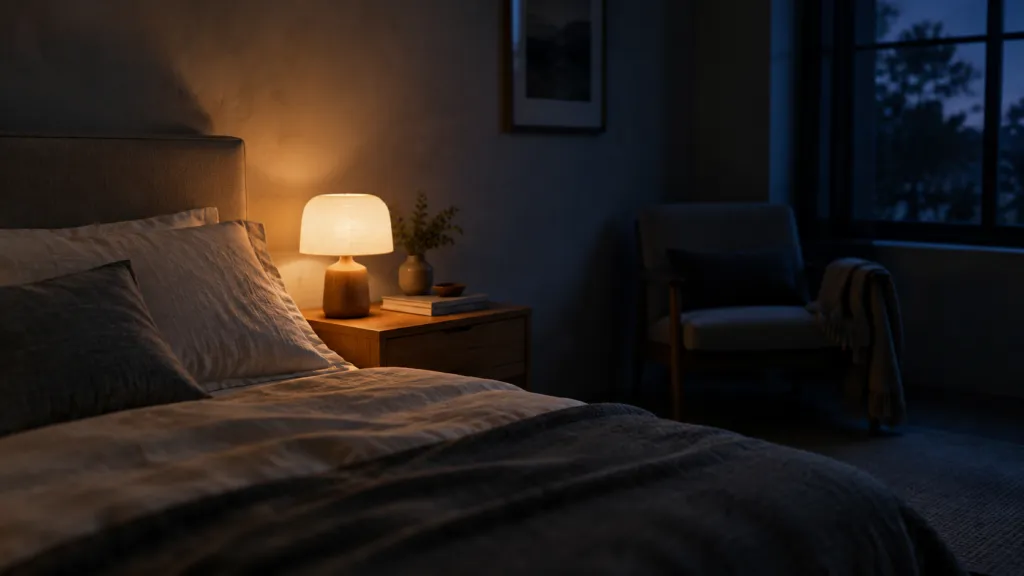
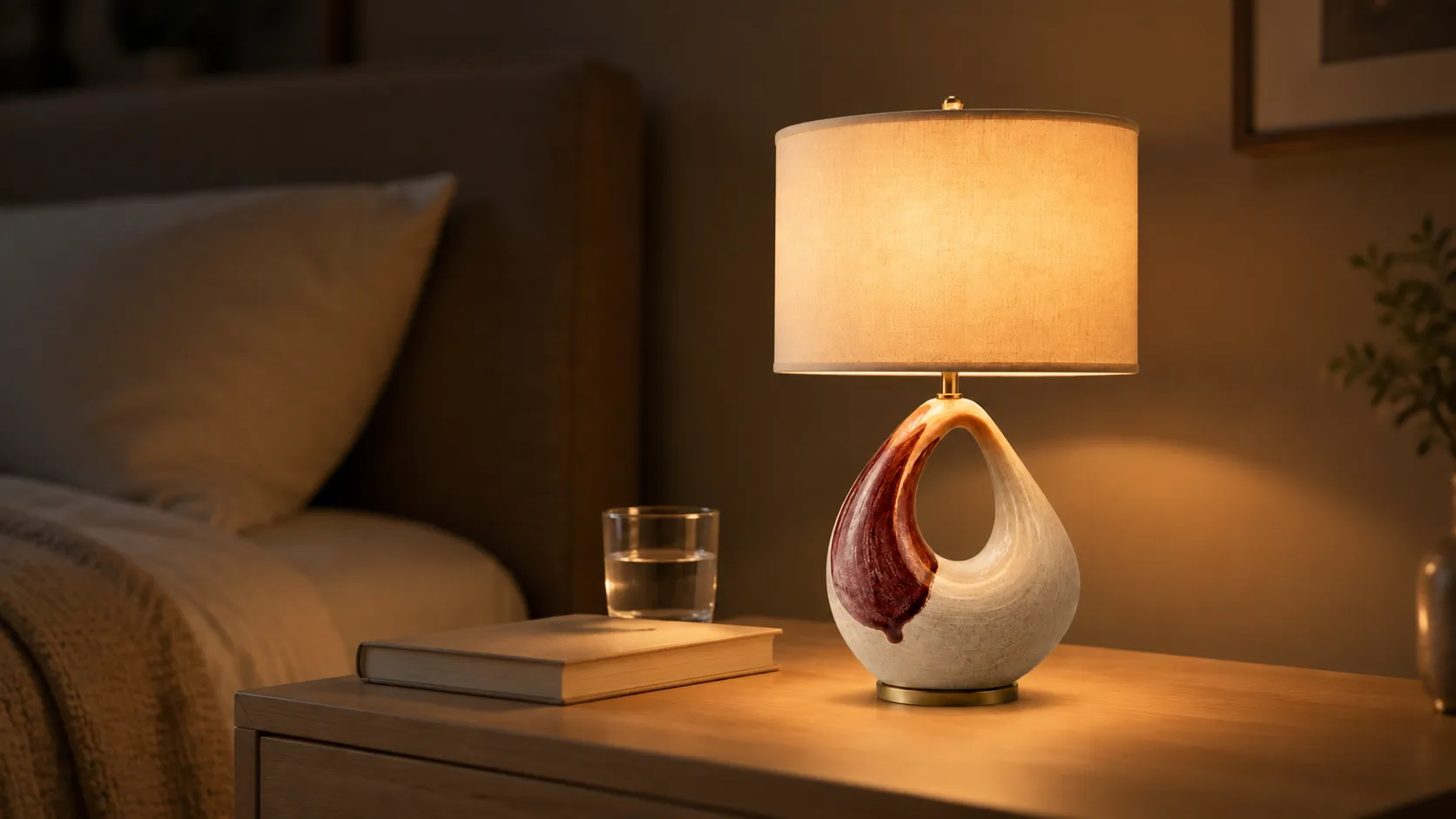
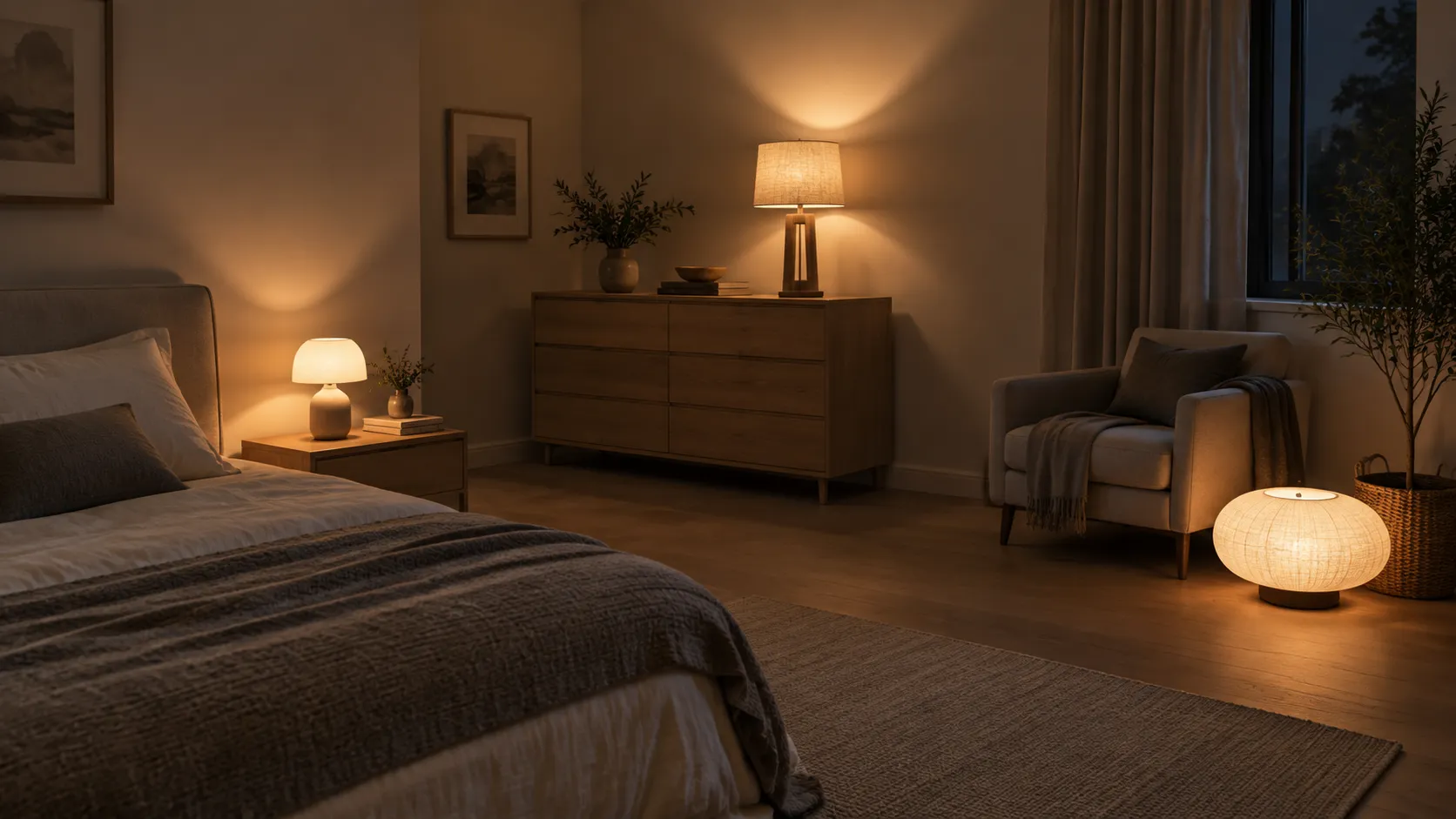
The job is atmosphere at low output. A bedroom mood lamp is not the room’s light source and it is not a reading light. It is the object still switched on after everything else is off, which is why its lowest setting decides more than its brightest one.
Efficiency has dropped out of the pitch entirely. In 2024, 63% of US households ran mostly LED bulbs for indoor lighting, up from 4% in 2015; 90% reported using LED bulbs at all, and 37% used them for all indoor lighting (EIA). The customer standing at this shelf is not comparing the lamp against a halogen bulb, because the rest of their house changed over years ago. What is left to compete on is the shape of the object, the quality of the bottom of its range, and how it is switched.
That reframes where the product belongs in a store. A mood lamp is bought the way a candle or a small ceramic piece is bought: on the object first, on the light second, on the price band third. It is an impulse and gift purchase far more often than a planned replacement, which is why it sells beside diffusers, frames and throws, not beside bulbs. Merchandise it as a lighting product and you collect questions nobody at the shelf can answer.
Source: U.S. Energy Information Administration, Residential Energy Consumption Survey 2020 and 2024, retrieved 2026-09-12
Color Changing Mood Lamp or Warm White: Two Different Buyers
A color changing mood lamp and a warm-white dimming lamp arrive on the same purchase order and behave like two separate products on the floor.
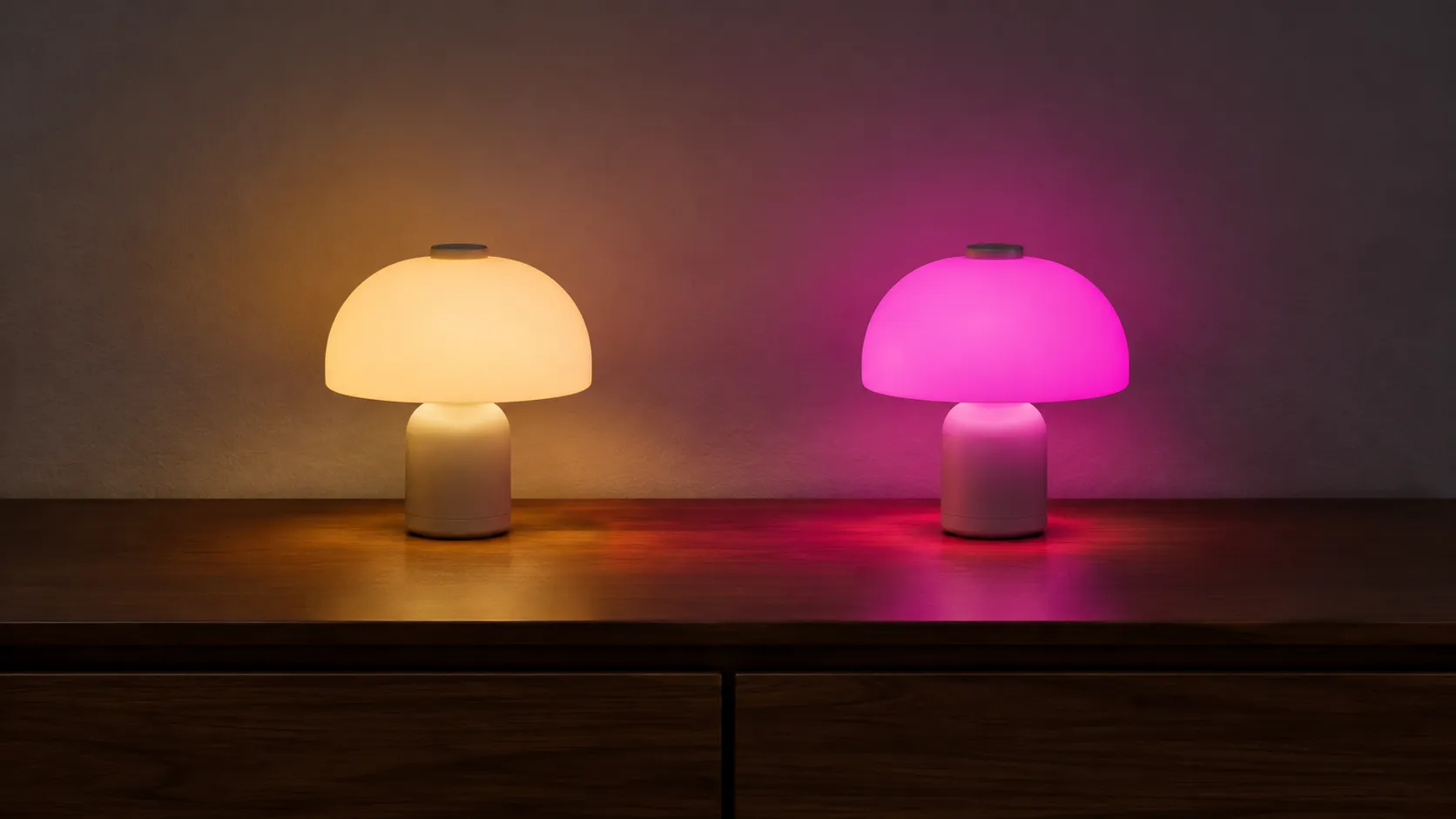
The color side is bought young and gifted often. It is judged on the length of the color list, on whether the effects loop without stepping, and on how it photographs. The warm-white side is bought by decor and hospitality accounts and is judged on one question: is the white a white anyone wants to sit in. That is where mixed-white units lose. A lamp that builds white out of red, green and blue diodes usually lands off the black-body curve and reads faintly pink or green against a plain warm lamp beside it, which is exactly the arrangement a shelf creates.
The fix is a line on the specification rather than a decision in marketing: ask for a dedicated white channel alongside the color diodes, and name the nominal color temperature you expect it to hit. The ENERGY STAR lamp specification sets the nominal steps a model should correlate to at 2700 K, 3000 K, 3500 K, 4000 K, 5000 K and 6500 K, with 2200 K and 2500 K applicable only to filament-style lamps. It also asks solid-state lamps for a color rendering index of Ra 80 or better, averaged across sampled units (ENERGY STAR Lamps V2.1). For a bedroom object 2700 K is the safe house number. A warmer candle-glow mode sits off that ladder for a normal LED build, so you have to state the target and the tolerance yourself. Which end of that range belongs beside a bed is a sleep question rather than a sourcing one, handled in what color light is best for sleep. Here it is a figure you write down before the first sample is cut.
One listing note: UK and Australian accounts search for a colour changing mood lamp, and the two spellings rarely share a page in a catalog system, so put both into the product data.
Smart Mood Lamp: Where the Radio Earns Its Place
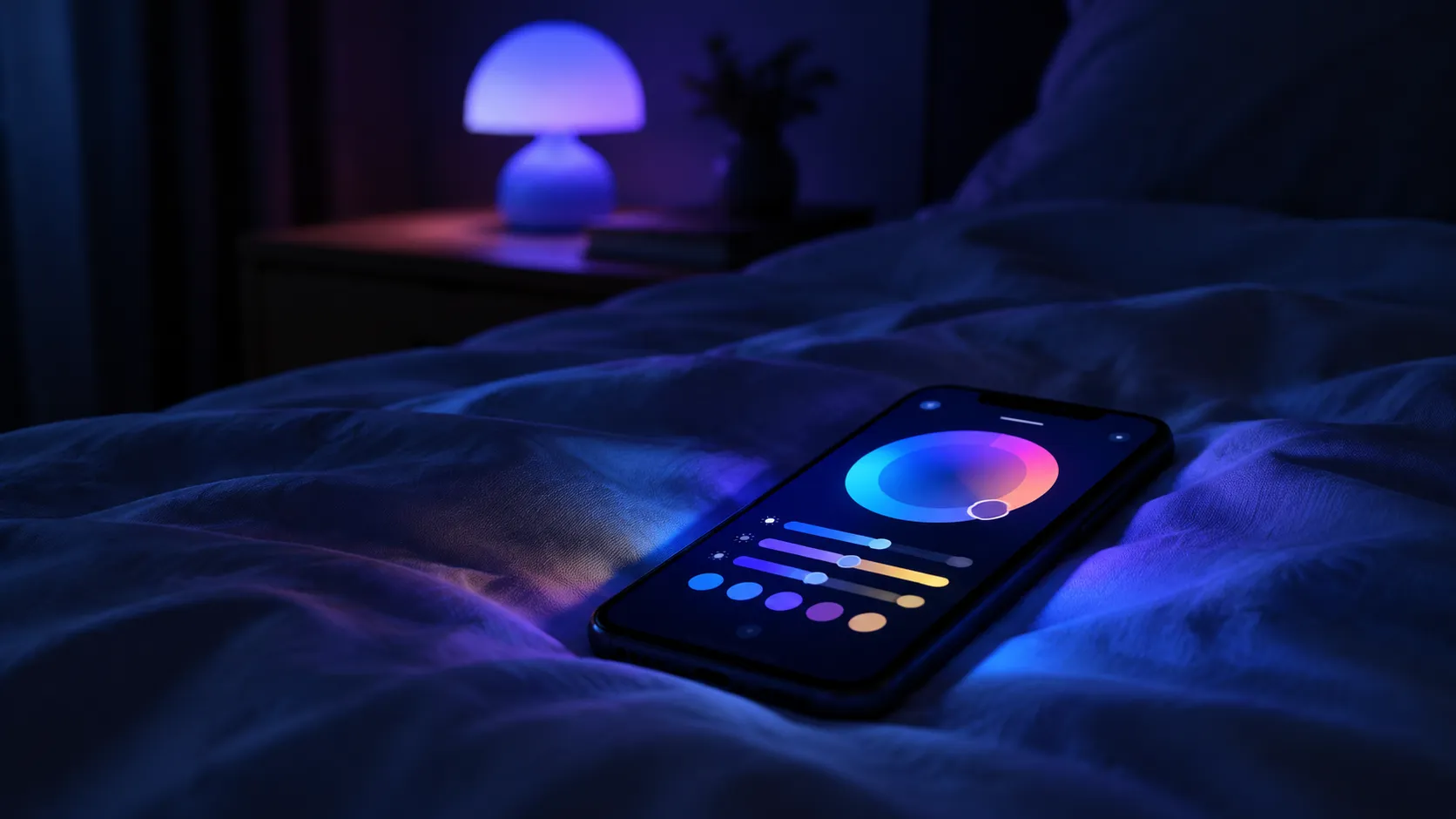
A smart mood lamp adds a radio, a firmware image and two app-store listings to a product that otherwise has four parts, so the real question is not whether customers like app control. It is how many of them will ever open the app.
The installed base gives an honest answer. In 2024, 47 million US households, about 36% of the country, had at least one smart speaker, up from 39 million and 32% in 2020 (EIA). Of the 2024 group, close to 14 million used the speaker to control lighting, against close to 10 million four years earlier. Divide the one count by the other and it is roughly three in ten of those households, which is our arithmetic rather than a published EIA figure. A real segment, growing, and still not the default customer for a gift-price lamp.
The radio carries a running cost in two places. ENERGY STAR asked lamps without integral controls to draw no power at all in the off mode, and allowed lamps with wireless control or connected functionality no more than 0.5 watt in standby or network mode (ENERGY STAR Lamps V2.1). A connected lamp is never off; it idles at the customer’s expense and on your power supply’s duty cycle. The second cost is interoperability. The first Matter specification release, from the Connectivity Standards Alliance, runs on Wi-Fi and Thread network layers and uses Bluetooth Low Energy for commissioning (CSA). The protocol choice decides whether the lamp needs a hub, how it joins a network, and who picks up the call when it does not.
The part most buyers underestimate is the tail. A radio module is cheap; keeping two store listings alive for the commercial life of the SKU is not, and an app that stops working turns a decorative object into a broken one.
| Control tier | Added to the bill of materials | What the customer has to do | Where it belongs | The complaint it invites |
|---|---|---|---|---|
| Inline cord switch | A switch body in the cord | Reach behind the furniture | Lowest price band, gift multipacks | Switch position, and the switch under load |
| Touch-dimmable base | Capacitive sensor, stepped driver | Tap the base, count the steps | Nightstand, decor accounts | Fixed steps where a smooth range was expected |
| Infrared or RF remote | Receiver, coin cell, handset | Find the handset | Color-led listings, kids rooms | Lost handsets and pairing questions |
| App over Bluetooth or Wi-Fi | Radio module, firmware, two store listings | Install an app, pair once | Smart-home ranges with support | App maintenance for the life of the SKU |
| Voice through a hub | A qualified protocol stack, commissioning flow | Join a network, name the device | Accounts already running a hub | Network faults you cannot reproduce |
The Dimming Floor Is the Line That Decides Returns
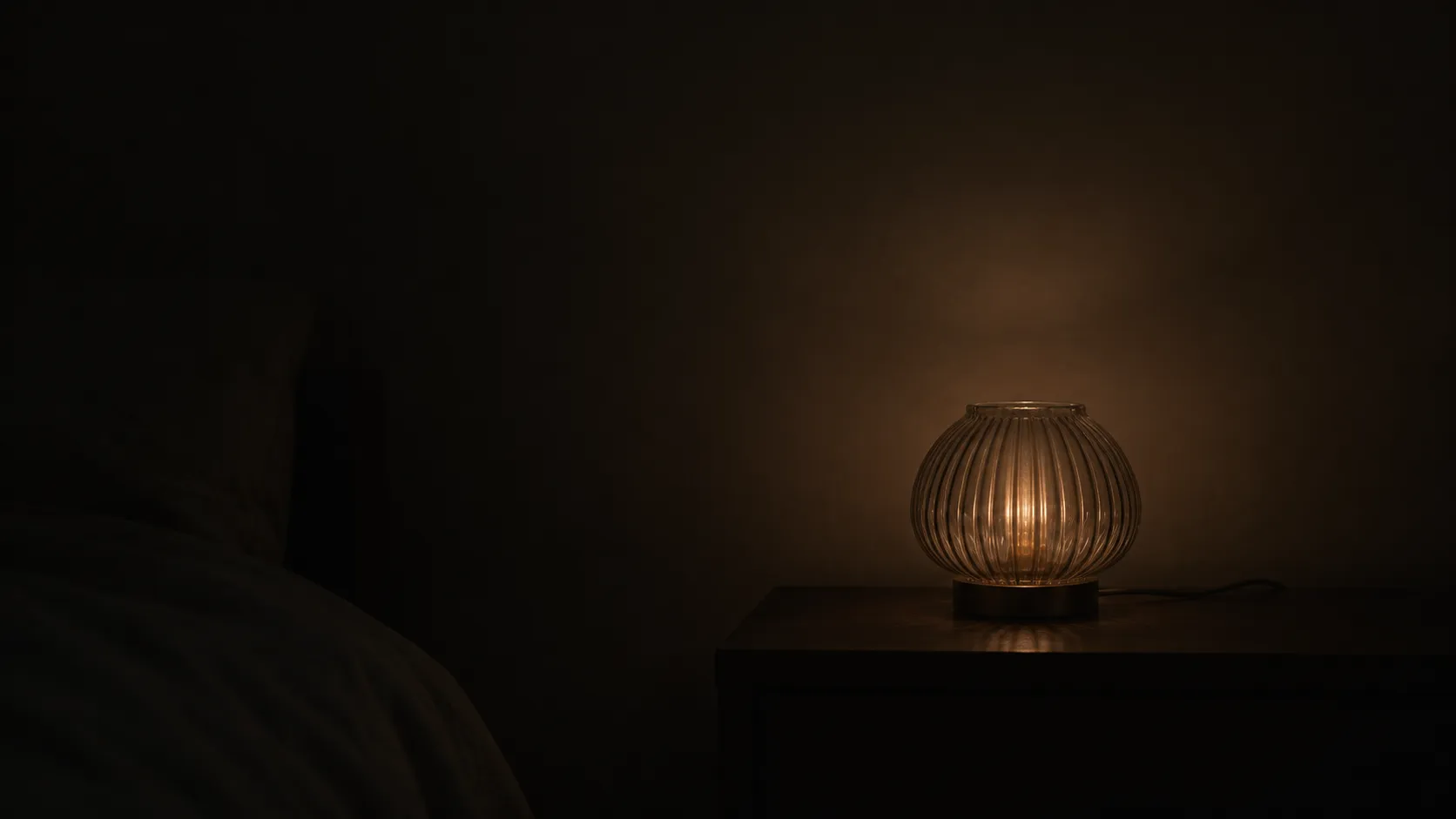
The specification a customer actually tests is the bottom of the range, in a dark room, on the first night.
There is a published number worth borrowing. ENERGY STAR asked any lamp marketed as dimmable to reach 20% of its maximum light output or lower on each tested dimmer or control, with 80% of tested lamp and dimmer combinations meeting the requirement (ENERGY STAR Lamps V2.1). Two caveats come with it. The document was written for replaceable bulbs rather than integrated decorative luminaires, and the lighting program itself sunset on 13 March 2023 (ENERGY STAR), so there is no mark to look for on a mood lamp today. That cuts both ways for a buyer. Nobody can show you a label, and nothing stops you copying the figure into your own purchase order and asking for it to be measured at sample stage.
What goes wrong below that floor is flicker. LEDs carry very little thermal or phosphor persistence, so they follow whatever waveform the driver sends almost instantly. Modulation can stay visible at 1,000, 2,000 and 6,000 Hz where there is relative movement between the eye and the source, and under very dark conditions some people identify a modulating source up to 11,000 Hz (U.S. DOE). The same source points at the remedy: drive above roughly 12,000 Hz, or avoid pulse-width modulation altogether. Cheap dimming does the opposite of that, chopping harder the lower it goes, so the setting the customer wants most is the setting that bands.
Run the test the customer runs: lights off, lamp at its lowest setting, phone propped on the nightstand filming ten seconds, then look for banding in the playback. A sample clean at full output and banding at the bottom goes back with the video attached.
Bedside, Dresser, Floor: Three Placements That Sell Differently
Three positions in a bedroom take three different products, and the difference is mostly footprint, height and where the switch ends up.
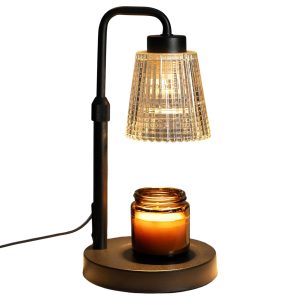
The nightstand is the crowded one. It already carries a phone, a glass and a book, so a lamp with a base wider than a hand span gets moved to the dresser inside a week. This is where a mood lighting lamp for bedroom use has to win on footprint before it wins on light. Switch position matters most here too: a switch that ends up behind the furniture is a switch nobody uses, which is one reason touch bases sell through this slot. Our touch dimmable bedside lamp and RGB LED night light sit at the two ends of it.
The dresser and the vanity take a taller object with a visible shade, because it is seen standing up from across the room rather than reached for in the dark. A mood lighting table lamp reads as decor in that position and competes with trays and frames, so shape and material do the selling; the mushroom glass table lamp is that brief in its most requested form. The floor position, beside a chair or in a corner, wants the widest spread and the least surface detail. It is the one placement where a projected wash often beats a lamp outright, which is why the sunset ambient table lamp gets specified for a corner rather than a nightstand. Lighting inside the wardrobe is a separate purchase, sized on strip length and color rendering: see LED strip lights in closet builds.
The head term covering this whole slot, table lamps for bedroom, spans all three positions plus many products that are not mood lamps at all. Worth remembering when a keyword report suggests one page can serve the lot. How the three positions layer with ceiling and task light belongs to our bedroom lighting ideas guide; the basket that carries them is in cozy bedroom ideas.
The Cord, the Switch and the Cell: Where This Category Fails
The recalls in this format are not about the diode. They are about the cheapest parts in the box.
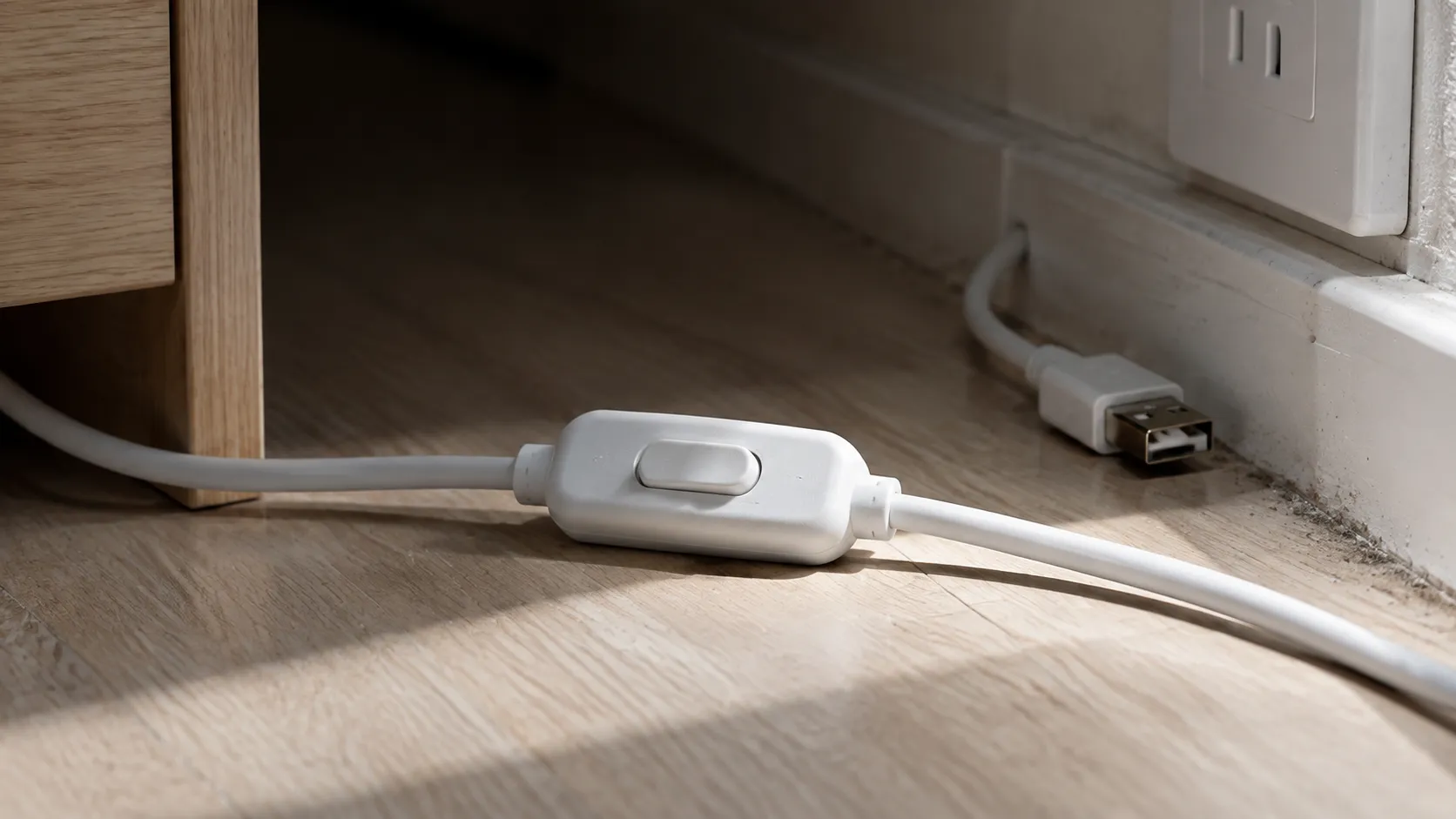
In April 2025 a US value retailer recalled about 29,000 USB-powered bear-shaped decorative lights, roughly 7.5 inches tall, because the power switch on the USB cord could overheat and melt. The firm had taken 28 reports of the cord overheating and melting, six reports of burns to fingers and two of property damage, burns to a wall and a headboard (CPSC). Five months earlier, in November 2024, about 5,300 battery-powered portable lamps were recalled because an electronic malfunction could cause the bulb to fail and the lithium cell to overheat. The one reported incident was a fire that damaged a side table and a bed, with no injuries reported (CPSC). Both would have passed a shelf-side look at the light they made.
The standards have moved in the same direction. UL 153, the US standard for portable electric luminaires, covered only luminaires operated while connected to an external supply until 26 September 2022. Supplement SA, published that day, extended it to portable luminaires running on integral single-use or rechargeable cells, with requirements covering impact resistance, water ingress and photobiological hazards, and with lithium cells required to meet UL 1642 (UL Solutions). Cordless mood lamps are a young format inside a young supplement. That is a reason to ask for the cell datasheet and the protection circuit, not a reason to walk away from the format.
For a purchase order it reduces to three lines almost nobody writes: which inline switch part and current rating, what the cord set is, and which cell chemistry and protection board sit inside any rechargeable version. Those are the parts a line substitutes when a price target moves, and the parts that came back in both recalls above.
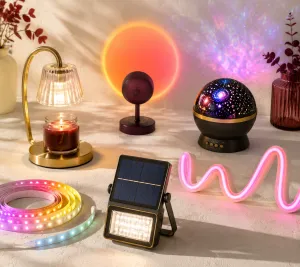
Mood Lamp, Sunset Lamp, Star Projector or Neon: Who Owns Which Shelf
Four formats get bought for the same reason and fail in different ways. Mixed on one fixture without a rule, they produce a display that sells none of them.
A mood lamp puts light on an object and light around it. It is furniture-scale, judged close up, and it still works in a partly lit room. A sunset projector throws a colored disc onto a wall and only works in a darkened room at a particular throw distance. That is a different specification conversation, handled in our piece on the golden hour sunset lamp. A star projector covers a ceiling and is bought for a child’s room or as a gift, with selection questions of its own set out under galaxy projector night light formats. A neon sign is wall decor that happens to emit light, sold by size and font rather than by output, which is why neon signs for rooms is a separate buy from this one.
The working rule is one format per price band per fixture position, plus one deliberate cross-sell. The same object sells as a mood lamp for living room side tables with nothing changed but the photography. It moves into hospitality only after changes to the cord set and the cleaning surfaces, covered in our guide to battery operated restaurant table lamps. Campus accounts are a fourth route with rules of their own, in flame-free dorm lighting.
Specifying a Mood Lamp Program Without Guessing
Everything above collapses into five decisions you can make before a drawing exists.
The commercial case for making them early sits in the returns arithmetic. The National Retail Federation put 2025 US retail returns at $849.9 billion, 15.8% of annual sales, with an estimated 19.3% of online sales sent back (NRF). A decorative lamp at a gift price cannot absorb that on margin; it survives by not coming back, and the parts that decide that cost cents each.
Set the floor before the ceiling
Name the lowest usable output and ask for it to be measured on the sample. Judge the top of the range afterwards, because nobody returns a lamp for being too dim at full power.
Fix the white before the colors
State the nominal color temperature and the rendering figure you want, and ask whether white comes from a dedicated channel or a mix. Colors are the easy part of the build.
Pick one control tier per price band
Cord switch, touch base, remote, app or voice. Two tiers in one price band split the same customer and double the support load on your side.
Specify the cord, the switch and the cell
Part numbers and ratings rather than descriptions, including the protection board on any rechargeable version. This is where substitutions happen quietly.
Test it in the dark, at the bottom
Lights off, lowest setting, ten seconds of phone video. Look for banding, a color cast in the white mode, and a base that slides on a polished surface.
One habit is worth more than the checklist: ask the factory to show you the sample at its lowest setting first. A supplier who reaches for the dimmer before the color wheel has had this argument before, and is usually the one whose second production run looks like the first.
Have the lamp built to your control tier
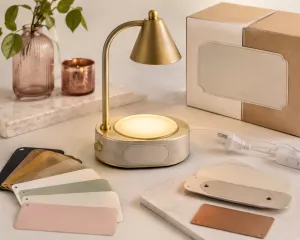
We build decorative table lamps in our own factory in Foshan, 4,000 square metres with 40 people across two production lines. The dimming floor, the white point, the switch type and the cord set are specification lines here, not whatever the last order happened to use. Send the price band, the control tier and the shelf position it has to fill, and we will quote the program.
Watch it work
The lowest setting, the dimming floor and the switch that decides returns, in 30 seconds:
FAQ
What is a mood lamp?
A mood lamp is a low-output decorative light whose job is the atmosphere of a room rather than its visibility. No standard defines the term, which is why the category holds everything from a glass object with one warm diode to a rechargeable puck with millions of addressable colors. The commercial test is simpler: if the customer would still want the object there with the power off, it is a mood lamp. If not, it is a light fitting and will be judged as one.
What is the difference between a mood lamp and a night light?
Function, and where the money goes. A night light is a wayfinding device, usually plugged straight into an outlet, often with a photocell, and its value is that somebody can cross a room at three in the morning. A mood lamp stands on furniture, takes up surface area, and is bought for how it looks. The overlap is kids rooms and dorms, where one object has to do both.
Is a mood lamp bright enough to read by?
Almost never, and a listing that suggests otherwise buys a return. Reading is a task level and this format sits well below one, with its light spread over a shade rather than aimed at a page. If an account wants one object for both, the honest answer is an adjustable arm or a second light. Target levels per part of a bedroom are in our bedroom lighting ideas guide.
Does a mood lamp still need a remote if it has an app?
At gift price bands, yes. An app is single-user by default: it pairs to one phone, and the second person in the room has no way to turn the light down without asking. A handset is the shared control, and it works while that phone charges in another room. For a hotel or short-let account, drop the app and keep a physical control.
Can a color changing lamp look premium, or does the format cap the price?
The format does not cap it; the white does. Premium decor accounts reject color changing units on the quality of the white mode and on plastic that reads as a toy, not on the presence of color. A glass or ceramic body, a dedicated white channel, and a color list that opens with usable ambers will hold a decor price. The same electronics in a moulded body will not.
Sources
Every external figure above was checked on 2026-09-12: household lighting and smart-speaker counts from the EIA, dimming, color and standby limits from the ENERGY STAR lamp specification and its sunset notice, flicker behaviour from the U.S. Department of Energy, the portable luminaire standard from UL Solutions, two recalls from the CPSC, returns from the NRF, and the Matter protocol from the Connectivity Standards Alliance.
- U.S. Energy Information Administration, More U.S. homes used LEDs over other bulb types for indoor lighting in 2024, 23 March 2026 (63% of households mostly LED in 2024 against 4% in 2015; 90% using at least one LED bulb; 37% fully LED indoors; 10% mostly incandescent or halogen; 7% mostly CFL; 47 million households with a smart speaker, about 36%, nearly 14 million of them controlling lighting), retrieved 2026-09-12.
- U.S. Energy Information Administration, Nearly half of U.S. households use LED bulbs for all or most of their indoor lighting, 31 March 2022 (47% mostly or all LED in 2020, 12% CFL, 15% incandescent or halogen; 39 million households with a smart speaker, 32%, nearly 10 million of them controlling lighting), retrieved 2026-09-12.
- ENERGY STAR, U.S. Environmental Protection Agency, Program Requirements for Lamps, Eligibility Criteria Version 2.1 (dimmable lamps to 20% of maximum light output or lower with 80% of tested lamp and dimmer combinations meeting it; color rendering index Ra 80 or better for solid-state lamps; nominal CCT steps 2700 K, 3000 K, 3500 K, 4000/4100 K, 5000 K and 6500 K, with 2200 K and 2500 K applicable only to filament-style lamps; no off-mode draw without integral controls and no more than 0.5 W standby with them), retrieved 2026-09-12.
- ENERGY STAR, U.S. Environmental Protection Agency, Lamps Specification Version 2.0 page, ENERGY STAR Lighting Sunset, 13 March 2023 (the date the lighting specifications were sunset), retrieved 2026-09-12.
- U.S. Department of Energy, Solid-State Lighting Program, Flicker (little thermal or phosphor persistence in LEDs; temporal light modulation visible at 1,000, 2,000 and 6,000 Hz where there is relative movement, identification reported up to 11,000 Hz; mitigation above roughly 12,000 Hz or without pulse-width modulation), retrieved 2026-09-12.
- UL Solutions, UL 153 Expanded to Add Battery-Operated Portable Luminaires, 29 November 2022 (Supplement SA published 26 September 2022, extending the portable electric luminaire standard to products powered only by integral single-use or rechargeable batteries, with requirements related to impact resistance, water ingress and photobiological hazards, and lithium cells required to comply with UL 1642), retrieved 2026-09-12.
- U.S. Consumer Product Safety Commission, Five Below Recalls Room2Room LED Iridescent Bear Lights Due to Fire and Burn Hazards, 3 April 2025 (about 29,000 units, about 7.5 inches tall, with a USB plug carrying an on/off switch; the power switch on the USB cord can overheat and melt; 28 reports of the cord overheating and melting, six reports of burns to fingers, two reports of property damage including burns to a wall and a headboard), retrieved 2026-09-12.
- U.S. Consumer Product Safety Commission, Tala North America Recalls Battery Powered Portable Lamps Due to Fire Hazard, 7 November 2024 (about 5,300 units; an electronic malfunction can cause the bulb to fail and the lithium battery to overheat; one report of a battery overheating and causing a fire with property damage), retrieved 2026-09-12.
- National Retail Federation, Consumers Expected to Return Nearly $850 Billion in Merchandise in 2025, 15 October 2025 ($849.9 billion in returns, 15.8% of annual sales, an estimated 19.3% of online sales), retrieved 2026-09-12.
- Connectivity Standards Alliance, Matter (one protocol for compatible smart home devices; the first specification release runs on Wi-Fi and Thread network layers and uses Bluetooth Low Energy for commissioning), retrieved 2026-09-12.
