

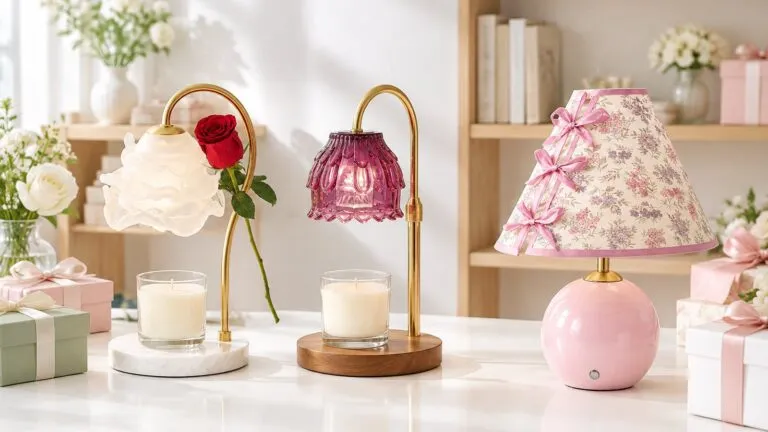
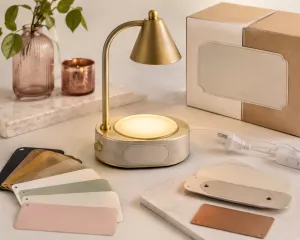

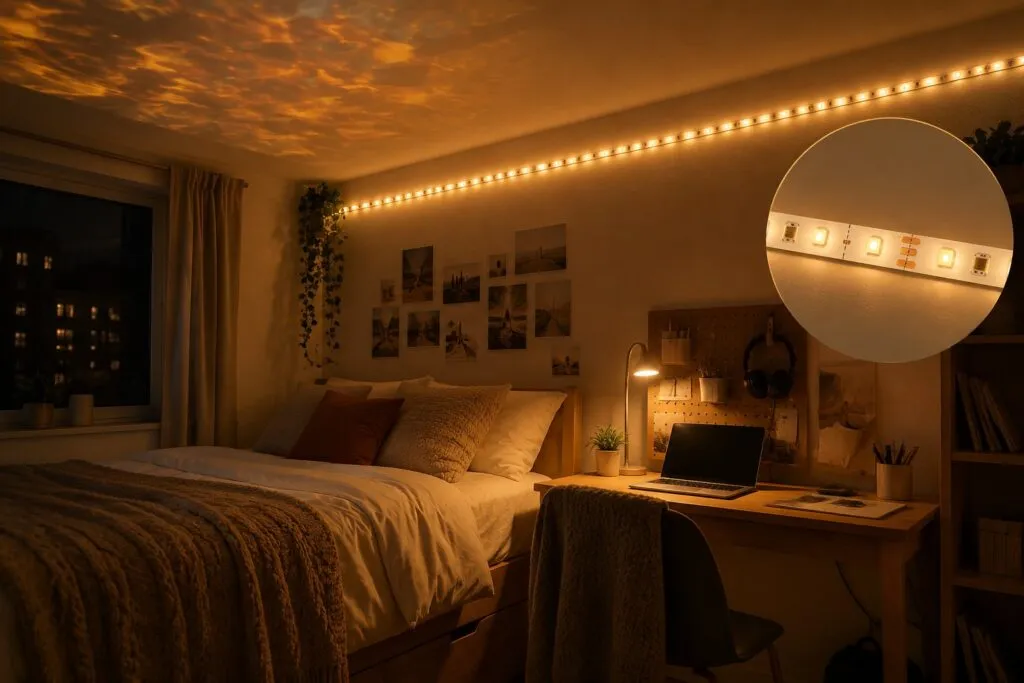
The best dorm lighting is flame-free by necessity: candles and open flames are banned in student rooms on nearly every college campus in the United States, so the real question is not whether to skip the candle, but what to light the room with instead. The good news is that the flame-free options, warm LED string lights, adhesive light strips, and sunset or star projectors, look better and last longer than a jar candle ever did. This guide covers why the rules exist, which picks reliably pass them, and how to build a warm, cozy room that a resident adviser will walk right past.
Key takeaways
Dorm lighting has to be flame-free: candles, incense, and other open flames are banned on nearly every campus. Warm LED string lights, light strips, and sunset or star projectors give a room the cozy glow students want without the fire risk, but always check your housing policy, because some schools also restrict halogen lamps, string lights, and extension cords.
- The US Fire Administration counts roughly 3,800 university housing fires a year, driven mainly by cooking, candles, smoking, and overloaded power strips (USFA).
- Open flame is behind about 15% of the more serious (nonconfined) dorm fires; going flame-free removes that cause entirely (USFA, 2007-2009).
- Campus fire risk peaks in the fall: university housing fires cluster in September and October as students return (USFA).
- Housing policies routinely ban candles, candle warmers, incense, and halogen lamps in residence halls (Texas A&M; CU Boulder).
- The USFA’s own advice for students is blunt: use flameless candles, and only power strips with built-in overload protection (USFA).
01Why do dorms ban candles and open flames?
Dorms ban candles and open flames because open-flame fires cause a share of the serious campus fires far out of proportion to how rarely candles are actually lit. The US Fire Administration counts roughly 3,800 university housing fires each year, and while most are minor confined cooking fires, open flame is behind about 15% of the more serious nonconfined fires, the ones that spread beyond their container (US Fire Administration, University Housing Fires 2007-2009, retrieved 2026-07-19). The same report notes that most nonconfined open-flame fires start in bedrooms, 42% of them, exactly where a student would light a scented candle. That risk math is why good dorm room lighting starts with a rule rather than a product: nothing with a flame.
Housing offices enforce that rule almost universally. The University of Colorado Boulder tells residents plainly that many fires in its residence halls are the result of burning candles, and prohibits open-flame devices and incense outright (University of Colorado Boulder, Fire and Life Safety, retrieved 2026-07-19). Texas A&M’s residence rules go further, banning candles, candle warmers, incense, and oil lamps together as open-flame devices, with confiscation for violations (Texas A&M Residence Life, retrieved 2026-07-19). Timing raises the stakes: fires cluster at the start of the school year, peaking in September and October as students return to campus (US Fire Administration, retrieved 2026-07-19), which is also why campus retailers stock flame-free lighting well before move-in.
What actually causes the serious dorm fires
Leading causes of nonconfined (more serious) university housing fires, 2007-2009; flame-free lighting removes the open-flame cause entirely
Source: US Fire Administration, University Housing Fires (2007-2009), Topical Fire Report Series. Retrieved 2026-07-19.
02What counts as flame-free dorm lighting?
Flame-free dorm lighting is any light source that makes light electrically instead of by burning something: no wick, no flame, no hot combustion. In practice that means low-voltage LED gear, which happens to run cool and sip power. The flame-free picks students actually use are warm LED string lights, adhesive LED light strips, sunset and star projectors, and USB or plug-in LED desk and clip lamps. Battery-powered flameless candles count too, and the US Fire Administration explicitly recommends them in place of the real thing (US Fire Administration, Fire Safety for College Students, retrieved 2026-07-19). A simple example is a rechargeable RGB night light.
Not everything without a flame is automatically safe, though, and that is the trap. Halogen lamps have no flame but run hot enough to ignite nearby fabric, which is why many campuses ban them right alongside candles (University of Colorado Boulder, retrieved 2026-07-19). So the safest dorm lights are the ones that stay cool to the touch and run on LEDs, and the ones to skip are anything that gets hot, has a flame, or, as the next sections cover, is named specifically in your housing contract.
03Flame-free dorm lighting ideas that pass the rules
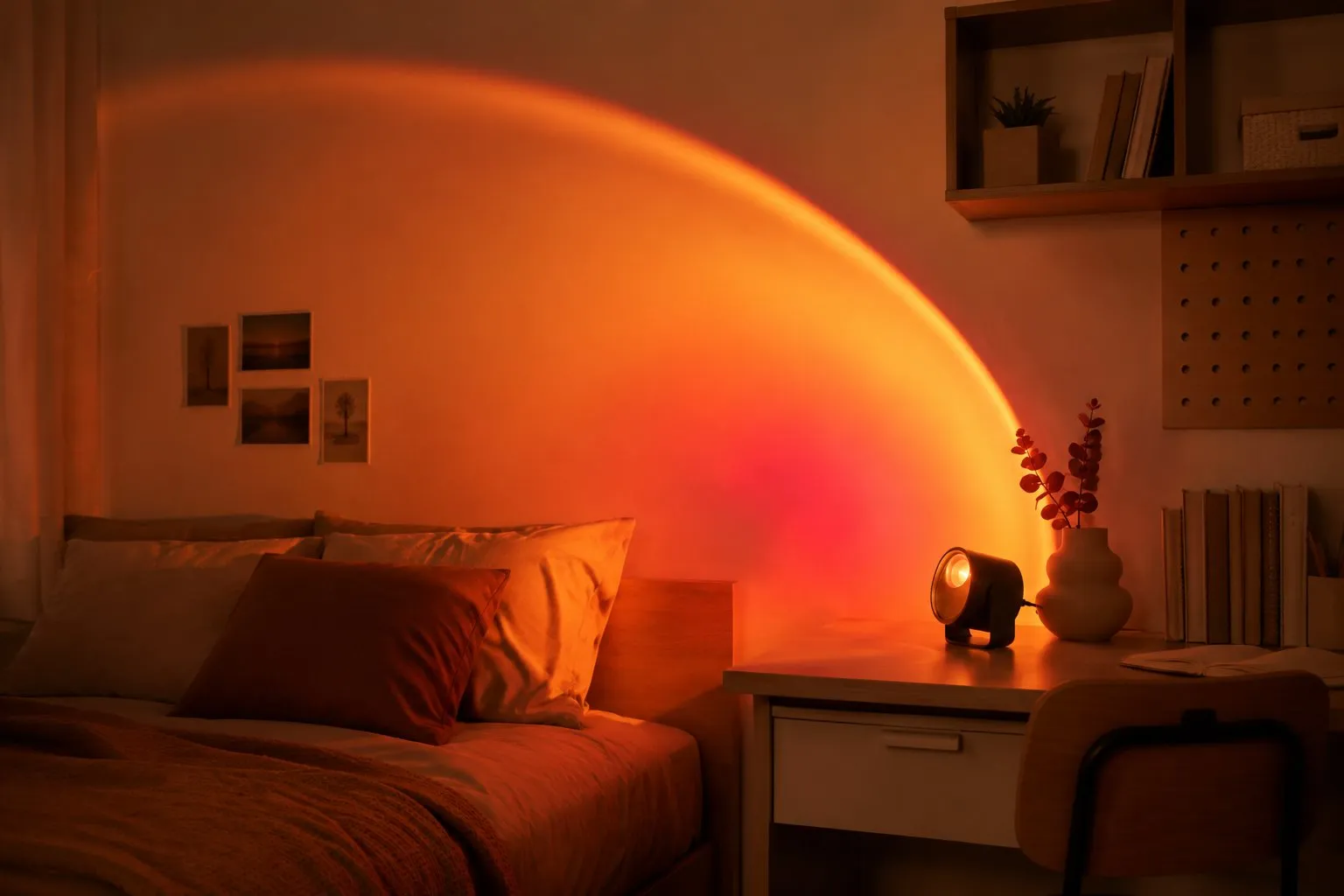
The dependable flame-free layers for a dorm come down to a handful of formats, each doing a different job. String lights and light strips supply the warm ambient glow, a projector adds atmosphere on the ceiling or wall, and a desk lamp handles the actual work. The light-level table further down covers how bright each should be; here is what each pick brings and, just as usefully, what gets taken away at the door. One of those layers is a smart sunset lamp that projects a round sunset glow onto the wall.
Flame-free picks (pass on most campuses)
- Warm, dimmable LED string lights
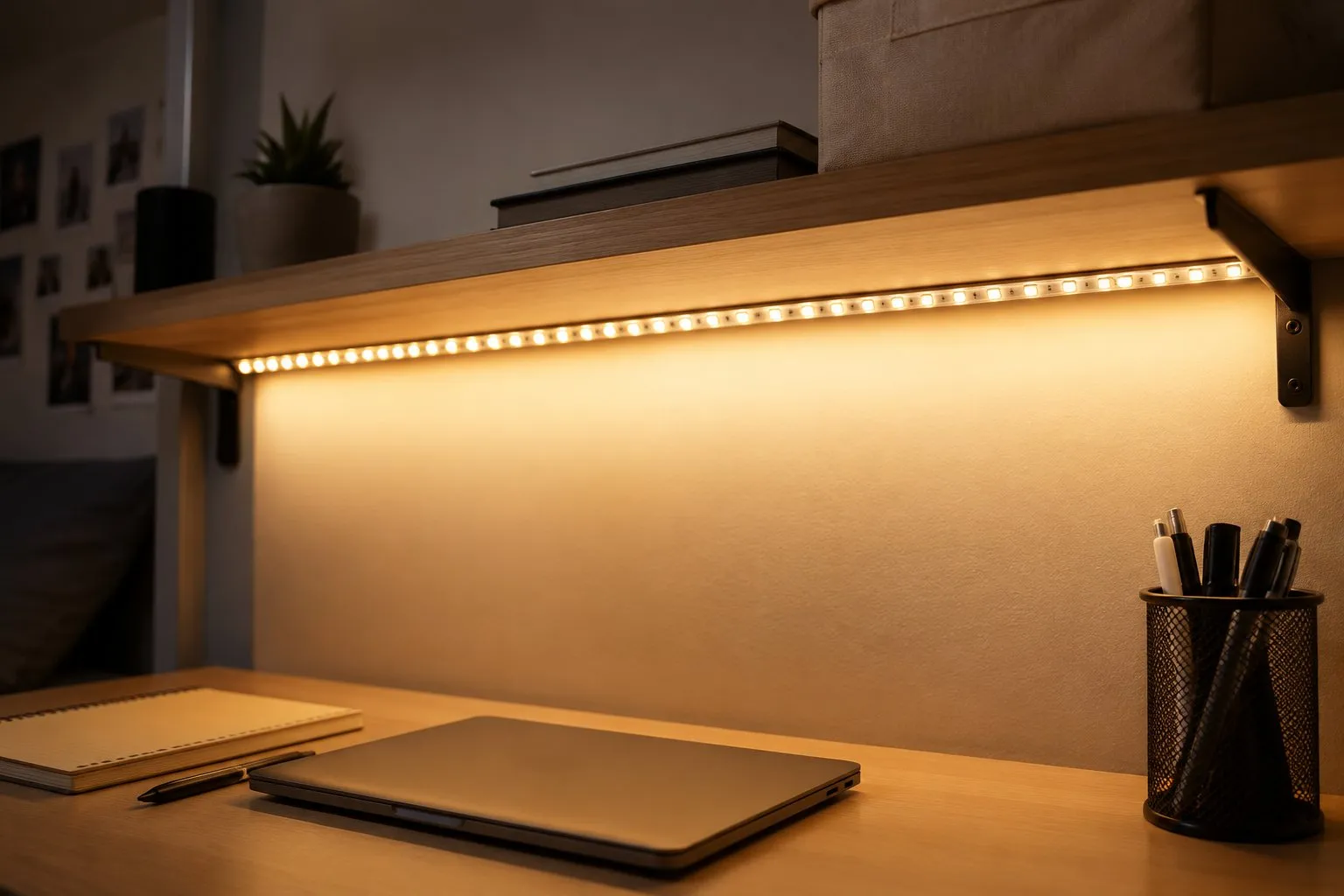
- Adhesive LED light strips behind a desk or shelf
- Sunset or star projector for ceiling ambiance
- Cool-running LED desk or clip lamp
What gets confiscated
- Candles, incense, and oil lamps (open flame)
- Halogen lamps (banned for their heat)
- Nailed-up or overloaded string lights
- Extension cords daisy-chained across the room
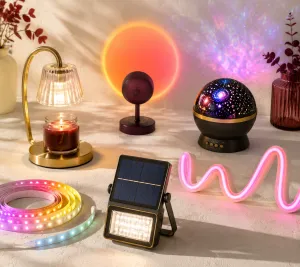
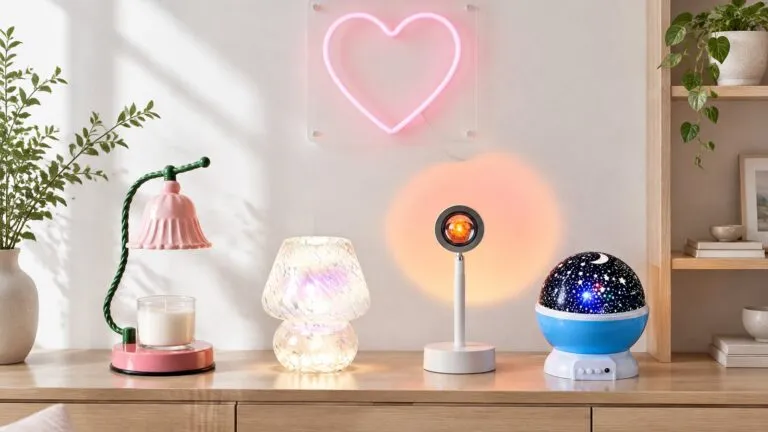
For the ambiance layer, a sunset projection lamp throws a warm amber wash across the wall that reads as calm rather than clinical, and galaxy and star projectors put a slow field of stars on the ceiling. Both belong to the wider cozy-home lighting range that back-to-school shoppers gravitate toward, and both are flame-free by design. Pair either with the warm, sleep-friendly light settings covered separately, keep the projector on its dim warm mode near bedtime, and the room feels finished without a single open flame.
04How much light does a dorm room actually need?
A dorm room needs different amounts of light in different spots, which is the whole case for layering rather than leaning on one bright ceiling fixture. Lighting engineers measure task light in footcandles (fc), and the recommended levels are modest: a general living or bedroom space wants about 20 to 30 fc of ambient light, while reading or study work wants a brighter 30 to 50 fc right where the book or screen is (Archtoolbox, Recommended Lighting Levels, citing IESNA, retrieved 2026-07-19). You do not measure this with a meter; you get there by putting the right kind of light in each zone.
Color matters as much as amount. Color temperature is measured in kelvin, where lower numbers look warmer and more amber and higher numbers look cooler and bluer (Lumens, Understanding Kelvin Color Temperature, retrieved 2026-07-19). For the relaxing ambient layer, a warm 2700K to 3000K glow is what makes a cinderblock room feel cozy; for the desk, a brighter, more neutral white keeps you alert while you work. The table maps each zone to a light level, a warmth, and the flame-free fixture that fits.
| Zone | Light level | Warmth on the box | Flame-free fixture |
|---|---|---|---|
| Ambient glow | 20 to 30 fc | Warm white, ~2700 to 3000K | LED string lights or light strips |
| Desk / study | 30 to 50 fc | Bright / cool white, ~4000K | Cool-running LED desk or clip lamp |
| Bedside / wind-down | Low and dim | Soft warm white, ~2700K | Small lamp or sunset projector |
| Accent / decor | Low | Warm, your choice of color | Star projector or strip backlight |
Two numbers, two settings: bright and neutral where you study, warm and low everywhere else. That split is exactly what a wall of daylight-white overhead tubes cannot give you, and exactly what a couple of inexpensive LED layers can, without a flame anywhere in the room.
05Are LED strip lights and projectors allowed in dorms?
Usually yes, but this is the one place to read your actual housing contract rather than trust a blanket answer. LED strip lights and projectors are flame-free and cool-running, so most schools allow them, but some restrict rope, string, and strip lights regardless of type, and rules genuinely vary from campus to campus. The safe move is to search your housing policy for the words lighting, candles, and decorations before you buy, and to keep the packaging if a strip is borderline.
Where they are allowed, safe installation is what keeps them allowed. Mount strips and string lights with the adhesive backing or removable hooks they come with, never nails or staples that can pierce the wiring, and keep any light off bedding, curtains, and paper. Power is the other half: the US Fire Administration tells students to use only power strips with built-in overload protection, and never to run a large appliance off an extension cord (US Fire Administration, Fire Safety for College Students, retrieved 2026-07-19). Extension cords in particular are flagged as a major cause of residence-hall fires, so skip daisy-chaining them across the room (University of Colorado Boulder, retrieved 2026-07-19).
06Setting up cozy, flame-free dorm lighting
Putting it together is mostly about layering warm, low light and keeping the wiring sane. Start with one ambient source, add one task light, and finish with an accent if you want atmosphere. The steps below take a bare double room to warm-and-cozy in an afternoon, with nothing a housing inspector can object to.
For a campus store, a back-to-school buyer, or a property manager fitting out student housing, the sourcing question is whether one partner can supply the whole flame-free range in the warm tones students actually reach for. BeginLighting builds and private-labels flame-free dorm lighting on its own Foshan lines, including LED string lights, light strips, and sunset and star projectors, packed retail- and gift-box ready so an opening order can span several formats at once. Prices are quoted per project rather than listed, which is why the next step is a quote rather than a cart.
Source flame-free dorm lighting, private-label
LED string lights, light strips, and sunset and star projectors in the warm tones students actually buy, packed retail- and gift-box ready. Built and private-labeled on our own Foshan lines, quoted per project.
FAQ
What is the best dorm lighting?
The best dorm lighting is warm, flame-free, and layered: soft LED string lights or a light strip for the overall glow, a cool-running desk lamp for study, and a sunset or star projector for atmosphere. Every piece runs on LEDs, so nothing has a flame or gets hot, which keeps it on the right side of campus fire rules while still making the room feel cozy rather than clinical.
What dorm lights are allowed on campus?
The flame-free dorm lights are the ones allowed almost everywhere: LED string lights, adhesive light strips, LED desk and clip lamps, and projectors. Candles, incense, oil lamps, and halogen lamps are commonly banned, the first three for their open flame and halogen for its heat. Because some schools also restrict string and rope lights, check your specific housing policy before you buy.
Can you have LED strip lights in a dorm?
In most dorms, yes. LED strip lights are flame-free and stay cool to the touch, so they usually pass, but a few campuses restrict rope, string, and strip lights of any kind, so read your housing contract first. Where they are allowed, stick them up with their adhesive backing rather than nails, keep them off fabric, and power them from a surge-protected strip, not a chain of extension cords.
Is dorm room lighting with candles ever allowed?
No. Dorm room lighting with real candles is banned on essentially every US campus, including candles lit for decoration or scent, because open flames are a leading cause of the most serious residence-hall fires. If you want that candle mood, the accepted swaps are battery flameless candles The same flame-free logic now drives hospitality purchasing, which we cover in a sourcing guide to battery operated table lamps for restaurants and hotels., which fire authorities specifically recommend, or a warm sunset projector.
What color light is best for a dorm room?
For relaxing, a warm light around 2700K to 3000K makes a dorm room feel cozy, while a brighter, cooler white near 4000K is better over the desk for focus. Matching the color to the task, warm for winding down and cooler for studying, gives you a room that works for both without one harsh overhead tube trying to do everything.
Sources
- US Fire Administration, University Housing Fires (2007-2009), Topical Fire Report Series (about 3,800 university housing fires a year; open flame behind 15% of nonconfined fires; fires peak in September and October; 42% of nonconfined open-flame fires start in bedrooms), retrieved 2026-07-19.
- US Fire Administration, Fire Safety for College Students (leading causes: cooking, candles, smoking, and overloaded power strips; use safe flameless candles; use only power strips with internal overload protection; never run a large appliance off an extension cord), retrieved 2026-07-19.
- University of Colorado Boulder, Residence Hall Fire and Life Safety Policies (many residence-hall fires result from burning candles; open-flame devices and incense prohibited; halogen lamps prohibited for their high heat; extension cords a major cause of fires), retrieved 2026-07-19.
- Texas A&M University Residence Life, Candles, Incense and Open Flames (candles, candle warmers, incense, and oil lamps prohibited as open-flame devices, subject to confiscation), retrieved 2026-07-19.
- Archtoolbox, Recommended Lighting Levels (IESNA-based: about 20 to 30 footcandles for living and bedroom ambient light; about 30 to 50 footcandles for reading and study), retrieved 2026-07-19.
- Lumens, Understanding Kelvin Color Temperature (lower kelvin is warmer and more amber; warm white around 2700K to 3000K versus daylight around 5000K), retrieved 2026-07-19.
07The Dorm Lighting Checklist to Run Before You Buy
Campus housing rules kill more dorm lighting purchases than price does. Every item below is a line an RA can actually check during an inspection, so tick all six before anything ships. Buyers stocking a back-to-school aisle should ask their supplier for the same six in writing: the mark on the plug, the timer, and the mounting method are where returns come from.
☐ No open flame — including so-called flameless candles that still carry a real wick.
☐ No exposed hot element within reach of bedding or curtains.
☐ A UL or ETL mark on the plug itself, not only printed on the carton.
☐ An auto-off timer, so a lamp left on at 2am shuts itself down.
☐ Clamp or adhesive mounting only — nothing screwed into a wall you do not own.
☐ Under the wattage cap written into the housing contract.
Request a Quote for a dorm-safe assortment and we will map each SKU to the six lines above.
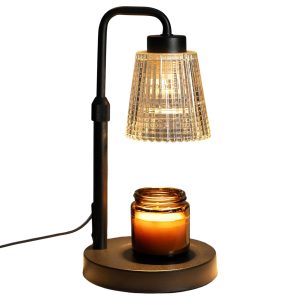
Are candle warmers allowed in dorms?
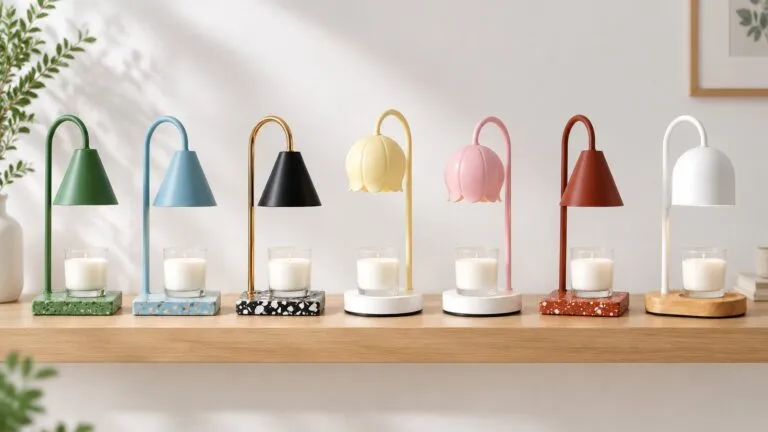
Often not, and this is the one flame-free product where the honest answer is to check the wording first. Some housing offices write the rule around open flame alone, in which case a device with no wick sits outside it. Others name the appliance directly: Texas A&M lists candle warmers alongside candles, incense and oil lamps as prohibited open-flame devices subject to confiscation, as cited in section 01. A second clause catches much of the rest, because many contracts separately restrict appliances with an exposed or high-wattage heating element whether or not a flame is involved. So read the two lines that matter, the open-flame list and the appliance list, before anything goes onto a back-to-school assortment. Where warmers are out, the same warm-glow slot is filled by a plug-in lamp, a light strip or a projector, none of which heat anything.
