


Most bedroom lighting ideas fail for one reason: a single bright ceiling light is asked to do every job at once, so it does none of them well. The fix, and the thread running through every idea below, is layering. Build the room from three kinds of light, an ambient wash, a task light for close work, and low accents for warmth, then keep the evening tones warm and put brightness only where you need it. Do that and one room can go from crisp and practical in the morning to soft and restful at night.
Key takeaways
Layer three kinds of light, ambient, task, and accent, instead of one overhead fixture. Keep evening tones warm around 2700K, match brightness to the job in each zone, and use dimmers so the same room can be bright at 8 a.m. and calm at 10 p.m.
- Lighting designers work in three layers: ambient, task, and accent (American Lighting Association).
- Accent light reads as a focal point when it is about three times as bright as the space around it (American Lighting Association).
- A general bedroom wants roughly 20 to 30 footcandles of ambient light; reading calls for 30 to 50 (IESNA Lighting Handbook).
- Warm white near 2700K suits the evening; daylight-white near 5000K is for mornings and tasks, not bedtime (Lumens).
- Warm, dim light is the sleep-friendly end of the spectrum, so save bright and blue for daytime (Sleep Foundation).
01What are the best bedroom lighting ideas?
The best bedroom lighting ideas all come down to layering: build the room from an ambient layer, a task layer, and an accent layer, rather than one bright fixture overhead. This is not a decorator’s flourish. It is the standard method lighting designers use, and the American Lighting Association’s Lighting Your Life guidance frames a well-lit room as exactly those three layers working together (American Lighting Association, Lighting Your Life, retrieved 2026-07-19). Ambient is the overall glow you navigate by, task is the focused light for reading or dressing, and accent is the low, warm light that adds depth and mood.
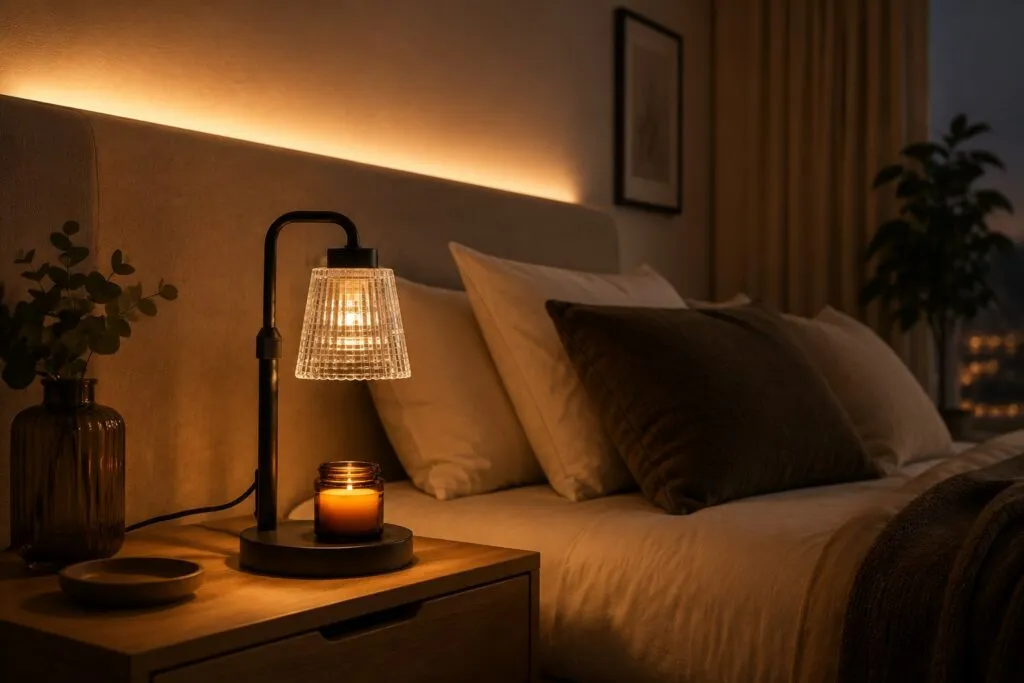
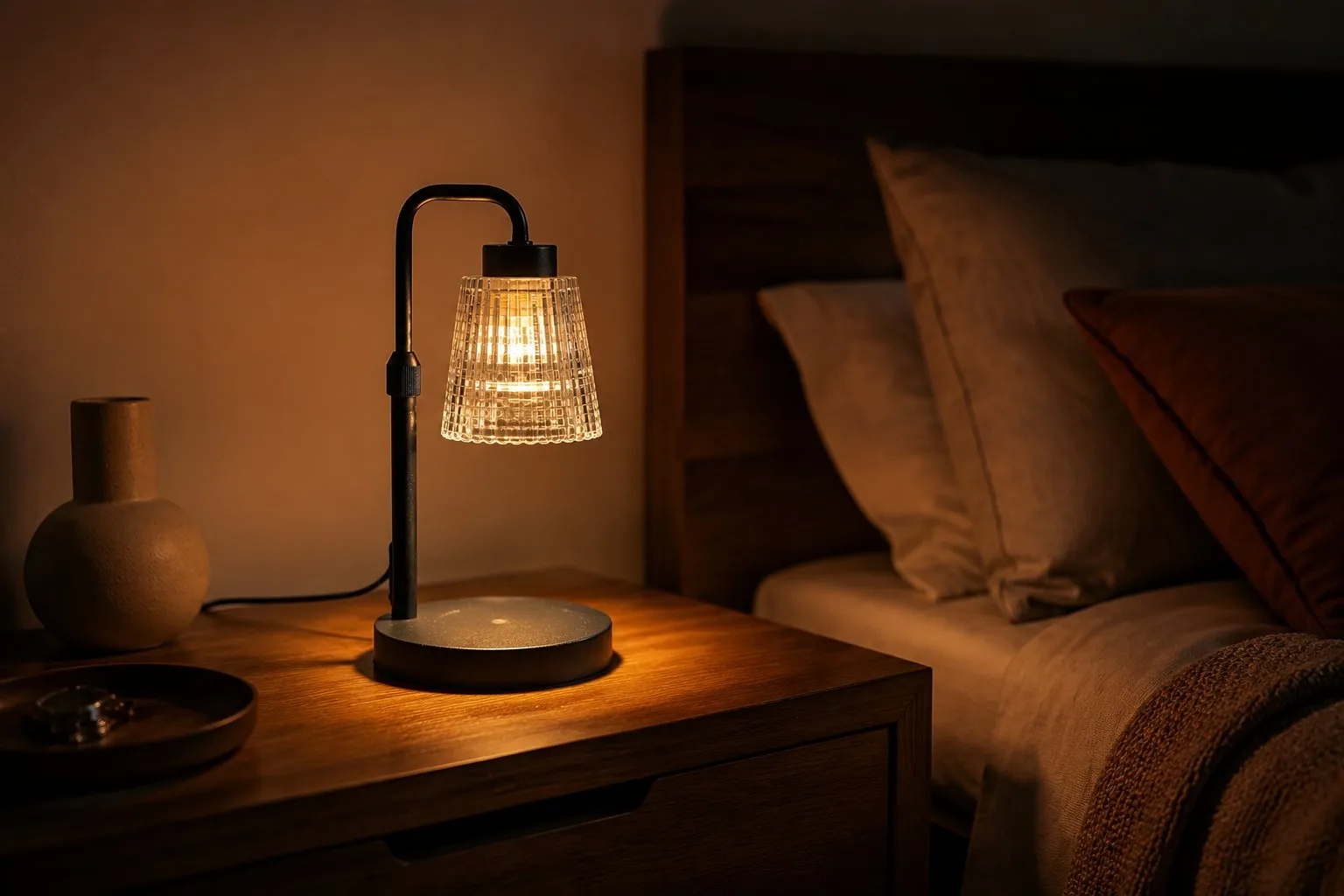
In a bedroom, the layers map onto real fixtures cleanly. Ambient can be a ceiling fixture, a pair of wall lights, or even bounced light; task is usually a bedside or reading lamp aimed where you actually look; and accent is where the character lives, from a warm table lamp to a strip tucked behind the headboard. The two rules that keep it restful rather than clinical are simple: keep the evening color warm, and keep the brightest light down at task height near the bed instead of blazing from the ceiling. Everything below is a way to apply that. For the accent layer, a green ceramic table lamp with a frosted glass dome adds a soft, warm glow without a harsh source.
02Why layer light instead of using one ceiling fixture?
One ceiling fixture forces a single compromise on the whole room: bright enough to find your keys, which is far too bright to wind down under. Overhead light also falls straight down, flattening the space and throwing hard shadows onto exactly the surfaces you use, like the bed and the nightstand. Layering solves both problems by giving you separate sources you can switch and dim independently, so the room is not stuck at one brightness or one mood.
The practical payoff is that a layered bedroom has scenes instead of an on-off switch. Morning wants the ambient layer up and cool-ish for energy; the last hour before bed wants the ambient layer off, one warm task lamp low, and maybe a soft accent glow. That flexibility is the whole reason to layer, and it costs nothing extra once the fixtures are on different switches.
One bright ceiling light
- One brightness for every mood, morning to midnight
- Flat, top-down light with hard shadows on the bed
- Too bright to wind down, glary when lying down
- No way to shift the room from work to rest
A layered bedroom
- Ambient, task, and accent on separate switches
- Light at eye and task height, not just overhead
- Dim warm scenes for evening, bright for mornings
- One room that adapts from practical to restful
03How much light does each part of a bedroom need?
Different bedroom jobs need very different amounts of light, and the gap is bigger than most people guess. Lighting levels are measured in footcandles (or lux, where one footcandle is about 11 lux), and the IESNA Lighting Handbook, the standard reference published by the Illuminating Engineering Society, gives working ranges by activity. Simply moving around a dim hallway to the bed needs only about 5 to 10 footcandles, while a general bedroom sits near 20 to 30, and reading in bed climbs to roughly 30 to 50 (IESNA Lighting Handbook, via Archtoolbox, retrieved 2026-07-19). Detailed grooming at a vanity is brighter still, closer to 80 footcandles (IES, via Super Bright LEDs, retrieved 2026-07-19).
The reason layering works falls straight out of those numbers: no single fixture can be both the 5-footcandle wander-to-bed light and the 80-footcandle vanity light. You need a bright, focused source where the detailed work happens and a much dimmer wash everywhere else. Treat these figures as guideposts, not rules, since comfortable brightness shifts with age and personal taste, but the relative spread, roughly ten times more light at the mirror than in the walkway, is what the fixtures have to deliver.
How much light each bedroom job wants
Recommended light levels by activity, in footcandles; higher bars mean more light on the task
Source: IESNA Lighting Handbook, Illuminating Engineering Society (hallway, ambient, and reading ranges via Archtoolbox); vanity task level of about 80 fc from IES residential levels via Super Bright LEDs. Retrieved 2026-07-19.
04What color light is best for a bedroom?
For a bedroom in the evening, warm white light around 2700K is the best color, the amber, candle-like end of the scale. Color temperature is measured in kelvin, and it runs backwards from what you might expect: lower numbers are warmer and more orange, higher numbers are cooler and more blue (Lumens, Understanding Kelvin Color Temperature, retrieved 2026-07-19). You rarely have to think in raw numbers, because bulb boxes translate them into plain labels like soft white and daylight. For a restful room, you want the soft, warm labels for anything you use at night.
This is not only about taste. Warm, dim light is the sleep-friendly end of the spectrum, while bright blue and cool white light keep you alert (Sleep Foundation, retrieved 2026-07-19); the deeper reason is that warm tones leave the sleep hormone melatonin alone, which is covered in our guide to the best light color for sleep. The nuance worth keeping is that color is only half of it: a warm 2700K bulb blazing at full output is still less restful than the same bulb turned down low, so warmth and dimness work together.
| On the box | Color temperature | Tone | Where it fits in a bedroom |
|---|---|---|---|
| Soft / Warm White | ~2700K | Amber, candle-like | Bedside, accents, wind-down evenings |
| Warm White | ~3000K | Soft warm white | General ambient, relaxed evenings |
| Bright / Cool White | 3500K to 4100K | Neutral, a little blue | Vanity and closet detail, daytime |
| Daylight | 5000K to 6500K | Crisp, blue-white | Morning energy only; not before bed |
05Matching ambient, task, and accent to real bedroom fixtures
Once the three layers make sense, the ideas write themselves: pick one fixture for each layer and let them overlap. The ambient layer is your quiet baseline, a ceiling light or a pair of wall sconces on a dimmer. The task layer goes where you do close work, which in most bedrooms means adjustable reading lamps or wall-mounted swing arms flanking the bed, plus a bright, cooler light at the vanity. The accent layer is where a room stops looking lit and starts looking designed.
The task layer at the bed is largely a sizing question; see how tall bedside lamps should be for the height and shade-size rules a buyer can put on a spec sheet.
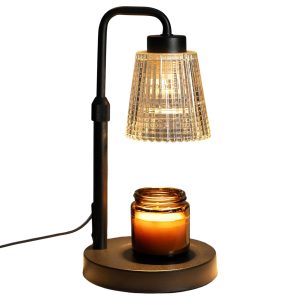
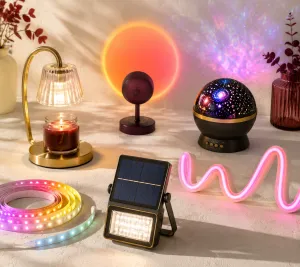
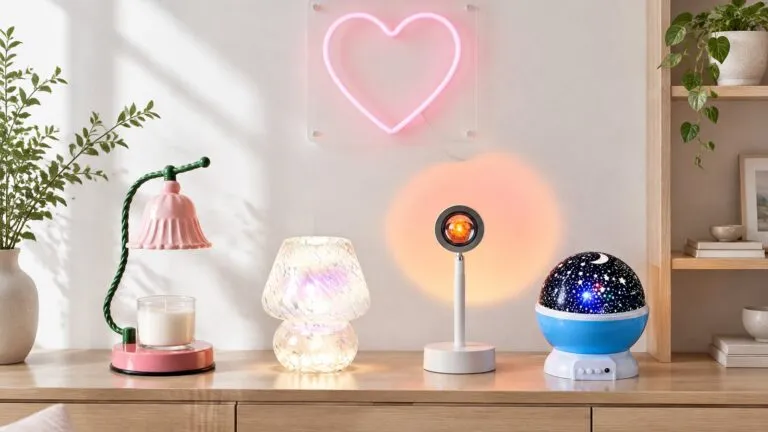
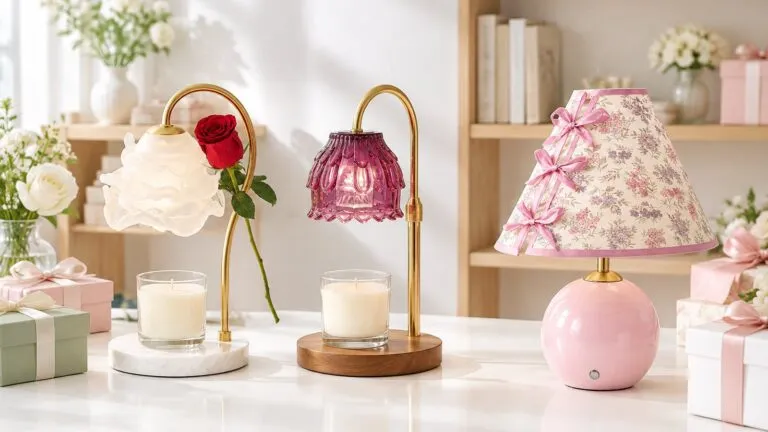
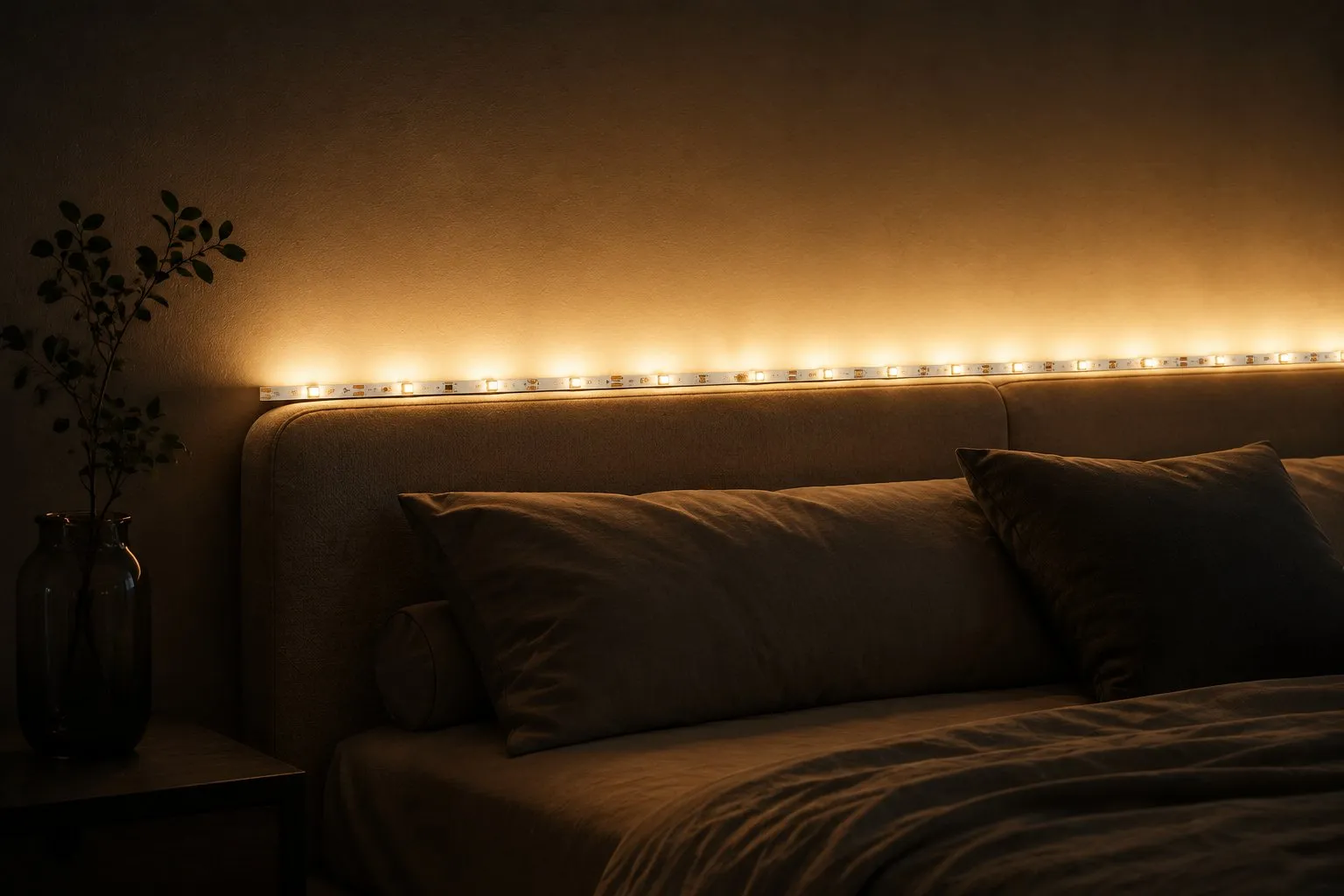
Accent is also where the most-searched bedroom pieces live. A bedroom mood lamp, whether a simple warm-glow table lamp, a sunset projection lamp that washes a wall in amber, or a warm-scented candle warmer lamp, adds a low pool of character light the ceiling never could. For hidden glow, an LED light strip tucked behind the headboard or under the bed frame turns a plain wall into soft indirect light; an LED strip bedroom setup like that reads as accent, not gadget, once the diodes stay out of sight. And projection light, from a sunset lamp or a starlit ceiling by way of galaxy and star projectors, is accent that also entertains, as long as you lean on the warm, dim modes near bedtime.
| Layer | Its job | Bedroom fixtures that fit |
|---|---|---|
| Ambient | Overall glow to move by | Ceiling light, wall sconces, bounced or cove light on a dimmer |
| Task | Focused light for close work | Bedside reading lamps, swing-arm wall lights, a brighter vanity light |
| Accent | Warmth, depth, and mood | Mood lamp, sunset projector, LED strip behind the headboard, candle warmer lamp |
06Building a layered bedroom, step by step
You do not need a renovation to layer a bedroom, just a short sequence that moves the room from one harsh fixture to warm, adjustable scenes. Start with the tone, then add the layers one at a time, and finish by putting them on controls you will actually use. The four steps below are the whole method, and they work in a rental as well as a build.
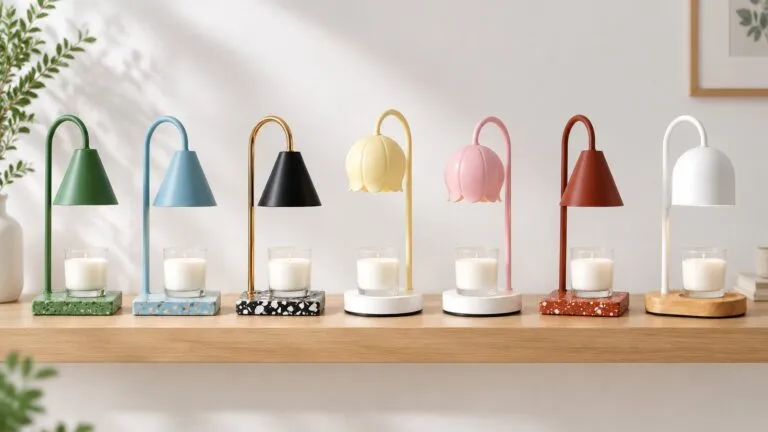
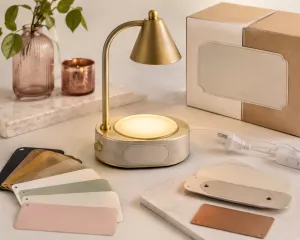
For a store, studio, or hotel fitting out this exact look at scale, the sourcing question is whether one partner can supply the whole warm, layered range at once. BeginLighting builds and private-labels bedroom mood lighting on its own Foshan lines, including sunset projection lamps, smart LED light strips, and our best-selling candle warmer lamps, packed gift-box ready so an opening order can span several formats. Prices are quoted per project rather than listed, which is why the next step is a quote rather than a cart.
Source a warm, layered bedroom range
Sunset projection lamps, smart LED light strips, warm bedside pieces, and best-selling candle warmer lamps in sleep-friendly warm tones, gift-box ready. Built and private-labeled on our own Foshan lines, alongside the wider cozy-home range. Prices are quoted per project.
FAQ
What are the best bedroom lighting ideas?
The best bedroom lighting ideas start with layering: combine an ambient layer for overall glow, a task layer for reading and dressing, and an accent layer for warmth and character, instead of leaning on one bright ceiling light. Keep the evening tones warm, around 2700K, and put the brightest light where you actually do close work, such as beside the bed. Layering this way lets a single room shift from bright and practical in the morning to soft and restful at night.
What is the best lighting for a bedroom?
The best lighting for a bedroom is warm, dimmable, and split across a few sources rather than one overhead fixture. A soft ambient layer sets the mood, a focused reading light handles close tasks, and low accents add depth without glare. Warm white bulbs near 2700K suit the evening, while a cooler, brighter light works better at a vanity or in the morning, so put the two on separate switches or dimmers.
Where should you put LED strips in a bedroom?
The most popular spots for an LED strip in a bedroom are behind the headboard, under the bed frame, along the back of a floating shelf, and above or below a wardrobe. The trick is to hide the strip itself so you see the glow and not the row of diodes, which turns it into soft accent light rather than a gadget. Choose a warm white strip for a restful room and keep it dimmed low in the evening.
Is a bedroom mood lamp worth it?
A bedroom mood lamp earns its place because it covers the accent and ambient layers at once, adding a low pool of warm light that a bright ceiling fixture cannot. Options range from a simple warm-glow table lamp to a sunset projection lamp that washes a wall in amber, or a candle warmer lamp that adds gentle scent alongside the glow. Any of them reads as calming as long as the tone stays warm and the brightness stays low near bedtime.
What color temperature is best for a bedroom?
For the evening, aim for warm white around 2700K, the amber, candle-like end of the scale that signals wind-down. Save cooler, brighter light near 4000K or higher for morning routines and vanity tasks where you need to see detail. Because kelvin runs backwards from what many expect, lower numbers are warmer, a quick check is to read the bulb box for soft or warm white rather than daylight for anything you use at night.
Sources
- American Lighting Association, Lighting Your Life (three layers of light: ambient, task, accent; accent most effective at about three times the brightness of the surrounding space), via 1000Bulbs, retrieved 2026-07-19.
- Archtoolbox, Recommended Lighting Levels, citing the IESNA Lighting Handbook, Illuminating Engineering Society (corridor 5 to 10 fc / 50 to 100 lux; dormitory living quarters 20 to 30 fc / 200 to 300 lux; reading and studying 30 to 50 fc / 300 to 500 lux), retrieved 2026-07-19.
- Super Bright LEDs, Home Lighting Guide: IES Residential Recommended Lighting Levels (bedroom about 20 fc; bathroom vanity task about 80 fc; kitchen general 40 fc, task 70 fc), retrieved 2026-07-19.
- Lumens, Understanding Kelvin Color Temperature (lower kelvin is warmer; soft white about 2700K versus daylight about 5000K labeling), retrieved 2026-07-19.
- Sleep Foundation, What Color Light Helps You Sleep? (warm red, orange, and yellow tones are the most sleep-friendly; bright cool and blue light keep you alert), retrieved 2026-07-19.
Merchandising ambient lighting bedroom sets at retail
Ambient lighting bedroom is what a shopper types when a room feels harsh and they do not yet know the word layering. That gives a retailer a very direct merchandising job: put the whole answer on one shelf instead of spreading it across three aisles. A bedside warm-glow lamp, a compatible dimmable bulb and one soft accent piece answer the entire request, and the shopper who buys all three is far less likely to return any of them than the shopper who buys a single fixture and finds the room still feels wrong.
- Group by the mood outcome rather than by fixture type: this shopper is browsing for warm and calm, not for table lamps.
- Hold every item on the shelf inside the same warm color-temperature range, so nothing clashes once the shopper combines them at home.
- Pair each dimmable fixture with a compatible bulb on the same shelf, because mismatched dimming is a leading cause of returns in this category.
- Keep one flame-free warm-glow anchor in the set for rentals and dorms where candles are prohibited.
The warm-glow anchors in that set, candle warmer lamps plus the bulbs and wax accessories that pair with them, are our own production, and so is the LED strip that runs alongside them. Tell us how you want the bedroom shelf built and we will quote the combination, packaging and carton configuration through Request a Quote.
