






How tall should bedside lamps be? Most listings answer with one overall height, and that number cannot settle it: what decides whether a lamp works beside a bed is where the lower rim of its shade lands relative to someone sitting up against the pillows. That depends on the bed and the nightstand more than on the lamp, which is why a height mistake only shows once the lamp is in the room.
This guide is for people who buy these lamps by the carton: home and gift buyers deciding how many height tiers to carry, hotel FF&E teams sizing one lamp to one bed, and online sellers whose listing has to survive a customer’s tape measure. It covers a rule you can run from two measurements, shade and base proportions, when a taller lamp is right, and the four sizes a quotation needs. The lamps we build for these programs sit in our bedside table lamps range.
Two neighbouring questions live elsewhere: which lamp belongs on a nightstand, a dresser or the floor is in our bedroom mood lamp guide, and how a table lamp layers with ceiling and accent light is in bedroom lighting ideas. This page stays with inches.
Key takeaways
Size a bedside lamp by where its shade rim lands above the mattress, then check shade and base against the nightstand’s width and depth. Overall height follows from those two; it is not the place to start.
- Lamps Plus puts the shade rim about 20 inches above the mattress and calls 26 to 28 inches the usual lamp; it does not say what posture that assumes.
- Sitting upright, adult eyes are 27 to 33 inches above the seat (1988 US Army survey, 5th-percentile women to 95th-percentile men).
- Published lamp heights run from 22 to 27 inches up to 26 to 30 for a king bed; one combined-height rule implies 34 to 40 inches on a 24-inch nightstand.
- Mattress tops span roughly 22 to 31 inches on typical frames, so a retail line needs at least two height tiers.
- Quote four sizes: overall height, rim height, shade diameter and base footprint, approved on a lit pair.
One Rule: Put the Shade Rim Where a Seated Reader’s Eyes Are
The working answer is a position, not a length: the lower rim of the shade should sit at or just below the eyes of someone sitting up in bed, measured from the mattress top rather than the floor.
Lamps Plus, one of the larger US lighting retailers, turns that into a number. Its table lamp guide, checked in September 2026, puts the base of the shade on a bedside lamp about 20 inches above the top of the mattress and says a lamp 26 to 28 inches tall including the shade usually does the job (Lamps Plus). It adds the test that matters on a sample: sitting or standing, you should never see the neck of the lamp or the bulb.
The reasoning is optical. Set the rim well below the reader’s eyes and the direct light from the open bottom of the shade lands on the nightstand, leaving the page with whatever filters through the fabric. Set it above the eyes and the reader looks up into the bulb. The band between those failures is narrow, and it moves with every inch the mattress or nightstand changes.
The 20-inch figure is worth testing against real bodies. In the 1988 anthropometric survey of US Army personnel, as tabulated by the NC State University Ergonomics Center, sitting eye height ran from 26.95 inches for a 5th-percentile woman to 33.39 inches for a 95th-percentile man, with medians of 29.06 and 31.19 inches (NC State Ergonomics Center). Those figures were taken sitting upright. A reader in bed reclines and sinks into the mattress, so their eyes sit lower by an amount the pillows decide. Lamps Plus does not say what posture its 20 inches assumes, but the gap to the survey medians is consistent with someone leaning back rather than sitting erect.
Source: Lamps Plus; Chairish; NC State University Ergonomics Center, from Gordon et al. (1988), retrieved 2026-09-29
Two consequences follow. A guest room with a tall, firm headboard, where people read sitting straight, needs a higher rim than a bedroom heaped with pillows. And the rule is a starting point for a mock-up, not a specification to sign without one.

From Two Measurements to a Lamp Height
Whether the brief asks how tall should nightstand lamps be or how tall should bedside table lamps be, the arithmetic is the same and needs two numbers from the room: the made-up mattress top and the nightstand top.
The conversion is one line: rim height on the lamp, measured from the underside of its base, equals mattress top plus rim target minus nightstand top. A 26-inch mattress top and a 20-inch target put the rim 46 inches off the floor, so on a 24-inch nightstand the lamp must carry its rim 22 inches above its own base. Shade and finial sit above that and set the overall height a listing quotes.
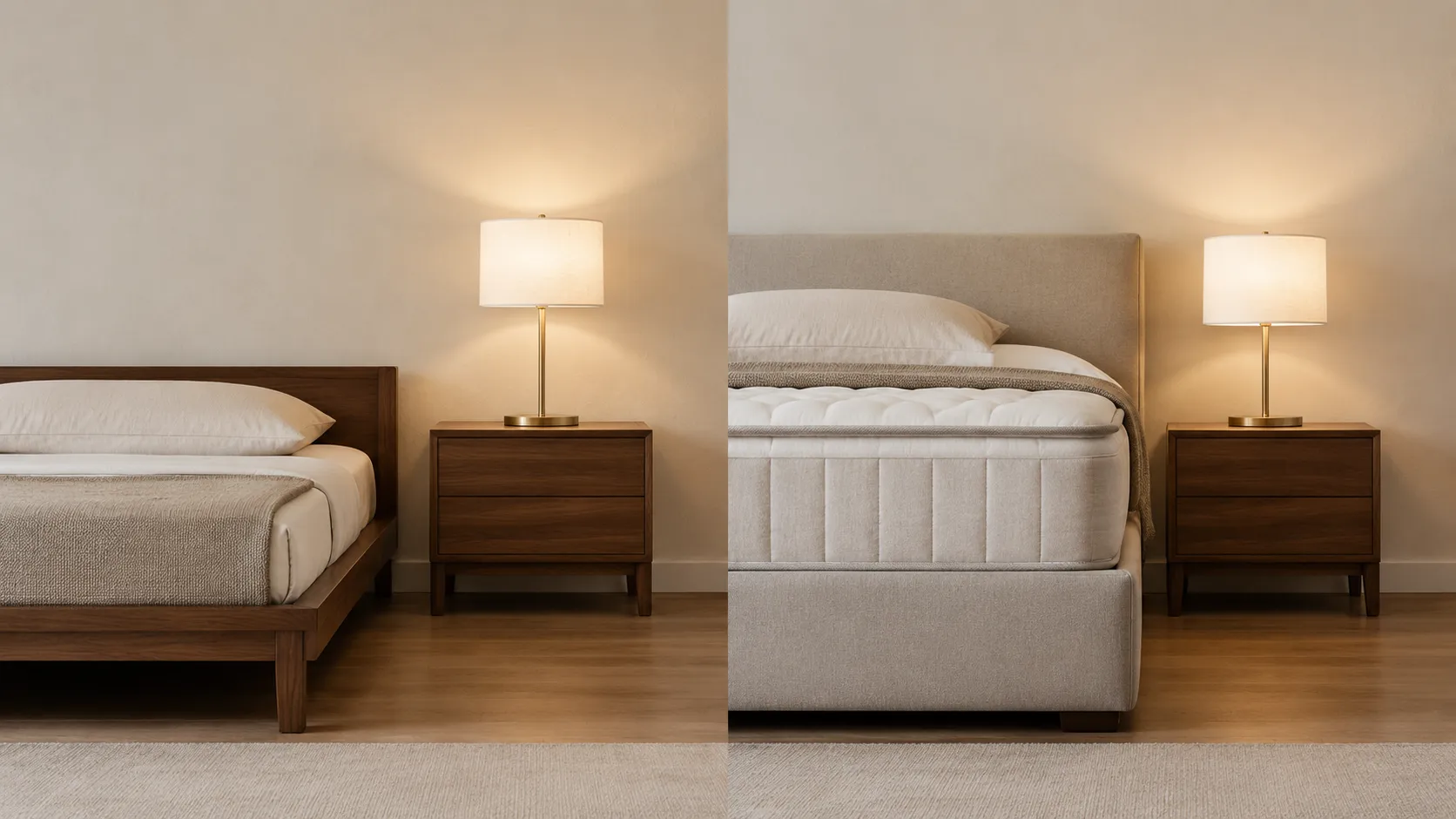
Real beds spread widely. The Sleep Foundation describes a typical frame as knee-level, about 12 to 16 inches tall, carrying a standard mattress of 10 to 15 inches (Sleep Foundation, updated May 2026). Together that puts mattress tops at roughly 22 to 31 inches before a topper. Hold lamp and nightstand constant and that nine-inch spread moves the rim from 20 inches above one mattress to 11 above another. The shopper blames the lamp.
The arithmetic also exposes an oddity. The two Lamps Plus numbers, a rim 20 inches above the mattress and a lamp 26 to 28 inches tall, agree only if shade and finial take up 6 to 8 inches, or the nightstand stands higher than the mattress. Neither is guaranteed, so the table works in rim heights first.
| Setup | Mattress top | Nightstand top | Rim from floor | Rim height on the lamp | Overall, if shade and finial add 8 to 12 in |
|---|---|---|---|---|---|
| 12 in frame, 10 in mattress, taller nightstand | 22 in | 26 in | 42 in | 16 in | 24 to 28 in |
| 12 in frame, 10 in mattress, matching nightstand | 22 in | 22 in | 42 in | 20 in | 28 to 32 in |
| 14 in frame, 12 in mattress | 26 in | 24 in | 46 in | 22 in | 30 to 34 in |
| 16 in frame, 15 in mattress | 31 in | 24 in | 51 in | 27 in | 35 to 39 in |
| 16 in frame, 15 in mattress, tall nightstand | 31 in | 30 in | 51 in | 21 in | 29 to 33 in |
Mattress tops are sums of the Sleep Foundation ranges; nightstand heights are example inputs, and the last column is a working assumption about shade and finial, not a product specification. The direction is the point: only the low bed beside a taller nightstand lands the published 24-to-28-inch lamps in the right band. Tall beds need taller lamps or taller nightstands.
Why the Published Height Rules Disagree
Ask design sources for a bedside height and you get overlapping ranges plus rules that contradict each other, because they measure different things.
Designer Bobby Berk, in a guide dated August 2026, puts bedside lamps at around 22 to 27 inches, or the nightstand’s height plus 2 inches (Bobby Berk). Lighting New York suggests 24 to 28 inches for a queen bed and 26 to 30 for a king. Maria Killam, writing in November 2020, pushes back on small bedroom lamps and asks why so many people assume a 28-inch lamp is too tall for a bedroom (Maria Killam). A Chairish post from September 2023 gives four answers on one page: two-thirds of the nightstand’s height, two or three inches taller than the nightstand, no more than 1.5 times its height, and 58 to 64 inches for nightstand and lamp combined (Chairish). On a 24-inch nightstand that is 16 inches, 26 or 27 inches, a 36-inch cap, and 34 to 40 inches.
Source: Bobby Berk; Lighting New York; Lamps Plus; Chairish, retrieved 2026-09-29
The split is between proportion rules and position rules. “About as tall as the nightstand, plus a little” describes how lamp and table read from the doorway; the rim rule describes what happens at the pillow. For a lamp people read by, position wins. For an accent lamp, proportion wins. Our mushroom glass table lamp is the second kind: its product page describes a decor-led glow meant to be seen, not a reading or task light, so the sight line across the room sets its height.
One limitation cuts against every figure here, ours included. The eye-height data is a 1988 military sample measured sitting upright rather than reclining, and we could not find an equivalent published for people reading in bed, so any rim target is an estimate until someone sits on the actual mattress. The fix is cheap: before a multi-room order, put one lamp on one real nightstand beside one made-up bed and look from the pillow.
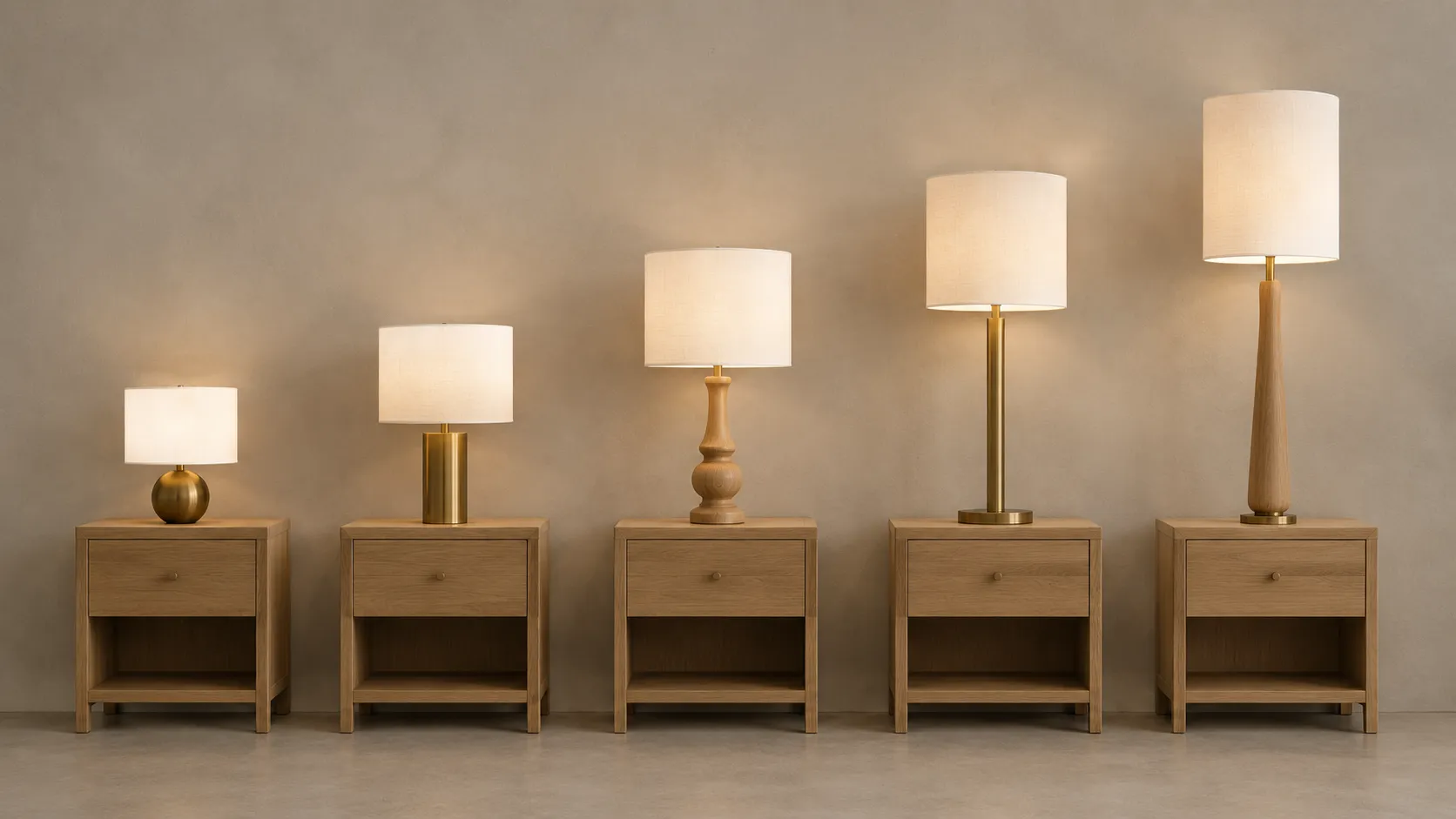
What Size Lamps for Bedside Tables: Shade Diameter and Base Footprint
Height is half the fit. Width and depth are the other half, and they decide whether the lamp stays on the nightstand or ends up on the dresser.
Three proportion rules circulate, and they disagree. Bobby Berk keeps the lamp to about one-third of the nightstand’s width at its widest point. The Lamps Plus shade guide ties the shade to the lamp instead: roughly one-third the height of the lamp body, up to one-half on tall modern designs, about as wide as the visible height of the base, and wider than the widest part of the body (Lamps Plus). Chairish wants the shade twice the width of the base. On a 24-inch-wide nightstand the one-third rule allows about 8 inches, a small shade, while Maria Killam wants a nightstand at least 28 inches wide. The rules describe different rooms.
Depth causes more trouble and gets written down less. Nightstands are usually shallower than they are wide, and a shade wider than the top is deep either touches the wall or hangs over the mattress edge, where an elbow or a half-asleep grab for the alarm knocks it. Measure depth first; hotel headboard walls rarely let a nightstand stand clear of the wall.
The base competes with a phone, a glass, a book and a charger. Our mood lamp guide puts it plainly: a base wider than a hand span gets moved to the dresser inside a week. A slim column or an open form on a small round foot carries a generous shade without eating the surface.
Our touch dimmable bedside lamp is built that way: a warm fabric shade over a ceramic base, with shade fabric, colour and base finish configured per program. It is offered at capability level rather than as a fixed spec sheet, so its dimensions are confirmed on your quotation. One height-related note on controls: a socket switch sits under the shade, so every added inch moves it away from the pillow, whereas this lamp dims with a tap and has a remote option for dimming from the bed.
When a Taller Lamp Is the Right Call
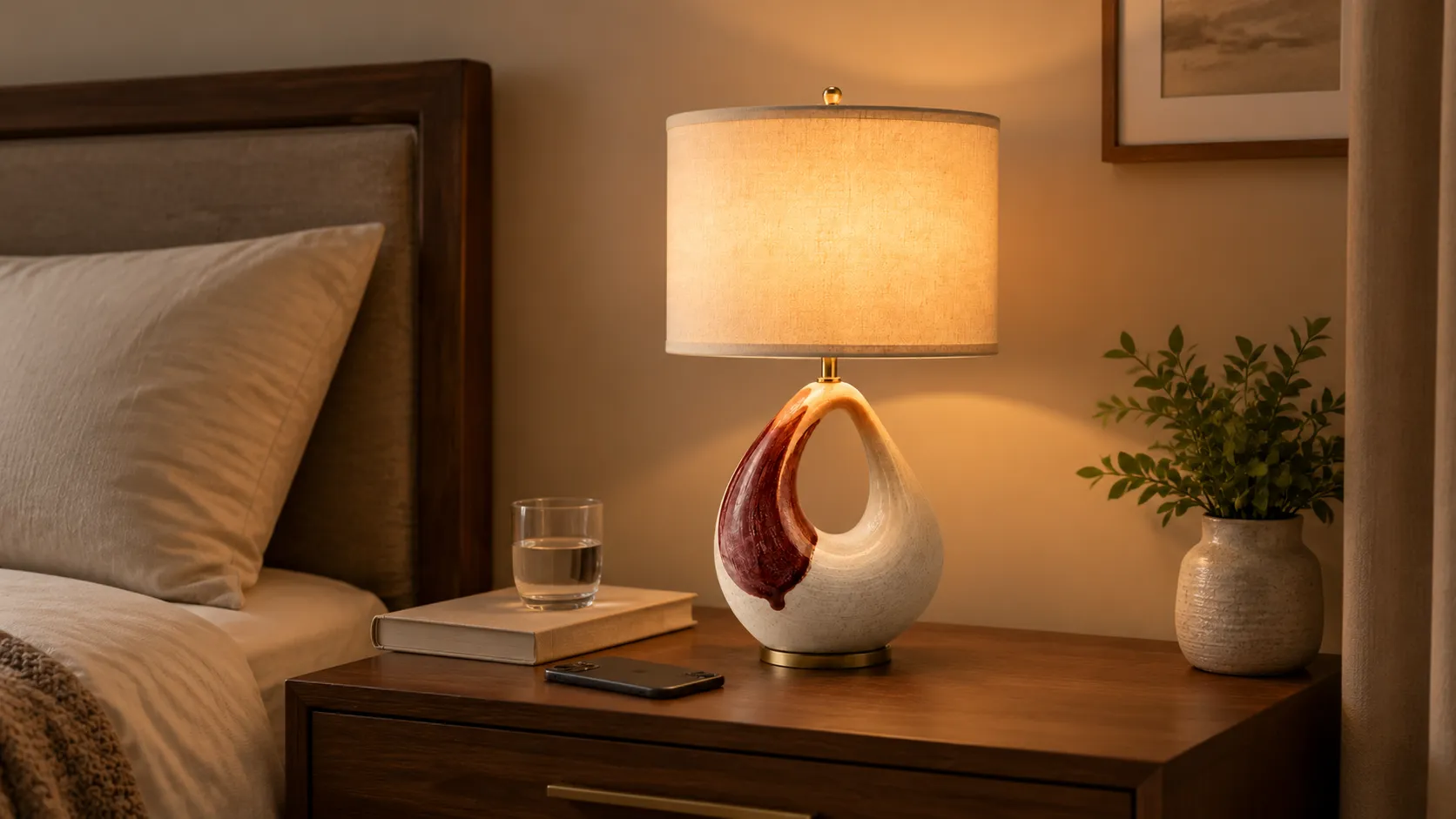
Tall bedroom nightstand lamps earn their place in three situations, and each one comes from the room rather than from taste.
The first is a high mattress. The Sleep Foundation puts the average mattress at 8 to 14 inches and classes 14 inches and up as extra-thick (Sleep Foundation, updated July 2025); on a tall frame with a topper, the mattress top can clear the nightstand by several inches. The rim target is measured from the mattress, so the lamp makes up the difference: in the table above, a 27-inch rim on a 24-inch nightstand, which puts the overall height in the mid-30s.
The second is a nightstand lower than the mattress: a floating shelf, a stool, a vintage chest bought for its looks. Same arithmetic. The third is the reader who sits upright against a tall, firm headboard. Their eyes sit nearer the survey figures than the 20-inch retail rule, and Maria Killam’s point that a lamp taller than the headboard only looks oversized when nothing above the headboard gives it context argues the same way from the proportion side.
Tall lamps carry costs that belong on the quotation. The rim rises above a reclining reader’s eyes, so the bulb shows to anyone lying down; that argues for a deeper shade or a diffuser across the bottom. The centre of gravity climbs, so the base needs weight; our touch lamp’s product page credits its weighted ceramic base with keeping it stable. And a lamp sized for a 31-inch mattress top looks oversized beside a 22-inch one, so say which bed a program was sized for. Where one design must cover several beds, adjustable-height stems are available on selected models in our range.
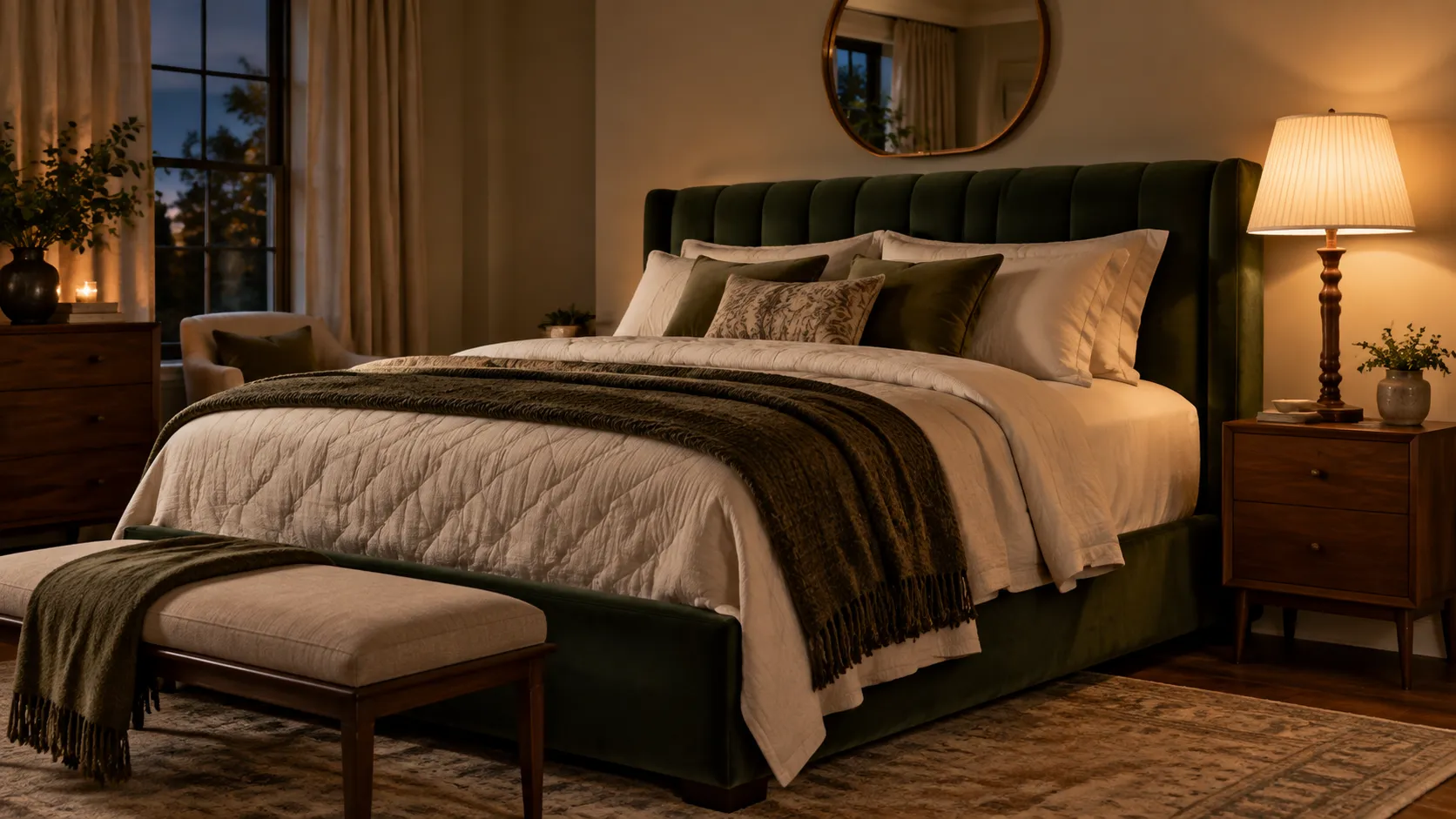
Four Sizes on the Quotation, Confirmed on the Pair
A single number for the height of bedside lamps on a request for quotation invites two suppliers to quote two different lamps. Four dimensions close the gap.
Overall height is the one everybody asks for and the least useful alone, because it bundles base, shade and finial into a figure that says nothing about the rim. Ask for all four, measured the same way on every sample, and sizing arguments move from the receiving dock to the sample stage, where they cost almost nothing.
| Dimension | Measured from and to | What it controls | What goes wrong without it |
|---|---|---|---|
| Overall height | Base underside to top of finial | Proportion against the headboard; carton size | Two quotes for one height describe different lamps |
| Rim height | Base underside to lower rim of the shade | Where light and glare land for the reader | The number the room depends on goes unwritten |
| Shade diameter | Bottom diameter, with top diameter and shade height | Wall and pillow clearance | A shade that hits the wall or overhangs the mattress |
| Base footprint | Widest width and depth at the surface | Room for phone, glass and book; stability | The lamp moves to the dresser in week one |
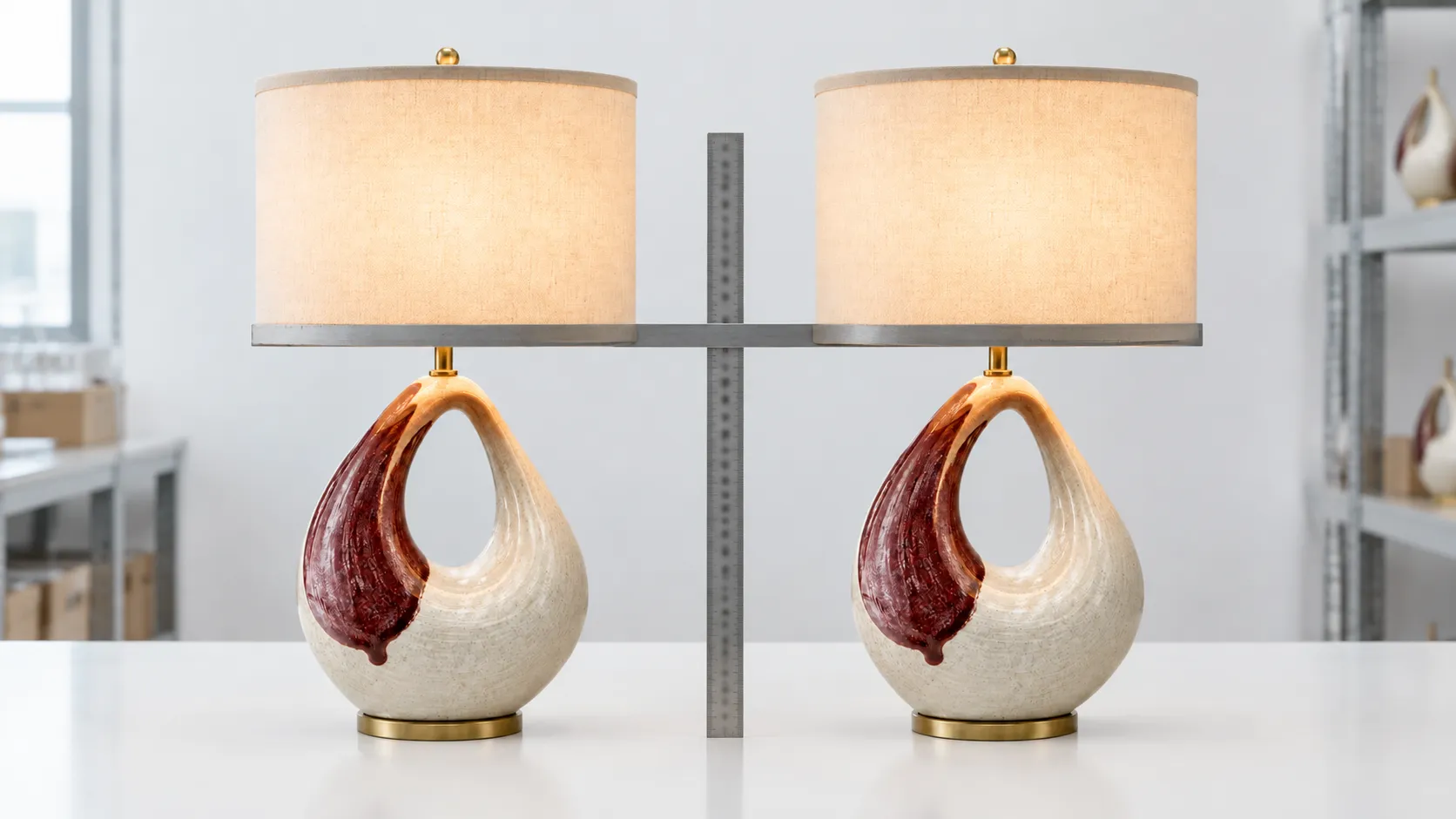
Then confirm them on the pair. A pair of bedside lamps is judged against each other before it is judged against the bed: the eye catches one rim sitting lower on one side of the headboard long before it notices both lamps are an inch too tall. Ask for both lamps from the same production run, measure both rims at sample approval, and put the approved sample’s numbers on the purchase order, not the catalogue’s. On our side, heights and shade diameters are part of the tooling brief, and those dimensions go into the written specification that travels with the PO.
Measure the made-up bed
Floor to mattress top at the pillow end, with the topper and bedding the room will use.
Measure the nightstand three ways
Height, width and depth, plus what else lives on it. Depth is the figure most briefs miss.
Pick the rim target
Start near 20 inches above the mattress for a room of pillows; go higher behind a firm, tall headboard.
Convert it to the lamp
Mattress top plus rim target minus nightstand top gives rim height; shade and finial give the overall.
Fit shade and base to the top
Shade inside the nightstand depth, widest point near a third of its width, and a foot that leaves room.
Approve a lit pair in a real room
Check from the pillow, standing beside the bed and from the door, then write the four numbers onto the order.
Stocking by Height: How Many Tiers a Retail Line Needs
A hotel sizes one lamp for one bed. A retailer sizes for beds it will never see, which turns the height question into an assortment question.
The numbers argue for two tiers rather than one. Mattress tops across the Sleep Foundation ranges span roughly nine inches, and the rim target sits in a band only a few inches wide, so no single lamp serves the whole spread. A standard tier sized for the common bed, plus a taller tier sold openly for high beds and upright readers, covers most of it without a third SKU to forecast. The tall tier moves slower, so carry it in fewer finishes.
Online, the listing does the sizing a store associate would. A shopper asking how tall should bedside lamps be is really asking about their own bed, and only the listing can answer. In a survey published by the National Retail Federation and Happy Returns in October 2025, US retailers estimated that 19.3% of online sales would be returned that year, against 15.8% of their sales overall (National Retail Federation). Those figures cover every category, and we found no public breakdown of lamp returns by cause. Still, a listing that states rim height beside overall height, and shows the lamp next to a bed of stated mattress height, lets the customer run the arithmetic before ordering rather than after delivery.
Colour temperature and sleep are a separate decision, covered in what color light is best for sleep. For the lamps themselves, our nightstand lamps and accent pieces are built to the tiers a buyer specifies, and the four sizes above are the quickest way to brief them.
Have the lamp sized to the bed it will stand beside
We make decorative lamps in our own factory in Foshan: 4,000 square metres, 40 people and two production lines. Send the mattress-top height, the nightstand height, width and depth, and the tiers you want to stock, and we will quote against a written specification and put a working sample in your hands.
Watch it work
Why a lamp that looked right in the listing keeps someone awake, and where the shade rim belongs instead, in 35 seconds:
FAQ
What height lamp suits a 30 inch nightstand?
Start from the mattress, not the table. With a 25-inch mattress top, a 20-inch rim target puts the rim 45 inches off the floor, only 15 inches above a 30-inch top, so the job wants a short body and a shallow shade rather than a tall silhouette. If the mattress sits level with the nightstand, ordinary retail heights work again.
How tall should a bedside lamp be next to a floor bed or a very low platform?
Lower the table before you shrink the lamp. A mattress near the floor puts the reading position so low that an ordinary lamp on an ordinary table throws its light over the reader’s head. A low bench or stool brings the lamp down with the bed, and a shorter body keeps the rim near the same 20-inch target.
Does the overall height on a lamp listing include the finial?
Not reliably. Some sellers measure to the top of the finial, some to the top of the shade, and a few quote the body alone because the shade ships separately. Ask which convention applies, and ask for rim height as its own figure, since overall height minus shade height only gives the rim if the shade sits exactly where the drawing says.
Should a pair of bedside lamps be the same height if the two nightstands are not?
Match the rims, not the lamps. Both lamps serve one mattress, so both shade rims should land at the same height off the floor; if one nightstand stands two inches taller, the lamp on it needs a rim height two inches shorter. Order the pair as two body heights in one finish and one shade size, or level the tops with a riser, rather than buying identical lamps and living with a lopsided pair.
Sources
Every external figure above was checked on 2026-09-29: the shade-rim rule, the shade proportions and the published height ranges from the retailer and designer guides named in the text, seated eye height from the NC State tabulation of the 1988 anthropometric survey, frame and mattress heights from the Sleep Foundation, and return rates from the National Retail Federation. Rim heights, overall heights and the combined-height conversions in the tables and the second chart are our own arithmetic on those figures, and say so where they appear.
- Lamps Plus, How to Find the Perfect Table Lamp (for bedside table lamps the base of the shade should be about 20 inches above the top of the mattress; a lamp 26 to 28 inches tall including the shade usually fits; the neck of the lamp and the bulb should never be visible sitting or standing), retrieved 2026-09-29.
- Lamps Plus, How to Size a Lamp Shade (shade roughly one-third the height of the lamp body, up to one-half for tall modern designs; shade width roughly equal to the visible height of the base; shade wider than the widest part of the body), retrieved 2026-09-29.
- Chairish Blog, How To Decide What Size Lamps For Nightstands, 15 September 2023 (a lamp roughly two-thirds the height of the nightstand; a lamp two or three inches taller than the nightstand; no more than 1.5 times the nightstand’s height; 58 to 64 inches from floor to the top of nightstand plus lamp; shade bottom at or just below eye level, usually around 22-27 inches away from where you’re resting; shade twice the width of the base), retrieved 2026-09-29.
- Bobby Berk, How to Choose the Right Bedside Lamp: Size, Height and Style Guide, 10 August 2026 (lamps around 22 to 27 inches high unless the bed or headboard is very low; alternatively nightstand height plus 2 inches; lamp about one-third the width of the nightstand at its widest point), retrieved 2026-09-29.
- Lighting New York, Find Your Perfect Height: Bedside Lamp Guide (shade bottom approximately at eye level when sitting up in bed; 24 to 28 inches for a queen bed; 26 to 30 inches for a king), retrieved 2026-09-29.
- Maria Killam, Ask Maria: What’s the Right Scale for Bedroom Lamps?, 19 November 2020 (a good end table should be at least 28 inches wide; asks why so many people assume a 28-inch lamp is way too tall for a bedroom; bedside lamps taller than the headboard look oversized only if there is no interest above the headboard to give them context), retrieved 2026-09-29.
- NC State University Ergonomics Center, Anthropometric Detailed Data Tables, excerpted from Gordon, C.C. et al., 1988 Anthropometric Survey of U.S. Personnel (eye height, sitting: women 5th percentile 26.95 in, 50th 29.06 in, 95th 31.27 in, n = 2,208; men 5th 28.94 in, 50th 31.19 in, 95th 33.39 in, n = 1,774), retrieved 2026-09-29.
- Sleep Foundation, Bed Frame Sizes, updated 12 May 2026 (a typical bed frame is knee-level, about 12 to 16 inches tall; a standard mattress is 10 to 15 inches), retrieved 2026-09-29.
- Sleep Foundation, How Thick Should a Mattress Be?, updated 25 July 2025 (the average mattress is 8 to 14 inches tall; extra-thick mattresses are 14 inches or more), retrieved 2026-09-29.
- National Retail Federation, Consumers Expected to Return Nearly $850 Billion in Merchandise in 2025, 15 October 2025 (in the NRF and Happy Returns survey, retailers estimate 15.8% of their annual sales returned, $849.9 billion, and 19.3% of online sales), retrieved 2026-09-29.
