

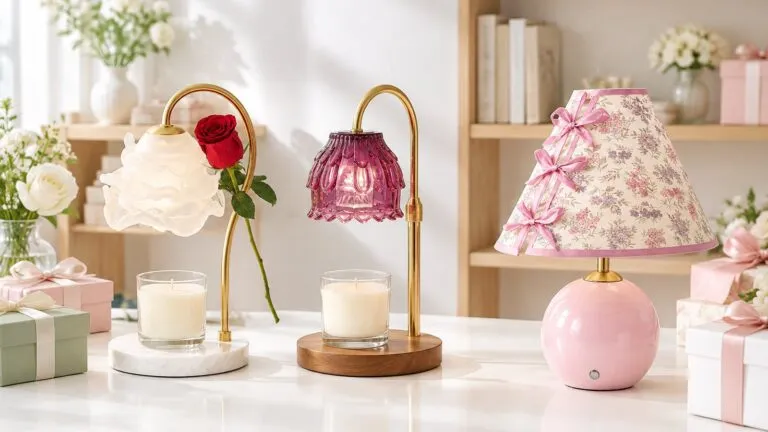

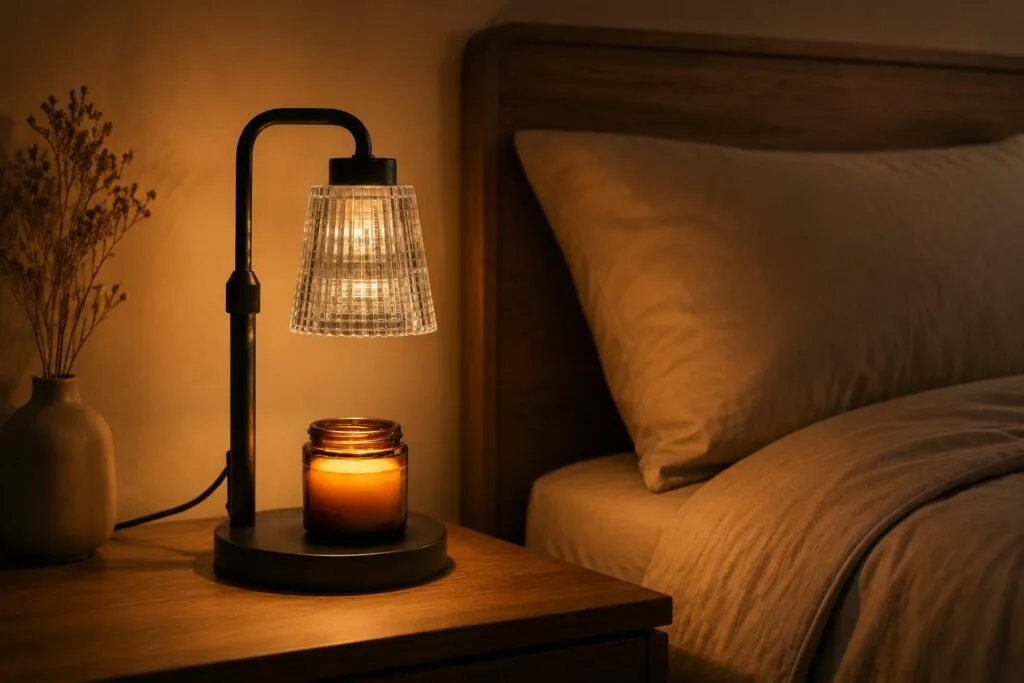
What color light is best for sleep? Warm, dim light at the amber, orange, and red end of the spectrum is the best light for sleep, and bright blue or cool white light is the most disruptive. The reason is not about taste. Your body reads warm, low light as a sign the day is ending, and it reads bright blue light as late-morning sun. Get the color and the brightness right in the last hour before bed, and the room itself starts doing some of the work of settling you down.
Key takeaways
The best light for sleep is warm and dim: amber, orange, or red tones kept low and soft. Cool white and blue light, including phone and TV screens, suppress the sleep hormone melatonin the most, so save bright and blue for daytime and switch to a warm, dim glow in the evening.
- Warm reds, oranges, and ambers are the most sleep-friendly colors; blue and cool white are the most disruptive (Sleep Foundation).
- Blue light suppresses melatonin more strongly and for longer than other colors, and shifts the body clock further (Harvard Health).
- In a 2025 study, evening melatonin recovered under red light but stayed suppressed under blue light (Life, 2025).
- Brightness counts as much as color: as little as 8 lux, dimmer than most table lamps, can have an effect (Harvard Health).
- On a bulb box, choose “soft white” or “warm white” (about 2700K), not “daylight” (about 5000K), for evening rooms.
01What color light is best for sleep?
The best color light for sleep is a warm one: soft red, amber, or orange, kept dim. Warm hues of red, orange, and yellow are better for preparing the mind and body for sleep, while bright, cool colors keep you alert (Sleep Foundation, What Color Light Helps You Sleep, retrieved 2026-07-19). Sleep researchers put it in practical terms too: use dim red lights for night lights, because red light is less likely to shift your circadian rhythm and suppress melatonin (Harvard Health, Blue light has a dark side, retrieved 2026-07-19). Red, in fact, has so little effect on the body clock that it is often called the safest color to keep on at night.
What you want to avoid is the opposite end: bright, blue-rich white light in the evening. That is the light of phone screens, ceiling downlights labeled “daylight,” and cool office panels. It is excellent for waking up and getting things done, and exactly wrong for the hour before bed. The rest of this guide is about why that split exists, and how to set an evening room, a nightstand, or a whole bedroom to the warm, dim side of it. None of this is a medical treatment for a sleep disorder; it is about giving your body the light cues it evolved to read.
02Why does the color of light change how you sleep?
Light color changes your sleep because a special set of receptors in your eyes uses light, and especially blue light, to set your internal clock. Melatonin is the hormone your body releases in darkness to signal that it is time to sleep; a 2018 review in the British Journal of Pharmacology describes it as the body’s chemical message of night, running high after dark and low in daylight (British Journal of Pharmacology, New perspectives on the role of melatonin in human sleep, 2018). Bright light in the evening tells that system it is still daytime, which lowers melatonin and holds you awake.
Not all colors carry that message equally. The eye’s clock-setting receptors are particularly sensitive to blue light (Sleep Foundation, retrieved 2026-07-19), and the effect has been measured directly. Harvard researchers compared 6.5 hours of blue light with green light of the same brightness; the blue light suppressed melatonin for about twice as long and shifted circadian rhythms by twice as much, 3 hours versus 1.5 hours (Harvard Health, retrieved 2026-07-19). Any light at night can lower melatonin, but as Harvard puts it, blue light does so more powerfully.
This is why screens matter so much after dark. Phones, tablets, and TVs are strong, close-range blue-light sources, and exposure to blue light tells the brain to make less melatonin, nudging you toward alertness rather than sleep (American Association of Sleep Technologists, Shedding Light on Blue Light and Sleep, retrieved 2026-07-19). Warm, dim room light pushes in the opposite direction, which is why swapping a bright white lamp for a low amber one can change how a room feels within minutes.
03Is red light really better than blue at night?
Yes, and the gap is measurable. In a 2025 study published in the journal Life, twelve healthy adults sat under either red light at 631 nm or blue light at 464 nm from 9 p.m. to midnight while researchers sampled their saliva every hour (Life, Comparative Effects of Red and Blue LED Light on Melatonin Levels, 2025). Melatonin started out almost identical under both lights, 19.7 pg/mL under red and 19.5 pg/mL under blue, and dropped under both after the first hour. Then the two colors split apart.
After two hours, melatonin under blue light sat at 7.5 pg/mL, while under red light it had climbed back to 26.0 pg/mL, a statistically significant difference (p = 0.019). After three hours the pattern held, 8.3 pg/mL under blue against 16.6 pg/mL under red (p = 0.013). In plain terms, the red-light group’s bodies were allowed to return toward night-time melatonin levels, while the blue-light group stayed suppressed all evening.
Salivary melatonin under red vs. blue light, evening exposure
12 healthy adults, saliva sampled hourly from 9 p.m. to midnight; higher bars mean more of the sleep hormone melatonin
Source: Life (MDPI), Comparative Effects of Red and Blue LED Light on Melatonin Levels During Three-Hour Exposure in Healthy Adults, 2025. Retrieved 2026-07-19.
Two honest caveats keep this in proportion. It was a small, single-evening study of twelve people, and the blue-light effect was strongest in younger participants and in men, so the exact numbers are a signal, not a personal prescription. And red is not a magic switch: the same authorities who favor it warn that if red light is too bright, it can still suppress melatonin (Sleep Foundation, retrieved 2026-07-19). The dependable takeaway is directional and matches the wider research. At night, warmer is gentler, but dim still matters.
04How warm is warm enough? Reading the light on the box
Warm enough usually means a color temperature around 2700K or lower in the evening. Color temperature is measured in kelvin (K), and it runs backwards from what you might expect: lower numbers are warmer and more orange, higher numbers are cooler and more blue (Lumens, Understanding Kelvin Color Temperature, retrieved 2026-07-19). You rarely have to think in raw numbers, though, because bulb boxes translate them into plain labels.
| On the box | Typical color temperature | Tone | Best time to use |
|---|---|---|---|
| Soft / Warm White | ~2700K | Amber, candle-like | Evenings, bedrooms, wind-down |
| Warm White | ~3000K | Soft warm white | Living rooms, relaxed evenings |
| Bright / Cool White | 3500K to 4100K | Neutral, slightly blue | Kitchens, bathrooms, daytime tasks |
| Daylight | 5000K to 6500K | Crisp, blue-white | Offices, focus, morning; not before bed |
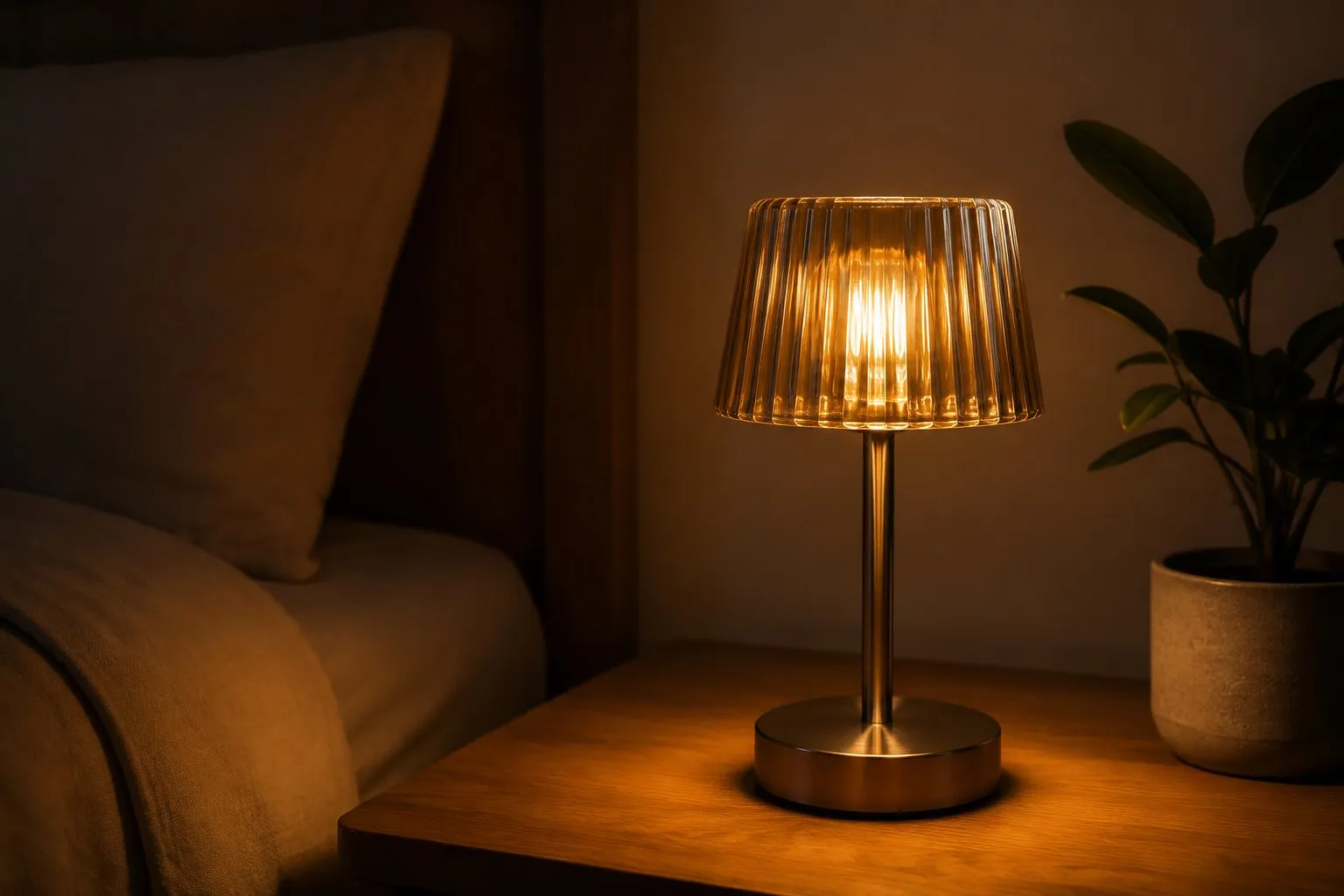
Color is only half of it, though. Brightness counts too. Harvard’s researchers note that as little as eight lux, a level exceeded by most table lamps and about twice that of a night light, is enough to have an effect (Harvard Health, retrieved 2026-07-19). So the evening goal is two things at once: warm and dim. A 2700K bulb blazing at full output is better than a daylight-white one, but a 2700K bulb turned down low is better still. If your fixtures are on a dimmer, the last hour of the day is what it is for. For the last hour before bed, a touch-dimmable bedside lamp makes it easy to keep that warm glow low.
Kelvin is one line on the box; lumens, color rendering, dimming and rated life sit beside it, and the order to read them in is set out in our guide to LED light bulbs.
05Warm vs cool light at night: a simple evening rule
A simple rule covers most of it: warm and dim after sunset, bright and cool during the day. Cooler, bluer light in the morning and at your desk helps you feel awake and focused, which is exactly what you do not want at 10 p.m. Flip the same room to a low, warm setting in the evening and you are giving your body the light cue it expects as night falls.
Warm & dim (evening)
- Amber, orange, or soft-red tone, around 2700K
- Low placement: lamps, not the ceiling
- Turned down; signals the body to wind down
- Screens off or set to warm night mode
Bright & cool (daytime)
- Great for morning energy and focus work
- Blue-rich white keeps melatonin low
- Overhead, high-output light late at night
- Phones and TVs at full brightness before bed
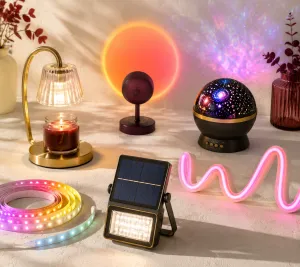
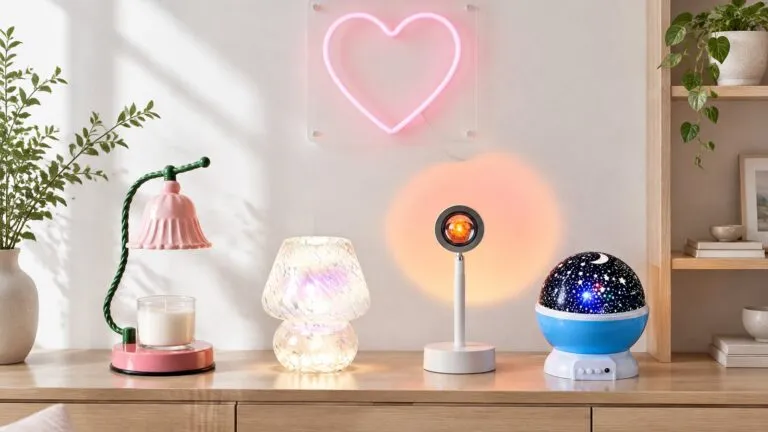
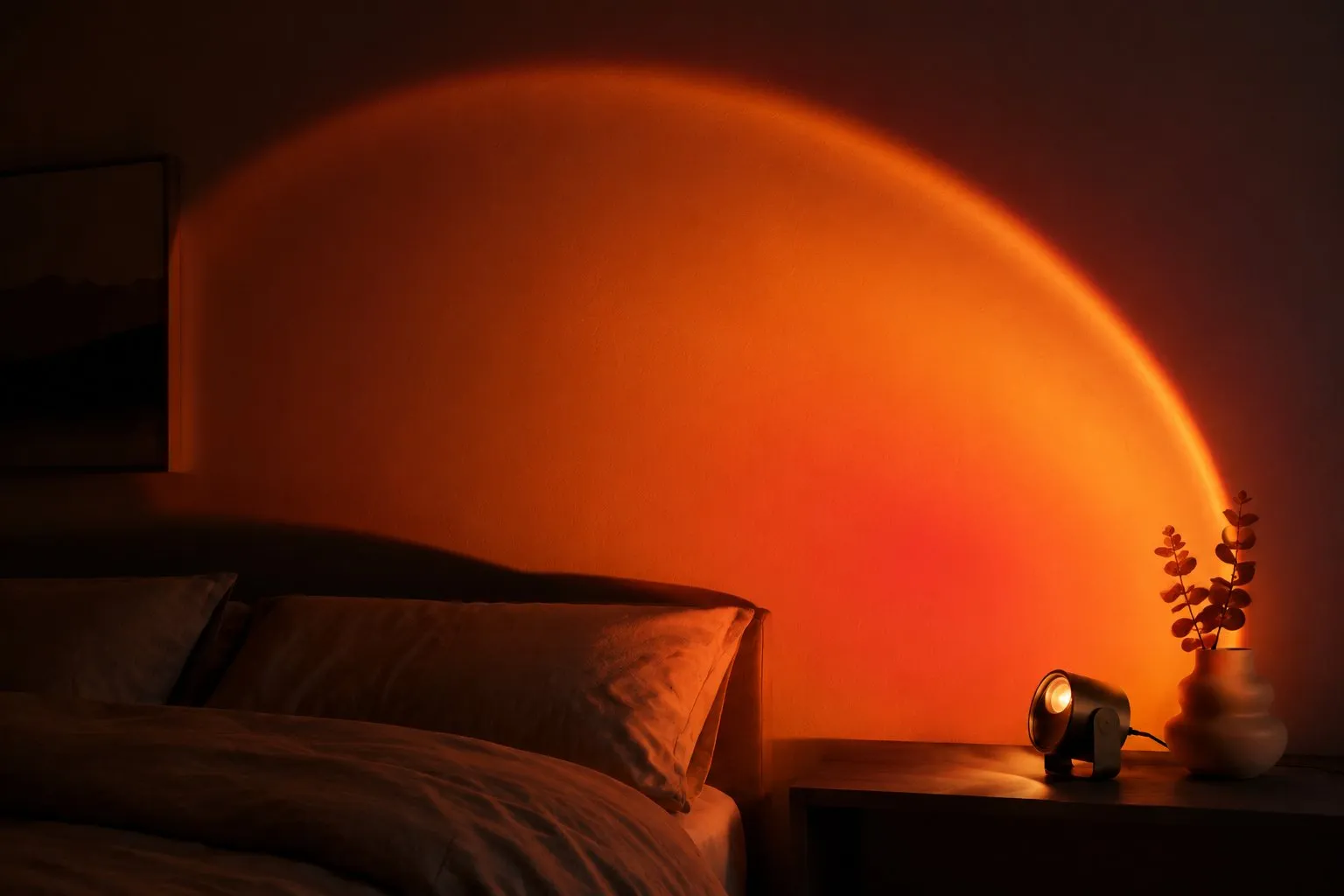
This is also why some of the most popular bedroom gadgets fit the warm rule so naturally. A sunset projection lamp throws a warm amber glow across a wall, close to the color of a real sunset, which is why it reads as calming rather than stimulating. If you prefer a starlit ceiling, galaxy and star projectors can work too, as long as you lean on their warm, dim modes near bedtime and skip the bright blue-white settings. Both sit inside the wider cozy-home lighting range, where warmth is the whole point.
06Building a warm, sleep-friendly bedroom glow
Building a sleep-friendly bedroom is mostly about layering warm, low light instead of relying on one bright ceiling fixture. Start by swapping the harshest bulb in the room for a warm one, then add a small pool of low amber light near the bed for the last hour of the day. The steps below take a room from bright-and-blue to warm-and-dim without a renovation.
For a store, studio, or hotel fitting out this exact mood, the sourcing question is whether one partner can supply the whole warm, cozy-home range. BeginLighting builds and private-labels warm mood lighting on its own Foshan lines, including sunset projection lamps and other soft-glow pieces, packed gift-box ready so an opening order can span several formats at once. Prices are quoted per project rather than listed, which is why the next step is a quote rather than a cart.
Source warm mood lighting, private-label
Sunset lamps and soft-glow pieces in sleep-friendly warm tones, gift-box ready. Built and private-labeled on our own Foshan lines, alongside the wider cozy-home range. Prices are quoted per project.
FAQ
What color light is best for sleep?
The best color light for sleep is a warm, dim one: soft red, amber, or orange. Warm hues keep the sleep hormone melatonin high and leave your body clock alone, while bright blue and cool white light do the opposite and keep you alert. Sleep authorities specifically suggest dim red light for night use because it is the least likely color to disrupt your circadian rhythm.
What light is best for sleep?
The best light for sleep is warm and low, not bright and blue. Aim for a soft amber or orange glow from a lamp turned down, rather than overhead white light or a phone screen. Brightness matters as much as color, so even a warm bulb should be dimmed in the last hour before bed to help your body wind down naturally.
Is red light or blue light better for sleep?
Red light is better for sleep. In a 2025 study in the journal Life, adults under red light in the evening recovered toward normal night-time melatonin, while those under blue light stayed suppressed for hours. Blue light is the strongest color at telling the brain to make less melatonin, so it is the one to avoid close to bedtime.
Does warm white light help you sleep?
Warm white light helps more than cool white, as long as you keep it dim. On a bulb box, warm white is usually labeled around 2700K, versus daylight at roughly 5000K or higher. A low, warm 2700K glow in the evening signals wind-down, but the same bulb at full brightness is far less restful, so warmth and dimness work together.
What color light should you avoid before bed?
Avoid blue and bright cool-white light before bed, which includes most phone, tablet, and TV screens. These are the strongest at suppressing melatonin and holding you in an alert state. If you cannot switch screens off, use a night or warm mode and dim them, and keep any remaining room light warm and low instead of white and bright.
Sources
- Harvard Health, Blue light has a dark side (6.5 h blue vs green: melatonin suppressed ~2x as long, circadian shift 3 h vs 1.5 h; use dim red night lights; 8 lux threshold), retrieved 2026-07-19.
- Sleep Foundation, What Color Light Helps You Sleep? (warm red/orange/yellow best; red does not affect circadian rhythm; eyes most sensitive to blue; bright red can still suppress melatonin), retrieved 2026-07-19.
- Life (MDPI), Comparative Effects of Red and Blue LED Light on Melatonin Levels During Three-Hour Exposure in Healthy Adults (12 adults; red 631 nm vs blue 464 nm, 9 p.m. to midnight; melatonin at 2 h 26.0 vs 7.5 pg/mL, p = 0.019; at 3 h 16.6 vs 8.3 pg/mL, p = 0.013), 2025, retrieved 2026-07-19.
- British Journal of Pharmacology (via NIH PMC), New perspectives on the role of melatonin in human sleep, circadian rhythms and their regulation (melatonin released in darkness, high at night and low in daylight), 2018, retrieved 2026-07-19.
- American Association of Sleep Technologists, Shedding Light on Blue Light and Sleep (blue light tells the brain to lower melatonin; dim or warm-mode screens before bed), retrieved 2026-07-19.
- Lumens, Understanding Kelvin Color Temperature (lower kelvin is warmer; soft white ~2700K vs daylight ~5000K labeling), retrieved 2026-07-19.
Warm light and the bedtime ritual
The color rule only pays off if the light belongs to a routine somebody actually keeps, which is why the wind-down hour matters more than any single bulb. A predictable sequence – lights down, screens away, one warm pool of light near the bed – does for an adult what a bath and a story does for a child: it tells the body the day is closing. Warm, dim light is the easiest half of that sequence to buy, and it is the half a retailer can stock.
In children’s rooms that ritual is where the product mix gets interesting. A bedtime story projector is bought for the story rather than for the lighting spec, but it is switched on in the last twenty minutes before sleep, which puts it squarely inside the wind-down window this guide is about. The same rule applies to it as to any other bedroom light: keep it warm and keep it dim, favour models with a genuinely low brightness setting and an auto-off timer, and skip the bright blue-white modes that undo the routine you just built. A warm night light left on low is a better companion to it than a cool white one.
For a buyer the practical read is that the sleep shelf is a mood shelf: warm-toned night lights, dimmable bedside lamps, sunset-toned glow pieces and the children’s projectors that share the same ritual. Merchandised together they sell as a wind-down set rather than as separate gadgets, and they restock together when they come from one partner.
