



Most datasheets for restaurant table lamps battery operated answer the wrong questions. They quote a lumen figure and a runtime headline, then stay silent on what decides a reorder: how the cell behaves after a year of nightly cycling, whether the housing survives a sanitizer wipe, and whether the batteries inside will clear air freight. This guide covers what a hospitality buyer should specify instead, and which supplier numbers are worth nothing.
The stakes are unusual for such a small object. A dining room may carry dozens of these fixtures, each handled twice a night by a server who is not thinking about lithium chemistry. Specify well and the fleet vanishes into the closing routine. Specify badly and your account inherits a nightly labor task and a drawer of dead units.
Key takeaways
- The IES dining table target is 3 to 6 footcandles; a wax tealight contributes only 0.5 to 1.0. You are replacing an atmosphere object, not a light source.
- Fire codes rarely ban candles. They condition them, with numeric limits on enclosure openings, tip resistance and placement, plus a permit.
- A lamp on a dining table is a nonfood-contact surface under the FDA Food Code, which dictates material, crevices and cleaning frequency.
- Runtime headlines are measured at the lowest dimmer step on a fresh cell. Specify against a service window, temperature stated.
- Ignore the LED lifetime figure. The battery fails first, so negotiate cycle count and field-replaceable cells.
Restaurant table lamps battery operated: what the category has to do
A cordless lamp in a commercial dining room has one job: hold a small, warm, steady pool of light on the table with no cord and no flame. The governing number is illuminance at the plate. The Illuminating Engineering Society recommends 3 to 6 footcandles at the dining table depending on the diner’s age, and a field survey in the society’s LD and A magazine found only 16 percent of restaurants measured met it (Illuminating Engineering Society, 2018).
The same survey is what makes this category commercially interesting. Three quarters of those rooms ran below 1.3 footcandles at the plate, and 18 percent had guests using a phone flashlight to read the menu. A wax tealight contributes only 0.5 to 1.0 footcandles to the plate and 0.3 to 0.5 onto a guest’s face. The fixture you are replacing was never doing the lighting job, only the atmosphere job, inconsistently.
That reframes the brief. You are not specifying a lamp bright enough to light dinner; the ambient layer does that. You are specifying a controllable accent that reads as a flame, holds output all evening, and never drops the plate under the legibility floor the same article puts at roughly 0.4 footcandles.
Source: Illuminating Engineering Society, LD and A, “The Secret Recipe for Restaurant Lighting” (retrieved 2026-08-24)
Restaurant candle lamps without a flame: what fire code actually says
Buyers still search for restaurant candle lamps rather than table lamps, and the vocabulary is telling. The operator wants a candle replacement, so the products that win keep the candle grammar: small footprint, low warm glow, a diffuser near a seated guest’s eye level. The fire-code case is also more specific than the usual claim that candles are banned. In most jurisdictions they are conditioned rather than banned, and the conditions are what make them expensive to run.
New York City writes those conditions out in numbers. Under section 308.5.2 of its Fire Code, a tabletop open-flame device must enclose the flame except for side openings no more than 0.375 inch (9.5 mm) in diameter; the enclosure must be noncombustible and securely attached; the device must return upright after being tilted to 45 degrees; and it must not leak fuel or wax faster than 0.25 teaspoon per minute (1.26 ml per minute) when tipped. Such devices may not sit in any aisle, corridor or component of the means of egress, and the operation runs under a permit or other approval.
Read as a purchasing specification, that is a running cost sheet: compliant holders, a permit relationship with the authority having jurisdiction, per-shift lighting and extinguishing labor, wax consumables, laundry loss, and a placement rule that strips the flame from the zones a host most wants warmed. A battery fixture inherits none of it. Confirm what your accounts’ local code imposes before quoting; requirements differ by city and occupancy class.
Runtime: specify a service window, not a headline number
Runtime is the most quoted and least verifiable figure in the category. A headline hours number is almost always measured at the lowest dimmer step, at room temperature, on a cell that has never been cycled. None of those conditions describes a working restaurant, and that gap is where reorder disputes begin.
Specify against the service window instead: the longest period between a lamp leaving the charging station and a closing server genuinely returning it, which usually runs past published trading hours. Then require runtime at three points, full output, mid step and lowest step, each with the ambient temperature it was measured at, plus a figure taken after a stated number of charge cycles rather than out of the box.
Temperature is the trap on terraces and unheated banquet spaces. A lithium-ion cell that delivers full rated capacity at around 27 degrees Celsius typically delivers only about 50 percent at minus 18 degrees Celsius, according to discharge testing summarized by Battery University. Capacity recovers as the cell warms, so this is a service-night problem rather than damage, but a lamp specified on an indoor number will look broken on a November patio.
Charging architecture: where rechargeable table lamps for restaurants succeed or fail
Ask an operator why a cordless program was abandoned and the answer is almost never the light. It is the dock. Rechargeable table lamps for restaurants split into three charging architectures, and that choice predicts staff compliance better than any other line on the sheet, because compliance comes down to how many deliberate motions a tired closing server performs per lamp.
| Architecture | Motions at close | Back-of-house demand | Typical failure | Best fit |
|---|---|---|---|---|
| Contact tray or rail | One: set it down | Dedicated shelf or trolley | Pins fouled by spillage | Large floors, high turn |
| Individual base | One, per-lamp placement | Scattered, no one station | Bases wander and vanish | Small or mixed rooms |
| Direct cable, USB-C | Two or three: find, align, plug | Power strip and cabling | Skipped units, worn ports | Low counts, back-up stock |
The trade is not simply that trays win. Trays cost more, need a committed footprint many urban kitchens lack, and fail as one unit if the tray dies mid-week. Individual bases are cheap to replace but multiply the small objects a venue must track. Direct cable charging is cheapest to build, and it is where compliance collapses, because it asks for a decision rather than a reflex.
Whichever family you pick, four questions belong in the RFQ before any sample ships. Is the connector proprietary or standard. Can the venue buy spare bases and cables as separate line items, and for how many years. Does a tray charge every position in parallel. And is the cell field-replaceable, or does a dead battery mean a dead lamp. That last one separates a fleet from a consumable, and suppliers answer it least clearly.
Splash, sanitizer and ingress: the food-code lens
A lamp standing on a dining table in a United States food establishment is not decor in regulatory terms. It is a nonfood-contact surface, and the FDA Food Code already describes what it must be. Section 4-101.19 requires nonfood-contact surfaces exposed to splash, spillage or other food soiling, or requiring frequent cleaning, to be built from corrosion-resistant, nonabsorbent and smooth material. Section 4-202.16 requires them free of unnecessary ledges, projections and crevices and designed to allow easy cleaning. Section 4-602.13 requires cleaning at a frequency necessary to preclude accumulation of soil residues (U.S. FDA Food Code, 2022).
That is a design brief, not a compliance footnote, and it quietly disqualifies a lot of attractive product. Knurled seams, fabric shades, deep fluting, an exposed charging-pin recess and a felt base all read as accumulation points to an inspector and as extra seconds to a closing server. Ask for the housing material by name, ask whether the shade is wipeable, and ask the supplier’s protocol for the sanitizer chemistries your accounts use, since quaternary ammonium and alcohol formulations haze some plastics.
Ingress protection is the second half of the same question, and the IP digits are more specific than most quotations admit. Under IEC 60529 the second digit is defined by a test, not an adjective, so ask which test the housing passed and whether the charging contacts were rated separately.
| Rating | Test condition | What it means on a dining table |
|---|---|---|
| IPX4 | Splashing water from all directions, limited ingress permitted | Realistic indoor floor |
| IPX5 | 6.3 mm nozzle, 12.5 liters per minute, 2.5 to 3 m, three minutes | Terrace cleaning, not immersion |
| IPX6 | 12.5 mm nozzle, 100 liters per minute, 2.5 to 3 m, three minutes | Beyond a table lamp’s needs |
| IPX7 | Immersion with the base 1 m below the surface for 30 minutes | Survives a dish pit, where no lamp belongs |
Light quality: color temperature, batch consistency and flicker
Three parameters decide whether the light flatters food and skin: correlated color temperature, color rendering, and how the driver behaves when dimmed. Warm is the easy part. The harder part is that a shipment can be individually within specification and still look wrong across a table of six, because a nominal color temperature is a bin, not a value.
The ENERGY STAR lamp specification is a useful yardstick even for fixtures that will never carry the label, because it turns adjectives into tolerances. It requires chromaticity to stay within a total linear distance of 0.007 on the CIE 1976 chromaticity diagram, holds directional lamps to 0.006 variation across the beam angle, and points to ANSI C78.377-2015 for nominal color temperature quadrangles. Its efficacy table also prices color quality honestly: an omnidirectional lamp rated CRI 90 or above need only reach 70 lumens per watt, while one below CRI 90 must reach 80 (ENERGY STAR Lamps V2.1).
Flicker shows up in guest photography and almost never on a sales sheet. The same document cites IEEE 1789-2015, the recommended practice for modulating current in high-brightness LEDs, as its reference. Cheap constant-current drivers hold steady at full output and modulate heavily at the bottom of the dimming range, precisely where a dining room runs them. Evaluate every sample at the dim step the venue will use, film it with a phone, and reject visible banding.
Lifetime and warranty claims worth challenging
This section argues against the habits of the industry we belong to. A 50,000-hour figure on a cordless lamp datasheet is usually meaningless, and a buyer is better served treating it as a warning sign than a feature.
Two reasons. First, how the projection is built. LED lifetime claims come from LM-80 measured data extrapolated by the TM-21 method, and the Illuminating Engineering Society limits that projection to six times the test duration, so 10,000 hours of LM-80 data supports 60,000 hours and no more. The IES states plainly that claims exceeding that limit are misleading and not supported by its standards, and adds that lumen maintenance life should not be the sole metric for luminaire lifetime (IES PS-10-18, 2018). Very few cordless lamp suppliers, ours included, can hand you the underlying LM-80 report.
Second, and more decisive here: in a battery lamp the diode is not what fails. The cell is. A lamp cycled nightly ends its useful life when the battery stops covering a service window, long before the LED dims to 70 percent of initial output. So the number worth negotiating is not L70. It is cycle count to a stated retained capacity, whether the cell is field-replaceable, and how long replacement cells stay available. Put those three in the warranty language, not the brochure.
Hotel led lighting: specifying the table lamp as part of a set
Restaurants inside hotels rarely buy in isolation. When a property refreshes, table lamps land in the same package as guest-room bedsides, corridor fittings, banquet uplighting and terrace pieces. A hotel led lighting specification that locks color temperature, dimming behavior and finish family across every fixture type is what makes a property read as designed. One assembled from four suppliers over two years reads as assembled.
Two consequences follow for a distributor quoting a property. Match color temperature across fixture families before optimizing any single item, because the dining-room lamp is usually chosen by the food and beverage team rather than the design team, and is the piece most likely to clash with its room. And batch the cordless items: every battery fixture on the property, from dining tables to buffet stations and spa rooms, shares one charging process, one rotation stock calculation and one spare-parts list.
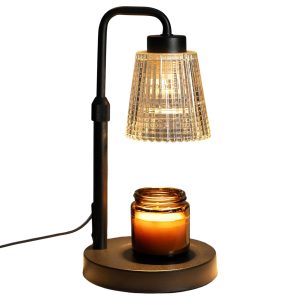
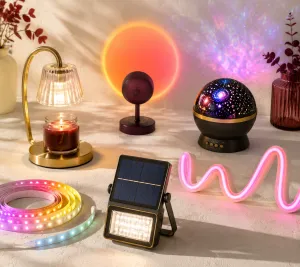
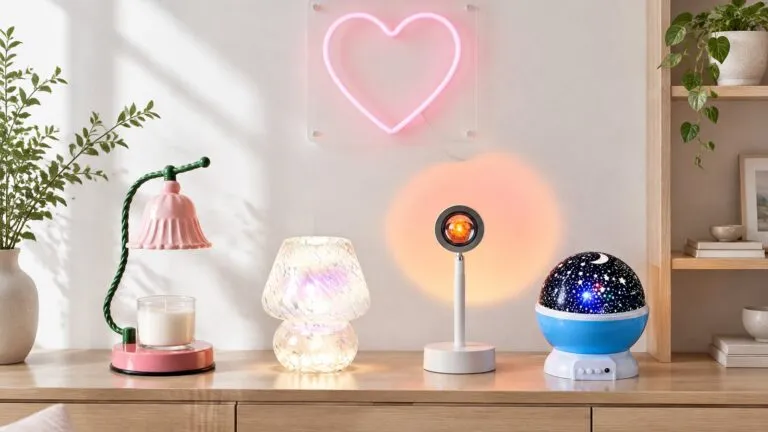
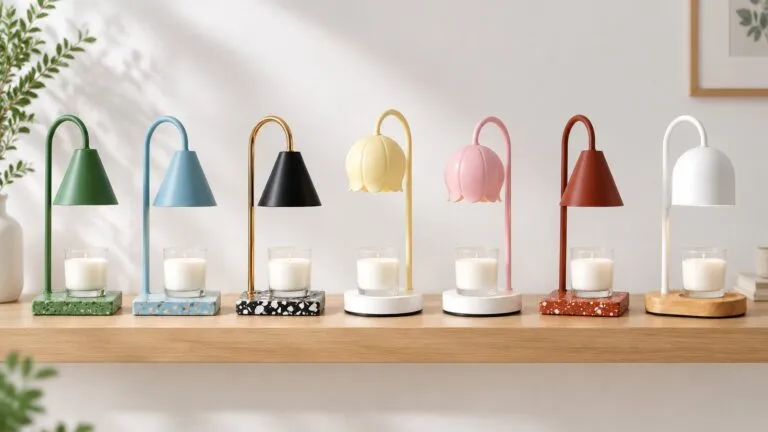
Properties with a spa or a lobby retail corner often attach flame-free ambience products to the same order, which is where a single-factory range earns its place. BeginLighting manufactures candle warmer lamps in-house and builds the adjacent categories on the same floor, including decorative and rechargeable table lamps and the giftable lighting program. One inspection standard across a mixed order and one shipment instead of four usually matters more than a cheaper line item.

Lithium rules that move your delivery date
The compliance item most likely to move your delivery date is not the lamp. It is the cell inside it. Every lithium-ion cell and battery type in a shipment must have passed the tests in Part III, sub-section 38.3 of the UN Manual of Tests and Criteria before it moves by air, and the resulting test summary is a document your freight forwarder will ask for by name.
The rules tightened for 2026. IATA’s battery guidance for the 2026 regulations, aligned to the 67th edition of the Dangerous Goods Regulations, requires lithium-ion cells and batteries with a watt-hour rating in excess of 2.7 Wh to be offered for transport at a state of charge not exceeding 30 percent of rated capacity, unless a State approval applies (IATA, 2026). A lamp with the battery built in moves as UN 3481, lithium-ion batteries contained in equipment.
For a buyer that becomes three habits. Expect air-freighted samples to arrive close to flat, so build a charge cycle into your evaluation schedule and never read a dead sample as a defect. Confirm before you order, not in the shipping week, who produces the UN 38.3 test summary and the dangerous goods declaration, because a missing document holds the whole consignment. And if you default to sea freight, confirm stowage and documentation with the carrier at quotation stage.
What to have ready before you send the RFQ
The highest-return move here is unglamorous: send a written specification and require a sample built against it, instead of asking for a catalogue sample and hoping. A shelf sample tells you only what a supplier already builds. A specification sample tells you whether they can build what you need, how long their engineering loop takes, and how they behave when the honest answer to part of your brief is no.
Send these lines with your drawing: required runtime with the brightness and temperature it must be met at; charging architecture and spare parts; ingress rating for indoor versus terrace placement and the cleaning chemistry involved; color temperature, CRI target and batch color tolerance; whether a flame-simulation mode is wanted; base mass and drop resistance; serviceability of shade, base and cell; and packaging and branding.
One honest caveat before you send it. Cordless lamps are not free of labor. They trade a per-shift lighting task for a nightly docking task, a back-of-house footprint and a rotation stock calculation, and a venue that will not commit to the docking routine is better served by a mains-wired fixture or a warmer lamp. Say that early. It saves an account that would otherwise churn in month four.
Specify a hospitality table lamp program from one factory floor
Tell us the venue count, the service window, the placements and the finish direction, and we will come back with a specification-matched proposal from the lines we build.
Frequently asked questions
Are restaurant table lamps battery operated bright enough to replace tealights?
Comfortably. A wax tealight puts only 0.5 to 1.0 footcandles onto the plate, well under the 3 to 6 footcandles the Illuminating Engineering Society recommends at a dining table. The specification that matters is the bottom of the dimming range, not the top, since a venue runs these dim all evening.
How do I specify a restaurant table lamp battery operated for an outdoor terrace?
Three things change outdoors. Ingress protection must cover blown dust and hose-adjacent cleaning, not indoor splashes alone. Runtime must be verified cold, since a lithium cell can deliver roughly half its rated capacity near minus 18 degrees Celsius. And you need base mass to resist breeze plus a UV-stable finish.
Which charging setup gives the best staff compliance?
Beyond a handful of covers, a contact tray usually wins, because it reduces closing to a single motion per lamp. Individual bases suit small or mixed rooms, and direct cable charging is cheapest to build and most often skipped at close. Whichever you choose, buy rotation stock.
Should restaurant candle lamps include a flame-simulation flicker mode?
It depends on positioning. Casual, themed and seasonal venues often want the flicker because guests read it as a candle. Fine dining prefers a steady warm glow, since simulated flicker reads as inexpensive at close range. This is firmware, so decide at sample stage and ask whether both modes fit one unit.
What lifetime number should I put in the contract?
Not the LED hours figure. In a battery lamp the cell fails long before the diode dims, so specify cycle count to a stated retained capacity, confirm the cell is field-replaceable, and pin how long replacement cells stay available. The IES warns against claims extrapolated beyond six times the test duration.
Sources
Every URL below was checked on 2026-08-24. Standards are cited by section number so your compliance team can verify them.
The list runs in the order the figures appear: illuminance, fire code, food-code surfaces, ingress, lithium transport, color and flicker, lifetime limits, cold-weather capacity.
- Illuminating Engineering Society (LD and A) — “The Secret Recipe for Restaurant Lighting”, Brett Andersen, 5 December 2018. https://ies.org/lda/the-secret-recipe-for-restaurant-lighting-2/ (retrieved 2026-08-24)
- UpCodes — “Use of Open Flames in Assembly Occupancies and Places of Public Gathering”, New York City Fire Code 2022, section 308.5.2. https://up.codes/s/use-of-open-flames-in-assembly-occupancies-and-places-of-public-gathering (retrieved 2026-08-24)
- U.S. Food and Drug Administration — “FDA Food Code 2022, Chapter 4: Equipment, Utensils, and Linens”, sections 4-101.19, 4-202.16 and 4-602.13. https://www.c-uphd.org/documents/eh/2022-FDA-Food-Code-Chapter-4-Equipment-Utensils-and-Linens.pdf (retrieved 2026-08-24)
- NEMA Enclosures — “IP Ratings Explained: Ingress Protection Ratings under IEC 60529”. https://www.nemaenclosures.com/ingress-protection-ratings/ (retrieved 2026-08-24)
- International Air Transport Association — “Battery Guidance Document: Transport of Lithium Metal, Lithium Ion and Sodium Ion Batteries, Revised for the 2026 Regulations”, 1 January 2026. https://www.iata.org/contentassets/05e6d8742b0047259bf3a700bc9d42b9/lithium-battery-guidance-document.pdf (retrieved 2026-08-24)
- U.S. Environmental Protection Agency, ENERGY STAR — “Program Requirements for Lamps (Light Bulbs), Eligibility Criteria Version 2.1”. https://www.energystar.gov/sites/default/files/ENERGY%20STAR%20Lamps%20V2.1%20Final%20Specification.pdf (retrieved 2026-08-24)
- Illuminating Engineering Society — “PS-10-18: IES Position on LED Product Lifetime Prediction”, 9 October 2018. https://ies.org/advocacy/ps-10-18/ (retrieved 2026-08-24)
- Battery University (Cadex Electronics) — “BU-502: Discharging at High and Low Temperatures”. https://www.batteryuniversity.com/article/bu-502-discharging-at-high-and-low-temperatures/ (retrieved 2026-08-24)
