


A neon sign for room walls is bought from a photograph and judged on a wall, and the two are almost never the same distance away. The photograph is shot close, at night, with everything else switched off. What arrives is a sheet of acrylic with a length of silicone tube on it, a cable that has to reach a socket, and four holes that have to land in something solid. This guide is for the person placing the factory order: a home decor buyer building a wall art range, a private-label seller, or a gift retailer stocking the dorm season.
Three neighbouring questions are answered elsewhere on this site. What a sign costs, band by band, is in our neon sign price guide. How long the tube and driver last, and what the piece draws overnight, is in how long neon signs last. Fonts and the proof cycle for bespoke wording are in custom neon name signs. Storefront and counter signage is a different buy, and this piece stays inside the home.
Key takeaways
Size the letters from the seat rather than from the wall, choose the backing and the fixing as one decision, settle the power path before the artwork, and judge the sample in a dark room at the distance the customer will actually sit.
- The most usable published relationship between character height and reading distance is the ADA visual character table: 5/8 inch minimum up to 6 feet of viewing distance, plus 1/8 inch for every foot beyond that (U.S. Access Board).
- Hang the same sign higher than 70 inches from the floor, which is where a piece above a headboard sits, and that floor jumps to a flat 2 inches of character height at any distance up to 15 feet.
- LED products are up to 90% more efficient than incandescent bulbs, and thermal management is the single most important factor in LED performance (ENERGY STAR). Here the heat lives in the plug, not on the wall.
- US residential fires involving electrical malfunction came to 23,700 fires and just over $1.5 billion in loss in 2023 (U.S. Fire Administration). Those counts are not broken out by product; the mains side is where a sign carries risk.
- Retailers expected 15.8% of 2025 sales to come back, $849.9 billion in all (NRF). On a fragile wall-hung item, the carton contents are the return rate.
Where Does a Neon Sign for Room Walls Actually Go?
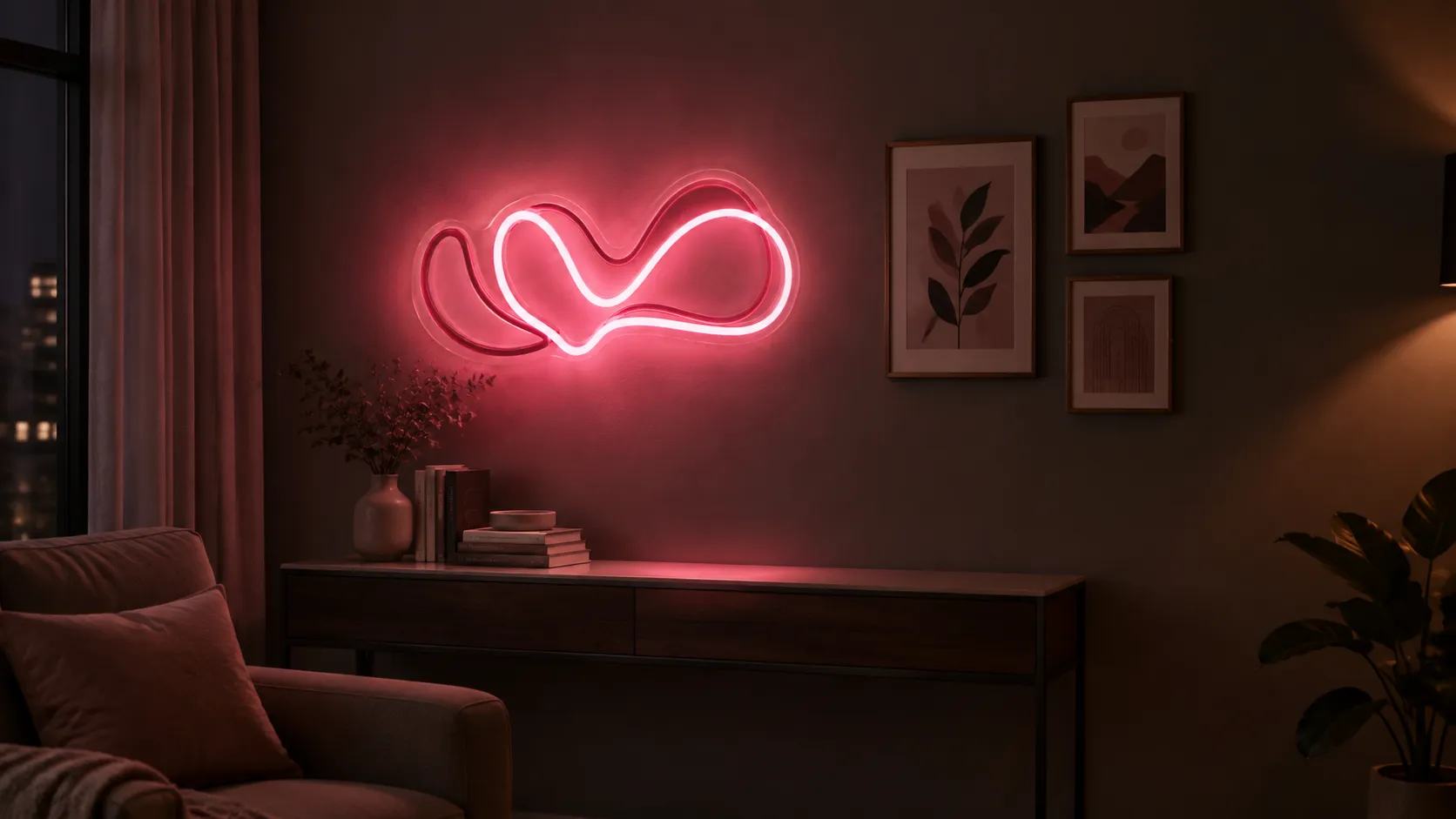
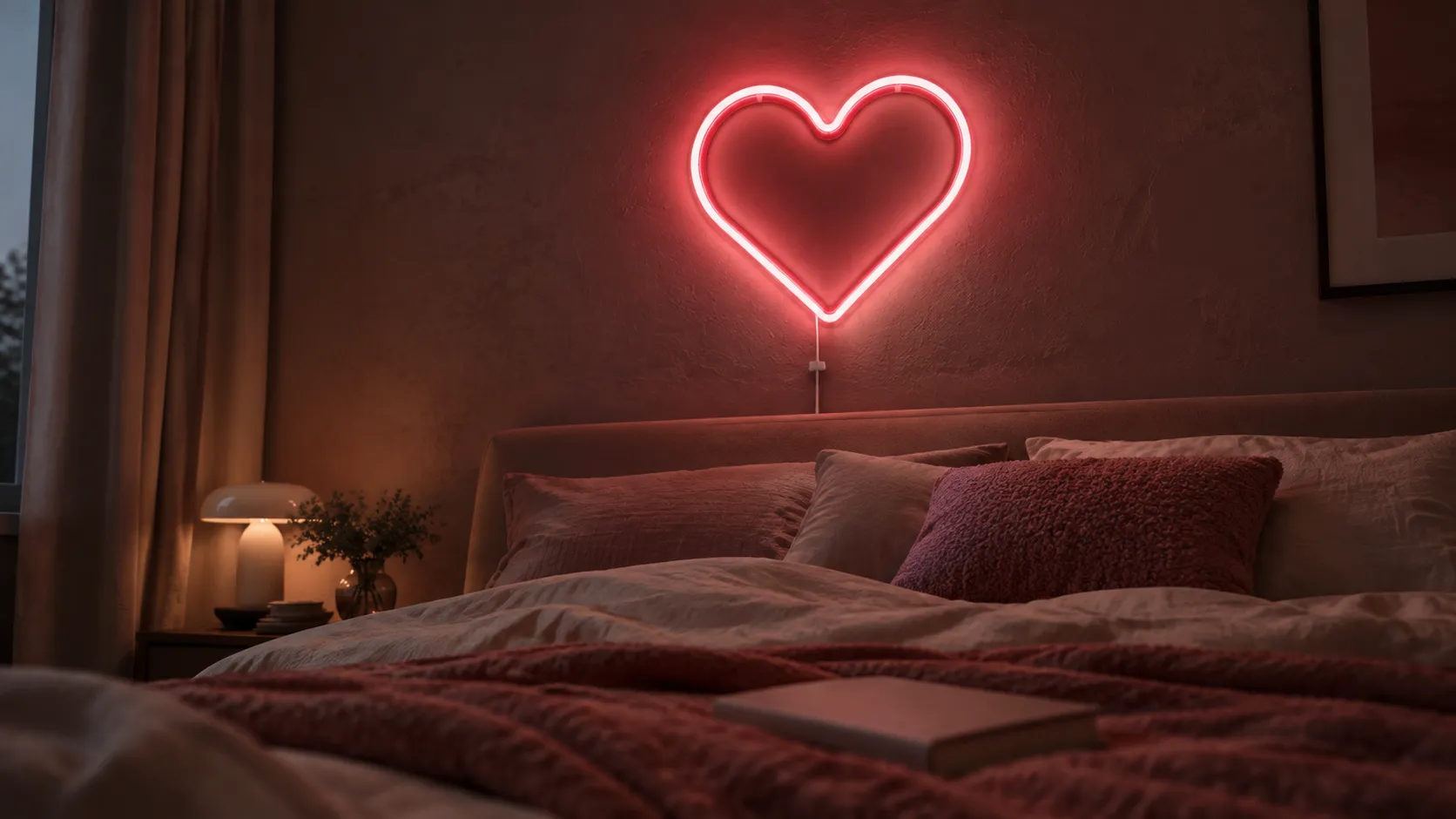
Four walls take almost all of it: above the headboard, behind a desk, beside framed prints on a gallery wall, and over a shelf where the sign is the last thing left on. Each placement sets a different viewing distance and a different mounting height, and those two numbers decide the size long before anyone picks a shape.
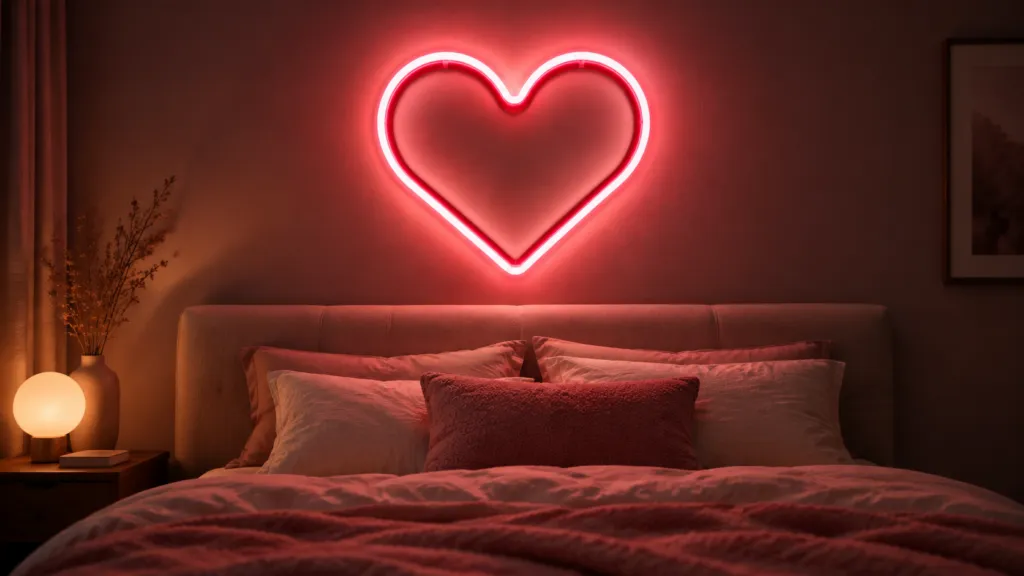
Above the headboard is the placement the category is photographed in, and the most constrained. The sign hangs high, the viewer is either lying under it or standing in the doorway three or four metres back, and the wall behind a bed is usually plasterboard with nothing solid behind it. Behind a desk the opposite applies: the viewer sits about a metre away, at eye level, sharing the room with a lit screen. A gallery wall wants the sign to be one object among several, so smaller and squarer than most buyers expect. Over a shelf it is the only light left on, so it has to dim.
Listing language follows the placement. A shopper typing neon sign for bedroom is usually picturing their own headboard wall; one typing neon sign in bedroom is more often looking at somebody else’s room and deciding whether to copy it. Same wall, different point in the decision, and a range needs photography for both. How the rest of the room is layered belongs to our piece on bedroom lighting ideas, and the cozy assortment sits in cozy bedroom ideas. Where the brief is a lit object on a surface, not a shape on a wall, the format to compare against is the bedroom mood lamp, and the two sell side by side rather than against each other.
How Big Should the Letters Be From Where People Sit?
Start from the seat, not from the wall. The published relationship you can actually test a sample against is the visual character table in the ADA standards: characters mounted 40 to 70 inches above the floor need a minimum of 5/8 inch of height when the viewer is closer than 6 feet, plus 1/8 inch for every additional foot of viewing distance (U.S. Access Board).
Run that out and the arithmetic is easy. Ten feet of viewing distance asks for about 1.13 inches of character height, twelve feet for 1.38 inches, eighteen feet for 2.13 inches. Then the table does something a buyer ought to know about. Raise the sign above 70 inches from the floor, which is exactly where a piece above a headboard ends up, and the minimum jumps to a flat 2 inches at any viewing distance up to 15 feet. Hanging high costs letter height. The standard gives no reason for that jump; the practical reading is that a sign above eye level is met at an angle.
Two honest limits on borrowing it this way. This is an accessibility floor for permanent signage in buildings, not a decor rule, and nobody will inspect a bedroom against it. It also assumes an upright typeface: script letterforms carry much less of their height in the part the eye reads, so a cursive word has to clear the floor rather than sit on it. Treat the figures below as the height beneath which a sign stops working, then add margin. Width follows, since width is character height times the number of letters, which is why how wide should it be is the second question rather than the first.
Source: both ends are published minima in Table 703.5.5, 2010 ADA Standards for Accessible Design, computed out to each distance, retrieved 2026-09-12
Wall Art Neon Sign: the Backboard Decides Half the Look
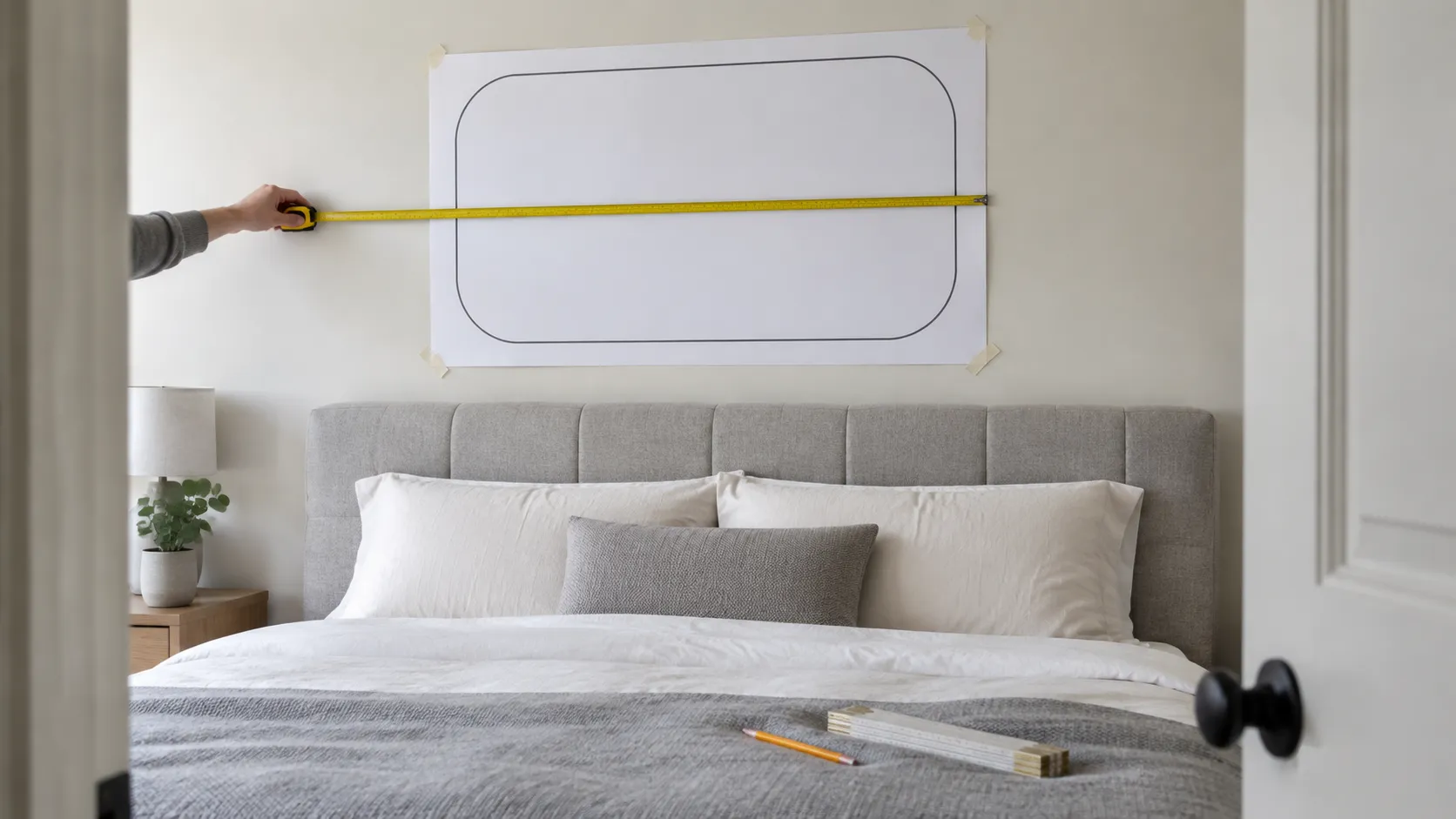
A wall art neon sign is two products screwed together. The silicone tube makes the light, and the acrylic panel behind it decides how the piece reads for the hours it is switched off, which is most of them.
Cut-to-shape backing follows the outline of the artwork with a small margin, so the sign more or less disappears into the wall by day and reads as a floating shape at night. A rectangular panel keeps the piece framed, cuts faster and packs far better, but it announces itself as a manufactured object in daylight. A frosted or tinted panel hides the clips that hold the tube down, and those clips are the detail customers photograph when they are annoyed. None is better than the others; they are different daytime products with the same night-time product inside.
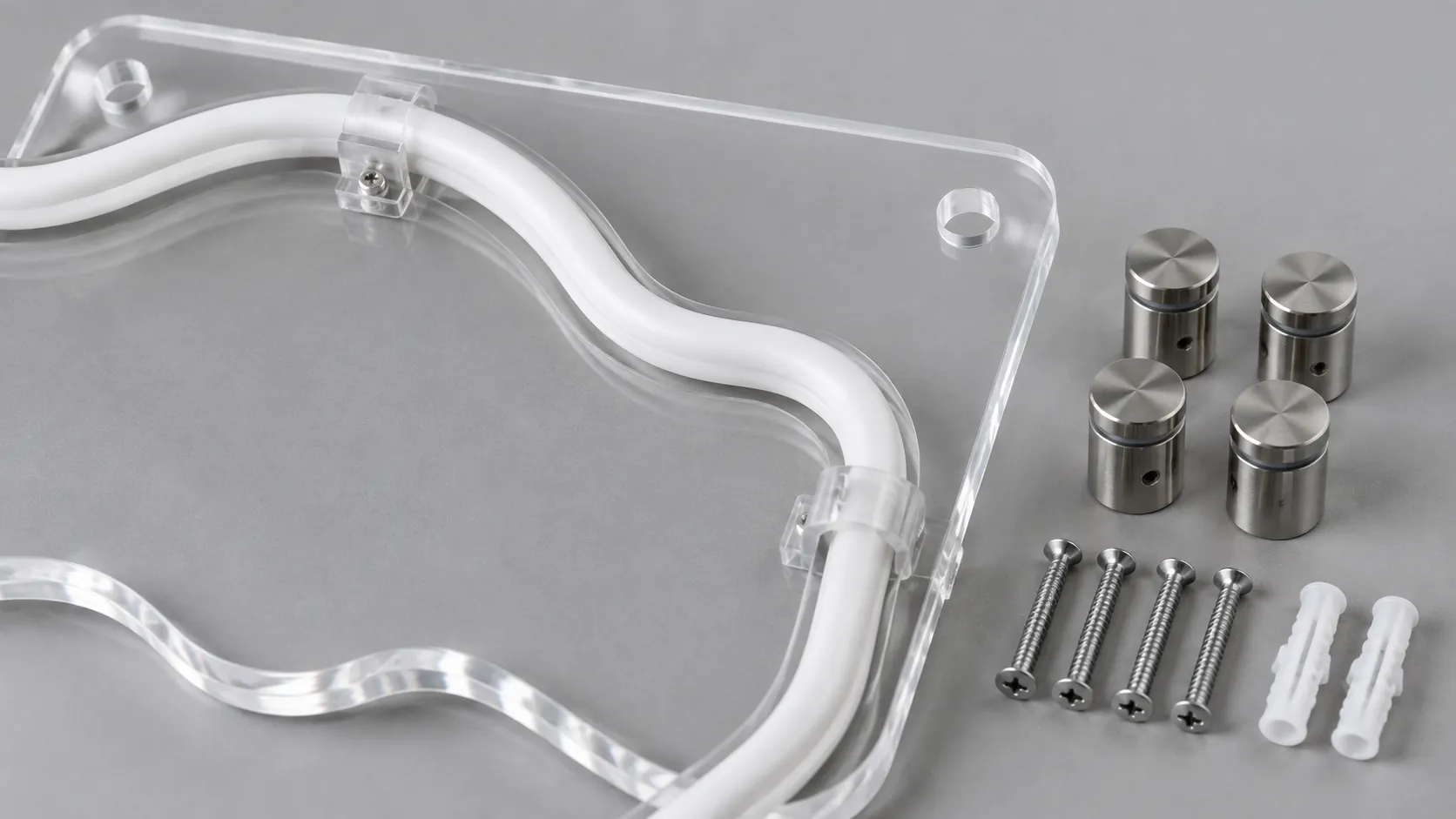
The fixing has to be chosen alongside the backing rather than after it. Pre-drilled holes with screws and plasterboard anchors are strongest and most permanent. A single hook with a chain lets the sign move, which suits a renter and looks wrong on anything large. Adhesive strips are the dorm and rental answer and the one most likely to come back down. Standoff spacers throw the glow onto the wall behind the panel, at the price of four accurate holes instead of two. Whichever you specify, the anchors, a drilling template and something to level with belong in the carton, because otherwise the customer judges your product on whatever was in a kitchen drawer.
| Fixing | What the carton has to hold | Walls it suits | Where it fails | Who asks for it |
|---|---|---|---|---|
| Screws and plasterboard anchors | Anchors, screws, drilling template, small level | Plasterboard, plaster over brick | A hole in the wrong place is permanent, and renters will not drill | Homeowners, larger formats |
| Single hook, chain or wire | Chain or clear wire, one hook, adjustable clamp | Picture rails, existing hooks, uneven walls | Anything large swings and settles crooked | Gallery walls, renters |
| Adhesive strips | Four or more strips, alcohol wipe, press-and-wait card | Smooth painted plaster and panels | Textured, papered, cold or freshly painted walls | Dorms, rentals, small formats |
| Standoff spacers | Four barrels, four screws, anchors, drilling template | Solid walls with room for accurate holes | Four holes that all have to line up | Premium tier, glow-behind looks |
| Desk or shelf stand | A moulded foot or acrylic base, no fixings | No wall required | Gets knocked over, and the cable shows | Gifting, short-stay rentals |
Does a Room Sign Run on USB or an Adapter?
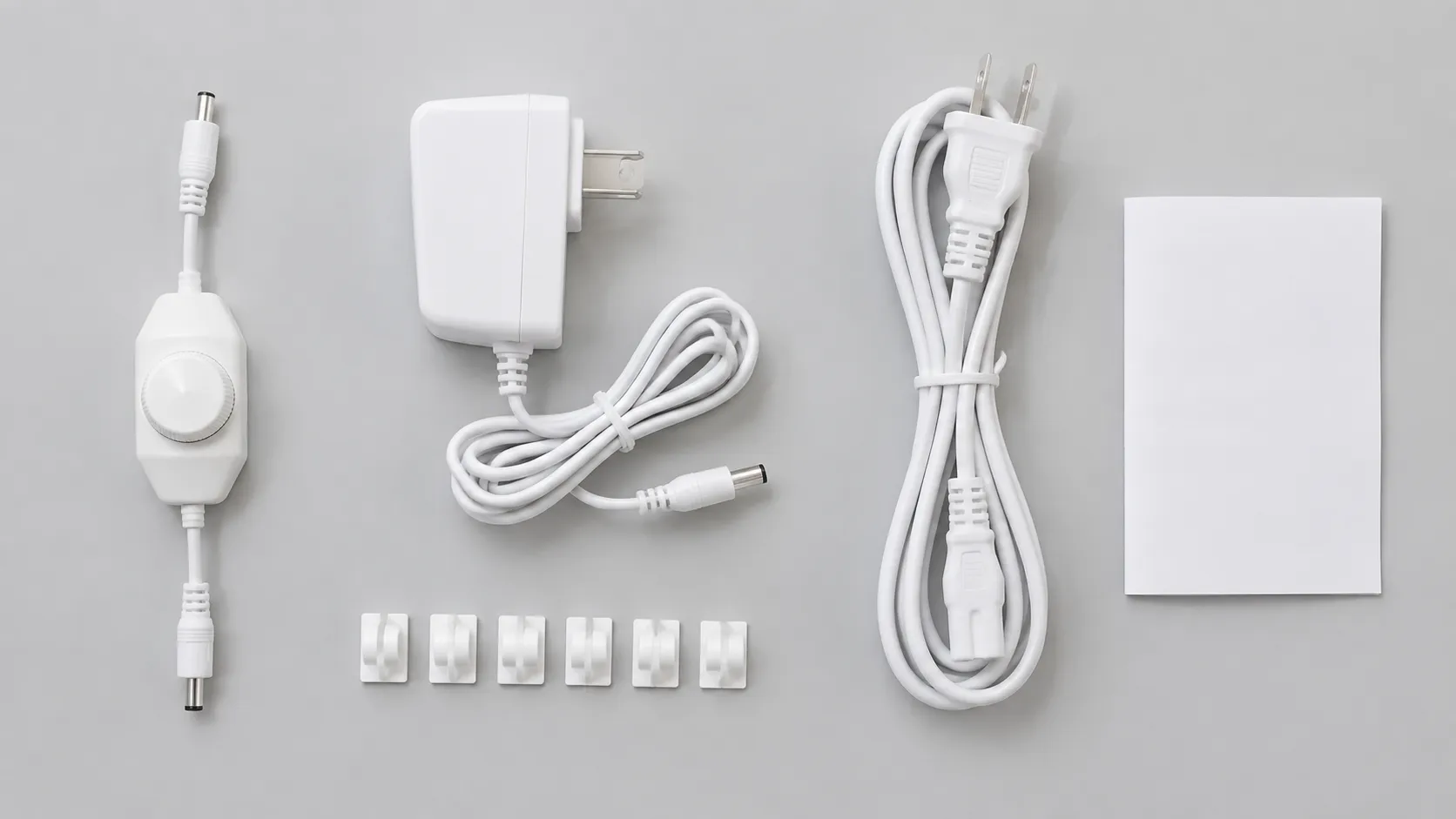
Small pieces run from a USB lead and anything with real tube length runs from a low-voltage adapter, and total tube length makes that decision rather than preference does.
The consequences are the boring ones. An adapter means a plug type for every destination market, a heavier carton and a brick that has to live somewhere out of sight. A USB lead keeps the box light, but it caps how much tube the piece can carry and moves the problem to whatever the customer plugs it into. Cable colour and length matter more than either choice. White cable down a dark wall is what customers photograph when they are unhappy, and changing it costs pennies at the order stage.
The safety arithmetic sits on the mains side, not on the tube. In 2023, US residential building fires involving electrical malfunction came to 23,700 fires, 305 deaths and just over $1.5 billion in loss; across the decade to 2023 the dollar loss rose 28% even as deaths fell 19% (U.S. Fire Administration). The USFA does not break those counts down by product. What they should change in a specification is the mains side: the adapter, the cord, and where somebody puts them. Ship enough cable to reach a real socket, ship clips to hold it flat, and print the cable run on the card. What the piece costs to run over a year is in how long neon signs last.
Is a Neon Sign Safe Above a Bed or in a Kid’s Room?
The tube is the least of it. LED neon runs on low-voltage direct current from an external adapter, so the component that gets warm is the driver in the plug, not the silicone on the wall.
That does not make heat a non-issue, it relocates it. ENERGY STAR puts LED products at up to 90% more efficient than incandescent bulbs and states that thermal management is generally the single most important factor in the successful performance of an LED over its lifetime (ENERGY STAR). Here that means one instruction: the driver needs air around it, not a slot behind a headboard. Brightness is the second thing to specify. A sign built to photograph well is too bright to sleep under, and a dimmer on the cable is cheaper than a lower-output tube. Whether the colour helps or hurts at bedtime is covered in what colour light is best for sleep.
In a child’s room the real hazard is the cable, and the closest published guidance comes from an adjacent product. The Consumer Product Safety Commission tells parents to move all cribs, beds, furniture and toys away from windows and window covering cords, preferably to another wall (U.S. Consumer Product Safety Commission). Read across, a sign above a cot wants its cable clipped flat from panel to socket with nothing loose in between, and the hanging-chain option is wrong for that room. Campus rules are stricter again, and they are in our guide to flame-free dorm lighting.
Custom Neon Signs for Home Decor: Stock Range or Made to Order?
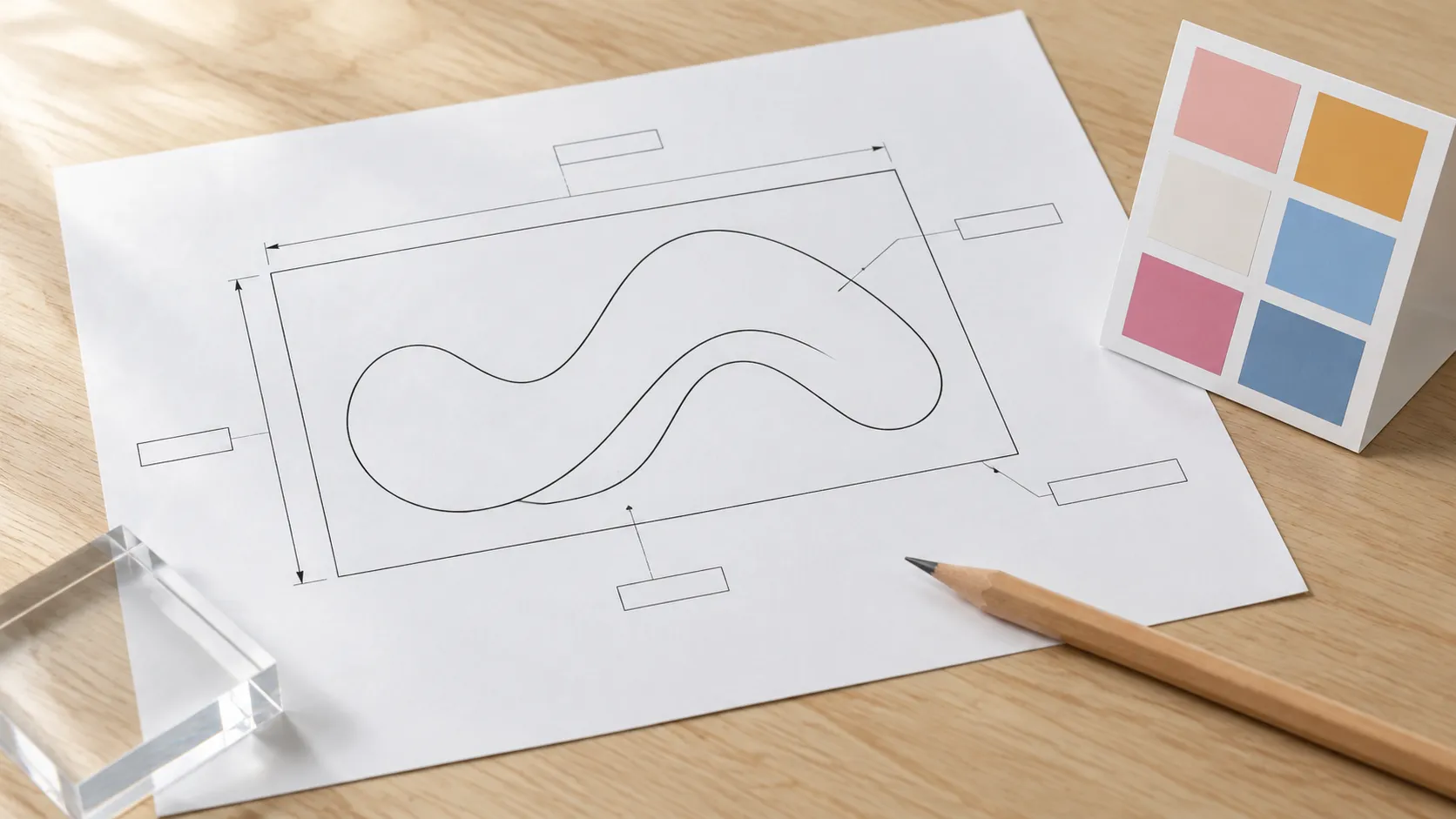
Both, and they are two different businesses sharing a production line. Custom neon signs for home decor split cleanly into a stock range you forecast and hold, and bespoke wording you build against an approved proof.
The same stock-versus-custom question in a harsher room — the garage — is answered in neon sign for garage: what changes on a workshop wall.
A stock range answers the shopper searching custom neon signs for room or custom neon signs for bedroom, who wants to see the shape before paying for it. It carries inventory risk, and it repeats: hearts, abstract line shapes and short word marks are the forms that recur across stock ranges, which is why the LED neon heart wall light is the piece most ranges open with. Bespoke wording carries almost no inventory risk and almost all of the customer service: every order is a drawing somebody has to approve before anything is bent. Our stock shapes sit in the custom neon signs range, and the custom script LED neon sign is the made-to-order end of the same line.
The merchandising fact behind the split is where the category sells. In the second quarter of 2026 US retail e-commerce ran to $340.2 billion, 17.1% of total retail sales (U.S. Census Bureau). That is the all-retail number; no published series breaks out decorative neon, and our own read is that a fragile, wall-hung, personalised object sits well above it. Online is also where returns bite: retailers expected 15.8% of 2025 sales to come back, $849.9 billion in total, 19.3% of online sales among them (NRF). For a stock range that is a packing and mounting problem, solvable with cardboard and a template. For bespoke wording it is barely a problem at all, because a signed proof is hard to argue with, which is the quiet commercial reason custom carries the better margin. Fonts and the proof cycle are in custom neon name signs, and what each band costs is in the price guide.
Custom Neon Gaming Signs Next to a Lit Screen
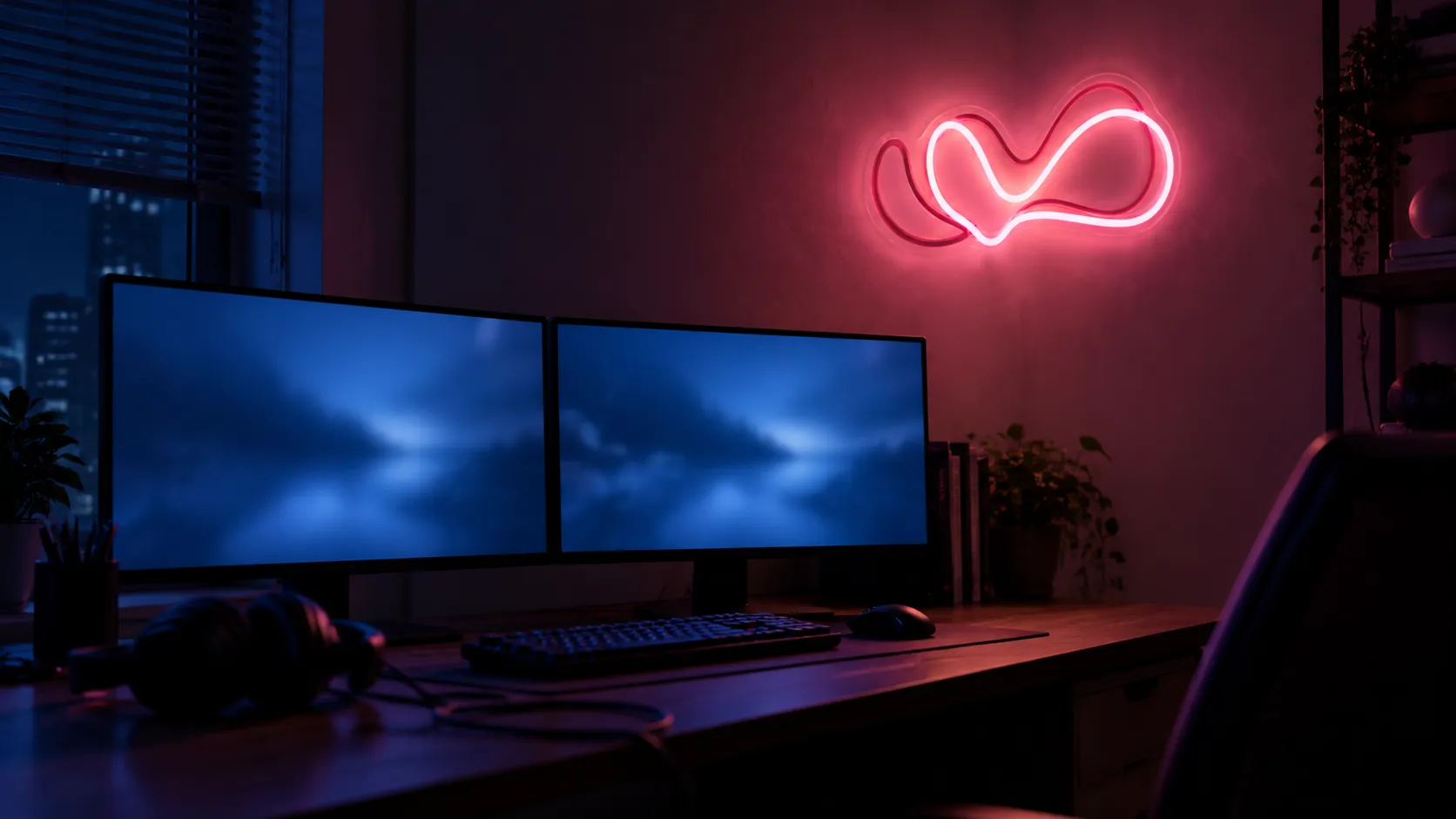
Custom neon gaming signs are the one home placement where the room is already emitting light, and that changes the specification more than the artwork does.
A monitor in a dark room is a mirror. Put a saturated sign on the wall facing a screen and it lands back in the player’s eye as a reflection; put it directly behind the seat and it turns up in every frame the player streams. The positions that work are off-axis and high: on the side wall above head height, or above the desk aimed at the wall rather than into the room. Marketplaces and buyers spell this category two ways, custom neon gaming signs and custom neon game signs, and a listing that carries both picks up traffic that would otherwise split between them.
This is also where specification runs out. The US Department of Energy’s lighting programme states plainly that current discomfort glare metrics are inadequate, with many competing models that are poor predictors or too complex to calculate (U.S. Department of Energy). There is no number you can write on a purchase order that guarantees a sign will be comfortable beside a screen. What works is a dimmer as standard, a warm option alongside the saturated colours, and a sample you sit in front of in a dark room before signing anything. A home training corner is a different brief again, and that one is in barbell neon signs.
What to Check on the First Sample
Everything above collapses into one evening with the sample, the right wall, and the lights off.
Do not judge a room sign on a bench under workshop light. This product is used at night, from a fixed seat, on a wall the buyer did not choose, and most faults only appear under those conditions: the clips showing through a clear panel, the hot spot where the tube doubles back, the cable that finishes 30 centimetres short of the socket, the faint hum nobody can hear on a factory floor.
Fix the wall before the word
Name the placement the SKU is built for, then write the mounting height and the seat-to-sign distance on the drawing before any artwork exists.
Set letter height from the seat
Take the minimum for that distance from the chart above, add margin for script letterforms, and let width come out of the arithmetic, not the other way round.
Choose backing and fixing together
Cut-to-shape or panel, then anchors, hook or strips. Carton contents are decided here, not later at the packing line.
Settle the power path
USB or adapter, cable colour, cable length measured to a socket that really exists, and whether the dimmer is standard.
Live with the sample in the dark
Right distance, lights off, twenty minutes. Watch for clips showing through and a hot spot at the turns, and listen at the plug rather than the wall.
Photograph it badly on purpose
Phone, no tripod, from the doorway and from the pillow. That is the picture your customer takes, and the one that becomes a review.
One habit is worth more than the rest of the list: ask the factory what it will not do. A supplier who tells you a lowercase cursive letter at that height will not hold its stroke is telling you something useful while the drawing is still cheap to change.
Have the range built around your walls
We make LED neon in our own factory in Foshan, 4,000 square metres with 40 people across two production lines, so backing shape, cable colour and length, dimmer, fixings and carton contents are specification lines. Send the placements you sell into, the sizes you want to hold and the power path for your market, and we will quote it.
Watch it work
The seat-to-wall sizing, the headboard height rule and the plug that carries the heat, in 30 seconds:
FAQ
Can you hang a neon sign for room walls without drilling?
Sometimes, and the deciding factor is load per fixing rather than total weight. Adhesive strips are rated individually, and an acrylic-backed sign carries most of its mass in the panel rather than the tube, so a large piece can sit well inside its total rating and still peel because one corner strip is taking more than its share. The practical limits are surface and season: textured plaster, wallpaper and fresh paint will let go, and a cold wall lets go sooner. For a rental-facing SKU, specify the smaller size with a rectangular panel and four strips instead of two, and print the strip count on the card.
Do LED neon signs hum or buzz in a quiet bedroom?
A well-built one is silent, and where it is not, the noise is the driver rather than the sign. Cheap drivers can sing at their switching frequency, and the sound only becomes a complaint in a bedroom, which is the quietest room the product ever lives in. It usually gets worse at low brightness, because dimming is often done by pulsing the supply rather than lowering it. Test for this deliberately at sample stage: a quiet room, the sign at its lowest setting, an ear at arm’s length from the plug rather than from the wall.
What size neon sign works above a queen bed?
Work from the headboard rather than the mattress, and from the doorway rather than the bed. A sign that reads as intentional usually lands between a half and two thirds of the headboard width, which keeps it clearly narrower than the furniture underneath. Then check what that width does to letter height, because a long phrase squeezed into it can finish below the legibility floor in the chart above: fine in a close-up photograph, a blur from the door. When the arithmetic fights you, cut words rather than width.
Can custom neon gaming signs be dimmed low enough for streaming?
Only if dimming was specified, and the two common methods behave differently on camera. Lowering the supply voltage dims smoothly and shifts the colour slightly as it goes. Pulsing the supply holds the colour and costs less, but a camera running a shutter speed that beats against the pulse rate records banding nobody in the room can see. Where the range is aimed at people who film in front of it, ask which method the controller uses, then film the sample on a phone at its lowest setting before signing it off.
Sources
Every external figure above was checked on 2026-09-12: character height and viewing distance from the U.S. Access Board and the 2010 ADA Standards, LED efficiency and thermal behaviour from ENERGY STAR, residential electrical fire counts from the U.S. Fire Administration, cord placement advice from the Consumer Product Safety Commission, glare metrics from the U.S. Department of Energy, e-commerce share from the U.S. Census Bureau, and returns from the National Retail Federation.
- U.S. Access Board, Guide to the ADA Standards, Chapter 7: Signs (minimum character height of 5/8 inch below 6 feet of viewing distance plus 1/8 inch per foot beyond it; non-glare finish; light-on-dark or dark-on-light contrast, with no minimum contrast level specified), retrieved 2026-09-12.
- U.S. Department of Justice, 2010 ADA Standards for Accessible Design, Table 703.5.5 Visual Character Height (5/8 inch at 40 to 70 inches mounting height; 2 inches above 70 to 120 inches for viewing distances under 180 inches; 3 inches above 120 inches), the source of every figure in the chart, retrieved 2026-09-12.
- ENERGY STAR, U.S. Environmental Protection Agency, Learn About LED Lighting (LED products up to 90% more efficient than incandescent; incandescent bulbs release 90% of their energy as heat; thermal management is generally the single most important factor in LED performance over a lifetime), retrieved 2026-09-12.
- U.S. Fire Administration, FEMA, Residential Building Electrical Malfunction Fires (23,700 fires, 305 deaths, 800 injuries and $1,501,600,000 in loss in 2023; over 2014 to 2023 a 2% rise in fires, a 19% fall in deaths and a 28% rise in dollar loss), retrieved 2026-09-12.
- U.S. Consumer Product Safety Commission, Window Covering Cords (move all cribs, beds, furniture and toys away from windows and window covering cords, preferably to another wall), the closest published guidance on cords near a child bed, retrieved 2026-09-12.
- U.S. Department of Energy, Solid-State Lighting: Glare (current discomfort glare metrics are inadequate, with many models that are poor predictors or complex to calculate), retrieved 2026-09-12.
- U.S. Census Bureau, Quarterly Retail E-Commerce Sales (second quarter 2026 e-commerce of $340.2 billion, 17.1% of total retail sales), retrieved 2026-09-12.
- National Retail Federation, Consumers Expected to Return Nearly $850 Billion in Merchandise in 2025 ($849.9 billion in total, 15.8% of annual sales, 19.3% of online sales), retrieved 2026-09-12.
