

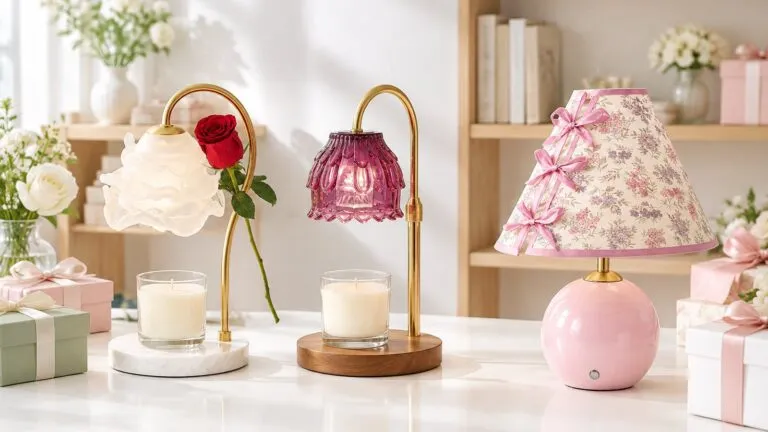
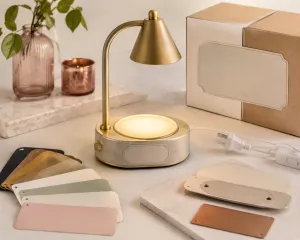


The best reading lamps put white light on the page, enough to reach roughly 30 to 50 footcandles, at a color temperature chosen for what and when you read, with color rendering of CRI 90 or higher, aimed at the book rather than the eyes, and backed by a softer layer of room light. This page is written for retailers, gift buyers and hotel guest-room buyers who stock table and bedside lamps, and for anyone choosing one lamp for a nightstand.
We build table and bedside lamps in our own factory in Foshan, and the models used as examples sit in our decorative table lamps range. If you are still deciding which kind of lamp a room needs at all, our guide to types of lamps sorts them by name and use; this page assumes the answer is a table or bedside lamp.
Key takeaways
The best reading lamps are chosen by what reaches the page. White light, enough of it, a color temperature matched to the reading, CRI 90 or higher, a shade that keeps the bulb out of the eyes and a second layer of room light are the six checks, and every one of them can be written on a quotation.
- The IESNA Lighting Handbook range for library reading and studying is 30–50 footcandles on the page; one footcandle is one lumen on one square foot.
- ENERGY STAR measures brightness in lumens, not watts, and sets 800 lumens as the minimum for a 60 W-equivalent bulb.
- Cool white is usually better for visual tasks and warm white for living spaces, in the Department of Energy’s wording; its label guidance puts warm light at 2700–3000 K and daylight-like light at 5000–6500 K.
- The IES Lighting Handbook, 10th edition, recommends Ra 90 for color matching, against Ra 80 for general interiors.
- Colored light fails the first check: the CIE color rendering method excludes predominantly monochromatic sources, and in an experiment reported by Harvard Health Publishing blue light suppressed melatonin about twice as long as green.
The Best Reading Lamps Start With White Light, Not Colored Light
White light here means the warm-to-daylight band printed on a bulb label, which the Department of Energy describes from 2700 K for warm light up to 6500 K for light that mimics daylight (U.S. Department of Energy). Read under white light; a colored setting is a mood light, not a reading light. The reasons follow color by color, and a reason is given only where an official or academic source supplies one.
- Any single saturated color. The CIE method used to score color rendering excludes sources of predominantly monochromatic radiation (International Commission on Illumination), so a single-color red, blue or green LED falls outside what the method was written to rate.
- Blue. In an experiment reported by Harvard Health Publishing, 6.5 hours of blue light suppressed melatonin for about twice as long as green light of comparable brightness and shifted circadian rhythms by 3 hours against 1.5. That rules blue out as an evening reading color, a point our page on what color light is best for sleep covers from the sleep side.
- Red. The same article advises dim red lights for night lights, because red is less likely to shift circadian rhythm: a night-light role, not a reading one.
- Amber, green, pink and purple modes. We found no official source that rates these for reading, so they get no health claim here; as colored sources they already fall under the first point.
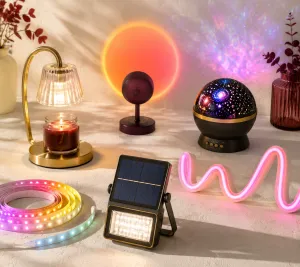
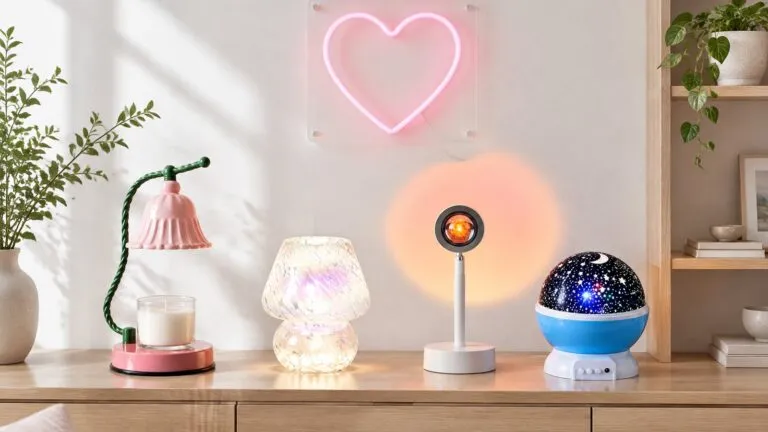
For a retailer the same rule decides what gets called a reading lamp in a listing. Color-changing night lights and sunset projection lamps are decorative glow products, and a Santa figurine lamp is a seasonal decorative piece; none of them belongs in a reading-lamp range. Listing a glow lamp as a reading lamp is the mismatch our bedside lamp checks flag in their shade section.

Brightness: 30–50 Footcandles on the Page, an 800-Lumen Top Setting
Illuminance is the light that lands on the page, measured in footcandles, where one footcandle is one lumen spread over one square foot (Archtoolbox); a lumen rating is the total visible light a lamp gives off (U.S. Department of Energy). Plan for 30–50 footcandles (300–500 lux) on the page, the range the IESNA Lighting Handbook gives for library reading and studying. Use 800 lumens, the ENERGY STAR minimum for a 60 W-equivalent bulb, as the reference for a reading lamp’s top setting. On a table lamp the top setting is the one to check for reading, because the bottom setting belongs to the half hour before sleep.
Wattage cannot tell you how bright an LED lamp is. ENERGY STAR describes brightness in lumens, not watts (ENERGY STAR), and the Department of Energy’s purchasing table pairs the 800 lumens of a 60 W incandescent bulb with LED lamps drawing 5.9 to 10.5 watts (U.S. Department of Energy). How old bulb wattages translate into lumens is charted in our guide to bedside lamps, so it is not redrawn here.
Several of our table lamps, among them the dimmable lamps on a weighted base, the lamp with a wireless charger and the dining table lamp, are specified as 3 W LED, and none of them publishes a lumen figure. We do not convert those watts into lumens: the figure to request on the quotation is full-output lumens, and the sample is checked against the 800-lumen reference with a book under it.
Color Temperature: Cooler White for Study, Warmer White for Evening Reading
Color temperature, given in kelvin (K), describes how warm or cool a white light looks: lower numbers are the warm colors and higher numbers the cool ones (U.S. Department of Energy). For study, close work and text you need to retain, choose a cooler white; for a novel in the evening and the last chapter before sleep, choose a warmer white. The Department of Energy’s Lighting Facts guidance puts the split in one line: cool white light is usually better for visual tasks, and warm white light is usually better for living spaces.
On the DOE label scale, warm or soft white is 2700–3000 K, cool or bright white is 3500–4100 K, and blue-white light that mimics daylight is 5000–6500 K. That gives a buyer a conditional answer instead of one number, and it makes the warmest step the weakest choice for a text you have to study, since DOE files warm white under living spaces rather than visual tasks. DOE’s Lighting Facts sheet adds that 2700–3600 K is recommended for most general indoor and task lighting, which puts the gold table lamp’s 6200K step above that band: a setting for a short spell of close reading, not the lamp’s all-evening default. The trade-off also runs the other way at night: the cool end that suits an afternoon of study is the bluer end, and blue is the color the Harvard melatonin result points at. Warm light and sleep have their own page in what color light is best for sleep.
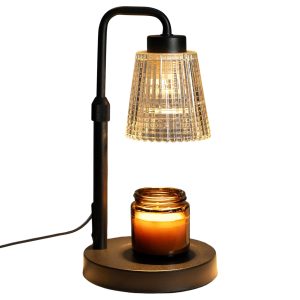
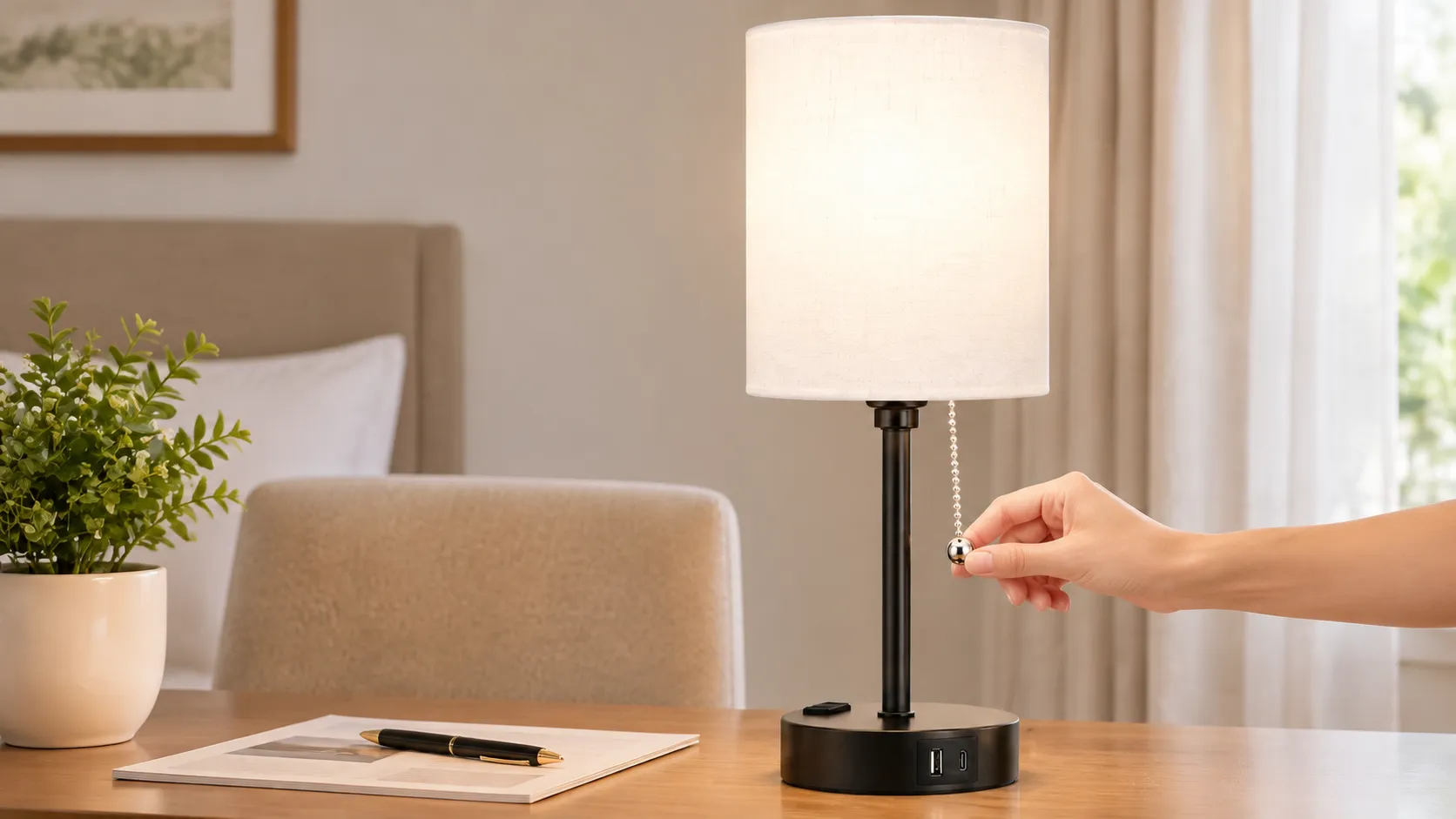
A lamp that switches between both ends settles the argument in one product. With its three-color LED bulb, the pull chain on our hotel lamp with USB and outlet steps the light from 2700K warm white to 3500K natural white and 5000K daylight white, then off: warm light for the evening, a cooler, whiter light for work at the desk. The gold table lamp gives 3000K, 4000K and 6200K from one E14 LED bulb, and the touch-dimmable bedside lamp switches between three color temperatures with no kelvin values published, so its steps go on the quotation.
Source: U.S. Department of Energy, Energy Saver Guide (first three bars, published values); BeginLighting product pages for the hotel lamp with USB and outlet and the gold table lamp (last two bars); retrieved 2026-11-10
Color Rendering: Ask for CRI 90 or Higher
Color rendering index (CRI, written Ra) scores how faithfully a light shows the colors of objects compared with a reference source, and incandescent light scores 100 (U.S. Department of Energy). Ask for CRI 90 or higher. The IES Lighting Handbook, 10th edition, recommends Ra 90 for color matching, against Ra 80 for general interiors (Pacific Northwest National Laboratory). California’s Title 24 JA8 rule also requires Ra 90 in residential new construction. Picture books, maps, magazines and colored inks are color work as far as the lamp is concerned.
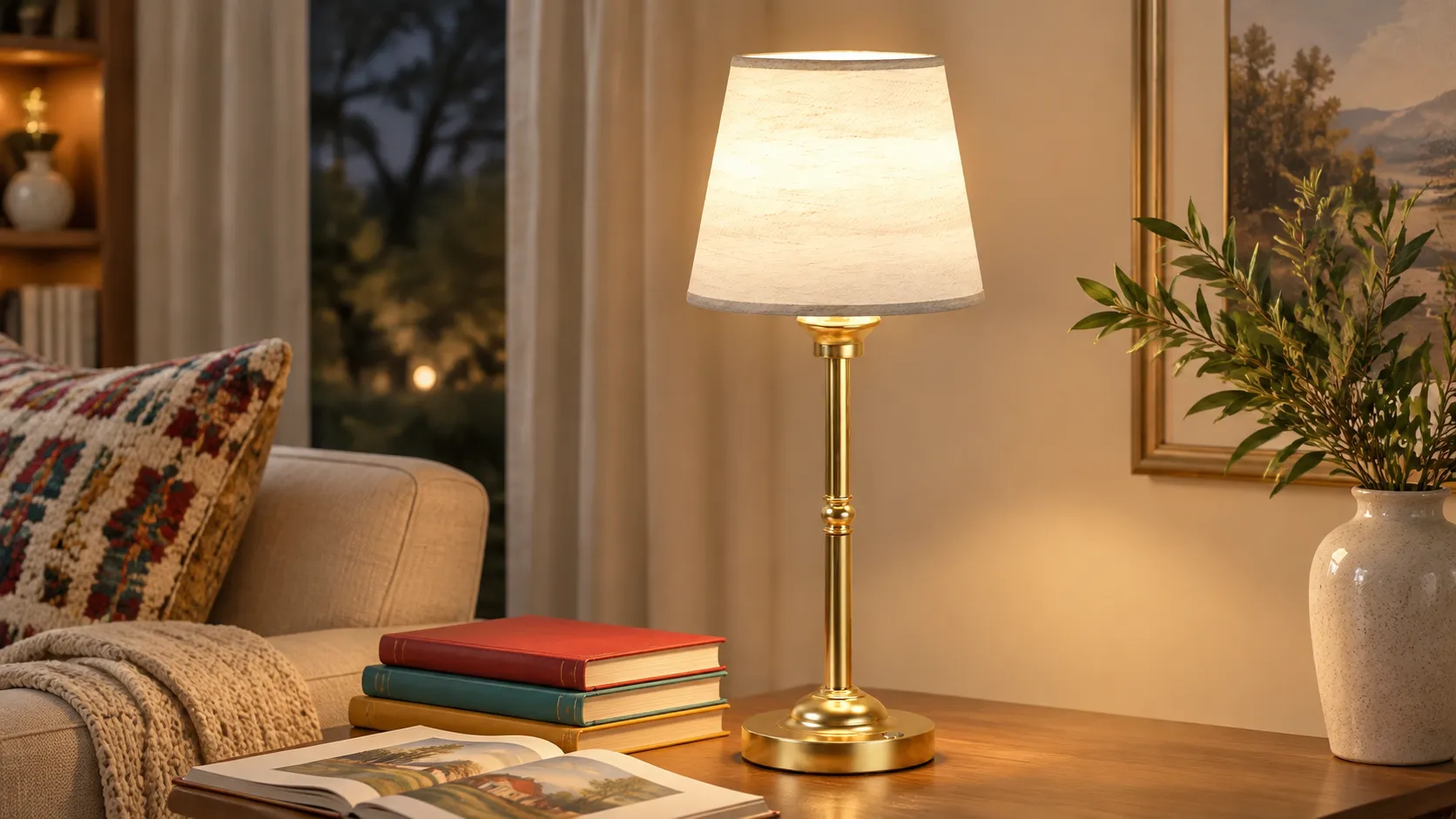
The 80, 90 and 95+ tiers and the red score R9 are explained in what is CRI in lighting. In our range, the gold table lamp is rated at a color rendering index of 90 or higher, so fabrics, books and decor keep their colors under it; it is the one table lamp in the range with a published CRI. For every other model, write the required index on the quotation and ask for the measured figure with the sample.
Light on the Page, Not in the Eyes
Glare, for a reader, is light reaching the eye straight from the bright part of a lamp instead of coming off the page. Point the light at the page and keep the bulb out of the reader’s line of sight. A federal home safety checklist puts the remedy plainly: indirect lighting or frosted bulbs can be used to reduce glare (CPSC). Both halves of this check come down to placement rather than specification, which is why they apply to any table lamp.
Aim the Light at the Page
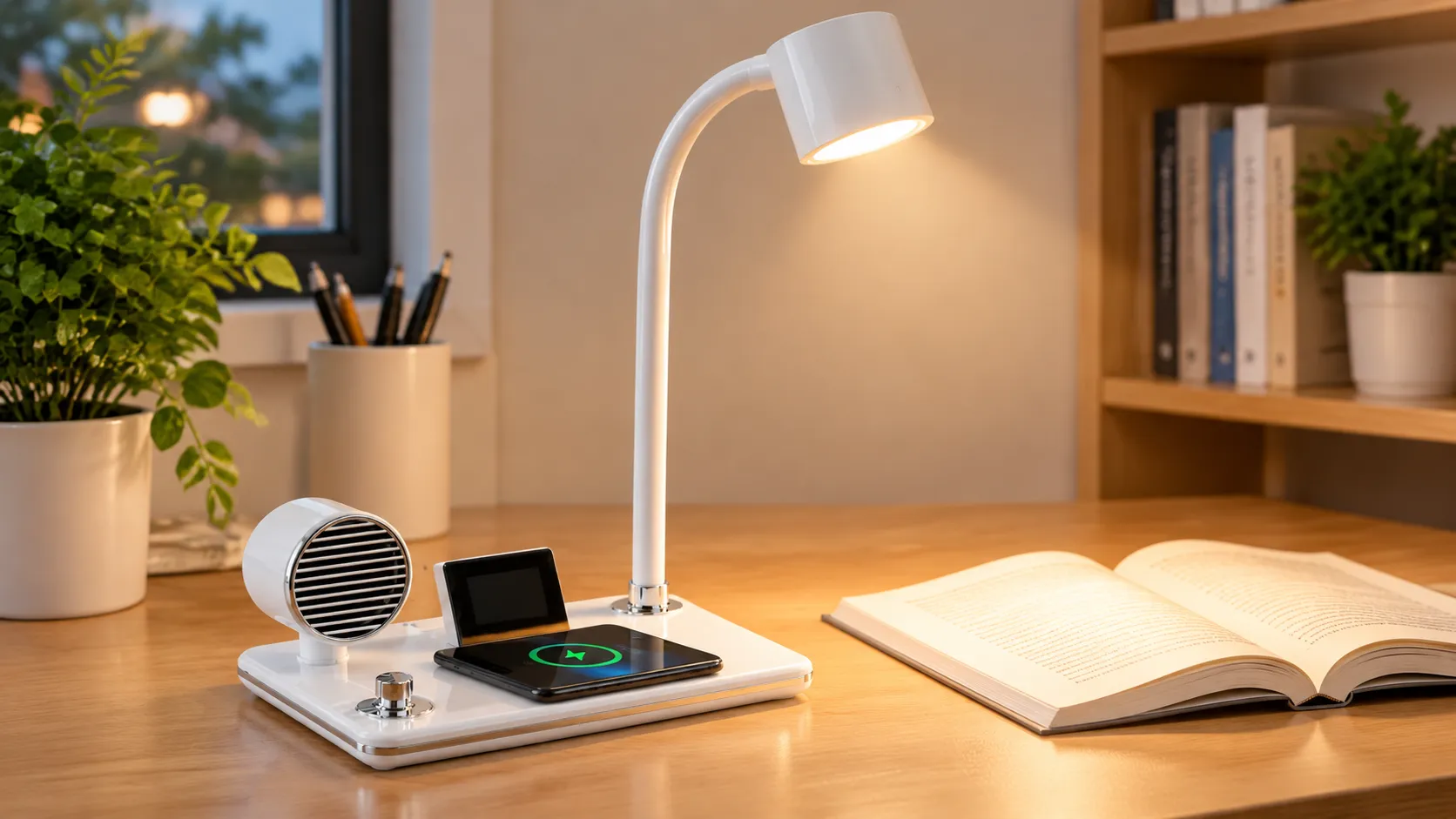
On a table lamp, aim is mostly set by where the lower rim of the shade sits. If it sits at about the eyes of someone sitting up, the open bottom of the shade throws light on the book and the bulb stays hidden; that rule, and the measurements behind it, are in our guide to how tall bedside lamps should be. A movable head adds a second control: the lamp with a wireless charger carries its 3 W LED head on a flexible gooseneck that turns through 360 degrees, so the light can point at a book, a keyboard or the wall.
Keep a Second Layer of Room Light On
A reading lamp lights one small patch, the page; everywhere else, the room takes its light from whatever reaches the walls and ceiling. Read with the lamp on and a room light on as well. The IESNA ranges show the arithmetic: dormitory living quarters sit at 20–30 footcandles and library reading at 30–50 (IESNA Lighting Handbook, via Archtoolbox), so a room layer near the lower figure leaves the reading lamp to add the difference where the book is, instead of lighting one bright page in a dark room. How ambient, task and accent layers work together in a bedroom is set out in bedroom lighting ideas.
Best Reading Lamp for Bed: Bright Enough to Read, Dim Enough to Sleep
A nightstand lamp works twice a night: once for the chapter, once for the minutes before the light goes off. The best reading lamp for bed meets the checks above at both ends of its range, bright and white enough for the page at the top, low and warm enough for the minutes before sleep at the bottom.
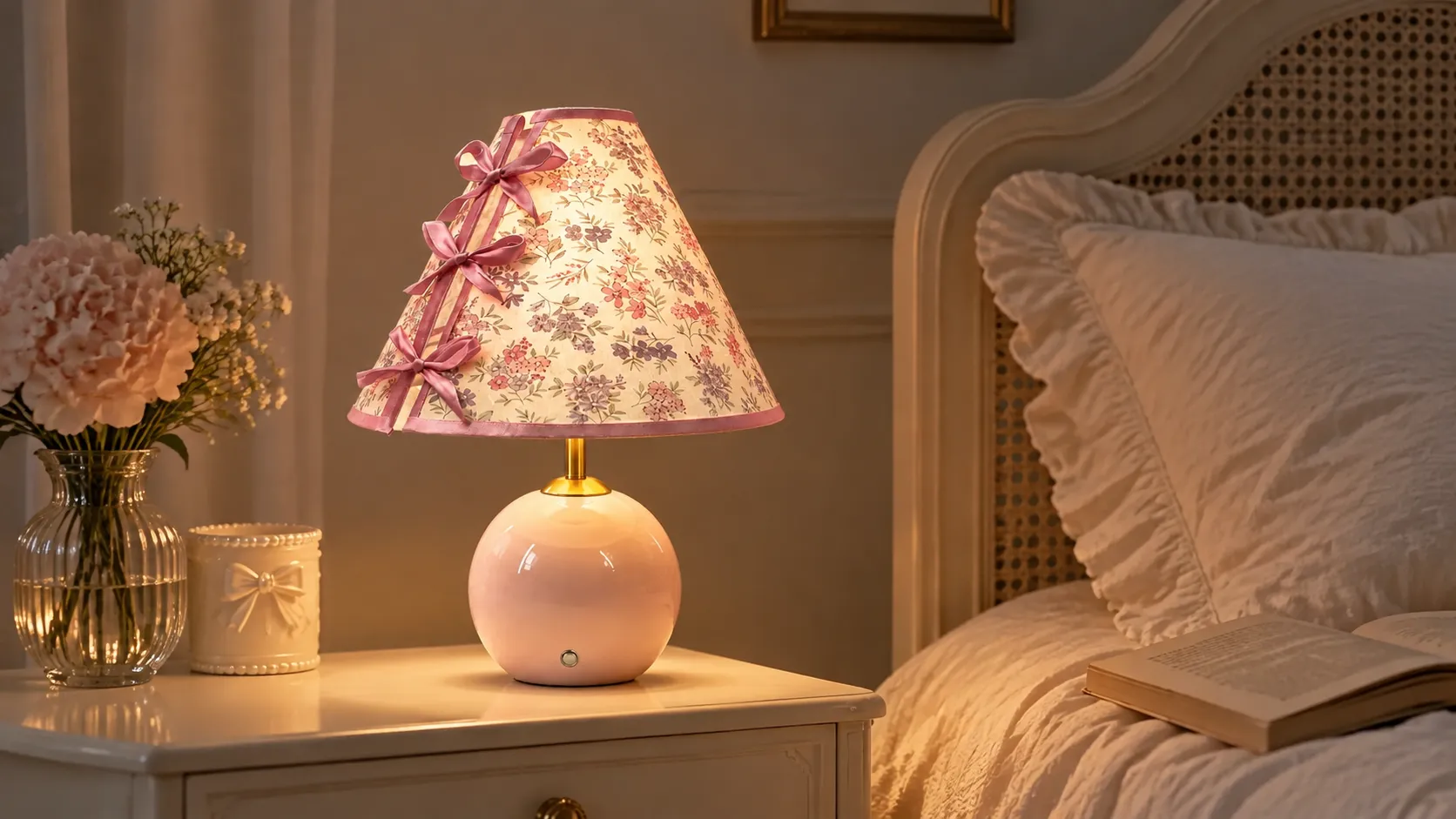
Our touch-dimmable bedside lamp is built around that up-and-down use, though its brightness and kelvin values are not published, so they go on the quotation. Its brightness turns up for reading or down to a low glow before sleep, the light switches between three color temperatures so one item covers a bedside and a desk, and a built-in battery gives 6–8 hours per charge from a 5 V USB supply, so no cable runs from the nightstand to the wall. The dimmable lamps reach the same two ends another way: a touch on the base switches the 3 W LED, a long press dims it, and the weighted base stands on four anti-slip pads.
How low the bottom step goes, whether the switch can be reached without sitting up and how heavy the base should be are covered in our bedside lamp checks, so they are not repeated here. Clip-on book lights and swing-arm wall lights are the other answers people find for reading in bed; they are not table lamps and sit outside this range.
Best Lamps for Reading at a Desk, a Sofa and a Guest-Room Nightstand
The best lamps for reading in these three places pass the same checks; what changes is how close the lamp sits to the page and who has to work it.
At a Desk
A home-office desk often carries invoices and a laptop side by side, so the light has to land on the paper and stay off the screen. For many buyers the best lamp for reading at a desk is one whose head can be turned away from the screen: the lamp with a wireless charger works as a desk lamp in a home office, with its gooseneck bent toward the paperwork. Desk lamp styles beyond the current models can be developed to a buyer’s brief as OEM or ODM work, and they are not stock items. Task lamps with long articulated arms are the other common desk answer, and they are not part of this range.
Beside a Sofa
A sofa end with a side table and no socket in reach is where a rechargeable lamp earns its place. The gold table lamp stands on a living-room side table with no cable, gives about 9 hours of light per USB-C charge and dims from 5% to 100% with a long press, so one base covers a bright page and a low glow. The dimmable lamps suit the same spot, the weighted base keeping the lamp steady on a polished surface. A floor lamp is the other usual answer beside a sofa, and it is outside this range.
On a Guest-Room Nightstand
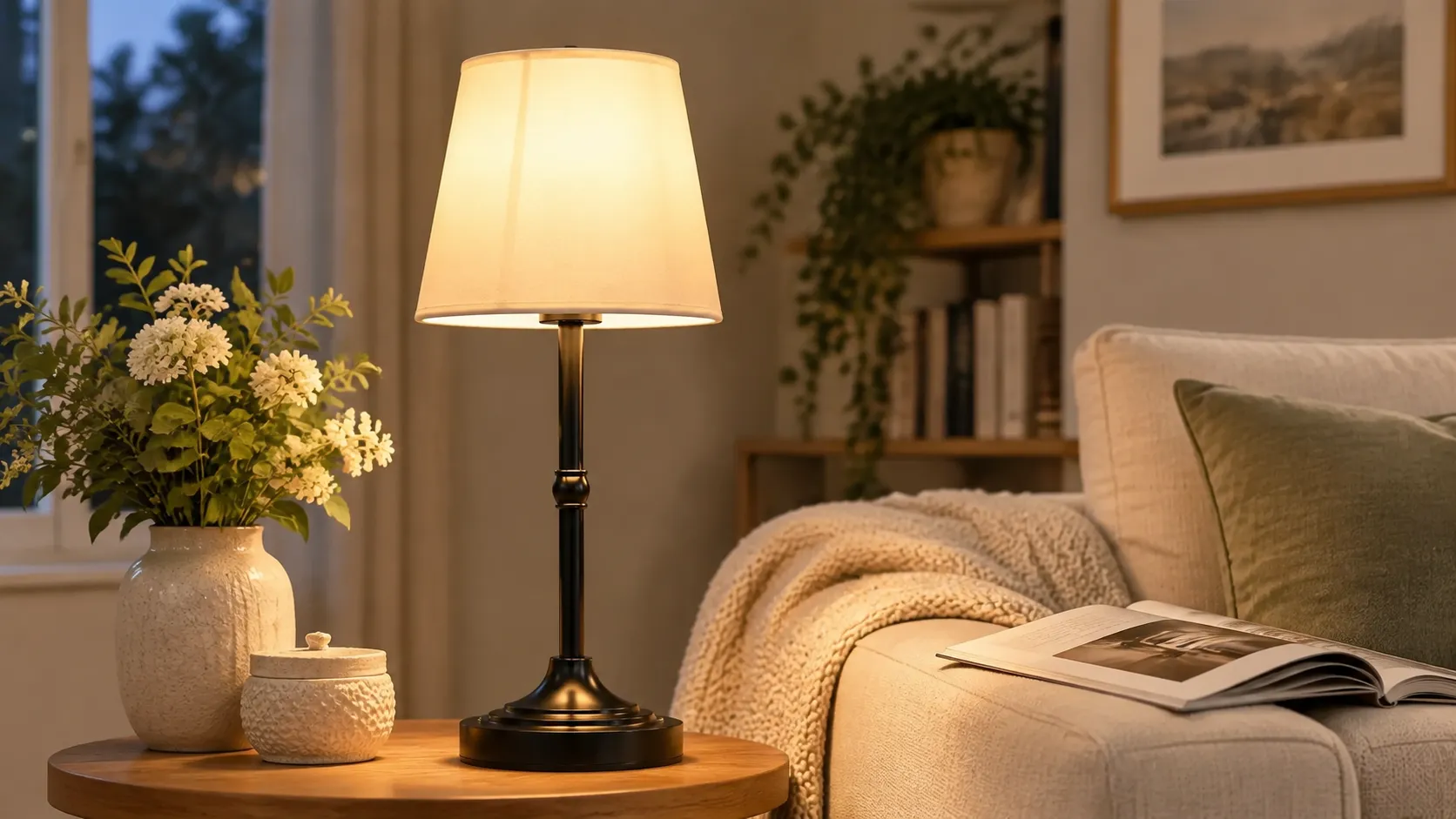
A hotel room has to work for a guest who reads at the bedside and for one who works at the desk, and one lamp model for both positions keeps the room simple to furnish. The hotel lamp with USB and outlet covers both: its pull chain picks warm light for the evening or a cooler white for desk work, the base carries one USB-A and one USB-C port with a 5 V 2.1 A output plus an AC outlet, and the socket is E26 on US versions and E27 on EU, UK and AU versions.
Our rechargeable dining table lamp is a different product. Its warm light suits a dinner service or a hotel bedside, neutral light a reception desk and white light a counter where staff read orders or receipts, so it is a table light for dining rooms and counters, and we do not list it as a reading lamp.
For Buyers: Putting Reading-Lamp Specs on the Quote
A reading lamp is judged on the page it lights, so the quotation has to state what the page will get. The table turns each check into a line on the request and shows where our current models stand; the flow after it is the order in which to settle them.
| Check | What to write on the quotation | Where our current lamps stand |
|---|---|---|
| Light color | White light only, with every color temperature step listed | Hotel lamp, gold table lamp and touch-dimmable bedside lamp list white color temperature steps; the wireless-charger lamp lists yellow, warm white and white; for the dimmable lamps, state it on the quote. The Santa lamp and color-changing night lights are decorative |
| Brightness | Full-output lumens at the top setting, compared with an 800-lumen reference | None of the lamps in this guide publishes a lumen figure; the dimmable lamps and the wireless-charger lamp state 3 W LED only, so lumens go on the quote |
| Color temperature | Each step in kelvin, and how the steps are switched | Hotel lamp 2700K, 3500K and 5000K by pull chain; gold table lamp 3000K, 4000K and 6200K; touch-dimmable bedside lamp three steps, kelvin to be stated |
| Color rendering | CRI (Ra) as a measured figure, 90 or higher where pages carry color | Gold table lamp CRI 90 or higher; the other models to be stated on the quote |
| Dimming | The control, and the range from the lowest to the highest step | Gold table lamp 5%–100% by long press; dimmable lamps by long press; touch-dimmable bedside lamp by touch |
| Head and aim | Fixed shade or turning head, and the height of the shade’s lower rim | Wireless-charger lamp on a 360-degree gooseneck; the others have fixed shades |
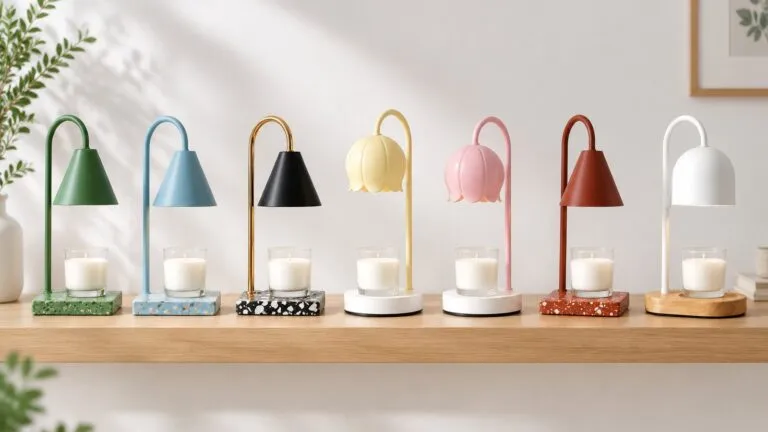
| Shade | Open at the bottom or diffusing, and how much light the material lets through | Linen drum (hotel lamp), tapered fabric (gold table lamp, dimmable lamps), printed cone (bedside lamp); judge the glow on a lit sample |
Fix the reading place
Bed, desk, sofa or guest room decides the power version, the footprint and whether the head has to turn.
Set the brightness
Write full-output lumens for the top setting, and plan for 30–50 footcandles on the page.
Set the color temperature
List the kelvin steps: a cooler white for study, a warmer white for the evening, or both on one switch.
Set the color rendering
Ask for CRI 90 or higher where pages carry color, as a measured figure rather than a claim.
Check the sample on a page
Put a book under the lit sample at the planned height, at the top and bottom steps, before the order is confirmed.
One trade-off belongs on the same sheet. A lamp that offers every step, from a daylight white to a low warm glow, is more to explain on a shelf card than a lamp with one fixed setting, so decide early whether the range is sold on reading performance or on looks, and write the steps to match.
Put the reading checks on your table lamp quotation
We build table and bedside lamps in our own factory in Foshan, 4,000 square meters with 40 people across two production lines, and shade, base finish, dimming and packaging are specified per style on the order. Sampling takes about 15 days, and the sample fee is refunded on your production order; how a sample is approved is set out on our sampling process page.
Watch it work
What a reading lamp has to do on the page, in 45 seconds:
FAQ
How many lumens do I need for reading?
For reading, the figure that counts is the light reaching the page: the IESNA Lighting Handbook range for library reading and studying is 30 to 50 footcandles, which is 30 to 50 lumens falling on each square foot of the page. A lamp rated in lumens is giving its total visible output, so the same lamp puts more light on a book when it sits closer and its shade opens downward. For a single lamp beside a bed or a chair, compare its top setting with the 800 lumens ENERGY STAR sets for a 60 W-equivalent bulb, then check the sample with a book in place.
Which light is the best for reading?
The best light for reading is white light aimed at the page, never a colored setting. Cool white suits study and close work, warm white suits relaxed evening reading, and a color rendering index of 90 or higher keeps colored print true. Put into a product, the best lamp for reading offers both ends of the white range, dims, and keeps its bulb hidden from the reader, with a room light left on as well.
How many watts do you need for a reading lamp?
A reading lamp has no correct wattage, because watts measure the power a lamp draws and lumens measure the light it gives. In the Department of Energy table, LED lamps reach the 800 lumens of an old 60 W incandescent at 5.9 to 10.5 watts, so two LED lamps of the same wattage can still differ in brightness. When a listing gives only watts, such as a 3 W LED, ask the maker for the lumen output instead of estimating it.
Sources
Every external figure above was checked on 2026-11-10: light levels from the IESNA Lighting Handbook values published by Archtoolbox, lumen equivalents from ENERGY STAR and the Department of Energy, color temperature ranges and the task-versus-living-space split from two Department of Energy publications, color rendering floors from the Pacific Northwest National Laboratory analysis and the CIE method record, melatonin figures from Harvard Health Publishing, and glare guidance from the Consumer Product Safety Commission. Product details are those of our own lamps.
- Archtoolbox, Recommended Lighting Levels, values from the IESNA Lighting Handbook of the Illuminating Engineering Society (library reading and studying 30–50 footcandles, 300–500 lux; dormitory living quarters 20–30 footcandles; one footcandle is one lumen on one square foot), retrieved 2026-11-10.
- ENERGY STAR, U.S. Environmental Protection Agency, Learn About Brightness (brightness is light output, measured in lumens, not watts; minimum lumens for 40, 60, 75 and 100 W incandescent bulbs are 450, 800, 1,100 and 1,600), retrieved 2026-11-10.
- U.S. Department of Energy, Federal Energy Management Program, Purchasing Energy-Efficient Light Bulbs, Table 2 (800 lumens: 60 watts incandescent against 5.9 to 10.5 watts LED; lumens measure total visible light, watts measure power input), retrieved 2026-11-10.
- U.S. Department of Energy, Energy Saver Guide, 2022 (about 800 lumens to replace a 60 W equivalent; warm or soft light 2700–3000 K, cool or bright light 3500–4100 K, blue-white light that mimics daylight 5000–6500 K), retrieved 2026-11-10.
- U.S. Department of Energy, Solid-State Lighting Program, Lighting Facts fact sheet (cool white light is usually better for visual tasks and warm white light for living spaces; 2700–3600 K recommended for most general indoor and task lighting; higher Kelvin is cooler; the higher the CRI, the truer the appearance of objects, with incandescent at 100), retrieved 2026-11-10.
- U.S. Department of Energy, archival copy, Royer, M., Analysis of Color Rendition Specification Criteria, Pacific Northwest National Laboratory, 2019 (IES Lighting Handbook, 10th edition: Ra 80 general interior, 85 color appraisal, 90 color matching and reproduction; California Title 24 JA8: Ra 90 with R9 of 50 or more for residential new construction), retrieved 2026-11-10.
- International Commission on Illumination (CIE), CIE 013.3-1995, Method of measuring and specifying colour rendering properties of light sources (eight test-colour samples for the general index; the method excludes sources of predominantly monochromatic radiation), retrieved 2026-11-10.
- Harvard Health Publishing, Blue light has a dark side, 24 July 2024 (6.5 hours of blue light suppressed melatonin about twice as long as green light of comparable brightness and shifted circadian rhythms by 3 hours against 1.5; dim red lights advised for night lights, since red is less likely to shift circadian rhythm), retrieved 2026-11-10.
- U.S. Consumer Product Safety Commission, Safety for Older Consumers: Home Safety Checklist, Publication 701 (indirect lighting or frosted bulbs can be used to reduce glare), retrieved 2026-11-10.
