

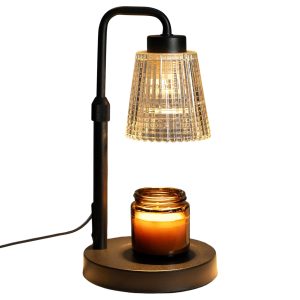
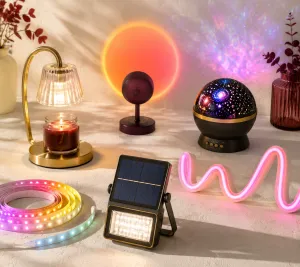
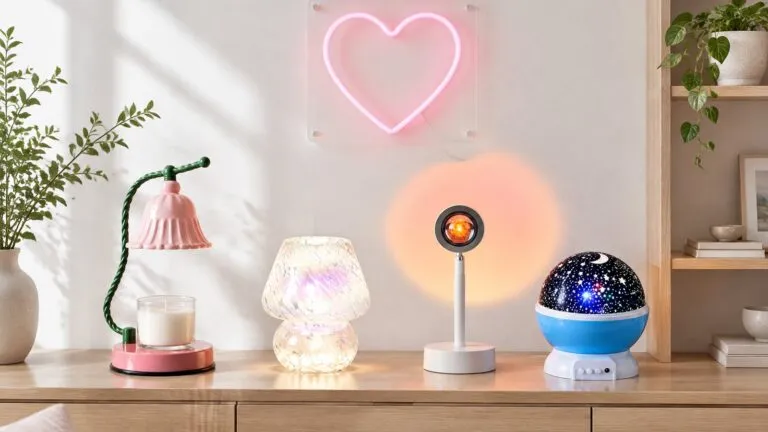
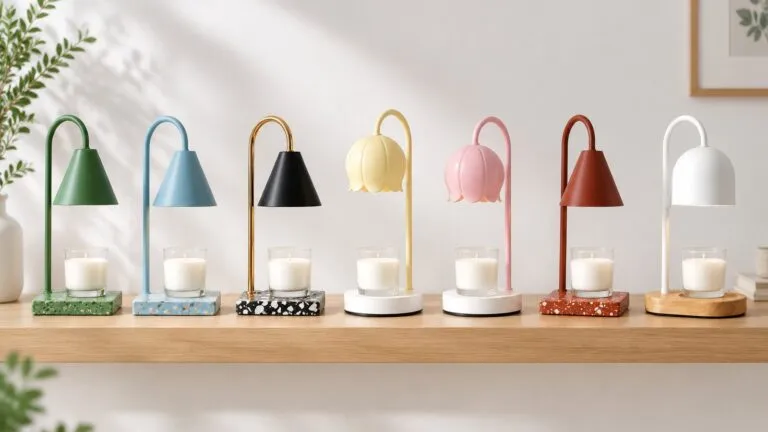
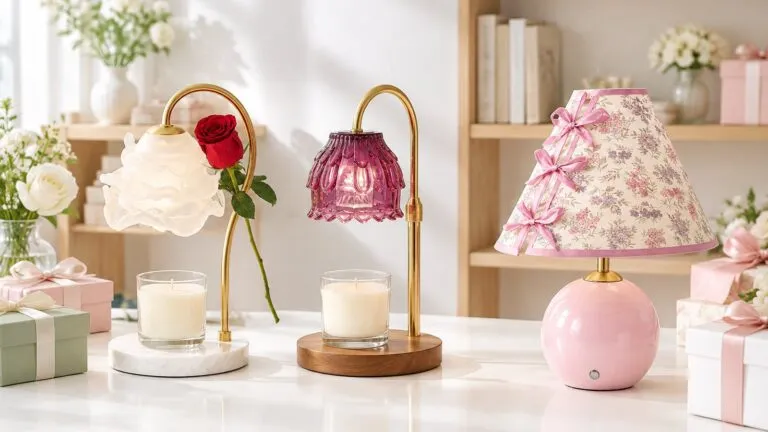

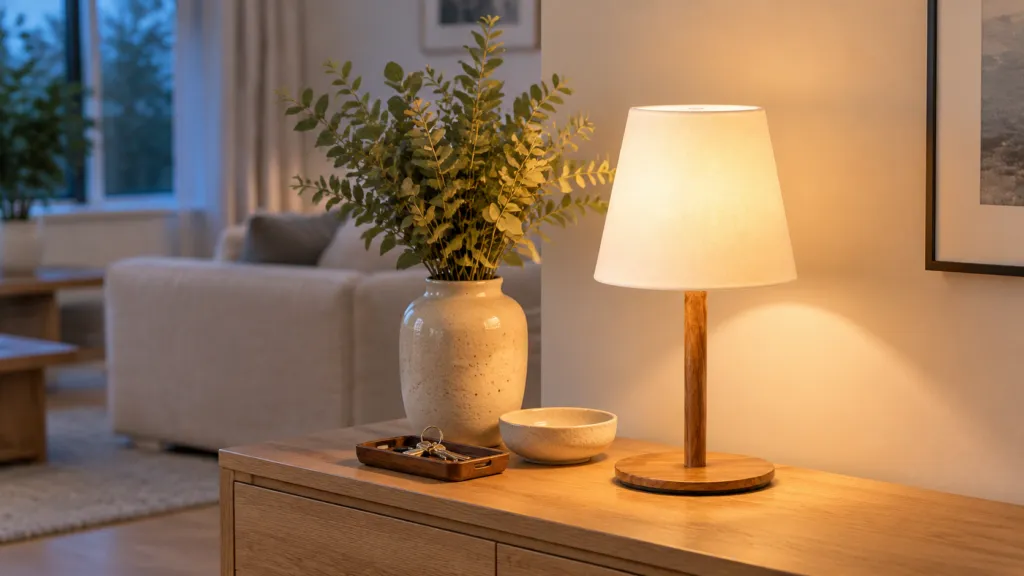
The living room lamp ideas that still work after dark start from two answers: light all three layers lighting designers work in (ambient, task and accent), and give a table lamp to every seat where someone reads, then to the console, the bookshelf and the darkest corner. The rest is styling.
This page is about table lamps. Search results for lamps for living room ideas lean hard on the floor lamp in the corner, and that piece appears below only as something a table lamp has to stand beside, because table lamps are what we build in our own Foshan factory. Every design pictured comes from our decorative table lamps range, one different lamp per idea.
If the names are the sticking point, our lamp names guide sorts them out. What follows is narrower: how many lamps a living room takes, where they go, and six pairings shown lamp by lamp.
Key takeaways
Count layers before lamps, then give each reading seat its own lamp and each surface you want to glow its own accent. Set the bottom of the shade near seated eye level, keep every lamp in the room in the same warm band, 2700K to 3000K, and use a cordless lamp anywhere an outlet would leave a cord across the floor.
- Lighting designers work in three layers, ambient, task and accent, and one fixture can cover two of them, so the count starts with layers rather than with a number of lamps.
- Illuminating Engineering Society figures put dormitory living quarters at 20 to 30 footcandles and reading at 30 to 50, which is why the reading chair needs a lamp of its own.
- Set the bottom of the shade near seated eye level; beside a standard 17 to 20 inch sofa that usually means 24 to 30 inches of lamp.
- Keep every lamp in the room between 2700K and 3000K, the warm range university extension guidance gives living rooms, and set color-changing lamps to their warmest step.
- On a shop floor, stage the lamps in the six spots and print height, shade size, power type and every light-color setting on the card.
How Many Lamps in a Living Room: Count Layers, Then Seats
A living room needs light in three layers, ambient, task and accent, and its table lamps are counted from the room itself: one beside every chair or sofa end where someone reads, plus one for each shelf, console or corner that should glow in the evening. Lighting designers use those three layers of light, and some fixtures do two of the jobs at once (1000Bulbs), so the count starts with layers and finishes with seats.
The reading seat gets a lamp of its own because the light levels are far apart. Handbook figures from the Illuminating Engineering Society, as tabulated by Archtoolbox, put dormitory living quarters at 20 to 30 footcandles and library reading and studying at 30 to 50, while a general corridor needs only 5 to 10 (IESNA Lighting Handbook, via Archtoolbox). The table has no living room row, so the living quarters row is the nearest; the gap between it and the reading row is why one overhead fixture leaves the armchair underlit.
The ambient layer is where table lamps run out. Take the lower end of that IES living-quarters row, 20 footcandles; one footcandle is one lumen per square foot, so a 12 by 16 foot room, 192 square feet, needs at least 3,840 lumens on the floor before any losses, on our arithmetic. Decorative table lamps are not built to carry that load, which is why a ceiling fixture or a floor lamp normally supplies the ambient layer and the table lamps supply the pools.
Accent is the layer small table lamps do best. The American Lighting Association’s Lighting Your Life, as quoted by 1000Bulbs, says accent lighting is most effective when the focal point is three times as bright as the space around it (1000Bulbs, quoting the American Lighting Association). The scale shows on battery models: our woven-shade boho lamp is rated at 120 lm, while ENERGY STAR rates a 60 W-equivalent bulb at a minimum of 800 lumens (ENERGY STAR). That makes the boho lamp an accent light first, for a shelf or a sill; the main reading lamp beside an armchair is a separate choice.
Bedrooms count differently because the main seat is the bed; our bedroom lighting ideas build the same three layers around the pillow. A studio, where one room does every job, is split into separately lit zones in our guide to decorating a studio apartment.
Where to Put Lamps in Living Room: Five Spots That Earn One
Put table lamps at the ends of the sofa, beside each reading chair, on the console behind the sofa or by the entry, on a bookshelf, and on a surface in the darkest corner. Those five spots cover both the seats and the places the eye lands in the evening, and each of them gets an idea of its own below.
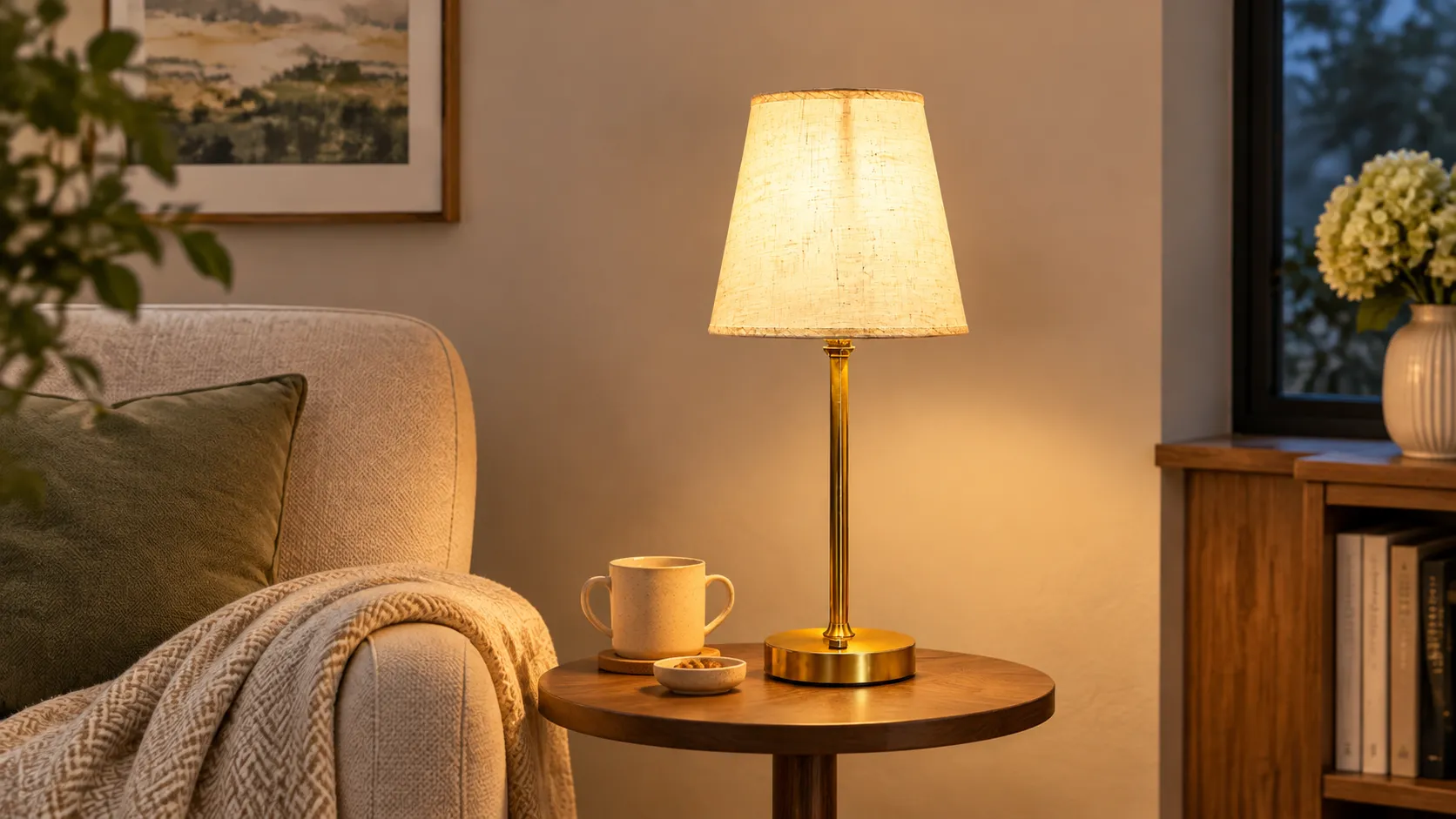
Height decides whether a lamp in one of those spots works. Lighting New York’s living room guide puts the bottom of the lampshade roughly at eye level for someone seated, and gives a total lamp height of 24 to 30 inches as a starting point beside a standard sofa of 17 to 20 inches, or 28 to 34 inches beside a tall sofa of 21 inches and up (Lighting New York). When the shade sits too high, the seated reader looks up into the bulb; when it sits too low, the light lands on the table and misses the page.
Beside a standard sofa that guide starts at 24 to 30 inches. Our two tallest living-room lamps fall short of it: the ceramic column, at about 56 cm or roughly 22 inches on our conversion, is sized for a living-room end table or a sideboard, and the pleated traditional lamp, at 480 mm (18.9 in), suits an end table or a sideboard; beside a sofa, check where the shade’s lower rim lands against seated eye level, since a taller end table lifts it. The four small designs in the chart below, 24 to 39.5 cm, are for shelves, consoles, sills and narrow side tables. For a taller sofa-end pair, write the height into the inquiry: heights and shade diameters are part of the tooling brief.
Source: BeginLighting product pages for the wood base lamps, touch lamps, boho table lamp, slim table lamp, traditional table lamp and modern table lamps, retrieved 2026-11-10
Cords decide the rest. A console behind a floating sofa, a shelf halfway up a wall and a window sill rarely have an outlet beside them. That is where a cordless lamp earns its place; our checklist of the best cordless table lamps covers battery, run time and charging before you buy one.
Mark the seats
Sketch the room and dot every chair and sofa end. Each dot where someone reads gets a lamp within arm’s reach.
Mark the surfaces
Circle the console, shelves, sideboard and sill you want lit after dark. These take the accent lamps.
Check the shade height
Sit in each seat and measure from the floor to your eyes. The bottom of the shade should land close to that line.
Map the outlets
Wherever a cord would cross a walkway or run under a rug to reach the spot, switch that spot to a rechargeable lamp.
Fix one warm band
Keep every lamp in the room in one warm band, 2700K to 3000K, and set any color-changing lamp to its warmest step before you judge the result.
Living Room Table Lamps Ideas: Six Pairings, Six Different Lamps
Six ideas follow, each shown with a different lamp from our range: the sofa ends, the sideboard, the console, the bookcase, the window sill and open shelving. Each is described by its power, its shade and its height.
Most living room lamps ideas online stop at the photograph; these add the specification a store would print on a shelf card.
A matched pair of pleated lamps at the sofa ends
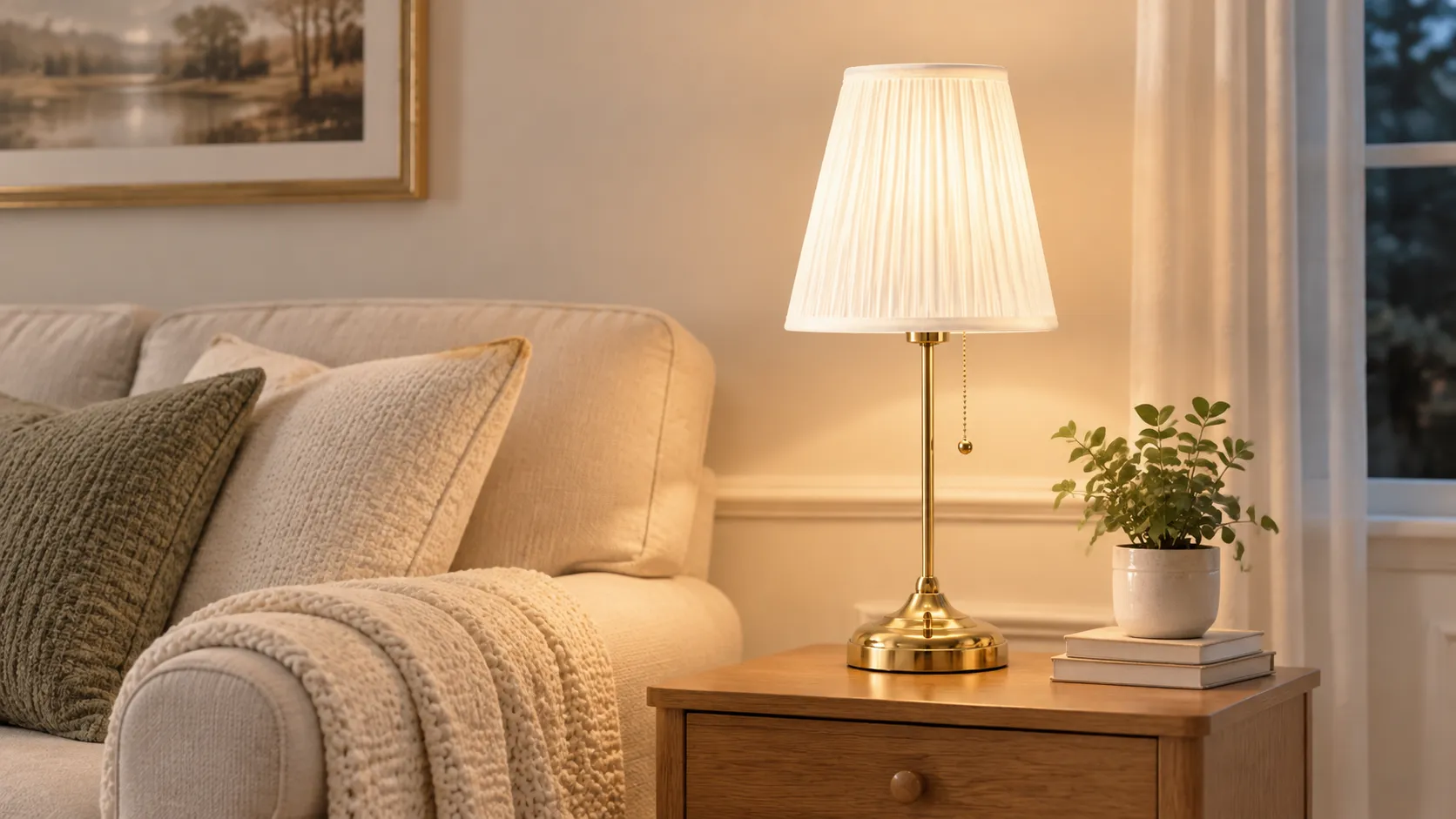
The pair is the oldest living room arrangement and still the safest: two identical lamps either side of a sofa make the seating read as one group. It is a pair like the one our mood lighting retail guide builds a cozy living-room set around. Our traditional table lamp fits the role with a tapered, finely pleated white fabric shade on a slim stem, a weighted round base with an anti-slip pad underneath, and a bead pull chain below the lamp holder.
It comes in brass tone or chrome with a UK, EU or US plug. At 480 mm (18.9 in) it is shorter than the 24 to 30 inches the living room guide starts from beside a standard sofa, so check the eye-level rule on the end tables you actually have: a taller end table brings the bottom of the shade up toward seated eye level. If the pair itself has to dim, as the pair in that retail guide does, use two of the white-shade touch lamps below instead; they dim when the switch is held.
A tall ceramic lamp to anchor the sideboard
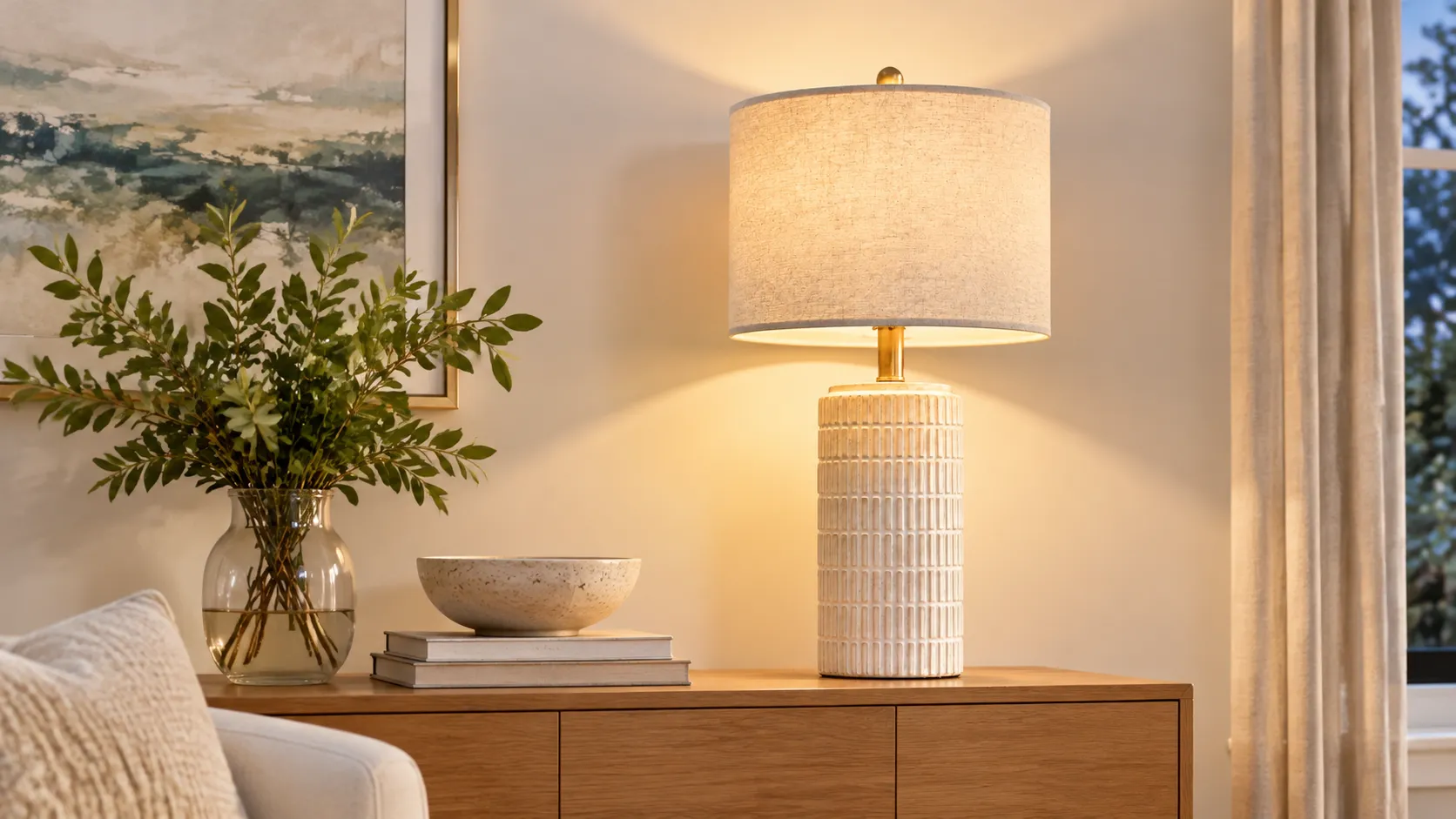
A sideboard wants one lamp with real height and a wide shade, so the light spreads up the wall as well as across the top. The modern table lamp in our range does it with a tall off-white ceramic column 15 cm across, glazed with fine speckles and a raised rectangular grid, under a straight fabric drum 32 cm wide.
It takes standard E27 bulbs up to 60 W, which means the light color is set by whichever bulb goes in, and it is offered in single packs or pair packs, so the same design can stand alone at one end of a sideboard or flank it as a pair.
A cordless lamp on the console behind the sofa
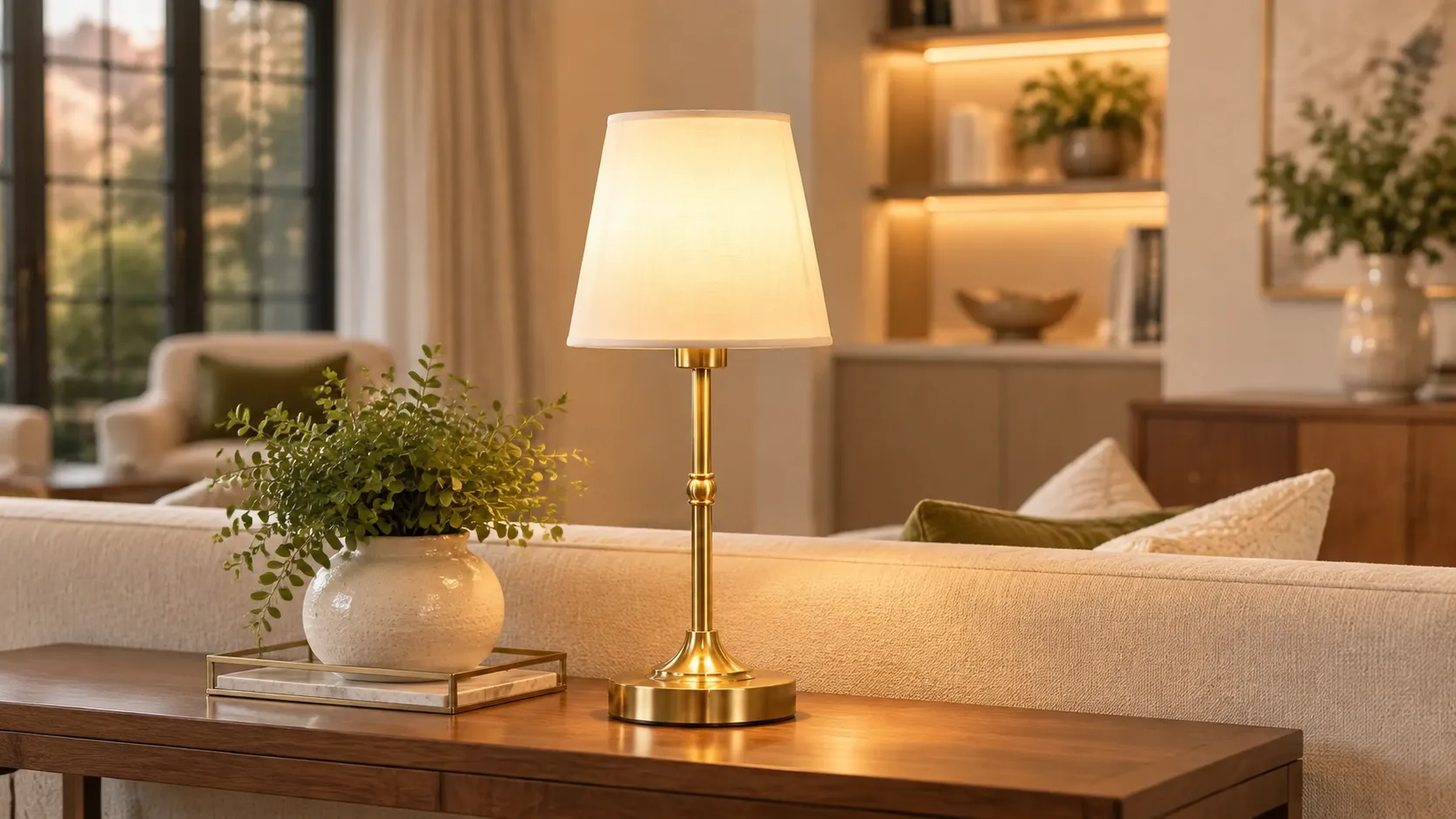
A sofa that floats away from the wall leaves its console with no outlet. Our rechargeable touch lamps put a plain white or cream fabric shade on a gold-tone iron stem; a tap switches the 3 W, 2700K warm LED, pressing and holding dims it, and the built-in battery charges through USB-C, offered as a 2000 mAh version and a higher-capacity version.
On the telescopic stem the height adjusts, 31.5 to 39 cm with the tapered shade, so the same lamp can sit low on the console and rise beside an armchair. When the battery runs low it keeps working on USB power from an adapter, a power bank or a laptop.
Printed shades to put color on a bookcase
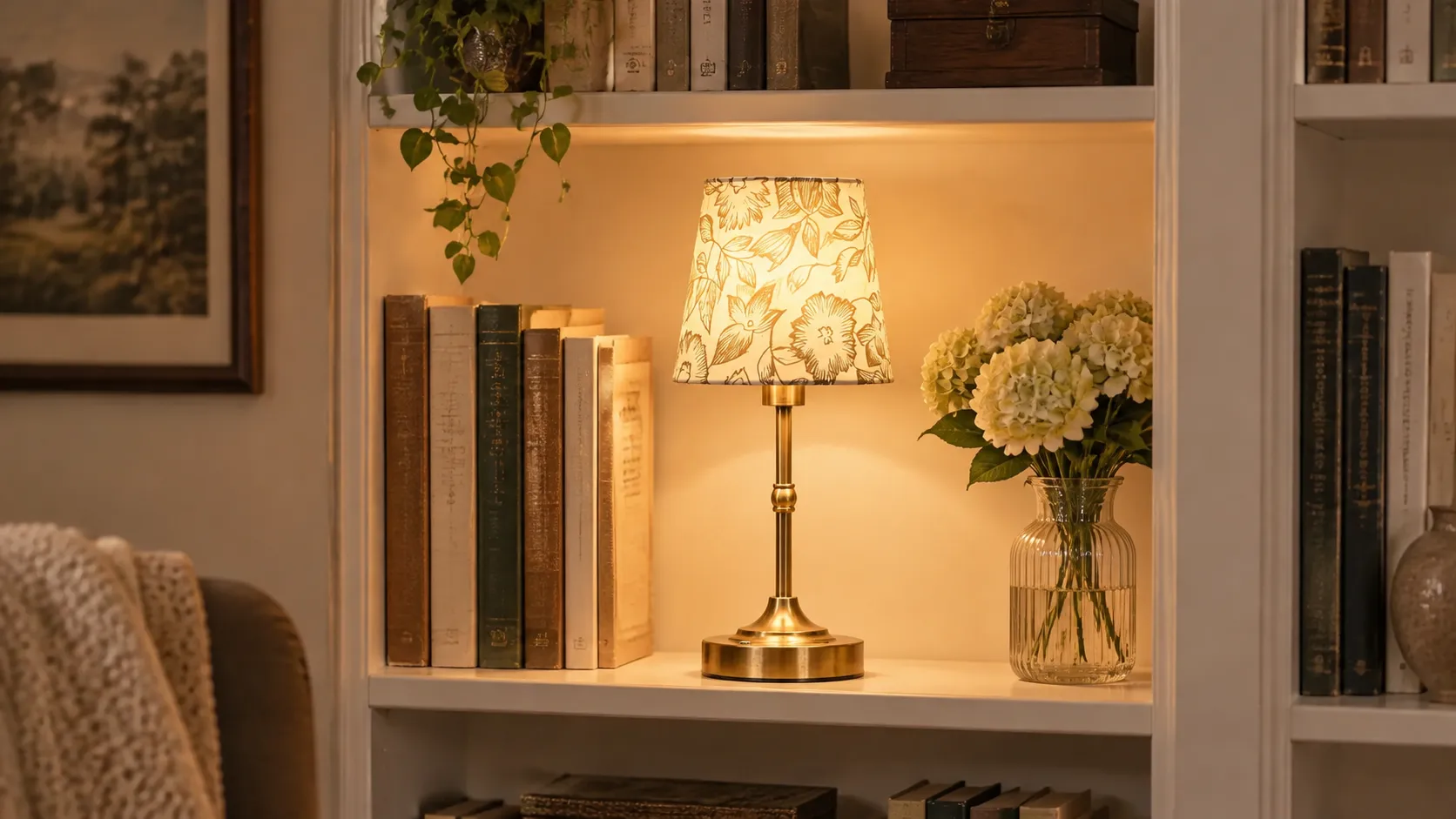
A printed shade adds color to a bookcase whether the lamp is on or off. The colorful table lamps in our range come with four printed fabric shades: palm-leaf and floral prints on tapered shades, a pleated shade with a gray-green lattice and dark trim, and a pleated chartreuse-yellow shade with white flowers.
Each sits on a slim gold-tone iron stem over a stepped, flared base, gives a single 2700K warm light dimmed by touch, and holds a 2000 mAh or 5200 mAh battery. Lit, the palm-leaf and floral prints glow gold-brown on cream, so look at them both ways before you choose one for a shelf.
A woven shade on the window sill
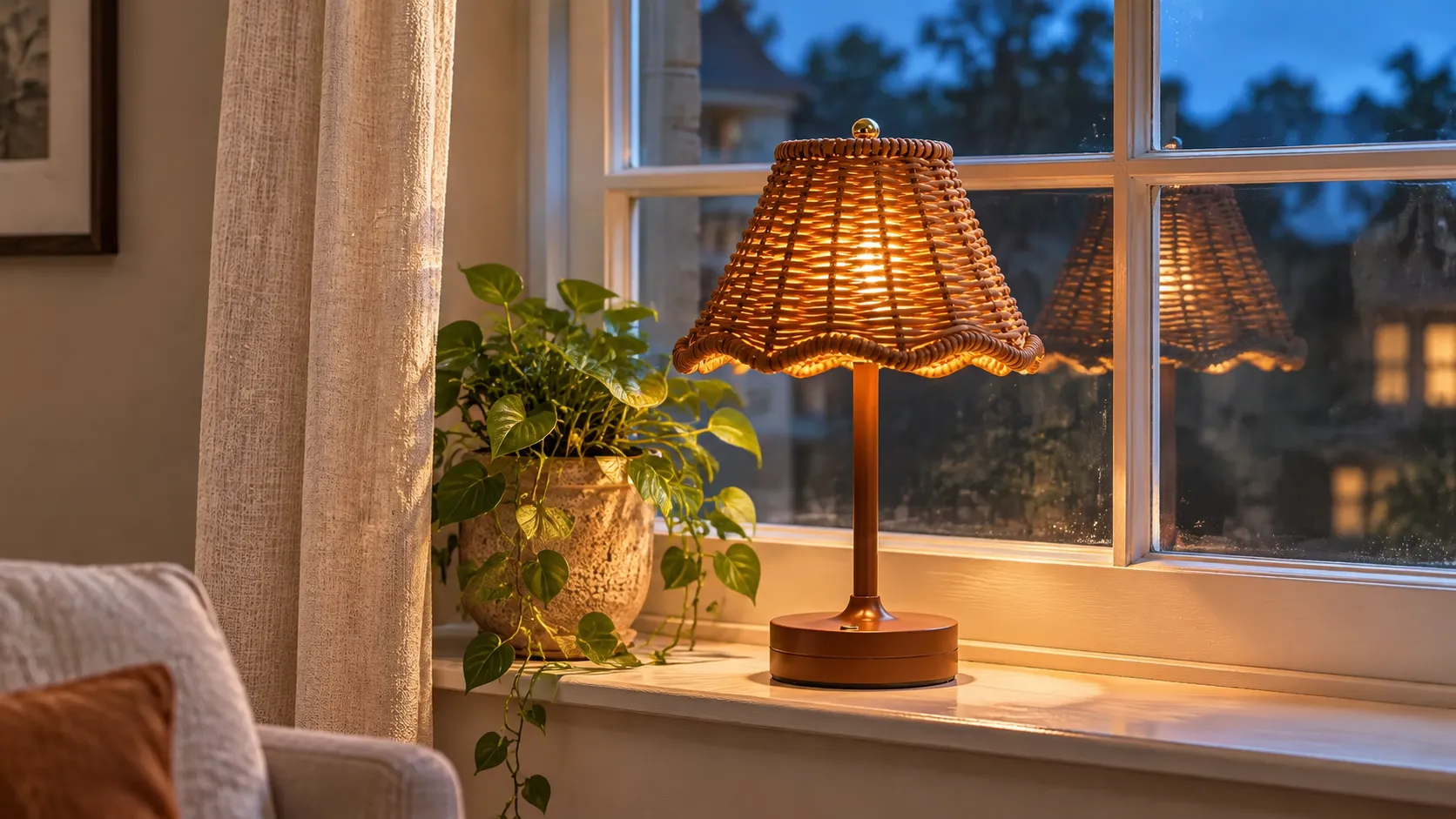
A window sill or a narrow plant shelf takes only a small base, and a textured shade looks finished from the street as well as from the sofa. The boho table lamp’s woven-look shade flares from a gold-tone ball finial to a wavy, scalloped lower edge, in brown or off-white with a stem and base to match, and the whole lamp stands about 32 cm tall.
One touch point on top of the base switches it, a long press dims it, and the light moves between 3000K, 4500K and 6500K. In a living room where everything else is warm, set it to 3000K and leave it there.
Small wood-base lamps along open shelving
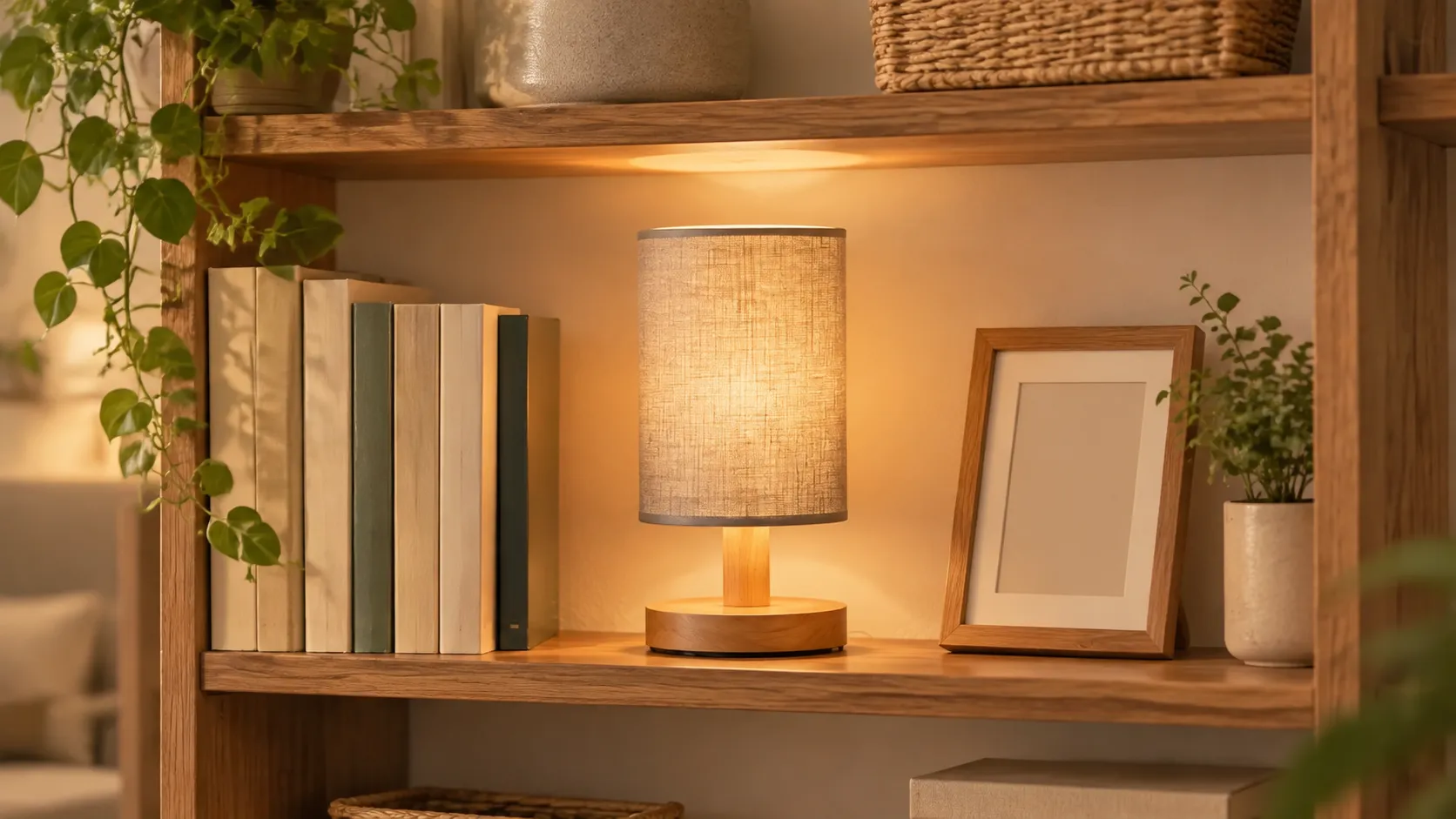
Open shelving needs lamps short enough to clear the shelf above, and several small ones read better than one large one. Our wood base lamps stand about 24 cm tall in the USB version, with a straight fabric cylinder 13 cm wide and 18 cm tall on a flat round wooden base, and come in USB, rechargeable touch and US plug-in versions.
The rechargeable versions give about 15 hours per charge, which suits a high shelf nobody wants to reach every evening. Six shade designs, plain grey, natural tan and white plus three prints, let one shelf mix them without looking random, and the wooden base can be laser-engraved for a private-label line.
Spot by Spot: Which Table Lamp Goes Where
The table gathers the ideas into one view: each spot, the table lamp that fits it, and the check that decides whether it works. The photographs above carry the detail.
| Spot | Which table lamp | What to watch |
|---|---|---|
| Sofa ends | A matched pair with fabric shades; plug-in is fine where an outlet sits behind the sofa | Shade bottom near seated eye level; both lamps on the same light color |
| Reading chair | A dimmable lamp whose shade hides the bulb from the seat | Reading wants more light than the room around it: 30 to 50 fc against 20 to 30 |
| Console behind a floating sofa | A rechargeable lamp, ideally on a telescopic stem | No outlet nearby; someone has to own the charging |
| Entry or hall table | A small touch lamp switched from the top of the shade | Reachable with one hand while coming in; set to the warm step |
| Bookcase and open shelves | Short lamps, such as the four 24 to 39.5 cm designs above, in one shade family | Clearance under the shelf above; the cord or the charging port at the back |
| Window sill | A cordless lamp on a small base | Base width against the sill depth; the lamp is seen from outside too |
| Sideboard | One tall lamp with a wide drum shade, or a pair | Shade wide enough to wash the wall above, not just the top |
Read it as a starting order rather than a rule: a room with no reading chair can skip that row and spend the money on the shelves. The small-pools approach behind the whole table is the same one our cozy bedroom ideas recommend for a bedroom: several warm, low lights instead of one bright overhead bulb.
Light Color, Dimming and Cords: What Makes the Ideas Look Right
Keep every lamp in the living room in the same warm band, 2700K to 3000K, and choose lamps that dim or step down, so the room can move from reading light to evening glow without anyone getting up to switch lamps off.
University of Maryland Extension’s home lighting guide puts 2700K to 3000K, warm or cozy, in living rooms and bedrooms, 3500K to 4000K in kitchens and offices, and 5000K to 6500K daylight in garages and task areas (University of Maryland Extension). That is the same 2700K to 3000K band our mood lighting retail guide holds a whole living-room set to. Several lamps above change color, the traditional lamp gives 3000K, 4500K and 6000K with a three-color bulb, the boho lamp runs up to 6500K and the small touch lamp up to 6000K, so the warm step is the one to set at home and to show on a display.
Dimming is the other half. The 1000Bulbs guide recommends dimmers in every room so the light can follow the time of day. The touch lamps, the colorful lamps and the boho lamp dim when the switch is held, and the slim lamp steps through 20%, 50% and 100% from a button on its base. The pull-chain traditional lamp has no dimming listed, which is fine at a sofa end if a dimmable lamp elsewhere sets the evening level.
Cordless lamps trade a cord for a charging routine, and only the boho lamp’s figure comes with a brightness setting attached: 6 to 8 hours per charge for the slim lamp, about 15 hours for the rechargeable wood base lamps, 8 hours at low brightness for the boho lamp. For any of the three, ask for run time at full brightness on the quote when a lamp has to last a whole evening on a display or beside a reader.
For Retail Buyers: Turning These Ideas Into a Display and an Order
The six living room lamp ideas above map straight onto a lamp assortment: a matched pair for sofa ends, one tall lamp for the sideboard, and small cordless lamps for consoles, shelves and sills. Stage a home-decor floor in that order, so shoppers see each lamp where it would sit at home.
Labeling matters because returns cost money. Retailers surveyed for a National Retail Federation and Happy Returns report estimate that 2025 returns will reach 15.8% of annual retail sales, $849.9 billion, and 19.3% of online sales (National Retail Federation). Height and light color are what a photograph hides, so put overall height, shade size, power type and every light-color setting on the card or listing.
Ordering follows the same map. Mixed orders across these designs go on one quote, line by line, with stem, shade, battery version and plug type written for each; shade prints, finishes and logo labels are specified per style, and the full set of designs sits in our table lamps range. We keep this range on low-MOQ wholesale terms. Sampling takes about 15 days, and sample fees are refundable on your production order.
Build a living room lamp range around these spots
We make table lamps in our own factory in Foshan, 4,000 square metres with 40 people on two production lines, so shade, stem, battery version, plug and logo label are lines you write on the specification. Sampling takes about 15 days, and sample fees are refundable on your production order. Send the spots you are stocking for and the designs you like, and we will quote the mix.
Watch it work
How many lamps a living room takes and where they go, in 40 seconds:
FAQ
Do lamps need to match?
No, only where the eye expects symmetry. Two lamps that flank a sofa, a bed or a sideboard look deliberate when they match and accidental when they nearly match, so buy those as a pair, or as a pair pack where a design is sold that way. Everywhere else, mixed shapes look collected over time rather than bought as a set, provided they share one warm light band and the lamps on any one surface, a shelf or a sideboard, share a shade family, such as all fabric or all woven.
How tall should end table lamps be?
Tall enough that the bottom of the shade meets your eyes when you sit, which makes the answer a sum rather than one number. Sit on the sofa, measure from the floor to your eye line, subtract the height of the end table, and the result is the lamp’s height to the bottom of its shade; the shade sits on top of that. Do it once per seat, because an armchair and a deep sofa rarely put your eyes at the same height.
How to choose a lamp for living room?
Choose by the spot first and the style second. Decide where the lamp goes, check whether an outlet is within reach of it, and measure the height it has to reach; only then pick a shade and a finish. In the store, switch it on and sit down next to it: if you can see the bulb from the seat, or have to stand up to find the switch, it is the wrong lamp for that spot however good it looks.
Sources
Every external figure above was checked on 2026-11-10: light levels from the Illuminating Engineering Society handbook as tabulated by Archtoolbox, the three layers from 1000Bulbs and the accent ratio from the American Lighting Association as quoted there, shade height from Lighting New York, color temperature from University of Maryland Extension, minimum lumens from ENERGY STAR and returns from the National Retail Federation. Dimensions, batteries and light colors of our own lamps come from the BeginLighting product page for each lamp named, read on 2026-11-10.
- Archtoolbox, Recommended Lighting Levels, citing the IESNA Lighting Handbook, Illuminating Engineering Society (dormitory living quarters 20 to 30 fc, 200 to 300 lux; library reading and studying 30 to 50 fc, 300 to 500 lux; general corridor 5 to 10 fc, 50 to 100 lux), retrieved 2026-11-10.
- 1000Bulbs, The Three Layers of Lighting Design Explained (lighting designers use three layers of light, ambient, accent and task; some fixtures serve two layers at once; quoting the American Lighting Association’s Lighting Your Life, accent lighting most effective when the focal point is three times as bright as the surrounding space; table and floor lamps listed among common task lights; dimmers recommended in every room), retrieved 2026-11-10.
- Lighting New York, Find the Perfect Height: Living Room Lamp Guide (bottom of the lampshade roughly at eye level when seated; standard sofas 17 to 20 inches high, with a total lamp height of 24 to 30 inches as a starting point; tall sofas 21 inches and up, with lamps of 28 to 34 inches), retrieved 2026-11-10.
- University of Maryland Extension, Home Energy: Lighting, Drew Schiavone, updated 14 July 2026 (CCT sets the mood: 2700–3000K warm/cozy for living rooms and bedrooms, 3500–4000K neutral for kitchens and offices, 5000–6500K daylight for garages and task areas), retrieved 2026-11-10.
- ENERGY STAR, U.S. Environmental Protection Agency, Learn About Brightness (minimum lumens 450, 800, 1,100 and 1,600 for old 40, 60, 75 and 100 W incandescent bulbs), retrieved 2026-11-10.
- National Retail Federation, Consumers Expected to Return Nearly $850 Billion in Merchandise in 2025, 15 October 2025 (NRF and Happy Returns: retailers estimate 15.8% of annual sales returned, $849.9 billion, and 19.3% of online sales), retrieved 2026-11-10.
