




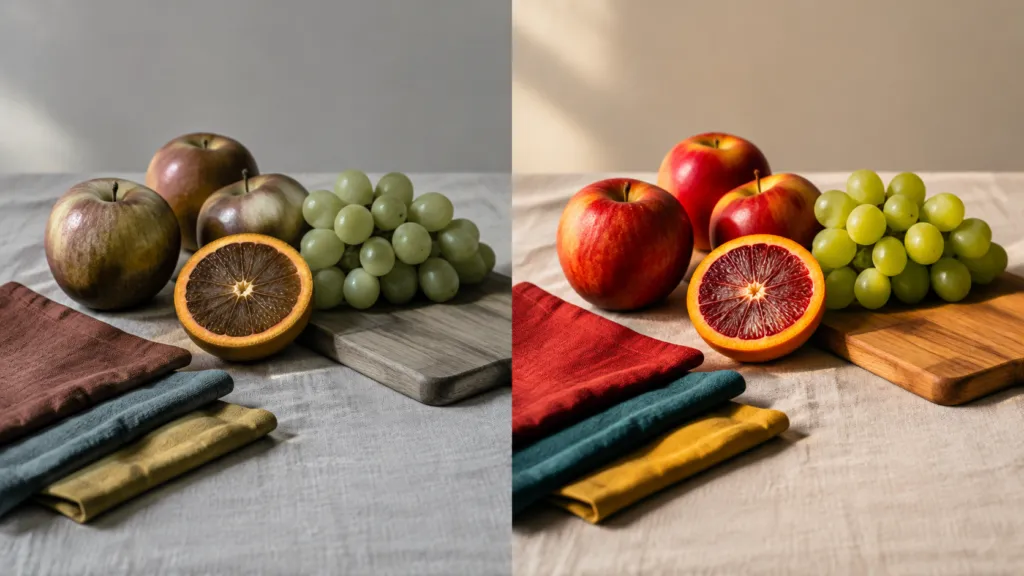
What is CRI in lighting? CRI, the color rendering index, scores on a 0 to 100 scale how faithfully a light source shows the colors of objects compared with a reference source of the same color temperature. A score under 80 misses the floor ENERGY STAR set for LED lamps and the IES Lighting Handbook sets for general interiors; 90 or higher is the Handbook level for color matching and what California requires of most indoor LED sources in new homes. A score of 100 means the test colors look exactly as they do under that reference, and every point below it is measured color shift.
A buyer writing a purchase order needs more than that, above all the red score R9 and a way to check a supplier’s claim. The formats we build sit in our LED strip lights range, where CRI is a figure you set on the order rather than one we print on a box.
Key takeaways
CRI averages eight pastel color shifts against a reference of the same color temperature. Use 80 as the floor, 90 where color is judged at the sale, and ask for R9 beside it.
- The strong red sample R9 sits outside the average and can be near zero under an acceptable Ra.
- ENERGY STAR lamps needed Ra 80 and R9 above zero; California JA8 needs Ra 90 and R9 of 50 or more.
- A bright, warm 2700K source can still render colors poorly: lumens and Kelvin measure other things.
- About 80% of listed LED products at Ra 80 or more scored 80 to 85, the most efficient way over the line (PNNL, 2019).
- On premium programs, add TM-30 Rf, Rg and red chroma shift, and hold repeat runs to a sealed sample.
What Is CRI? A Definition You Can Quote
CRI is a single number from the International Commission on Illumination (CIE) test method that rates how closely a white light source reproduces the colors of standard test samples, compared with a reference light of the same color temperature.
US federal rules word it more plainly: color rendering index is “the measured degree of color shift objects undergo when illuminated by a light source as compared with the color of those same objects when illuminated by a reference source of comparable color temperature” (ENERGY STAR, quoting 10 CFR 430.2). The method, CIE 13.3, takes a general index from eight test-color samples and adds special indices from six more: a strong red, yellow, green and blue, plus complexion and foliage (International Commission on Illumination). The general index is written Ra, and Ra is what a box means by CRI 90.
Below 5000 K the calculation compares the lamp with a blackbody radiator, which an incandescent filament closely approximates; at 5000 K and above it uses a CIE daylight illuminant (Royer, LEUKOS). A warm 2700K source and a cool 5000K source can both score 95 against their own references while the same red sweater looks different under each. CRI measures faithfulness to a reference, never how pleasant a room looks.
The method is old: adopted by the CIE in 1965, revised in 1974 and republished unchanged in 1995, averaging muted pastel samples from the Munsell library (Royer, LEUKOS).
CRI Meaning in Practice: 80 vs 90 vs 95+
In practice the CRI meaning comes down to three lines: 80 is the floor for general interiors, 90 is the step up wherever color gets judged, and 95 and above is a buyer’s own choice rather than anything a code or rating program in our sources asks for.
The 10th edition of the IES Lighting Handbook recommends Ra 80 for general interiors, 85 for color appraisal and 90 for color matching, and the industrial practice RP-7-01 accepts 70 for important tasks (Royer, U.S. Department of Energy). California sits either side: Title 20 requires Ra 82 for lamps sold in the state, and the residential JA8 rule requires 90 of every other light source (California Energy Commission).
Source: floors as tabulated in Royer, Analysis of Color Rendition Specification Criteria (U.S. Department of Energy archival copy, 2019), cross-checked against the ENERGY STAR Lamps Version 2.1 specification and the California Energy Commission 2025 compliance manual; upper bound of 100 added here; retrieved 2026-10-12
The real decision is 80 against 90, and the market explains why. In a 2019 analysis for the U.S. Department of Energy, Pacific Northwest National Laboratory found that about 80% of products listed by LED Lighting Facts at Ra 80 or more scored between 80 and 85. A blue LED chip under a yellow-green phosphor is the most efficient way over the 80 line, so products bunch just above it. Moving past that design could mean a red phosphor or a red LED, among other routes the paper lists.
| Ra band | What shoppers see | Where it fits | Published anchor |
|---|---|---|---|
| Below 80 | Reds turn brown, skin looks sallow, deep greens and blues go muddy | Plant rooms, outdoor security, stock nobody shops from | Under the ENERGY STAR and IES general interior floors; RP-7 allows 70 for some industrial tasks |
| 80 to 89 | Most colors fine; saturated reds and deep woods go flat when R9 is low | Corridors, stockrooms, ambient light in stores and offices | IES Handbook: 80 general, 85 color appraisal; California Title 20: 82 |
| 90 to 94 | Food, fabric and timber read close to the reference | Fresh food, apparel, cosmetics, kitchens, display shelves | IES Handbook color matching; California JA8 with R9 of 50 or more |
| 95 and up | Gains show mainly when two samples sit side by side | Swatch matching, inspection benches, product photography | No code or program in our sources asks for it; back it with TM-30 data |
The 80 floor has a thin pedigree. ENERGY STAR adopted it in 2001, and the same paper notes it rested on technology capability, manufacturing tolerance and common practice rather than experiments. Treat 80 as a filter for the worst products, not proof that a light looks good.
Color Rendering Index vs Color Temperature vs Lumens
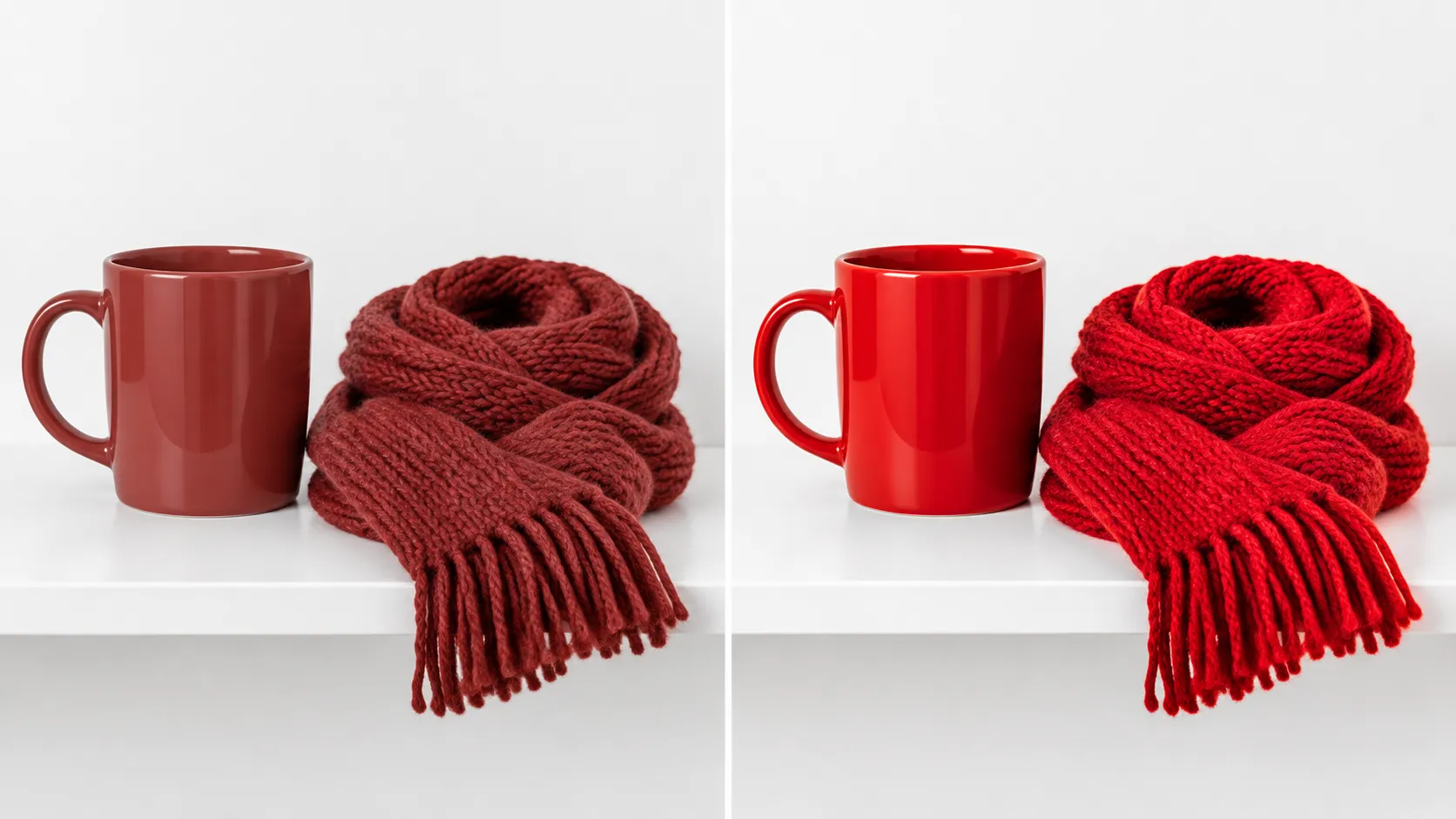
Lumens measure how much light a source gives, color temperature describes what color the white light itself looks, and the color rendering index rates how accurately that light shows the colors of other objects; a lamp can be bright and pleasantly warm and still render poorly.
US packaging makes the split visible. The Federal Trade Commission Lighting Facts panel carries Brightness and Light Appearance, and manufacturers may not add information the rule does not list (Federal Trade Commission). Color rendering therefore has no line on the panel shoppers are taught to read; when printed at all, it sits on a side panel or a spec sheet.
| Metric | Question it answers | Unit or scale | Where a US buyer finds it | What it cannot tell you |
|---|---|---|---|---|
| Lumens | How much light comes out | Lumens | Lighting Facts panel, as Brightness | Whether colors look right |
| Color temperature (CCT) | How warm or cool the white looks | Kelvin (K) | Lighting Facts panel, as Light Appearance | How accurately objects render |
| Color rendering index (Ra) | How faithfully object colors match a reference of the same CCT | Index, maximum 100 | Side panel, spec sheet or test report | How reds render, or whether colors look richer or duller |
| Efficacy | How much light each watt buys | Lumens per watt | Spec sheet | Anything about color, and it usually falls as Ra rises |
The numbers interact through efficiency, and here the honest answer runs against selling the premium product. ENERGY STAR wrote the trade-off into its lamp thresholds: an omnidirectional lamp at CRI 90 or more had to reach 70 lumens per watt, against 80 below 90, and directional lamps got 61 against 70 (ENERGY STAR). That is a 12.5% lower efficiency floor for the high-CRI omnidirectional lamp, computed here from the two published values. A high color rendering source spends power on deep red energy the eye is less sensitive to, so at equal wattage it gives fewer lumens. Buy the extra rendering where color earns money, not on a stockroom run.
Choosing the color temperature itself is a separate decision; for bedrooms, our page on what color light is best for sleep covers warm against blue.
Why R9 Matters More Than the Average Score
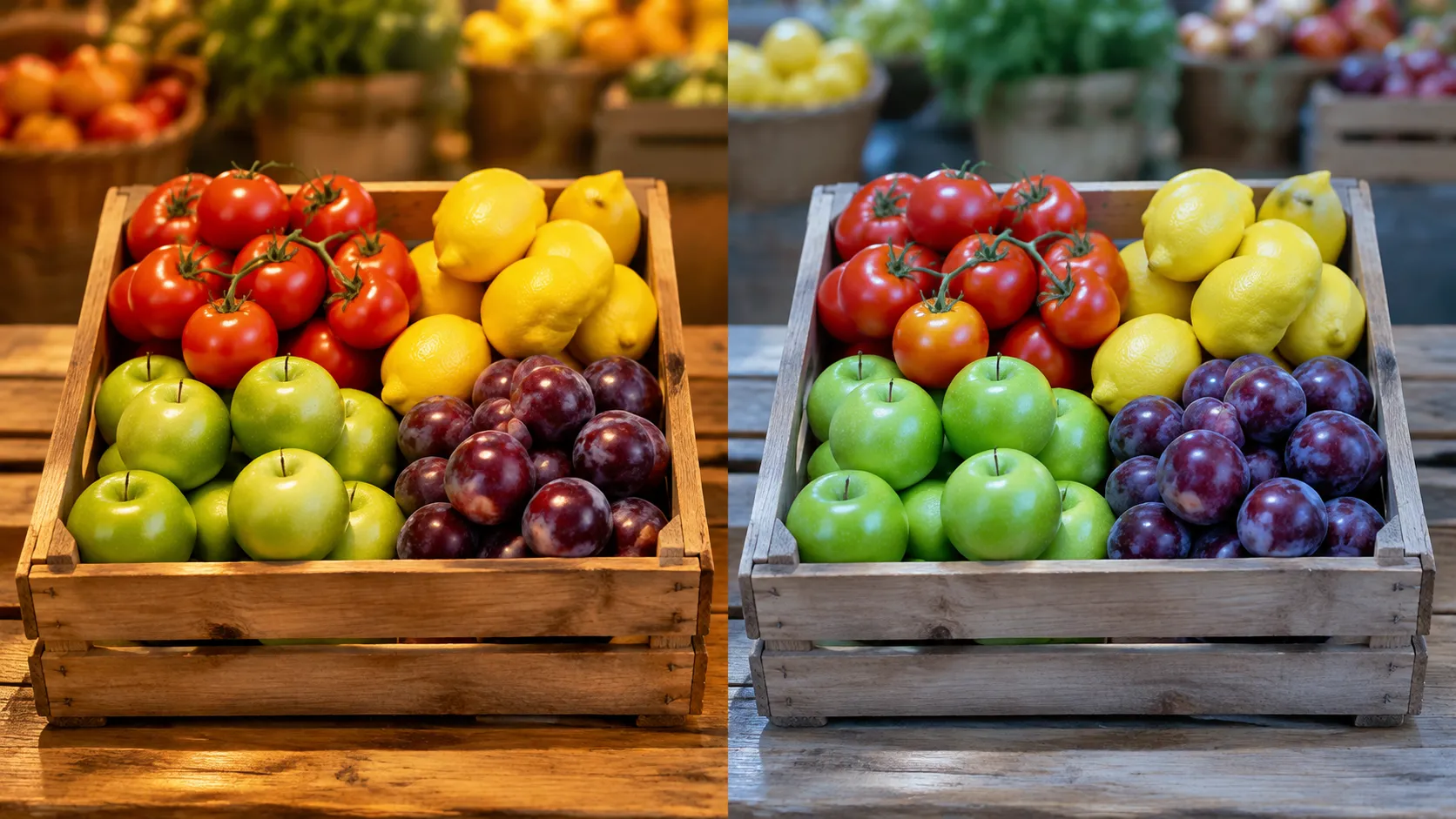
R9 matters because CIE 13.3 calculates it and then leaves it out of the general index: Ra is the mean of samples one to eight only, so a lamp can post a passing Ra while its saturated red score sits near zero.
Averages hide the worst score, and the worked CIE calculation for an old warm white fluorescent shows how far. Its eight special indices run from 87.9 on one sample down to 10.4 on another, yet the general index comes out at a single tidy 51 (Wikipedia). Nothing in that 51 warns about the 10.4.
Source: Wikipedia, Color rendering index, worked example for illuminant FL4 (special indices as published; mean computed here); retrieved 2026-10-12
Published criteria set the red floor far apart. ENERGY STAR asked solid-state lamps for Ra 80 and an R9 above zero (ENERGY STAR); the WELL Building Standard v1 kept Ra 80 but asked for R9 of at least 50, and California JA8 wants Ra 90 with R9 of 50 or more (California Energy Commission). A lamp with R9 of 1 and one with R9 of 50 can print the same Ra 80 on the box.
Source: ENERGY STAR Lamps V2.1; Royer, DOE archival copy, 2019 (WELL v1); California Energy Commission 2025 compliance manual (JA8); retrieved 2026-10-12
The market follows the most efficient path to the number. The PNNL analysis plotted 484 commercial LED spectra and found most near the lower edge of the Ra 80, R9 0 region, because that shape meets Ra 80 most efficiently. So put R9 of at least 50 on the order wherever red merchandise, food or skin tones are part of the sale, on the same report page as Ra. Add R13, the light complexion sample, for mirrors and cosmetics counters.
CRI Lighting by Space: Retail Displays, Kitchens, Closets and Shelves
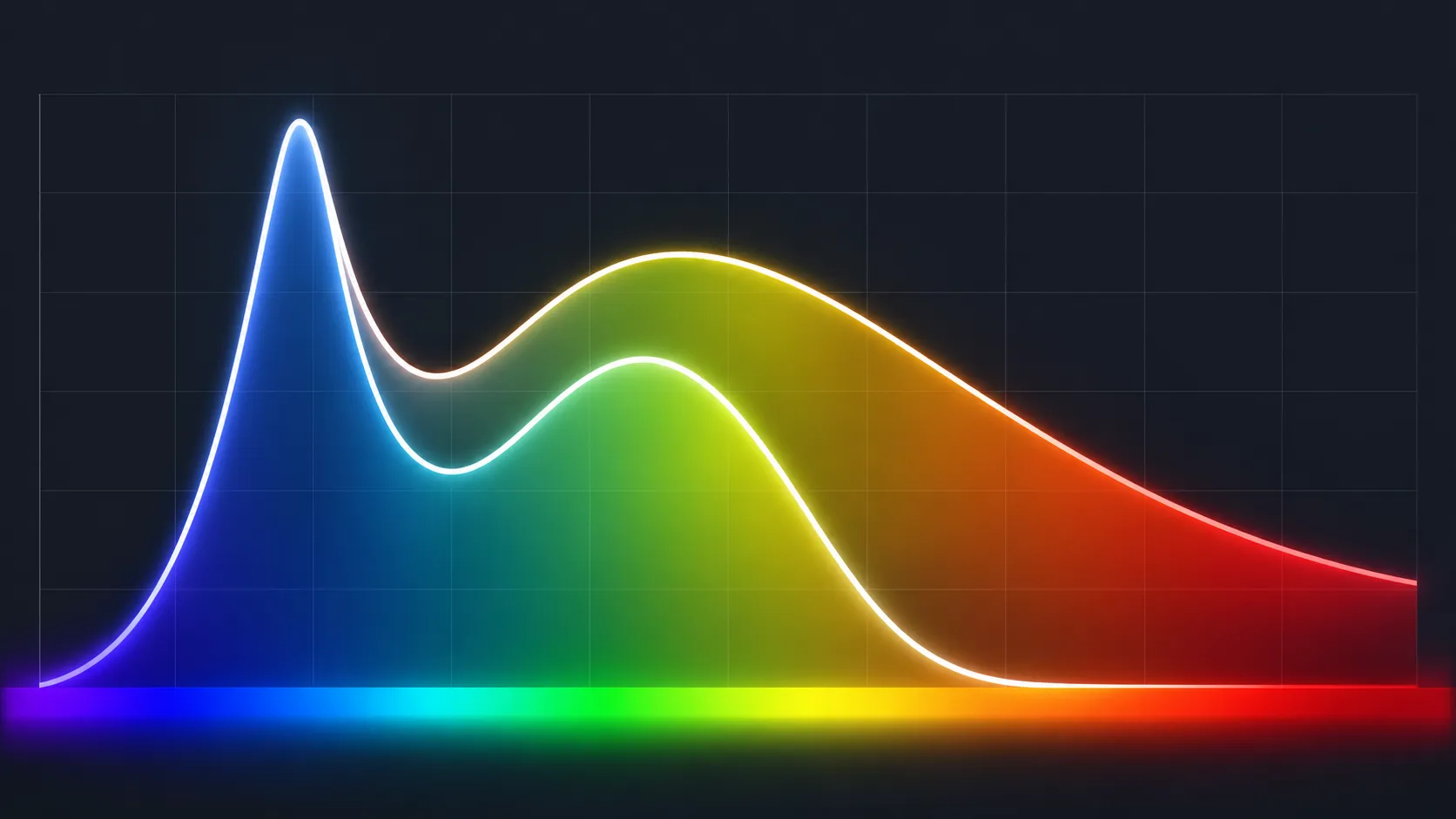
CRI lighting decisions by space follow one test: spend on color rendering where a customer judges color before paying, and save it where nobody looks closely.
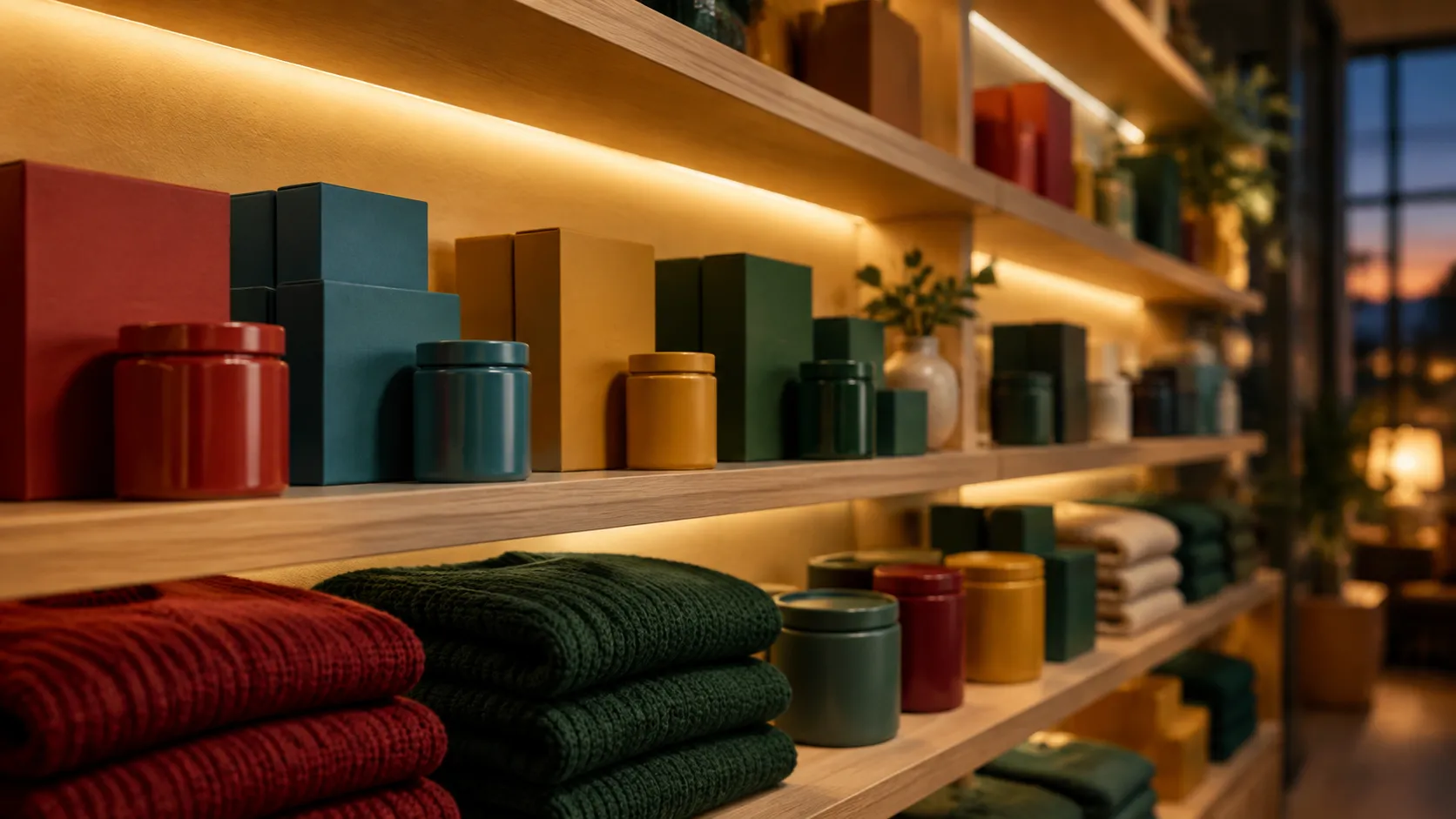
Retail displays carry the strongest case. Apparel, cosmetics, fresh food and anything on a colored pack are judged under the store’s own light, and a return costs more than the better strip did. Specify Ra 90 with R9 stated there, and keep 80 for back-of-house and circulation; WELL v2 itself accepts Ra 80 in circulation areas (Royer, U.S. Department of Energy). A high CRI LED strip under a shelf lip is often the cheapest way to lift a display, because it lights the product rather than the room.
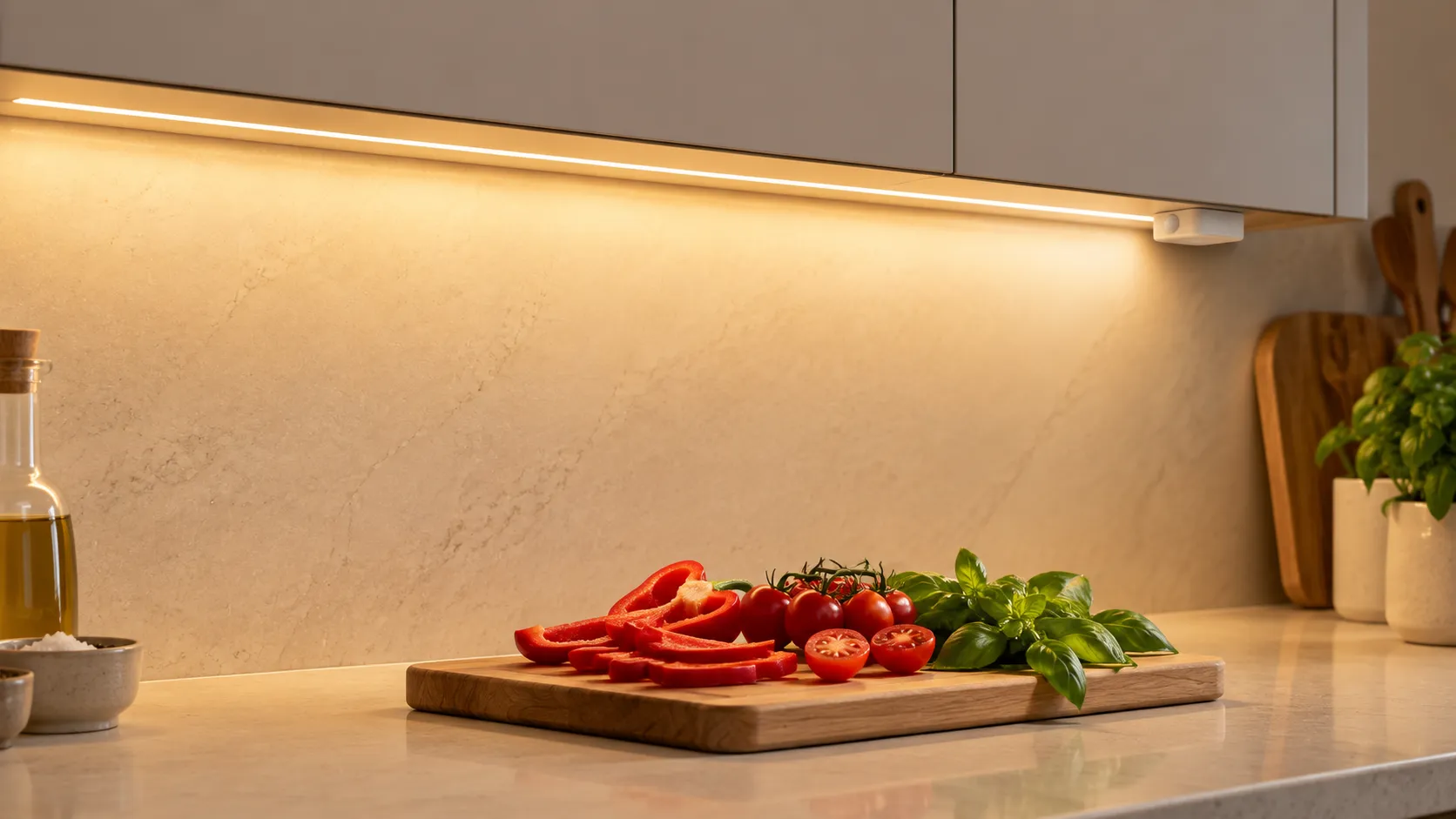
Kitchens are task light on food. Our retail buyer primer on LED under cabinet lighting already sets the kitchen line at CRI 90 or higher with a warm 2700K to 3000K white, and we hold to it. California points the same way for new homes. Its 2025 Energy Code, which applies to permit applications filed from January 1, 2026, requires permanently installed lighting, under-cabinet runs included, to be JA8-certified, and JA8 includes Ra 90 and R9 of 50 or more. Lighting inside drawers and cabinetry is exempt at 45 lumens per watt or better (California Energy Commission). Our under-cabinet motion strip kit is built for the counter position, with Motion, Touch and Always-On modes in one pack; its color rendering is set per program on the quote.
Closets and shelves split by use. A wardrobe where someone chooses clothes is a color-matching job; our closet and wardrobe strip guide covers the fidelity research and a three-jacket sorting test. California draws a similar line for storage: linen closets share the drawer and cabinetry exemption from JA8, so its Ra 90 rule does not reach them. Bookcases and display shelving sit in between: rate them by what is on the shelf, not by the room.
How to Check a Supplier’s CRI Claim Before You Order
Check a CRI claim by asking for a measured report on the finished product at the color temperature you are ordering, reading Ra and R9 together off that report, and holding every later run to a sealed approved sample.
A quoted CRI often comes from the LED package datasheet rather than the finished strip, from a different CCT than the one ordered, or from an average that hides unit-to-unit spread. Even ENERGY STAR treated Ra 80 as an average over ten units, with no more than three below 77 and none below 75, and it asked for the spectral power distribution from 380 to 780 nm at 5 nm intervals or finer (ENERGY STAR). A supplier who can send that spectral file can back the claim.
Ask for the measured report, not the LED datasheet
The figure must come from the finished strip at the CCT and drive current you are ordering. A chip datasheet describes a component in a lab fixture.
Read Ra and R9 off the same page
One measurement, with model, CCT, date and method named. Ask for the spectral data file so the result can be recomputed later.
Look at samples side by side
Two candidates at the same CCT and height over real merchandise: a red pack, raw timber, denim, a skin-tone swatch. Numbers settle disputes; the eye picks the sample.
Seal the approved sample
Both sides keep one labelled unit with its CCT bin and report reference. That unit, not an email, is the color standard.
Hold repeat runs to it
Check incoming stock against the sealed unit, and ask for one production bin per run so two lots never meet mid-display.
Write the checks into the request for quotation so a blank field counts as not met. CCT tolerance in MacAdam steps and the binning rule for repeat orders are decoded in our LED strip spec decoder, alongside the ENERGY STAR Ra and R9 pair for strip sheets and that program’s retirement at the end of 2024.
| RFQ line | How to write it | Evidence to request |
|---|---|---|
| General index | Ra of at least 90 at the ordered CCT, measured on the finished product | Test report naming model, CCT, drive current and method |
| Strong red | R9 of at least 50, reported on the same page as Ra | Full list of R1 to R14, not Ra alone |
| Spread between units | Lowest single-unit Ra stated, not only the average | Unit-by-unit results for the tested sample |
| Color temperature | Nominal CCT with a tolerance in MacAdam steps | Binning statement and the rule for later runs |
| Spectral data | Spectral power distribution supplied as a file | 380 to 780 nm at 5 nm steps or finer |
One limit sits on our side of the table. We do not publish CRI or R9 figures for our strip lines. Our anchor smart RGB LED strip is an app, voice and remote controlled accent product, and its color modes have no CRI to quote. For a white strip, Ra and R9 are confirmation items: the quote states, line by line against your floor, which figures can be confirmed before samples are produced. Write the floor into the RFQ and let every supplier answer the same line.
Where CRI Falls Short: TM-30 and Newer Metrics
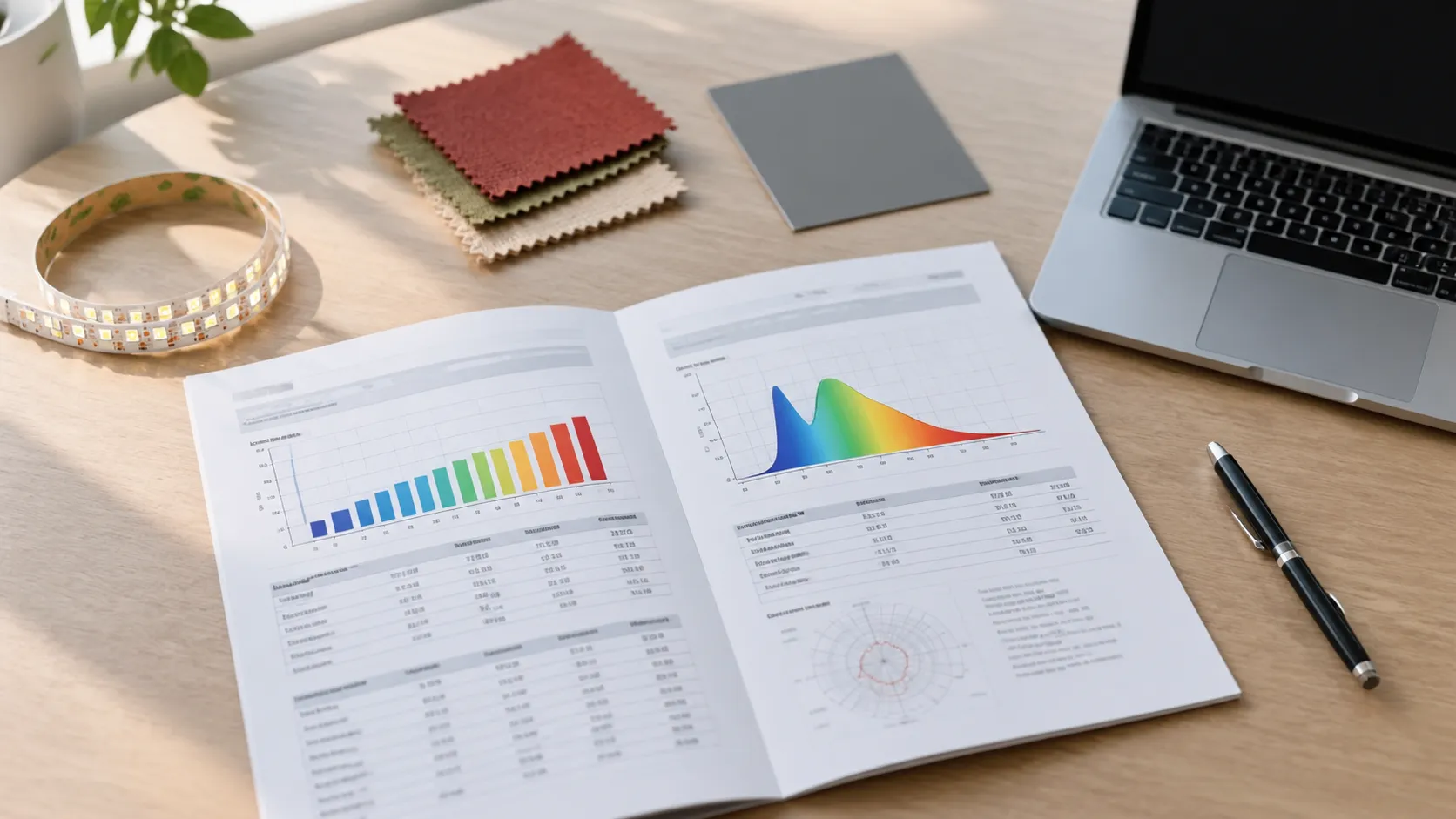
CRI falls short because it averages only eight pastel samples in an obsolete color space, and the newer ANSI/IES TM-30 method fixes that with 99 samples and separate scores for fidelity, saturation and red.
The CIE itself has acknowledged that Ra “deviated from a scientifically accurate colour fidelity measure” and that its values “do not always correlate well with visual evaluation by general users” (Royer, LEUKOS, quoting CIE 224:2017). The gap matters on a purchase order: the PNNL analysis showed that theoretical spectra meeting Ra 80 or Ra 90 could score as low as 41 or 65 on the newer fidelity index, and theoretical sources sharing an Ra of 80 spread across more than 40 points of Rf.
TM-30 comes from the Illuminating Engineering Society, now as ANSI/IES TM-30-24, and scores a light against 99 color evaluation samples drawn from real objects (U.S. Department of Energy; Royer, LEUKOS). The IES recommends moving to its fidelity index. A short glossary:
- Rf: average fidelity across the 99 samples, up to 100, the modern counterpart of Ra.
- Rg: gamut; 100 matches the reference, higher is more saturated, lower is duller.
- Rcs,h1: chroma shift for reds, positive when they get richer.
- Rf,h1: red fidelity, which does the job R9 was meant to do.
- CQS: the Color Quality Scale from Davis and Ohno at NIST, an earlier fix that uses a larger set of high-chroma samples (NIST).
For specifications, TM-30 added Annex E in 2019: three design intents, preference, vividness and fidelity, each at three priority levels for interiors lit at 200 to 700 lux. Preference level 3 plus fidelity level 3 works out to Rf of at least 85, Rg of at least 89, a red chroma shift between −12% and 23% and red fidelity of at least 85 (Royer, LEUKOS). Few retail programs need that yet, but a TM-30 report beside Ra and R9 is cheap insurance and shows which suppliers measure the full spectrum.
So the full answer to what is CRI in lighting is a useful floor and a poor ceiling. On the RFQ that means Ra at the ordered CCT and R9 on the same report page; add a TM-30 Rf and Rg line only where the program sells on color. Whichever band you settle on, our LED strip lights line takes color rendering as a line you write on the order.
Put your color rendering floor on the quote, not on the box
We build LED strip in our own factory in Foshan, 4,000 square meters with 40 people across two production lines. Send the Ra and R9 floor and the color temperature you need, and we will quote the run against those lines and state on the quote which of them we can confirm before samples are made.
Watch it work
Why the same tray of tarts looks fresh under one light and tired under another, and what to ask a supplier for instead of more brightness, in 37 seconds:
FAQ
What does CRI mean in lighting?
It means color rendering index, and on a box or spec sheet it almost always refers to one figure, the general index Ra from the CIE test method. CRI 90, Ra 90, 90 CRI and 90+ are four ways of printing the same claim. A pack that says high CRI without a figure has told you nothing you can check against a test report.
How is CRI calculated?
A spectroradiometer records the spectral power distribution of the lamp. The calculation builds a reference of the same color temperature, works out how far each test sample shifts in color between lamp and reference in the CIE 1964 U*V*W* space, and turns each shift into a special index: 100 minus 4.6 times the color difference. Ra is the mean of the first eight; the same arithmetic on six extra samples gives R9 to R14.
Do RGB LED strips have a CRI rating?
Only for the white they produce. A saturated red, green or purple setting has no color temperature, so there is no reference to compare it with and no CRI. A white mixed from the color channels can be measured, which is why ENERGY STAR tested color-tunable lamps at their white settings. For task light plus party colors, quote a strip with a dedicated white channel and ask which setting the figure came from.
Can a CRI score be negative?
Yes. The 0 to 100 range describes where white light sources normally score, not a hard floor: CIE 13.3 values can go negative (Royer, LEUKOS). Any sample whose color shifts by about 22 units or more (100 divided by 4.6) scores below zero. Wikipedia lists low-pressure sodium at a general index of about minus 44, although the CIE method itself excludes such near-monochromatic sources. On an LED test report, treat a negative R9 as a fail for any display of food, timber, red packaging or skin.
Sources
Every external figure above was checked on 2026-10-12: the test method and its samples against the CIE publication record, program floors against the ENERGY STAR specification and the California Energy Commission’s 2025 Energy Code documents, the cross-standard table and market clustering against the PNNL analysis, TM-30 against the PNNL tutorial and the Department of Energy FAQ, the Color Quality Scale against its NIST record, label content against the Federal Trade Commission guidance, and the worked calculation against the reference entry.
- International Commission on Illumination (CIE), CIE 013.3-1995, Method of measuring and specifying colour rendering properties of light sources (the test-colour method: a general index from eight test-colour samples, supplemented by special indices from six more samples representing a strong red, yellow, green and blue plus complexion and foliage; the method excludes predominantly monochromatic sources such as low-pressure sodium), retrieved 2026-10-12.
- ENERGY STAR, U.S. Environmental Protection Agency, Program Requirements for Lamps (Light Bulbs), Eligibility Criteria Version 2.1 (federal CRI definition from 10 CFR 430.2; solid-state lamps at Ra 80 or more on average, no more than 3 of 10 units below 77 and none below 75, R9 above 0; spectral data from 380 to 780 nm at 5 nm or finer; minimum efficacy of 70 lm/W for omnidirectional lamps at CRI 90 or more against 80 below 90, and 61 against 70 for directional lamps; color-tunable lamps tested at white settings), retrieved 2026-10-12.
- California Energy Commission, 2025 Single-Family Residential Compliance Manual, Chapter 6: Residential Lighting (the 2025 Energy Code requires all installed residential luminaires and light sources to comply with Joint Appendix JA8, and lists lighting attached to the top or bottom of permanently installed cabinets as permanently installed; JA8-2025: CRI of 90 or more, or 82 for Title 20 lamps, R9 of 50 or more for products other than Title 20 lamps, CCT of 4000 K or less, at least 45 lumens per watt; lighting inside drawers, cabinetry and linen closets exempt at 45 lumens per watt or more), retrieved 2026-10-12.
- California Energy Commission, 2025 Building Energy Efficiency Standards (buildings whose permit applications are filed on or after January 1, 2026 must comply with the 2025 Energy Code), retrieved 2026-10-12.
- U.S. Department of Energy, archival copy, Royer, M., Analysis of Color Rendition Specification Criteria, Pacific Northwest National Laboratory, 2019 (Table 1 of published floors: IES Lighting Handbook 10th edition Ra 80, 85 and 90, IES RP-7-01 70 and 85, Title 20 Ra 82, JA8 Ra 90, WELL v1 Ra 80 with R9 of at least 50, WELL v2 circulation Ra 80; ENERGY STAR adopted Ra 80 in 2001 without experimental basis; about 80% of listed products at Ra 80 or more fall between 80 and 85; 484 commercial spectra cluster at the lower edge of the Ra 80, R9 0 region; theoretical spectra meeting Ra 80 or 90 could score Rf as low as 41 or 65), retrieved 2026-10-12.
- U.S. Department of Energy, archival copy, Royer, M., Tutorial: Background and Guidance for Using the ANSI/IES TM-30 Method for Evaluating Light Source Color Rendition, LEUKOS 18:2, 191–231, 2022 (CIE method adopted 1965, revised 1974, republished 1995; eight pastel Munsell samples; 99 color evaluation samples from real objects; CIE 13.3 reference of Planckian radiation below 5000 K and a CIE daylight illuminant from 5000 K; CIE 13.3 values can be negative; CIE 224:2017 statement on Ra; Rf spread above 40 points at Ra 80; IES recommendation to move to Rf; Annex E design intents from 2019 for 200 to 700 lux and the P3 plus F3 composite), retrieved 2026-10-12.
- U.S. Department of Energy, Solid-State Lighting Program, TM-30 Frequently Asked Questions (ANSI/IES TM-30-24 as an American National Standard method for evaluating light source color rendition, published by the Illuminating Engineering Society), retrieved 2026-10-12.
- Federal Trade Commission, The FTC Lighting Facts Label: Questions and Answers for Manufacturers (Brightness and Light Appearance as required label content; the label may not include marks or information other than those the Rule specifies; no color rendering line), retrieved 2026-10-12.
- Wikipedia, Color rendering index (Ri = 100 − 4.6 × the color difference; worked FL4 example with special indices from 10.4 to 87.9 averaging 51; indices can go negative, with low-pressure sodium listed at about −44; CRI cannot be calculated for non-white light), retrieved 2026-10-12.
- National Institute of Standards and Technology (NIST), Davis, W. and Ohno, Y., The Color Quality Scale, Optical Engineering 49(3), 2010 (CQS as a test-samples method built on a larger set of high-chroma reflective samples, scaled from zero to 100), retrieved 2026-10-12.
