


What are LED light bulbs? They are replaceable bulbs that make light with light-emitting diodes instead of a heated filament, so they draw far less power and run cooler. ENERGY STAR puts the efficiency gain at up to 90% over incandescent bulbs, and the U.S. Department of Energy expects good-quality white LED products to last 30,000 to 50,000 hours.
For a retail or sourcing buyer, the useful split is between a bulb, which goes into a socket somebody already owns, and an integrated LED product, where the diodes are built into the thing you sell, as in our LED strip lights range. We do not make replacement LED bulbs, so this page reads them the way a buyer meets them on a spec sheet, and covers the one product of ours that still needs a halogen bulb on purpose.
Key takeaways
An LED light bulb is a lamp built around semiconductor chips, a driver and a heat sink, shaped to fit sockets designed for filament bulbs. It wastes far less energy as heat and lasts much longer, but its rated life is largely a projection, and the heat inside the fitting decides how close real use gets.
- LED stands for light-emitting diode. ENERGY STAR rates LED lighting at up to 90% more efficient than incandescent bulbs, which give off 90% of their energy as heat.
- DOE lifetime figures run to the hour output falls to 70%, not to the hour the lamp goes dark; ENERGY STAR’s Lamps specification, Version 2.1, set a 15,000-hour floor for rated life.
- Brightness is lumens, not watts: about 1,100 lumens replaces a 75 W incandescent, and an LED screw-in bulb can get there on as little as 9 W.
- Halogen survives where heat is the job, as in a candle warmer.
- Most decor LEDs are not bulbs at all; strip, neon, projectors and many decor lamps build the diodes in, so the whole unit, driver included, is what wears out.
What Is an LED Light Bulb?
An LED light bulb is a replaceable lamp that produces light from light-emitting diodes, packaged in the shapes and bases of the filament bulbs it replaces so that it drops straight into an existing socket.
That last clause is the whole design brief. ENERGY STAR notes that advances in materials let manufacturers build LED bulbs matching the shapes and sizes of traditional incandescent bulbs, so an A-shape LED fits a table lamp made decades earlier. The short answer to what are LED light bulbs, then, is a conversion kit in a familiar shell: chips that make the light, a small power supply, a metal body that carries heat away, and a dome that spreads the beam.
Is a bulb the same as a LED? No. The LED is the chip, a component that uses a semiconductor to emit light; a bulb holds several of them alongside parts that make no light at all. Someone searching “what is led bulbs” or “what is a led light bulbs” means the finished product, but a supplier quoting “LEDs” may mean chips, boards or bulbs, at very different prices.
The bulb format also limits an LED. A filament throws light and heat in every direction, while LEDs are directional sources (ENERGY STAR), so a bulb needs a diffuser and careful chip layout to imitate the old glow. Products designed around LEDs from the start, like strip, LED neon or a projector, skip the imitation.
What Does LED Lighting Stand For, and How Does It Make Light?
LED lighting stands for light-emitting diode lighting: the light comes from a semiconductor that glows when current flows through it, rather than from a wire heated until it shines.
So when a buyer asks what does LED lights stand for on a quote, the answer is the diode, not the bulb. ENERGY STAR puts the working version simply: a current passes through a microchip, which lights the tiny sources we call LEDs. Inside the chip, electrons recombine with “holes” in the semiconductor and release energy as photons, and the colour of those photons is set by the semiconductor’s band gap, not by temperature (Wikipedia, Light-emitting diode). A filament works the other way round. It has to get hot enough to glow, and most of what it gives off is heat.
A single diode emits a narrow band of colour, so white light is assembled. The U.S. Department of Energy lists three routes: a phosphor that converts coloured light to white, a red, green and blue mix, or a hybrid. The phosphor route is the one the parts table below assumes.
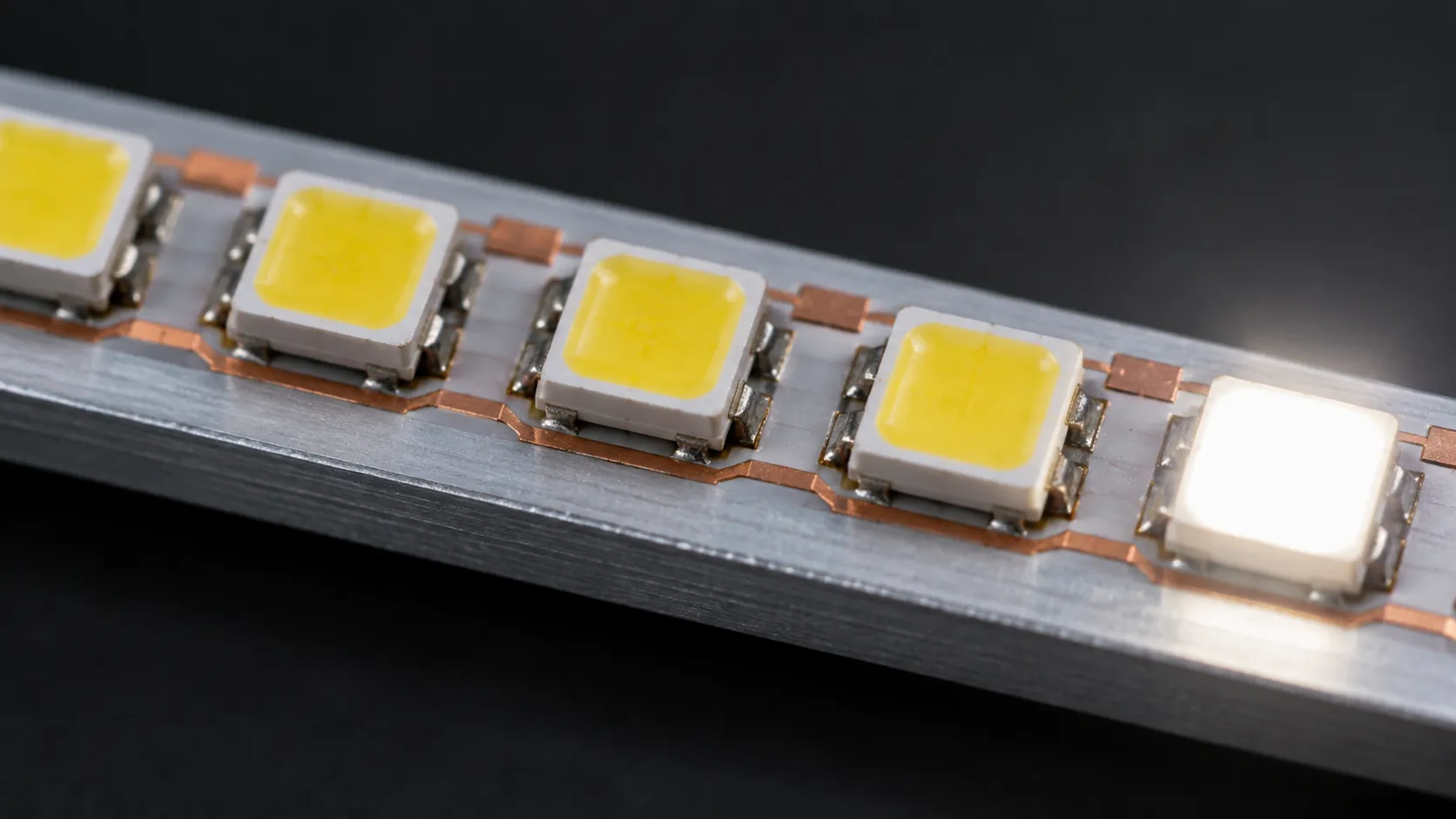
Two more pieces complete the chain, both covered in the 2014 lifetime guide from DOE and the Next Generation Lighting Industry Alliance. Mains power is alternating current and LED chips need regulated direct current, so every LED bulb carries a driver, a set of circuits that includes an AC/DC converter. And because the diodes turn electricity into light inside the device, they retain their heat instead of radiating it, and it has to be conducted away. That fact decides how long an LED lasts, and why a candle warmer still runs on halogen.
What Is Inside an LED Light Bulb
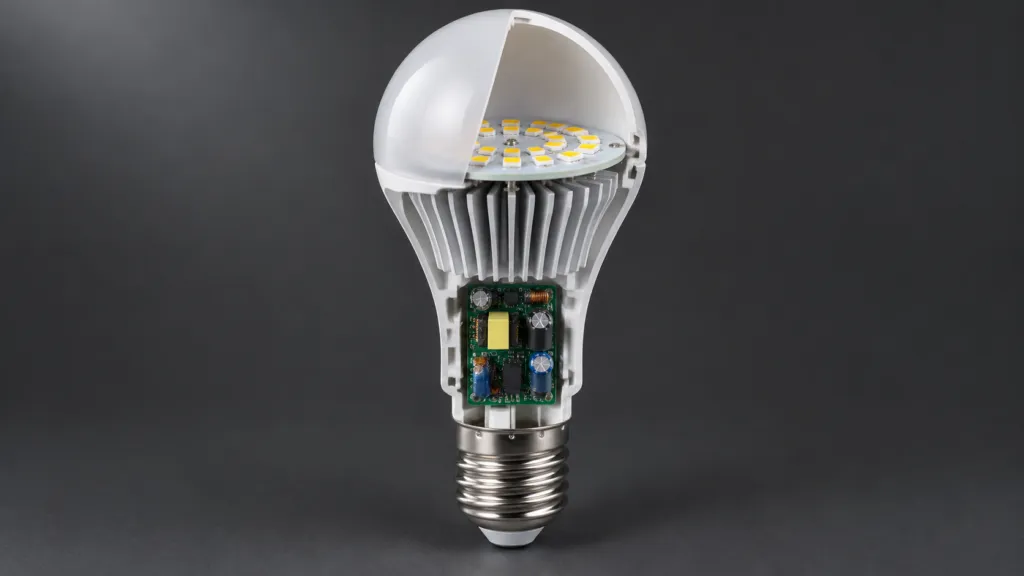
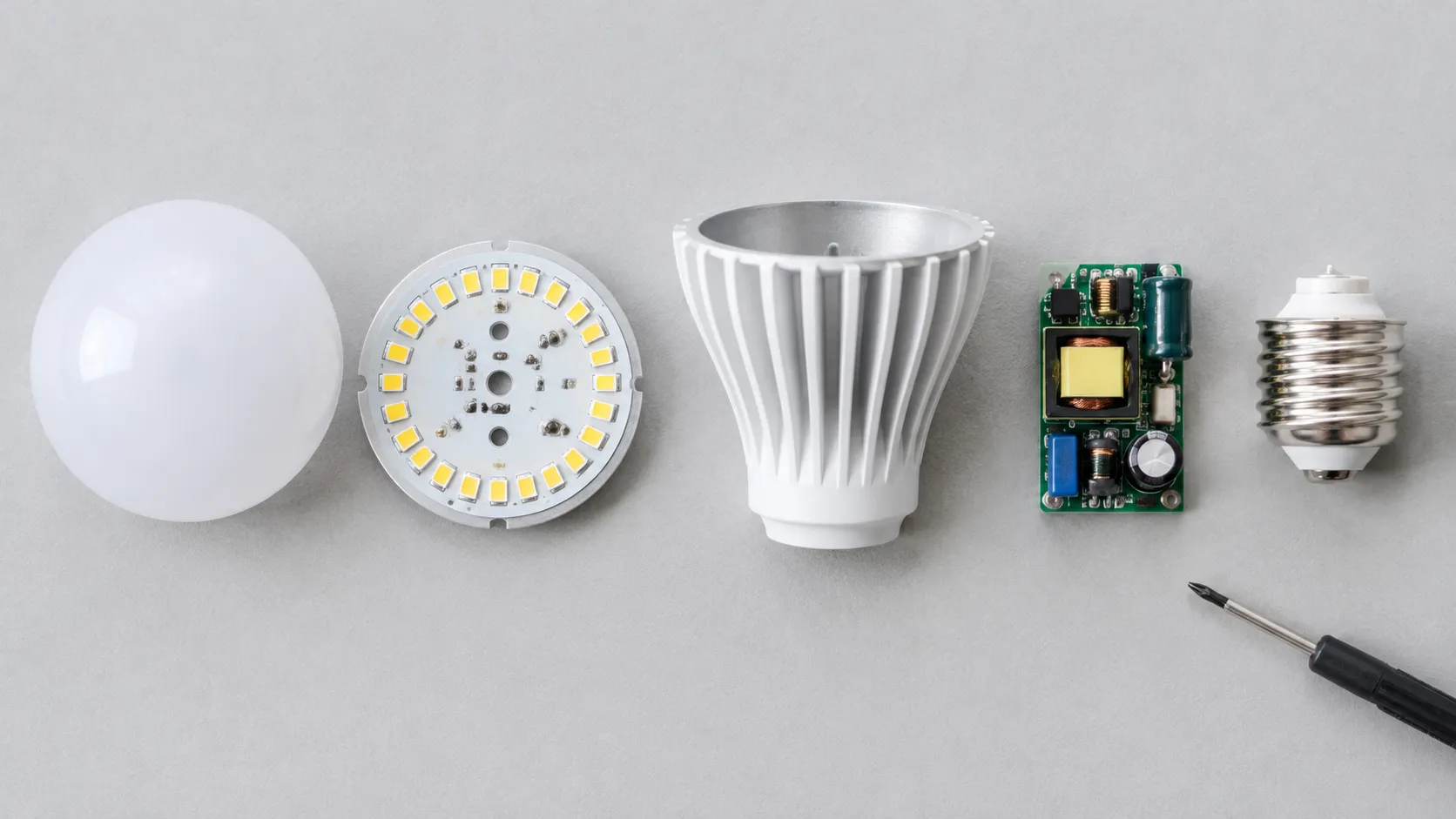
Five parts sit inside a typical LED light bulb: a diffuser, a board carrying the LED chips, a heat sink, a driver and the base that fits the socket. Each has its own way of failing, and only one of them makes light.
What LED light bulbs are made of is mostly a list of materials chosen for heat. The plastic or glass dome softens light from directional chips. The chips sit on a small board, often metal-backed, that hands their heat to a finned body; ENERGY STAR says the heat sink absorbs the LED’s heat and dissipates it into the surroundings, and calls thermal management generally the single most important factor in an LED’s performance over its lifetime. The neck hides the driver, and the base is the same screw or pin fitting the old bulb used.
Sourcing conversations tend to fixate on the chips, yet the DOE-backed reliability guidance cited below says the LED package may not be what decides how long a product lasts. Give the driver and the thermal path as many questions as the chips.
| Part | What it does | What wears or fails | What to ask the supplier |
|---|---|---|---|
| Diffuser or lens | Spreads light from directional chips into a bulb-like glow | Yellowing or haze | Beam angle; glass or plastic dome |
| LED chips and phosphor | Make the light; the phosphor turns blue light white | Slow loss of output, drift in colour | Colour temperature, colour rendering, binning |
| Board and heat sink | Carry heat away from the chips | Runs hot in closed fittings, which speeds every other failure | Rating for enclosed fixtures |
| Driver | Converts mains AC into the DC the chips need | Electronic failure, flicker, buzz on the wrong dimmer | Dimmer compatibility list, flicker data |
| Base | Fits the existing socket, screw or twist-lock pins | Wrong fitting or voltage for the market | Base type and rated voltage |
How Long Do LED Bulbs Last? Rated Life vs Real Life
Good-quality white LED lighting products are expected to reach 30,000 to 50,000 hours (U.S. Department of Energy), counted to the hour output falls to 70%, not the hour they go dark; for LED lamps, ENERGY STAR’s Version 2.1 floor was 15,000 hours.
ENERGY STAR states the definition directly: LED lifetime is established on a prediction of when light output decreases by 30 percent, the point the trade calls L70. A filament bulb fails abruptly; an LED usually fades, so its rated life forecasts when the room will look noticeably dimmer. The Department of Energy puts a typical incandescent at about 1,000 hours and a comparable CFL at 8,000 to 10,000. ENERGY STAR’s Version 2.1 also required an LED lamp claiming 15,000 hours to keep at least 86.7% of its initial output after a 6,000-hour test. At three hours a day, that 15,000-hour floor is roughly 13.7 years by our arithmetic.
Source: U.S. Department of Energy, LED Basics (incandescent, CFL and LED useful life); ENERGY STAR Program Requirements for Lamps, Version 2.1 (LED minimum). Retrieved 2026-10-12.
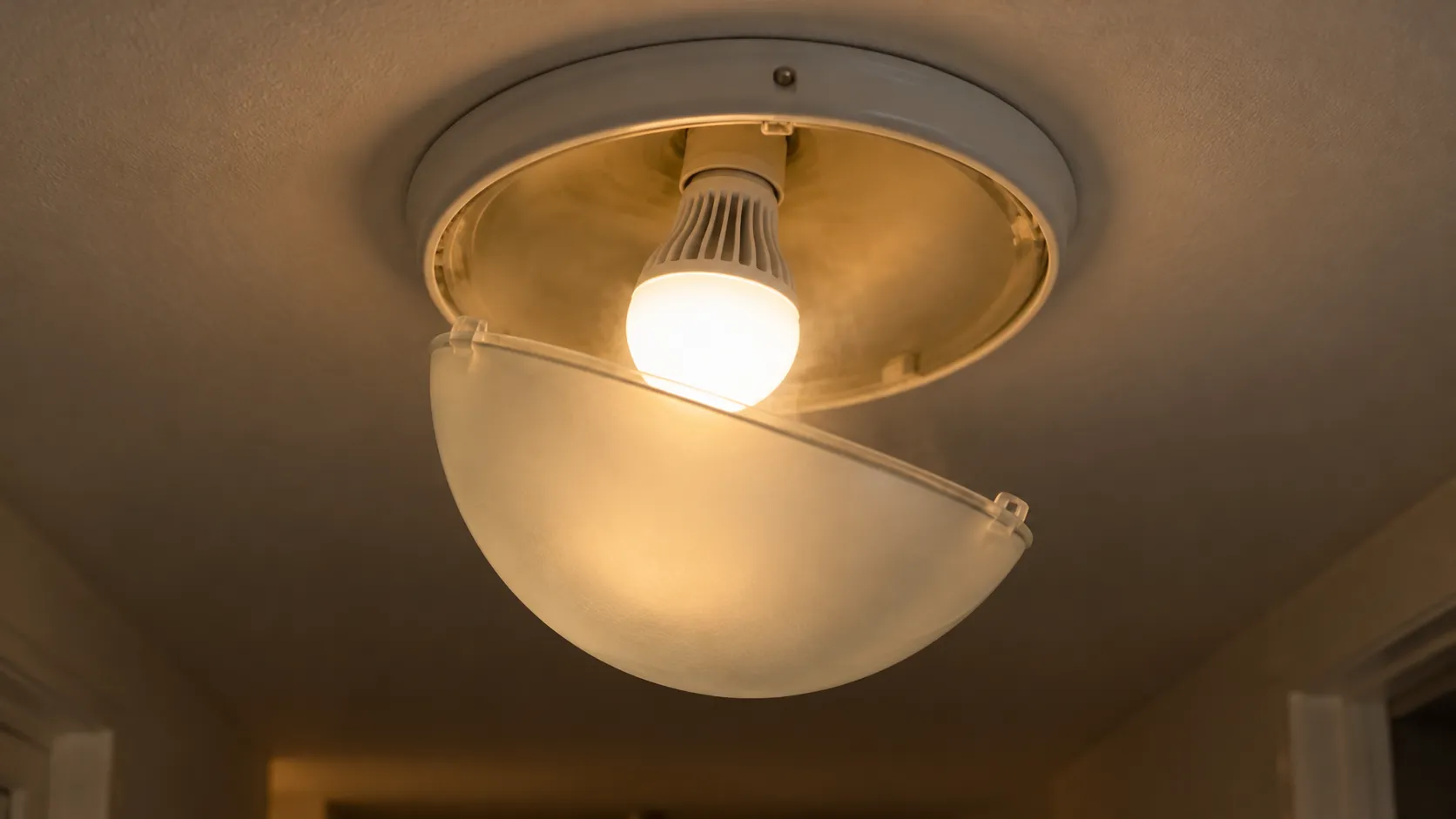
Real life runs shorter than rated life mainly because of heat. LEDs keep their heat rather than radiating it, so it leaves by conduction and convection, and the local temperatures that result accelerate changes in the LED and the electronics around it, according to the industry consortium’s 2014 lifetime guide. A bulb sealed in a closed glass ceiling fitting runs hotter than the same bulb in an open shade, which is why ENERGY STAR’s lamp specification provides for lamps labelled “not for use in totally enclosed luminaires”.
The second gap matters more to an importer than to a homeowner. The same 2014 guidance states that lumen depreciation is not a proxy for luminaire lifetime: a driver can end a product before its chips fade. Rated hours are also partly a forecast at launch. Under ENERGY STAR Version 2.1, an LED lamp could be certified and labelled after 3,000 hours of testing, with the full-life test still running. Ask what a long rating was tested on, and for how long.
LED vs Halogen, Incandescent and CFL
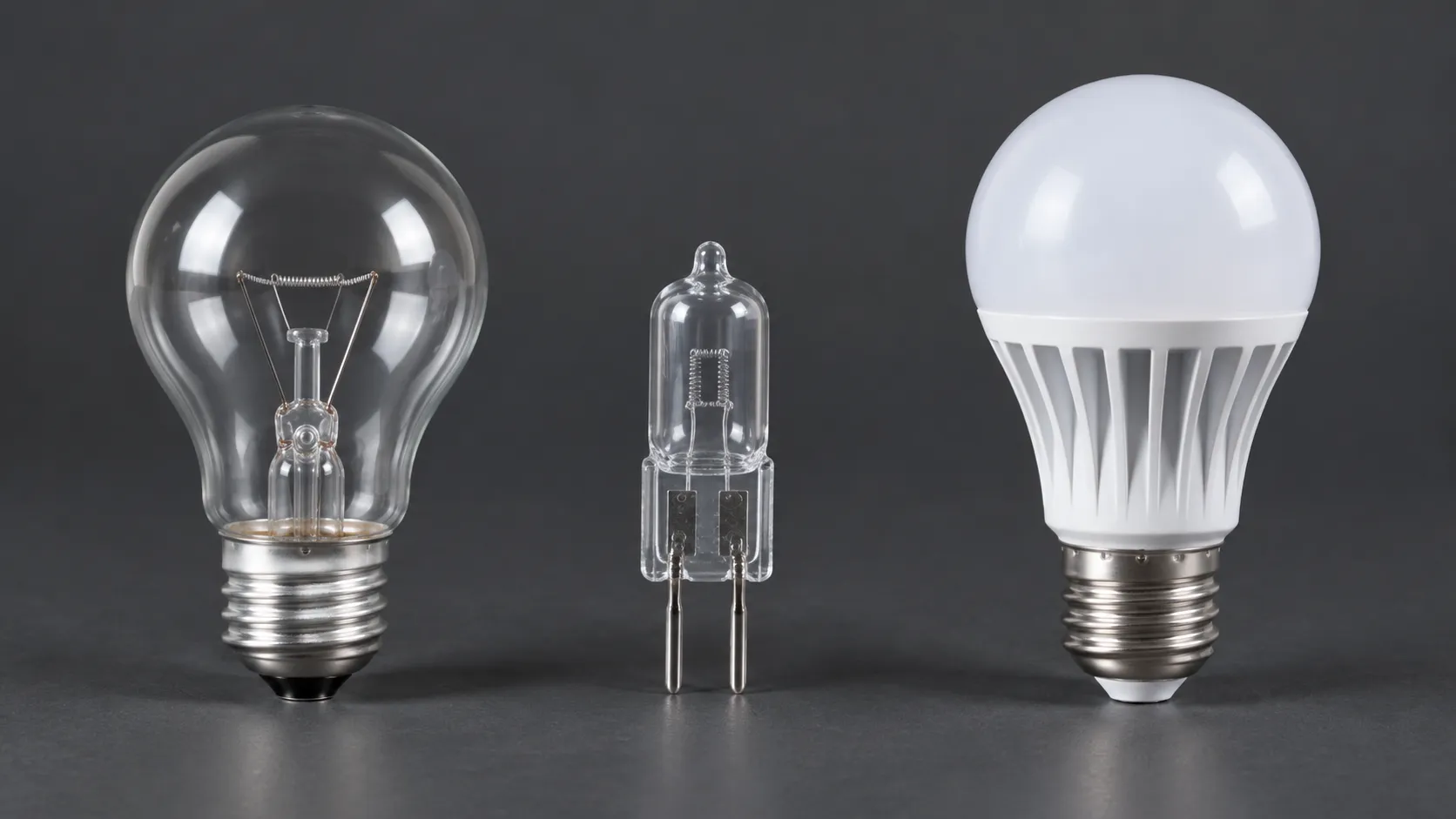
For the same light, an LED draws a fraction of the power of a filament bulb: ENERGY STAR rates LED lighting at up to 90% more efficient than incandescent, and the Department of Energy’s 2021 consumer guide says LEDs use up to 90% less energy and last up to 25 times longer.
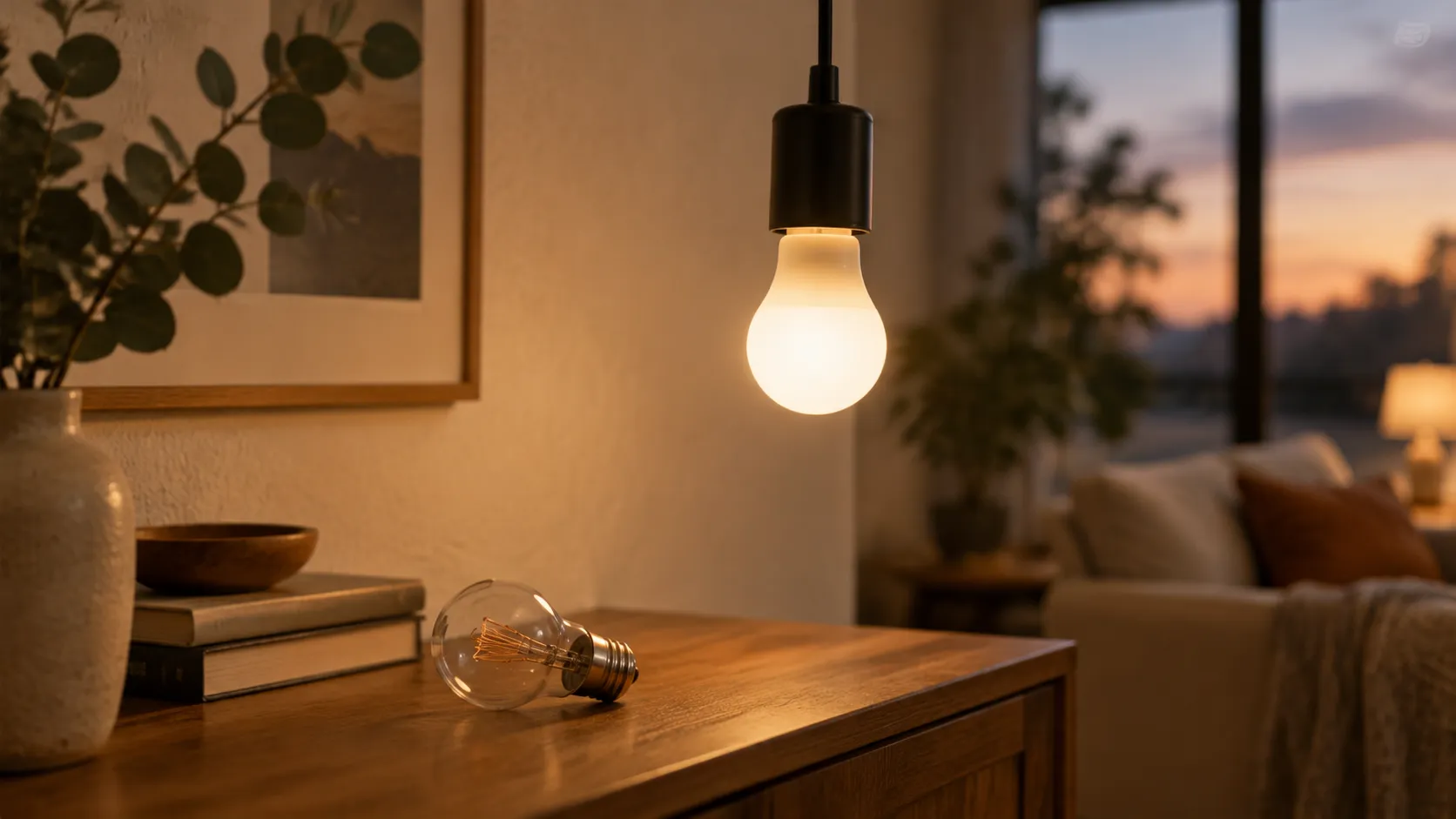
The gap comes from where the energy goes. Incandescent bulbs released 90% of their energy as heat and only 10% as light, says the same DOE guide. A halogen is an incandescent with halogen gas and a quartz shell that can become extremely hot (Minnesota Department of Commerce); DOE’s 2011 briefing for retailers put its saving at about 25%, with the same life in most models. CFLs used 75% less energy than incandescents (U.S. Department of Energy) but hold 1 to 5 mg of mercury (Minnesota Department of Commerce).
Light output is the fair way to line the four up, and it corrects an old habit. Calling one bulb “brighter at the same wattage” compares the wrong numbers: a watt measures electrical power, a lumen measures light. DOE’s example: about 1,100 lumens replaces a 75 W incandescent, and an LED screw-in bulb gets there on as little as 9 W (U.S. Department of Energy). Compare by lumens; watts tell you the running cost.
Source: U.S. Department of Energy, 2011 briefing for media and retailers (halogen, CFL, 2011 LED) and 2021 Consumer Guide to Energy-Efficient Lighting (2021 LED). Retrieved 2026-10-12.
For general lighting this is largely settled. DOE’s April 2024 final rule raises the minimum for the most common lightbulbs from 45 to more than 120 lumens per watt, binding on bulbs made or imported from July 25, 2028; DOE says a broad variety of widely available LED bulbs can meet that level and CFLs cannot. Filament and halogen lamps hold on where their heat is the point, which is the one place our range still uses one.
Why Candle Warmer Lamps Use a GU10 Halogen Bulb, Not an LED
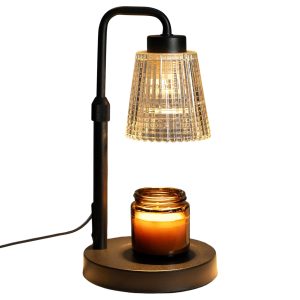
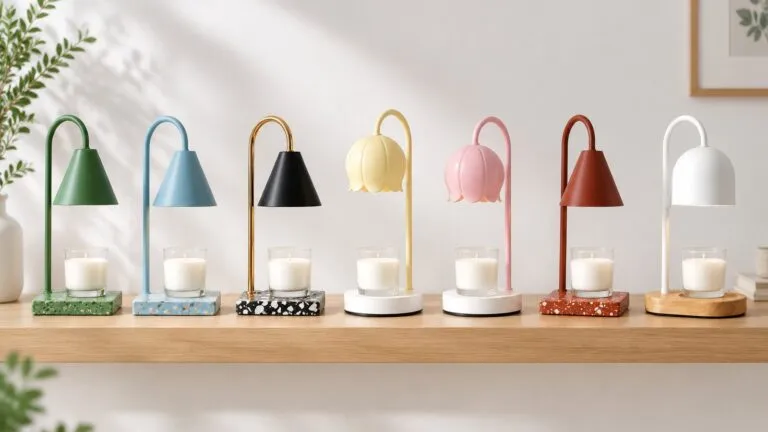
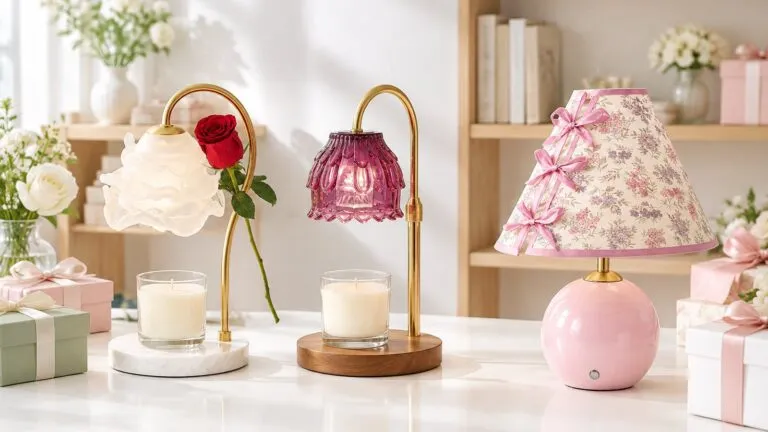
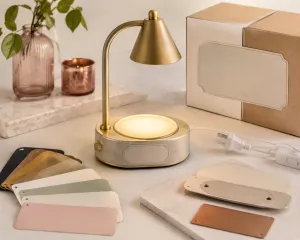
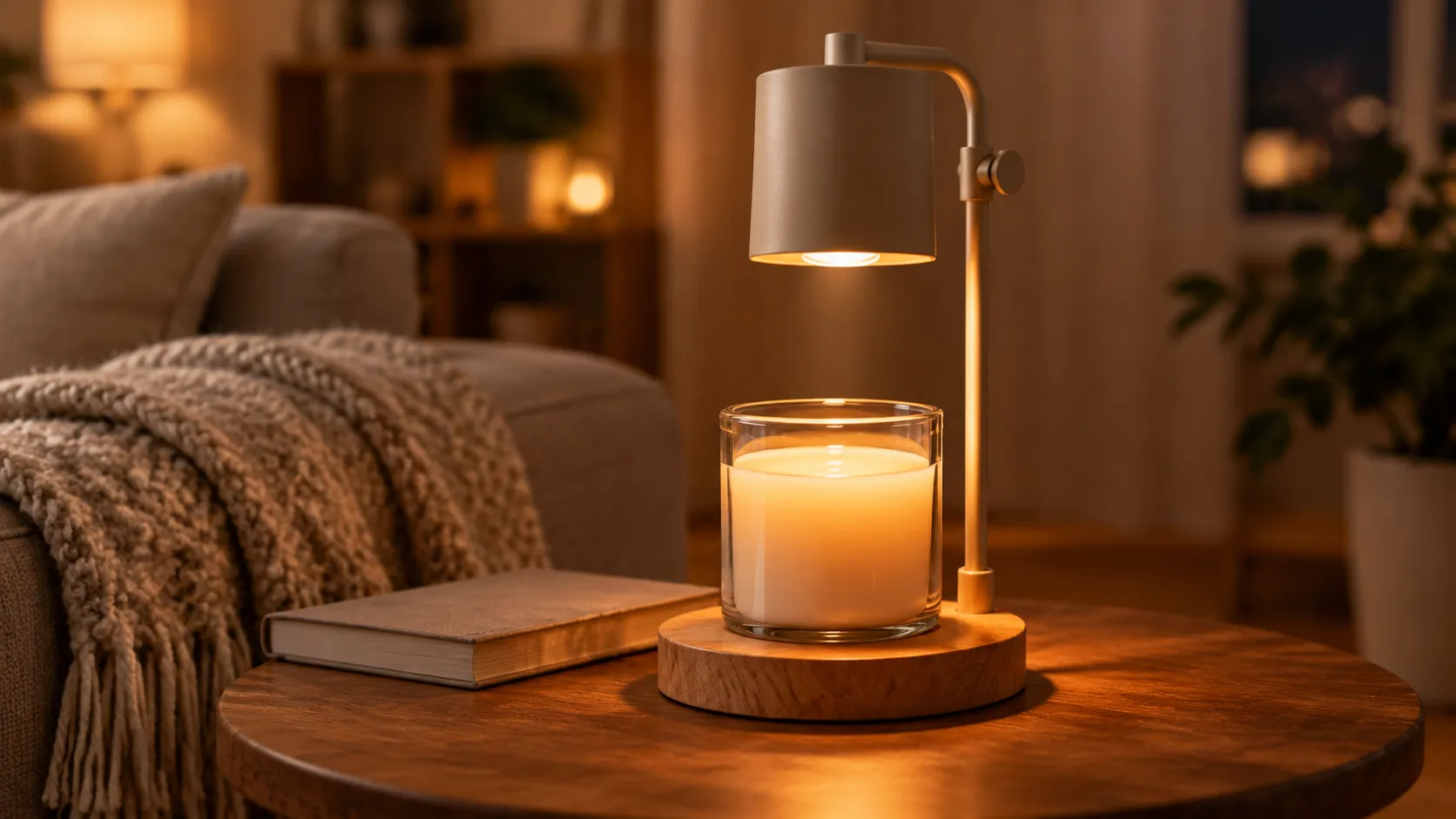
A candle warmer lamp uses a GU10 halogen bulb because the bulb is its heat source, not its light. The warmth has to melt the top of a jar candle from above, and an LED is engineered to keep its heat in a heat sink rather than send it toward the wax.
ENERGY STAR and the Department of Energy both put an incandescent’s heat share at 90% of its energy, and that heat radiating down from the shade is what forms a melt pool. An LED of similar light output draws a fraction of the power and keeps its waste heat in its own body, so it lights the wax and barely warms it. Fit one to a warmer and you get a reading lamp over a cold jar.
That is also why the spare is described carefully. Our GU10 halogen bulbs for candle warmers are supplied purely as warmer parts, with a tool-free twist-and-lock base so a user can replace a spent one by hand, and never as room lighting. Wattage is confirmed on the specification sheet issued with each quote, and the right shade-to-wax height is a separate question, answered in our candle warmer use guide.
Here is the trade-off, stated against our own interest. As a light source, halogen belongs to the incandescent family that gives off 90% of its energy as heat (ENERGY STAR), it sits at the wrong end of the energy chart above, and it is the one part of a warmer that wears out. An all-LED, energy-first assortment has no natural slot for a candle warmer. The practical answer is to list the lamp as a fragrance appliance, describe the bulb by its job as a heat source, and put spares on the same order. Power draw is worked through in our candle warmer safety explainer, and the range sits under candle warmer lamps.
Where LEDs Go Beyond Bulbs: Strips, Neon, Projectors and Lamps
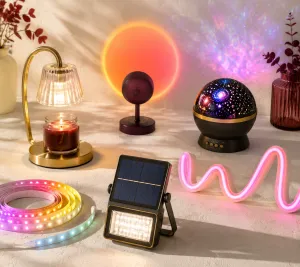
Most decorative LEDs are now built into the product rather than screwed into it. An LED bulb replaces the lamp in a fitting someone already owns, while strip, LED neon, projectors and many decor lamps are new fittings whose diodes, driver and housing are designed as one unit.
ENERGY STAR’s phrasing is that LEDs are incorporated into bulbs and fixtures, and the fixtures half is where the variety sits: once nobody imitates a filament bulb, the light source takes the shape of the product. The catch is that an integrated product has no bulb to swap. The driver or plug-in adapter becomes as much a lifetime part as the chips, and a failure becomes a return rather than a spare-part sale. Sample the complete unit, power supply included, rather than judging it on the chip.
Strip is the clearest case. Our smart LED light strip is adhesive-backed and cut to length, and is controlled by app, voice or an included remote, so the diodes run along a shelf edge or behind a television where no bulb could sit. Specification work for strip is about diode density, adhesive and the controller in the kit, not about a socket.
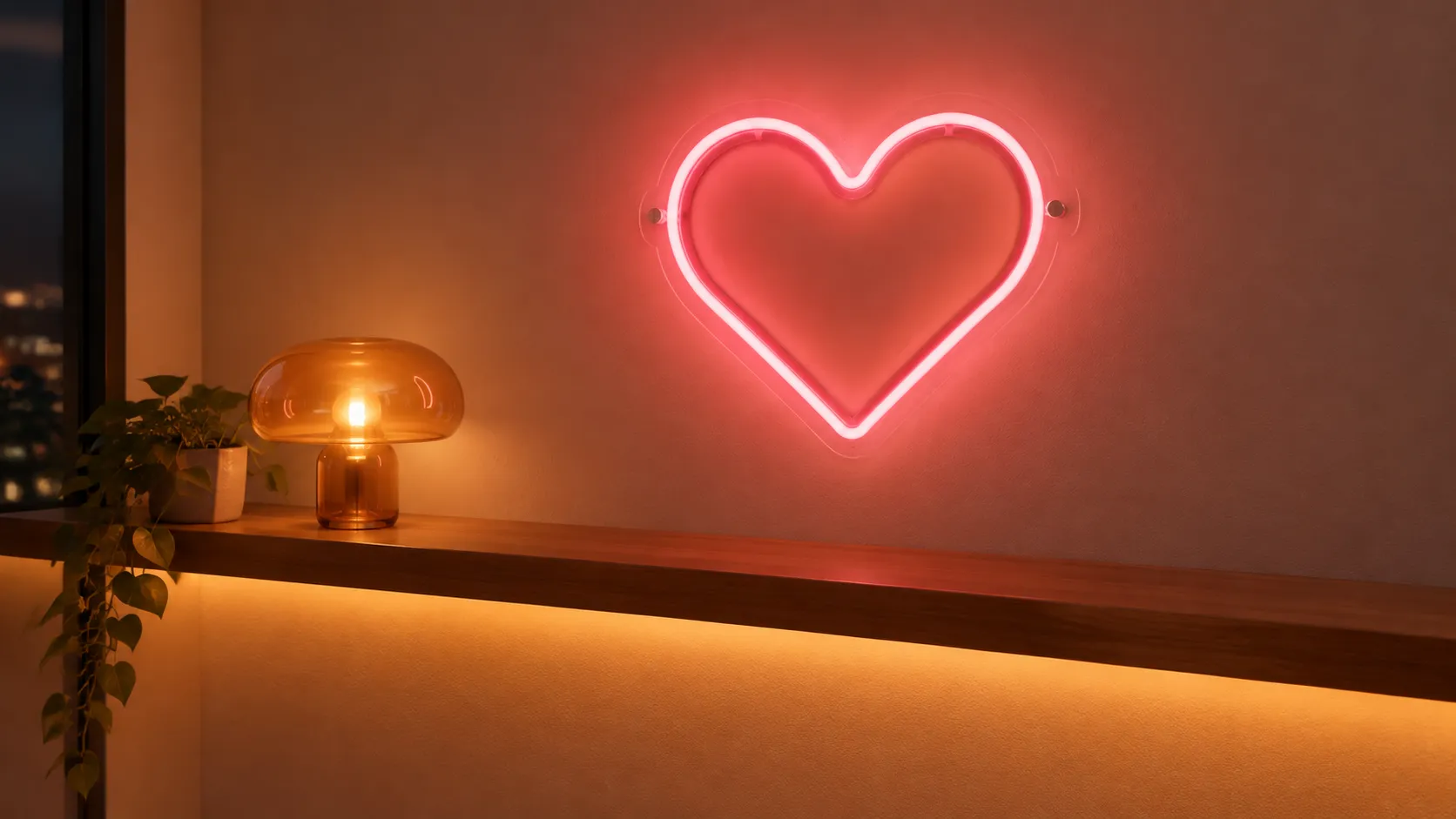
LED neon goes a step further. Our LED neon sign line bends flexible silicone LED tubing onto a clear acrylic backboard and runs at low voltage from a plug-in adapter, with no glass tube and no high-voltage transformer. How it compares with glass neon over the years is in our neon sign lifespan guide.
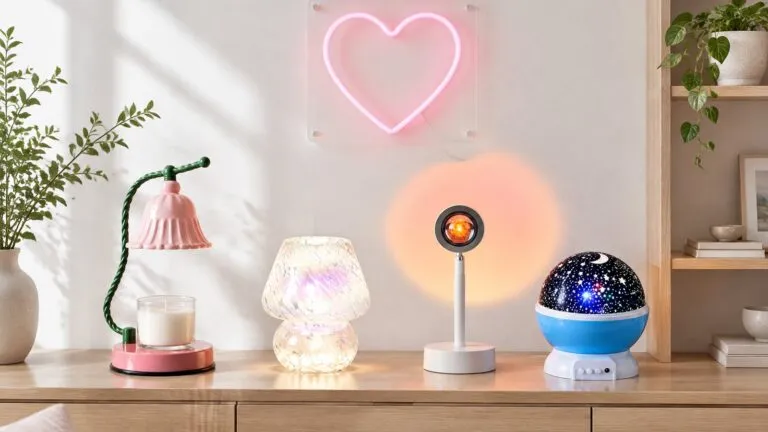
Projectors use LEDs as an engine rather than a bulb. In a galaxy projector, LED sources create the nebula wash while the starfield is laid over the top; the mechanics are explained in our galaxy projector explainer, and the range sits under star and galaxy projectors.
Lamps split two ways. A sunset projection lamp sells the light itself, a coloured halo thrown onto the wall, and ours sit under sunset projection lamps; a mushroom-shaped amber glass lamp is bought on silhouette and sits in our decorative table lamps line. For both, the light source is confirmed against the brief; across all four lines, power, lumens, colour temperature and colour rendering are confirmed on the quote for your market.
What to Check on an LED Spec Sheet Before You Buy
Read an LED spec sheet in this order: lumens, colour temperature, colour rendering, dimming, the fitting it will live in, and only then rated life, because each step can rule a product out before the next matters.
Lumens come first because they are what a customer sees. For colour temperature, the Department of Energy’s rule is plain: lower kelvin numbers look warmer, higher ones cooler and bluer.
Start with lumens, not watts
Ask for lumens first; the DOE benchmark is about 1,100 lumens to replace a 75 W incandescent.
Set the colour temperature
Match what is already on the shelf or in the room, and state the kelvin on the order.
Ask for colour rendering as a measured value
Two lamps at the same kelvin can show reds, wood and skin tones quite differently. A test report beats an adjective.
Confirm dimming against the real dimmer
Many LEDs dim, but only on compatible controls. Get the compatibility list in writing before the order, not after the first complaint.
Name the fitting it will live in
Sealed glass domes, recessed cans and warm rooms all shorten real life. If that is where the lamp goes, ask for an enclosed-fixture rating.
Read the life claim last
Ask whether the hours are L70, how long the test really ran, and how much of the figure is projection.
Colour rendering needs more than one step, and our explainer on what CRI means in lighting covers the scale, the R9 value and how to check a supplier’s claim. For strip specifically, our supplier spec decoder reads a strip datasheet line by line.
Where an integrated product suits the job better than a bulb, the same discipline applies to our LED strip lighting line: send the use, the market and the fitting, and the specification comes back written against them.
Source LED strip, neon, projectors and decor lamps, and the warmer that still runs on halogen
We do not make replacement LED bulbs. We build LED strip, LED neon, projectors, decor lamps and candle warmer lamps in our own factory in Foshan, 4,000 square metres with 40 people across two production lines, and power, output and colour for each program are confirmed on the quote. Send the product type, the market and how it will be used.
Watch it work
Why he carried an LED neon sign in like it was glass, and what is actually inside LED lighting, in 35 seconds:
FAQ
What does LED stand for in lighting?
Light-emitting diode. Lighting paperwork also names the LED package: SMD (surface-mount device) LEDs are soldered onto a board, COB (chip on board) bonds many chips under one phosphor layer, and OLED, the organic light-emitting diode, is a related technology found mostly in screens. A quotation that says only LED leaves the package type open, so ask.
Is a bulb the same as a LED?
Not in trade vocabulary. Lighting people call the replaceable bulb a lamp and the complete fitting a luminaire, and the LED is the light-emitting component inside either one. On a purchase order that difference decides if the line is a consumable your customers replace themselves or a finished fixture you will be asked to repair or take back.
Are LED lights better than bulbs?
The question usually pits LEDs against the old incandescent, yet an LED bulb is still a bulb, so compare technologies. Against the CFL that came between them, the 2021 Department of Energy guide says an LED can last up to four times longer and stays cool to the touch, and it credits LED lighting with saving the average household about $225 a year. The one exception is a job that needs heat, as in a candle warmer.
How to know if LED is type A or B?
That question is about LED tubes that replace fluorescent tubes, not bulbs. In UL Solutions terms, a Type A tube runs on the existing fluorescent ballast with the fitting unchanged, while a Type B tube needs lampholders wired directly to the branch circuit, so an electrician rewires the fitting around its ballast. Check the type on the tube and its pack, and fix the labels supplied with a certified conversion kit to the converted fitting. Never put one type in a fitting wired for the other.
Sources
Every external figure above was checked on 2026-10-12. Energy and lifetime numbers come only from ENERGY STAR and the U.S. Department of Energy: the acronym, efficiency ratio, heat share, lifetime definition and heat-sink role from ENERGY STAR; heat share, energy savings, lumens guidance, useful life, white-light routes and efficiency standards from DOE, including its 2011 briefing for the halogen, CFL and LED savings behind the energy chart; driver, heat and reliability findings from the DOE-supported industry consortium guide; and the LED lamp rating floor and lumen-maintenance test from the ENERGY STAR specification text. The halogen description and CFL mercury content come from the Minnesota Department of Commerce, the device physics from one reference entry, and the LED tube types in the FAQ from UL Solutions.
- ENERGY STAR, U.S. Environmental Protection Agency, Learn About LED Lighting (LED stands for light emitting diode; an electrical current passes through a microchip, which illuminates the tiny light sources called LEDs; LED lighting produces light up to 90% more efficiently than incandescent bulbs; incandescent bulbs release 90% of their energy as heat; LED lifetime is predicted as the point light output decreases by 30 percent; heat sinks absorb and dissipate LED heat, and thermal management is generally the single most important factor in LED performance; LEDs are directional; LED bulbs now match incandescent shapes and sizes; LEDs are incorporated into bulbs and fixtures), retrieved 2026-10-12.
- U.S. Department of Energy, Energy Saver, Consumer Guide to Energy-Efficient Lighting, DOE/EE-2465, 2021 (incandescent bulbs released 90% of their energy as heat and 10% as light; a CFL used 75% less energy than a comparable incandescent; LEDs use up to 90% less energy and last up to 25 times longer than incandescent bulbs; an LED can last up to four times longer than a CFL and is cool to the touch; the average household saves about $225 a year in energy costs by using LED lighting; a watt measures electrical power and a lumen measures light; a 1,100-lumen LED replaces a 75 W incandescent, available in an LED screw-in bulb using as little as nine watts; lower kelvin numbers look warmer, higher numbers cooler), retrieved 2026-10-12.
- U.S. Department of Energy, Solid-State Lighting Program, LED Basics (useful life counted to 70% of initial light output; good-quality white LED products expected to reach 30,000 to 50,000 hours or longer; a typical incandescent about 1,000 hours and a comparable CFL 8,000 to 10,000 hours; white light by phosphor conversion, colour mixing or a hybrid), retrieved 2026-10-12.
- Next Generation Lighting Industry Alliance LED Systems Reliability Consortium and U.S. Department of Energy, LED Luminaire Lifetime: Recommendations for Testing and Reporting, third edition, September 2014 (LEDs convert electricity to light directly within the device and retain heat rather than radiating it, raising local temperatures that accelerate changes in the LED and nearby electronics; a contemporary driver combines circuits including an AC/DC converter and current regulation to provide regulated power to the LEDs; lumen depreciation is not a proxy for luminaire lifetime; the LED package may not be dominant in determining product lifetime), retrieved 2026-10-12.
- ENERGY STAR, U.S. Environmental Protection Agency, Program Requirements for Lamps (Light Bulbs), Eligibility Criteria Version 2.1 (solid-state lamps rated life of at least 15,000 hours; a 15,000-hour claim requires at least 86.7% of initial output after the 6,000-hour test; initial certification at 3,000 hours of testing for LED lamps, with final lifetime test results certified later; labelling for lamps not for use in totally enclosed luminaires), retrieved 2026-10-12.
- U.S. Department of Energy, Office of Energy Efficiency and Renewable Energy, Consumer Light Bulb Changes: Briefing and Resources for Media and Retailers, 2011 (energy-saving incandescent bulbs, also called halogen incandescents, use about 25% less energy than traditional incandescents and typically have the same life span; ENERGY STAR-qualified CFLs use about 75% less energy; ENERGY STAR-qualified LEDs use about 75–80% less energy and last about 25 times longer than the traditional incandescent bulbs they replace), retrieved 2026-10-12.
- Minnesota Department of Commerce, Home Energy Guide: Bulbs (halogen bulbs described as essentially incandescent bulbs infused with halogen gas and given a quartz shell, which can become extremely hot; CFLs contain between 1 and 5 milligrams of mercury), retrieved 2026-10-12.
- U.S. Department of Energy, DOE Finalizes Efficiency Standards for Lightbulbs to Save Americans Billions on Household Energy Bills, 12 April 2024 (the final rule will raise the efficiency level from 45 lumens per watt to more than 120 lumens per watt for the most common lightbulbs, with manufacturer compliance required from July 25, 2028 for newly produced or imported general service lamps; the levels can be met by a broad variety of widely available LED bulbs but not by compact fluorescent bulbs), retrieved 2026-10-12.
- Wikipedia, Light-emitting diode (an electronic component that uses a semiconductor to emit light when current flows through it; electrons recombine with electron holes and release energy as photons; colour set by the semiconductor band gap), retrieved 2026-10-12.
- UL Solutions, FAQ: UL Certified LED Retrofit Luminaire Conversion Kits (a Type A lamp is a direct substitute for a fluorescent lamp operating from the host luminaire’s integral ballast without any modification to the luminaire; a Type B lamp operates in luminaires with fluorescent-type lampholders wired directly to the branch circuit, including luminaires converted under a retrofit program; certified retrofit kits include field-applied labels to affix to host luminaires after conversion), retrieved 2026-10-12.
