


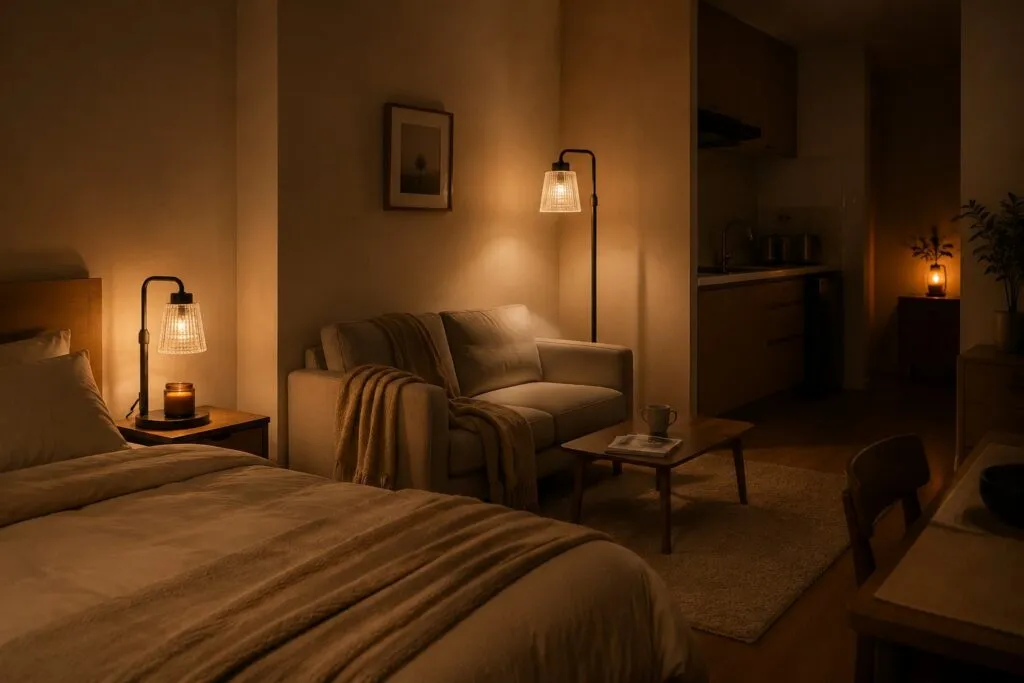
The hardest part of working out how to decorate a studio apartment is that one room has to be a bedroom, a living room, an office, and a kitchen at the same time, and as a renter you usually cannot move a wall or rewire a fixture to help. The move that does the most work, and the one you fully control, is light. Zone the single room with pools of warm, plug-in light instead of paint or built-ins, keep the evening tones warm, and put brightness only where a task needs it. Do that and a studio reads as several calm spaces rather than one bright box.
Key takeaways
Treat a studio as several zones in one room and light each one separately with warm, plug-in fixtures you can take with you. Bounce daylight with a mirror, keep evening tones near 2700K, and match brightness to the task so a work-and-sleep room feels calm at night.
- The average U.S. studio was about 457 square feet in 2024, so every square foot has to do more than one job (RentCafe).
- Lighting designers build a room from three layers: ambient, task, and accent (American Lighting Association).
- A mirror does not add light; it reflects existing light, so placing one opposite a window spreads daylight deeper into the room (RMCAD).
- General living wants roughly 20 to 30 footcandles; reading or desk work wants 30 to 50 (IESNA Lighting Handbook).
- Warm, dim light near 2700K is the sleep-friendly end of the spectrum, which matters when the bedroom is also the living room (Sleep Foundation).
01How do you decorate a studio apartment?
To decorate a studio apartment, divide the single room into zones and give each one its own pool of light, because as a renter you can change the lighting far more freely than the floor plan. The space is genuinely tight to begin with: the average U.S. studio measured about 457 square feet in 2024, up from 444 the year before (RentCafe, National Average Apartment Size, retrieved 2026-07-19), which is why one bright overhead light flattening the whole room is the worst thing you can do. Break that single box into a sleep area, a living area, and a work or kitchen area, then light each one on its own. A renter-friendly accent for one of those zones is a rechargeable sunset wall lamp that goes up without hard wiring.
Lighting is the backbone of that plan for a simple reason: it is the one design layer a rental lets you change without tools or permission. You cannot repaint freely or knock through a wall, but you can add lamps, swap bulbs, and place a mirror, and each of those quietly redraws the room. So the rest of learning how to decorate a studio apartment is less about furniture and more about where the light pools, how warm it is, and which zone it belongs to. Everything below is a way to apply that.
02Why is lighting a renter’s best decorating tool?
Lighting is a renter’s most powerful decorating tool because it is reversible, it needs no permission, and it changes the whole feel of a room in an evening. The overhead fixture you inherited is usually one harsh, cool source you are not allowed to swap out, and it lights the kitchen, the bed, and the sofa with the same flat glare. Plug-in light is the workaround: every lamp, strip, and projector you add is yours, moves with you, and leaves no holes, no paint, and nothing that touches your deposit.
That reversibility is exactly why light beats most other studio fixes. Paint and shelving and hardwired fixtures all ask for a landlord’s yes and a promise to undo it later, while a warm floor lamp or a hidden LED strip asks for neither. Lean into the layer you own, and a rental stops feeling like a temporary box you are camping in and starts feeling designed.
The overhead light you inherited
- One cool, flat source over the whole studio
- Cannot be swapped or dimmed in most rentals
- Lights bed, sofa, and kitchen with the same glare
- No way to separate one room into zones
Plug-in light you control
- A pool of warm light for each zone you use
- Reversible: no drilling, paint, or lost deposit
- Dim, warm scenes for evening; bright for tasks
- Moves with you to the next apartment
03How do you zone a studio apartment with light?
You zone a studio with light by giving each area its own low pool of illumination, so the room reads as a sleep spot, a lounge, and a desk rather than one open floor. The principle behind it is the designer’s three-layer method: a quiet ambient wash to move by, focused task light where you do close work, and low accent light for warmth and mood (American Lighting Association, Lighting Your Life, retrieved 2026-07-19). In a studio you simply repeat that trio in miniature for each zone, and let the darker gaps between the pools act as invisible walls.
Daylight is worth zoning too, and a mirror is the renter-friendly way to do it. A mirror does not create light, it reflects the light already in the room, so a large mirror placed opposite or perpendicular to your window bounces daylight deeper into the space and makes a small studio feel both brighter and larger (RMCAD, The Role of Mirrors in Interior Design, retrieved 2026-07-19). Pair that with a rug under the living zone and a lamp beside the bed, and you have defined three areas without moving a single wall.
04Small apartment lighting ideas that work in a rental
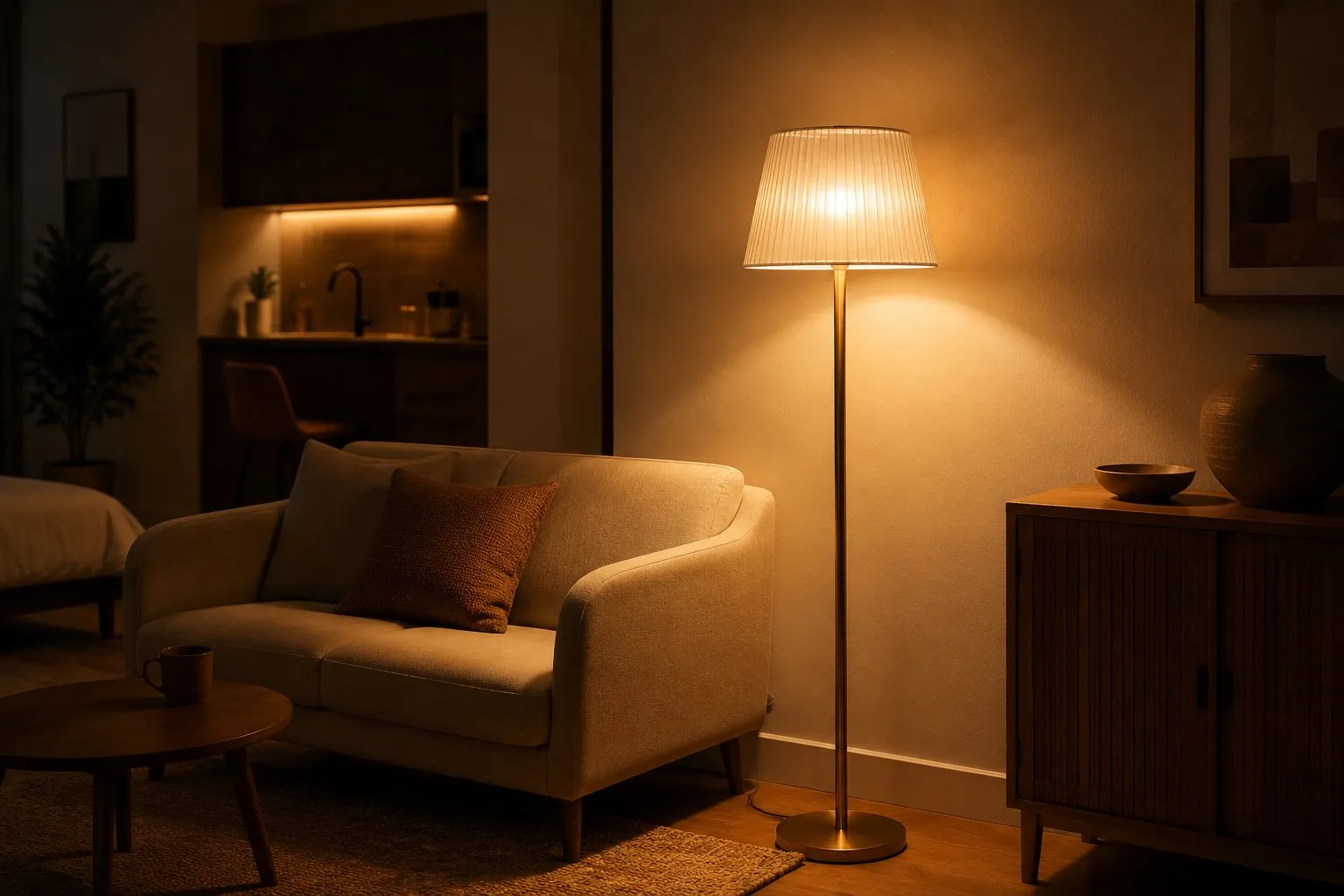
The best small apartment lighting ideas for a studio are the ones that layer light without touching the wiring. Start with ambient: a tall floor lamp aimed up at the ceiling bounces a soft, even wash across the room and does the job the inherited fixture cannot. Add task light where you actually work, a reading lamp by the bed and a brighter, cooler light at the desk or kitchen counter. Then the accent layer is where a studio stops looking lit and starts looking designed.
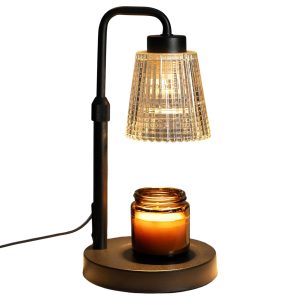
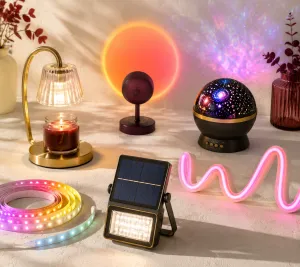
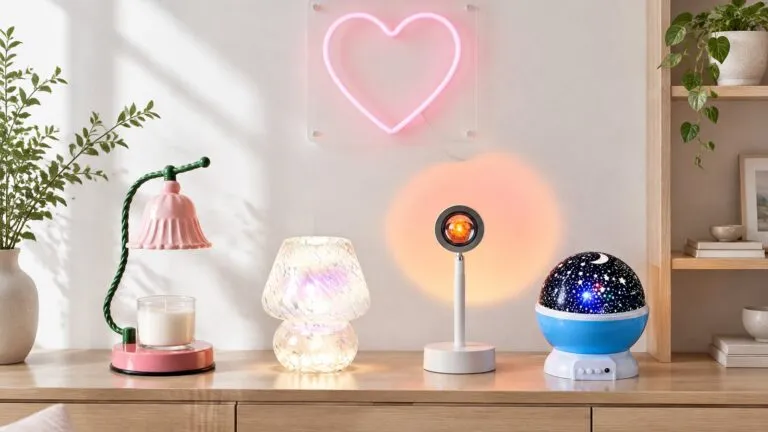
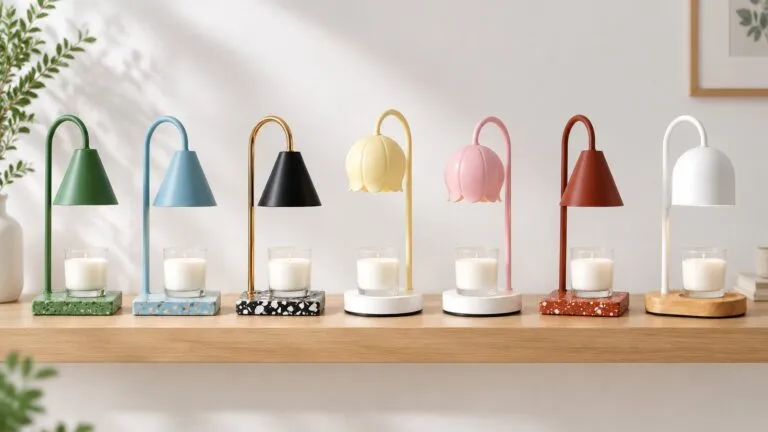
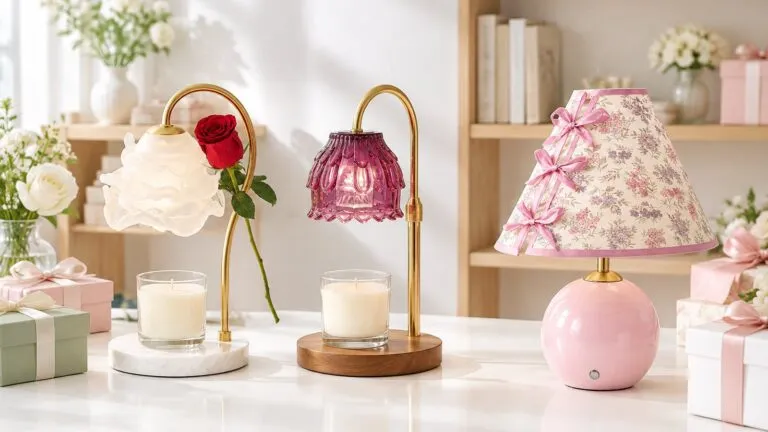
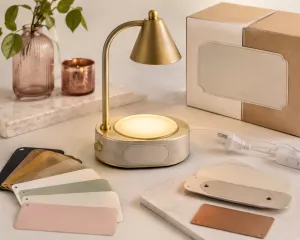
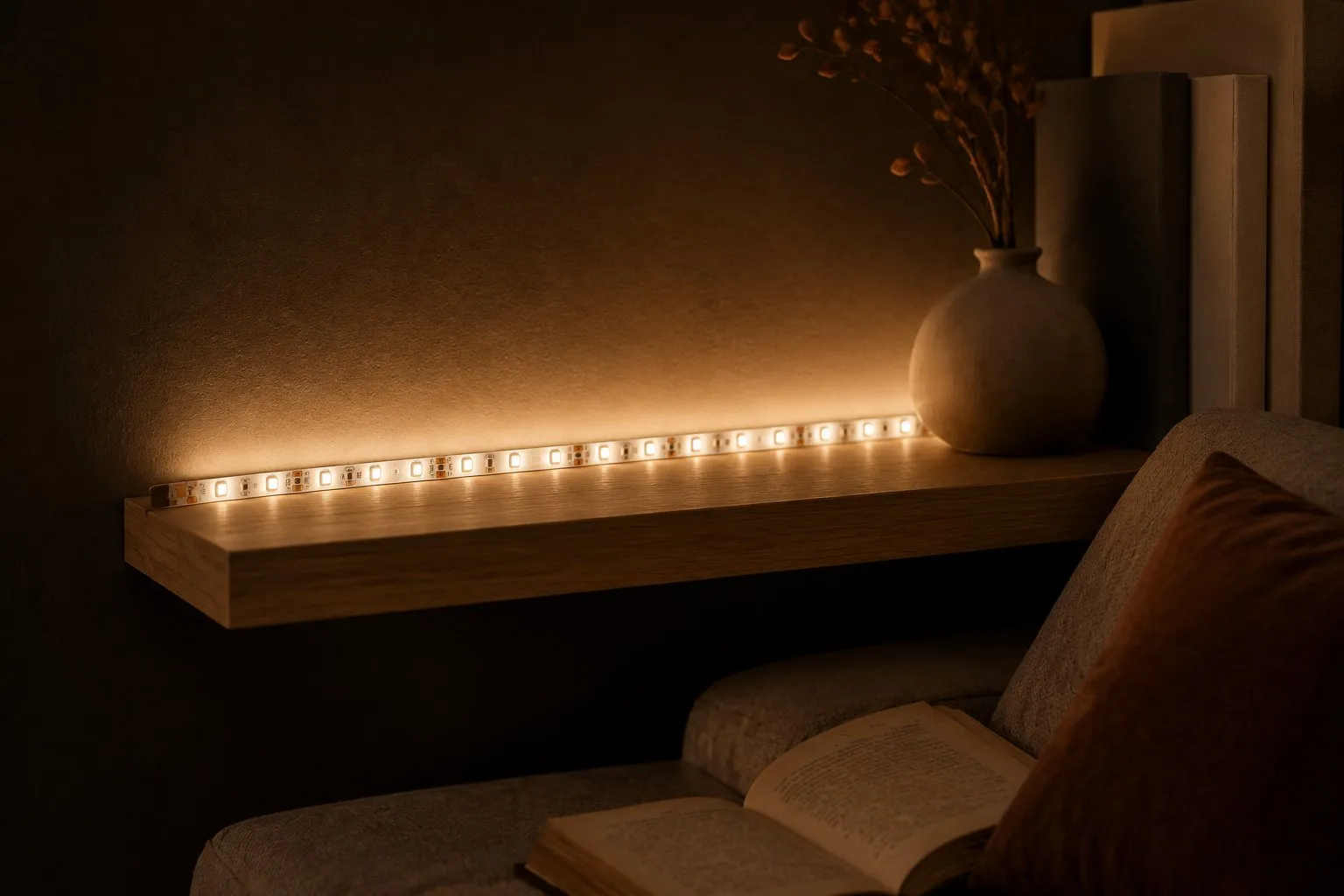
Accent is also where the most-searched pieces live, and each one plugs straight in. A sunset projection lamp washes a wall in amber to mark a mood corner, an LED light strip hidden behind a shelf or headboard turns a plain wall into soft indirect glow, and a warm candle warmer lamp adds a low pool of scented light beside the bed. Projection light from a starlit ceiling by way of galaxy and star projectors is accent that also entertains, as long as you lean on the warm, dim modes at night. The same layering logic scales up to a full bedroom once you move somewhere bigger.
| Layer | Its job in one room | Renter-friendly, plug-in options |
|---|---|---|
| Ambient | Soft overall glow to move by | Floor lamp bounced off the ceiling, plug-in wall wash, mirror opposite the window |
| Task | Bright, focused light for close work | Bedside reading lamp, clip-on light, brighter desk or counter lamp |
| Accent | Warmth and zone markers | Sunset projector, hidden LED strip, candle warmer lamp, galaxy projector |
05How much light and what color does a studio need?
A studio needs different amounts of light in different zones, and the gap is wider than most people guess. Lighting levels are measured in footcandles, where one footcandle is roughly 11 lux, and the IESNA Lighting Handbook published by the Illuminating Engineering Society gives working ranges by activity. Simply moving around wants only about 5 to 10 footcandles, a general living area sits near 20 to 30, and reading or desk work climbs to roughly 30 to 50 (IESNA Lighting Handbook, via Archtoolbox, retrieved 2026-07-19). A kitchen counter is brighter still, closer to 70 footcandles for prep (IES residential levels, via Super Bright LEDs, retrieved 2026-07-19). No single fixture can cover that whole spread, which is the real reason a studio has to be lit zone by zone.
Color matters as much as quantity, and here the studio has a twist: because the bedroom is also the living room, the accent and bedside light should stay warm at night. For the evening, aim for warm white around 2700K, the amber end of the scale, since color temperature runs backwards from what you might expect and lower kelvin numbers are warmer (Lumens, Understanding Kelvin Color Temperature, retrieved 2026-07-19). Warm, dim light is the sleep-friendly end of the spectrum, while bright blue and cool white keep you alert (Sleep Foundation, retrieved 2026-07-19), which is covered further in our guide to the best light color for sleep. Save the cooler, brighter light for the kitchen and desk, and keep it off before bed.
How much light each studio zone wants
Recommended light levels by activity, in footcandles; higher bars mean more light on the task
Source: IESNA Lighting Handbook, Illuminating Engineering Society (moving-around, living, and reading ranges via Archtoolbox); kitchen counter task level of about 70 fc from IES residential levels via Super Bright LEDs. Retrieved 2026-07-19.
| On the box | Color temperature | Tone | Where it fits in a studio |
|---|---|---|---|
| Soft / Warm White | ~2700K | Amber, candle-like | Bedside, accents, wind-down evenings |
| Warm White | ~3000K | Soft warm white | Living-zone ambient, relaxed evenings |
| Bright / Cool White | 3500K to 4100K | Neutral, a little blue | Kitchen counter and desk detail |
| Daylight | 5000K to 6500K | Crisp, blue-white | Daytime tasks only; not before bed |
06A renter-friendly lighting plan, step by step
You do not need a renovation or a landlord’s sign-off to relight a studio, just a short sequence that moves the room from one harsh fixture to warm, zoned pools of light. Start with the tone, then light each zone, add accents, and finish by putting the layers on controls you will actually use. The four steps below are the whole method, and every one of them is reversible.
For a store, rental-furnishing brand, or property manager fitting out this exact renter-friendly look at scale, the sourcing question is whether one partner can supply the whole warm, plug-in range at once. BeginLighting builds and private-labels studio and small-space mood lighting on its own Foshan lines, including sunset projection lamps, smart LED light strips, and our best-selling candle warmer lamps, packed gift-box ready so an opening order can span several formats. Prices are quoted per project rather than listed, which is why the next step is a quote rather than a cart.
Source a warm, renter-friendly lighting range
Sunset projection lamps, smart LED light strips, warm plug-in pieces, and best-selling candle warmer lamps in sleep-friendly warm tones, gift-box ready. Built and private-labeled on our own Foshan lines, alongside the wider cozy-home range. Prices are quoted per project.
FAQ
How do you make a studio apartment feel bigger?
The quickest way to make a studio apartment feel bigger is to stop lighting it as one room. Give each area its own low pool of warm light so the eye reads separate zones, place a mirror across from your window to bounce daylight deeper into the space, and keep the brightest light down at task height rather than blazing from the ceiling. Layered, warm light adds depth and shadow, and a room with depth feels larger than a flat, evenly lit box.
What are the best small apartment lighting ideas for renters?
The best small apartment lighting ideas for renters are the reversible ones: a warm floor lamp bounced off the ceiling for ambient light, a clip-on or table reading lamp for the bed and desk, and low accent pieces like a sunset projection lamp, a hidden LED light strip, or a candle warmer lamp. All of them plug in, need no drilling or rewiring, and move with you to the next place, so nothing risks your deposit while still changing how the room feels.
How do you decorate a studio apartment without painting or drilling?
Learning how to decorate a studio apartment without painting or drilling means leaning on the things you can change freely: light, textiles, and freestanding pieces. Swap the inherited bulb for a warm one, add plug-in lamps to carve the room into zones, layer rugs and a mirror to define areas and bounce light, and use peel-friendly or freestanding fixtures instead of hardwired ones. Every one of these is reversible, so the room transforms without a single hole in the wall.
What color light is best for a studio apartment?
For a studio in the evening, warm white light around 2700K is best, the amber, candle-like end of the scale that signals wind-down and helps a work-and-sleep room feel restful at night. Save cooler, brighter light near 4000K or higher for the kitchen counter or desk where you need detail. Because a studio is also your bedroom, keeping the accent and bedside light warm and dim near bedtime matters more here than in a home where sleeping happens behind a separate door.
How do you divide a studio into separate areas?
You divide a studio into separate areas by giving each one a visual anchor and its own light. A rug and a floor lamp mark the living zone, a bedside lamp and a warm accent glow mark the sleep zone, and a brighter task light marks the desk or kitchen. Because only the zone you are using needs to be bright, lighting each area on its own switch or smart plug lets you turn a single room into a bedroom, a lounge, or an office one pool of light at a time.
Sources
- RentCafe, National Average Apartment Size (studios averaged 457 square feet in 2024, up from 444 in 2023), retrieved 2026-07-19.
- American Lighting Association, Lighting Your Life (three layers of light: ambient, task, accent), via 1000Bulbs, retrieved 2026-07-19.
- RMCAD, The Role of Mirrors in Interior Design: Light, Space and Illusion (mirrors reflect existing light rather than create it; placed opposite or perpendicular to a window they spread daylight through a room), retrieved 2026-07-19.
- Archtoolbox, Recommended Lighting Levels, citing the IESNA Lighting Handbook, Illuminating Engineering Society (corridor 5 to 10 fc; dormitory living quarters 20 to 30 fc; reading and studying 30 to 50 fc), retrieved 2026-07-19.
- Super Bright LEDs, Home Lighting Guide: IES Residential Recommended Lighting Levels (kitchen general 40 fc, task 70 fc), retrieved 2026-07-19.
- Lumens, Understanding Kelvin Color Temperature (lower kelvin is warmer; soft white about 2700K versus daylight about 5000K), retrieved 2026-07-19.
- Sleep Foundation, What Color Light Helps You Sleep? (warm tones are the most sleep-friendly; bright cool and blue light keep you alert), retrieved 2026-07-19.
07How to Decorate a Studio Apartment: Four Lighting Mistakes and the Fix
Most guides on how to decorate a studio apartment start with furniture. In a single room, light does more work than the sofa: it is the only thing that can turn one space into a bedroom, an office and a dining room across a day. The four fixes below are all renter-safe, all reversible, and all cost less than a rug.
Mistake: One ceiling light doing every job. → Fix: Three small warm sources at three heights, all on the same color temperature.
Mistake: Cool white bulbs chosen to make the room feel bigger. → Fix: Warm white low down, cooler light only over the work surface.
Mistake: Drilling for sconces in a rental. → Fix: Clamp, plug-in and adhesive fixtures that leave the wall intact.
Mistake: Open-flame candles in a no-flame lease. → Fix: A warmer lamp that melts the same jar with no flame at all.
Stocking a student or city-rental aisle? Request a Quote for the flame-free set above.
Will rental LED strip lighting damage a painted wall?
Not if you choose for removal before you choose for brightness. Adhesive strips are the standard renter answer, but the tape is the part that decides whether the deposit comes back: warm the strip along its length with a hairdryer for a few seconds, then peel it back flat against the wall rather than pulling it away from the wall, and the paint stays where it is. Where the paint is fresh or already lifting, skip adhesive altogether and clip the strip to the back edge of a shelf or a headboard, so the glow reaches the wall while nothing touches it. Keep it on the same warm white as the rest of the room and hide the emitters, because what you want is the reflected wash, not a visible line of dots.
