


How to use wax melts is a question your customer asks at the shelf, not at home, and the answer decides whether there is a second purchase. The mechanics fit on a card: a small amount of wax in the dish, warmed, run in sessions, changed when the scent goes. What does not fit on a card is that almost every published answer comes from a brand selling its own melts, the figures disagree by roughly a factor of two, and that gap turns into a return three weeks later. This guide is for the person buying the category, so the answers lift straight onto a shelf card or a staff crib sheet.
Two neighbouring questions sit outside it on purpose. What a wax melt actually is belongs to our candle and wax melt pairing guide, and the format argument against a jar candle belongs to wax melt warmer against candle warmer lamp. Seasonal assortment sits in the Christmas stocking guide. This piece stays on the instructions.
Key takeaways
Load one cube, run it in sessions rather than all day, and change the wax when the scent goes rather than when the wax looks used. Published run times disagree by about a factor of two, so print one honest range and one simple test.
- One maker publishes 8 to 12 hours of fragrance per cube; another says swap it every 4 to 5 hours. Both are vendor guidance, not testing, so a card should carry a range.
- Wax does not evaporate. Only the fragrance leaves, which is why a dish that still looks full can be completely scentless.
- Behaviour follows the wax base: published melting bands run from about 115°F on paraffin to 180°F at the top of the soy range (Hywax).
- Fragrance load is capped by the wax, from 3 to 6 percent on beeswax up to 10 to 12 percent on soy and coconut (Craftybase), so a third cube adds wax, not scent.
- Retailers expect 15.8 percent of 2025 sales back, worth $849.9 billion (NRF and Happy Returns). Instructions are the cheapest return-prevention tool in the aisle.
How Do Wax Melts Work?
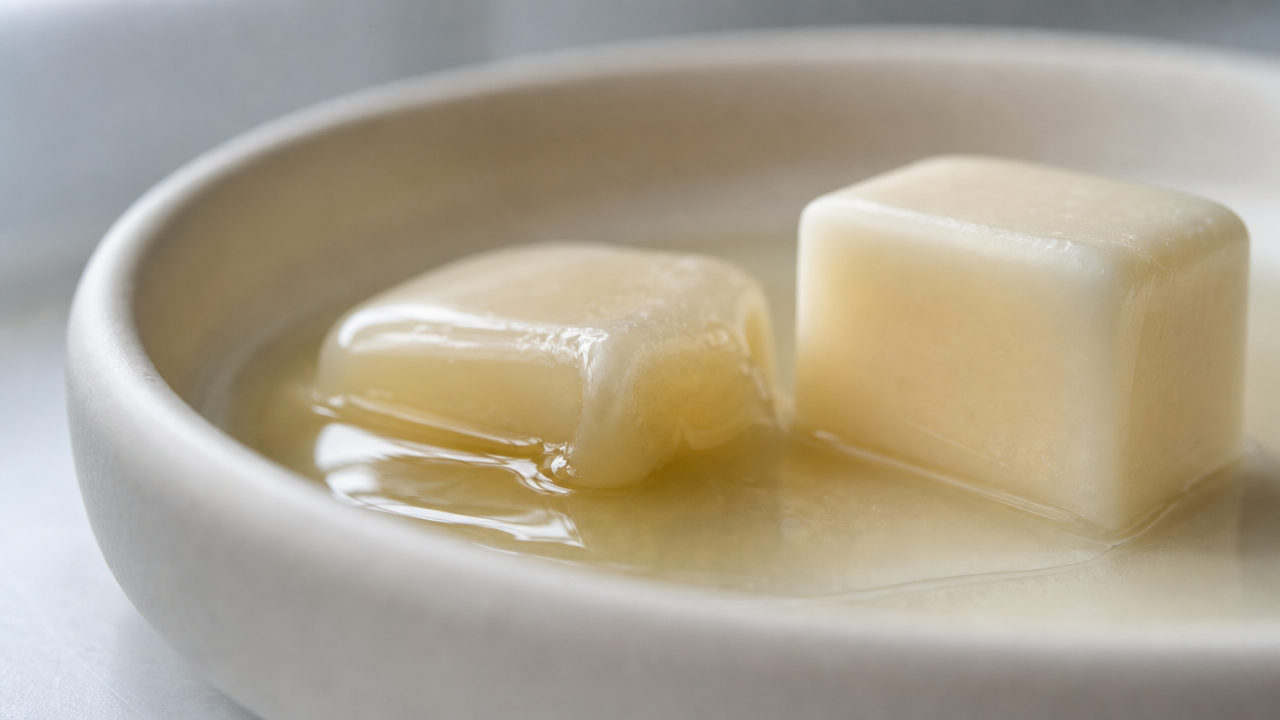
How do wax melts work is a temperature question. Heat softens a wickless piece of scented wax until the fragrance oil bound inside it evaporates into the room, and the wax itself stays in the dish.
The one-line definition, and the reason soy and soy blends dominate the format, is set out in SECTION 03 of our pairing guide, so it is not repeated here. What matters for instructions is that there is no flame and no wick, so nothing is consumed. The wax you put in is the wax you take out, minus a few percent of fragrance oil that has left as vapour.
That oil is capped by chemistry rather than by generosity. Published maximum loads run about 3 to 6 percent for beeswax, 6 to 10 percent for paraffin and 10 to 12 percent for soy and coconut, with the best throw on soy near 8 to 10 percent (Craftybase). Past the ceiling the oil separates instead of binding. Scent is a fixed budget per gram, and every instruction below is about spending it slowly. The National Candle Association estimates that 75 to 80 percent of candles sold in the United States are scented, so fragrance performance is the category, not a feature of it.
Source: Hywax GmbH, wax melting point reference (retrieved 2026-09-05)
Read it as a compatibility warning. A coconut melt sits inside a three-degree window and liquefies almost as soon as the dish is warm; a blended melt may need 150°F before anything happens. Same warmer, same customer, same instructions, two different experiences. That is what a shelf card exists to defuse.
How Many Cubes to Load, and Why a Third One Does Nothing
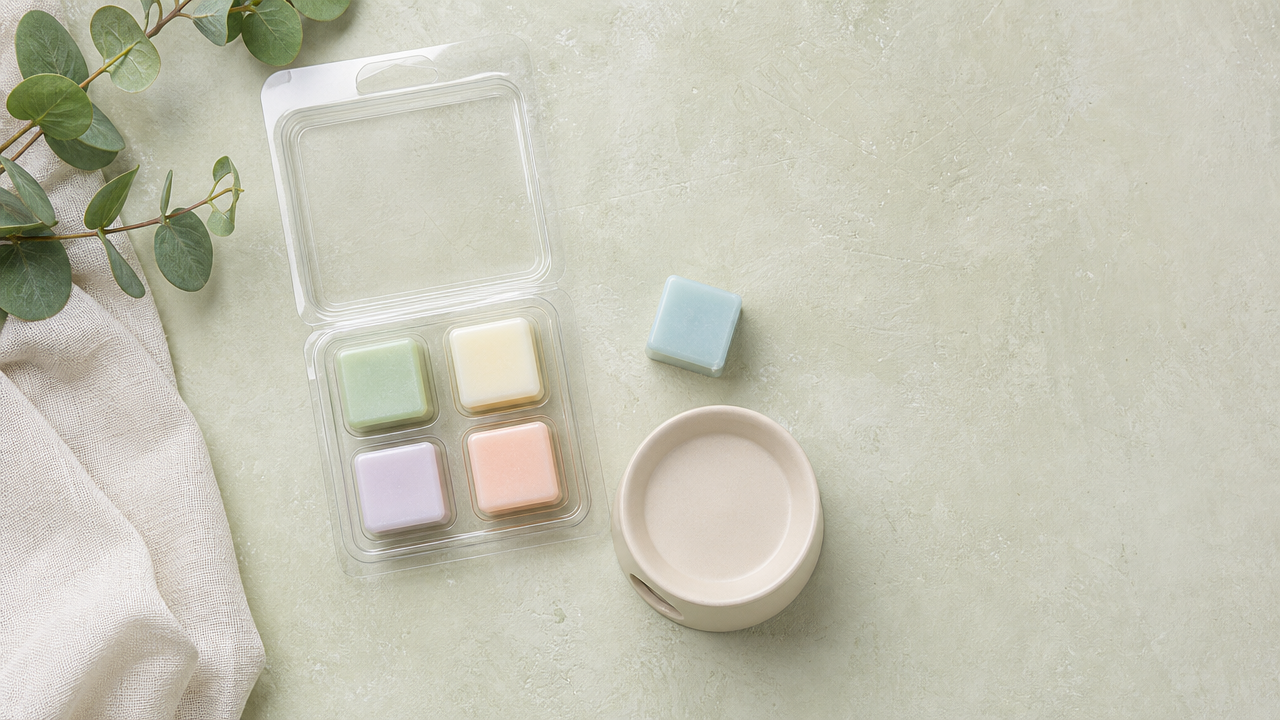
One cube, or roughly an ounce of wax, is the working answer for a standard dish, and it is what the makers publish. Happy Wax tells customers to use approximately one ounce and not more than one melt at a time.
The instinct at home runs the other way. If one cube smells good, three should smell better, and a customer who paid for a clamshell of six will spend half of it on the first evening. The dish overfills, the wax creeps toward the rim as it expands, and three cubes of fragrance go in one session instead of three. The documented failure modes when load is exceeded run from oil pooling and separation through to a more flammable wax at extreme overloads (Craftybase).
The reason a third cube does nothing is the ceiling above. Scent per gram is fixed at the pour, so extra wax adds volume and heat load, not intensity. If a room needs more fragrance, the lever is a second warmer in a second doorway, not a fuller dish. Write it on the card as a count and a fill line: one to two cubes, wax no higher than halfway up the dish.
How Long Do Wax Melts Last?
How long do wax melts last depends on whose guidance you read, and the published answers sit a long way apart. Seventh Avenue Apothecary puts a cube at 8 to 12 hours of fragrance. Happy Wax puts two or three of its smaller shapes at about 8 hours.
A wicked jar runs on different arithmetic — wax weight against a wick’s consumption rate rather than hours of fragrance — and that is worked through in how long does a candle burn, including the tunnelling complaints that never apply to a melt.
The page that gives 8 to 12 hours also tells customers to change the wax every 4 to 5 hours for best fragrance. Those are two different measurements wearing the same units: hours until the wax is scentless, against hours until the scent is no longer strong. Print only the larger number and you hear from customers at hour five. Print only the smaller one and you look like you are selling through stock faster than anyone needs to buy it.
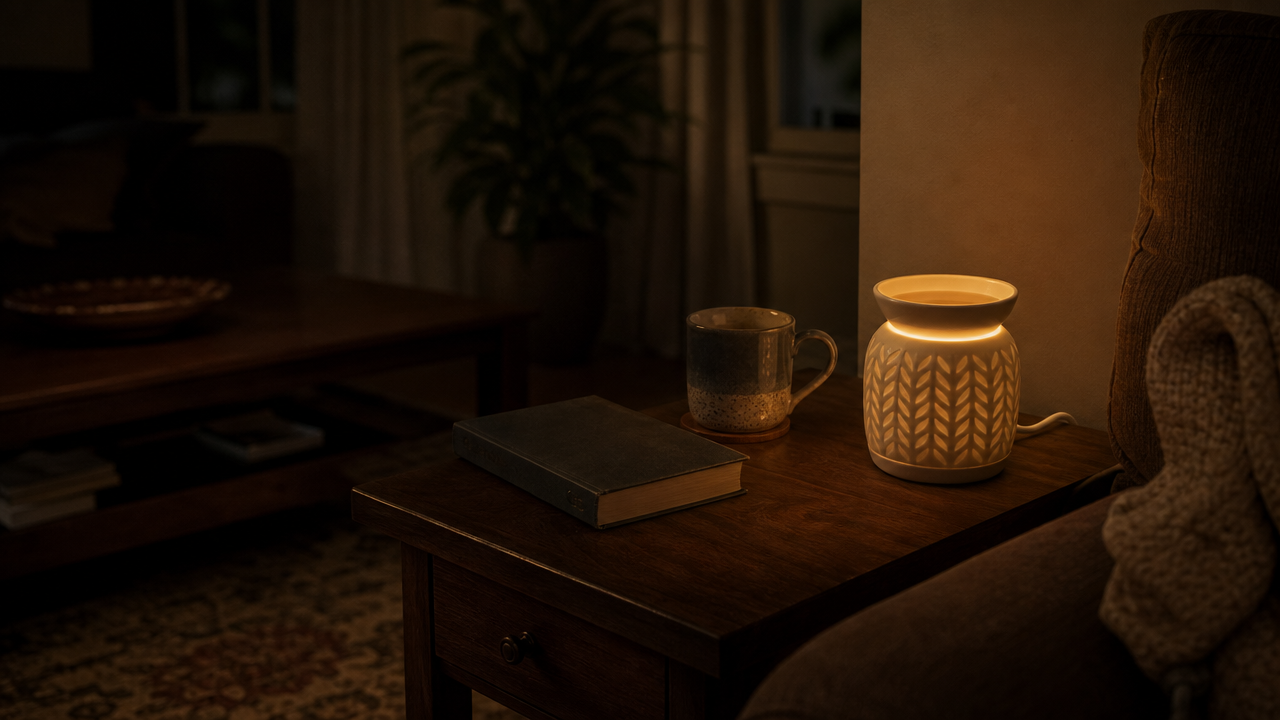
Usage behaviour closes the gap. Roughly three-quarters of candle users say they burn for four hours or less per sitting (National Candle Association), and melt customers behave much the same way: an evening, not a day. On that pattern a cube covers two to three evenings, which is far more useful on a card than an hour figure. Neither maker states the room size, the wax base or the warmer wattage behind its number, which is why the card should end with a test rather than a promise.
When to Change the Wax, and What to Do With the Old Cube
Change the wax when the scent goes, not when the wax looks used, because it will look the same on the last evening as it did on the first.
This is the most useful line a home fragrance retailer can print, and almost nobody prints it. Nothing is consumed in a warmer, so the visual cues people carry over from candles are useless: no falling wax level, no shortening wick, no soot on the glass. A dish of spent wax is a full dish. Customers waiting for a visual signal run scentless wax for days and never come back for the refill the category depends on.
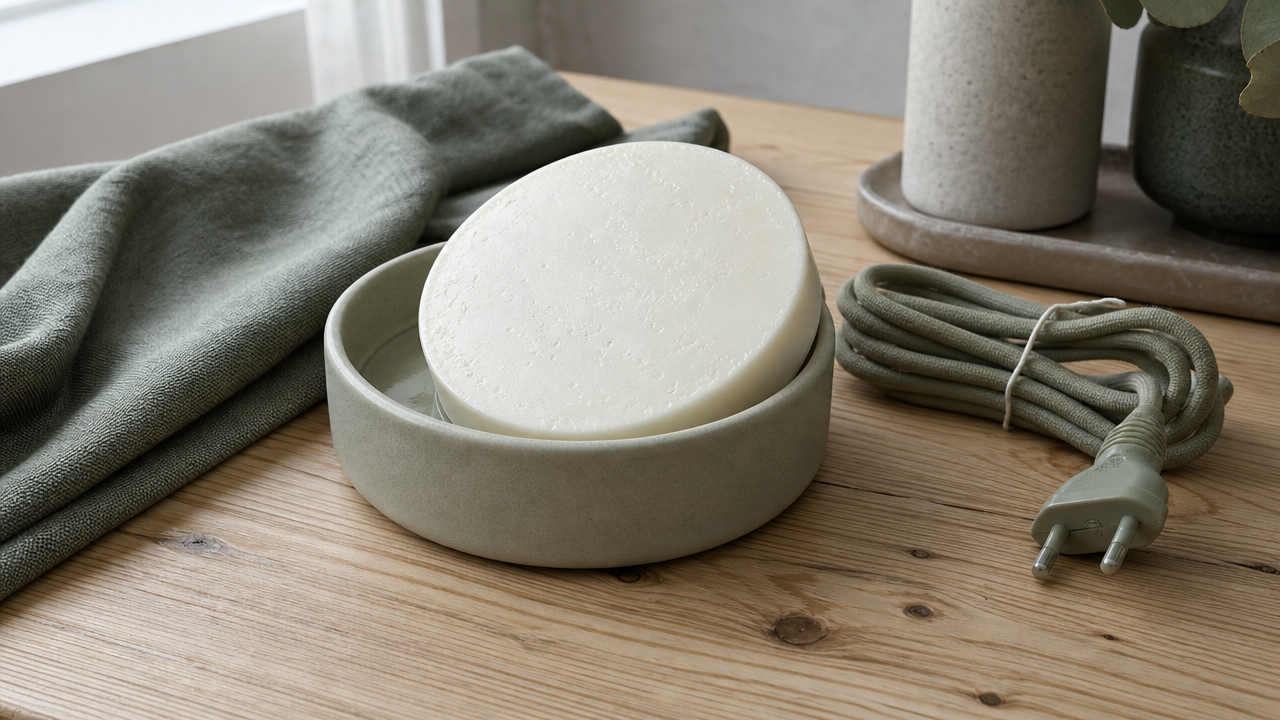
The test is simple enough for a card. Leave the room ten minutes, come back, and judge the first breath through the doorway; a neutral doorway means the wax is finished. Removal is a cooled-wax job, and our candle warmer safety explainer already sets out the sequence and the two things never to do. If wax has ended up somewhere it should not be, the surface-by-surface method is in how to get wax out of clothes, carpet and wood. Spent wax is ordinary household waste, and it does not belong down a sink, where it sets in the trap.
How to Use Wax Melts Without Burner or Warmer Hardware
How to use wax melts without burner hardware is one of the most searched questions in the category, and most of the answers circulating online should go nowhere near a shelf card. Radiators, mug warmers, hairdryers, a dish balanced over a tealight: they all appear in consumer guides, and they share one defect.
None of them controls temperature, and none turns itself off. The U.S. Consumer Product Safety Commission lists a set of voluntary standards for this category, including a fire-safety specification written for candle accessories and a terminology guide covering candles and their accessory items. Purpose-built warmers are designed against that body of work; a radiator is not. A retailer who prints an improvised method has quietly taken on the liability for it, and a warmer costs very little.
Commercially the market has already settled it. Electric melt warmers took the largest revenue share of the North America fragrance wax melts market in 2024, ahead of tealight warmers, in a market forecast to reach $4.98 billion by 2030 on a 9.5 percent compound growth rate (Grand View Research). Cubes led the form segment and clamshells led on packaging, which is worth knowing when you set the fixture.
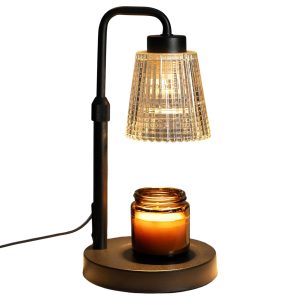
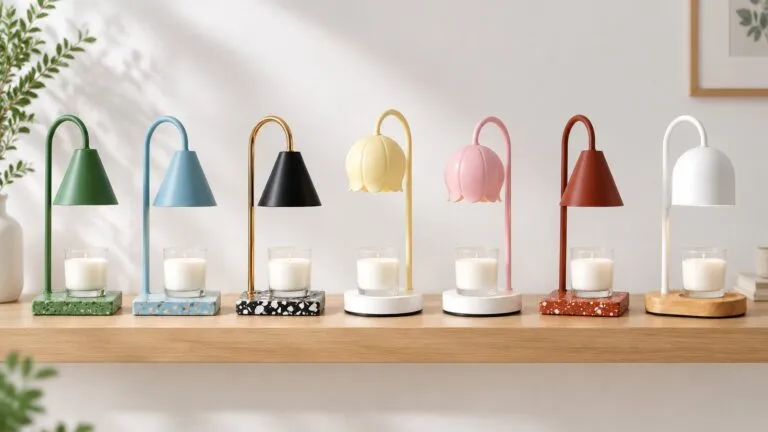
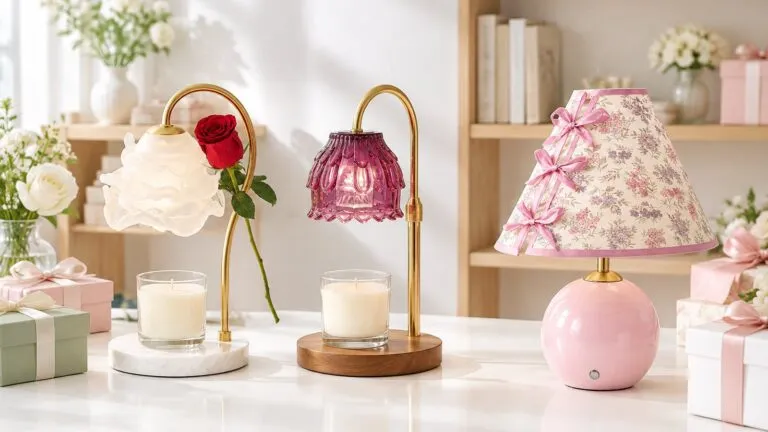
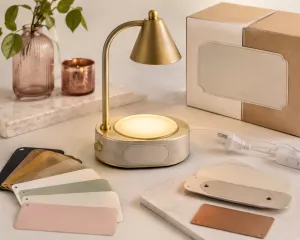
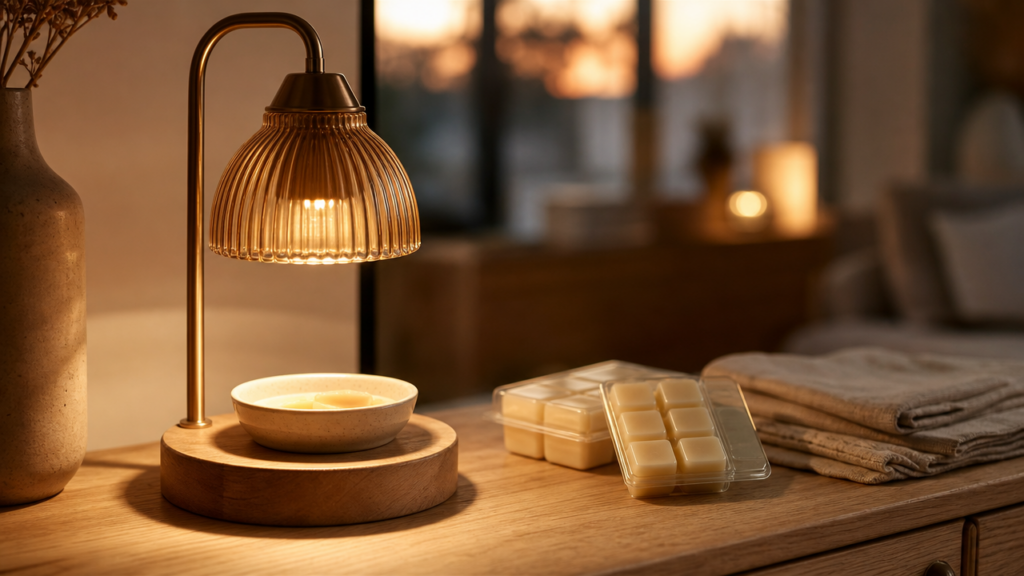
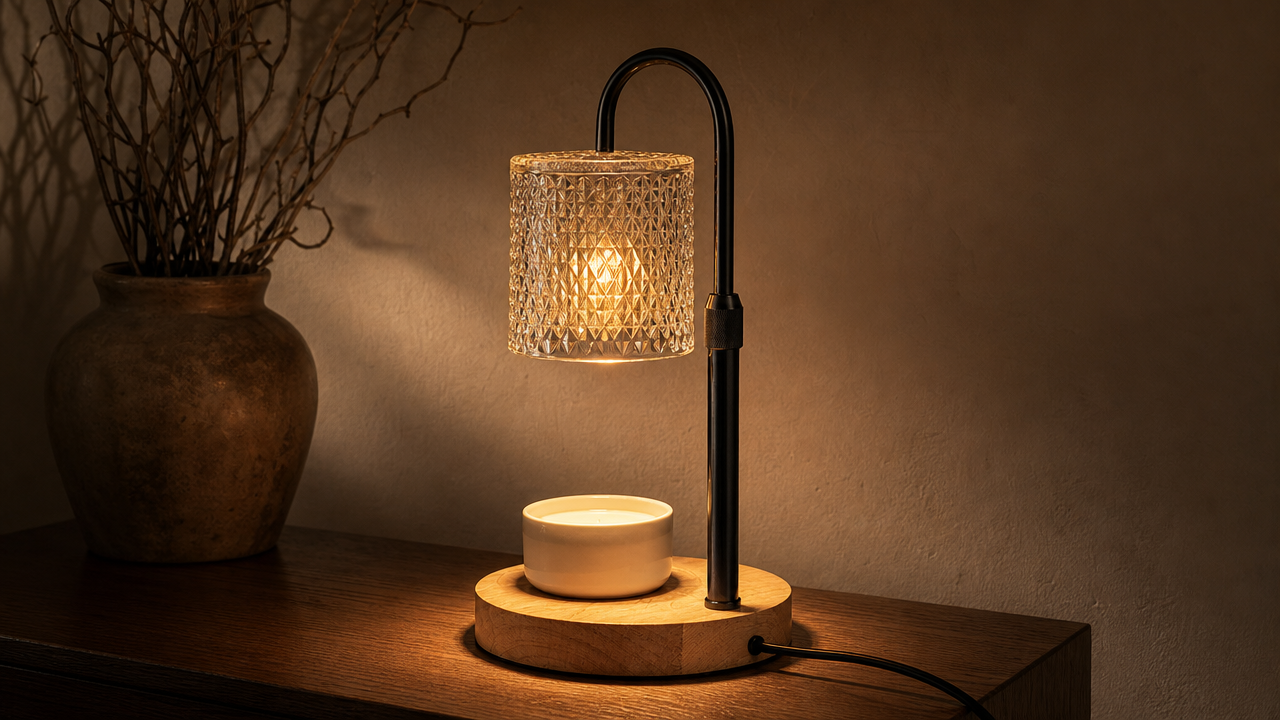
The answer we build is the top-down lamp. Instead of a hidden element under a dish, a bulb sits above the wax and warms it from over the top, which makes the fixture furniture rather than an appliance. Formats worth walking a customer to are the glass dome top-down warmer and the arch lamp with a timer, with the full range in candle warmer lamps and the mechanics in our top-down format guide. One limitation belongs on the card rather than the small print, and it works against us: a top-down lamp is built to warm a vessel standing on its base, not loose wax, so a melt has to go into a small melt-safe dish or a wax-melt jar. Sell the lamp with the dish and the customer never meets the problem.
The Card Itself: Six Lines Staff Can Read Out
What staff get asked is never how do you use wax melts in the abstract. It is six specific questions, usually in the same order, standing at the fixture.
The economics justify the print run. Retailers expect 15.8 percent of 2025 sales to be returned, worth $849.9 billion, and 19.3 percent of online sales, against 16.9 percent and $890 billion the year before (NRF and Happy Returns). Home fragrance returns are rarely about a broken product. They are about an expectation nobody set.
Match the dish to the melt
An electric warmer, or a lamp with a melt-safe dish. On a top-down lamp the wax goes in a dish, never loose on the base.
Load one cube, not three
Roughly an ounce, wax no higher than halfway up the dish. A second cube is for a bigger dish, not a stronger smell.
Run it in sessions
An evening at a time, the way people already use candles, then switch it off. Round-the-clock running spends the fragrance faster.
Judge it from the doorway
Leave the room ten minutes and come back in. A nose sitting inside a smell stops reporting it.
Change on scent, not on sight
The wax looks identical on the last evening and the first. A neutral doorway means it is finished.
Cool it, unplug it, lift it out
Wait until the wax sets, then lift the disc out whole. Never clean it hot, never put the base in water.
| The question | What the card should say | Why it prevents a return |
|---|---|---|
| How many do I use? | One cube, wax halfway up the dish | Overfilling spends three evenings of scent in one |
| How long can I leave it on? | An evening at a time, then switch it off | Sets a session expectation instead of a day-long one |
| How long will one cube last? | Two to three evenings, then test it | Replaces two conflicting hour figures with a behaviour |
| The scent stopped, is it faulty? | Step out for ten minutes and come back | Separates a spent cube from a habituated nose |
| Can I reuse it? | Yes, until the doorway smells of nothing | Stops customers discarding wax with scent left in it |
| How do I get the old wax out? | Cool it, unplug it, lift the disc out | Prevents burns, and prevents wax down the sink |
| I do not own a burner | An electric warmer, or a warmer lamp with a dish | Keeps improvised heat sources off your liability |
The Complaint That Is Not a Product Fault
The most common complaint in this category is that the scent stopped working after a week. Usually the wax is fine and the nose has moved.
Odour habituation is measurable and fast. In a 2014 study in Frontiers in Behavioral Neuroscience, 26 young adults were given 20 repeated presentations of the same odour within roughly an hour. Pleasantness ratings fell significantly among the participants who liked the smell to begin with, sniff volume fell with them, and by the twentieth exposure the ratings of those who had liked the odour and those who had disliked it were no longer statistically different.
Two consequences follow. Rotating two scents on a fortnightly cycle keeps both of them working and doubles the attach sale, which is a rare case of the honest answer and the commercial one pointing the same way. The doorway test in step four exists for the same reason. The other limit worth stating plainly is that flameless is not emission-free: warming scented wax does put material into the air, a subject with real measurements behind it that we cover in whether wax melts are toxic, and telling customers to ventilate makes a retailer look more credible, not less.
Stocking the Consumable Beside the Lamp
Instructions are a merchandising decision as much as a service one, because the consumable is where the margin repeats and the lamp is bought once.
The lamp has its own six-line card; if the question is the jar rather than the cube, start with how to use a candle wax warmer.
Naming is the first place a listing goes wrong. The voluntary standards the Consumer Product Safety Commission lists include a terminology guide, and it exists because the same object is sold as a melt, a tart, a cube and a wickless candle depending on the aisle. Pick one word per fixture, use it on the card, the pack and the listing, and make sure the shopper who searched for one of the others still lands on it. Our category page for candle accessories and bulk candles carries the poured candles and the care tools that ship beside the lamps.
We are a lighting factory in Foshan that also pours its own consumables, which is why the candles beside our lamps are ours rather than a bought-in line. Our soy wax scented candles are the format currently on the shelf, and melts can be poured to a customer brief on the same principle. We publish no weights, scent lists or fill specifications for a melt line that has not been released, because a spec written before the pour is a spec that turns out wrong. If the programme has to travel, the packing and freight arithmetic is in candle warmers in bulk.
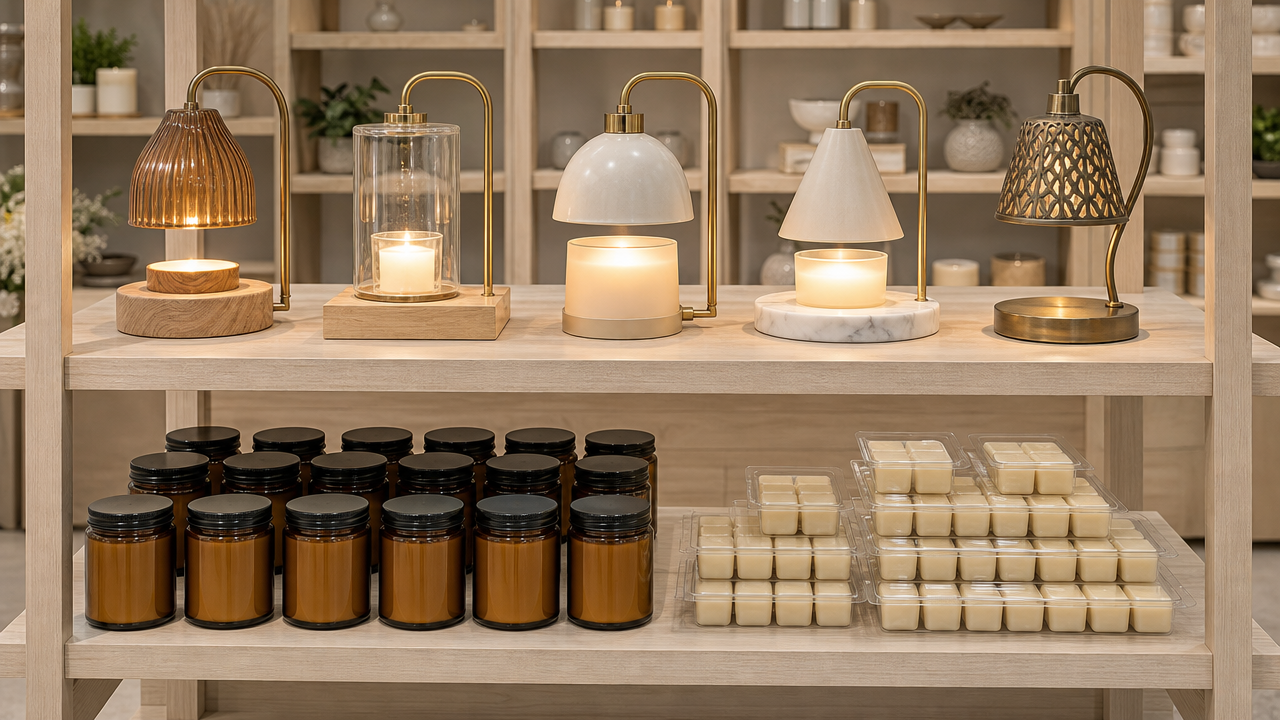
Build the fixture and the consumable in one place
We make top-down candle warmer lamps in our own factory in Foshan — 4,000 square meters, 40 people, two production lines — and pour the scented wax that sits under them. Bring the fixture you want, the dish it has to accept and the way you intend to card the shelf, and we will quote the lamp and the consumable together.
Watch it work
The load, the session and the change-out, in 43 seconds:
FAQ
Can you reuse wax melts?
Yes, and it is the normal way to use them. Nothing burns away in a warmer, so the wax loaded on Monday is still there on Friday with less fragrance oil in it, and it can be reheated for as long as it smells of anything. One maker puts a cube at roughly three or four sessions on a four-hour tealight before it is spent, though electric warmers run longer sessions and get there sooner. The wax cannot be recharged: adding fragrance oil to spent wax at home is not a recovery method and should never be suggested at the counter.
Do wax melts expire, and should retailers date the stock?
Wax does not spoil, but fragrance oil ages. A clamshell sealed in a stockroom for a couple of years smells weaker on first melt than the same product bought new, and heat accelerates it, which makes the top shelf above a sunlit window the worst place to hold reserve stock. Rotate the oldest to the front, keep it away from heating vents, and ask the supplier for the pour date rather than the delivery date.
Can you mix two wax melt scents in one warmer?
Physically yes, and customers do it constantly. Whether it works is another matter, because fragrance oils are blends already, and two finished blends stacked on each other rarely behave like the sum of the parts. Safer counter advice is to pair within a family, and to keep the total to one dish load rather than adding a cube for the second scent. Two distinct smells in a house is a job for two warmers in two rooms.
What should staff say when a customer asks about pets?
Do not improvise this one at the counter. Cats in particular metabolise some fragrance compounds differently from people and dogs, and an honest answer turns on specific ingredients rather than a blanket reassurance about flameless products. Our guide to whether wax melts are safe for cats is written to be read by staff and repeated to a shopper. The short version at the fixture: ventilate the room, keep the warmer out of reach, and stop using a scent if the animal starts avoiding the room.
Is a wax melt cheaper for a customer to run than a candle?
Per evening it usually is, because the consumable costs a fraction of a jar candle and gets reused across several sittings. The honest comparison has to include the warmer, an up-front cost a jar candle does not carry, which turns it into a payback conversation rather than a price one. The format-by-format version of that argument, including who owns the repeat purchase, is in wax melt warmer against candle warmer lamp.
Sources
Every external figure above was checked on 2026-09-05. Run-time figures are quoted as what melt makers publish, not as independent testing.
- National Retail Federation and Happy Returns, Consumers Expected to Return Nearly $850 Billion in Merchandise in 2025 (15.8% and $849.9bn in 2025; 19.3% online; 16.9% and $890bn in 2024), retrieved 2026-09-05.
- U.S. Consumer Product Safety Commission, Candles and Candle Accessories, voluntary standards (the fire-safety specification for candle accessories and the terminology guide), retrieved 2026-09-05.
- National Candle Association, Elements of a Candle (75 to 80 percent of candles sold in the U.S. are scented), retrieved 2026-09-05.
- National Candle Association, Candle Industry Facts and Figures (about three-fourths of users burn four hours or less per sitting), retrieved 2026-09-05.
- Hywax GmbH, Wax Melting Point reference (paraffin 115 to 155°F, soy 120 to 180°F, coconut 124 to 127°F, beeswax 144 to 147°F, blends 150 to 163°F; charted above), retrieved 2026-09-05.
- Craftybase, How to Calculate Fragrance Load When Making Candles (maximum loads by wax type, and the failure modes past the ceiling), retrieved 2026-09-05.
- Frontiers in Behavioral Neuroscience, Ferdenzi, Poncelet, Rouby and Bensafi, Repeated exposure to odors induces affective habituation of perception and sniffing, 2014 (26 adults, 20 presentations, convergence by the twentieth), retrieved 2026-09-05.
- Grand View Research, via Global Information, North America Fragrance Wax Melts Market 2025 to 2030 ($4.98bn by 2030 at 9.5% CAGR; electric melt warmers, cubes and clamshells leading in 2024), retrieved 2026-09-05.
- Happy Wax, How To Use Wax Melts, Cubes and Tarts (approximately one ounce, not more than one melt at a time; two to three smaller shapes for about eight hours), retrieved 2026-09-05.
- Seventh Avenue Apothecary, How Long Do Wax Melts Last (8 to 12 hours per cube; change every 4 to 5 hours; three to four sessions on a four-hour tealight), retrieved 2026-09-05.
