


Key takeaways
Are wax melts safe for cats? In most homes, with care, yes, because the wax is rarely the problem: the fragrance is. A melt or candle is low in toxicity if a cat licks a little, but the scented oils inside are what veterinary poison sources flag, since cats cannot break down certain fragrance compounds the way people and dogs can.
- The wax, soy or paraffin, is low-toxicity in small amounts. The fragrance oils are the real question.
- Cats are uniquely vulnerable: they are deficient in a liver enzyme, glucuronyl transferase, needed to clear phenols and related compounds (Merck Veterinary Manual).
- Watch the scent, not just the format: tea tree, citrus, pine, peppermint, cinnamon, wintergreen and eucalyptus are named by veterinary sources as oils toxic to cats.
- Flame-free is not the same as pet-safe. A warmer removes the flame and the soot, but heated scented wax still puts fragrance compounds into the air.
- The honest retail message is guidance, not fear: ventilate, keep it out of reach, favour mild or unscented options, and point a worried owner to a vet or poison line.
01Are wax melts safe for cats?
Are wax melts safe for cats? In most homes, with sensible care, yes, because the bigger question is not the wax at all, it is the fragrance you melt into the room.
Split the product in two and the answer gets clearer. The wax base, whether soy or paraffin, is low in toxicity: a cat that licks a spot of cooled wax will usually get nothing worse than a mild, passing stomach upset. What veterinary poison-control sources actually worry about is the scented oil carried in that wax, and the three ways a cat meets it: breathing it, having it settle on the fur and then grooming it off, or nibbling a warm spill. That is why the honest answer to a customer is a scent-and-placement answer, not a yes or no. For the wider set of matched accessories a warmer buyer stocks, see our accessories range.
One boundary up front, because it protects the customer and the shop. Everything below summarizes general guidance from public veterinary and poison-control sources. It is not a diagnosis, and it is not a substitute for a vet. A cat that is drooling, wobbly or struggling to breathe after an exposure needs a professional, not a label. We relay what the authorities say and stop there, because overclaiming safety, in either direction, is how trust gets lost.
02Why are cats more sensitive than dogs or people?
Because a cat’s liver cannot process certain fragrance compounds the way a dog’s or a person’s can, so the same scent that is harmless to you can build up in a cat.
The mechanism is specific and well documented. The Merck Veterinary Manual states that cats “are deficient in the enzyme glucuronyl transferase,” and that “this enzymatic deficiency makes cats very sensitive to phenol and phenolic compounds, which some oils contain” (Merck Veterinary Manual, Toxicoses From Essential Oils in Animals, retrieved 2026-07-18). Many popular fragrance oils are rich in exactly those phenols and in terpenes, so a compound a person clears in an hour can linger in a cat. Merck also notes that essential oils “are readily and rapidly absorbed through the GI tract, skin, lungs, and mucous membranes,” which is why exposure is not only about drinking something.
A cat’s own habits raise the stakes. VCA Animal Hospitals points out that “cats are fastidious self-groomers, so if these products get on their skin, they will often be ingested” (VCA Animal Hospitals, Essential Oil and Liquid Potpourri Poisoning in Cats, retrieved 2026-07-18). A fine mist of fragrance that drifts onto a cat’s coat becomes an oral dose the next time it washes. VCA and the ASPCA both add that very young cats, and cats with existing liver disease, are more sensitive still. None of this means a scented home is off limits to a cat owner. It means the margin for carelessness is smaller than it is with a dog.
03Which scents and oils should you watch for?
The concern is concentrated in a fairly short list of oils that veterinary sources name again and again, so a cat-conscious buyer can steer by scent family.
Across the ASPCA, VCA and Pet Poison Helpline, the same names recur. VCA lists “oil of cinnamon, citrus, pennyroyal, peppermint, pine, sweet birch, tea tree (melaleuca), wintergreen, and ylang ylang” (VCA Animal Hospitals, retrieved 2026-07-18). Pet Poison Helpline adds citrus oil, specifically its d-limonene, along with clove and eucalyptus oils to the same watch list (Pet Poison Helpline, Essential Oils and Cats, retrieved 2026-07-18). The Merck Veterinary Manual singles out one in particular: “tea tree oil has been the most commonly reported intoxicant in pets.” A scent labeled natural or botanical is not safer here; a natural tea tree or citrus oil is precisely the kind of compound a cat struggles to clear.
| Scent / oil | Why it is flagged for cats | Where it usually appears |
|---|---|---|
| Tea tree (melaleuca) | Rich in phenols; named the most reported pet intoxicant | “Natural”, spa and wellness blends |
| Citrus (d-limonene) | A terpene cats are slow to clear | Fresh, citrus and “clean” scents |
| Pine | Terpene-heavy, flagged by poison sources | Woodsy and holiday scents |
| Peppermint & wintergreen | Phenolic and salicylate compounds | Mint and cool-season blends |
| Cinnamon & clove | Phenol-rich warming spices | Bakery and autumn scents |
| Eucalyptus & ylang ylang | Named on veterinary watch lists | Spa, floral and decongestant blends |
The practical read for a shop is not to ban fragrance, it is to know which shelf edge to flag. A lightly scented soy option, or an unscented melt paired with a warmer, is the gentlest choice for a customer who has just told you they own a cat. It is also a genuinely useful thing to be able to say at the counter, and it is the sort of matched-scent thinking we cover in our candle pairing guide.
04Is a flameless warmer safer than a burning candle for a cat?
A flameless warmer removes real hazards for a cat, the flame, the tip-over fire and the soot, but it does not remove the fragrance question, so it is safer, not automatically safe.
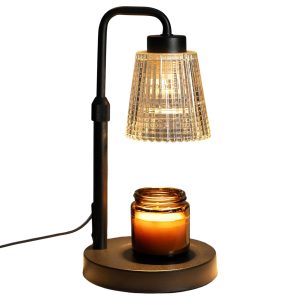
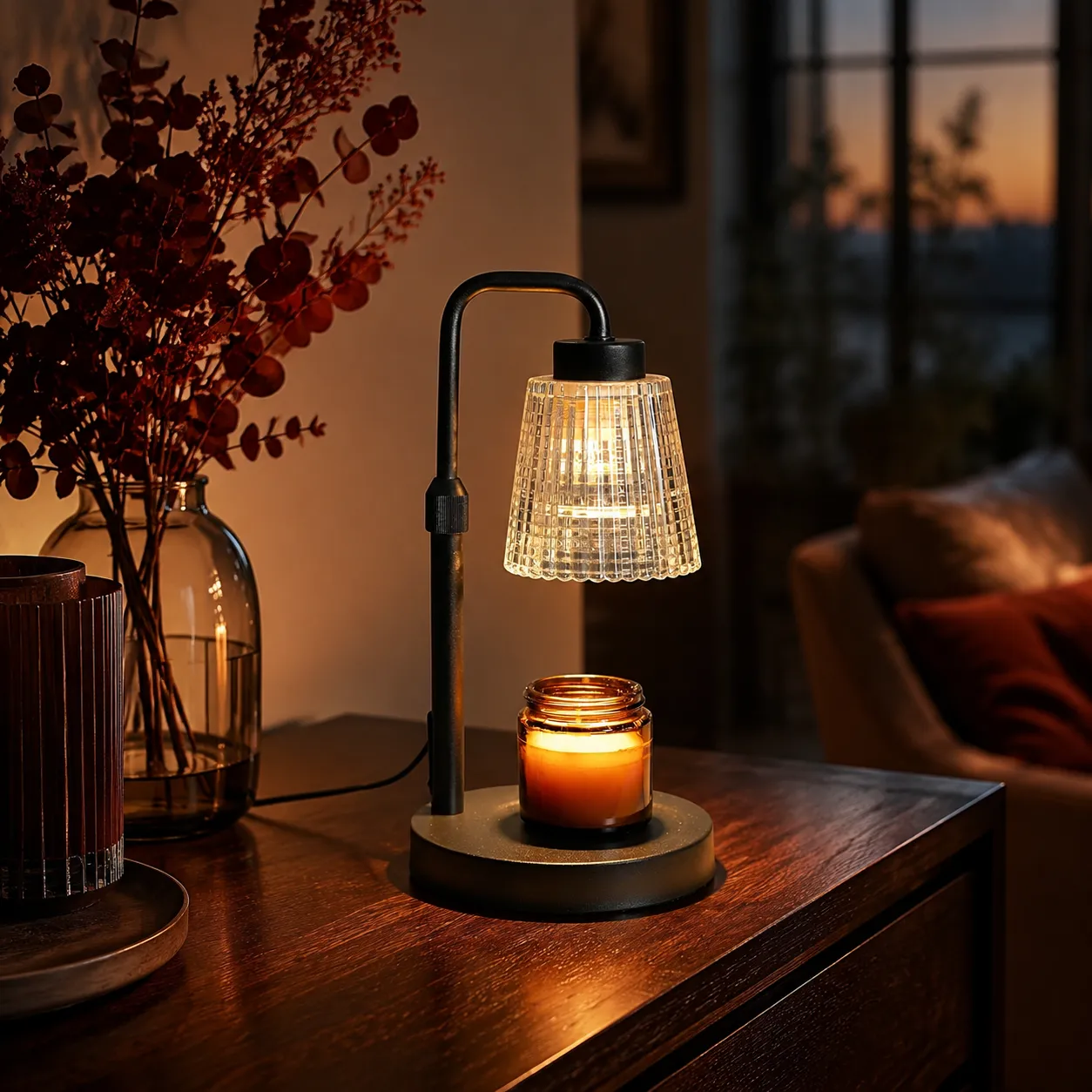
Start with what the warmer genuinely fixes. A curious cat and an open flame are a poor mix: a tail or a paw can knock a lit candle into curtains, and a burning wick adds combustion soot to the air. A flame-free candle warmer lamp lights nothing. It melts the wax with a low-heat bulb from above, so there is no flame to catch, no soot, and on a timer model nothing left running when you leave the room. That is a real reduction in the two risks a shopper pictures first.
What it does not change is the fragrance itself. Heated scented wax is not inert. In February 2025, researchers at Purdue University reported in the American Chemical Society journal Environmental Science & Technology Letters that warming scented wax melts releases fragrance terpenes that react with indoor ozone to form new ultrafine nanoparticles, at a respiratory-tract deposited dose they measured near 29 billion particles per minute (the figure is from the underlying study in Environmental Science & Technology Letters, DOI 10.1021/acs.estlett.4c00986; framing via American Chemical Society, Scented wax melts may not be as safe for indoor air as initially thought, February 2025, retrieved 2026-07-18). The flame is gone; the scented compounds are not. For a cat, whose sensitivity is to those compounds, the warmer solves the fire problem, not the fragrance one. That honest framing is the same one we use in our companion product-safety explainer for retailers.
Open-flame candle, in a cat home
- Live flame a cat can knock into fabric
- Combustion soot added to the air
- Hot wax spill if the jar is tipped
- You do control exactly when it burns
Flame-free warmer, in a cat home
- No wick lit, so no flame to catch or tip
- No combustion soot
- Fragrance compounds still released from warm wax
- A timer removes the “left it running” worry
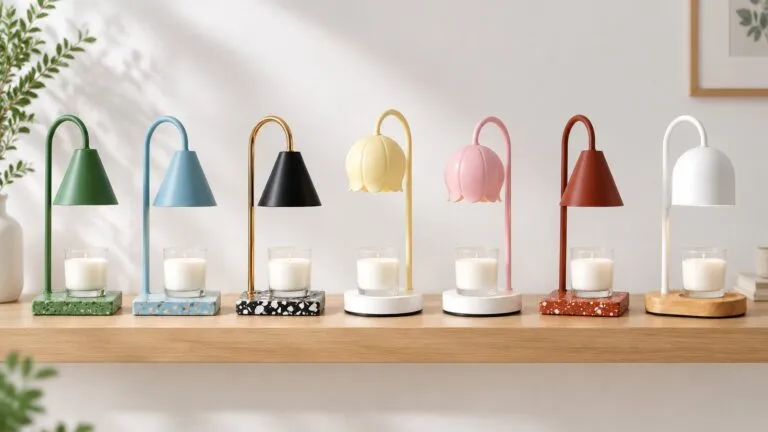
So the fair answer to a buyer is that a flame-free format is the lower-risk way to enjoy scent around a pet, and it is our own focus as a maker: our flame-free candle warmer lamps are the product behind our top-selling position in Amazon’s candle-lamp category. It is still a scented product, though, so the pet advice below travels with it rather than being cancelled by it. Browse the format in our candle warmer lamps category.
05What candles are non-toxic?
Shoppers often ask what candles are non toxic, and the honest answer is that the wax, the wick and the fragrance each matter more than the word natural printed on the label.
Take the three in turn. Wax first: soy and beeswax are the popular cleaner-burning choices because they burn cooler and produce less visible soot than a cheap paraffin, which is why a matched soy candle is the one we supply alongside our warmers. Wick next, and this is the one hard rule with the force of regulation behind it. The U.S. Consumer Product Safety Commission bans metal-cored candle wicks that contain more than 0.06% lead by weight, under a rule effective in October 2003 (16 CFR 1500.17), after finding lead-cored wicks could pose a lead-poisoning hazard (U.S. Consumer Product Safety Commission, Metal-Cored Candlewicks Containing Lead and Candles With Such Wicks, 2003, retrieved 2026-07-18). Domestic candles use cotton, paper or zinc wicks; imported stock is where a buyer should confirm it.
The third factor is the one this article keeps returning to, and it is the one a generic non-toxic label misses. A candle can be a clean soy wax on a cotton wick and still carry a citrus or tea tree fragrance that a cat should not be breathing at close range. Non-toxic to a person is not the same as safe around a cat. So the most useful thing a retailer can do with the phrase is unbundle it: point a pet owner to a clean wax, a plain wick, and a mild or unscented fragrance, in that order, rather than trusting a single marketing word to carry all three.
06What the poison-control data actually shows
Put the worry in proportion: scented household products are a real but small slice of what actually sends pets to poison control, and the honest number reassures more than it frightens.
In 2024, the ASPCA Animal Poison Control Center responded to more than 451,000 calls about animal exposures, a nearly 4% rise on the year before (ASPCA, The Official Top 10 Toxins of 2024, retrieved 2026-07-18). The categories that dominate that list are everyday food and medicine, not fragrance. Over-the-counter medications topped it at 16.5% of exposures, human food and drink followed at 16.1%, and chocolate accounted for 13.6%. Household products, the broad category that includes cleaners and liquid potpourri, made up 6.5%, and essential oils are only a slice of that. The chart below is the honest context to hand a nervous customer.
Source: ASPCA Animal Poison Control Center, The Official Top 10 Toxins of 2024 (leading exposure categories), retrieved 2026-07-18.
The authorities are measured, not alarmed, and a retailer can be too. The ASPCA’s own guidance on diffusers is that “using an oil diffuser for a short time period in a secured area, one that your dog or cat cannot access, is not likely to be an issue,” with the caveat that a pet with existing breathing problems is best kept clear altogether (ASPCA, The Essentials of Essential Oils Around Pets, retrieved 2026-07-18). That is the tone to strike on the shop floor: not a warning to put people off scent, but a short set of sensible habits that let a cat owner keep enjoying it.
07How retailers can stock and advise responsibly
Honesty is the merchandising asset here. A shop that gives a cat owner four plain habits, and does not overclaim, earns the repeat visit.
The advice a customer needs is short enough to fit on a care card, and it turns a nervous first purchase into a confident one. Lead with format and scent choice, keep the placement rules simple, and be careful with the words on the shelf tag. The four steps below are the version we hand our own wholesale buyers.
On the sourcing side, that honesty is easier when the supplier shares it. We manufacture the flame-free candle warmer lamps and supply matched soy candles and wax melts as accessories, and for a pet-conscious buyer we can source milder scent profiles or unscented melts rather than pushing a single strong fragrance. Consolidating the warmer, the candle and the melt with one partner also means one set of quality standards and one clear ingredient conversation, which is a great deal easier to relay to a cautious customer than five scattered orders. Start with a narrow, cat-considerate assortment, prove it on your shelves, then widen it.
Stock the flame-free format with honest pet guidance
Flame-free candle warmer lamps, plus matched soy candles and wax melts we can source in milder or unscented profiles. Private-label and wholesale, quoted per project.
08When a cat needs a vet, not a warning label
If a cat shows symptoms after meeting a scented product, that is a veterinary question, and the right move is to call, not to treat it at home.
The signs worth knowing are the ones the poison lines list. VCA and Pet Poison Helpline describe drooling, vomiting, an unsteady or wobbly gait, muscle tremors, lethargy and difficulty breathing among the symptoms of essential-oil exposure in cats (Pet Poison Helpline, Essential Oils and Cats, retrieved 2026-07-18). If any of those follow a spill, a diffuser session or a cat grooming a scented coat, the sensible response is quick and boring: get the cat to fresh air, do not try to make it vomit or dose it with anything, and phone a professional with the product’s ingredient list in front of you.
Two numbers are worth keeping on the same care card as the product tips. The ASPCA Animal Poison Control Center runs a 24-hour line at (888) 426-4435, and Pet Poison Helpline operates at (855) 764-7661 (ASPCA and Pet Poison Helpline, retrieved 2026-07-18). A local veterinarian is the right first call, and these lines back them up around the clock. Handing a customer those numbers, rather than a promise that nothing can go wrong, is the version of pet-safety a shop can actually stand behind.
FAQ
Are wax melts safe for cats?
In most homes, with sensible care, yes. The wax itself, whether soy or paraffin, is low in toxicity if a cat licks a little, so the real question is the fragrance melted into the room. Keep the warmer out of reach, run it in a ventilated space the cat can leave, favour mild or unscented options, and call your vet if the cat shows any symptoms after exposure.
What candles are non toxic for a home with cats?
Look at three things, not just the word natural on the label: a cleaner-burning wax such as soy or beeswax, a plain cotton or paper wick (lead-cored wicks were banned in the United States under a 2003 CPSC rule), and a mild or no fragrance. A candle that is described as non-toxic for people is not automatically safe around a cat, because cats react to fragrance compounds that do not bother us.
Can I use a candle warmer or wax melt if I have a cat?
Yes, with care. A flame-free warmer removes the flame, the tip-over fire risk and the soot, which is genuinely safer than an open candle around a curious cat. It does not remove the fragrance, though, so use it for short periods in a ventilated room the cat can walk out of, keep it well out of paw’s reach, and choose a gentle scent or none at all.
Which essential oils are worst for cats?
Veterinary sources repeatedly name tea tree (melaleuca), citrus, pine, peppermint, cinnamon, wintergreen, sweet birch, clove, eucalyptus and ylang ylang as oils toxic to cats. The Merck Veterinary Manual notes that tea tree oil has been the most commonly reported intoxicant in pets. These are the scents to treat with the most caution in a cat household, whether in a melt, a candle or a diffuser.
What should I do if my cat is exposed to a wax melt or essential oil?
Move the cat to fresh air, do not try to treat it yourself, and call a professional with the product ingredients in hand. In the United States you can reach the ASPCA Animal Poison Control Center at (888) 426-4435 or Pet Poison Helpline at (855) 764-7661, both of which run around the clock. Your own veterinarian is the right first call if the cat is drooling, wobbly, vomiting or struggling to breathe.
The pet-safety information here summarizes general guidance from the cited veterinary and poison-control sources, current as of July 2026. It is not veterinary advice or a diagnosis. If you think a pet has been exposed to a potentially harmful substance, contact your veterinarian or a poison-control line immediately.
Sources
- Merck Veterinary Manual, Toxicoses From Essential Oils in Animals (cats deficient in glucuronyl transferase; sensitive to phenols; tea tree the most reported intoxicant; absorption via GI tract, skin, lungs), retrieved 2026-07-18.
- VCA Animal Hospitals, Essential Oil and Liquid Potpourri Poisoning in Cats (oil list; fastidious self-groomers ingest skin exposure; symptoms), retrieved 2026-07-18.
- Pet Poison Helpline, Essential Oils and Cats (full oil list including citrus d-limonene, clove, eucalyptus; symptoms; 24-hour line 855-764-7661), retrieved 2026-07-18.
- ASPCA, The Essentials of Essential Oils Around Pets (short diffuser use in a secured area the pet cannot access is not likely an issue; APCC 888-426-4435), retrieved 2026-07-18.
- ASPCA, The Official Top 10 Toxins of 2024 (451,000+ calls, up ~4%; OTC meds 16.5%, food/drink 16.1%, chocolate 13.6%, vet products 8.6%, plants/fungi 8.1%, household products 6.5%), retrieved 2026-07-18.
- U.S. Consumer Product Safety Commission, CPSC Bans Candles With Lead-Cored Wicks (16 CFR 1500.17; lead over 0.06% by weight; rule effective October 2003), retrieved 2026-07-18.
- American Chemical Society, Scented wax melts may not be as safe for indoor air as initially thought, February 2025 (Purdue University; terpenes react with ozone to form nanoparticles); underlying study: Environmental Science & Technology Letters, DOI 10.1021/acs.estlett.4c00986 (~29 billion particles/min respiratory-tract deposited dose), retrieved 2026-07-18.
- BeginLighting factory product specification and sourcing notes, 2026 (flame-free candle warmer lamps built in-house; matched soy candles and wax melts supplied as accessories; milder and unscented profiles available to source). Primary source, on file with the BeginLighting sourcing desk.
What pet safe can honestly mean on a wax melt shelf
Pet safe wax melts is one of the fastest-growing phrases in home fragrance search, and also one of the least defined. There is no regulated definition of the term, no certifying body standing behind it, and no test a supplier can point to that makes a fragranced product categorically safe around a cat. A retailer who prints the phrase without qualification inherits that gap.
What can be stated honestly is narrower and, in practice, converts just as well:
- The wax base, disclosed by name such as soy or a coconut blend, rather than described only as natural.
- The fragrance, disclosed as a full list of the essential oils present, or offered as an unscented option carrying no fragrance load at all.
- The format, flame-free and low-temperature, so there is no open flame for a cat to knock over and no soot.
- The usage guidance, meaning a ventilated room and an animal that can always leave the space.
Pet friendly wax melts framed that way, as disclosed ingredients plus sensible usage guidance, hold up to a customer question Buyers deciding how much shelf each device deserves can also read our comparison of wax melt warmers and candle warmer lamps, which sets out where the two categories genuinely diverge., a veterinarian’s opinion and a marketplace compliance review. Framed as an unqualified safety promise, they do not.
Merchandising the range
Shoppers searching cat safe wax melts are usually not hunting for a certification; they want reassurance that they can keep a scent habit without putting the animal at risk. The assortment that answers that is an unscented or very lightly scented tier, a warmer that runs at low temperature, and shelf copy that explains ventilation instead of making claims. Put the unscented option next to the fragranced one rather than hiding it in a niche corner, because the pet-owning shopper is usually the same person buying the rest of the shelf.
Candle warmer lamps and the wax accessories that pair with them are our own production, so wax base and fragrance load are specification points we can quote against rather than fixed catalog items. Tell us how you want the pet-conscious tier built and we will come back on options and wholesale pricing through Request a Quote.
