


A wax melt warmer and a candle warmer lamp usually sit within arm’s reach of each other in the same US home fragrance aisle, and buying teams routinely treat them as one line item. They are not one line item. A wax melt warmer heats loose scented cubes from underneath in a shallow dish. A candle warmer lamp hangs a downward halogen bulb over an ordinary jar candle and melts the surface without ever lighting the wick. Different heat path, different consumable, different shelf job.
This guide is for retail buyers and private-label owners deciding how much of the flame-free fixture goes to each format. It compares them on what moves a purchase order: the temperature band each device must hit, the safety story you can defend, who owns the repeat purchase, and how much shelf height each one eats. We build the lamp side in our own factory, so we also state plainly what we do not build.
Key takeaways
- A wax melt warmer heats cubes from below in a dish it owns. A candle warmer lamp heats a wicked jar candle from above and owns no vessel at all.
- Both work one narrow window. Paraffin melts near 46 to 68 °C and soy across 49 to 82 °C, while reported warmer operating bands sit around 49 to 71 °C, so a fixed-output device can under-melt a high-melt soy candle.
- Flame-free is defensible. Seattle Fire Department, citing NFPA data for 2014 to 2018, reports 7,600 US home candle fires a year, 81 deaths and 677 injuries. Neither format removes heat, though.
- The dish only earns its facing if you merchandise the wax too, because a one-ounce melt gives roughly 8 to 12 hours of strong throw.
- BeginLighting builds the lamp side and the soy candles that pair with it. Dish-style wax melt warmers and hot-plate tart warmers are not a line we make.
How a wax melt warmer moves heat, and how a lamp does it
An electric wax melt warmer is a small appliance with a shallow dish or removable tray on a body housing the heat source, either a low-wattage bulb inside the base or a resistive element under a metal or ceramic plate. The shopper drops in one or two scented cubes, they liquefy from the bottom up, and when the throw fades the cooled disc is popped out and replaced.
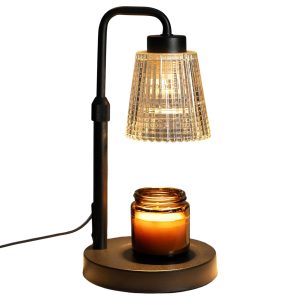
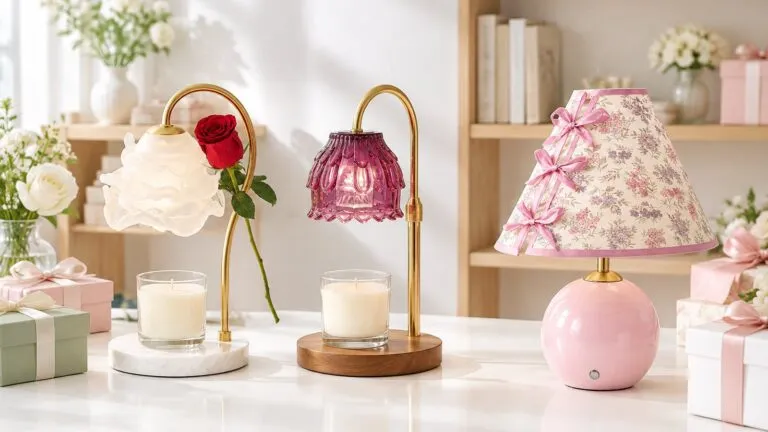
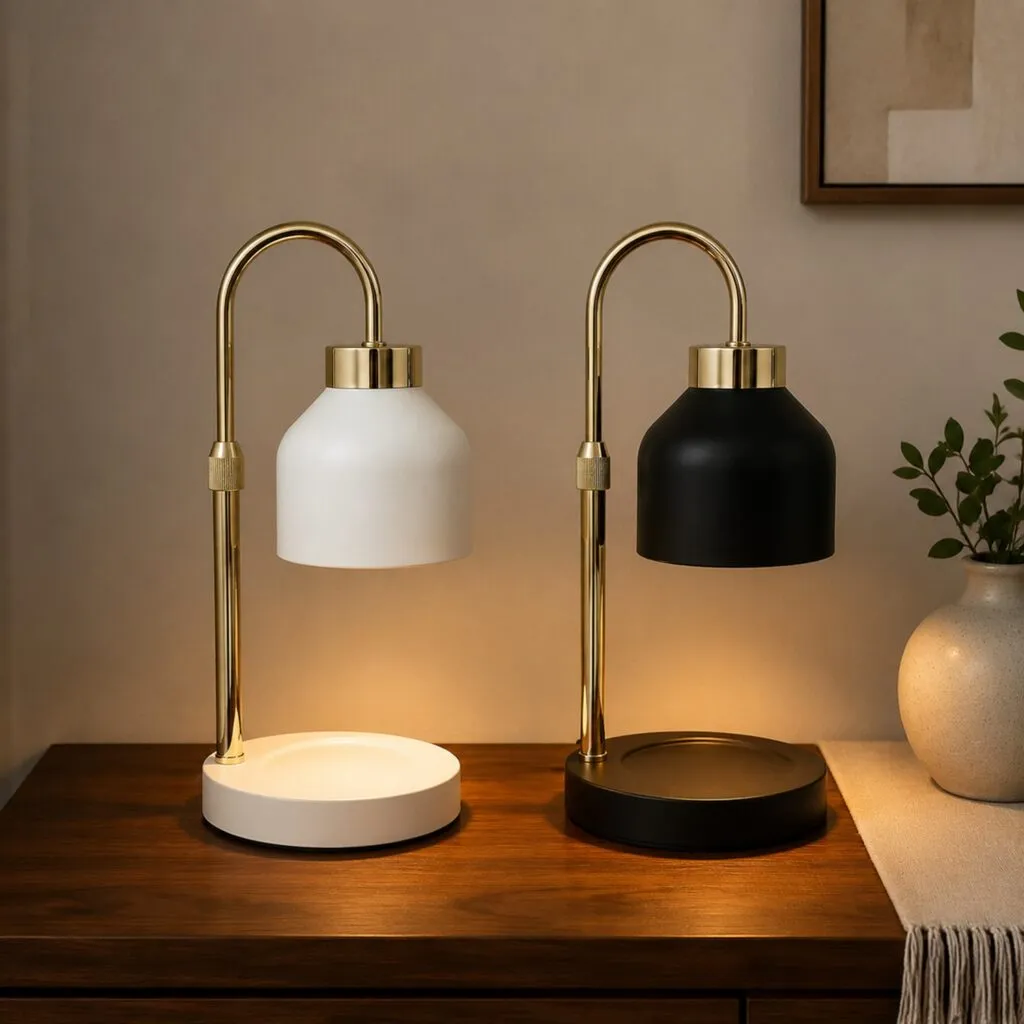
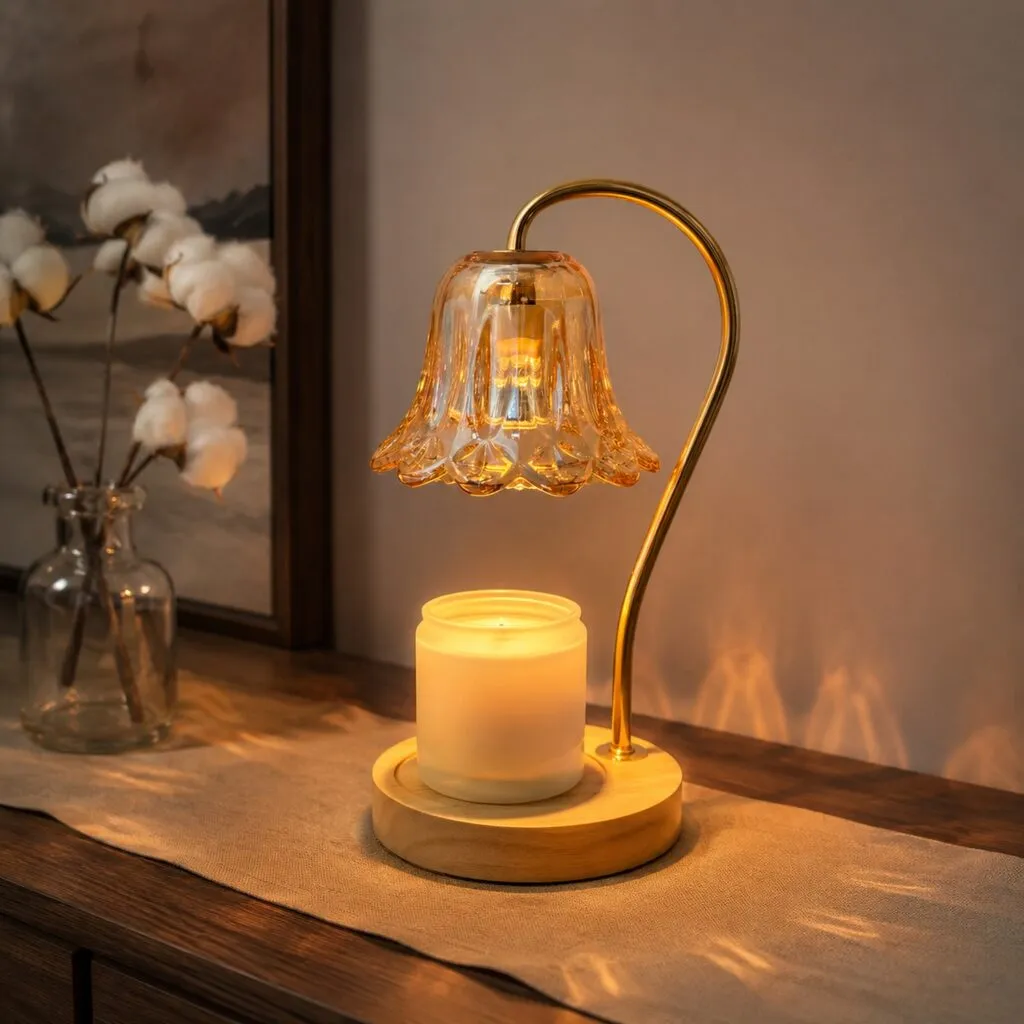
A candle warmer lamp inverts that geometry. A downward halogen bulb sits on a pole or inside a shade above the candle, and radiant heat opens an even melt pool across the full surface of an ordinary wicked jar candle. The wick is never lit, so there is no flame, no soot ring and no tunnelling. Wikipedia’s entry on candle warmers describes both architectures and puts typical draw at 15 to 40 W while running, the range our own GU10 halogen models occupy.
That difference in heat direction drives nearly every decision downstream. The dish owns its vessel, so it must own its wax. The lamp owns no vessel, so it borrows the candle your customer already buys from you and attaches to a range you already run. Our models pair the GU10 head with a four-level timer and a four-level dimmer, so the user controls how fast the pool opens and how long the unit runs.
The naming problem your listing copy must solve
Shoppers do not search in your taxonomy, and the dish format has collected more aliases than almost any other small appliance. The same device is sought as an electric wax melt warmer, a tart warmer, a wax melts burner, and a warmer for wickless candles for warmers. Tart warmer is the oldest name, carried over from the flat tart shape of early scented wax pieces, and it is still typed by shoppers who will never find you if you optimise only for the newest term.
The confusion runs both ways. Lamp owners call the thing a candle warmer, a lamp warmer or simply a flameless candle, and some arrive on a dish listing expecting to stand a jar candle on it. When the wrong shopper buys the wrong device, the return lands on your margin, not the manufacturer’s, and the review that follows attacks a product that worked as designed.
The fix is one sentence high in the title block or first bullet, answering a single question: what wax does this take. A dish takes cubes, tarts or wickless melts. A lamp takes existing jar candles, and the jar has to fit under the shade. Everything else, from finish names to timer specs, is secondary to that disambiguation.
The temperature band both formats have to hit
Both categories solve one thermal problem: get wax past its melting point without cooking the fragrance oil out of it. The band is narrower than most buyers assume. SER Wax Industry puts paraffin at roughly 46 to 68 °C, beeswax at 62 to 65 °C, and soy across a wide 49 to 82 °C depending on grade. Blended Waxes splits soy into a low-melt grade near 54 °C and a high-melt grade near 66 °C, and puts microcrystalline blends as high as 63 to 91 °C. Reported operating temperatures for candle warmer lamps run about 49 to 71 °C, the same band a dish targets from underneath.
Source: SER Wax Industry and Blended Waxes melting-point references; REIDEA candle warmer temperature guidance (retrieved 2026-08-24)
Read that as a buyer rather than a chemist and one thing jumps out: the bands overlap, but not everywhere. A fixed-output warmer near the bottom of 49 to 71 °C opens a soy candle poured on a low-melt grade around 54 °C without trouble, and struggles with a dense high-melt soy. That is the mechanical reason behind the commonest negative review on both formats, some version of “it barely melted anything”. Usually not a defective unit, but a wax specification and a device output nobody matched.
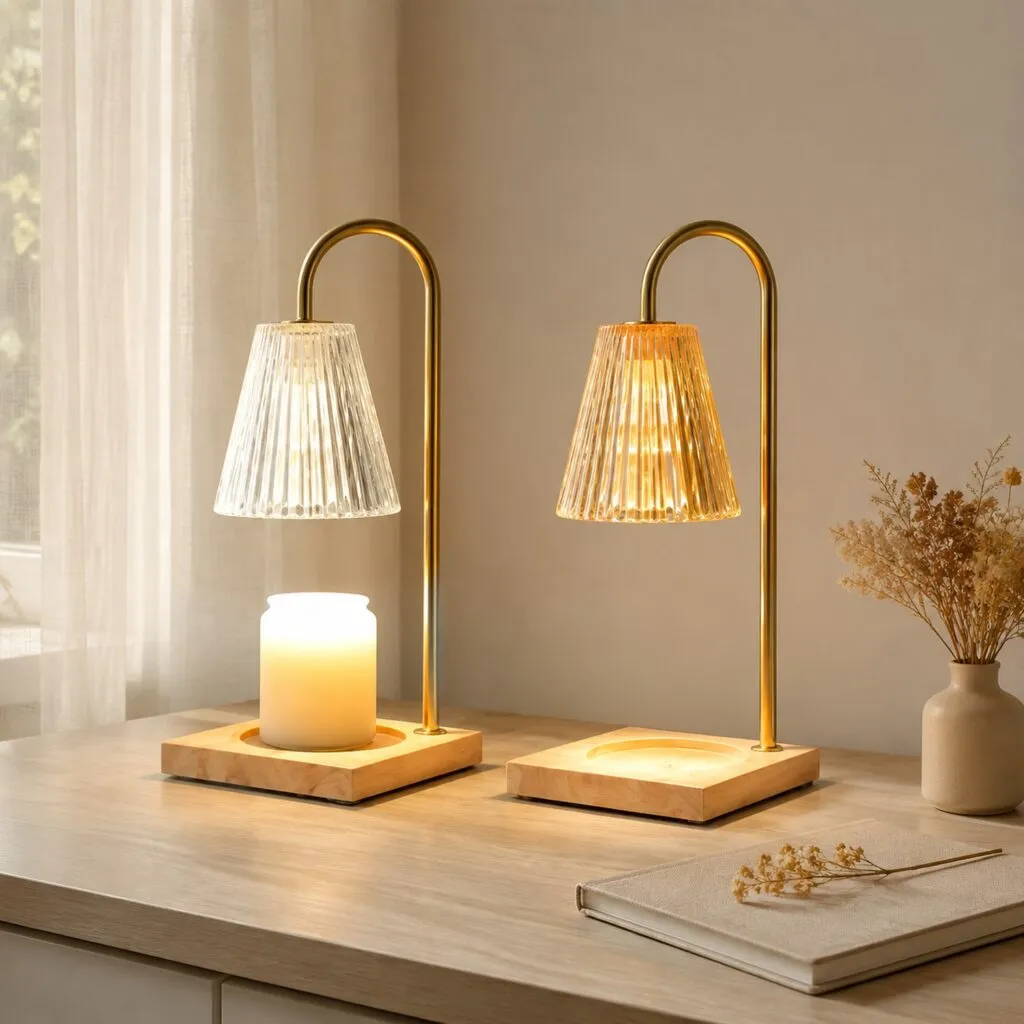
This is where dimmer and timer control stops being a marketing bullet. A dimmed lamp can be brought down for a soft paraffin blend and pushed up for a stubborn soy, letting one SKU cover a wider candle range than a single-setting device. Whichever format anchors your fixture, ask the supplier for the working temperature of the exact model and match it against the wax you actually pour. Our fluted glass cone lamp on a square wood base is specified this way for buyers who want the dimmer range documented up front.
What flame-free buys you, and what it does not
The flame-free argument is real and worth a number on your shelf talker. Seattle Fire Department, publishing NFPA figures for 2014 to 2018, reports an average of 7,600 US home fires started by candles per year, causing 81 civilian deaths and 677 civilian injuries, and ranks candles third among causes of bedroom fires. Set that against the baseline from the U.S. Fire Administration, which recorded an annual average of 368,500 residential building fires, 2,770 deaths and 11,650 injuries across 2017 to 2019.
Here is the nuance that belongs in staff training: flame-free is not heat-free, and no honest supplier should let you imply otherwise. A dish holds a reservoir of liquid wax on an exposed plate. A lamp puts a bulb drawing 15 to 40 W inches above a glass jar, and both the housing and the melt pool get genuinely hot. The unattended-appliance and stable-surface guidance the National Candle Association publishes for open-flame candles, including keeping the item at least 12 inches from anything flammable, applies almost unchanged to a powered warmer. Market these as simply “safe” and you are writing your own service problem.
A second honest limitation: removing the flame does not remove whatever the fragrance oil emits into the room, and pet-owning households ask sharper questions about cubes than about jar candles, because cubes tend to carry higher fragrance loads by weight. If your base skews toward pet owners, brief floor staff to answer with the manufacturer’s fragrance disclosure rather than with reassurance.
Who owns the repeat purchase
A dish earns through consumable velocity. The appliance is a thin-margin entry ticket, and the revenue arrives every time the shopper returns for cubes. Happy Wax, an established US melt brand, puts a typical one-ounce melt at roughly 8 to 12 hours of strong scent throw and advises breaking up any cube heavier than 0.55 ounces so it does not flood the dish. For a shopper who runs a warmer four evenings a week, that is a fast replenishment cycle.
The catch is that the cycle belongs to whoever merchandises the wax, not whoever sold the hardware. Stock an electric wax melt warmer without a wax endcap on the same fixture and you have handed the repeat purchase to a competitor after absorbing the low-margin unit sale yourself. A wax melts burner without cubes beside it is not a category, it is an unintended loss leader. It also imports an assortment problem: the National Candle Association estimates more than 10,000 candle scents are available to US consumers, and three-quarters of buyers call fragrance extremely or very important, so a thin cube range reads as a thin store.
A lamp earns the opposite way, through unit margin and gifting seasonality. It carries a higher ticket because it reads as a decor object rather than a plastic appliance, and it pulls a second sale from the candle aisle you already run rather than demanding a new supply chain. The National Candle Association reports roughly 35 percent of candle sales land in the Christmas and holiday season against 65 percent non-seasonal: a gift-led fourth quarter on a steady attach-rate base. Pair the lamps with a poured soy range from our candle and accessories line and that attach sale stays inside your own margin.
Planogram: footprint, cord and packaging
Physically these are not comparable objects, and allocating the fixture as if they were produces a bay that looks broken. A dish is low, wide and stackable, faces well in multiples, and ships in a plain carton because nothing about it is fragile. A lamp is vertical, roughly twice the height of a dish once the shade is on, needs real shelf height to sell its finish, and carries a visible cord.
Cord management quietly wrecks lamp displays, because a lamp lifts the lead into the shopper’s eye line while a dish hides it behind the fixture. Confirm cord length at quotation stage rather than discovering on delivery that the supplied lead will not reach the fixture outlet. Packaging splits the same way: lamps need moulded inserts, and a gift programme needs retail-ready packaging that skips the repack.
| Attribute | Wax melt warmer, also sold as tart warmer | Candle warmer lamp |
|---|---|---|
| Heat direction | From below the wax | From above the wax surface |
| Heat source | Internal bulb or element under a plate | Downward halogen bulb, GU10 on our models |
| Reported draw | Varies by element | Roughly 15 to 40 W while running |
| Wax accepted | Cubes, tarts, wickless candles for warmers | Standard wicked jar candles, wick unlit |
| Working band | Targets 49 to 71 °C from underneath | Reported band about 49 to 71 °C |
| Built-in consumable | Yes, the store must carry the wax | No, the customer’s existing jar candle |
| Shelf footprint | Low and stackable, counter-unit friendly | Vertical, needs height and cord planning |
| Retail role | Entry accessory, impulse and add-on | Decor object and giftable hero |
| Made by BeginLighting | No, not a line we manufacture | Yes, in our own Foshan factory |
Assortment rules by channel
There is no universal split, only a right split for a given channel, shopper and supply chain. The sequence below is what we walk through with buyers who arrive undecided, and the order matters: shopper first, hierarchy second, consumable third, physical plan last. Buyers who start from the planogram retrofit a shopper story onto a fixture they already built.
One rule holds everywhere: do not run two heroes. Both formats can anchor a fixture, neither can share the anchor, and a bay with two competing heroes reads as indecision.
Gift, home decor and seasonal retail
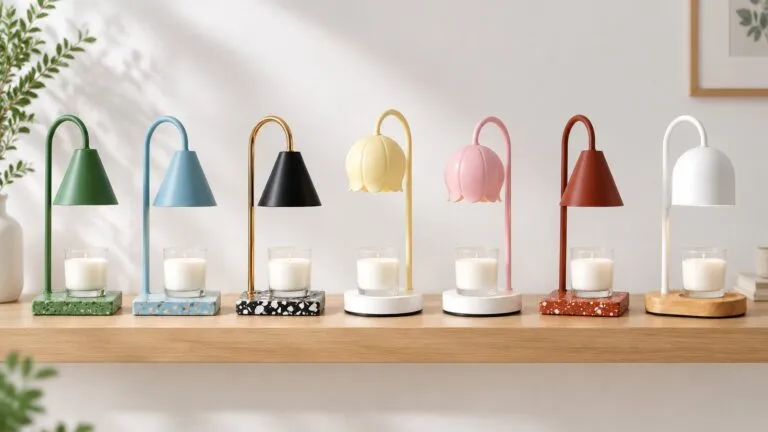
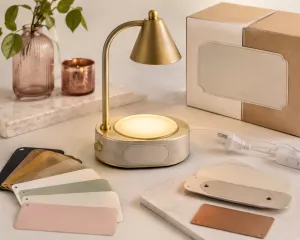
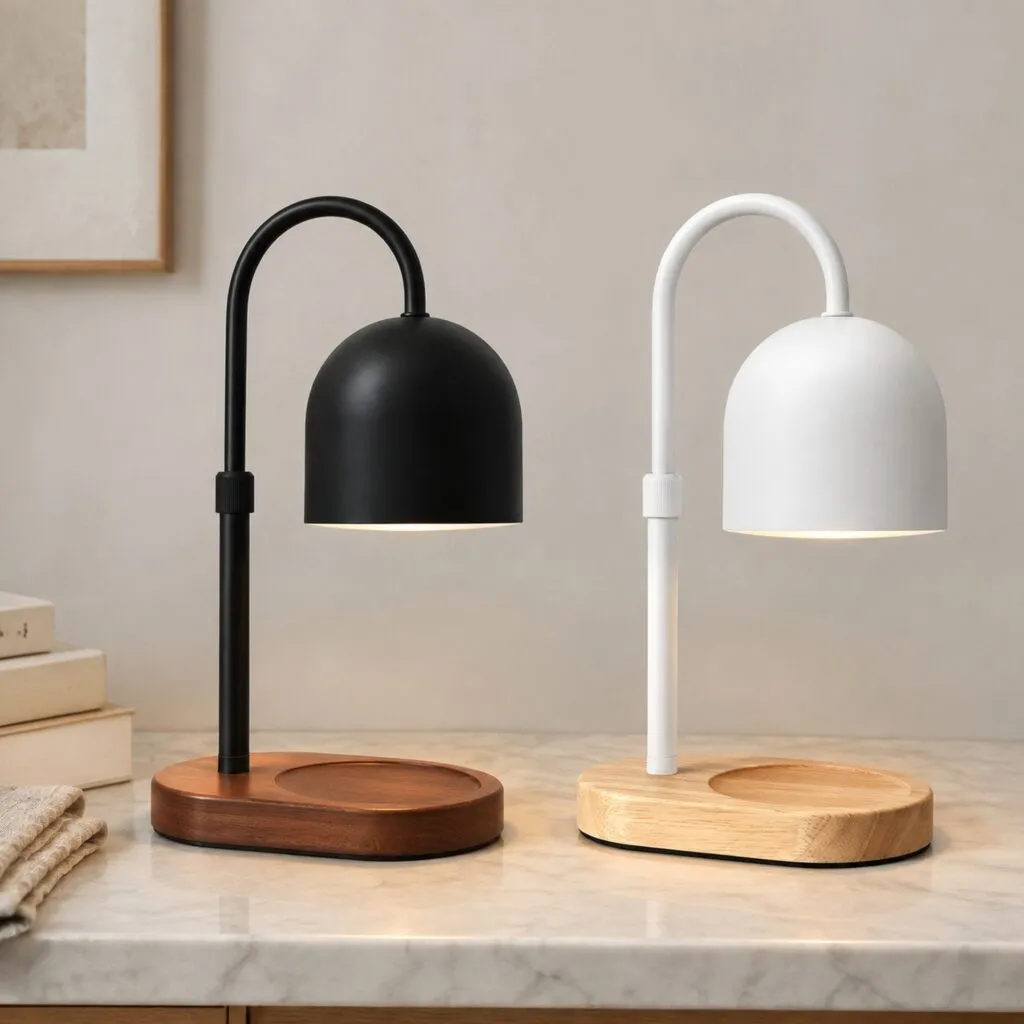
Lamp-led, with the dish absent or reduced to a single entry facing. The driver is how the object looks switched off, on a console table in November. Finish range and gift packaging outweigh the fragrance story. Our full finish range sits in the candle warmer lamps category.
Home fragrance specialists and candle brands
Both formats, with an enforced hierarchy. Use the lamp as the hero that upgrades the candle range you already own, and keep a dish as the entry rung for shoppers not ready for the higher ticket. If you already pour or source scented wax, the dish becomes the engine that consumes it. If you do not, the lamp is lower risk.
Marketplace and private label
Differentiation on the dish side is genuinely hard, and it is fair to say so. The form factor is simple, listing photography converges, and competition collapses to price. The lamp side still rewards specification work, because control over shade material, base, timer and dimmer behaviour, cord length and packaging changes the listing rather than just the number on it. That is the honest reason we build one and not the other.
What we manufacture, and what we do not
BeginLighting is a lighting factory in Foshan. We produce candle warmer lamps and their accessories in house, covering glass shades, steel poles, powder-coated steel and solid wood bases, and timer and dimmer models across our finish range, alongside soy wax scented candles poured on the same floor so lamp and candle can be specified as one programme. Our wholesale candle warmers page sets out how a private-label programme runs from drawing to production.
We do not manufacture dish-style wax melt warmers, hot-plate tart warmers, or wax cubes and wickless melts. When a buyer sends us a melt burner drawing we say so on the spot rather than quoting a product whose tooling and safety file we do not control. That costs us the occasional order and it is still the right answer.
It is also why this comparison is deliberately even-handed. If your analysis lands on the dish format, place it with a supplier who actually builds dishes and hold them to the evidence standard we are asking you to hold us to. If it lands on the lamp, we would like the enquiry, and you should still ask the hard questions below.
What to prepare before you send an RFQ
Most quotation rounds stall because the request arrives without the handful of facts a factory needs to price it. Write down the destination market and voltage, because a 110 V North American programme and a 220 to 240 V European one are different bills of materials. Write down the candle or wax you intend to pair with it, including the melting grade if your vendor will disclose it. Write down the jar dimensions the lamp must clear, because shade opening and pole height are the two numbers most often discovered too late.
Then settle two commercial questions before asking for a number. First, is this a decor programme or a fragrance programme, since that decides whether finish variety or consumable supply is the binding constraint. Second, do you need retail-ready packaging, because retrofitting it onto a quote built for a plain export carton never goes smoothly.
Finally, ask every supplier for current test reports covering your destination market and the exact model number you intend to ship, and match the report to the SKU rather than to the catalogue page. A supplier who produces that mapping quickly is telling you something useful about how they run production. One who sends a report for a different model is telling you something too.
Plan the flame-free fixture with the factory that builds the lamp
If your analysis has landed on the lamp side, the next step is specification rather than browsing: finish family, shade and base material, timer and dimmer behaviour, cord length, jar clearance and packaging. Send us the fixture you are trying to fill and the candles you intend to pair with it.
Frequently asked questions
What is a wax melt warmer, and how is it different from a candle warmer lamp?
A wax melt warmer is an electric dish that heats scented cubes from below, through an internal bulb or a resistive plate, until they liquefy and release fragrance. A candle warmer lamp does the reverse: a downward halogen bulb warms the top of a jar candle so a melt pool forms without lighting the wick. The dish takes cubes. The lamp takes your customer’s existing candles.
Is an electric wax melt warmer safer than burning a candle?
It removes the open flame, which matters given the 7,600 US home candle fires a year reported by Seattle Fire Department from NFPA data for 2014 to 2018. It does not remove heat. The plate, housing and liquid wax all reach working temperature, so the same unattended-appliance guidance applies. Candle warmer lamps sit in the same position: flame-free, not heat-free.
Is a tart warmer the same thing as a wax melts burner?
In everyday US retail usage, yes. Tart warmer is the older name, carried over from the flat tart shape of early scented wax pieces, and wax melts burner is the variant that arrives through marketplace listings. Both usually describe the same dish-and-element device. Listing both terms is worth doing, because many shoppers still type the older one.
Do I need a dish warmer if I already stock candle warmer lamps?
Only if you can also supply the wax. The dish format’s value depends on a repeat consumable, so stocking it without cubes on the same fixture pushes replenishment to another retailer. If your wax supply is uncertain, lamps are the lower-risk entry into flame-free fragrance, because the consumable is a jar candle your customer likely already buys from you.
Do you supply wickless candles for warmers or wax cubes?
No. Wax cubes and melt pucks are outside our process. Our candle work centres on soy wax scented candles poured in house and designed to pair with the lamps and accessories we build ourselves. If your programme needs cubes too, tell us the assortment you are planning and we will say what we can quote and what belongs elsewhere.
Sources
Every source below was opened and checked on 24 August 2026. Government and trade-association figures are quoted as published, with the reporting period stated in the body so you can age the number yourself.
Operating temperatures and melt durations vary by model, wax grade and ambient conditions. Treat these ranges as planning references, not as SKU specifications.
- Seattle Fire Department — “Holiday fire safety tips: candles and incense” (NFPA data, 2014 to 2018). https://fireline.seattle.gov/2021/11/17/holiday-fire-safety-tips-candles-and-incense/ (retrieved 2026-08-24)
- U.S. Fire Administration, FEMA — “Residential Building Fires 2017-2019”. https://www.usfa.fema.gov/statistics/reports/where-fires-occur/residential-building-fires-v21i2.html (retrieved 2026-08-24)
- National Candle Association — “Facts and Figures”. https://candles.org/facts-figures/ (retrieved 2026-08-24)
- National Candle Association — “Candle Safety”. https://candles.org/candle-safety/ (retrieved 2026-08-24)
- SER Wax Industry — “Candle Wax Melting Point Chart: Paraffin, Soy and Beeswax Guide”. https://www.cere.it/blog/the-melting-point-of-candle-wax (retrieved 2026-08-24)
- Blended Waxes Inc. — “Melting Point Factors for Common Waxes”. https://blendedwaxes.com/blog/wax-melting-point-factors/ (retrieved 2026-08-24)
- Happy Wax — “How Long Do Wax Melt Scents Last?”. https://happywax.com/blogs/from-the-blog/how-long-do-wax-melt-scents-last (retrieved 2026-08-24)
- REIDEA — “What Temperature Does a Candle Warmer Lamp Get?”. https://www.ireidea.com/blogs/post/what-temperature-does-a-candle-warmer-get-unveiling-the-precision-of-reidea-candle-warmers (retrieved 2026-08-24)
- Wikipedia — “Candle warmer” (device architectures and power draw). https://en.wikipedia.org/wiki/Candle_warmer (retrieved 2026-08-24)
