




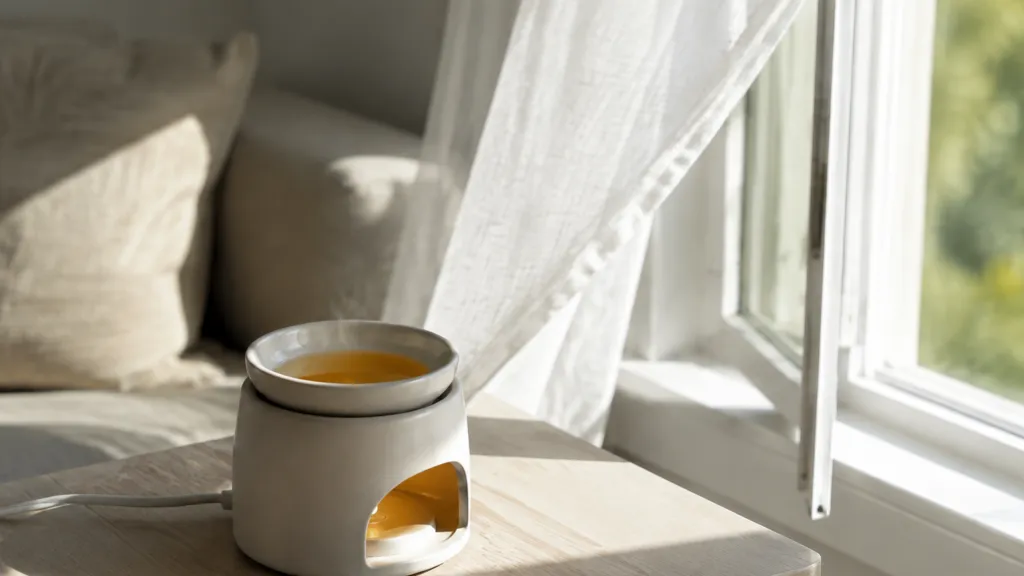
Are wax melts toxic? The measured answer is narrower than either side of the usual argument admits. Wax melts are not poisonous in the ordinary sense, and no controlled emissions study has caught the wax releasing the compounds it is popularly accused of releasing. Yet the best indoor-air measurement published so far, from Purdue University in 2025, found scented melts driving ultrafine particle levels in a real house that matched a burning candle or a gas stove. The thing doing that is not the wax. It is the fragrance carried in it.
Key takeaways
Wax melts are not poisonous to handle, and in small amounts not poisonous to swallow. What the research actually flags is the fragrance: scented melts release terpenes that react with indoor ozone to form nanoparticles, while unscented melts of the same wax produced none.
- Purdue researchers tested 15 commercial wax melts in a full-scale house. Scented melts triggered particle formation; unscented melts did not (Patra et al., 2025).
- Scented melt use deposited a median 29 billion particles per minute in the respiratory tract, against 8 to 19 million at rest.
- Wax base barely moves emissions: a 2007 study found paraffin, soy, stearin and beeswax virtually identical, with no benzene detected.
- Melts are safer than candles on fire, soot and burn injury. On ultrafine particles it is roughly a wash.
- The levers you actually control are fragrance load, session length and ventilation, not the label on the wax.
01The short answer, worry by worry
The question arrives in a dozen phrasings but always resolves into the same five claims, and the evidence splits them cleanly: two collapse on contact with the data, three hold up.
| The claim | What the measurement shows | Where that leaves it |
|---|---|---|
| Paraffin wax releases benzene | No benzene detected in any reference candle wax across a screen of more than 300 target compounds (Okometric 2007) | Not supported, and a wax melt never burns at all |
| Soy is the non-toxic option | Combustion byproducts of paraffin, soy, stearin and beeswax were virtually identical in composition and quantity | Not supported as an emissions claim |
| Scented melts pollute indoor air | Scented melts pushed particle counts past one million per cubic centimeter; unscented melts produced no nucleation event | Supported, and fragrance is the cause |
| It is as bad as burning a candle | Median deposited dose of 29 billion particles per minute, against 13 billion for a scented candle | Supported for ultrafine particles only, not for soot, flame or fire risk |
| Swallowing a piece is dangerous | Wax is not poisonous; large amounts can cause intestinal obstruction (MedlinePlus) | Low risk, but still a choking question with small children |
Both failed claims are about the wax, the part measured most thoroughly and found least interesting. Both surviving claims are about the fragrance, which until recently almost nobody measured.
02What is actually inside a wax melt
A wax melt is a simpler object than the marketing suggests: a wax base, a fragrance load, usually a dye. Only one of the three leaves the dish and enters the air in any quantity.
The base is what gets named on the packaging. Paraffin is a refined petroleum fraction; soy wax is hydrogenated soybean oil with a lower melting range; beeswax, palm and coconut fill out the rest. All of them do one job: holding fragrance oil in a solid until heat sets it free.
The fragrance load does the work, and is almost never disclosed by weight. Its characteristic components in the melts measured are monoterpenes and monoterpenoids, the family that gives citrus peel and pine their smell. Heating a whole cube in an open dish releases more scent compounds than a candle does, because direct heating maximizes the melted surface area (ACS Axial, retrieved 2026-08-28).
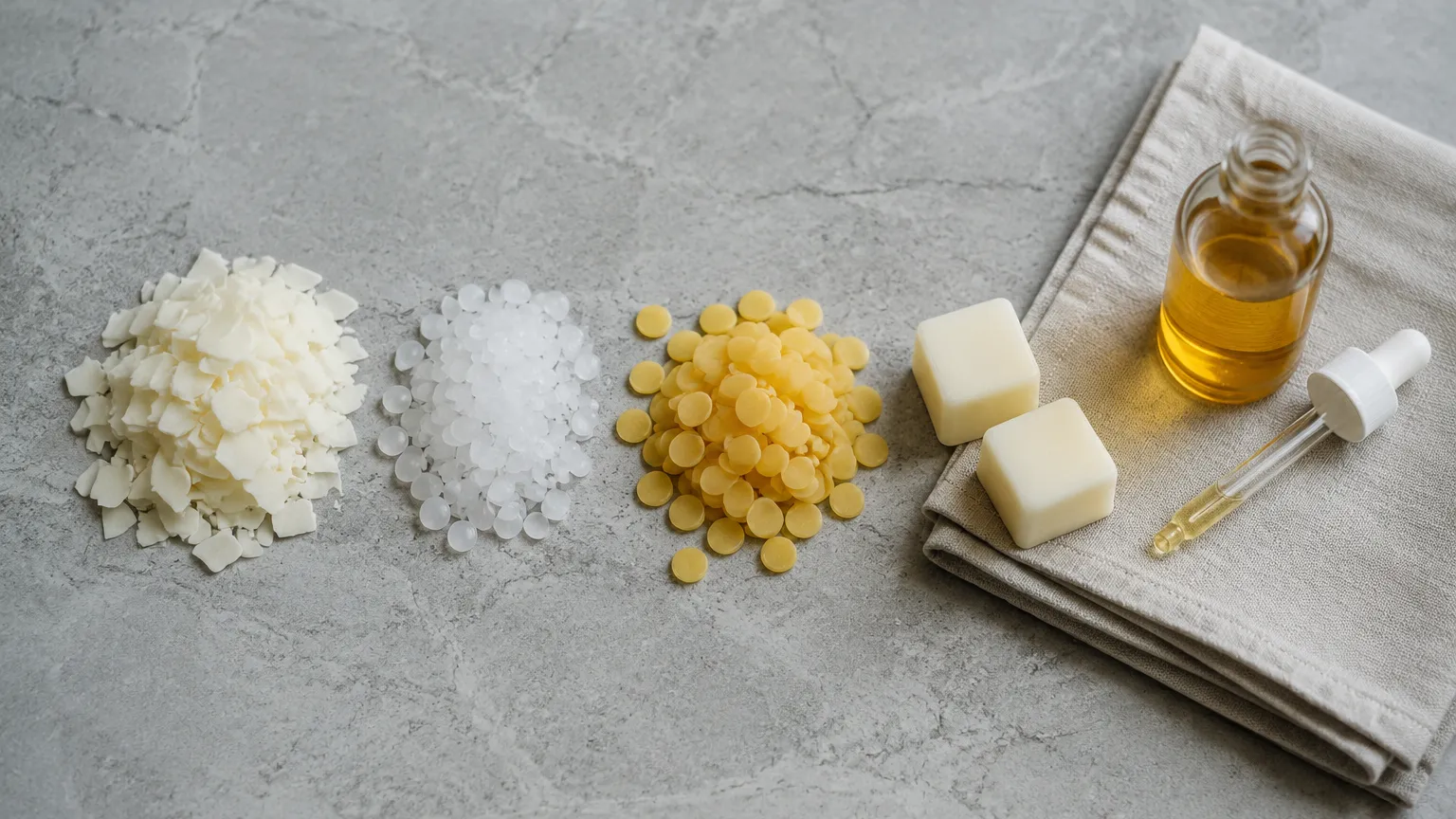
Equally important is what a melt lacks: no wick, no flame, no combustion, and so no soot or carbon monoxide. That is a real advantage. It is not the same as releasing nothing.
03Are wax melts harmful? What the 2025 study measured
Until recently, anyone asking are wax melts harmful was working from inference, because nobody had put a wax warmer in a real house and counted what came off it. In February 2025 somebody did.
The study is Patra, Jiang, Liu, Steiner, Jung and Boor, published in Environmental Science and Technology Letters as “Flame-Free Candles Are Not Pollution-Free.” The team ran 15 commercial wax melts, scented and unscented, in a full-scale residential test house at Purdue University, roughly two hours per experiment (Patra et al., 2025).
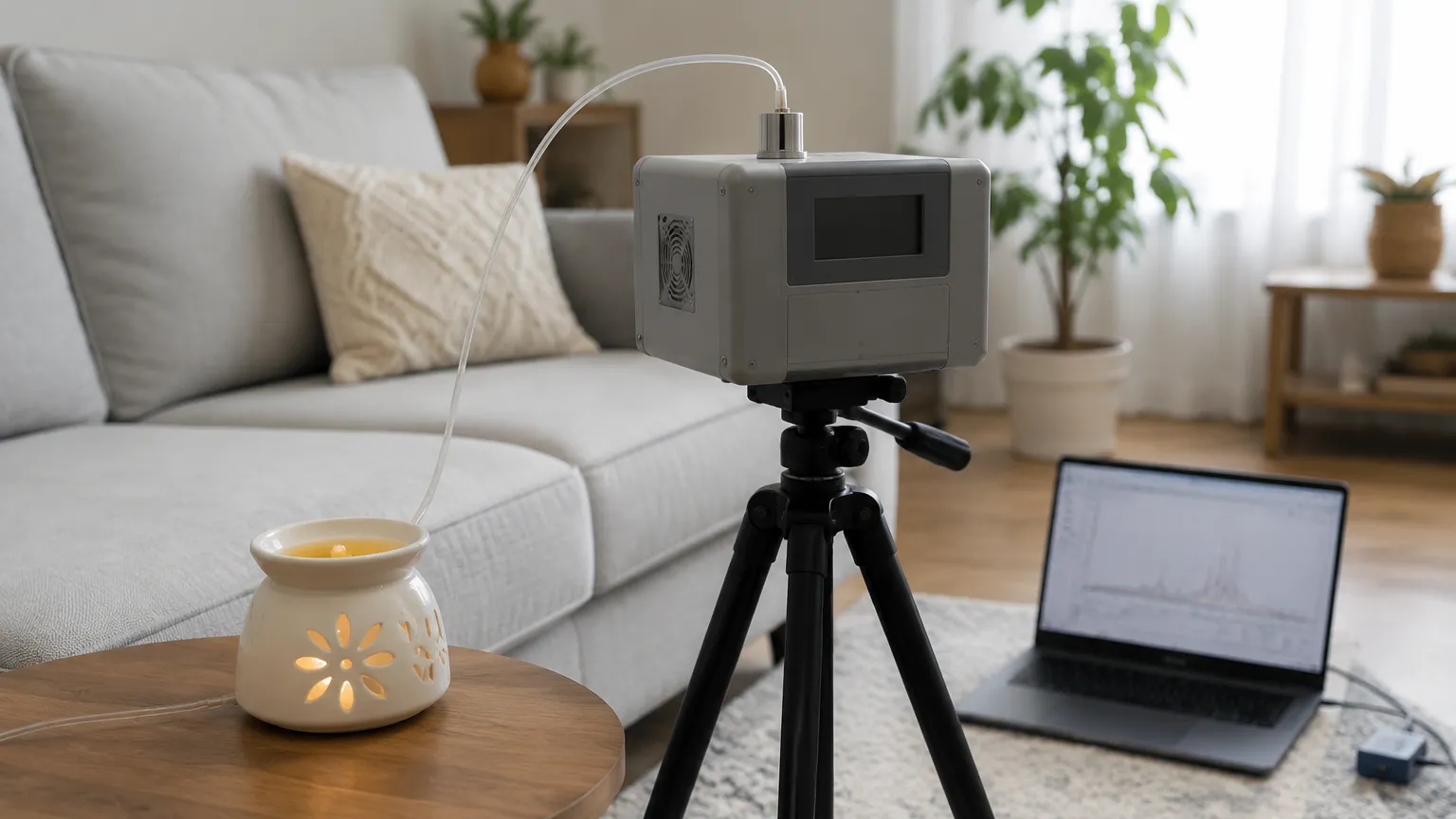
The mechanism is two-step. The melt emits terpenes, not particles. Those terpenes react with ozone already present indoors, at background levels of 9.7 to 29.9 parts per billion, and the products condense into brand-new particles out of nothing. Counts in the smallest band jumped from a few hundred per cubic centimeter to over ten thousand within minutes, and the fresh particles grew at 14.5 to 52.8 nanometers per hour into the range that reaches the lungs.
Fragrance load, not merely fragrance presence, decided whether that happened. In runs with strong particle growth the median peak terpene concentration was 193.4 parts per billion; in runs without, 55. Same product, different dose.
Source: Patra et al., Environmental Science and Technology Letters, 2025, open access via PubMed Central; comparison values compiled in that paper (retrieved 2026-08-28)
Two things about that chart cut in opposite directions. The gap between a running melt and the same room at rest is roughly three orders of magnitude. But a deposited count measures exposure, not harm: the study did not follow anyone’s health, and does not establish that a wax melt makes anyone ill.
The control condition reframes everything else. Unscented melts, heated identically in the same house, produced no significant terpene emissions and no particle nucleation at all.
04Are soy wax melts safe?
Are soy wax melts safe is the most-asked follow-up in this category, and the honest answer is that soy is a fine wax asked to carry a claim the data never gave it.
The benchmark is the 2007 Okometric study, run by the Bayreuth Institute of Environmental Research and published through the National Candle Association: reference candles of paraffin, soy, stearin, palm and beeswax burned in a chamber, exhaust screened against more than 300 chemicals suspected of toxicity or respiratory irritation. All of them burned cleanly, and their combustion byproducts were “virtually identical in composition and quantity” (National Candle Association, Okometric 2007, retrieved 2026-08-28).
The numbers back the wording. Total VOCs came in at 3.07 to 5.09 micrograms per gram of wax consumed for paraffin, soy, stearin and beeswax alike, palm the only outlier at 10.70, with closed-room air levels around 1 percent of the applicable standard. Formaldehyde led for every wax at 0.66 to 1.77 micrograms per gram, acetaldehyde prominent for soy. Fingerprints, not safety differences.
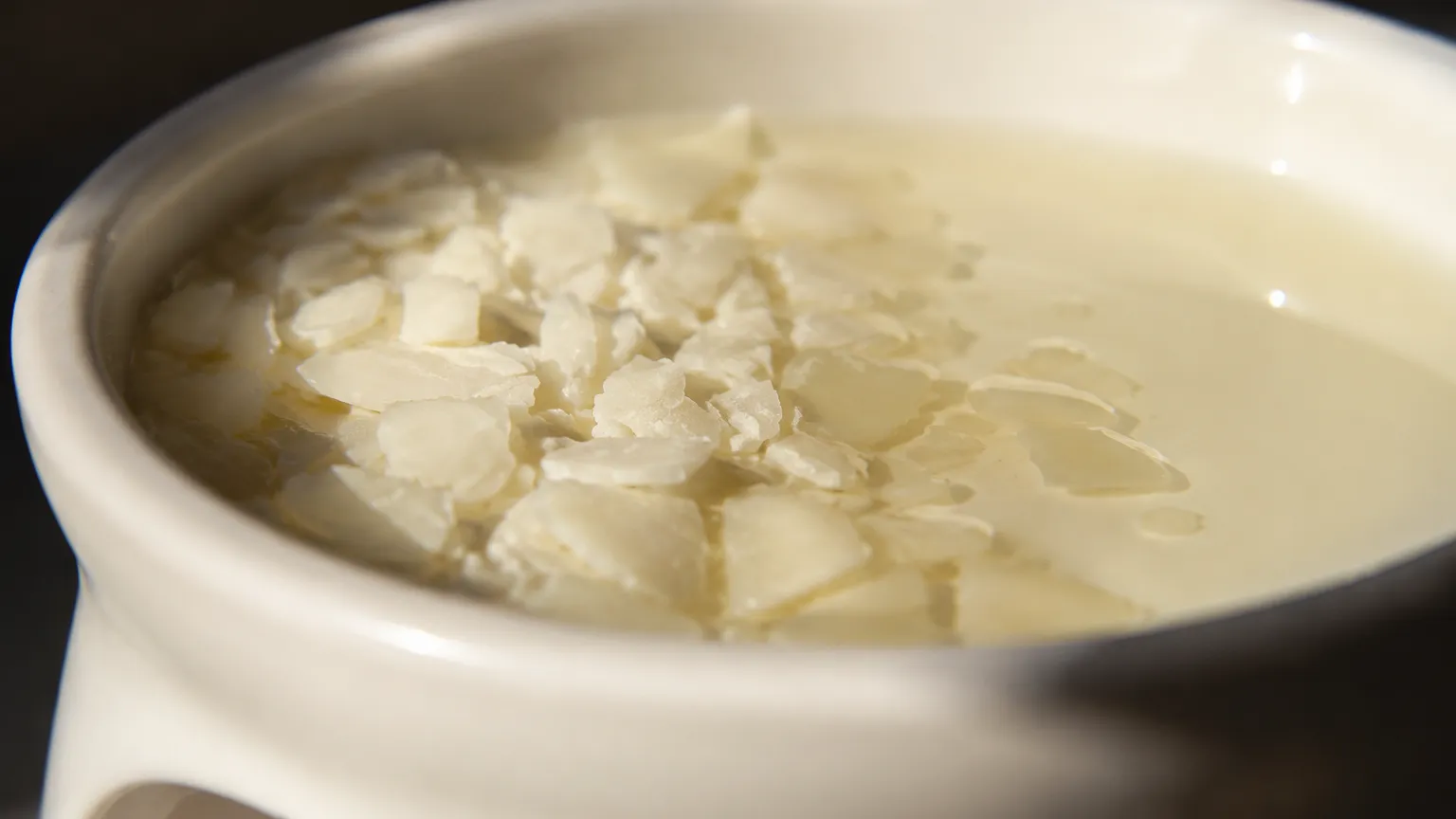
So when the question sharpens to are soy wax melts toxic, the accurate reply is that a soy melt is no more of an emissions source than the same fragrance load in a different base. The 2025 work separated nothing by wax type either; what separated results was scented against unscented.
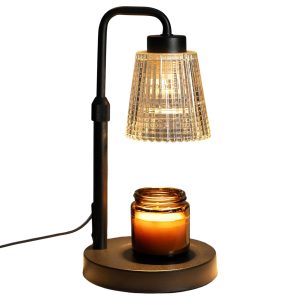
That matters to how we talk about our own range. The soy-wax candles we supply alongside our warmer lamps use a soy base chosen for finish and scent throw, not as an air-quality claim, because the published testing does not support one. They sit in our accessories range.
05Paraffin, benzene and the claim that will not die
Near the top of every search result for this topic sits the assertion that paraffin releases benzene and toluene. It has a plausible origin and a clear answer.
The origin is real chemistry: paraffin is a petroleum by-product, and incomplete combustion of petroleum-derived material can produce aromatic hydrocarbons. The Missouri Poison Center puts the cautious version well: burning paraffin “can release chemicals such as acetone, benzene, and petroleum distillates,” while noting that “it is more commonly accepted that they do not emit enough chemicals to harm humans” (Missouri Poison Center, retrieved 2026-08-28).
| Target compound group | Emission range across all waxes | Share of the strictest applicable standard |
|---|---|---|
| Total VOCs | 3.07 to 10.70 micrograms per gram of wax | About 1 percent |
| Benzene | Not detected in any wax | Not applicable |
| Formaldehyde | 0.66 to 1.77 micrograms per gram | Under 1 percent |
| Acetaldehyde | Under 0.10 to 0.70 micrograms per gram | Under 2 percent |
| Dioxins and furans | 0.008 to 0.029 picograms per gram | About 1 percent |
| Styrene, ethylbenzene, naphthalene, phthalates | Not detected in any wax | Not applicable |
When a properly funded chamber study went looking for exactly this, it did not find it. No benzene was detected in any reference candle wax, and no styrene, ethylbenzene, naphthalene, phthalate or acrolein either. Everything detected landed at roughly 1 to 2 percent of the strictest applicable standard.
There is a second answer, and the more decisive one: a wax melt does not burn. The paraffin argument is about combustion products, and a warmer holds wax near its melting point, far below the temperature at which pyrolysis chemistry starts. Pointing at paraffin is how the category spent a decade answering the wrong question.
06Are wax melts safer than candles?
Are wax melts safer than candles is the comparison most buyers actually want, and it has three parts with three different answers rather than one verdict.
On everything to do with the flame, melts win outright: no open flame, no wick to mushroom, no soot filming a ceiling, no pool of burning liquid to knock over. The National Candle Association’s safety guidance is largely flame-management rules that a warmer deletes by design (National Candle Association, Candle Safety Tips, retrieved 2026-08-28).
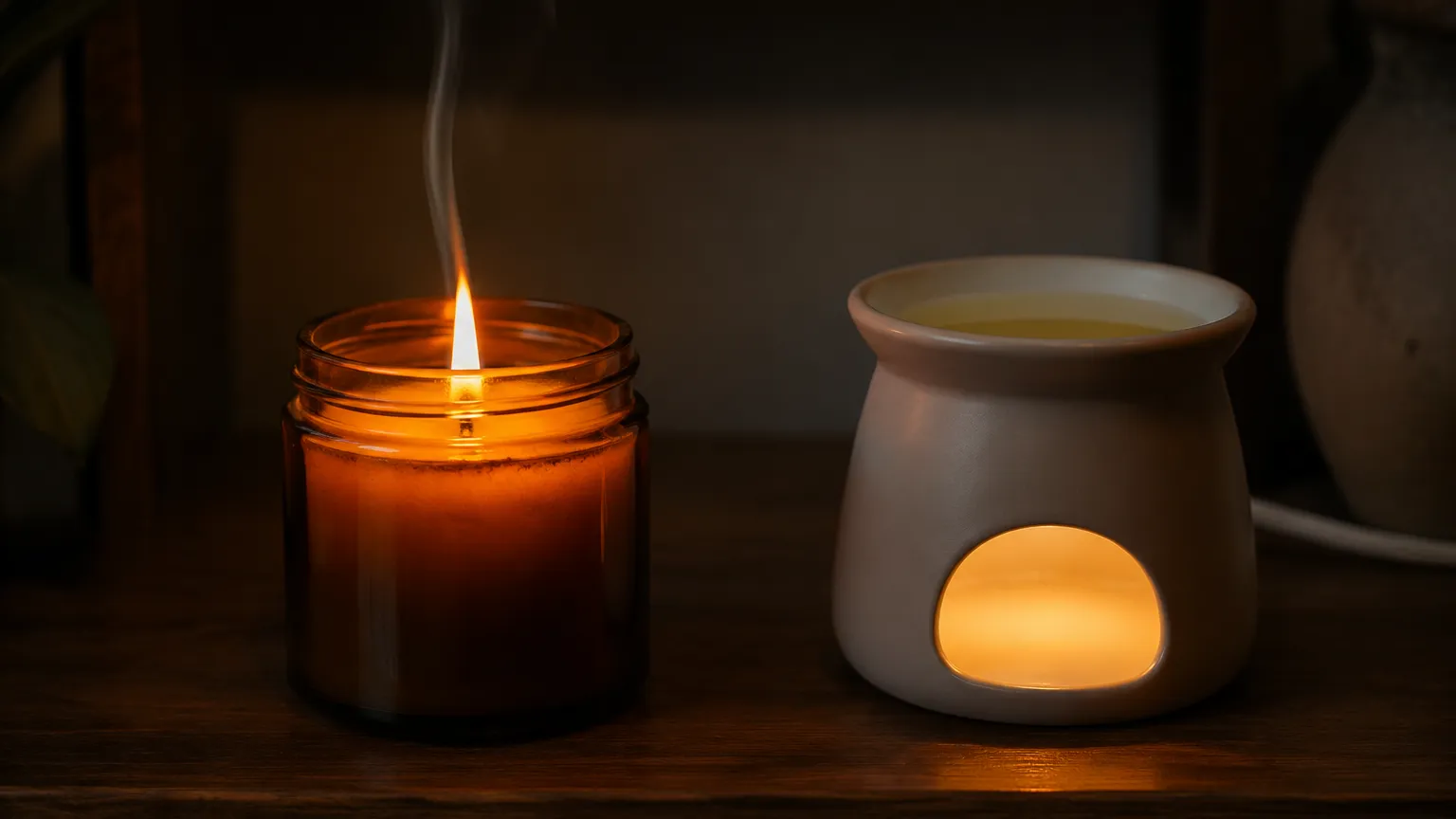
On ultrafine particles it is a wash, and that is the finding that surprised people. Scented melts produced particle counts comparable to combustion-based scented candles, and by deposited dose ran higher, 29 billion particles per minute against 13 billion. Removing the flame removed the combustion products, not the fragrance chemistry.
On fragrance intensity, melts can be the stronger emitter, for the surface-area reason above. If you are weighing the formats on more than air, the wax melt warmer against candle warmer lamp comparison goes further, the top-down lamp format behaves differently again since it warms a sealed jar rather than an open dish, and our candle warmer safety explainer covers the retailer version.
07Asthma, allergies and sensitive lungs
For most households this is an air-quality question with a small answer. For a household with asthma or a chemical sensitivity it is the whole question, and general averages stop being useful.
Start with the baseline everyone already lives in. The US Environmental Protection Agency reports concentrations of many volatile organic compounds running consistently higher indoors than outdoors, up to ten times higher, with a dozen common organic pollutants 2 to 5 times higher inside homes. The direct effects it lists are eye, nose and throat irritation, headaches and nausea (US EPA, Volatile Organic Compounds’ Impact on Indoor Air Quality, retrieved 2026-08-28).

The ultrafine fraction behaves differently, because particles that small are not filtered out in the upper airway. In the Purdue measurements, deposition into the pulmonary region alone reached around 200 million particles per minute. The authors’ own recommendation is measured: “careful consideration of their use is recommended despite the scented wax melts being marketed as a safer alternative for indoor aromatherapy” (Patra et al., 2025). A sensible reading of that, for anyone with asthma or a chemical sensitivity, is to keep sessions short and out of poorly ventilated rooms.
Fragrance allergy is a separate and more common track. Reactions to specific components show up as headaches, sneezing or contact dermatitis rather than as anything measurable in room air, and are specific to the person, not the category.
Which leaves the only rule here that overrides the data: if a scent reliably produces symptoms in your home, that observation outranks any average measurement above. Stop using it. None of this is medical advice.
08Swallowing, skin contact and the pet question
Not every version of this worry is about the air. A large share of the searches behind it come from someone who has just watched a toddler put a wax cube in their mouth.
On that one the answer is reassuring and clinical. “In general, wax is not poisonous,” states the MedlinePlus entry on wax poisoning, maintained by the US National Library of Medicine; with a large quantity the concern is intestinal obstruction rather than toxicity, and recovery is very likely (MedlinePlus, Wax poisoning, reviewed 2025, retrieved 2026-08-28). A melt is dyed and fragranced rather than plain, so it is worth a call rather than a shrug: in the United States, Poison Help is on 1-800-222-1222, and webPOISONCONTROL at poison.org handles the same triage online (National Capital Poison Center, retrieved 2026-08-28).
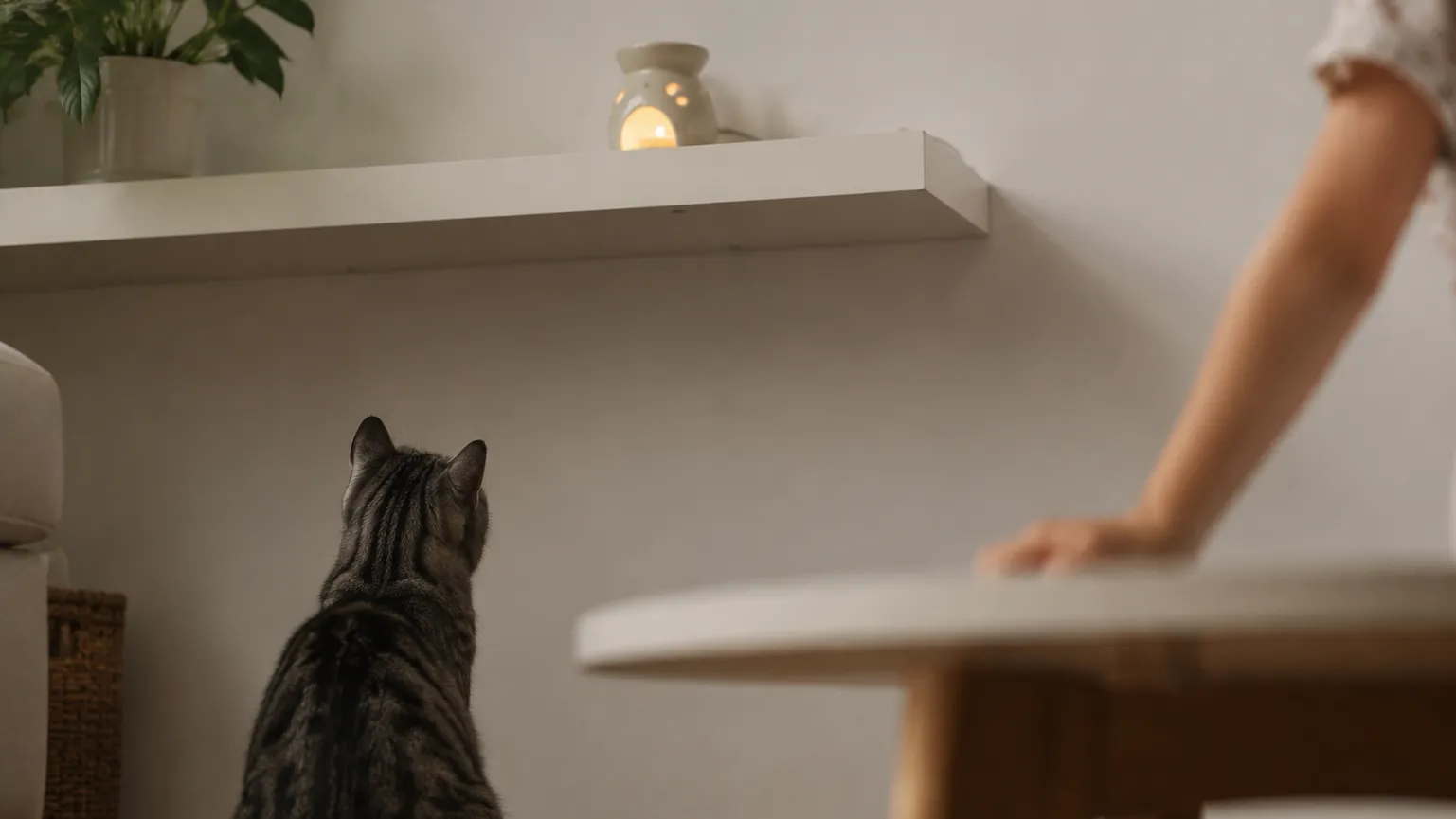
The physical risks are more real than the chemical ones. A melt pool is hot liquid in an open dish, and the plate stays hot after switch-off, so the logic that applies to a mug of tea applies here: high, back from the edge, away from anything that pulls at cords.
Pets are a separate problem, because fragrance compounds that merely smell strong to us can be metabolically significant for a cat, and a warmer sits at the height cats investigate. See our guide on whether wax melts are safe for cats before running scented wax in a house with animals.
09How to run scented wax without the spike
Nothing in the evidence says stop using wax melts. It says exposure tracks fragrance load, session length and air exchange, and all three are yours to set.
Open something first
The study varied ventilation directly, and the higher air exchange rate left far fewer of the particles that reach deep lung tissue.
Use less wax, not more
Growth events tracked terpene concentration. One cube beats three, and a scent you can just notice beats one you cannot ignore.
Run shorter sessions
Test runs were about two hours. Concentrations build while the warmer is on and fall once it is off.
Keep it out of small closed rooms
Bathrooms, box rooms and anywhere a door stays shut concentrate the same emission into far less air.
Defer to the person, not the product
If someone in the house has asthma or reacts to a scent, run it unscented or not at all.
The ventilation result is worth reporting exactly as measured. In the sub-3-nanometer band the two tested rates came out close, medians of 1.4 million particles per cubic centimeter at 3.0 air changes per hour and 2.3 million at 6.5, which the paper calls relatively consistent across ventilation rates. The difference showed up in growth: the plume was markedly stronger at the lower rate, and in the 3 to 100 nanometer range the medians were 49,000 per cubic centimeter against 2,700 (Patra et al., 2025).
The EPA’s general guidance for any VOC-emitting product points the same way: increase ventilation when using them, and buy only what you will use. For the fragrance without the fragrance chemistry, the non-scent options in making a house smell good cover what ventilation and cleaning do alone. For buyers specifying product, the controls are documentary, and we set them out in our non-toxic candle sourcing spec.
10Watch it work
What the 2025 study actually measured, in 37 seconds:
FAQ
Are wax melts bad for you?
Not in the way the phrase suggests, but not nothing either. There is no evidence that wax melts are poisonous, and controlled emissions testing of candle waxes found no benzene and no phthalates in any wax type. The 2025 Purdue measurements showed scented melts raising ultrafine particle levels to roughly the order of a burning candle or a gas cooking burner, through fragrance terpenes reacting with indoor ozone. That is exposure, not demonstrated illness: ventilate, use less fragrance, run shorter sessions.
Are wax melts toxic?
No, in the ordinary sense of the word. Wax is not poisonous to touch, and the US National Library of Medicine’s guidance states that wax is generally not poisonous, with obstruction rather than toxicity the concern if a large amount is swallowed. Nothing in the published emissions work identifies a toxic compound coming off a warming melt at a concerning concentration. The legitimate concern is the fragrance chemistry after the vapor leaves the dish, which forms nanoparticles small enough to reach deep lung tissue.
Are soy wax melts safe?
Yes, in the same measure as any other wax base, and no more. The 2007 Okometric chamber study tested paraffin, soy, stearin, palm and beeswax against more than 300 target compounds and found their emissions virtually identical in composition and quantity, all at around 1 to 2 percent of the strictest applicable indoor-air standard. Soy shows a slightly different aldehyde fingerprint, but that is a trace signature rather than a safety difference. The driver is fragrance, not wax.
Does an unscented wax melt release the same particles as a scented one?
No, and this is the cleanest result in the whole study. Unscented wax melts, heated in the same house under the same conditions, produced no significant terpene emissions and no particle nucleation at all. That control condition is what shows the fragrance rather than the wax is responsible, and it gives anyone with a sensitivity a real option without the chemistry that drives particle formation.
How long should a scented wax melt run in one session?
There is no official limit, and no study has established a safe duration, so treat this as sensible practice rather than a rule. The Purdue experiments ran roughly two hours each and saw concentrations build throughout that window, which suggests keeping sessions to an hour or two in a ventilated room rather than leaving a warmer on all day.
Sourcing the flame-free scent category
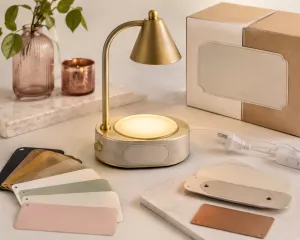
We manufacture flame-free candle warmer lamps and supply matched soy-wax candles alongside them, for buyers building a home fragrance range without the flame, soot and fire questions that come with an open wick. Private label and wholesale, quoted per project, out of our own 4,000-square-meter, 40-staff factory in Foshan.
This page summarizes published air-quality research and is general information, not medical advice. No claim here is a safety guarantee for any wax melt, candle or warmer. Anyone managing asthma, a respiratory condition or a fragrance allergy should consult a clinician, and any suspected ingestion should go to a poison control service.
Sources
- Patra, Jiang, Liu, Steiner, Jung and Boor (PubMed Central, US National Library of Medicine), Flame-Free Candles Are Not Pollution-Free: Scented Wax Melts as a Significant Source of Atmospheric Nanoparticles, Environmental Science and Technology Letters, 2025 (source for the terpene, ozone, growth-rate, deposited-dose and ventilation figures quoted on this page; unscented melts produced no nucleation), retrieved 2026-08-28.
- American Chemical Society, Scented wax melts may not be as safe for indoor air as initially thought (plain-language summary of the study design and the scents tested), retrieved 2026-08-28.
- ACS Axial (American Chemical Society), Wax Melts: An Indoor Health Risk? (direct heating maximizes melted surface area, so scented melts release more airborne scent compounds than candles), retrieved 2026-08-28.
- National Candle Association, 2007 Okometric Study Summary: Analysis of Emissions from Paraffin, Soy, Palm, Beeswax and Stearin Candles, Bayreuth Institute of Environmental Research (more than 300 target compounds; benzene, styrene, ethylbenzene, naphthalene, phthalates and acrolein not detected; source for every emissions figure in the table above), retrieved 2026-08-28.
- US Environmental Protection Agency, Volatile Organic Compounds’ Impact on Indoor Air Quality (indoor VOC levels up to ten times outdoor; listed health effects; increase ventilation when using products that emit VOCs), retrieved 2026-08-28.
- MedlinePlus, US National Library of Medicine, Wax poisoning (wax is generally not poisonous; obstruction risk with large amounts; Poison Help on 1-800-222-1222), reviewed 2025, retrieved 2026-08-28.
- National Capital Poison Center, Press release on the closure of its call center (closed 31 March 2025 after 44 years; now all-digital via webPOISONCONTROL), retrieved 2026-08-28.
- Missouri Poison Center, Are Candles Bad for You? (source for both paraffin quotations above), retrieved 2026-08-28.
- National Candle Association, Candle Safety Tips (the flame-management rules a flame-free warmer removes), retrieved 2026-08-28.
