




Key takeaways
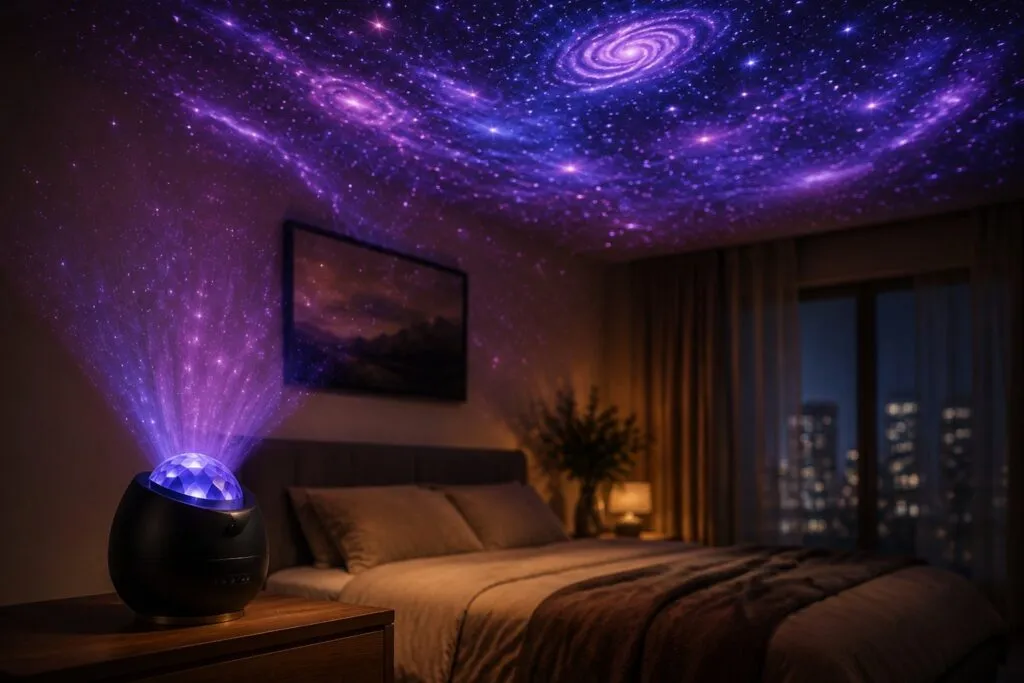
The best galaxy projector for a retail shelf is not a single product. It is the right pick from two very different technologies: disc-based planetariums that project a real, sharp night sky, and laser-and-LED units that paint a soft, moving mood.
- Disc-based projectors (Sega Homestar Flux, Pococo) shine light through a printed disc to cast real constellations. Laser units (BlissLights, Govee, most marketplace “galaxy lamps”) scatter thousands of moving dots.
- For realistic stars, the best star projector is a disc planetarium; for wide, dreamy color, a laser-nebula unit wins.
- Coverage is the number retailers misread most: a BlissLights laser field is rated near 900 sq ft, while the smart Govee Galaxy 2 Pro is rated up to 301 sq ft.
- US-legal laser units are registered with the FDA’s CDRH, and a Class 3R beamlet is capped at 5 mW. Safe-to-sell means a low laser class plus a printed warning and an auto-off timer.
- The laser-and-LED style is the standard private-label path, which is the category BeginLighting builds on its own Foshan lines.
01Two engines hide behind one category
The best galaxy projector for a retail shelf is not one product; it is the right one of two very different machines. Demand has flooded the shelf with units sold interchangeably as galaxy projectors, star projectors and galaxy lamps, and it hides a hardware split that decides everything about how a customer feels on unboxing night.
Space.com’s 2026 roundup draws the line cleanly. Disc-based projectors, such as the Sega Homestar Flux and Pococo, shine a focused light through a printed disc to cast a sharp, real image: actual constellations or photographed nebulae (Space.com, Best star projectors 2026, retrieved 2026-07-18). Laser-based units, such as the BlissLights Sky Lite and most of the “galaxy lamps” sold on marketplaces, fire a laser through a diffraction grating that scatters thousands of moving dots plus an LED color cloud (BlissLights, retrieved 2026-07-18). One paints a real sky; the other paints a mood. Stocking the wrong one for your shopper is the most common way this category disappoints at the register.
Disc-based planetarium
- Projects real constellations and photographed nebulae
- Pin-sharp, astronomically accurate image
- Smaller, fixed projection circle
- Higher unit cost, few color or motion effects
Laser-and-LED galaxy projector
- Soft moving nebula and wide coverage
- Low cost, low power draw, gift-friendly
- App, music-sync and smart tiers sell well
- Not real constellations; the motor fails first
02What separates the best galaxy projector from a gimmick?
The best galaxy projector is separated from a gimmick by four things a shopper feels inside the first week: sharpness that holds across the whole ceiling, a motor quiet enough for a bedroom, honest coverage that matches the room, and a clean safety file. Everything else on the box, the effect counts and the color menus, is secondary to those four.
Of the four, the motor deserves more weight than any listing gives it. On a laser-and-LED unit, a small gear motor spins the nebula lens continuously, which makes it the single most-used moving part and the one most likely to buzz or fail first. That is why sampling matters more than spec-reading in this category: two units with identical marketing photos can hide a plastic grating that smears the stars at the edges, or a motor that hums by month two. Walk that same short checklist in our private-label sourcing guide before you commit an order, and read the parts breakdown in how a galaxy projector works so you can decode any spec sheet. A motor-driven example is our ocean wave projector, whose 3 V geared motor turns the ripple lens at a rated 7 rpm.
03The reference models a buyer should benchmark
You do not need to stock these four units, but you should benchmark against them, because they define what “good” looks like in each archetype. The Sega Homestar Flux and Pococo anchor the realistic disc-based end. The BlissLights Sky Lite anchors the ambient laser-nebula end. The Govee Galaxy Projector 2 Pro anchors the smart, app-driven hybrid. A sample that undercuts all four on either sharpness or motor noise is a sample to reject.
| Model | Type | Best for | Key spec | Control |
|---|---|---|---|---|
| Sega Homestar Flux | Disc planetarium | Realistic constellations | 60,000 HD stars, 5 W LED | Dial + timer |
| Pococo | Disc planetarium | Photo-real discs, eye-gentle | Swappable HD discs, LED (no laser) | Buttons only |
| BlissLights Sky Lite | Laser + LED nebula | Ambient mood, wide coverage | Laser field rated near 900 sq ft | Remote / app tiers |
| Govee Galaxy 2 Pro | Smart LED + laser | App control, scenes | Rated up to 301 sq ft, Matter | App + voice |
The pattern behind the table is the trade-off every buyer keeps meeting: realism and coverage pull in opposite directions. Disc planetariums win the sharpness contest but throw a smaller, fixed circle. Laser-and-LED units cover a whole room but cannot render a true constellation. The Govee sits in the middle, buying smart-home convenience at the cost of a cooling fan that turns on after a warm-up period and a permanent power lead (Space.com, Govee Galaxy Light Projector 2 Pro review, retrieved 2026-07-18).
04Which is the best star projector for realistic constellations?
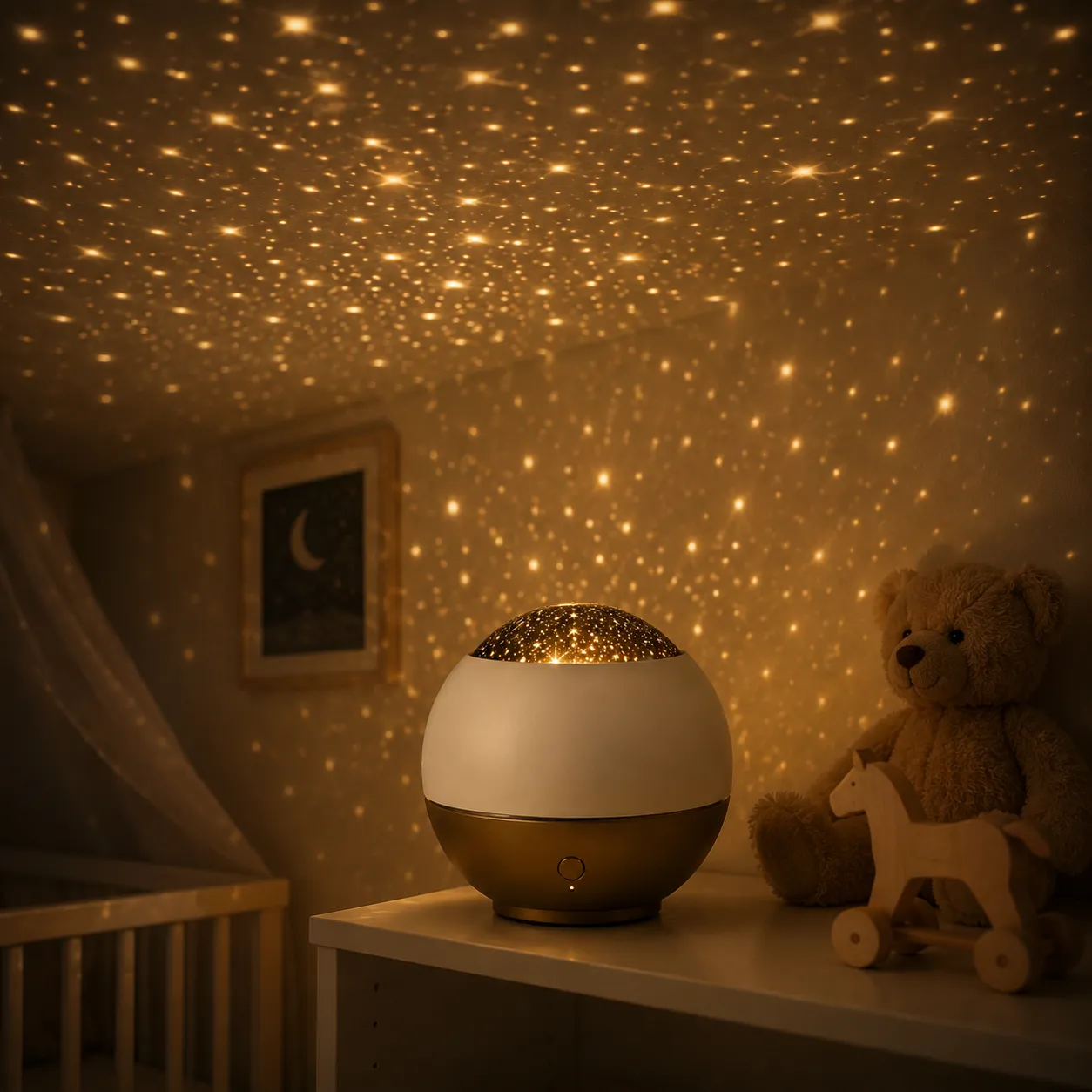
For accurate constellations, the best star projector is a disc-based planetarium, not a laser galaxy projector. Sega Toys’ Homestar Flux projects 60,000 high-definition stars through glass optical lenses (Sega Toys, Homestar planetarium, retrieved 2026-07-18). That glass-and-disc approach is the reason a planetarium looks like a sky and a marketplace unit looks like scattered dots.
The Pococo takes the same disc-based route with a retail-friendly twist. It uses replaceable high-definition discs lit by an LED rather than a laser, which sidesteps the eye-safety questions that follow every laser unit, and it swaps in categories from constellations to nebulae to planets (Space.com, Best star projectors 2026, retrieved 2026-07-18). The honest trade is control and coverage: disc planetariums like these lean on physical buttons, project a smaller circle, and cost more per unit than the laser crowd. For a gift-shop shelf chasing volume and color, that premium is often the wrong bet, which is why the two archetypes rarely compete for the same buyer.
05How should a retailer match coverage to the room?
Coverage is the spec retailers misread most, because the big number on the box is almost always the laser star field, not the softer LED nebula that shares the same housing. A BlissLights Sky Lite laser field is rated near 900 square feet from ten feet away (BlissLights, retrieved 2026-07-18), while its LED nebula cloud is specified at roughly 225 square feet, a 15-by-15-foot spread on the maker’s product page (BlissLights, Sky Lite product page, retrieved 2026-07-18). The stars throw far; the color does not. A customer who buys on the 900 figure for a large living room can still end up with a thin-looking nebula. For a feature-led pick, a galaxy projector with a Bluetooth speaker bundles audio with the star field.
The practical rule for a buyer is to size the archetype to the shopper’s real room and ceiling height, then say so on the shelf talker. A rated coverage that suits a small bedroom will look sparse in an open-plan space, and sharpness also drops as the throw distance grows. The smart hybrids sit lower on coverage by design: the Govee Galaxy 2 Pro is rated up to 301 square feet, trading raw reach for scenes and app control (Govee, Galaxy Light Projector 2 Pro, retrieved 2026-07-18).
06Are galaxy projectors safe to sell?
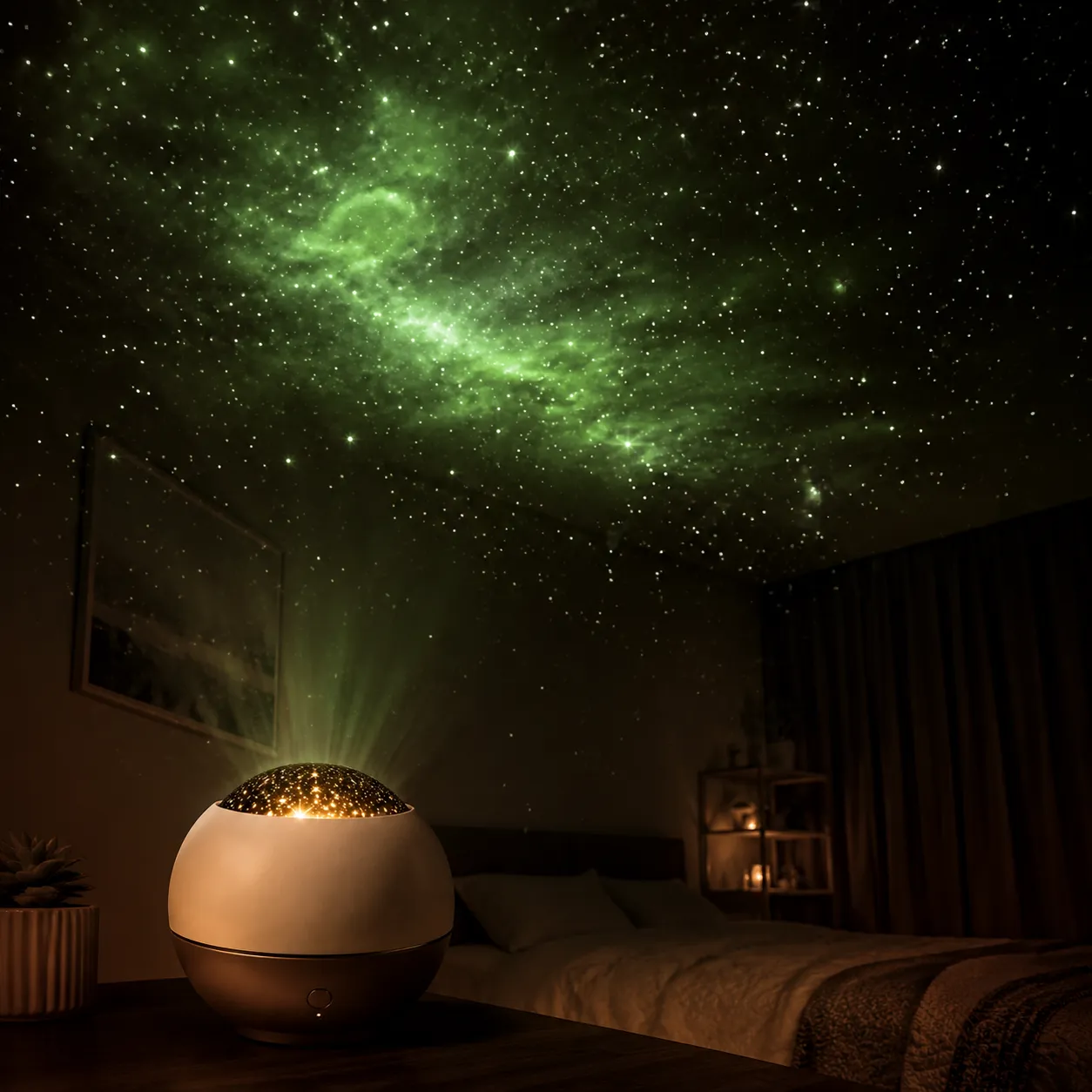
Consumer galaxy projectors are designed to be eye-safe in normal use, and for a retailer that safety is a paperwork question as much as a hardware one. Any laser-illuminated projector legally sold in the US must be registered with the FDA’s Center for Devices and Radiological Health under Laser Notice No. 57 (U.S. FDA, retrieved 2026-07-18). Disc-based planetariums like the Pococo dodge the question entirely by using an LED rather than a laser, which is a genuine selling point for nervous parents.
On the laser side, the math is deliberately conservative: in a Class 3R star field the strongest single beamlet is capped at 5 milliwatts, treated as safe for the brief, accidental exposure of walking through the light (LaserPointerSafety.com, retrieved 2026-07-18). Honest sourcing means printing the standing advice on the box rather than hiding it: never look into the laser aperture, mount the unit above head height, and lean on an auto-off timer for a child’s room. The safest units pair a low laser class with a clear warning and a documented safety class, and that file is exactly what a serious buyer should ask a supplier to produce.
Sourcing galaxy & star projectors to private-label?
BeginLighting builds laser-and-LED galaxy projectors on its own Foshan lines: quiet motors, remote and app tiers, gift-box-ready packaging, and a documented safety class. Prices are quoted per project, so the next step is a quote, not a cart.
Put the whole guide on one shelf and it comes down to a single decision: name the shopper, then name the archetype. A stargazer who wants real constellations is a disc-planetarium customer. A teen who wants a cozy, color-shifting ceiling is a laser-and-LED customer, and that laser-and-LED unit is the one most retailers private-label, alongside the wider cozy-home range we map in our mood lighting for retail guide.
Frequently asked questions
What is the best galaxy projector overall?
There is no single winner, because the best galaxy projector depends on the job. Disc-based planetariums like the Sega Homestar Flux win on realism, laser-nebula units like the BlissLights Sky Lite win on drifting color and coverage, and the Govee Galaxy Projector 2 Pro wins on app control and smart-home features. For a retailer, the best galaxy projector is the archetype that matches the shopper and the shelf, not one universal pick.
What is the best star projector for realistic constellations?
For accurate constellations, the best star projector is a disc-based planetarium, not a laser galaxy projector. The Sega Homestar Flux projects 60,000 high-definition stars through glass optical lenses, and the Pococo uses replaceable high-definition discs lit by an LED rather than a laser. Both trade wide coverage and color effects for a sharp, real night sky.
What is the difference between a galaxy projector and galaxy lamps?
Mostly the name on the box. Galaxy lamps, galaxy projectors and star projectors are sold interchangeably for the same night-sky effect. In practice the label galaxy lamps usually points at the laser-and-LED style that casts a soft moving nebula plus pinpoint stars, while a home planetarium is the disc-based side that projects real constellations. The hardware split matters more than the marketing word.
Are galaxy projectors safe for a kids’ room?
They are designed to be eye-safe in normal use, and the laser side is regulated. Any laser-illuminated projector legally sold in the US must be registered with the FDA’s CDRH, and a Class 3R star field caps each beamlet at 5 milliwatts. The standing advice still holds: never look into the laser aperture, mount the unit above head height, and use the auto-off timer for a child’s room.
Can a retailer private-label a galaxy projector?
Yes, and the laser-and-LED nebula style is the most common private-label path because it is the cheapest to produce at volume and the easiest to brand. BeginLighting builds this category on its own Foshan lines, with remote and app tiers, gift-box packaging, and a documented safety class. Prices are quoted per project, so the next step is a quote rather than a cart.
Sources
- Space.com, Best star projectors 2026 (disc-based vs laser-diffraction split; Homestar Flux, Pococo, BlissLights; coverage vs distance), retrieved 2026-07-18.
- Sega Toys, Homestar home planetarium (60,000 HD stars, 5 W LED, glass optical lenses), retrieved 2026-07-18.
- BlissLights, What Is a Galaxy Projector, and Why You Should Get One (laser field rated near 900 sq ft from 10 ft; coherent vs incoherent light), retrieved 2026-07-18.
- BlissLights, Sky Lite Galaxy & Star Projector product page (published specifications: Laser 30×30 ft; Cloud 15×15 ft, roughly 225 sq ft LED nebula coverage), retrieved 2026-07-18.
- Govee, Galaxy Light Projector 2 Pro product page (rated coverage up to 301 sq ft, Matter and voice control), retrieved 2026-07-18.
- Space.com, Govee Galaxy Light Projector 2 Pro review (cooling fan noise after warm-up; requires constant power), retrieved 2026-07-18.
- U.S. FDA, Classification and Requirements for Laser Illuminated Projectors (Laser Notice No. 57), retrieved 2026-07-18.
- LaserPointerSafety.com, Laser safety FAQ (Class 3R 5 mW beamlet cap, aim above eye level), retrieved 2026-07-18.
BeginLighting builds galaxy and star projectors on its own Foshan lines. Named products above are third-party reference models cited for benchmarking; specifications are the manufacturers’ published figures, not claims about a specific BeginLighting model.
Where the home planetarium projector fits in the range
Alongside the nebula-and-laser units that dominate this category sits an older, quieter sub-type: the home planetarium projector, which casts an actual star map rather than a decorative light show. It uses a rotating disc or an optical plate to project recognisable constellations in roughly correct relative positions, and its buyer is usually an adult hobbyist, a teacher, or a parent buying an educational gift rather than a mood-lighting shopper.
That distinction matters at the shelf because the two sub-types fail different review tests. A decorative unit is judged on coverage and color; a planetarium unit is judged on whether the stars stay sharp at the edge of the projection and whether the constellations are identifiable. Retailers who merchandise them side by side should label the difference explicitly, or the educational buyer writes a one-star review about a fake sky.
The bedroom variant is the volume end of that sub-type. A planetarium projector for bedroom use is specified around a shorter throw distance, a quieter motor and a sleep timer, because it runs while someone falls asleep rather than during a demonstration. Motor noise is the most commonly overlooked line on the spec sheet here, and it is the one a returns log surfaces first.
What to ask a supplier before sampling
- Disc or optical-plate resolution, and whether edge sharpness holds at the ceiling height you plan to claim on the box.
- Motor noise measured at the unit, rather than a marketing descriptor such as whisper-quiet.
- Timer and auto-off behavior, which is a returns driver in the bedroom tier.
- Laser class documentation for any unit using a laser diode, issued for the assembled product rather than the component.
Projectors are one of our own lines, built on the same Foshan floor as our warm-glow indoor lighting. What a buyer gets from us on this range is a build we control, samples off the line that will run the order, and one consolidated quote across the star and galaxy line-up, private label included. Tell us which sub-types you plan to stock and we will come back through Request a Quote.
A third engine sits beside those two, the lens-and-LED build described in our explainer on the sunset projection lamp, and it is the one buyers cross-shop whenever the brief says mood rather than astronomy.
