



How long does a candle burn is the question behind most of the complaints a candle buyer ends up owning, and the honest answer is that the figure on the box is arithmetic rather than measurement. Net wax weight divided by a consumption rate gives you hours. Change the wick by one size and the identical jar earns a different number, which is how two suppliers quote forty hours and fifty-six for the same-looking product without either inventing anything.
Three neighbouring questions sit outside this piece deliberately. Which candle suits a warmer head belongs to our candle and warmer pairing guide. The trimming method with the tool in hand lives on the candle care and wick trimmer kit page. What a wick is made of is a documents question, answered in verifying non toxic candles. What follows is the rate: what sets it, what wrecks it, and what to print so your staff stop absorbing the gap.
Key takeaways
How long does a candle burn is a division problem rather than a property of the candle. Fill weight divided by consumption rate gives hours, the wick sets the rate, and nothing in US labelling requires anyone to prove the answer.
- Published guidance puts larger candles at 5 to 7 hours per ounce of wax and smaller votive candles at 7 to 9 (BottleStore.com), so a 12 ounce jar is honestly quotable anywhere from 60 to 84 hours.
- No US standard governs a burn-time claim. ASTM F2058, the labeling specification the CPSC points to, covers fire safety warnings and states that it addresses no other labeling requirement.
- The wick is the meter. One wick reference works its example at 3.5 grams of wax an hour, from a 600 gram candle that loses 14 grams across a four-hour burn (Eco Candle Project).
- Trimming is the only lever the customer holds. The National Candle Association puts the gain at up to 25 percent longer when the wick is kept at a quarter inch.
- Around three-fourths of candle users burn for 4 hours or less per sitting (National Candle Association), so a fifty-hour jar is about a dozen evenings and a forecastable reorder date.
Where the hours on a candle label come from
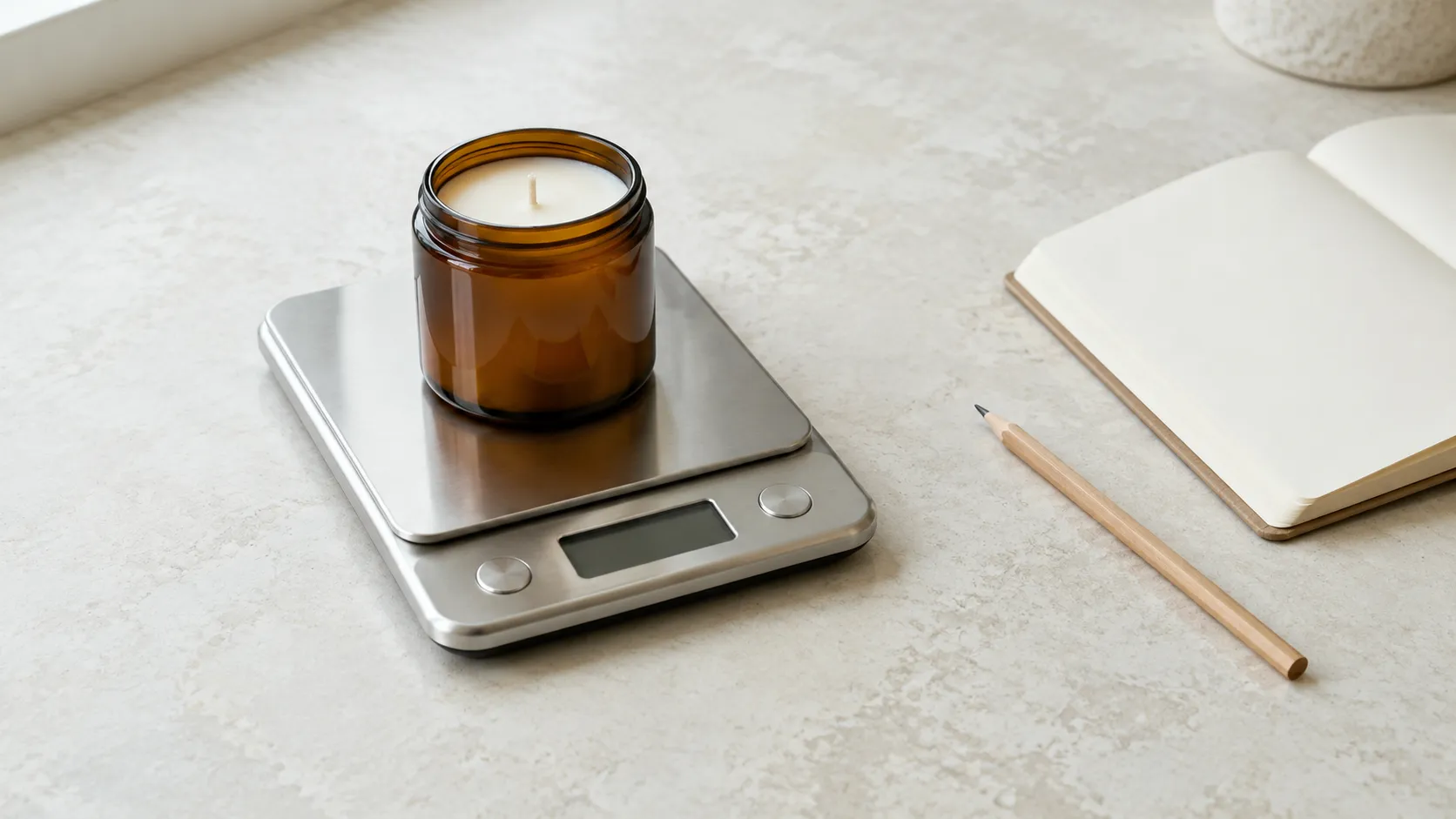
Burn-time figures are produced one of two ways. One is a weigh, burn, weigh test: record the cooled weight of the filled candle, burn it for at least four hours, cool it, weigh it again, and divide the wax consumed by the hours spent. Repeat until the candle puts itself out, then divide total net wax by that rate (BottleStore.com). Or you take a rate somebody else published, multiply by fill weight, and print the result. Both produce a number in the same font.
That gap is not small. Shortcut rates sit on the same page as the test method: about 5 to 7 hours per ounce for larger candles, and 7 to 9 for smaller votive candles. On a 12 ounce jar that spread runs from 60 to 84 hours, which is the source’s own worked example. Forty percent is a lot of room to be right in, and a buyer comparing quotes at 50 and 70 hours may be looking at identical arithmetic with different ends picked.
Rate source: BottleStore.com, Calculating Your Candle Burn Time (5 to 7 hours per ounce on larger candles, 7 to 9 on smaller votive candles, 60 to 84 hours for 12 ounces). Every bar except 12 oz is our multiplication of that rate, not a figure the source publishes. Retrieved 2026-09-12
Underneath the arithmetic sits a real physical rate, and it belongs to the wick rather than the wax. Wick references express it as rate of consumption in grams per hour, and the worked example in one of them is a 600 gram candle that loses 14 grams across a four-hour burn, or 3.5 grams per hour (Eco Candle Project). Wick weight there is expressed as yield in metres per kilogram, where a Stabilo 4 runs 1083 m/kg against a Stabilo 14 at 591 m/kg. The page puts the direction plainly: the higher the yield, the smaller the wick, the flame and the heat. Read that against the consumption rate and the heavier wick is the one spending wax faster. That last step is ours. Melt pool depth on a correctly wicked candle grows by roughly 0.64 cm per hour, with a flame between 1.27 and 5 cm tall. Change those and you change the burn time.
The one claim on a candle label nobody has to stand behind
Candles carry a fuller set of voluntary standards than most buyers expect. Six of them are listed by the US Consumer Product Safety Commission: ASTM F2417 for fire safety, F2058 for fire safety labelling, F2326 for visible emissions, F2601 for accessories, F2179 for annealed glass containers, and F1972 for terminology. F2417 exists to prescribe minimum safety requirements for candles and candle ensembles so that normal use carries a reasonable degree of safety. A separate specification, F2179, covers the annealed glass the container itself is made from.
None of it touches burn time. F2058 sets out what has to appear on a candle unit of sale and how, down to the safety alert symbol followed immediately by the signal word WARNING in uppercase boldface letters. Then it draws its own boundary: it is not the intent of this specification to address any other labeling requirements (ASTM International). Fire safety information is standardised. Hours on the front of the box are not mentioned, not defined, not tested by anybody unless you ask.
For a buyer that turns an unanswerable question into a procurement one. You cannot audit a quoted burn time, but you can audit the test behind it: how many cycles, how long each session ran, what the wick was, and whether it counts net wax or gross filled weight. A supplier who keeps a burn sheet hands it over without fuss. One who just repeats the number already on the label has told you what it is worth.
How to cut candle wick, and why a quarter inch is a rate setting
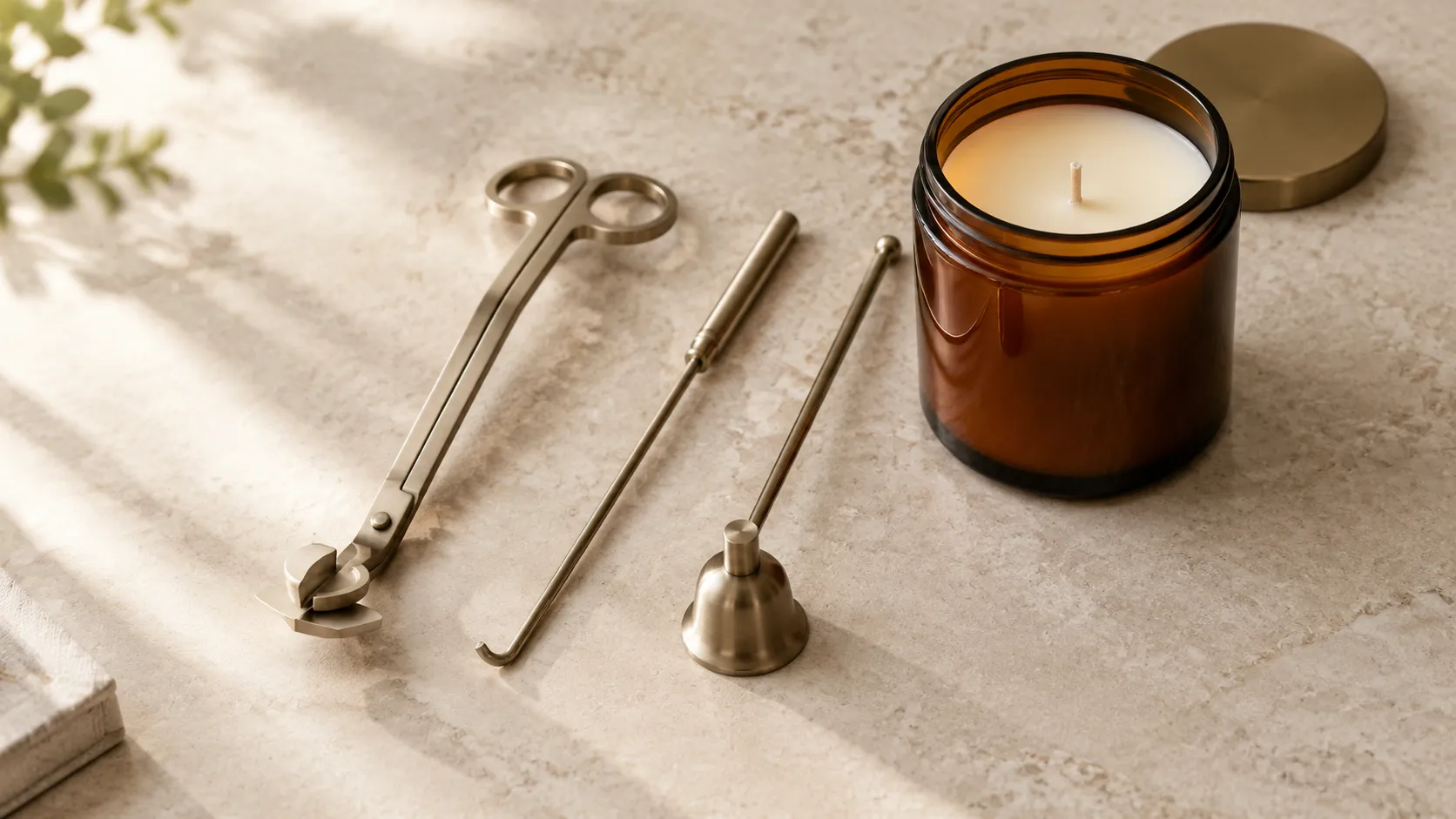
National Candle Association guidance is short: trim the wick to a quarter inch before lighting, and candles will burn up to 25 percent longer if the wick is trimmed every couple of hours. That is the largest single lever anyone downstream of the factory controls. Flame height is the mechanism. A long or mushroomed wick draws more melted wax up the braid than the flame can burn cleanly. The flame then grows past the 1.27 to 5 cm band a correctly sized wick sits in (Eco Candle Project), and the surplus leaves as soot and as hours.
There is a floor as well as a ceiling, and it is the half that gets left off shelf cards. How short to cut candle wick has a practical answer of about an eighth of an inch. Below that the flame has too little braid above the wax to establish itself, so it either drowns in its own pool or fails to spread wide enough to reach the glass. Guidance on rescuing an over-trimmed candle works to the same figure, restoring an eighth to a quarter inch of wick clear of the surface before relighting (Harlem Candle Co). A quarter inch is the target. An eighth is the edge, not a bonus.
Choosing the wick in the first place — series, size against jar diameter, wood versus cotton — is a sourcing decision covered in our candle wick guide for private-label buyers.
How long should a candle wick be before lighting is answered in more detail on our candle care and wick trimmer kit page, along with what a dipper and a snuffer each do. It belongs in a piece about burn time because trimming is not housekeeping. It is the only field adjustment to the rate the factory set, and it decides whether your quoted hours are true on a customer’s kitchen table.
Tunneling, and the repair that decides whose fault it was
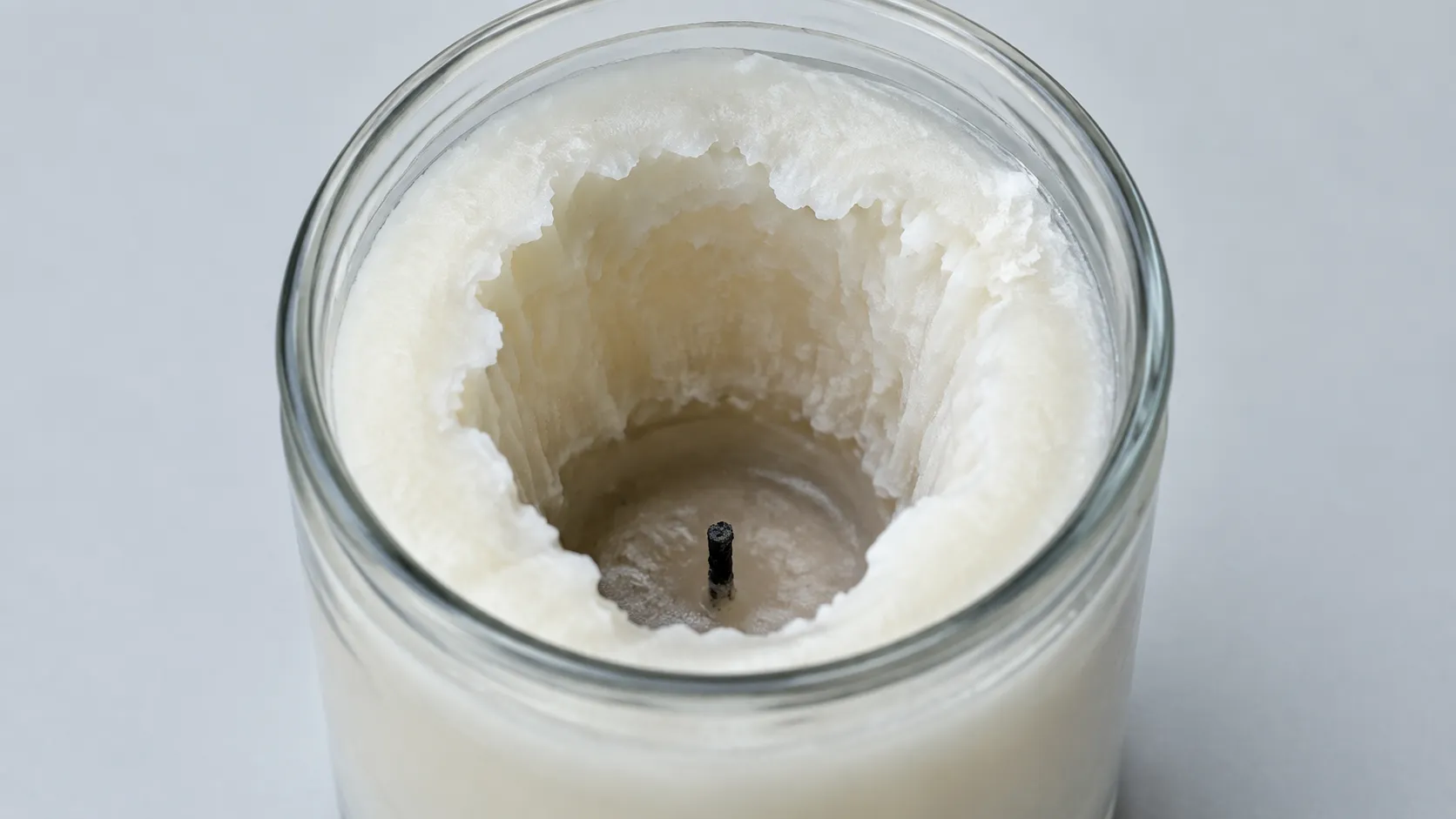
How to fix tunneling candle with short wick problems is the second question your counter staff will field. It almost always arrives framed as a defect claim: a narrow shaft down the middle, a thick collar of hard wax welded to the glass, and a customer who paid for wax they cannot reach. Two causes account for nearly all of it. One is the memory burn, where wax keeps the diameter of the widest pool it has ever reached, so a first burn cut short sets a ceiling every later burn runs into. Prevention is fixed at one hour of burning per inch of candle diameter (National Candle Association), which means a three inch jar needs three hours the first time it is lit. Another is a wick too small for the vessel, which cannot pull enough melted wax to hold a flame that heats the surface edge to edge (The Flaming Candle).
Recovery is the same in both cases, and it doubles as a diagnostic. Run it once at the counter and the candle tells you which cause you have.
Let it go cold and hard
Put the candle out and leave it until the wax sets solid. Every step below works on cold wax and none of them works on a warm jar.
Melt the top flat
Hold a heat gun or a hair dryer on high over the surface until the top layer is liquid and level right across the jar (Harlem Candle Co).
Give the wick something to stand on
Pour a little of the melted wax off until an eighth to a quarter inch of wick stands clear. A buried wick cannot start a pool.
Tent a sheet of foil over the mouth
Cover the top, tent it so it does not touch the wax, and cut one hole in the centre about the width of the flame (The Flaming Candle).
Burn it back out to the glass
One to two hours, checked every thirty minutes, until the pool reaches the glass all round. Take the foil off and let it set flat.
Decide whose fault it was
If it tunnels again from a flat, full-width start, the wick is undersized. That is a conversation with the supplier, not the customer.
Here is the part that does not flatter the accessory sitting beside your candles. A trimmer kit prevents the over-trim and the mushroomed wick, and it protects the rate on a candle that was wicked correctly. It does nothing for an undersized wick: no amount of tidying the braid makes it heat a wider circle of wax. Published guidance says to re-wick one size up when the current wick sits at or below the recommended minimum for the jar (The Flaming Candle), and that is a factory operation rather than a counter one. Sell the tool as a cure for tunneling and you will get a second, worse complaint from the same customer. Sell it as what it is.
Turning label hours into a replenishment date
Hours on a box are a specification. What a buyer needs is a date. Conversion runs through how people actually use the product, and the association data is unusually direct. Approximately three-fourths of candle users say they typically burn candles for 4 hours or less per sitting (National Candle Association). The same association recommends no session longer than four hours, with at least two hours of cooling before relighting. On those two figures a fifty-hour candle works out at a dozen to eighteen sittings. That multiplication is ours, and it counts occasions rather than calendar time.
Turn that into weeks using whatever burning frequency your customers actually show. Three evenings a week at roughly three hours each spends about nine hours, so a fifty-hour jar comes back to the shelf in five or six weeks; a daily burner is back inside a month. That figure carries its assumptions on the outside, which makes it more defensible than the label number. US retail candle sales run to roughly $3.14 billion a year on the association’s own published figure, though that one still rests on a 2013 Mintel estimate. Candles get burned most often in living rooms at 42 percent, then kitchens at 18 percent and bedrooms at 13 percent (National Candle Association). Middle sizes do the replenishment work and the large jars do the gifting.
One limit belongs on the same page: hours are not the only clock running. Highly fragrant candles carry a published life span of 6 to 12 months (National Candle Association), which is fragrance oil ageing rather than the wax going off. A jar held in reserve stock across two seasons tests weaker on first burn than the same product bought new, and the customer reads that as a burn-time failure. Rotate on pour date, not delivery date.
What a wickless jar takes out of the equation
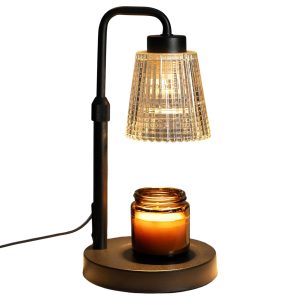
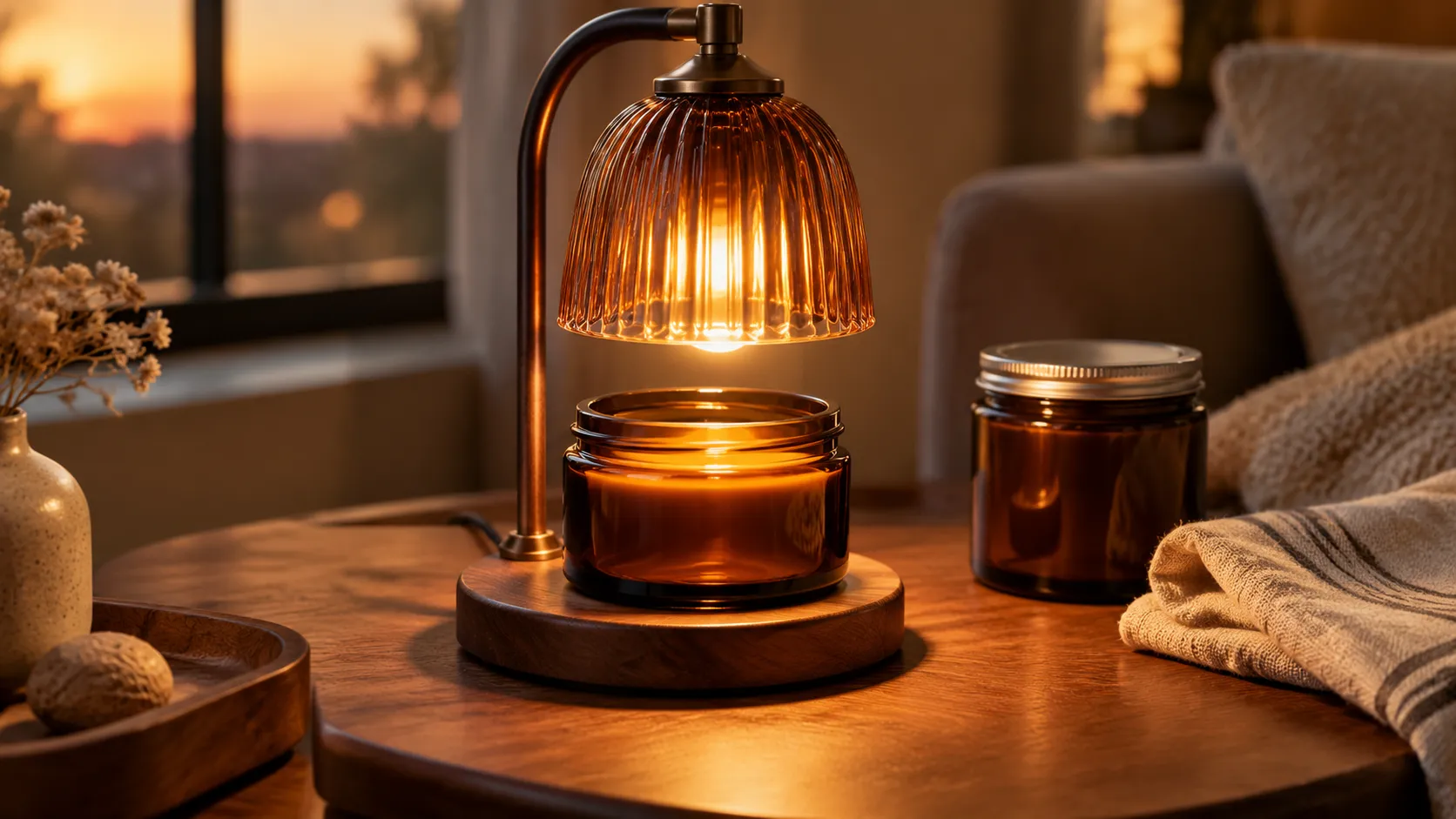
Every failure mode above traces back to one component. Remove the wick and the list goes with it: no trim length to get wrong, no memory ring, no tunnel, no mushroom, no drowning flame in the last third of the jar. That is the design argument for the wickless format, and why our 400 g soy jar and the 450 g size are poured without a wick, for a warmer head rather than a flame. Run time does not stop being a question, it moves: it becomes a property of the appliance and the fragrance load, and appliances are far easier to specify than habits.
Whether a warmer actually makes a candle last longer is answered in our candle warmer safety explainer, which has a section on it. Do wax melts last longer than candles is the neighbouring shelf question, and it belongs to the wax melt shelf card with the published ranges it carries. Which candle suits which warmer head is the pairing guide again, and it stays there.
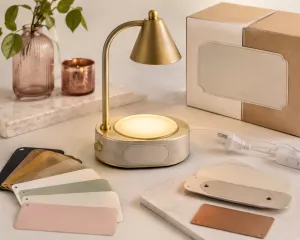
For assortment purposes, a wicked candle and a wickless jar answer different questions and should be carded differently. Wicked candles sell on ritual and need the trimming instruction to deliver their hours. Wickless jars sell on control and need the right appliance beside them, which the warmer lamp range and the candle and accessory lines exist to pair. Both leave wax residue eventually, covered in our guide to getting wax out of fabric and wood. If the category is new to your buying team, the warmer lamp category primer is the shorter start.
The complaint log, and the six lines that close most of it
Returns are the cost of an expectation set wrong, and the retail total is no longer a rounding error: retailers expected 15.8 percent of 2025 sales back, worth $849.9 billion, with 19.3 percent of online sales returned (NRF and Happy Returns). A candle return is rarely about the wax. It is a number on a box meeting a customer who burned in forty minute stretches, trimmed the wick with nail scissors down to nothing, or blew out the first burn after twenty minutes because dinner was ready. Each is cheaper to prevent with a printed line than to process afterwards.
| What the customer says | The line on the card | Why it closes the complaint |
|---|---|---|
| It lasted half as long as the box said | Hours assume a trimmed wick and full burns, so we print a range | Swaps an absolute claim for a conditional one before the sale |
| There is hard wax stuck all round the sides | First burn runs one hour per inch across the jar | Names the memory burn while it can still be prevented |
| I trimmed it and now the flame is tiny | A quarter inch, never shorter; an eighth is the floor | Stops the over-trim that starves the flame and stalls the pool |
| The wick has vanished into the wax | Warm the top, pour a little off, free the wick, relight | Turns a refund into a two-minute repair at the counter |
| It burns a hole down the middle and stops | Bring it back to us; that is a wick size fault, not a use fault | Routes a real defect to the supplier instead of the buyer |
| Can I leave it on all evening? | Four hours, then let it cool for two before relighting | Matches the burning guidance the trade association publishes |
Two of those rows carry most of the weight: trim to a quarter inch every time, and give the first burn one hour for every inch across the jar. Staff who can say both without looking them up will close most of what comes back, and the rest will be genuine wick-size faults for a supplier conversation. Keep the card to six lines; one that runs to a page gets read once.
What to ask a candle supplier before the first order
The question how long does a candle burn has no single answer, only a rate and a set of conditions, so the useful supplier conversation covers both. Ask for the burn sheet and read three things off it: how many cycles were run, how long each session was, and whether the candle burned to self-extinguish or stopped early. Then ask whether the quoted hours came off that sheet or off a per-ounce rule. Those are not the same claim. Ask for net wax weight rather than filled weight, since a heavy vessel flatters a gross figure. And ask for the wick series and size against the internal diameter of the jar. That is the one specification that predicts tunneling before a single unit ships. Ask for it before you sample.
Then print a range with the condition attached rather than a single number. Approximately 45 to 55 hours with the wick trimmed to a quarter inch before each burn is a claim you can support, and it survives contact with a customer who burns differently from the way your test did. A bare fifty hours is a claim somebody will eventually ask you to defend, and the standards give you nothing to defend it with.
Spec the candle and the wick together
We pour scented candles and build the warmer lamps and candle care tools beside them in our own factory in Foshan — 4,000 square meters, 40 people, two production lines. Bring the jar diameter, the fill weight you plan to card, and the way you intend to state burn time, and we will quote the candle, the wick specification and the accessory line on one sheet.
Watch it work
The division behind the label hours, the missing standard and the quarter inch trim, in 30 seconds:
FAQ
Does the way a candle is put out change how long it lasts?
It changes the next burn more than the current one. Blowing a candle out sends up smoke and leaves the wick tip charred and mushroomed, so the next lighting starts with an oversized flame until that tip is trimmed off. A dipper, which pushes the wick into the melt pool and lifts it back out, puts the flame out without smoke and coats the tip in wax so it lights cleanly. A snuffer sits between the two. Neither adds hours by itself, but the dipper removes one small reason a candle drifts off its rate.
Why does the last part of a jar candle burn faster?
Heat has nowhere left to go. Early in the life of a jar the wax above the wick absorbs the heat and the glass stays cool. As the level drops the flame sits closer to the base and the glass holds heat instead of shedding it. The melt pool goes deeper and wider for the same flame, the wick draws faster, and the final third disappears at a rate the first third never showed. It is also where a wick can drown in its own pool, which reads as a fault rather than an ending.
Do three-wick jars burn longer than single-wick jars of the same weight?
Usually shorter, which surprises buyers who assume more wicks means more product. Three wicks consume wax at roughly three times the rate of one comparable wick, so the same fill weight is spent in a fraction of the hours. What the format buys is coverage: three wicks reach the edge of a wide jar a single wick could never heat, so the customer gets a full melt pool and stronger scent throw instead of extra evenings. Quote the two formats on separate rows and let the hours differ.
Does putting a candle in the fridge make it burn longer?
No, and it is worth telling staff so, because the tip circulates every winter. Chilled wax starts out harder, but the flame heats it back to melting within minutes and the rate returns to whatever the wick sets. What the cold does reliably is make the wax contract away from the glass and crack, while condensation leaves water in the pool. Both produce a worse burn, sometimes a genuine return. Trimming is the only lever a customer holds that moves the number.
Sources
Every external figure above was checked on 2026-09-12. Per-ounce burn rates are quoted as what candle trade sources publish, not as independent testing, and no burn-time figure here describes our own candles.
- National Candle Association, Your Foolproof Guide to Burning a Candle Correctly (trim the wick to a quarter inch; burn one hour for every inch of diameter; no session longer than four hours with at least two hours of cooling; up to 25 percent longer with regular trimming; 6 to 12 month life span for highly fragrant candles), retrieved 2026-09-12.
- National Candle Association, Candle Industry Facts and Figures (approximately $3.14 billion in US retail sales, which the page itself attributes to a 2013 Mintel estimate; about three-fourths of users burn 4 hours or less per sitting; living rooms 42 percent, kitchens 18 percent, bedrooms 13 percent), retrieved 2026-09-12.
- U.S. Consumer Product Safety Commission, Candles and Candle Accessories (the six voluntary standards named above: F2417, F2058, F2326, F2601, F2179 and F1972), retrieved 2026-09-12.
- ASTM International, F2058-07(2021) Standard Specification for Candle Fire Safety Labeling (scope: fire safety information on candle units of sale, the safety alert symbol followed by the signal word WARNING in uppercase boldface letters, and the statement that it is not the intent of the specification to address any other labeling requirements), retrieved 2026-09-12.
- ASTM International, F2417-17 Standard Specification for Fire Safety for Candles (scope: minimum safety requirements for candles and candle ensembles for a reasonable degree of safety in normal use), retrieved 2026-09-12.
- BottleStore.com, Calculating Your Candle Burn Time (5 to 7 hours per ounce on larger candles, 7 to 9 on smaller votive candles, 60 to 84 hours for a 12 ounce candle, and the weigh, burn, weigh method; charted above), retrieved 2026-09-12.
- Eco Candle Project, Understanding a Wick Rate Chart (rate of consumption in grams per hour, with a worked example of 600 g to 586 g over four hours giving 3.5 g/hr; wick yield 1083 m/kg against 591 m/kg; melt pool deepening 0.64 cm per hour; flame height 1.27 to 5 cm), retrieved 2026-09-12.
- The Flaming Candle, How to Fix Candle Tunneling (undersized wick and short first burn as the two causes; the tented foil method at one to two hours checked every thirty minutes; re-wicking one size up), retrieved 2026-09-12.
- Harlem Candle Co, 3 Steps to Fix Candle Wicks That Are Buried or Too Short (heat gun or hair dryer to level the surface; pour off wax to leave an eighth to a quarter inch of wick clear; reset the memory at one hour per inch of diameter), retrieved 2026-09-12.
- National Retail Federation and Happy Returns, Consumers Expected to Return Nearly $850 Billion in Merchandise in 2025 (15.8 percent of annual sales, $849.9 billion, and 19.3 percent of online sales), retrieved 2026-09-12.
