


Key takeaways
- A candle warmer lamp is a flameless device that melts a jar candle from above with a warm bulb, releasing the same fragrance with no flame, soot, or smoke.
- The category rides a proven home-fragrance habit: the National Candle Association reports about $3.14 billion in annual U.S. candle sales and more than 10,000 scents in the market.
- The flameless angle is a genuine safety story. The NFPA logs an average of 7,610 U.S. home structure fires a year started by candles, with 81 deaths and $278 million in property damage. A warmer removes the open flame entirely.
- Our lamps ship as a real, spec’d product: a glass shade on a powder-coated steel or solid-wood base, a 4-mode timer (2 / 4 / 8 / 10 h), and 4-level dimming (10 / 30 / 70 / 100%), and the lamp we build ranks #1 in Amazon’s Candle Lamps best-seller category.
SECTION 01What is a candle warmer lamp?
So, what are candle warmers? A candle warmer is an electric device that melts a candle to release its fragrance without ever lighting the wick.
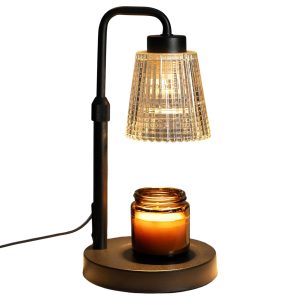
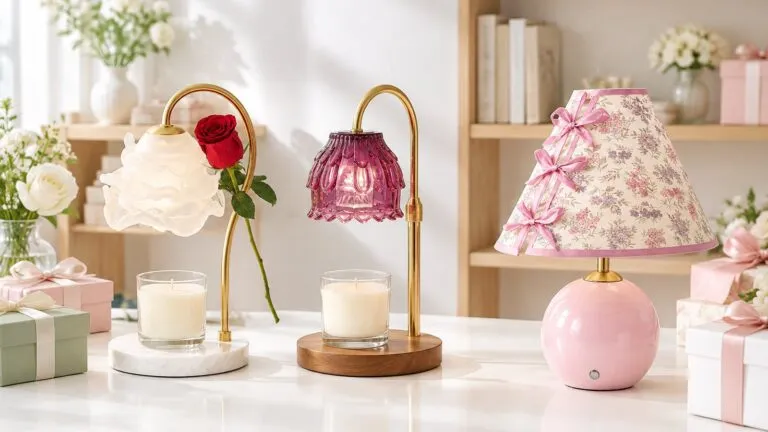
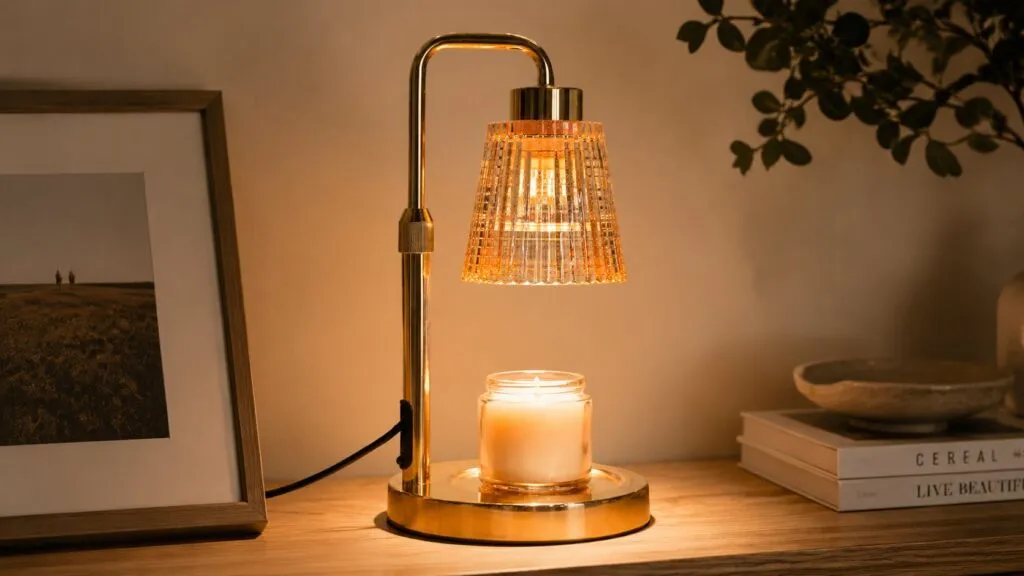
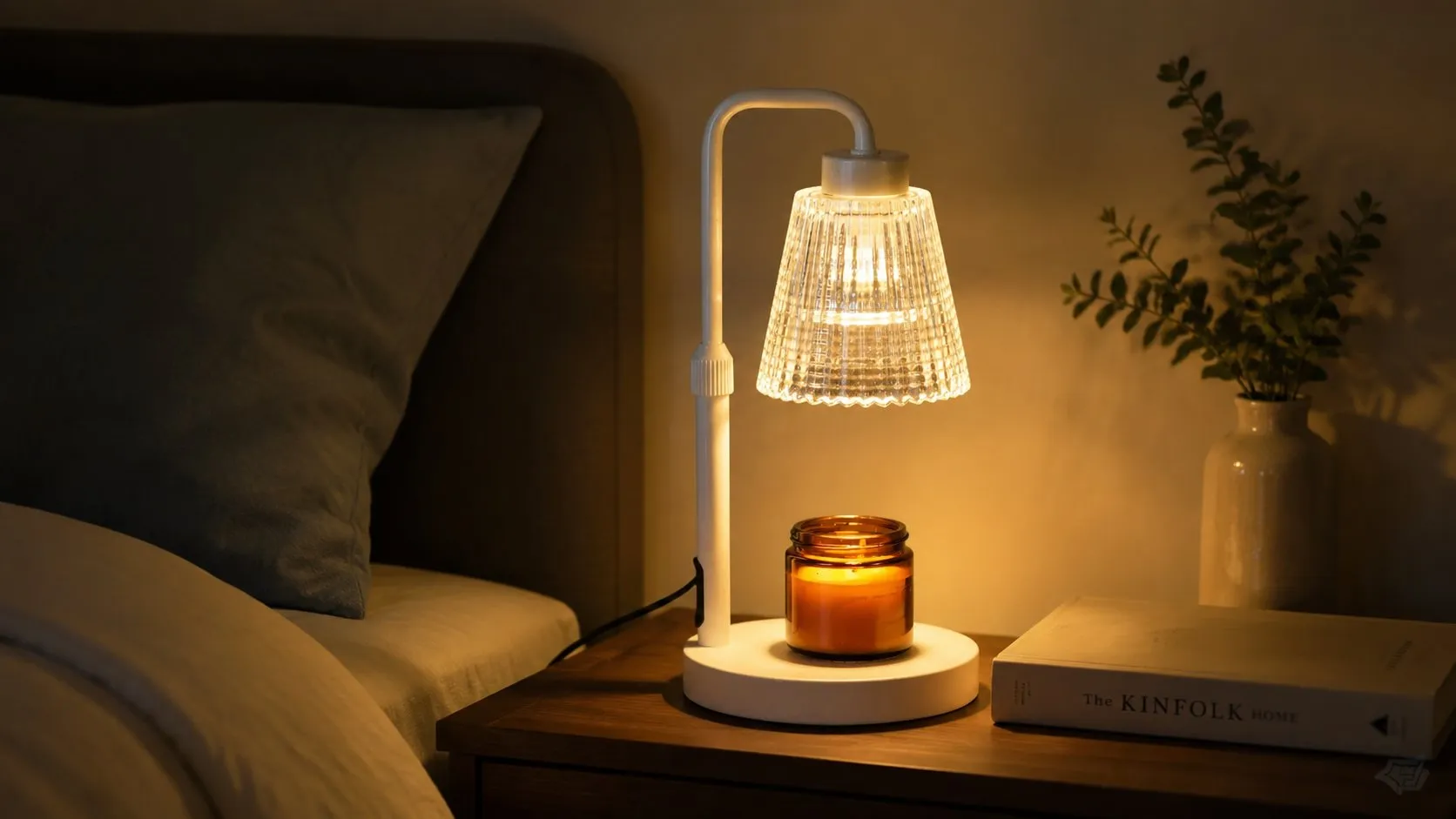
If you are a buyer sizing up the category, start with the plain definition, because it is also the sales pitch. A candle warmer lamp sits over a jar candle and warms the wax from the top with a small bulb, so the shopper gets the scent of a lit candle with no flame, no soot, and no burnt wick. The format most people mean when they ask what is a candle warmer lamp is the tall, arch-style lamp: a glass shade on a slim rod, over a weighted base, with the bulb tucked inside the shade pointing down at the candle. It doubles as a warm accent light, which is why it photographs like decor rather than an appliance.
The wider family has two shapes worth knowing before you build an assortment. A top-down candle warmer lamp heats a finished jar candle from above and is the display-piece hero. A hot-plate or dish warmer heats from below and is aimed more at loose wax melts. Both are “candle warmers,” but they merchandise differently and sit at different price points. This guide focuses on the lamp, because that is the version driving the category’s retail growth and the one shoppers photograph and gift.
SECTION 02How does a candle warmer work?
A candle warmer works by warming the top layer of wax to its melting point, roughly 120 to 150°F for common candle waxes, so it forms a fragrance-releasing melt pool without combustion.
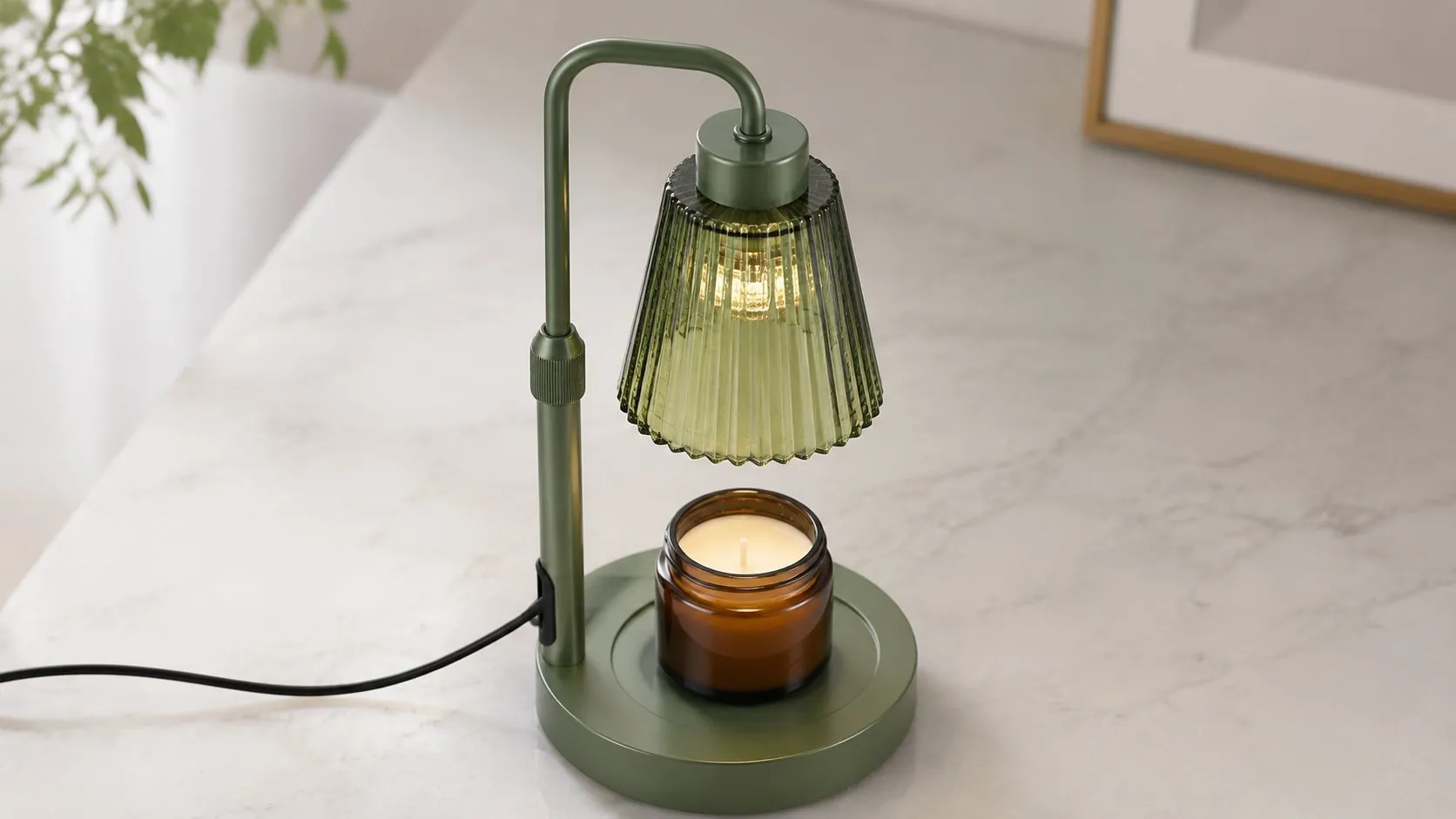
Here is the mechanism a buyer should be able to explain on a sales floor. In a top-down lamp, a bulb inside the shade sends gentle, radiant heat down onto the candle surface. The wax at the top absorbs that warmth, softens, and melts into a shallow pool, and the fragrance oils blended into the wax evaporate off that pool exactly as they would above a flame. Because the heat is coming from a bulb and not a burning wick, nothing is consumed: turn the lamp off and the pool cools and re-hardens, leaving the candle intact for next time. Our lamps use a 50W GU10 halogen bulb as that heat source, the same component covered in our companion GU10 halogen heat-source guide. Our own glass-dome, top-down candle warmer lamp is built around exactly this top-down mechanism.
The temperatures involved explain why the format is gentle. In binding ruling N340956, issued July 17, 2024, U.S. Customs and Border Protection described a candle warmer lamp of this type reaching a surface near 120°C at the plate, driven by a GU10 halogen bulb (U.S. CBP, Ruling N340956). The wax itself only needs to reach its own melting point to release scent, and that point is well below the plate maximum. Candle-wax melting-point references compiled by SER Wax Industry and WickFusion (retrieved 2026-07-16) put soy wax at roughly 120 to 180°F, paraffin near 115 to 154°F, beeswax at 144 to 149°F, and coconut wax at 124 to 127°F. A top-down lamp delivers heat in the low end of that band, which is why it melts only the top surface rather than the whole jar.
Source: wax melting-point reference charts, SER Wax Industry and WickFusion; warmer surface band per candle-warmer operating guides. Retrieved 2026-07-16.
One consequence matters for merchandising. Because a top-down lamp melts only the surface, the candle keeps most of its wax volume, so a jar lasts noticeably longer than it would if burned down. That is the mechanism behind the “candles last longer” claim shoppers hear online, and it is worth stating accurately rather than overselling a specific multiple. The step-by-step version of the process looks like this:
SECTION 03What does a candle warmer do for the shopper?
What does a candle warmer do that a candle cannot? It delivers the same scent, cleaner and safer, while preserving the candle so the shopper gets more use from every jar they buy.
For the end shopper, the appeal is a stack of small wins that add up to an easy purchase. There is no flame to watch, so the candle can run while they cook, work, or fall asleep, with an auto-off timer as backstop. There is no soot to darken walls and ceilings, and no smoke, which matters to renters and to anyone sensitive to combustion byproducts. And because only the surface melts, the jar they already love lasts through many more sessions, which quietly reframes a warmer as a way to protect their candle collection rather than replace it. That preservation benefit pairs directly with the attach sale in our best-candles pairing guide.
The home-fragrance context is why the benefit lands. As of its 2026 Facts & Figures page, the National Candle Association reports U.S. retail candle sales of about $3.14 billion a year, with more than 10,000 scents on the market and candles most often burned in the living room (42%) (National Candle Association, Facts & Figures). A candle warmer does not compete with that habit; it extends it, giving fragrance-loving shoppers a flameless way to keep using the jars they are already buying. For a store, that means the warmer is not a niche gadget but an accessory riding a mass-market category.
SECTION 04Top-down lamp vs. hot-plate warmer
A top-down candle warmer lamp heats a jar candle from above and works as decor; a hot-plate warmer heats from below and is cheaper but plainer. Most stores lead with the lamp and use the plate or wax melts as an entry item.
The two formats are not rivals so much as different rungs of the same ladder, and knowing the split helps you build an assortment instead of one SKU. The lamp puts the heat source above the candle, which reaches the fragrance-bearing surface first and gives a fast, strong scent throw, and the lit shade is a design object that sells on looks. The plate puts the heat underneath, which is simpler and less expensive, works well for loose wax melts, and disappears into the background rather than serving as a light. The comparison below is the one a buyer weighs:
Top-down candle warmer lamp
- Heats the wax surface directly for fast scent throw
- Doubles as a decorative accent light
- Best with jar and tin candles
- Higher price point and gift appeal
- The hero SKU shoppers photograph and share
Hot-plate / dish warmer
- Heats from below, plate or dish style
- Lowest price, entry-level buy
- Suited to wax melts and cubes
- Minimal decorative presence
- Good attach or opening price point
There is a real limitation to name here, and naming it builds trust with your own shoppers: a top-down lamp only works with container candles. Pillars, tapers, and tealights have no jar to hold a melt pool, so they are not compatible, and a shopper who buys a lamp for a pillar candle will be disappointed. That constraint is actually a merchandising opportunity, because it steers buyers toward jar candles and wax you can sell alongside the lamp. The lamp is the anchor; the plate, the melts, and the candles fill out the price ladder beneath it.
SECTION 05Why is a flameless candle warmer the strongest hook?
A flameless candle warmer removes the open flame that causes candle fires, which is the category’s most concrete selling point. U.S. fire departments respond to thousands of candle-started home fires every year.
The safety story is not marketing gloss; it is grounded in the numbers your shoppers half-remember from the news. In its September 2025 candle-fire report, the National Fire Protection Association (NFPA) found that U.S. fire departments responded to an average of 7,610 home structure fires per year started by candles, causing 81 civilian deaths, 677 injuries, and $278 million in direct property damage, which works out to about 21 home candle fires a day (NFPA, Candle fires). A flameless candle warmer sidesteps the entire failure mode: there is no open flame to knock over, forget, or place too close to something that can burn.
The cause data is what makes the pitch precise. The NFPA reports that three of every five (60%) home candle fires start when something that can burn is left too close to the flame, and in 16% of cases the candle was left unattended or abandoned. Both root causes are flame-and-attention problems, and both are removed by a warmer that uses a bulb instead of a wick, and that shuts itself off on a timer.
Source: National Fire Protection Association, Candle fires report (September 2025). “All other conditions” is the arithmetic remainder. Retrieved 2026-07-16.
For a retailer, this reframes safety from a disclaimer into a headline benefit. The honest caveat is that a candle warmer is a heat-generating electrical appliance, so it still needs a stable surface, clearance from anything flammable, and sensible unattended-use limits, which is exactly what our candle-warmer safety explainer for retailers walks through. The point is not that a warmer is risk-free; it is that removing the open flame eliminates the single largest cause of candle fires, and that is a benefit worth putting on the shelf edge.
SECTION 06Is a candle warmer a proven retail category?
Yes. Candle warmers have moved from novelty to established category, with demand visible in Amazon best-seller ranks and in viral social content, and the format sells year-round with a holiday peak.
The demand signal a buyer can check independently is the best-seller rank. The candle warmer lamp we manufacture ranks #1 in Amazon’s Candle Lamps best-seller category, which is the kind of category-level proof that tells a store the shopper demand is already there rather than something a supplier is asserting. That is a statement about the product’s standing in its category, not a brand-wide claim, and it is the sort of external validation a buyer should ask any supplier to substantiate.
The social signal points the same way. Independent retail coverage, including Taste of Home’s review of the “viral” candle warmer lamp, ties the category’s growth to home-fragrance shoppers discovering the format through social video under tags like #CandleWarmer (Taste of Home, Candle Warmer Lamp review). For a merchandiser, the useful read is that awareness is being created for you: shoppers arrive already wanting a flameless way to enjoy jar candles, and the store that has stocked the lamp captures that demand. The seasonality is friendly too, with a gifting peak in the fourth quarter layered on top of steady year-round home-fragrance buying. If you are planning an assortment against 2026 demand, our 2026 home-ambiance trends brief puts the warmer in the wider cozy-lighting context.
SECTION 07What to look for before you stock candle warmers
Before stocking candle warmers, check five things: heat source, timer and dimming, materials, packaging, and the sourcing model, because they decide both the shelf story and the landed cost.
A candle warmer is a simple object, which makes the differences between a good one and a cheap one easy to miss on a spec sheet. The features that matter are the ones a shopper actually touches: how the lamp controls its heat, how long it can safely run, and whether it feels like a considered object or a disposable gadget. The table below is the short checklist we hand new buyers, mapped to what each feature does for the sale.
Once the range is on the shelf, most complaints are usage rather than product; the step-by-step shelf card — height, dimmer, timer, bulb — is in how to use a candle wax warmer.
| What to check | Our lamp’s spec | Why it matters at retail |
|---|---|---|
| Heat source | 50W GU10 halogen bulb, top-down | Replaceable bulb, gentle surface warming, easy attach-sale of spares |
| Auto-off timer | 4 modes: 2 / 4 / 8 / 10 h | Safe unattended use and overnight running, a core safety selling point |
| Dimming | 4 levels: 10 / 30 / 70 / 100% | Doubles as adjustable ambient light, widens the use case |
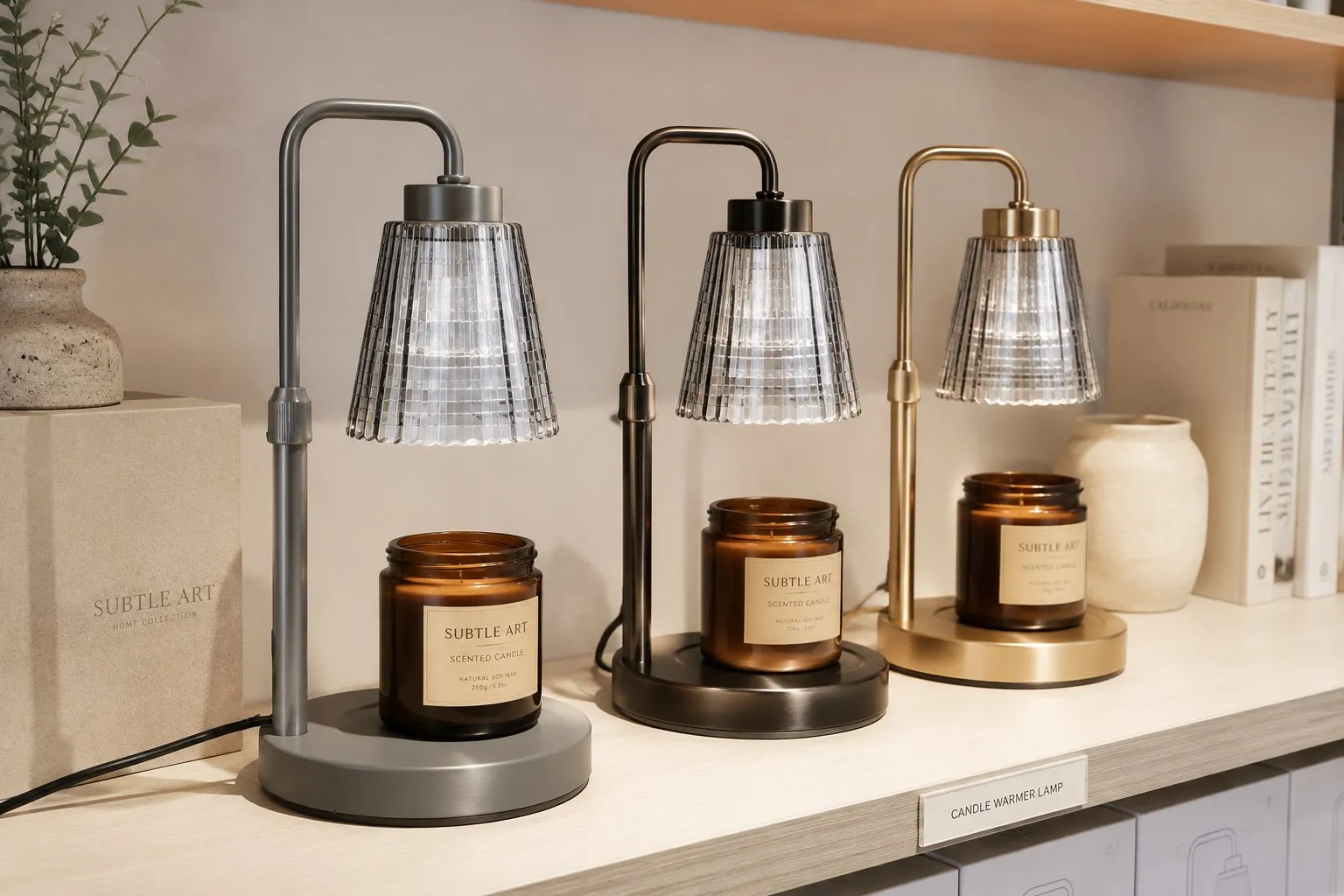
| Shade and base | Glass shade; powder-coated steel or solid-wood base | Reads as decor, not a gadget; supports higher price points |
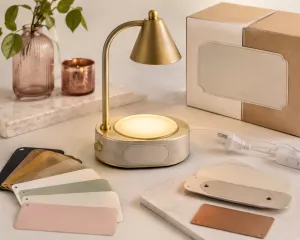
| Packaging | Printed gift box or plain brown inner box | Shelf-ready and giftable, or cost-down for re-brand buyers |
One caution belongs on every sourcing checklist: do not confuse design-level safety features with formal certification. A real auto-off timer and a stable, low-heat design are genuine safety features you can describe honestly, but they are not the same as a UL, ETL, or CE mark, and no responsible supplier should let you imply a certification that a product does not hold. Ask for test reports where your market requires them, and treat any feature you cannot verify as a question rather than a claim. The last thing to settle is the sourcing model, buying stock wholesale, private label, or full OEM, which we lay out in the candle warmer sourcing guide.
SECTION 08How BeginLighting builds its candle warmer lamps
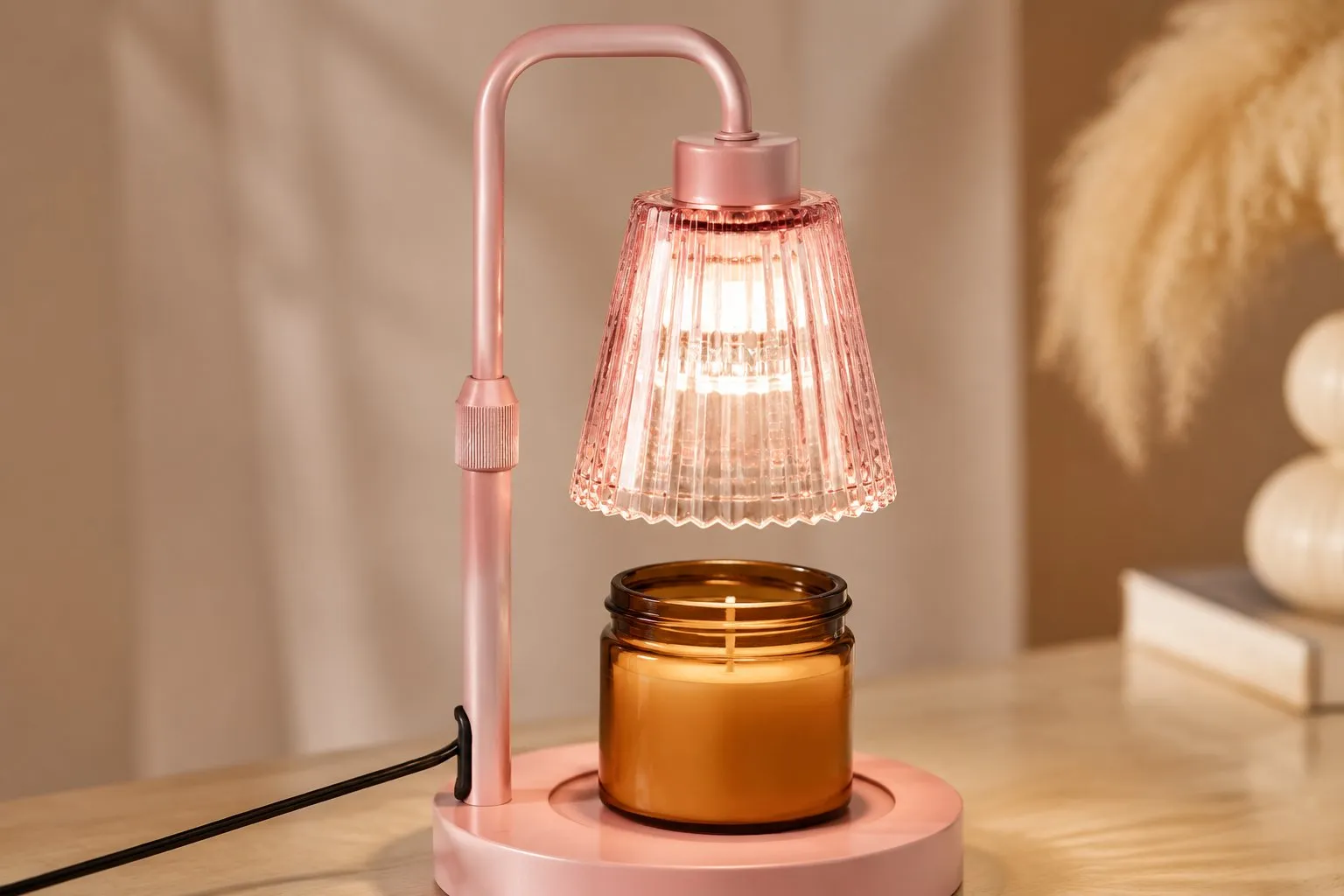
BeginLighting builds candle warmer lamps as a factory-direct range: a glass shade over a powder-coated steel or solid-wood base, a 50W GU10 halogen heat source, a 4-mode timer, and 4-level dimming, made on the same line as our retail brand.
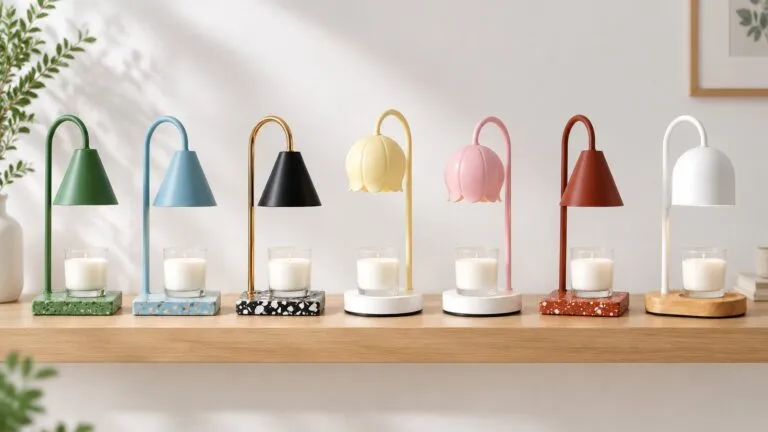
Everything above is easier to act on when the product behind it is a real, spec’d range rather than a stock photo. Our candle warmer lamps use a glass shade on either a powder-coated steel base or a solid-wood base, depending on the family, with a slim metal rod and a weighted foot so the lamp stands stable on a nightstand or a shelf edge. The heat source is a 50W GU10 halogen bulb, the timer offers 2, 4, 8, and 10-hour auto-off modes, and the dimmer steps through 10, 30, 70, and 100% so the same lamp can be a bright warmer or a low night light. Those are the figures on our factory carton and spec sheet (revision 2026-06-12), not aspirational numbers.
The reason a buyer can trust the consistency is the manufacturing setup: your order runs on the same line, and through the same checks, as the retail brand we sell ourselves, from a dedicated manufacturing base in Foshan. That is what “factory-direct” means in practice here, one production standard whether the lamp ships to our own shelves or to yours. To see the range and the finishes in one place, browse the candle warmer lamp category, and when you are ready to talk quantities, colors, and packaging, the sourcing desk can turn a shortlist into a quote.
Stock a proven, factory-direct candle warmer range
Send us your target colors, packing level, and quantities. We confirm specs, the carton break, and a quote so your first order lands ready for the shelf.
FAQ
What is the difference between a candle warmer and a wax warmer?
A candle warmer melts a finished jar candle so the shopper burns the candle they already love, flame-free. A wax warmer melts loose wax melts or cubes in a dish. A top-down candle warmer lamp does both jobs for jar candles: it warms the existing candle from above, while many hot-plate wax warmers are designed mainly for wax melts sitting in a shallow tray.
What does a candle warmer do to the fragrance compared with burning?
A candle warmer releases the same fragrance oils a flame would, but by gently warming the wax surface instead of combusting it. There is no soot, no smoke, and no burning wick, so the scent is cleaner and the candle keeps its full volume because only the top layer melts and then re-solidifies when the lamp switches off.
Is a top-down candle warmer better than a hot-plate warmer?
For jar candles, a top-down candle warmer lamp usually gives a faster, stronger scent throw because it heats the wax surface directly under a bulb and doubles as a decorative light. A hot-plate warmer costs less and suits wax melts, but it heats from the base and is less of a display piece. Most retailers stock the lamp as the hero and the plate or wax melts as an entry-price or attach item.
Do flameless candle warmers work with every candle?
No. A flameless candle warmer lamp is built for container candles, jar and tin candles that hold a melt pool. Pillars, tapers, and tealights have no container to hold the melted wax, so they are not a match for a top-down lamp. Steering shoppers toward jar candles is part of the sales conversation and an easy attach-sale for a paired soy candle.
Why are candle warmers a good category for retailers to stock?
Candle warmers pair a proven home-fragrance habit with a flameless, giftable format that photographs well and sells year-round with a holiday peak. Demand is visible in Amazon best-seller ranks and in viral social content, the unit is light and packs densely for freight, and the lamp naturally pulls attach sales of candles and spare bulbs, which lifts basket size.
Market and safety figures are a planning baseline drawn from the cited public sources as of July 2026. Product specifications are from the BeginLighting factory spec sheet (rev. 2026-06-12); confirm current specs and any required test reports for your market before ordering.
Sources
- National Fire Protection Association, “Candle fires” (report data current as of September 2025): average U.S. home candle fires, deaths, injuries, property damage, and leading conditions. nfpa.org, retrieved 2026-07-16.
- National Candle Association, “Facts & Figures”: U.S. retail candle sales, number of scents, and where candles are burned. candles.org, retrieved 2026-07-16.
- U.S. Customs and Border Protection, Ruling N340956, “The tariff classification of a candle warmer lamp from China,” issued July 17, 2024 (GU10 halogen bulb, surface temperature). rulings.cbp.gov/ruling/N340956, retrieved 2026-07-16.
- SER Wax Industry, “Candle Wax Melting Point Chart: Paraffin, Soy & Beeswax Guide.” cere.it, retrieved 2026-07-16.
- WickFusion, “The Melting Point Chart for All Common Candle Waxes.” wickfusion.com, retrieved 2026-07-16.
- Taste of Home, “Candle Warmer Lamp: Our Review of the Viral Decor.” tasteofhome.com, retrieved 2026-07-16.
- BeginLighting factory carton and product specification sheet, revision 2026-06-12 (materials, timer modes, dimming levels, GU10 bulb). Primary source, on file with the BeginLighting sourcing desk.
That line is not a claim on a spec sheet — here is the floor it runs on, from glass and steel at goods-in to the powered-on test before sign-off.
If you already know the product should carry your own name, see what a private-label program actually lets you change on a proven build.
Which GU10 halogen bulb for candle warmer lamps do you ship, and can retailers replace it themselves?
Every lamp in our range runs on a 50W GU10 halogen bulb in the MR16 form factor. It is the heat source for the wax, not room lighting, which is why the wattage looks high next to an LED spot of the same shape. It is also a standard replaceable part rather than a sealed component: the bulb comes out of the socket like any GU10, so a store can carry spares instead of returning a whole lamp when one dims.
That is why the bulb is stocked as its own accessory SKU. Most buyers add a small quantity of GU10 halogen replacement bulbs to the first order and then reorder them as an attach item alongside candles. Bulb specifications are from our factory spec sheet (rev. 2026-06-12); confirm the current revision with your quote.
What do shoppers ask at the shelf, and what should staff answer?
Five questions come up again and again on a sales floor, and candle warmer vs burning is the comparison sitting underneath all of them. Give staff one line for each and the category explains itself. If you are writing the spec behind those answers, our teardown of what category leaders have in common turns a rankings page into a usable spec sheet.
- How do candle warmers work? A bulb above the jar warms the top layer of wax until it releases its fragrance oils. Nothing is lit and nothing is consumed.
- Do candle warmers really work? Yes, on container candles. The scent comes off the melt pool the same way it does above a flame, which is the mechanism set out in section 02.
- Do candle warmers make the scent go away? No, but it arrives differently: a steady throw rather than the sharp first hour of a fresh flame, and it returns every time the lamp goes on until the oils are spent.
- Do candles last longer with a candle warmer? Yes, because only the surface melts and it re-hardens once the lamp is off. Say it that way rather than quoting a multiple nobody can substantiate.
- Is a candle warmer better than burning? On scent it is a swap, not an upgrade. What it removes is the flame, the soot and the smoke, and that is the part the shopper is actually buying.
What other uses for candle warmer lamps do shoppers ask about?
Two searches keep landing on this category and neither one is really this product, so it is worth training staff to redirect rather than to sell. A candle warmer for coffee cup search wants a flat heated coaster that keeps a drink hot from below, which is a different appliance with a different heat profile; a top-down lamp is built to warm a wax surface inside a jar and is not a food or drink warmer. A candle warmer for simmer pot search comes from people who simmer citrus peel and spices on a stove and want a version they can leave running, and the nearest fit on a fragrance shelf is a jar candle or a wax melt in the same scent family under a warmer, not an open pot of water. Answering both honestly costs one sentence and saves a return.
