

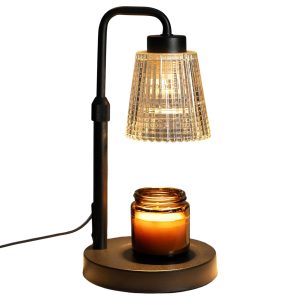
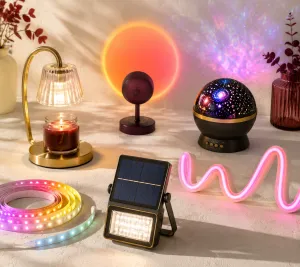
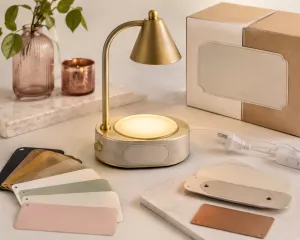

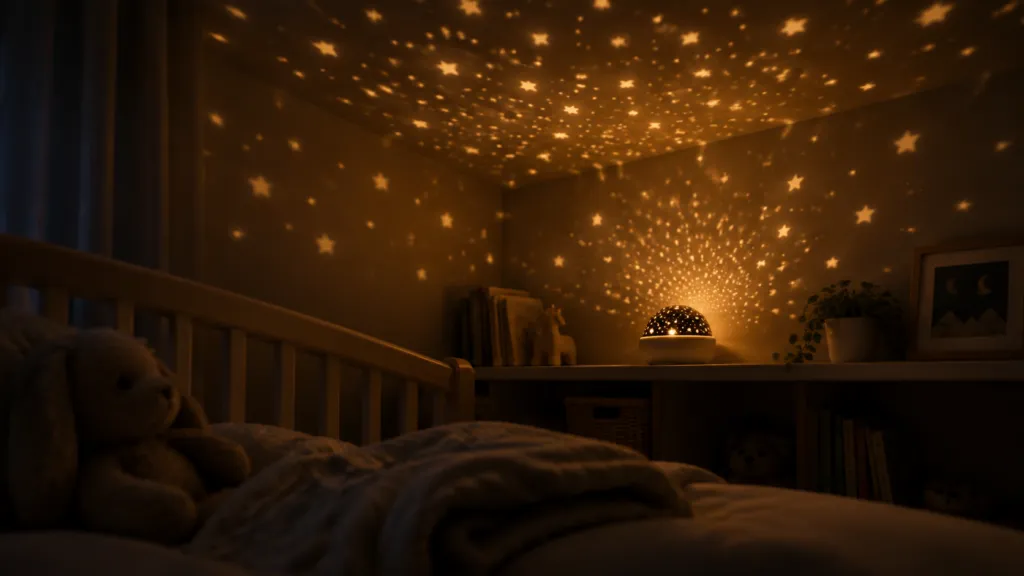
A galaxy projector night light is two products sharing one housing, one lead and one price, and the two want opposite things. The lamp half has to be dim, warm and switched on for eight hours. The projector half has to be bright, saturated and switched on for twenty minutes while somebody watches it. Specify the second half alone and you get a unit a parent cannot leave running, which is how a five-star demo video collects one-star reviews. This guide is for the person placing the factory order: a nursery and gifting buyer, a decor category manager, a private-label seller.
Three neighbouring questions are answered elsewhere on this site. How the laser and the LED build the picture is in how a galaxy projector works. Which models are worth benchmarking is in our galaxy projector comparison. Whether an Nth-generation or N-in-1 claim is a real spec change, and which specs matter across a private-label range, are in the star projector private-label guide. What follows is narrower: the two-mode form itself, and what changes on the order sheet because the thing has to work as a lamp.
Key takeaways
The night light mode runs all night, so it sets the thermal duty, the power budget and most of the paperwork. Specify it first and let the star field follow.
- The two modes have opposite spec sheets: dim, warm and continuous for the lamp; bright, saturated and brief for the projection. One board serves both.
- The power path caps the product before the optics do. A USB 2.0 host port gives up to 2.5 W and a 3.x port up to 4.5 W, against 7.5 W or 15 W from Type-C at its default currents (Cambrionix).
- In the EU a child-appealing luminaire is explicitly not a toy: Annex I, item 17 of Directive 2009/48/EC excludes it, so the file is a luminaire file.
- In the US the handset is the regulated part. A replaceable button cell needs a compartment that takes a tool or two independent and simultaneous hand movements, plus warnings on packaging, product and manual (CPSC).
- Evening light is not neutral for this customer: about 1000 lux suppressed melatonin by 87.6% in three to five year olds, seven of ten still low fifty minutes later (Akacem et al., Physiological Reports).
Where the 2 in 1 Galaxy Projector Night Light Sits on a Shelf
Type 2 in 1 galaxy projector night light into a marketplace search box and one carton comes back under half a dozen titles. 2 in 1 night light galaxy projector. 2-in-1 usb night light galaxy projector. Night light projector galaxy, where a translation tool wrote the listing. Plain 2 in 1 galaxy projector, with the lamp demoted to a bullet point.
The scramble is not cosmetic, because the two halves pull in different shoppers. Somebody searching galaxy projector night lights is furnishing a child’s room and wants a lamp that happens to do something clever. Somebody searching galaxy night light projector is more often decorating a ceiling in a teenager’s room, and wants the effect with a lamp thrown in. Same box, two jobs, and the listing that leads with the wrong one absorbs the return.
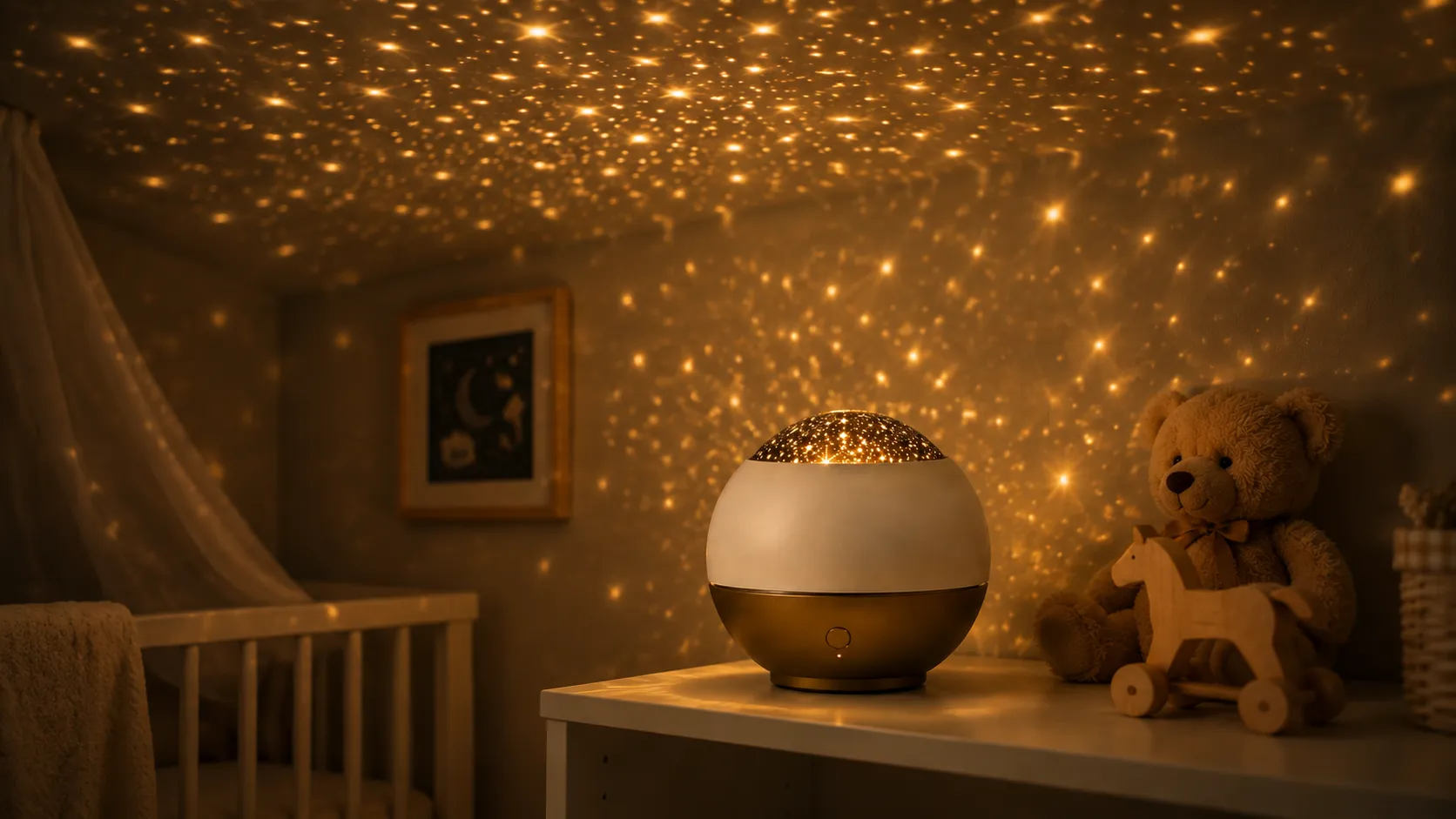
Physically the form has settled: a rounded body about the footprint of a coffee mug, with a pierced or lensed upper half that throws the star field and a lower half holding the board, the button and the lead. Our own rotating star projector with night light is built on that pattern, and the variant that adds audio, the galaxy projector with Bluetooth speaker, keeps the same logic underneath. The rest of the star and galaxy projector range divides between this shape and plain bodies that never pretended to be lamps.
One nearby form gets confused with it. A sunset projection lamp throws a single soft disc of graded colour rather than a star field, and sells to a different shopper; that form is covered in our golden hour sunset lamp guide. Ranging both is sensible. Describing both with the same copy is how a category page stops converting.
The Night Light Mode Is the One That Runs All Night
Almost every hour of this product’s duty cycle belongs to the lamp mode, and almost none of the marketing does. That is where the avoidable complaints come from: a lamp dim enough to sleep beside is not a lamp that photographs well.
Start at the bottom of the dimming range rather than the top. In 2018 a team at the University of Colorado Boulder ran a week-long protocol on ten children aged three to five and exposed them in the hour before bed to roughly 1000 lux, against a dim baseline below 15 lux. Melatonin fell by 87.6%, stayed suppressed for at least fifty minutes after the light stopped, and in seven of the ten had not returned to half the dim-light level by the end of that window (Akacem et al., Physiological Reports). That was a bright stimulus, not a night light. It does not say a night light ruins sleep; it says the system beside this product is sensitive, and the useful end of the dimming range is the end nobody demonstrates.
That points somewhere awkward. The lowest step has to be low enough to be genuinely boring, which makes it useless in a shop demo and invisible in a listing photograph. A unit whose dimmest setting is still bright enough to read by is the wrong unit for a nursery whatever the copy says, and a buyer sampling in a lit office will never find out. Sample it after dark, the only condition the product is used in. The separate argument about warm against cool light before sleep is in what colour light is best for sleep.
Three behaviours then decide whether the lamp mode survives a household. Whether the unit remembers its last setting or wakes at full brightness after a power cut, which is the difference between a quiet reset and a woken toddler. Whether the auto-off timer stops the projection only or the lamp too, because a parent who wanted a glow until morning gets a dark room at two. And whether the timer options are stated anywhere the customer will read. None of these cost anything at the factory. All are decided by whoever writes the firmware brief, or by the mould supplier’s default board if nobody does.
Usb Galaxy Projector: the Power Path Sets the Ceiling
A usb galaxy projector is defined by its socket long before it is defined by its optics. Whatever the listing claims about brightness, the port at the far end of the lead sets a hard ceiling, lower than most people assume.
Under the USB standards a 2.0 host port supplies 5 V at 500 mA, giving up to 2.5 W, and a 3.x host port raises that to 900 mA and up to 4.5 W (Cambrionix). A Battery Charging 1.2 port draws 1.5 to 2.4 A for 7.5 to 12 W, and a Type-C port at its defined current levels of 1.5 A or 3 A gives 7.5 W or 15 W. That is a spread of six to one, and the customer picks which end to plug into. A unit designed around a modern charger will be visibly dimmer on the back of a television, and the review will say it arrived faulty.
Source: Cambrionix, Understanding USB Power Standards (max power table), retrieved 2026-09-12
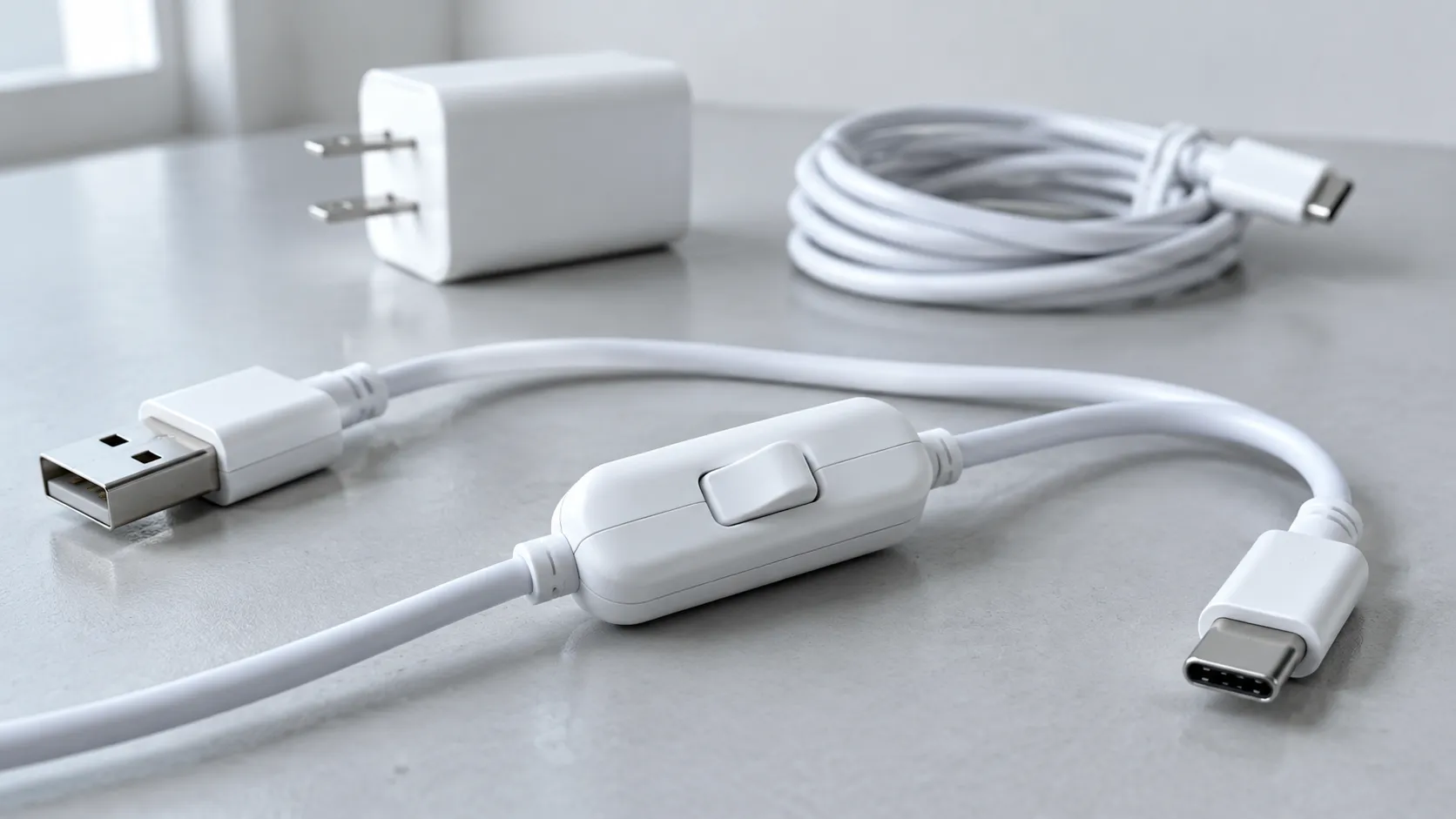
The lead itself carries the cheapest failure in the category. In April 2025 a US retailer recalled about 29,000 decorative LED lights sold at around $12 after the power switch moulded into the USB cord overheated and melted. The firm had received 28 reports of the cord overheating, including six burns to fingers and two reports of damage to a wall and a headboard (CPSC recall notice). The inline switch is the part a cost-down exercise reaches for first, and the part that sits on a bedroom floor all night. If the design uses one, it belongs on the order as a named component.
Two more decisions sit in the same place: lead length, which has to reach a socket from a shelf rather than a desk, and whether an adapter travels in the carton. Shipping cable only is cheaper and moves the question onto whatever brick is in the customer’s drawer. Including an adapter means owning a second regulated component with its own marks and plug variants per market. Both answers are defensible. Discovering which one you chose after the first container lands is not.
Mini Galaxy Projector: What the Small Housing Gives Up
A mini galaxy projector is not a smaller version of the same product. Shrinking the body removes thermal mass, speaker volume and battery room in that order, and each removal surfaces somewhere in the customer experience.
Heat comes first because it hides through sampling. A small sealed enclosure running for eight hours has nowhere to put the heat from the driver and the LED, and the surface a parent touches at midnight is warmer than the one a buyer touches after a five-minute demo. There is no number to copy here, and copying one off a competitor’s sheet would be worse than useless. Ask instead for enclosure temperature after a full night in a closed, unventilated room, taken on the finished sample.
The second trade is run time. Once a cell goes in, the product acquires a duty cycle it did not have before, and a cell sized for portability rarely covers a night. Fine for the car and travel positioning these units sell on. A problem for a listing that also shows a cot. The honest split sells the corded unit as the bedroom item and the battery unit as the portable one.
What the small housing buys back is real: a lower price step, more units per case, and an object that reads as a gift rather than an appliance. For a gifting or impulse position that is often the entire argument. Build the range so the small unit is never the one asked to carry the nursery claim.
Smart Galaxy Projector: App, Voice and the Support Tail
A smart galaxy projector adds a radio, an app and a support obligation that outlives the product. The radio is the cheap part; the obligation is the part to price.
Start by asking who owns the app. Most projector apps in this price band are white-labelled platforms shared across hundreds of brands, so the update schedule, the privacy policy and the day the app is delisted belong to somebody who has never heard of your brand. That is workable while everybody knows it is the arrangement, and stops being workable when a retailer’s customer service promises firmware fixes the platform will never ship. Voice integration adds a second dependency with its own qualification process.
The support tail shows up in the numbers. Pairing failures, router incompatibilities and forgotten passwords all arrive at the returns desk described as a broken product, get processed as one, and are counted against the product in every report the category manager reads. A plain unit with a button and a handset generates almost none of that. The question is not whether the smart tier is better, it is whether the price step covers the handling, and in the lowest bands it does not.
| Tier | Power and control | Shelf position | What the returns desk sees |
|---|---|---|---|
| Base corded | USB lead, button or inline switch | Entry price step, impulse and gift | Dead inline switch, dim on a weak port |
| Mini portable | USB lead plus internal cell | Travel, car and dorm add-on | Run time shorter than the listing implies |
| Remote | USB lead plus handset with a button cell | Nursery and kids room | Lost handset, flat cell, compartment queries |
| App or voice | USB lead plus a Wi-Fi or Bluetooth radio | Connected home ranges | Pairing failures logged as product faults |
Child Safety in a Room That Stays Dark All Night
The safety file for this form is not the file for a projector. It is the file for a lamp a small child sleeps beside, plus a light source with its own marking rules, plus a handset holding a coin cell.
Take the light source first. Where a unit draws the star field with a laser, the marking is the buyer’s first checkpoint: the FDA states that labelling for Classes II to IV must include a warning symbol giving the class and the output power (FDA, laser products). The same agency advises against any laser above 5 mW or without its power printed on the labelling, and for laser toys recommends staying inside Class 1 limits (FDA, laser toys). A sample with no class marking is not a finished sample. Why a laser star field differs from an LED nebula is in how a galaxy projector works.
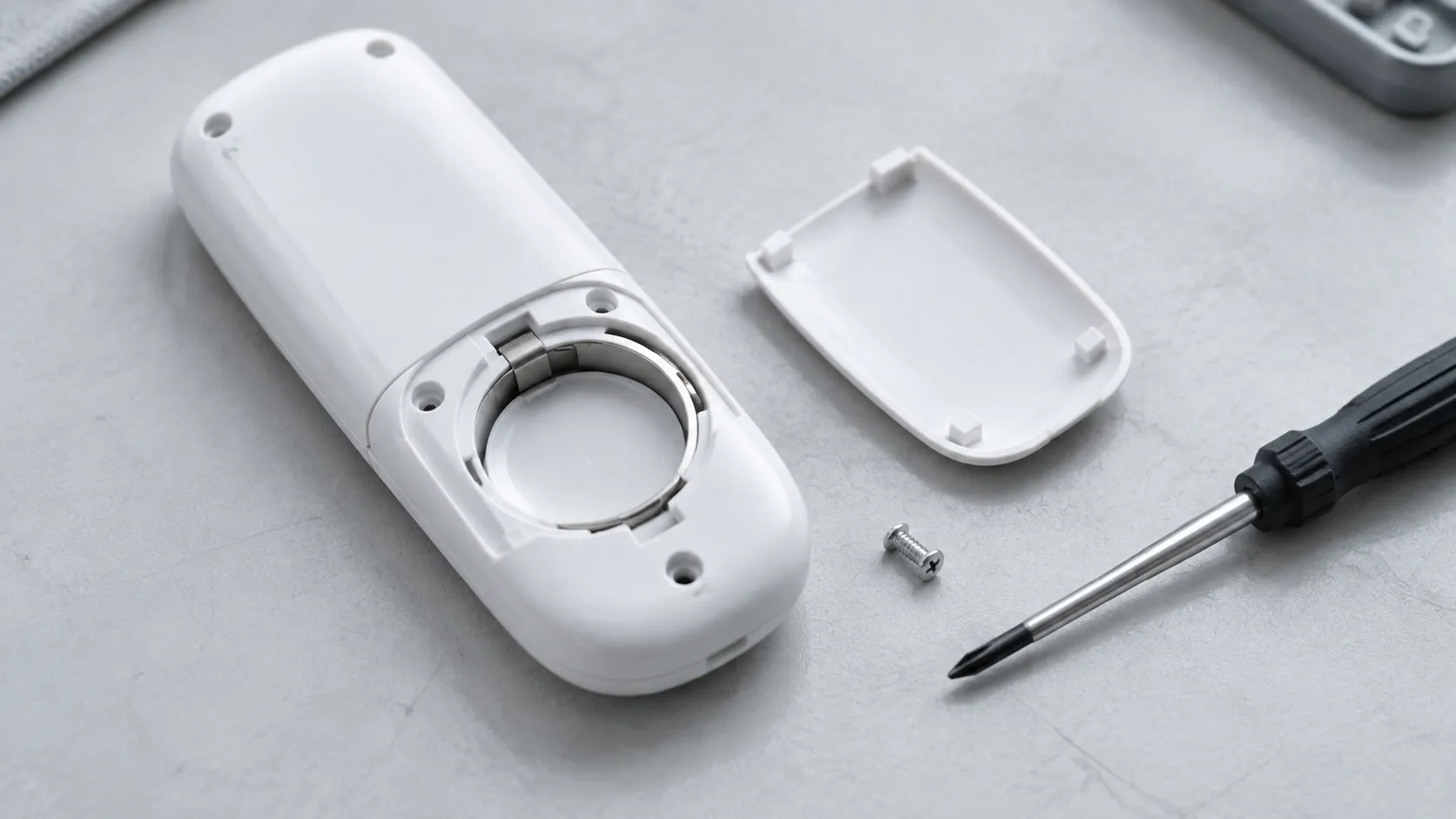
The handset is most often overlooked, because it feels like an accessory. Under the CPSC rule at 16 CFR 1263, a compartment holding replaceable button cell or coin batteries must be secured so that opening it requires a tool or at least two independent and simultaneous hand movements, with ANSI/UL 4200A-2023 incorporated by reference. Warnings go on the packaging, on the product where practicable, and in the instructions (CPSC). The dates have passed: packaging in February 2023, the enforcement discretion window in March 2024, battery labelling in September 2024. A door that slides off under a thumbnail is a compliance failure.
Then there is which rulebook applies, and the two big markets answer differently. In the US a children’s product is one designed or intended primarily for children 12 years of age or younger, assessed on four factors including your own packaging and marketing; that pulls in third-party testing and a written Children’s Product Certificate (CPSC). In the EU it runs the other way. Directive 2009/48/EC covers products intended for play by children under 14 years of age, but Annex I lists what is not a toy, and item 17 is child-appealing luminaires. A star projector styled as a nursery lamp sits outside the toy directive by name. Neither answer is the factory’s to choose.
| Item | Requirement | Source |
|---|---|---|
| Laser marking | Classes II to IV carry a symbol stating class and output power | FDA, laser products |
| Cell compartment | A tool or two independent and simultaneous hand movements to open | CPSC, ANSI/UL 4200A-2023 |
| Cell warnings | Packaging, product where practicable, instructions | CPSC, 16 CFR 1263 |
| US age class | Aimed at children 12 or younger triggers third-party testing and a written CPC | CPSC, children’s products |
| EU class | Child-appealing luminaires excluded from the toy directive by Annex I, item 17 | Directive 2009/48/EC |
When the Answer Is a Plain Projector, Not a Two-Mode Unit
The two-mode form is not the default. It wins in a specific set of rooms and loses in several others, and a range that ships it everywhere carries cost it does not need.
It loses first wherever the lamp function is already covered. A bedside lamp, a smart bulb and an existing night light between them leave the second mode nothing to do. It loses again at the top of the range, where the buyer wants the ceiling to be the whole event. It loses on price ladders too, because two functions in one body compress the gap between the entry SKU and the step above it.
The fourth case is the one buyers miss. Adding a night light mode and a nursery photograph is precisely what moves a product into children’s-product territory under the four-factor test above, with the testing and certificate that follow. If the plan is an adult decor or gaming-room SKU, the lamp mode can drag a whole line across a border it never needed to cross. There the plain body is cheaper and safer: our galaxy star projector for ceilings is that shape, the wider projector range holds the rest, and the model-by-model comparison sits in the galaxy projector comparison.
What to Check on the First Sample
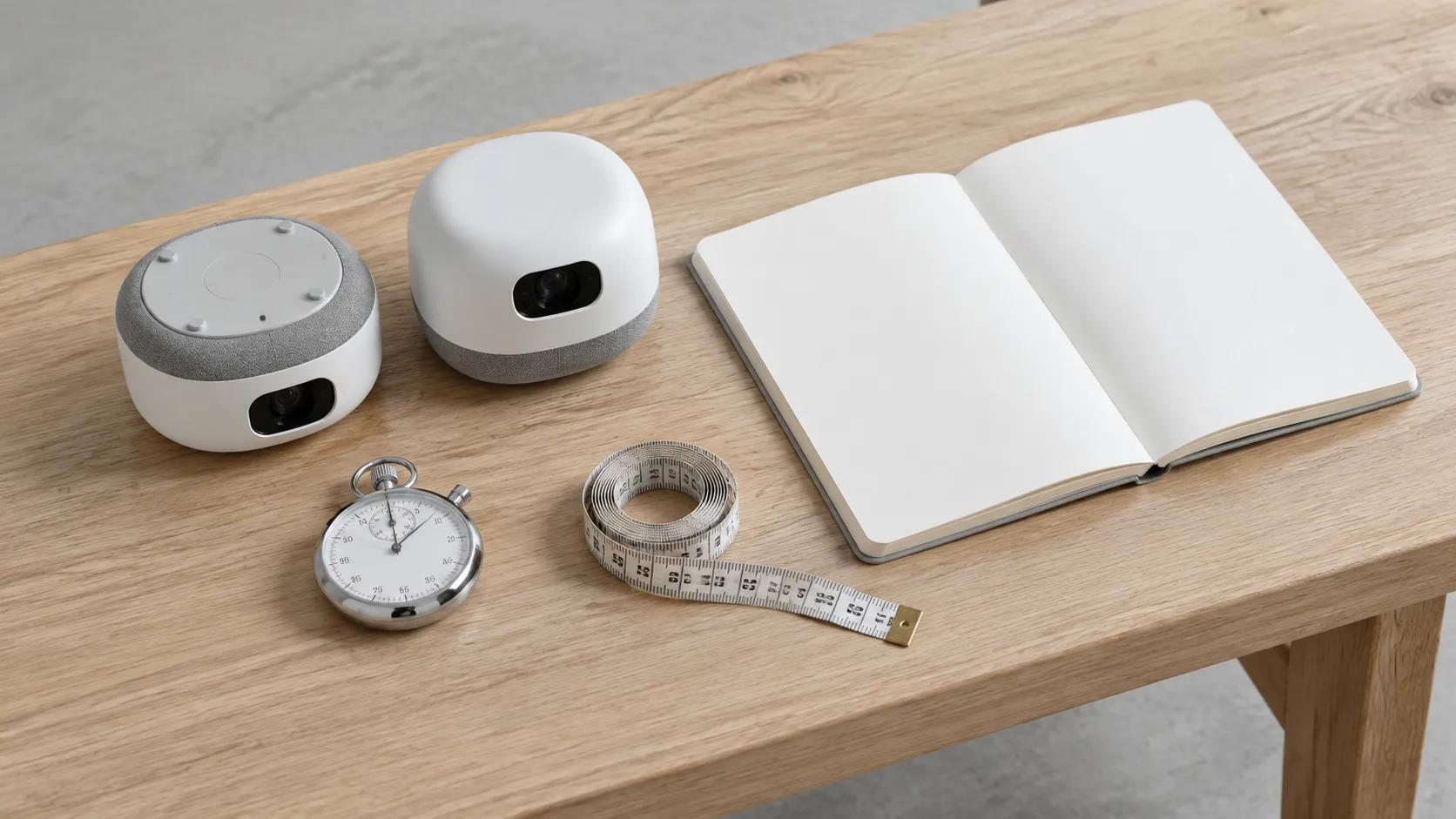
Six checks, none needing more than a dark room, a phone and a screwdriver. Run them before the specification sheet: the sheet describes the intent, the sample describes the factory.
Run the lamp mode all night
Eight hours unattended in a closed room. Check the warmth by hand, and whether it held the step you set.
Read the labelling first
If the source is a laser, class and output power belong on the product. No marking, unfinished sample.
Open the handset one-handed
A battery door that yields to a thumbnail fails the compartment rule. Two movements or a tool, or it goes back.
Use the worst port you own
The back of a television, not a fast charger. Compare brightness, and watch for flicker at the lowest step.
Switch modes fifty times
The mode button is the control customers use most and specify least. Listen for the click changing character.
Write the age statement first
Decide who the product is for, then brief the images to match. Classification is read off your marketing.
One habit carries the rest. Ask the factory which of these it has already measured, and treat a straight answer as worth more than a confident one. A supplier who says the enclosure temperature has never been logged overnight has told you something useful. So has one who quotes a figure with no test condition.
Have the two-mode unit built to your specification
We build star and galaxy projectors in our own factory in Foshan, 4,000 square metres with 40 people across two production lines, so the lowest dim step, the auto-off behaviour, the handset compartment and the carton marking are specification lines rather than whatever the mould already does. Send the markets you sell into, the control tier and the age statement, and we will quote the build.
Watch it work
The two modes, the power path and the lamp setting that runs all night, in 30 seconds:
FAQ
Is a galaxy projector night lamp the same product as a galaxy projector night light?
On almost every listing, yes. One carton, two names, and the split is a search habit rather than a product difference: shoppers furnishing a child’s room type lamp, shoppers decorating a ceiling type light. It stops being harmless on the specification sheet, where lamp can also mean a projector with no separate dim circuit. Ask the factory to confirm the steady glow is its own mode.
Can the night light mode and the star projection run at the same time?
On some boards yes, on most no, and it changes what the product is. A unit that holds a low glow under a slow star field covers a parent’s whole evening. One that treats the two as exclusive states forces a choice at bedtime, fine if the listing says so and a defect if it does not. The cost is thermal, so leave the combined mode running overnight during sample testing.
How many projection films should a galaxy projector night light ship with?
Ask instead what the films are for. Disc sets sell the listing photograph, and beyond four or five slides the extras are rarely swapped after the first week. The count earns its place in gift ranges, where a slide wallet makes the carton feel like a set. The practical question is where the discs live when they are out of the unit.
Should the carton include a wall adapter or just a USB cable?
Shipping bare cable is cheaper and moves a compliance question onto the household, which is not the same as removing it. Whatever brick the customer finds in a drawer becomes part of the product for support purposes, and the weak ones produce the dim, flickering unit that comes back as faulty. Most ranges settle it by market: adapter where the retailer expects a complete gift, cable only where it sells as an accessory.
What should a listing title say so buyers do not expect a video projector?
Put the word light or lamp before the word projector, and name the surface in the first line. Shoppers arriving from a video-projector search read resolution into the word projector, then rate one star when a ceiling of stars arrives. Titles that hold up name the effect and the room in the same breath.
Sources
Every external figure above was checked on 2026-09-12: laser class marking and consumer laser advice from the FDA, the button cell compartment and warning rules plus the children’s product definition from the CPSC, the recall figures from the CPSC recall notice, the toy directive scope and exclusion list from the consolidated EU text, the melatonin study from Physiological Reports, and the USB power figures from a USB standards summary.
- U.S. Food and Drug Administration, Laser Products and Instruments (labelling for Classes II to IV must include a warning symbol stating the class and the output power of the product), retrieved 2026-09-12.
- U.S. Food and Drug Administration, Laser Toys: How to Keep Kids Safe (do not buy or use any laser that emits more than 5mW power, or that does not have the power printed on the labelling; toy lasers recommended to stay within Class 1 limits), retrieved 2026-09-12.
- U.S. Consumer Product Safety Commission, Button Cell and Coin Battery FAQs (compartments must require a tool or at least two independent and simultaneous hand movements to open; ANSI/UL 4200A-2023 incorporated by reference; warnings required on packaging, on the product where practicable, and in instructions and manuals), retrieved 2026-09-12.
- U.S. Consumer Product Safety Commission, Button Cell and Coin Battery business guidance (packaging requirements effective 12 February 2023, enforcement discretion for products containing such batteries to 19 March 2024, battery packaging labelling from 21 September 2024), retrieved 2026-09-12.
- U.S. Consumer Product Safety Commission, Five Below Recalls Room2Room LED Iridescent Bear Lights Due to Fire and Burn Hazards (about 29,000 units sold at about $12; the power switch on the USB cord can overheat and melt; 28 reports of overheating including six burns to fingers and two reports of property damage; recall dated 3 April 2025), retrieved 2026-09-12.
- U.S. Consumer Product Safety Commission, Children’s Products (a children’s product is designed or intended primarily for children 12 years of age or younger, assessed on four factors; such products are required to undergo third-party testing and to have a written Children’s Product Certificate), retrieved 2026-09-12.
- EUR-Lex, Directive 2009/48/EC on the safety of toys, consolidated text (scope covers products designed or intended for use in play by children under 14 years of age; Annex I, item 17 lists child-appealing luminaires among the products not considered toys), retrieved 2026-09-12.
- Physiological Reports, Akacem LD, Wright KP Jr, LeBourgeois MK, Sensitivity of the circadian system to evening bright light in preschool-age children, 2018;6(5):e13617 (ten children aged three to five, about 1000 lux against a dim baseline below 15 lux, melatonin suppression of 87.6 ± 10.0%, still suppressed fifty minutes after the stimulus, seven of ten not recovered to half of dim-light levels), retrieved 2026-09-12.
- Cambrionix, Understanding USB Power Standards (maximum power table: high-power device 500 mA at 5 V for 2.5 W, USB 3.x single-lane 900 mA for 4.5 W, Battery Charging 1.2 at 1.5–2.4 A for 7.5–12 W, Type-C current 1.5 A for 7.5 W and 3 A for 15 W), retrieved 2026-09-12.
