




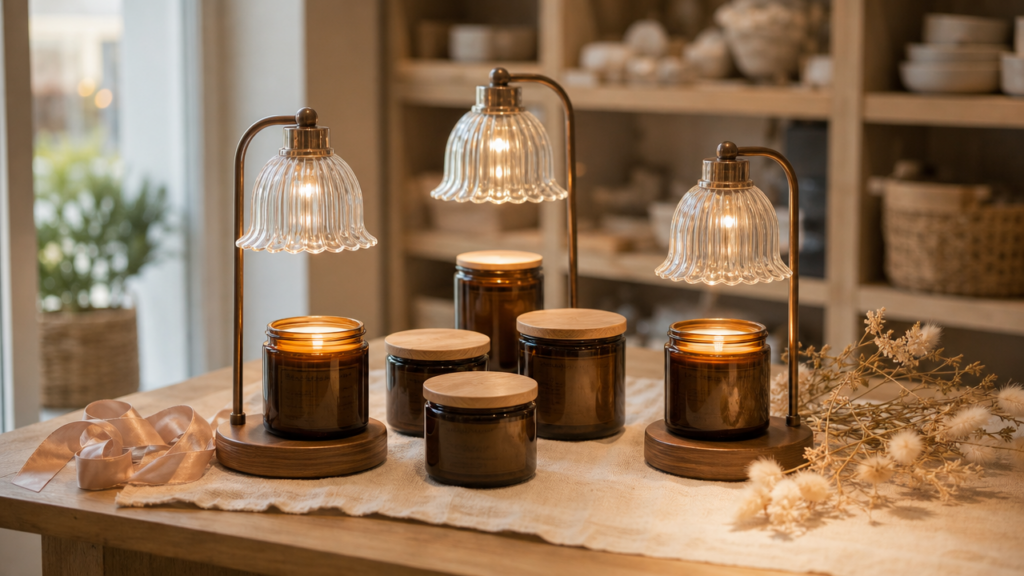
Valentines candles are the jar candles, warmer lamps and refill packs a gift or home fragrance shop puts on a front table in the first week of January — and almost none of them are bought in January. That table is the visible end of a Q1 sourcing decision taken months earlier. It is written in September, for the buyer who still has the ordering window open and has to plan around a factory shutdown that in 2027 sits on top of Valentine’s Day.
One fact reshapes the order, so settle it first. Valentine’s money does not all go to couples. In its 2026 survey the National Retail Federation found 58 percent of celebrants buying for a family member, 33 percent for a friend, 27 percent for a child’s classmate or teacher and 21 percent for a co-worker (NRF). A table dressed only for romance is dressed for part of the traffic.
Key takeaways
Valentines candles are a Q1 order placed against a February shelf. Build it from neutral stock that still sells in March, anchor the gift box on a warmer lamp rather than a candle, and land the delivery before the Lunar New Year shutdown closes the reorder door.
- US Valentine’s spending is forecast at a record $29.1 billion for 2026, on an average budget of $199.78 among the 55 percent who celebrate (NRF).
- Romance is the largest line, not the only one: $14.5 billion goes to significant others but $4.5 billion to family, $2.4 billion to friends and $2.2 billion to classmates and teachers (NRF).
- Lunar New Year 2027 falls on Saturday, February 6, with the shutdown put at January 30 to February 14 (SEKO Logistics). A February reorder is not a February delivery.
- We do not make a Valentine’s range, and you probably should not buy one. Neutral shapes plus packaging make the season and carry the stock into March.
- Decide the markdown before the container sails. Retailers expect 17 percent of holiday sales back as returns (NRF and Happy Returns).
What Valentines Candles Have to Do on a Gift Shelf
The category has to serve four different shoppers standing in the same three feet of aisle, and only one of them is buying for a partner.
Sketch them in order of ticket size. There is the token for a colleague or a teacher, which has to cost less than flowers and arrive already wrapped. There is the friend gift, which has to look considered without implying anything. There is the self-purchase, quietly one of the better lines of the month in a fragrance shop. And there is the partner gift, the only one that carries a boxed set at full price. A shelf with depth in the last of those alone runs out of the first three by mid-February and then discounts the fourth.
The published spending split supports that ordering better than most seasonal folklore does. Of the record $29.1 billion the NRF forecast for 2026, $14.5 billion is earmarked for significant others, $4.5 billion for family members, $2.4 billion for friends, $2.2 billion for children’s classmates and teachers, $2.1 billion for pets and $1.7 billion for co-workers (NRF). Add the four non-romantic lines together and there is roughly $11 billion of gifting that a heart-printed box serves poorly and a good candle serves almost perfectly.
Source: National Retail Federation, Valentine’s Day Spending Expected to Reach New Records, January 27, 2026 (retrieved 2026-09-05)
Two rules come out of that chart. Put the depth in the middle of the price ladder rather than the top, because the middle serves three shoppers and the top serves one. And treat the season as wrapping and placement laid over stock you already believe in.
Backdating a Q1 Order Around Lunar New Year
Every Valentine’s planning article counts forward from January 1. The calendar that actually governs the order counts backwards from a factory holiday in China.
Lunar New Year 2027 falls on Saturday, February 6. A supply chain planning guide from SEKO Logistics maps the effect around that date: a pre-holiday slowdown from roughly January 9 to 16 as capacity fills and workers begin leaving, a near-complete shutdown from January 30 to February 14, resumption between February 20 and March 6 at about 35 percent of the workforce, and full recovery through late March (SEKO Logistics). The same guide notes that ocean rates climb from mid-December as shippers rush cargo ahead of the break, and that carriers answer with blank sailings.
Line those dates up against the selling season and the problem is plain. Valentine’s Day 2027 is the Sunday eight days after Lunar New Year. For the whole week your shelf is doing its work, the factory that could refill it is closed, and so is most of the supplier base around it. No vendor can promise their way around a national holiday that empties industrial towns, ours included.
Fix the assortment while the factory year is open
Choose the SKUs, the pack format and the box in autumn, while samples can still change without competing for pre-holiday capacity.
Commit before the slowdown, not during it
SEKO puts the 2027 slowdown at around January 9 to 16. Capacity is allocated ahead of that window, not inside it.
Book the sailing as deliberately as the cargo
Rates climb from mid-December and carriers blank sailings. A confirmed booking beats a rate you cannot use.
Take delivery into the warehouse in January
Three-quarters of celebrants start planning in the first week of February or earlier (NRF). Build the table first.
Assume there is no reorder
Anything asked for during the shutdown becomes a March conversation, so buy the depth once.
Write the exit before the container sails
Decide now which SKUs go to markdown on February 15 and which lose a sleeve and stay on the shelf.

A Valentine Wax Warmer Is the Anchor of the Gift Box
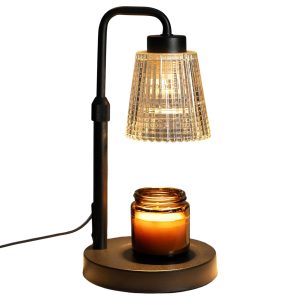
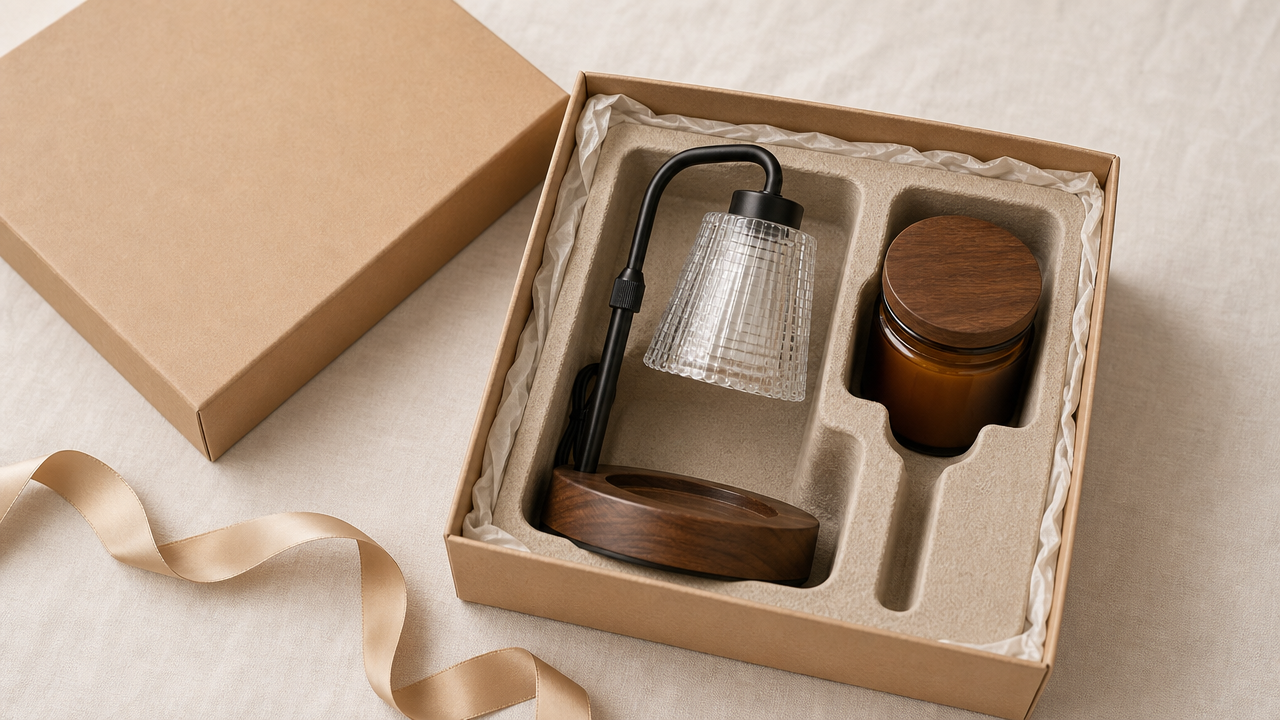
A valentine wax warmer is not a different product from the one you sold in October. It is the same electric lamp, in a different box, on a different table, and it is the right thing to build the gift set around.
Buying the warmer, the candle and the box from one source keeps that gift box simple to reorder: our wholesale gifts for gift shops are built on our own Foshan floor and priced together on one quote list.
The reason is durability rather than sentiment. Candles get consumed, so they have to be given in a quantity that feels generous, which pushes the ticket up or the margin down. Warmer lamps are fixtures the recipient keeps, so one unit reads as a real gift at a price a sibling will pay. It also opens an annuity. Whoever receives the lamp is a refill customer for as long as they use it. Hence shipping a candle warmer lamp gift box set as one boxed unit rather than loose parts.
Structure the offer as a short ladder rather than a single hero. Most shops over-invest in the top rung and then have nothing at twenty dollars.
| Rung | What is in it | Who buys it | What to watch |
|---|---|---|---|
| Sleeved single candle | One jar candle, printed belly band | Colleague, teacher, thank-you | Only the band is seasonal, so print it late |
| Warmer, retail box | One lamp in its own carton | Friend, sibling, self-purchase | Artwork neutral enough to sell in March |
| Warmer plus candle set | Lamp, jar candle, moulded insert | Partner gift, the pedestal item | Insert and box size drive the carton count |
| Refill multipack | Two or three jar candles or melt packs | Basket add-on at the till | Fragrance mix decides sell-through |
| Display bundle | Lamp, candle, care tool on a tray | Window and table display | The tray is a fixture, not stock |
One practical note. Boxed sets and loose units do not pack alike, and the difference lands on the freight invoice rather than the unit price, so settle the pack format before the artwork; the arithmetic is in our guide to candle warmers in bulk, cartons and freight. The display tray and a wick trimmer kit belong on a different budget line, since they go back in the box on February 15.
Valentine Wax Melts Are the Basket Item, Not the Hero
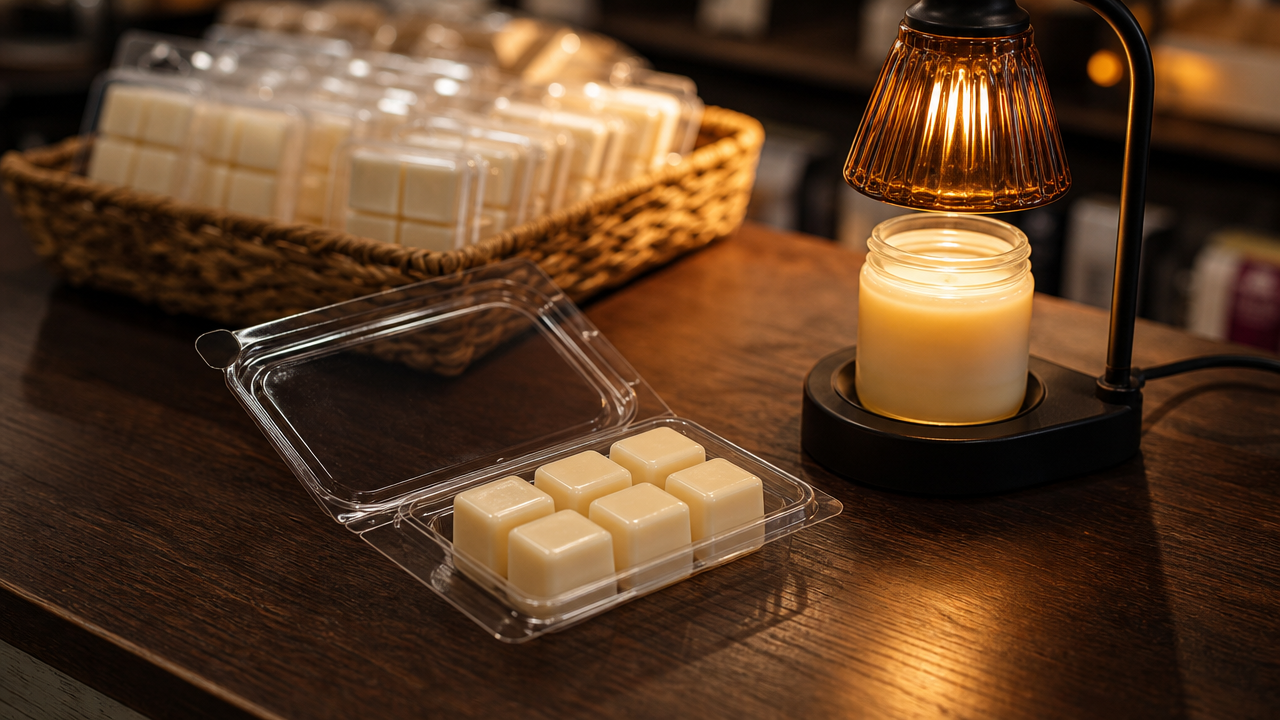
Valentine wax melts do a specific job on this shelf, and it is not the job of the pedestal item. They are what somebody adds at the till because the price is low enough not to think about.
The physical format explains the merchandising. The break-apart clamshell that melt makers standardise on is a six-cavity tray, and it is small: one supplier lists cavities of 0.97 by 1.0 by 0.6 inches in a pack that lies flat at 7.88 by 2.88 inches (Fillmore Container). Total fill sits in a narrow band, roughly 2.34 ounces (North Mountain Supply) to about 3 fluid ounces (Fillmore Container), with pour temperature capped around 140 to 160°F so the plastic does not deform. Those are supplier norms, not figures we publish: we do not list a melt SKU, and the packs on our candle and warmer accessories line are poured to a brief rather than pulled from stock.
What follows for the shelf is simple. Packs that thin cannot hold a display on their own, so they belong in a bowl at the counter or clipped beside the lamps, never on the pedestal. It travels well inside a mixed carton too, which makes it the cheapest way to add units to an order already shipping. If the format has to be explained to staff or a customer, two other pages do it: what a melt actually is sits in our candle and warmer pairing guide, and the device-side difference in wax melt warmer versus candle warmer lamp.
Building the Season Out of Neutral Stock
Here is the part most seasonal guides skip. We do not make a Valentine’s range, and for a window this short you are usually better off that way.
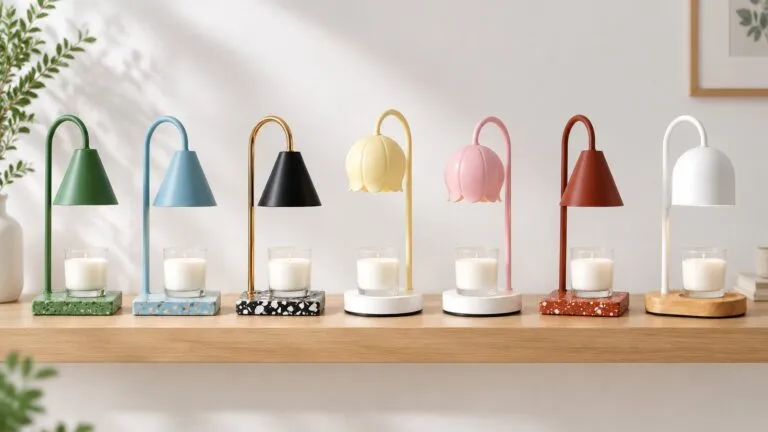
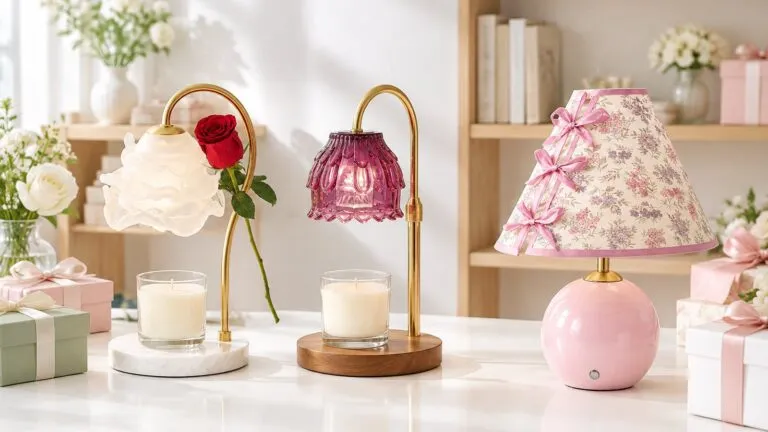
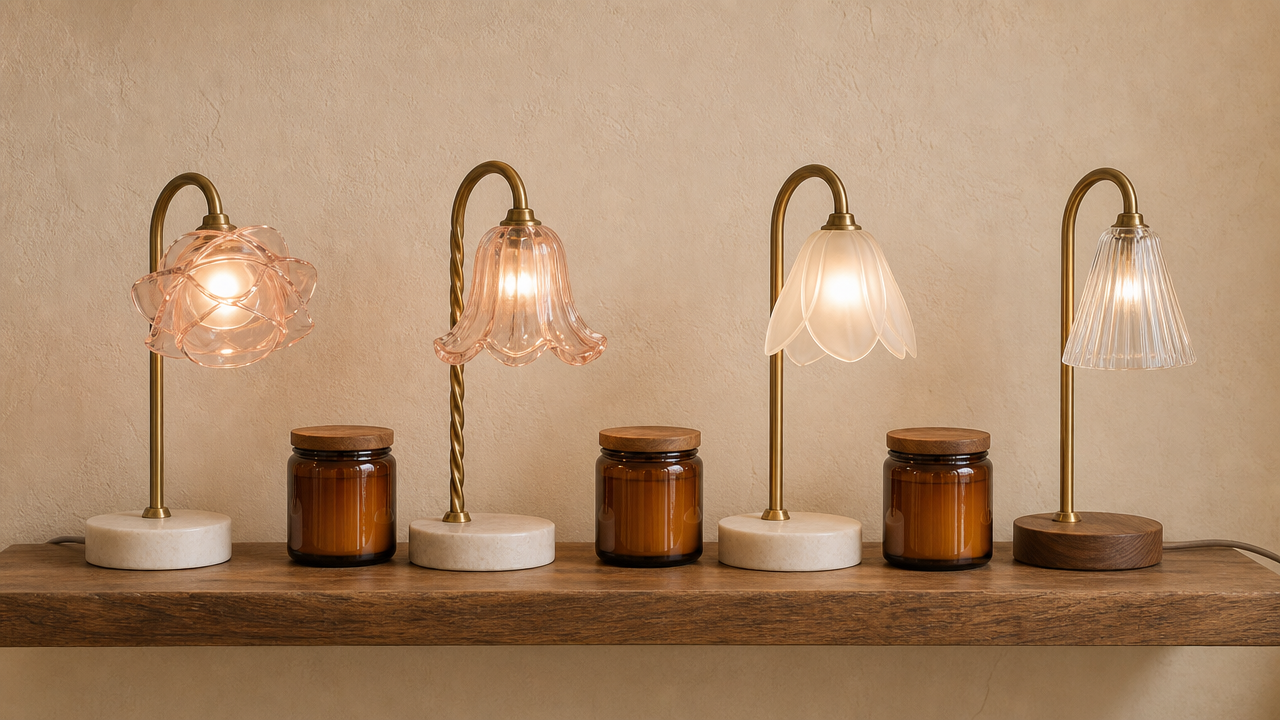
Being specific about the limit: there is no heart-shaped shade, no red-tinted wax and no rose fragrance verified on our line, and nothing here offers one. What exists is a catalogue of neutral shapes that read as the season once they are grouped and lit. The rose blossom shade is a flower before it is a Valentine, which is why it still sells at Mother’s Day. The bell flower lamp with a twisted stem in blush pink brings colour without a date on it, and camellia and frosted petal shades do the same in white and clear glass. Pair them with the amber jars from our scented candle line and there is nothing to dismantle on February 15.
Fragrance is where the season is really made, and buyers know it. Three-quarters of candle buyers rate fragrance as extremely or very important to what they choose, and more than 10,000 scents are on offer in the US market (National Candle Association). Two decisions follow. Do not launch an unfamiliar scent into a five-week window, because there is no time to learn whether it works; pull forward two proven sellers, usually one warm and one floral. Then keep the list short enough to smell in the time a shopper will stand there.
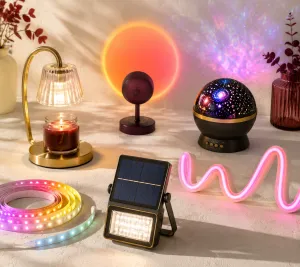
The theme belongs in the display layer, the only part you are not stuck with. Colour comes from props, ribbon and a printed band rather than the product; the mechanics are in our piece on sensory retail display. For a lit focal point above the table, a fixture beats stock: an LED neon heart sign goes back in its box on February 15 and comes out next year, which no printed carton does.
Cartons, Gift Boxes and the January Delivery
The packaging decision usually gets framed as a branding question. On a Q1 order it is mostly a freight and flexibility question.
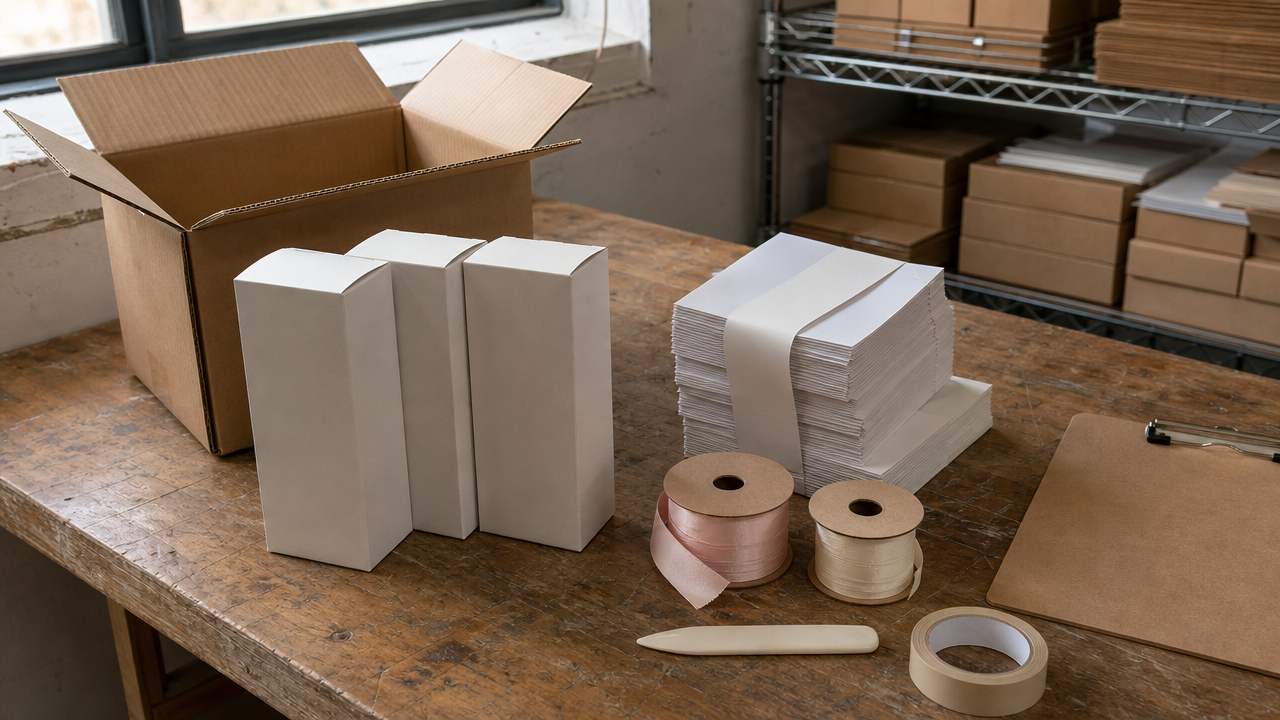
Printed gift boxes raise the perceived value of the top rung, and also fix it. Printed hearts cannot be sold on in March, and unsold printed cartons are dead inventory in a way unsold lamps are not. Most experienced buyers land on a neutral retail box carrying the brand, with the occasion added by a sleeve or a ribbon applied in your own stockroom. That splits the risk properly: the expensive component stays generic and the cheap one carries the date.
Two things need settling before artwork goes to print. First, whether the season ships as a mixed carton or as single-SKU cartons, because a mixed carton is easier to receive, harder to reorder against and slower to pick. Second, who owns the moulded insert, since tooling outlives a season. The cube and duty arithmetic behind both sits in our carton and freight guide, and the wider gift programme on the giftable lighting page.
What Happens to the Shelf After February 14
The last part of the buy is the part nobody enjoys planning, which is why it usually gets planned badly: what the shelf does on the morning of February 15.
Start with returns, because gift seasons generate them. Retailers estimated that 15.8 percent of annual sales would come back in 2025, worth $849.9 billion, with 17 percent of holiday sales and 19.3 percent of online sales returned, and around 9 percent of returns judged fraudulent (NRF and Happy Returns). The window does not close on the 14th; it closes when the returns settle, and a boxed set that comes back with a crushed insert and no sleeve is not resaleable at full price. Two habits beat any policy wording: check the box at the till, and hold spare inserts and sleeves so a returned set can be rebuilt rather than discounted.
Then run the carry-over test on every line. Anything with a date, a heart or a colourway you would not stock in April goes to markdown while there is still foot traffic, not in May. Everything else loses its sleeve and rejoins the permanent assortment, which is where the neutral-stock argument pays. Around 35 percent of US candle sales fall in the Christmas season, leaving roughly 65 percent across the rest of the year on a base of about $3.14 billion in annual US retail sales (National Candle Association). Valentine’s is a spike on a shelf that sells all year, and buying it as a season of its own is the usual way to lose money on it.
The Questions to Settle Before the Order Goes In
Most of the risk in a Q1 seasonal buy comes out of five questions asked in September, none of which are about price.
Ask them in writing and keep the answers, because the useful ones are dates and names rather than adjectives. Suppliers who answer the calendar question with a date have thought about their own holiday. One who answers with reassurance has not. Better to learn that in September.
| Question | Why it decides the order | A usable answer |
|---|---|---|
| Which SKUs are in the current running range? | A catalogue photograph is not an item on the line this quarter | A named list, not a category |
| When does the line stop taking new work before the holiday? | Decides whether you are in this shipment or the next | A calendar date for your own plan |
| Is the retail box artwork seasonal or neutral? | Printed seasonal cartons cannot be sold on in March | Neutral box plus a separate sleeve |
| Which fragrances can actually be poured for this order? | A published scent list is not the same as stock | A short list checked against the pour schedule |
| Which parts of this order can repeat in March? | Separates the seasonal lines from the permanent ones | The neutral SKUs, listed explicitly |
If the answer to that last question covers most of the order, the buy is sound. If it covers almost none, you have bought a season rather than a range, and February 15 will say so. Our guide to best-selling gift shop items covers what keeps reordering once the occasion is over.
Plan a Q1 shelf with the people who pour it
We make candle warmer lamps, jar candles and warmer accessories in our own factory in Foshan — 4,000 square meters, 40 people, two production lines — so the lamp, the candle and the box are quoted as one programme instead of three. Send the shelf you want to build, the box format and the month you have to hit, and we will quote against that rather than a catalogue page.
Watch it work
The September order, the neutral carton and the February 15 reset, in 37 seconds:
FAQ
What is a valentine’s day wax warmer, and is it a different product from a regular one?
It is the same electric lamp. Nothing inside changes for the season; the difference is the carton it arrives in and the table it sits on. That matters commercially, because a warmer given in February still works in March and never becomes markdown stock the way a printed box does. Shoppers searching for valentine wax warmers are naming an occasion, not a specification, so order the lamp against the year-round plan and treat only the packaging as seasonal spend.
Do valentine’s day wax melts need a different fragrance from the rest of the year?
No, and choosing one is usually a mistake. A five-week window leaves no time to find out whether a new scent sells, and a fragrance that fails leaves stock nobody reorders. Bring forward two existing best sellers, keep the set small enough to smell at the counter, and let the sleeve say Valentine rather than the wax. If a seasonal signal is wanted, move the pack on the shelf before changing the recipe.
Can we get a valentines wax warmer in a heart shape or a red finish?
Not from stock. There is no heart-shaped shade and no red-tinted glass on our range, and we would rather say so than photograph something we cannot ship. A bespoke shade is a tooling conversation quoted from drawings, and the Q1 calendar is the real constraint, not the design work. Most buyers who ask take a floral shade or the blush colourway, because those keep selling in April.
Is Valentine’s Day a large enough window for a gift shop to buy against?
It is real money in a narrow channel, so size the buy honestly. Of the $29.1 billion forecast for 2026, the two largest categories are jewelry at $7 billion and an evening out at $6.3 billion, neither of which a fragrance shop competes for, and only 21 percent of celebrants planned to shop at a specialty store against 38 percent online (NRF). Buy for the traffic you get, hold the seasonal part down to packaging, and the downside is a slow fortnight, not a write-off.
Sources
Every external figure above was checked on 2026-09-05: spending from the National Retail Federation, category size from the National Candle Association, the holiday calendar from a logistics guide, melt packaging from two suppliers.
- National Retail Federation, Valentine’s Day Spending Expected to Reach New Records, January 27, 2026 ($29.1 billion total, $199.78 average budget, 55% celebrating, the recipient split charted above, channel shares), retrieved 2026-09-05.
- National Retail Federation, Love, actually: 3 ways consumers are embracing Valentine’s Day this year (75% planning in the first week of February or earlier), retrieved 2026-09-05.
- National Candle Association, Facts & Figures (about $3.14 billion in annual US retail candle sales; about 35% of sales in the Christmas season; three-quarters rating fragrance extremely or very important; more than 10,000 scents), retrieved 2026-09-05.
- National Retail Federation and Happy Returns, Consumers Expected to Return Nearly $850 Billion in Merchandise in 2025, October 15, 2025 (15.8% and $849.9 billion; 17% of holiday sales; 19.3% online; 9% fraudulent), retrieved 2026-09-05.
- SEKO Logistics, Lunar New Year: a supply chain planning guide for Asia sourcing (2027 date of Saturday February 6; slowdown January 9 to 16; shutdown January 30 to February 14; resumption February 20 to March 6 at roughly 35% of workforce; blank sailings), retrieved 2026-09-05.
- Fillmore Container, 6 Cavity Wax Melt Clamshell Mold (cavities of 0.97 by 1.0 by 0.6 inches, lay-flat 7.88 by 2.88 inches, 3 fluid ounce fill), retrieved 2026-09-05.
- North Mountain Supply, Two-Piece Wax Melt 2.34 Ounce 6-Cavity Clamshells (2.34 ounce total fill; 140 to 160°F pour range), retrieved 2026-09-05.
