

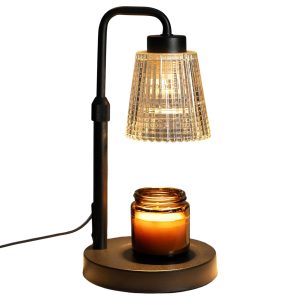
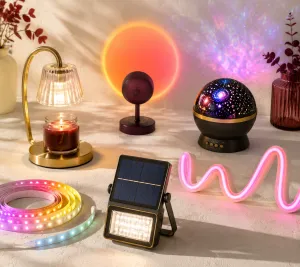

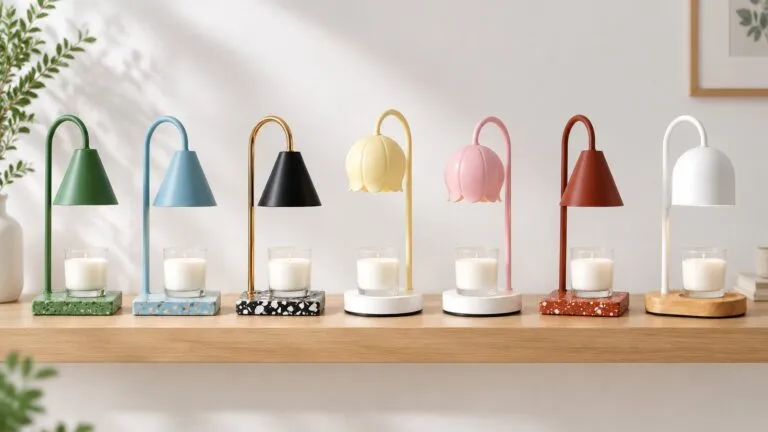
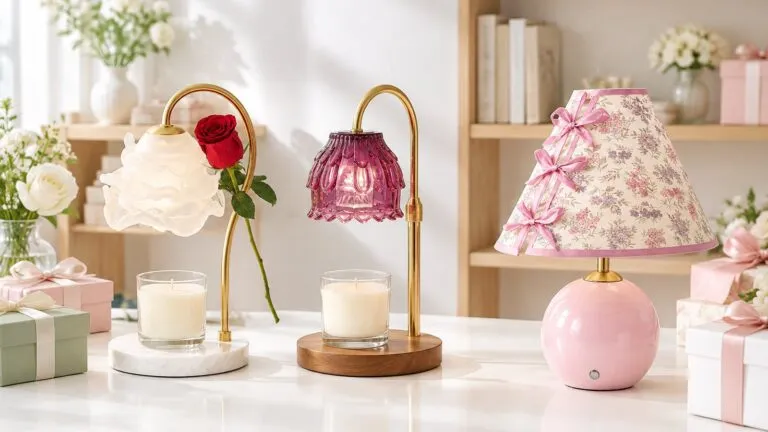
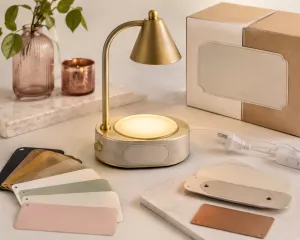

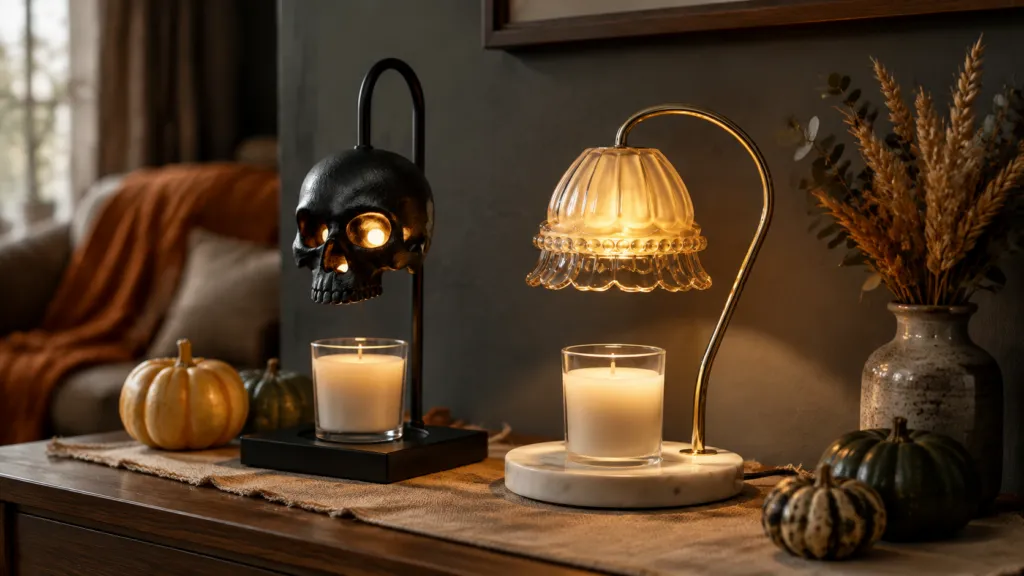
A halloween candle warmer is a flameless lamp — a skull, a ribbed pumpkin, a horned figure — that melts a jar candle with a heated bulb instead of a lit wick. It decorates and it works, which is the whole reason the format keeps taking October shelf space from resin ornaments that only sit there.
This page is written for the buyer topping up in late August, not the one who signed a container order in March. Bulk seasonal purchase orders closed months ago. What is still live is replenishment against hard marketplace receiving deadlines, and the assortment decision for 2027. If you need the format explained first, our candle warmer lamp category primer covers it. Everything below assumes you already sell them.
Key takeaways
Bulk Halloween buying is closed for this season. What is left is late-season replenishment inside marketplace receiving windows, plus using this October’s sell-through to build the 2027 range.
- Amazon’s 2026 Black Friday arrive-by dates are October 14 for AWD, October 21 for FBA with minimal splits and October 28 with optimized splits — and arrival is not receipt.
- Decorations took $4.2 billion of a record $13.1 billion U.S. Halloween season, with 78% of shoppers buying them (NRF).
- Nearly half of Halloween shoppers, 49%, start in September or earlier. An August restock is not early; it is on time.
- Eight seasonal styles sit in our range: four skulls, three pumpkins, one gothic figure. The pumpkins carry past October 31; the skulls do not.
- The cheapest 2027 research you will run is the sell-through log you keep between now and November 1.
Where the Halloween Season Actually Stands in Late August
The buying calendar and the selling calendar are two different animals, and by the last week of August only one of them is still open.
The bulk cycle runs early because the physical chain is long. Ocean freight from South China, deconsolidation, then inbound to a fulfillment center is a multi-week sequence even when nothing goes wrong, and seasonal goods have no tolerance for the weeks when something does. Factory orders for October are placed in spring and shut before summer ends.
What is open is narrower and, for most sellers, more valuable: replenishment. Express top-ups on the two or three styles actually moving, parcel restocks into a marketplace, and pulling forward whatever already sits in a domestic third-party warehouse. None of that is limited by your patience. It is limited by the platforms’ receiving deadlines, which are published, dated and unforgiving.
Amazon moved its 2026 inbound cutoffs forward. For Prime Big Deal Days the arrive-by dates are September 2 for AWD, September 9 for FBA using minimal shipment splits and September 16 using Amazon-optimized splits. For Black Friday week and Cyber Monday they are October 14, October 21 and October 28, with peak fulfillment fees running October 15, 2026 through January 14, 2027 (CoreTrex, on Amazon’s 2026 holiday calendar). A SKU that misses the September gate can still make the October one, but it sells the back half of the season at peak-fee rates.
| Inbound route | Prime Big Deal Days | Black Friday & Cyber Monday | What it means for Halloween stock |
|---|---|---|---|
| AWD | September 2 | October 14 | Earliest gate; only useful if goods are already stateside |
| FBA, minimal shipment splits | September 9 | October 21 | Fewer destinations, simpler prep, tighter date |
| FBA, Amazon-optimized splits | September 16 | October 28 | Latest gate, but October lands after most seasonal demand |
| Peak fulfillment fees | October 15, 2026 – January 14, 2027 | Received after mid-October means peak rates | |
Read every one of those as a date by which units are received and checked in, not one by which a truck pulls up. In peak season a shipment can arrive at a fulfillment center on the deadline and still sit in a dock queue, and the sensible buffer between arrival and received status is three to seven days (PrepVia). Subtract that before you build your own calendar. And remember what you are shipping: a warmer is a boxed, breakable, corded appliance that will not survive a hurried repack the way a costume accessory will.

What the Wax Warmer Halloween Search Spike Tells You
Seasonal demand does not switch on in October. It ramps from August, peaks around the third week of the month, and collapses inside forty-eight hours of the holiday itself.
Start with the size of the pot. The National Retail Federation put total U.S. Halloween spending at a record $13.1 billion, up 12.9% from $11.6 billion the year before, with per-person spending at an all-time high of $114.45 (NRF, survey of 8,045 consumers). The split matters more than the headline: decorations reached $4.2 billion, with 78% of shoppers buying them, up from 75%. That is within a rounding error of costumes and comfortably ahead of candy.
It matters because a warmer is a decoration that keeps working after the party. Costume money is spent once and thrown away; decoration money buys something that comes out of a box again next October. A seasonal warmer sits in the second bucket, which is why it carries a higher unit price than the shape alone would suggest.
Source: National Retail Federation, “Halloween Spending to Reach Record $13.1 Billion” (retrieved 2026-08-28)
Now the timing. Nearly half of Halloween shoppers, 49%, began buying in September or earlier, up from 47% the year before (NRF). The July and August end of that behavior has picked up the name Summerween, and it is no novelty: 47% of one traffic study’s respondents shop before October against 32% a decade ago, with the 25 to 34 bracket at 56% (RetailNext). An August listing refresh is not premature. It is late for the earliest third of your customers.
At the other end, foot-traffic analysis puts the national peak in the third week of October, roughly the 17th to the 20th, with gift and novelty stores showing a second, sharper spike on October 30 (PassBy). Two peaks, two entirely different shoppers: a planner decorating for the month, and someone who needs something tonight. A corded lamp in a box sells to the first and almost never to the second. So meaningful sell-through runs about seven weeks, from the first week of September to the third week of October, and inventory landing outside that window is next year’s problem.
The Eight Halloween Warmers on Our Own Shelf
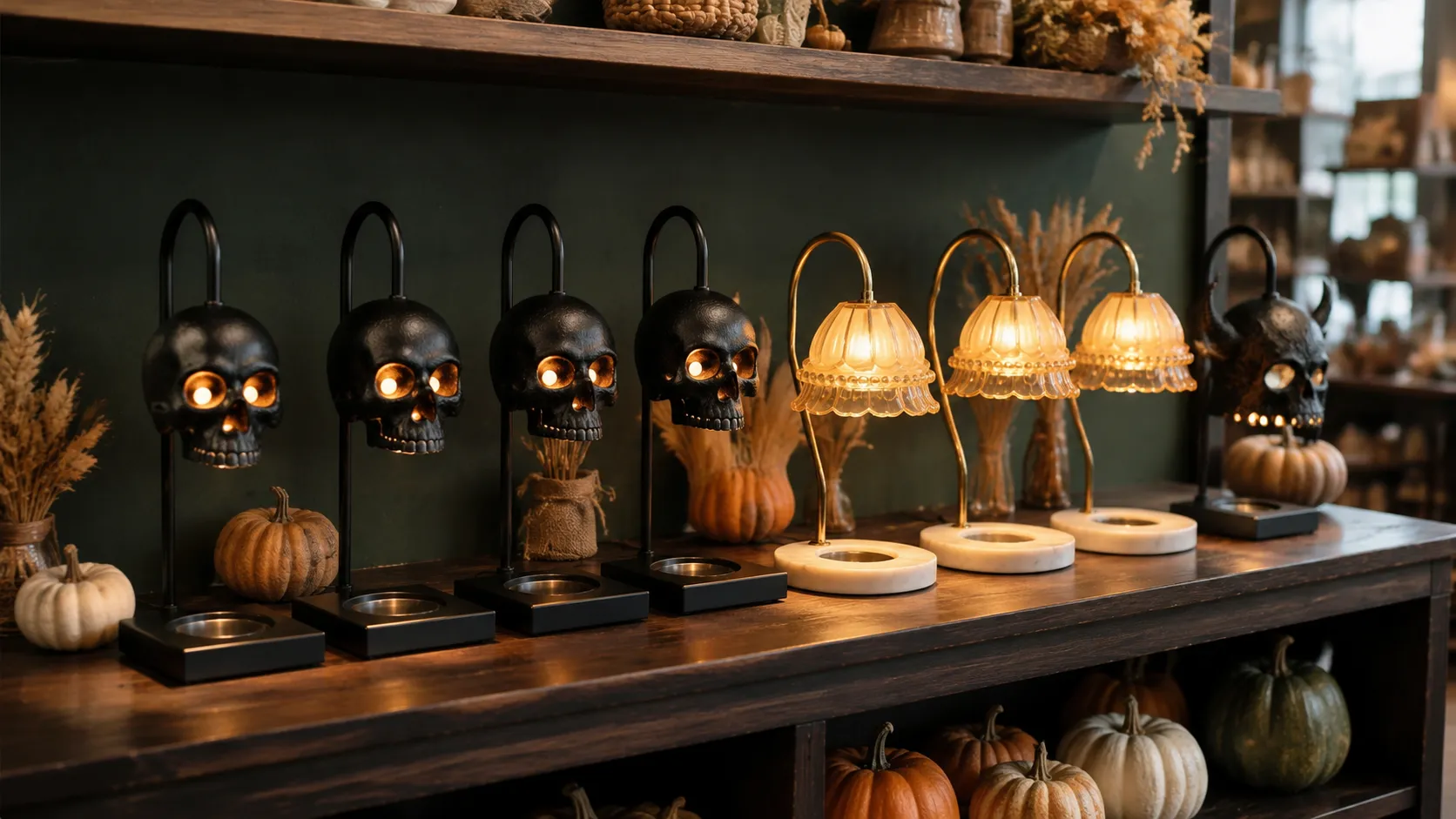
Eight styles carry the season in our range, and they fall into three families that behave very differently on a shelf.
The skulls are the widest family and the most literal. The skull candle warmer lamp in powder-coated iron is the plain-spoken version, shade and base in one finish, and the easiest to photograph against a dark background. The bar-frame skull edition suspends the bulb from a horizontal arm rather than a curve, which reads more like furniture and less like a novelty. The crowned skull moulded in resin on a solid wood base holds finer surface detail than metal will. And the color-changing skull cycles RGB for ambient glow, which is the one that travels on short-form video.
Pumpkins are the softer half of the season and sell to a wider customer, because ribbed pumpkin glass reads as autumn as readily as Halloween. The pumpkin-flower glass warmer on a round wood base runs to seven colourways, unusual depth for a seasonal shape. The pumpkin-lantern on a slim metal base comes in four, and the marble-base version in four including a gold peony shade that leaves the season behind entirely. Then the outlier: the gothic horned demon in all metal, which nobody buys by accident. It exists to anchor a themed set.
| Style | Material family | Reads as | Shelf role |
|---|---|---|---|
| Skull, iron shade and base | Powder-coated metal | Halloween, gothic year-round | The volume skull; safest first buy |
| Skull, horizontal bar frame | Iron | Gothic, design-led | Breaks up a page of curved-arm lamps |
| Crowned skull, resin | Resin on solid wood | Collectible, gift | Highest detail; carries gift-box presentation |
| Color-changing skull | Moulded body, RGB | Novelty, social video | Impulse price point; content piece |
| Pumpkin-flower glass | Ribbed coloured glass, wood base | Autumn first, Halloween second | Seven colourways; the assortment spine |
| Pumpkin lantern, metal base | Ribbed glass, metal | Autumn, harvest | Lower profile for tight shelves |
| Pumpkin lantern, marble base | Ribbed glass, marble | Autumn, home decor | Survives November 1; the carryover unit |
| Horned demon, all metal | Metal throughout | Halloween only | Range anchor and attention piece |
The group sits inside our candle warmer lamps category next to the non-seasonal builds, and that adjacency is deliberate: a buyer who arrives for a skull in September is one you can move to a fluted glass lamp in January.
What an Electric Halloween Wax Warmer Has to Get Right
An electric halloween wax warmer is judged on two things at once, and the seasonal half is the easy half.
The costume has to work at two metres, on a phone screen. The appliance has to work at arm’s length, every evening, for eight weeks, in a house temporarily full of paper decorations. Most seasonal warmers that fail do so on the second test, and the failure surfaces as a one-star review mid-season, when there is no time left to fix it.
The thermal job is undemanding. A warmer only has to hold the top layer of wax inside the band container waxes melt across — roughly 46–68 °C for paraffin and a wider 49–82 °C for soy (Hywax) — and a small halogen bulb aimed down at a jar does that easily. What separates a good seasonal build from a bad one is everything around the bulb: whether the shade sits square, whether the base has mass enough to stay put when a cord is tugged, whether the timer actually cuts power.
The flame question deserves a straight answer rather than a slogan. Nothing is lit, so there is no open flame and no combustion soot, and that is a real reduction in the specific risk Halloween decorating creates: paper, cotton webbing and polyester cobweb draped near a light source. U.S. fire authorities report an average of 20 home candle fires every day and advise keeping at least 12 inches between a candle and anything that can burn, naming flameless alternatives as the substitute (U.S. Fire Administration). A warmer takes the ignition source out of that picture. It does not stop being a heated appliance, and the full argument sits in our retailer’s safety explainer.
- Base mass and footprint. A tall figure on a light base is a returns problem. Weigh the sample, then tug the cord from three angles.
- Shade fixing. Resin and moulded shades should not rattle on the stem. Rattle becomes a review.
- Timer and automatic shut-off. Confirm durations on the spec sheet and cycle them on the sample, not in the listing copy.
- Bulb supply. The bulb is a wear part. Agree how replacements are supplied before the season, not during it.
- Head clearance. Stand your tallest jar under the shade; the geometry is in our guide to top down candle warmers.
- Finish and paperwork. Powder coat, plating and resin age differently in a hot car, and market-specific electrical documentation is the most common reason a seasonal shipment sits still.

A Late-Season Replenishment Sequence That Does Not Overshoot
The failure mode in late season is rarely running out. It is running out of the two styles that sell while sitting long on the six that do not.
Seasonal inventory punishes averages. Eight styles will not sell evenly, and by the second week of September the split is usually visible: one or two runaway styles, three or four steady, and a tail that will still be there in November. The decision is not “how much Halloween stock do I need” but “which two SKUs do I chase, and what do I deliberately let run out”. The sequence below is built around the marketplace deadlines rather than a target stock level, because the deadlines are the only fixed points on the board.
Rank by sell-through rate, not units left
Two weeks of velocity per style beats any pre-season forecast. Sort by rate.
Draw the line at the top two or three
Chase only styles selling above your season average. The rest are already at the right quantity.
Work backwards from the receiving date
Published arrive-by date, minus three to seven days for check-in, minus transit and prep. That is your order-by date.
Split the shipment across two gates
Half against the earlier date, half against the later. One lot risks the whole restock on one customs queue.
Reprice the tail before it becomes clearance
A slow style discounted October 10 recovers more than the same style on November 2.
Log every number as you go
Daily units, colourway split, return reasons, review complaints. This is the entire input to next year’s buy.
Two details belong with that. Air freight on a seasonal restock only pencils out if the unit is already proven; paying air rates to find out whether a style works is an expensive experiment. And a restock is only half the job on a marketplace — the listing has to be dressed for the season too, which our teardown of candle warmer listings covers.
For a smaller shop with no marketplace deadlines the same sequence holds with different dates: the ceiling is your own last realistic delivery, and chasing only proven styles matters more, not less, when order sizes are small enough to be swallowed by shipping.

Turning This Season Into the 2027 Range
The cheapest product research you will ever run costs nothing but the discipline of writing things down between now and November 1.
Seasonal categories are kind to anyone who keeps records, because the demand curve repeats. Three questions decide next year’s buy and all three are answerable from data you are generating right now: which styles sold, at what rate and price; which colourways sold within a style, because a seven-colourway pumpkin range never splits evenly and that split is the most useful number in the file; and what customers complained about, which is where specification changes come from.
The forward calendar then runs backwards from the same October peak. If sell-through ends in the third week of October, and inbound has to be received before that, and ocean transit and production sit in front of that, then range decisions and samples belong in the first quarter of the year. That is not an aggressive schedule; it is the one the freight imposes. Buyers who treat Halloween as a Q3 decision are structurally buying whatever is left rather than what they chose.
Two more things belong in the file. Packaging, because a seasonal warmer is often bought as a gift and gift presentation is decided at the carton stage, not at the shelf — the trade-offs sit in our notes on bulk cartons, packaging and freight. And branding: if this season proved the category for you, the 2027 question is whether the range should carry your own name, which our candle warmer sourcing guide and our primer on private label for a small business both take on. One caution on extrapolating: eight styles across seven weeks is a small sample, and a style that underperformed may have failed on photography or listing position rather than design.
What Happens to Seasonal Stock on November 1
Every seasonal buy needs an exit plan, and the honest ones are written in August rather than discovered in November.
Demand for anything explicitly Halloween falls off a cliff within about forty-eight hours of the holiday, and the October 30 spike gift and novelty retailers see does not repeat (PassBy). Whatever is on the shelf on November 1 is carried, discounted or stored, and each of those has a cost that should have been priced into the original order.
This is where the material split earns its keep. A skull and a horned demon are Halloween or nothing, so their exit is a markdown or a twelve-month storage bet, and storage is only rational if the style is proven and the unit is not fragile. Ribbed pumpkin glass is a different animal: on marble or wood it photographs as autumn home decor straight through Thanksgiving, and a warm amber colourway keeps selling into winter gifting with no seasonal framing at all. That is the argument for weighting an eight-style range toward glass, however well the figures perform in October.
For the carryover styles, November is a merchandising move rather than a discount. Rephotograph them out of the seasonal set, move them into your general home decor and gift categories, and let them ride demand you already sell into — the ground our notes on trending home decor products, gifts for candle lovers and best-selling gift shop items cover. Returns arrive in the first half of November and a used warmer comes back with wax in it, so hand our guide to removing candle wax to whoever processes them, and remember that pairing the lamps with jar candles changes off-season too, which our candle pairing guide covers.
Build next season’s range with the factory, not the middle
We make flame-free candle warmer lamps in our own factory in Foshan — 4,000 square meters and 40 people, running the seasonal skull, pumpkin and gothic builds on the same lines and through the same checks as our own retail brand, the one behind our top-selling position in Amazon’s candle-lamp category. Private label, your own colourways, or your drawings. Tell us the season you are planning for and we will work the calendar backwards with you.
Watch it work
Count cartons against the days still selling, in 37 seconds:
FAQ
What is a halloween candle warmer?
It is a small electric lamp with a seasonal shade or figure, usually a skull or a ribbed pumpkin, that melts a jar candle with a heated bulb rather than a lit wick. Scent releases from warmth alone, so there is no open flame and no combustion soot, and the candle stays in the jar it was sold in. Functionally it is an ordinary candle warmer lamp; commercially it is a decoration, which is why it competes for the $4.2 billion U.S. shoppers spend on Halloween decorations rather than for the candle budget (NRF).
Which wax warmer halloween styles sell through fastest?
The split is consistent: literal figures spike hardest in the last three weeks before the holiday, while ribbed pumpkin glass sells earlier, longer and to a wider customer because it reads as autumn rather than as Halloween. That makes the figures the better attention piece and the glass the better inventory. Weight the middle of a range toward glass and use one or two figures to anchor the top, because the glass will still be selling in November when the figures are on markdown. One thing worth stating plainly in your listing copy: shoppers searching for halloween wax melts usually want the scented wax itself rather than a lamp.
Is an electric halloween wax warmer safe to leave running in a decorated room?
It removes the specific hazard Halloween decorating creates: an open flame next to paper and polyester webbing. Nothing is lit, so there is nothing to knock over and no soot. U.S. fire authorities record an average of 20 home candle fires a day and recommend 12 inches of clearance from anything that can burn, naming flameless alternatives as the substitute (U.S. Fire Administration). It is still a heated appliance with a hot bulb, so use a flat, stable surface, keep decorations clear of the shade, choose a model with a timer and automatic shut-off, and keep it out of reach of children and pets.
Do seasonal Halloween styles keep selling after October 31?
Explicitly Halloween shapes do not. Demand collapses within roughly forty-eight hours of the holiday and does not recover, so a skull or a demon on the shelf on November 1 is a markdown or a twelve-month storage decision. Autumn-coded pieces behave differently: ribbed amber or orange glass on a wood or marble base carries through Thanksgiving and into winter gifting once it is rephotographed out of the seasonal set. Plan the exit when you place the order, not when the season ends.
How many spooky styles should a small shop stock in one season?
Fewer than feels comfortable, and with depth rather than breadth. A shop that spreads a fixed budget across eight styles usually ends the season out of stock on two and long on four, whereas the same budget across three or four sells cleaner and leaves less to carry. The exception is a colourway range: seven colourways of one shape is a single buying decision and merchandises as a set, so it does not fragment the way seven different shapes do.
Sources
Every external figure above was checked on 2026-08-28. Season size and shopper timing come from the National Retail Federation and independent traffic analysis; the inbound deadlines are Amazon’s published 2026 holiday calendar; the fire-safety framing is U.S. federal and NFPA guidance.
- National Retail Federation, NRF Consumer Survey Finds Halloween Spending to Reach Record $13.1 Billion (total and per-person spending, category split, 49% shopping in September or earlier), retrieved 2026-08-28.
- National Retail Federation, Halloween Data and Trends (participation, activity and category history used for the chart context), retrieved 2026-08-28.
- CoreTrex, Amazon Q4 2026 Inbound Deadlines: Sept 2 AWD Cutoff (the AWD and FBA arrive-by dates and peak fee window quoted in the table), retrieved 2026-08-28.
- PrepVia, Amazon Q4 2026 Inventory Deadlines: The Backward Calendar (arrival is not receipt; the three-to-seven-day check-in buffer), retrieved 2026-08-28.
- PassBy, Halloween Retail Insights: Analyzing Peak Shopping Periods and Foot Traffic Data (October 17–20 national peak, October 30 gift and novelty spike), retrieved 2026-08-28.
- RetailNext, Spooktacular Summerween: 2025 Halloween Retail Trends (47% shopping before October against 32% a decade ago; 56% among 25–34s), retrieved 2026-08-28.
- Salsify, Halloween in July: What Is Summerween Shopping (the Summerween label, and decor overtaking costumes as the largest category), retrieved 2026-08-28.
- Hywax, Wax Melting Point: Compare 100-195°F Ranges (the paraffin and soy melt bands a warmer has to hold), retrieved 2026-08-28.
- U.S. Fire Administration, FEMA, Candle Fire Safety (20 home candle fires reported per day; 12 inches of clearance; flameless alternatives), retrieved 2026-08-28.
- National Fire Protection Association, Safety with Candles (the underlying candle fire guidance behind the flameless comparison), retrieved 2026-08-28.
