


Key takeaways
- There are three candle warmer sourcing models: stock wholesale (buy an existing catalog item), private-label (our product, your brand and packaging), and full OEM (a bespoke design built to your spec). They rise in that order on cost, control, minimums, and lead time.
- Match the model to your stage: a single boutique or a category test starts with wholesale; a growing multi-door retailer moves to private-label; a national program with volume commits to full OEM.
- Private label is worth understanding because store brands keep taking share. In 2024, U.S. private label sales hit a record $271 billion, up 3.9% while national brands grew about 1% (PLMA / Circana).
- Duty and packaging, not the unit price, are usually the biggest swing in landed cost. U.S. Customs classified a China-origin candle warmer lamp at 6% duty plus a 25% Section 301 tariff (CBP ruling N340956, July 2024).
- You can climb the ladder in sequence: prove the category on wholesale, own the shelf with private-label, then commit tooling to OEM only when volume is real.
01Three ways to source a candle warmer program
Sourcing a wholesale candle warmer program comes down to one decision before price ever enters the conversation: how much of the product do you want to own?
Almost every candle warmer inquiry we receive is really a sourcing-model question in disguise. A buyer asks for a price, but what they need first is to place themselves on a ladder of three models: stock wholesale, where you buy a lamp that already exists; private-label, where you put your brand on our product; and full OEM, where a lamp is engineered to your own design. Each rung buys you more control over the product and the shelf, and each rung costs more in money, minimum quantity, and time. Get the rung right and the price question answers itself.
This guide sits above the how-to articles you may have already read. If you know you want your own brand, our private-label candle warmer walkthrough covers the artwork and packaging steps; if you want a bespoke lamp, our inquiry-to-loading-dock OEM process covers the build; and the numbers behind any first order, minimums, sampling, and timing, live in our MOQ and lead-time importer guide. What this page adds is the decision layer that tells you which of those three roads to take, and why.
The category is worth the effort to get right. In its 2024 market report, the publisher Cognitive Market Research valued the global home fragrance market, the shelf a candle warmer sells from, at USD 24.15 billion in 2024, expanding at a 9.5% compound annual rate through 2031. A flameless warmer is the fast-growing, safer end of that shelf, and how you source it decides whether you are renting a catalog or building an asset.
02What does buying wholesale candle warmers actually mean?
Buying wholesale means purchasing a candle warmer that already exists, in the maker’s own catalog colors and packaging, at a volume price. It is the lowest-cost, lowest-commitment, fastest way in: no artwork, no tooling, no setup fees. The trade-off is that the product is not exclusive to you, and you cannot change its design or its box.
Stock wholesale is how most first-time buyers and single-location retailers should start. You pick a color from the range, order in whole-carton multiples, and the goods ship because they are already built. Our glass lamps pack 12 or 16 units per master carton depending on the base, so a candle warmer wholesale order is placed by the carton rather than by the piece, which keeps the export seal intact and the freight math clean. Because nothing is customized, a stock order also carries the shortest lead time of the three models: production time collapses to whatever is on the shelf plus transit.
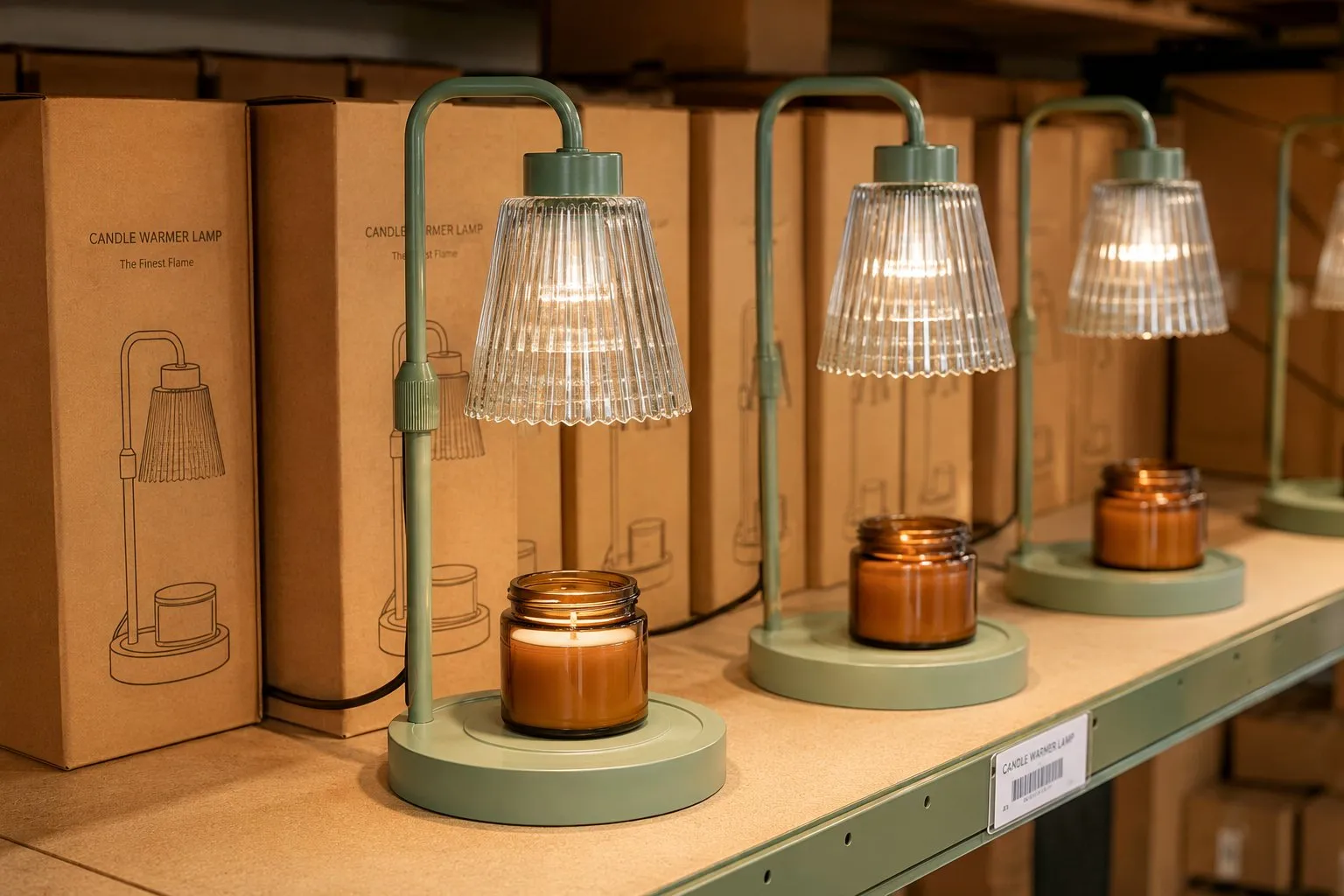
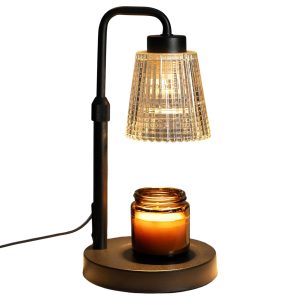
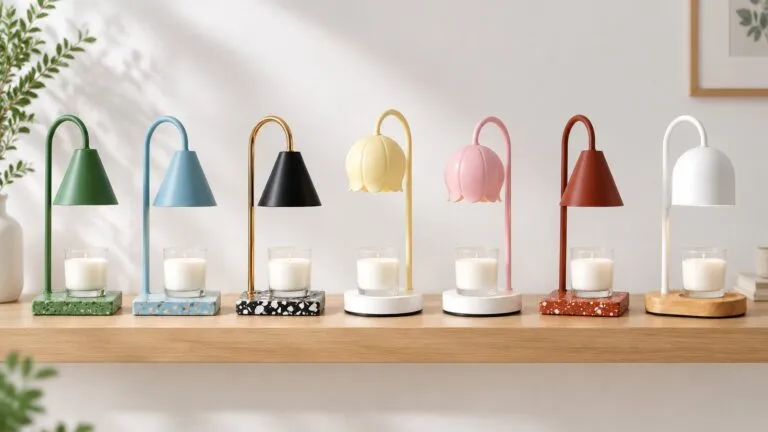
The honest limitation of wholesale is exclusivity. Because the same sage-green lamp is available to any buyer, you compete on price and merchandising, not on a product only you can sell. That is fine when you are testing whether the category moves in your store, and it is a weak position once it clearly does. When you find that candle warmers sell and you want to defend the margin, that is the signal to climb to the next rung. You can browse the catalog that a wholesale order draws from on our candle warmer lamps page.
03When does private-label fit a growing candle warmer brand?
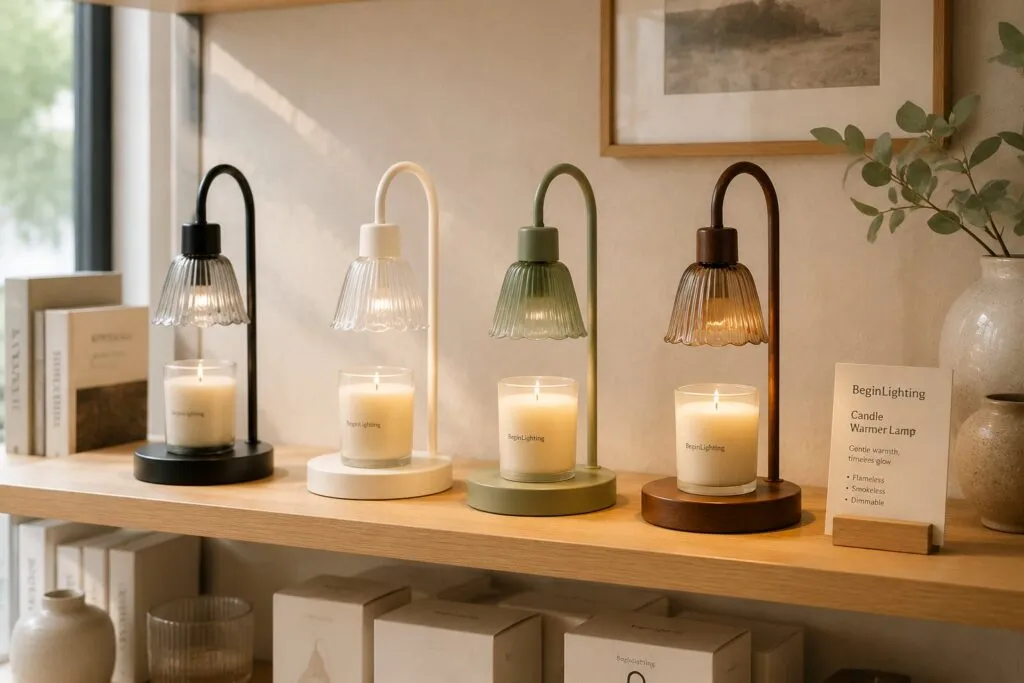
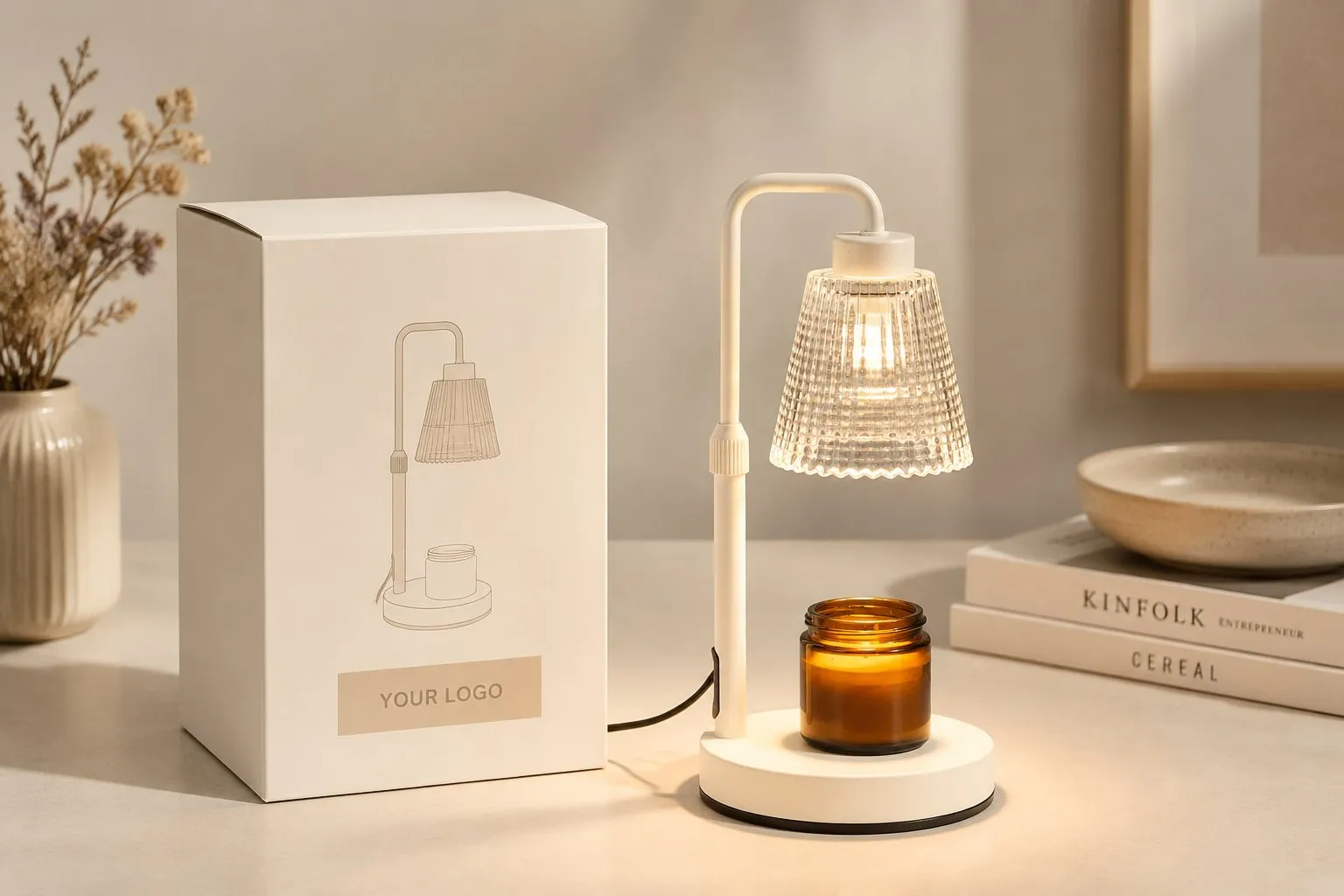
Private-label fits the moment you have proven the category sells and want the sale to build your brand instead of ours. In this model the lamp is our proven product, but the packaging, the logo, the color name, and often the exact finish are yours. Control and cost sit in the middle: higher than wholesale because of artwork and packaging runs, far lower than OEM because the lamp itself is not re-engineered.
This is the rung most growing retailers should occupy, and the data explains why. Store brands are not a discount afterthought anymore; they are where retail growth is concentrated. In the first half of 2024, Circana and PLMA reported U.S. private-label dollar share at about 20% and unit share near 23%, both records, while private-label dollar sales grew 2.3% against national brands’ 1.1%. Every point of that share is a retailer choosing to own the brand on the shelf rather than rent a national one, and a candle warmer is an ideal private-label product because the hardware is mature and the differentiation lives in finish and packaging.
Source: PLMA, “Private Label Sales Rose 3.9% in 2024 to Record $271 Billion,” Circana Unify+ data (2024 actual; 2020 base derived from PLMA’s reported $51 billion, 23.6% four-year gain). Retrieved 2026-07-16.
Where private-label asks for judgment is commitment. You are paying for packaging plates and a larger first run, so the per-unit price is higher than a stock buy on day one and the artwork is a schedule item, not an afterthought. The practical move is to private-label only the colors you have already seen sell at wholesale, and to keep the long-tail finishes on plain packing until they earn a box. The full artwork, nameplate, and packaging sequence is laid out step by step in our private-label candle warmer guide.
04What does full OEM candle warmer manufacturing involve?
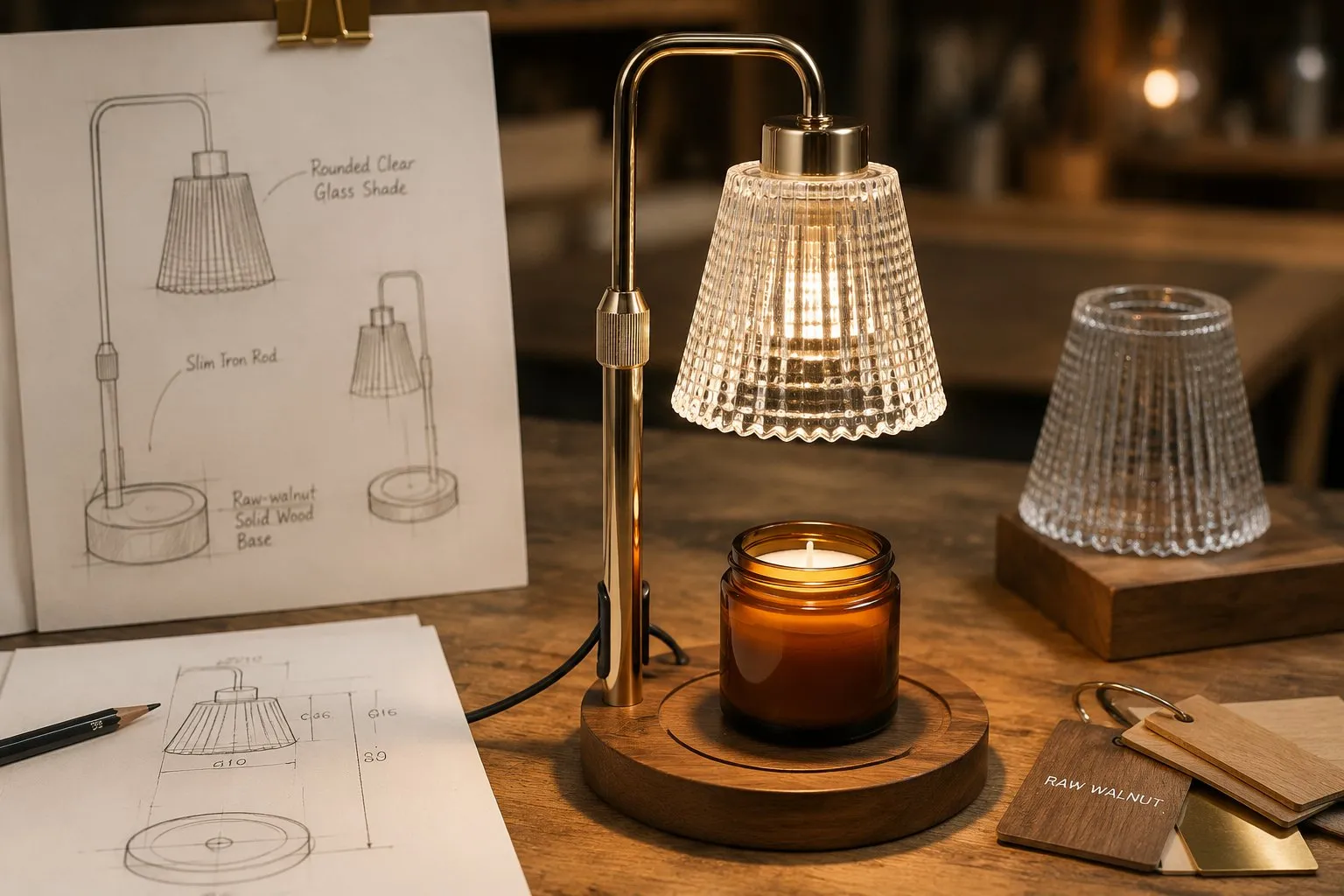
Full OEM means a candle warmer designed to your specification from the ground up: a shade shape, base material, mechanism, or footprint that does not exist in any catalog. It gives you the most control and the only true exclusivity, and it asks for the most in return, tooling investment, the highest minimums, and the longest lead time because a sample loop precedes mass production.
OEM is the rung for buyers who have volume and a reason to differentiate on the hardware itself, not just the box. If your program needs a proprietary shade geometry, a specific timer and dimmer behavior, or a base in a material no competitor offers, you are describing an OEM build. As a working reference, our own catalog lamps run a four-step timer at 2, 4, 8, and 10 hours and a four-step dimmer at 10, 30, 70, and 100%. An OEM program can move those parameters, the shade, and the base to a spec sheet you own, which is exactly why the commitment is larger.
The candid limitation of OEM is that its strengths become liabilities at the wrong stage. Tooling is a sunk cost that only pays back over volume, and a bespoke design cannot be quietly discontinued if it underperforms the way a stock color can. It is the right model when demand is proven and scale is real, and an expensive mistake when it is used to launch an unproven concept. The full path from first drawing to a loaded container is documented in our OEM process walkthrough.
05Which sourcing model fits which store size?
The fastest way to choose is to match the model to your stage, because control you cannot yet use is just cost. As a rule of thumb: a single store or a category test buys wholesale; a growing multi-door or online brand private-labels; and a national or high-volume program commits to full OEM. The table below lines up all four decision axes so you can place yourself.
| Decision axis | Stock wholesale | Private-label | Full OEM |
|---|---|---|---|
| What is yours | A catalog lamp, our brand | Our lamp, your brand and box | A lamp designed to your spec |
| Entry cost | Lowest | Medium (artwork, packaging) | Highest (tooling) |
| Buyer control | Low | Medium | High |
| Minimum commitment | Lowest (by the carton) | Higher (a print run) | Highest (a tooling run) |
| Lead time | Shortest (stock plus transit) | Plus packaging production | Plus tooling and sampling |
| Exclusivity | None (shared catalog) | Brand-level (your box) | Product-level (your design) |
| Best-fit store | Single store, category test | Growing multi-door or DTC brand | National or high-volume program |
Read the table down your own column. If you are one shop testing whether warmers sell, the wholesale column is the whole answer, and paying for a print run would be buying control you cannot use yet. If you are a brand opening its fifth door, the private-label column protects your margin without a tooling gamble. Only when the OEM column’s costs are small against your annual volume does bespoke design pay. The exact minimums, sample fees, and timing that sit behind each column are quantified in our MOQ, sampling and lead-time guide, and we hold specific quantities out of this article on purpose so the numbers you plan against are the current ones on your quote.
Placing a gift shop, brand, chain or distributor on the ladder
Your stage still sets the rung, as the table above shows; your type of business only changes what that rung looks like.
- If you run a gift or home store new to warmers, start on stock wholesale; an order can mix finishes on the same lamp body, so several colors can be tested side by side.
- If you make candles or home fragrance and warmers already sell alongside your wax, private label is your next rung; if the warmer is still new to your line, start on wholesale.
- If your own brand sells online, private label becomes the next rung once a catalog color sells through in your store; until then, the test runs on stock wholesale.
- If you are buying for a regional chain, private-label the colors that have already sold at wholesale so every door shelves the same box.
- If you supply other stores as a distributor or rep group, buy stock wholesale and ask for plain master cartons if you rebrand downstream.
- If you hold drawings for a shade, base or control the catalog does not list, it becomes an OEM brief once your volume can carry the tooling; until then, private-label the closest catalog lamp.
- If you already private-label a warmer elsewhere, you are changing supplier, not rung; quote it as private label with your current spec and artwork.
06How do cost, control, minimums and lead time trade off?
Every step from wholesale to OEM buys more control and charges for it in three currencies at once: money, minimum quantity, and time. There is no rung that gives you exclusivity cheaply or instantly. Seeing the three models as one rising ladder, rather than three separate offers, is what keeps a buyer from over-committing.
The two ends of the ladder make the trade-off concrete. Put the extremes side by side and the pattern is clear: you are buying down risk on the left and buying up ownership on the right.
Stock wholesale (left rung)
- Lowest entry cost, no setup fees
- Smallest commitment, order by the carton
- Fastest, the goods already exist
- No exclusivity, shared catalog product
Full OEM (right rung)
- Highest cost, tooling is a sunk investment
- Largest commitment, minimums and sampling
- Slowest, a design and sample loop first
- True exclusivity, a product only you sell
Private-label sits deliberately between these two, and that is its whole appeal: brand-level ownership without a tooling bet. The tradeoff worth stating plainly is that control is only an asset once you can use it. A single boutique that jumps straight to OEM pays for exclusivity it has no volume to amortize, while a national retailer stuck on wholesale leaves brand equity on the table with every sale. The skill in sourcing is not picking the “best” model, it is picking the rung that matches the demand you can actually prove today.
What each sourcing model’s quote should spell out
The quote gap moves as you climb, from electrical and after-sales detail on a stock order to ownership of artwork, labels and, on OEM, the tooling itself.
Stock wholesale
- Right for: buyers happy with the catalog finish and box as they are.
- Ask on the quote: which finishes can share an order; plug type, bulb rating and cord length for your market; whether spare bulbs are packed; after-sales and defect-return terms.
- Move up a rung once: warmers sell steadily for you and rivals stocking the same lamp in the same box undercut your price.
Private label
- Works for: buyers whose catalog finish has sold through and who now want their own logo and box on it.
- Get in writing: whether a branded sample comes before the bulk run, and how many rounds; who supplies the box dieline and approves print proofs; whose name goes on the instruction leaflet and warning labels; who applies barcodes; whether a custom color stays yours alone.
- Hold off while: no catalog finish has sold through for you yet, or your brand artwork is still unfinished.
Full OEM
- Meant for: programs that need control over the hardware itself, with proven volume behind the tooling.
- Agree before tooling starts: who owns the tooling and design files; what happens to the tooling if the program pauses; who arranges any testing your retailer requires on the new design.
- Not needed when: the change is only color, logo, box or plug; private label handles those on the existing lamp.
07Landed cost: where duty and packaging change the math
Whichever model you choose, the number that most often breaks a first budget is not the unit price, it is the landed cost, and duty is the biggest single line in it. For a China-origin candle warmer lamp bound for the United States, the tariff can dwarf the packaging decision that separates wholesale from private-label.
The specifics are on the public record. In binding ruling N340956, issued July 17, 2024, U.S. Customs and Border Protection classified an iron-base candle warmer lamp from China under HTS subheading 9405.29.6010 at a 6% general duty, and noted that China-origin goods in that subheading carry an additional 25% Section 301 tariff. That is a realistic landed-duty assumption near 31% on the lamp, not the 6% a quick lookup suggests. This applies equally to a stock wholesale lamp and an OEM one, so it belongs on every costing sheet regardless of sourcing model. Section 301 lists and rates change, so treat these figures as a planning baseline and confirm classification with a licensed U.S. customs broker before you commit.
Packaging is the smaller variable, and it is the one your sourcing model actually controls. A stock lamp arrives in the maker’s box; a private-label lamp arrives in yours; an OEM program can redesign the pack entirely. Because these lamps are volumetric and cube out long before they weigh out, the packing level changes unit cost and shelf appeal far more than it changes freight. The full carton, gift-box, and freight math, including how many lamps fill a container, is worked through in our bulk cartons, packaging and freight guide.
What to do when you switch models or suppliers
Order the sample before anything else; the purchase order waits until the work below is planned.
Stock wholesale to private label
- Request a branded sample of the finishes moving into your box, and check logo placement and print.
- Prepare logo files, box copy and barcodes, and rewrite the instruction leaflet and warning label with your brand and contact details.
- Reshoot the product page with the branded box and decide whether it replaces the old listing or sits beside it.
- Sell through catalog-box stock, or shelve it apart from the branded run.
Private label to full OEM
- Freeze drawings and materials, and agree in writing which approved sample is the production reference.
- Plan new photography, a new listing rather than a variant, and a manual for the new shape or controls.
- Decide whether the private-label version stays on or runs out, and rewrite the staff demo and customer-service answers for the new design.
Same model, new supplier
- Sign off the new supplier’s sample against your spec sheet item by item, from finish and shade to bulb, plug and box print.
- Refit your box artwork to the new dieline, update supplier details on cartons, labels and the leaflet, and touch the listing only if the spec changed.
- Ask what documentation is available for the exact model.
08The bottom line: start one tier below where you think you are
If you are unsure which model fits, start one tier below where you think you belong and climb on proof. Most buyers overestimate the control they need on day one and pay for it in minimums and lead time they did not have to spend. Wholesale proves the category, private-label captures the brand, and OEM defends a franchise, in that order. If the premium tier is where you land, our dimmable, marble-finish candle warmer lamp sits at the top of that range.
The reason to sequence it, rather than leap, is that each rung de-risks the next. A wholesale run tells you which colors and packing levels sell in your channel, which is exactly the information a private-label order needs to spend artwork money well. A private-label program tells you the volume and the finish worth defending, which is exactly what an OEM tooling decision needs to pencil out. Skipping a rung does not save time; it spends commitment before the demand that justifies it is proven. When you know your rung, our sourcing desk can confirm the carton break, packing level, and current minimums for your SKU list on a single quote.
If you want a single prompt for the decision, read the signal you are seeing in your own sales and let it name the next rung.
| The signal you are seeing | The rung it points to | Why |
|---|---|---|
| You have never sold a candle warmer | Stock wholesale | Prove the category before you spend on control. |
| A catalog color sells out and you reorder it | Private-label | Demand is proven; capture the brand on the box. |
| One or two finishes drive most of your volume | Private-label | Put your brand on the winners, plain-pack the tail. |
| Volume is steady and you need a product rivals cannot copy | Full OEM | Tooling amortizes and exclusivity finally pays. |
Not sure which rung fits your store?
Tell us your channel, your target colors, and roughly how many units a season. We will point you to the right model, wholesale, private-label, or OEM, and send a quote with the carton break, packing level, and current minimums.
Climbing a rung, or staying on yours
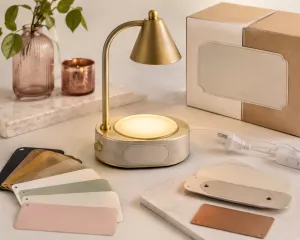
If stock wholesale is your rung, check finishes and carton details on the wholesale candle warmers page. If a color has earned your own box, start from the finish range a private label builds on. When you write in through the quote form, name the destination market and whether goods ship in a plain master carton or your own printed box.
If a switch does not pay, do not make it. When your sales could not absorb a print run, or a tooling bill has no design reason behind it, keep buying the way you buy now and watch your reorder pattern; the next rung can wait until sell-through says otherwise.
FAQ
What is the minimum order for wholesale candle warmer lamps?
For wholesale candle warmer lamps the practical floor is the master carton, not a single unit. Our glass lamps ship 12 or 16 pieces per carton, so a stock wholesale order is placed in whole-carton multiples of a color you can buy today. Private-label and OEM programs carry higher minimums because they commit a print run or tooling. Exact quantities, sample fees, and timing are covered in our companion MOQ and sampling guide, and confirmed on a quote for your SKU list.
Is private label or wholesale candle warmer sourcing cheaper?
Stock wholesale candle warmer sourcing has the lowest entry cost because you buy an existing catalog item with no setup fees. Private label adds artwork, packaging plates, and a larger commitment, so the per-unit price is higher on a first run but usually falls as volume grows and the brand equity stays with you. The right answer depends on whether you are testing a category or building a shelf brand you own.
How do I choose a candle warmer manufacturer for private label?
Pick a candle warmer manufacturer that already sells the product at retail, publishes real carton and specification data, and can show the same line and the same quality checks it runs for its own brand. Ask to see the timer and dimmer specification, the base materials, the master-carton figures, and a sample before you commit artwork. A maker that can walk you from inquiry to a loading dock without a trading intermediary shortens the chain and the price.
Can I start with candle warmer wholesale and move to OEM later?
Yes, and it is the sequence we recommend for most new buyers. Start with candle warmer wholesale to prove the category sells in your channel, graduate to private label once you know which colors and packing level move, then commit to full OEM tooling only when volume justifies a bespoke design. Each step reuses what you learned in the last, so you spend on control only after the demand is real.
What lead time should I expect from a candle warmer lamp wholesale supplier?
A candle warmer lamp wholesale order of in-stock colors ships fastest because the goods already exist. Private label adds packaging production once artwork is approved, and full OEM adds tooling and a sampling loop before mass production even starts. Our sampling cycle runs about 15 days, with the sample fee refundable against a production order. Because these lamps are volumetric, plan ocean transit and customs on top of production time.
Market and duty figures are a planning baseline drawn from the cited public sources as of July 2026. Tariff classification and applicable Section 301 duties can change; confirm your entry with a licensed U.S. customs broker before ordering. Minimum-order and lead-time specifics are confirmed on a live quote.
Sources
- Private Label Manufacturers Association (PLMA), “Private Label Sales Rose 3.9% in 2024 to Record $271 Billion,” Circana Unify+ data, January 16, 2025. plma.com, retrieved 2026-07-16.
- Retail Dive, “Private brands hit record highs in unit and dollar share in first half of 2024,” reporting Circana and PLMA data, July 11, 2024. retaildive.com, retrieved 2026-07-16.
- Cognitive Market Research, “Home Fragrance Market Report” (global market size USD 24,152.2 million in 2024; 9.5% CAGR 2024-2031). cognitivemarketresearch.com, retrieved 2026-07-16.
- U.S. Customs and Border Protection, Ruling N340956, “The tariff classification of a candle warmer lamp from China,” issued July 17, 2024. rulings.cbp.gov/ruling/N340956, retrieved 2026-07-16.
- U.S. International Trade Commission, Harmonized Tariff Schedule of the United States, subheading 9405.29 (luminaires and lighting fittings). hts.usitc.gov, retrieved 2026-07-16.
- CandleScience, “White Label and Private Label Candles,” definitions of white-label versus private-label sourcing. candlescience.com, retrieved 2026-07-16.
- Shopify, “Wholesale Candle Vendors: Where to Buy in Bulk (2025),” on wholesale versus custom sourcing. shopify.com, retrieved 2026-07-16.
- BeginLighting factory manufacturing and carton specification data, revision 2026-06-12 (production base, timer and dimmer steps, carton packs). Primary source, on file with the BeginLighting sourcing desk.
Is BeginLighting a candle warmer manufacturer or a wholesale supplier?
Both, and the distinction is worth stating plainly because it decides what we can change for you. We are the manufacturer: the lamps are built on our own two assembly lines in a 4,000 m² Foshan facility of around 40 people, from glass, powder-coated steel and solid wood at goods-in through to a powered-on test on every finished lamp before it is boxed. That is why finish, base material, logo, gift box and plug type are specification questions here rather than requests we have to pass along.
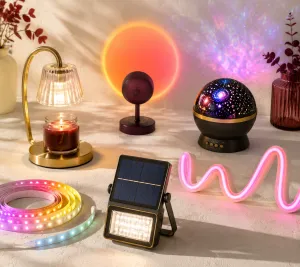
We are also a wholesale supplier. Stock colors can be bought from the existing catalog by the master carton with no artwork and no tooling, and the rest of the cozy-home range around the warmer — projectors, LED strip, solar flood lights, custom neon and decorative table lamps — runs on the same floor, consolidates onto one quote and is held to one QC standard. If a supplier will not tell you where a given product is actually made, that is the question to keep asking.
Full OEM only works if the floor behind it is real, so before you commit tooling money, see the Foshan floor and the 40-person crew that would run your program.
Before pricing that commitment, check which parts of the product are yours to change: finish, branding, packaging and electrical are specified per program rather than fixed in advance.
