


Key takeaways
The most reliable way to make your house smell good is to fix the odor before you add fragrance: clean and ventilate first, then layer a flame-free scent you can safely leave running. Warmers, wax melts and diffusers hold a scent far longer than an air-freshener spray, without the open flame behind thousands of home fires a year.
- Clean and ventilate first: the EPA lists source control and ventilation as its first two strategies for indoor air, ahead of anything you plug in or spray, so masking a smell over a dirty room never lasts.
- Go flame-free for scent you can leave on: a candle warmer lamp melts a candle with a warm bulb instead of a flame, and a candle lasts far longer that way (Taste of Home), while removing the risk behind an average of 7,610 US home candle fires a year (NFPA).
- Layer by room: an entryway, living room, bathroom and bedroom each want a different intensity, and matching the method to the room is what makes a whole house smell good rather than one corner.
- Looks sell the scent: in our last 100 five-star reviews of our best-selling candle warmer lamp, look and ambiance is mentioned by 28% of reviewers, just behind scent at 33%, which is why people keep a warmer out and the scent stays on.
- Keep it light and rotate scents to beat nose blindness; a gentle, consistent background beats a heavy hit that fades and overwhelms anyone walking in fresh.
01How do you actually make your house smell good?
The most reliable way to make your house smell good is to work in two steps, in order: remove the bad smell first, then add a good one you can leave running. Most fragrance advice jumps straight to step two, which is why a scented spray fades in an hour and the musty, cooking or pet smell underneath comes right back. Clean the sources, move some air, then layer a flame-free scent, and the whole house holds it.
The order is the part people skip, and it is the part that matters. Fragrance is not a cleaner; it sits on top of whatever is already in the air. A home that genuinely smells good is a clean home with a light, consistent scent layered over it, not a dirty one hidden under a heavy one. Get that backwards and you spend money spraying over a problem that keeps coming back stronger than the perfume.
That two-step order is the whole secret to how to make your house smell good, and the rest of this guide fills in each step: the clean-and-ventilate foundation, the flame-free home fragrance ideas worth using, why a candle warmer leads them, how to scent each room, and how to make it last without overdoing it.
02Start with odor, not fragrance: clean and ventilate first
Before any scent goes in, deal with the source. The most effective, most cost-efficient way to improve the air in a home is source control, removing or reducing whatever smells, followed by ventilation, moving fresh air through the room (EPA, Improving Indoor Air Quality, retrieved 2026-07-19). The EPA lists air cleaners and filters only as a third, supplementary step, not a replacement for the first two. Scent belongs after all of that, not instead of it.
Source control in a real house is unglamorous but decisive. The usual culprits are the trash and the sink drain, damp towels and laundry, the fridge, litter boxes and pets, and the soft furnishings that quietly hold odor: rugs, upholstery, curtains and bedding. A fabric that has trapped cooking, smoke or pet smell will keep re-releasing it under any fragrance you add, so wash or air these on a schedule, empty and rinse the bins, run the disposal, and launder bedding weekly. This is where a house that smells good is actually won.
Ventilation is the free second step, and it does more than any product. Open windows on opposite sides of the house for a cross breeze, even for a few minutes; run the kitchen and bathroom exhaust fans during and after cooking or showering; and keep air moving. Warm, still, humid air holds odor, while moving air clears it. Only once the room is clean and aired does an added scent read as this house smells good rather than something is being covered up. The honest limit worth naming here, and it applies to every scented product including ours, is simple: a warmer or diffuser scents a room, it does not clean it.
03Flame-free home fragrance ideas that actually last
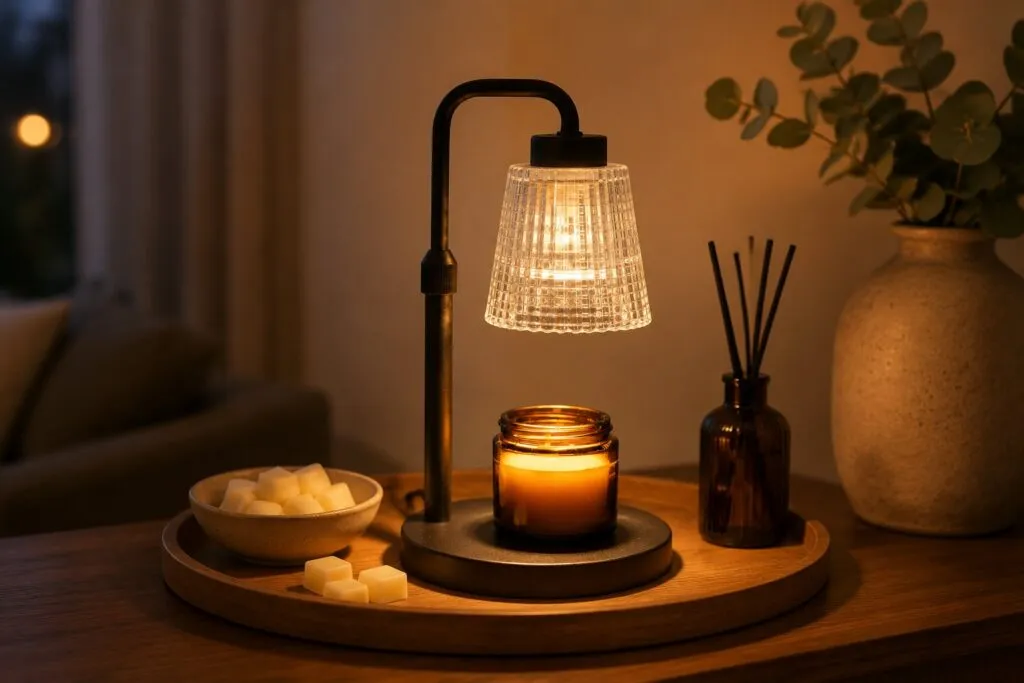
The home fragrance ideas that last are the flame-free ones you can safely leave running: a candle warmer lamp, wax melts, reed and electric diffusers, and a stovetop simmer pot for a quick, natural boost. Each holds a scent far longer than an aerosol spray, and none needs an open flame. The table below matches each method to how it works, the job it does best, and what to watch for, so you can pick by room rather than by whatever is on the shelf.
| Method | How it works | Best for | Watch-outs |
|---|---|---|---|
| Candle warmer lamp | Melts a jar candle or wax with a warm bulb | All-day background scent plus a warm glow | Use the wax it is rated for; set it on a heat-safe surface |
| Wax melts and warmer | Small wax cubes melted on a warming plate | Swapping scents often in smaller rooms | Throw is gentle; refresh the cubes when it fades |
| Reed diffuser | Reeds wick scented oil into the air, no power | Bathrooms and entryways | Slow and low; flip the reeds to refresh |
| Electric diffuser | Disperses oil in water as a fine mist, no heat | Quiet, adjustable, hands-off scent | Follow the oil ratios; mind sensitive pets |
| Simmer pot | Water simmered with citrus, herbs and spices | A fast, natural, seasonal kitchen scent | Never leave the stove unattended; top up the water |
Why do these beat a spray? An air-freshener spray gives a strong hit that is gone within the hour, so you spray again and again and the smell never actually stays. The flame-free formats work the opposite way: a low, steady release that builds a consistent background a home holds all day. That steadiness is what smelling good really is, a room that greets you the same way every time, not a peak that fades back to the odor underneath. It is also cheaper over a year, because you refill rather than replace.
If you want scent with nothing plugged in, the simmer pot is the classic natural trick: water with orange peel, cinnamon and cloves fills a kitchen and doubles as a little humidity in dry months. The one rule is the stovetop rule, never leave it unattended and keep the water topped up, which makes it a while-you-are-home method rather than a leave-it-all-day one. For all-day, unattended scent, the electric formats are the safer bet. This shift from the open flame toward flame-free delivery is the same one driving the wider home fragrance trends retailers are stocking now.
04Why is a candle warmer lamp the flame-free method that lasts?
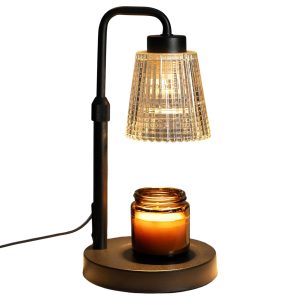
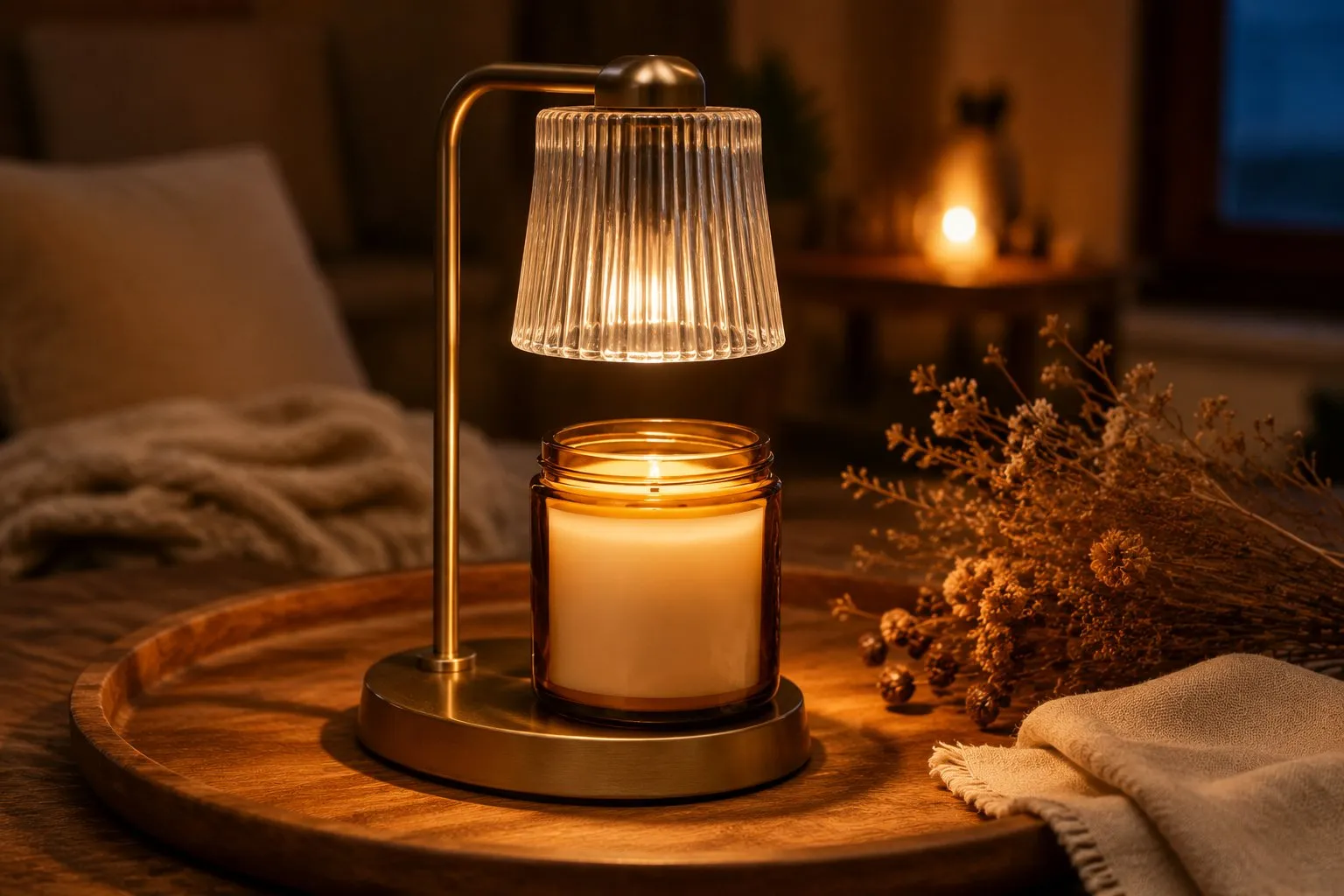
A candle warmer lamp lasts because it solves the two problems that limit every other scent method at once: it is safe to leave running, and it stretches a single candle for weeks. It melts the wax with a warm bulb instead of a wick, so the scent and the warm glow stay while the open flame goes away, and that one swap is what turns a candle from a supervised, half-hour treat into an all-day fixture.
The safety case is not abstract. US fire departments respond to an average of 7,610 home structure fires started by candles a year, causing 81 deaths and about USD 278 million in direct property damage (NFPA, Candle Fires, retrieved 2026-07-19), and three of every five of those fires start when something that can burn is left too close to the flame. A warmer removes the flame entirely, which is exactly why it is the flame-free method you can leave on across a room, in a way a lit wick never should be. Safety here means fire safety, plainly stated, not a health claim.
It also lasts in the literal sense. Because the wax is warmed gently rather than burned off, a candle can last several times longer on a warmer than it would lit (Taste of Home, Candle Warmer Lamp review, retrieved 2026-07-19), so a single jar scents a room for weeks instead of an evening. And it earns its spot on looks, not just function: in our own read of the last 100 five-star reviews of our best-selling candle warmer lamp, scent is mentioned by 33% of reviewers and how it looks and the ambiance it creates by 28%, both ahead of gifting at 12%. The chart shows the full split.
Source: BeginLighting review analysis, last 100 five-star reviews of our best-selling candle warmer lamp, retrieved 2026-07. Themes are non-exclusive; a review can mention more than one.
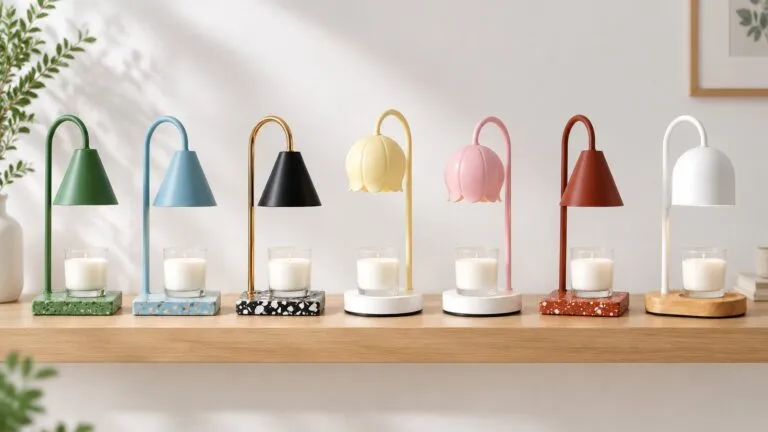
The takeaway from that data is that people keep a warmer out because it looks good lit, and then love that it makes the room smell good. For scenting a whole house that is the ideal object: it earns a permanent spot on a console or a nightstand, so the scent is always on rather than saved for guests. It is a product we build ourselves, and so are the candles and wax that pair with it; for wholesale buyers those are quoted per project. You can see the current candle warmer lamps we make for the range.
05How do you make each room smell good?
You make a whole house smell good by matching the method and the intensity to each room, rather than scenting one corner and hoping it drifts. An entryway wants a first impression, a bathroom wants freshness on demand, a bedroom wants something gentle and safe to leave on, and a kitchen wants odor control before any fragrance. The map below walks the house room by room.
The pattern across every room is the same two-step order: clean and air it, then add a flame-free scent sized to the space. A small room needs less than you think, and a single warmer or diffuser is plenty; doubling up just muddies the scent. The bedroom is the one to be strictest about, both for safety and because you want the lightest touch where you sleep, and it pairs naturally with the warm-glow layering in our cozy bedroom ideas guide.
06How do you make the scent last without overdoing it?
You make a home scent last by keeping it low and consistent, rotating scents so your nose does not tune them out, and resisting the urge to over-scent. A gentle background that is always on beats a heavy hit that fades, and it is the whole difference between a house that smells good and one that smells overpowering to anyone who just walked in.
The reason a strong scent seems to vanish is olfactory adaptation, better known as nose blindness: your nose stops registering a constant smell within minutes, so the temptation is to add more, which just overwhelms visitors who arrive fresh to it. The fix is not more scent, it is variety. Rotate two or three scents through the week or by season, and let a warmer or diffuser run at a low, steady level rather than blasting a room right before guests arrive. Consistency, not intensity, is what a nose reads as a home that always smells nice.
There is a real limit worth respecting. Any added fragrance, candle, spray or plug-in, releases compounds into the air, and the EPA’s first advice for indoor air is still source control and ventilation, not more product (EPA, Improving Indoor Air Quality, retrieved 2026-07-19). So keep rooms ventilated, use scent lightly, and if anyone at home is sensitive, favor a warmer or reed diffuser you can place low and dial down over an aerosol that fills a room all at once. If you have pets, choose and place scent with them in mind; our guide on whether wax melts are safe for cats covers the specifics. The goal is a home that smells clean and lightly scented, not one you can smell from the driveway.
If you sell home fragrance rather than just buy it, the same logic scales up, and the category is growing into it: Grand View Research projects the global home fragrance market will reach about USD 26.5 billion by 2033. The flame-free formats are the ones customers reorder, because a warmer sells the candles and wax melts that follow it, so for a gift shop or boutique the move is to stock a flame-free hero with a refill tail and source the whole range, warmers, candles and wax, from one supplier who can restock and private-label it. Our wholesale home fragrance range is built around the best-selling candle warmer lamp we make, with the candles and wax melts poured on the same Foshan floor and consolidated under one quote.
Source the flame-free fragrance shelf, wholesale
The best-selling candle warmer lamp we build, plus the candles, wax melts and wider ambient lighting basket made on the same Foshan floor, consolidated under one quote and ready to private-label. Prices are quoted per project.
FAQ
What is the fastest way to make your house smell good?
The fastest way to make your house smell good is to open the windows for a few minutes, take out the trash, run the disposal and kitchen fan, and put a simmer pot of citrus peel and cinnamon on the stove. That clears and freshens a room in minutes. The catch is that fast fixes fade fast, so once the room is clean and aired, add a flame-free warmer or diffuser at a low, steady level to hold the scent through the day.
How can I make my house smell good without using a flame?
You can make a house smell good with no flame at all by using a candle warmer lamp, wax melts, a reed or electric diffuser, or a stovetop simmer pot. A warmer melts a jar candle with a warm bulb instead of a wick, so you keep the scent and the glow with no open flame, and you can safely leave it running across a room. Reed and electric diffusers need no heat at all and suit bathrooms, entryways and bedrooms.
Why doesn’t my house smell good even after I clean?
If a house still smells off after cleaning, the odor is usually trapped in soft surfaces or still air rather than on the counters. Rugs, upholstery, curtains, bedding and the drain and bin hold and re-release smells, so wash or air them on a schedule and rinse the sink and disposal. Then move fresh air through with open windows and exhaust fans. Only once the source is gone and the air is moving will a light scent read as clean rather than as a cover-up.
How do I make my house smell good all day?
To make a scent last all day, use a flame-free method you can leave running at a low, steady level, such as a candle warmer lamp or an electric diffuser, rather than a spray that peaks and fades. Rotate two or three scents through the week so your nose does not tune them out, keep the intensity gentle, and place the device where air moves through the room. A quiet, constant background scent lasts far longer than a heavy hit.
What are good home fragrance ideas for a small space or apartment?
For a small apartment, one flame-free source at a low setting is plenty: a single candle warmer lamp or one reed diffuser will scent an open-plan space without overwhelming it. Doubling up in a small room just muddies the scent and makes it heavy for anyone walking in. Ventilate first, keep the intensity light, and let one gentle source run rather than several competing ones.
BeginLighting builds its candle warmer lamps and the wider fragrance and ambient lighting basket on its own Foshan lines. Fire and indoor-air figures in this guide are drawn from the published sources cited below; the review breakdown is our own first-party data. This is a home fragrance guide, not health advice. Verify final product specs against samples before ordering.
Sources
- US Environmental Protection Agency, Improving Indoor Air Quality (three strategies in order: source control, then ventilation, then air cleaners and filters), retrieved 2026-07-19.
- National Fire Protection Association, Candle Fires (average 7,610 US home structure fires per year, 81 deaths, USD 278 million in property damage; three in five start when something flammable is too close; two in five deaths occur in the bedroom), retrieved 2026-07-19.
- Taste of Home, Candle Warmer Lamp review (a flame-free warmer keeps the scent and a candle lasts far longer than burning it), retrieved 2026-07-19.
- Grand View Research, Home Fragrance Market Size & Share Report (global market projected to reach about USD 26.5 billion by 2033), retrieved 2026-07-19.
07How to Make Your House Smell Good, Ranked by How Long It Lasts
Everything written about how to make your house smell good is really answering three different questions: what works in ten minutes, what holds all evening, and what runs unattended for a week. Sort the methods by duration and the shopping list gets short. A warmer lamp sits in the middle band, which is why gift aisles keep it next to the candles: it is scent you can also read by.
Under an hour — A spray or a stovetop simmer: the strongest first impression, gone before your guests are.
A full evening — A warmer lamp melting a wax jar: steady throw, no flame, and it switches off with the light.
A week or more — A reed diffuser or a vented sachet: low intensity, zero attention, easy to forget in a good way.
Buying for a home-fragrance shelf? Request a Quote for the middle band — the flame-free one that also lights the room.
Do you need an odor eliminator for house smells, or is fragrance enough?
They do two different jobs and the order matters. An eliminator goes after the molecule itself, by removing the source, washing the fabric holding it or venting the air it sits in, which is the work section 02 describes. A passive odor absorber for home use, an open box of baking soda in the fridge, an activated-charcoal bag in a closet or under a sink, quietly mops up what is left inside a small enclosed volume; it will not perfume a room and is not meant to. Fragrance comes third, once there is nothing left to cover. Run those three the other way round and the room reads as a masked smell rather than a clean one.
What does eucalyptus smell like, and what is the smell of oud?
Worth knowing before you pick a fragrance wall, because these two sit at opposite ends of it. Eucalyptus is sharp, cool and green with a camphor edge close to a spa steam room, and it reads as clean rather than sweet, which is why it lands in bathrooms and entryways. Oud is the opposite register: it comes from resinous agarwood and it is dense, warm and woody, with a leathery, faintly smoky sweetness that stays in a room for hours. A little carries a long way, so keep it for a living room in the evening rather than a small bathroom.
