


The best wax melts for a retail shelf are the ones a customer buys a second time, and that is settled by five decisions made long before the clamshell is sealed: the wax blend, the fragrance load, how the scent throws in an actual warmer, how long a cube keeps working, and the pack it sells in. None of the five is a brand name, which is why this page names no melt brands.
It is written for the buyer filling a home fragrance bay, where one reviewer’s nose says little about what sells through in your store. The poured candles and care items that ship beside our lamps sit in our candle accessories range.
Two neighbouring questions already have pages of their own. Which wax behaves better under a top-down lamp is in our candle and wax melt pairing guide, and the per-wax fragrance ceilings, the cube count and the change-out routine are in how to use wax melts. This page stays on selection.
Key takeaways
Judge a wax melt line on five things a ranking never shows: the blend, the fragrance load, throw in a real warmer after a full cure, a melt-life claim with its test conditions, and a pack with room for a proper label. The brand worth stocking is the one that can document all five, every batch.
- North American fragrance wax melts were a USD 2.59 billion market in 2024, forecast to reach USD 4.98 billion by 2030 (Grand View Research).
- Fragrance load is a ceiling. One supplier rates a soy wax at 10% maximum and still tells makers to start at 6%.
- Sniff a sample too early and you are ranking the cure, not the scent: published cure times run from three days to two weeks depending on the wax.
- Clamshells led packaging revenue in 2024 and cubes led by form.
- Stronger is not automatically better. In a 2025 release, Purdue University engineers linked scented melts to indoor nanoparticle formation, and it is the fragrance doing it, so the right load beats the maximum one.
Five Things a Shelf-Worthy Wax Melt Gets Right
A shelf-worthy melt gets five things right, and a product photo shows none of them: the wax it is poured from, how much fragrance that wax carries, how the scent throws once warm, how long a cube keeps scenting a room, and whether the pack survives a stockroom and a checkout.
In 2024 Grand View Research valued the North American fragrance wax melts market at USD 2.59 billion, put 2025 at USD 2.88 billion and forecast USD 4.98 billion by 2030, a 9.5% compound annual growth rate. Electric melt warmers held the largest revenue share among warmer types, and the warmer your customer owns sets the temperature every melt on your shelf is judged at.
Fragrance is the purchase driver, so it gets the most attention and the least scrutiny. Three-fourths of candle buyers call fragrance extremely or very important, according to the National Candle Association; the figure is for candles, but a melt shopper is buying the same thing with the wick taken out. A ranking cannot tell you whether the line will smell the same in March as it did in the sample box, and that is the question a buyer is paid to answer.
Asking which wax melts best is a chemistry question with a short answer. Asking which are the best wax melts to stock, the ones that sell twice, is a buying question, and the rest of this page answers that one.
Wax Blend: Match It to the Warmer, Then Ask What Is in It
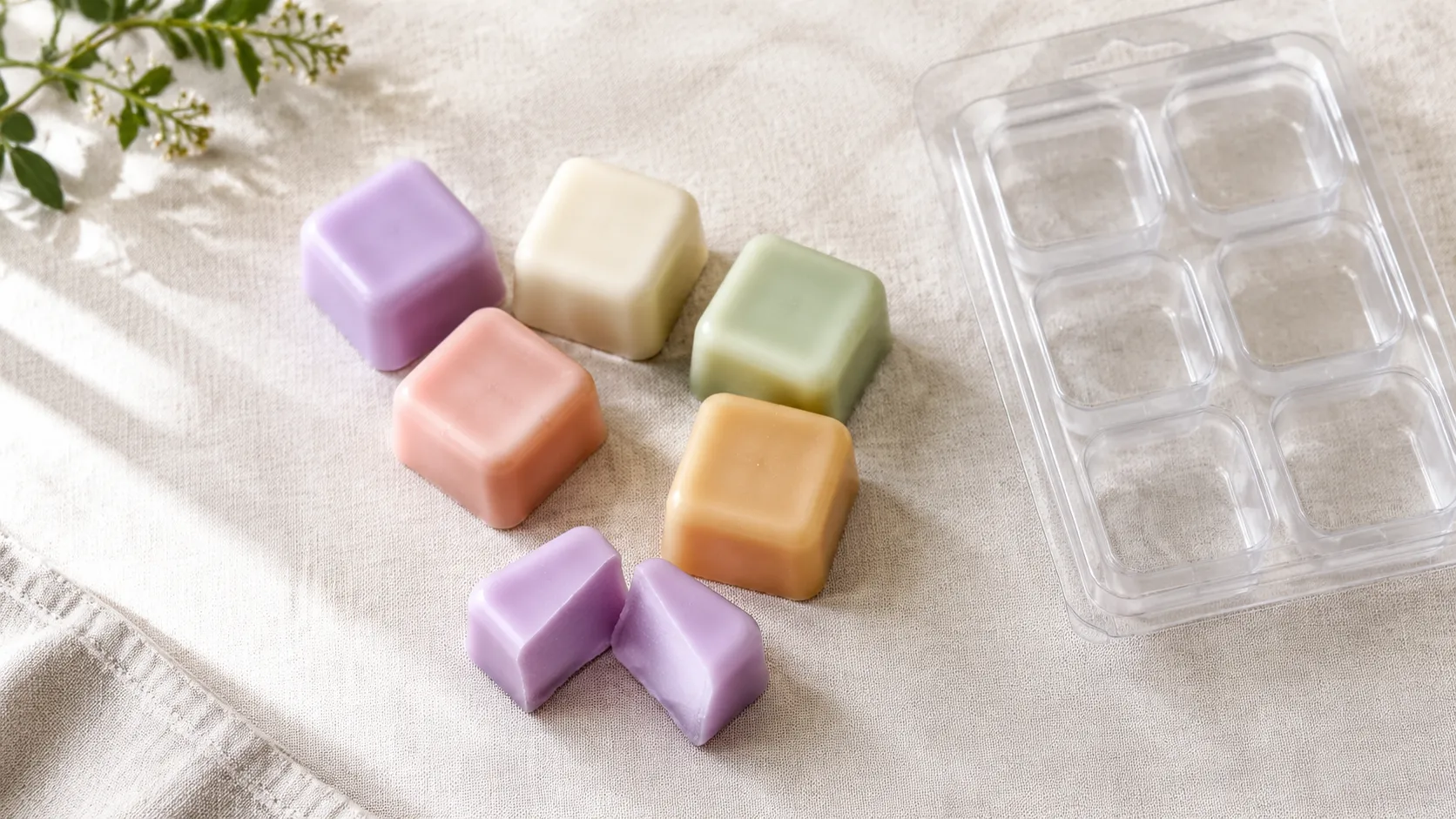
Choose the blend for the warmer your customers already own, then make the supplier tell you what is actually in it. The soy-against-paraffin argument under a lamp is settled in the pairing guide linked above, so it gets one line here: soy leans to a clean, even pool, paraffin to a louder hot throw.
The name on the front is not a composition. Blending is normal in this category, soy with coconut, soy with paraffin or a supplier’s own vegetable blend, so a melt named after one wax can be poured from several. Nothing is wrong with a blend; the problem is a wax claim on a shelf card that nobody can back with a number, so hold the composition by weight and the wax grade before the artwork is drawn.
Then match the heat. CandleScience’s soy melt tutorial recommends a warmer with a high-heat bulb when maximum throw is the goal, a reminder that one cube can perform differently in a plate warmer, a tealight dish and a bulb warmer. Test in the warmer type your customers actually own.
Fragrance Load: A Ceiling on the Spec Sheet, Not a Strength Rating
Read a fragrance-load figure as the most oil the wax can hold, not as a promise of how strong the room will smell. The ceilings for each wax, from beeswax at the low end to soy and coconut at the top, are set out in our guide to using wax melts and not repeated here.
Supplier data shows how wide the honest range is. CandleScience gives AAK 464 soy wax a maximum load of 10% but recommends starting at 6%, and warns that too much fragrance, especially a dense one, may not result in a stronger scent. Its melt tutorial runs a soy pillar wax at 10% while rating that wax at up to 25% for melts.
Two more limits sit on top of the wax. Every fragrance oil has its own IFRA certificate, and Category 12, air care not intended for skin contact, is the category that covers candles and wax melts (CandleScience). Each certificate states the maximum for that oil, which can sit below the wax’s own ceiling. So ask for the load each scent actually runs at, with the Category 12 certificate for each oil; one number for the whole range is a sign nobody has asked before.
There is also a case against pushing the load. In a February 2025 release, Purdue University engineers described their paper in Environmental Science and Technology Letters: scented wax melts release terpenes which react with indoor ozone to form nanoparticles, polluting indoor air at least as much as candles (Purdue University). That argues for the right load rather than the maximum, and for a ventilation line on the shelf card; the measurements are unpacked in are wax melts toxic.
Best Smelling Wax Melts Are Decided in a Warmer, After the Cure
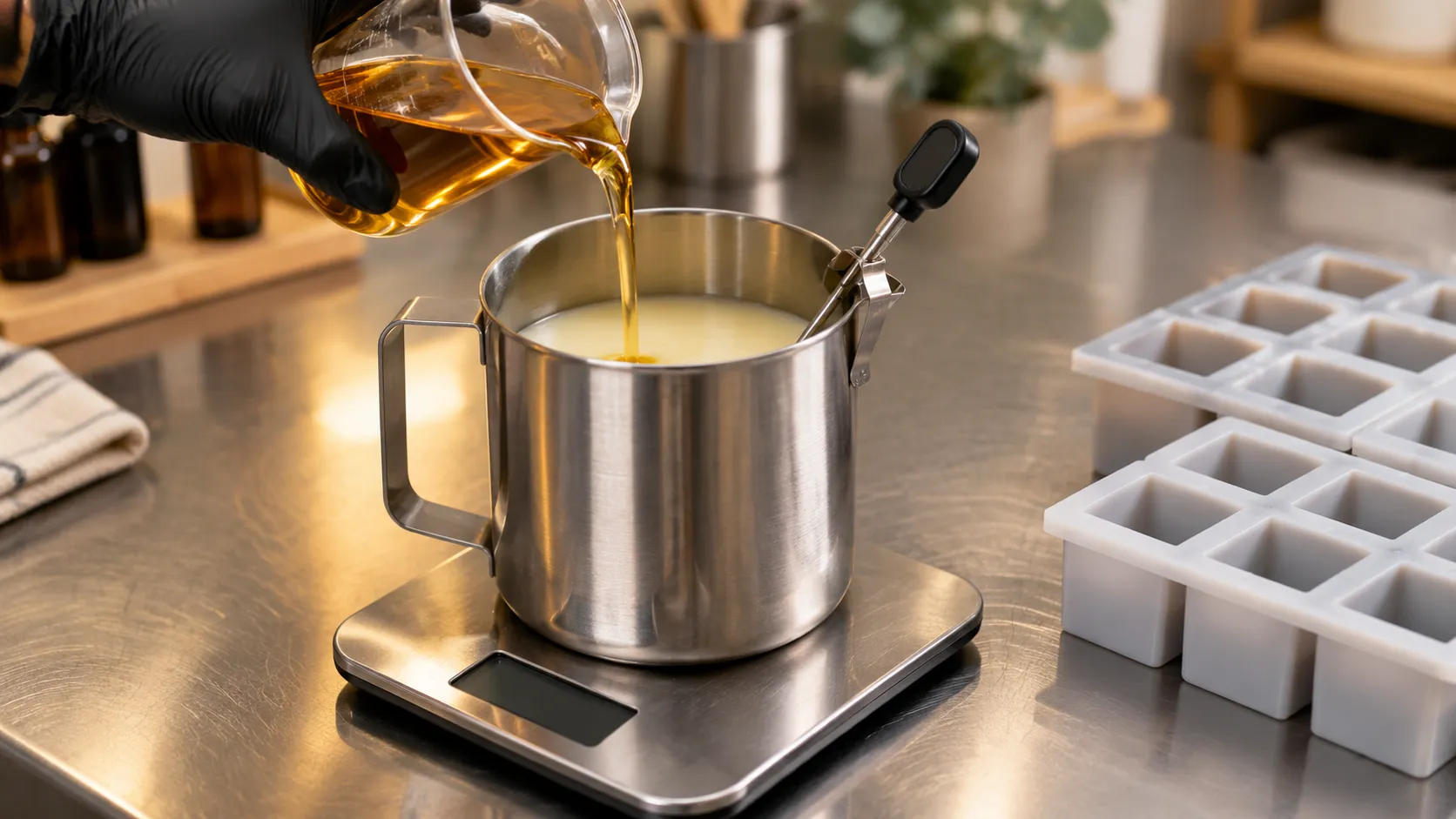
The best smelling wax melts are the ones that still smell right on a customer’s warmer two hours in, and you only find that out after the wax has cured. Cold throw, the scent straight from the pack, sells the first unit; hot throw, the scent while melting, earns the second.
CandleScience defines hot throw as fragrance strength while a candle is burning and runs its check after at least two hours and no more than four; a melt panel can borrow that window unchanged. It also lists what a test cannot control, from high ceilings and humidity to draughts. Write the room, the warmer and the time on every score sheet.
Curing is where most sample comparisons go wrong. Fragrance needs time to settle into the wax, and the time depends on the wax: CandleScience says paraffin waxes need three to five days and soy and other natural waxes at least one to two weeks, and calls two weeks ideal for its 464 soy. Put a paraffin sample and a soy sample through the same day-three sniff test and you have measured the cure, not the fragrance.
Source: CandleScience, Candle Making 101: Hot Throw; Getting Started with AAK 464 Soy Wax; How to Make Soy Wax Melts. Retrieved 2026-10-21.
Room and nose come next. By the National Candle Association’s count, candle users burn most often in the living room (42%), ahead of the kitchen (18%) and the bedroom (13%), so a melt that fills a sample cupboard has not been tested where it will be used. Noses disagree too. Keller and colleagues showed in Nature in 2007 that human smell perception differs enormously between individuals, and that a common variant of a single odour receptor changes how strong and how unpleasant people find one class of odour. One buyer’s verdict is a sample of one; three people scoring blind is a panel.
Scent family matters as much as strength. Grand View Research found that floral fragrances held the largest share of North American wax melt revenue in 2024, with fruity scents forecast to grow fastest. Anchor the bay in the family that already sells and trial the faster-growing one in small quantities.
Melt Life: Ask How the Hours Were Measured
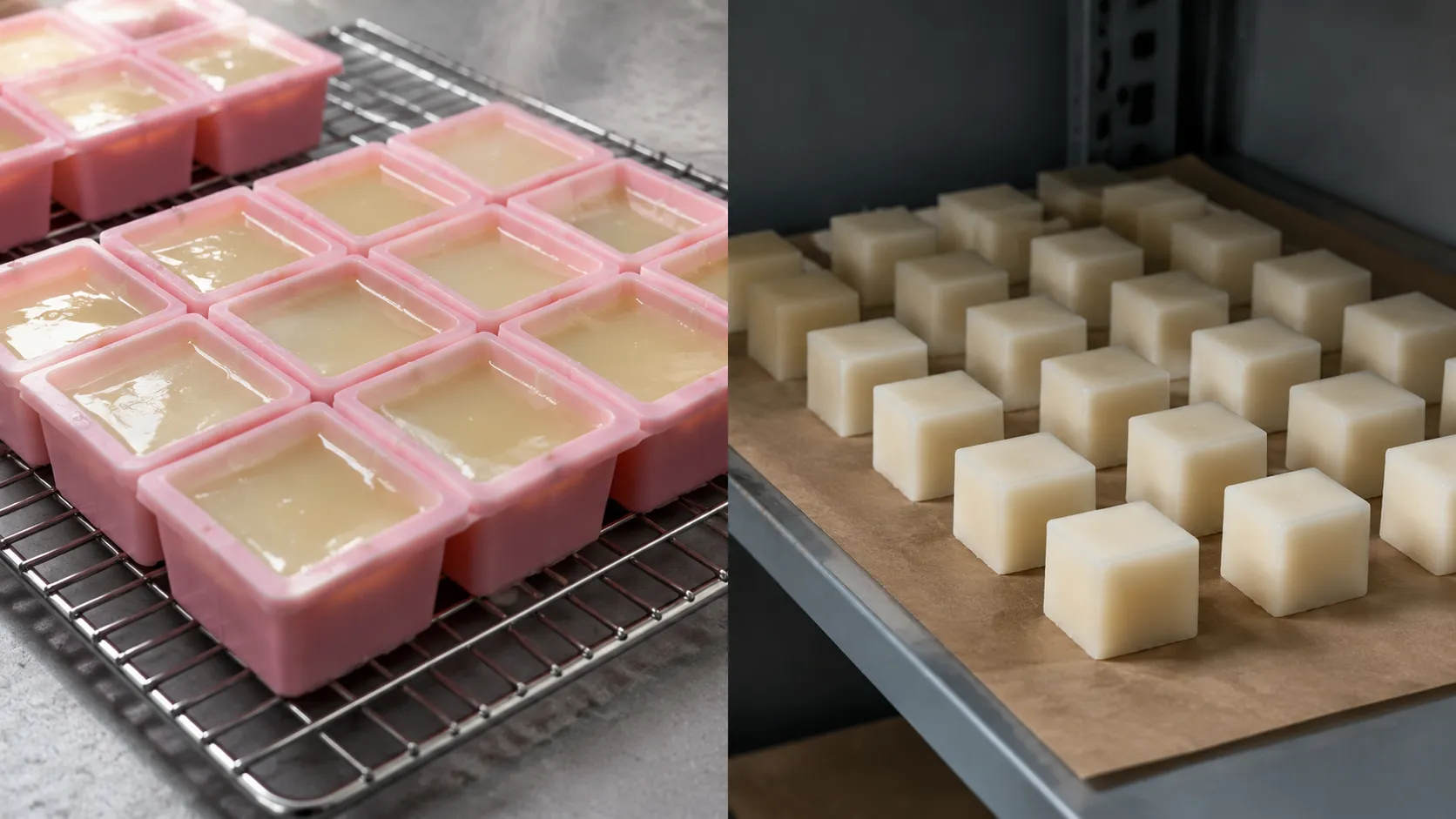
Treat any hours-per-cube figure as a test result and ask for the test behind it. Published figures from melt makers disagree by roughly a factor of two, a gap explained in how to use wax melts, so this section covers what to ask.
Four conditions change the answer: the warmer’s heat, the session length, the room and the point at which the scent is judged finished. About three-fourths of candle users burn for 4 hours or less per sitting (National Candle Association), so an hours figure measured on a warmer left on all day describes a habit few customers have. An hours claim should arrive with the warmer, the session pattern and the end point attached; keep the supplier’s test log on file and print an hours range with its condition rather than a single headline number.
Pack Format: Clamshells, Bars, Sachets and Tins
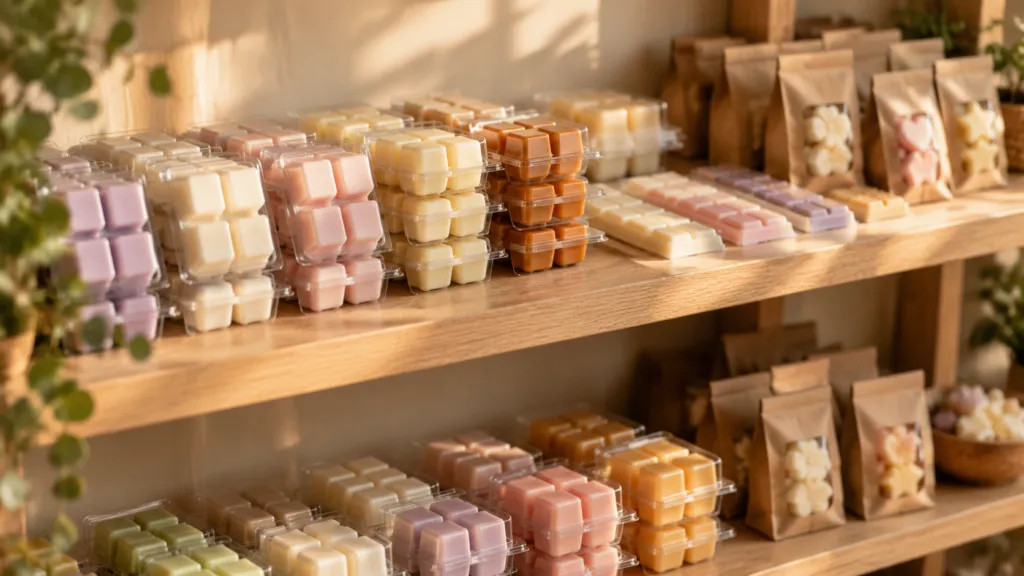
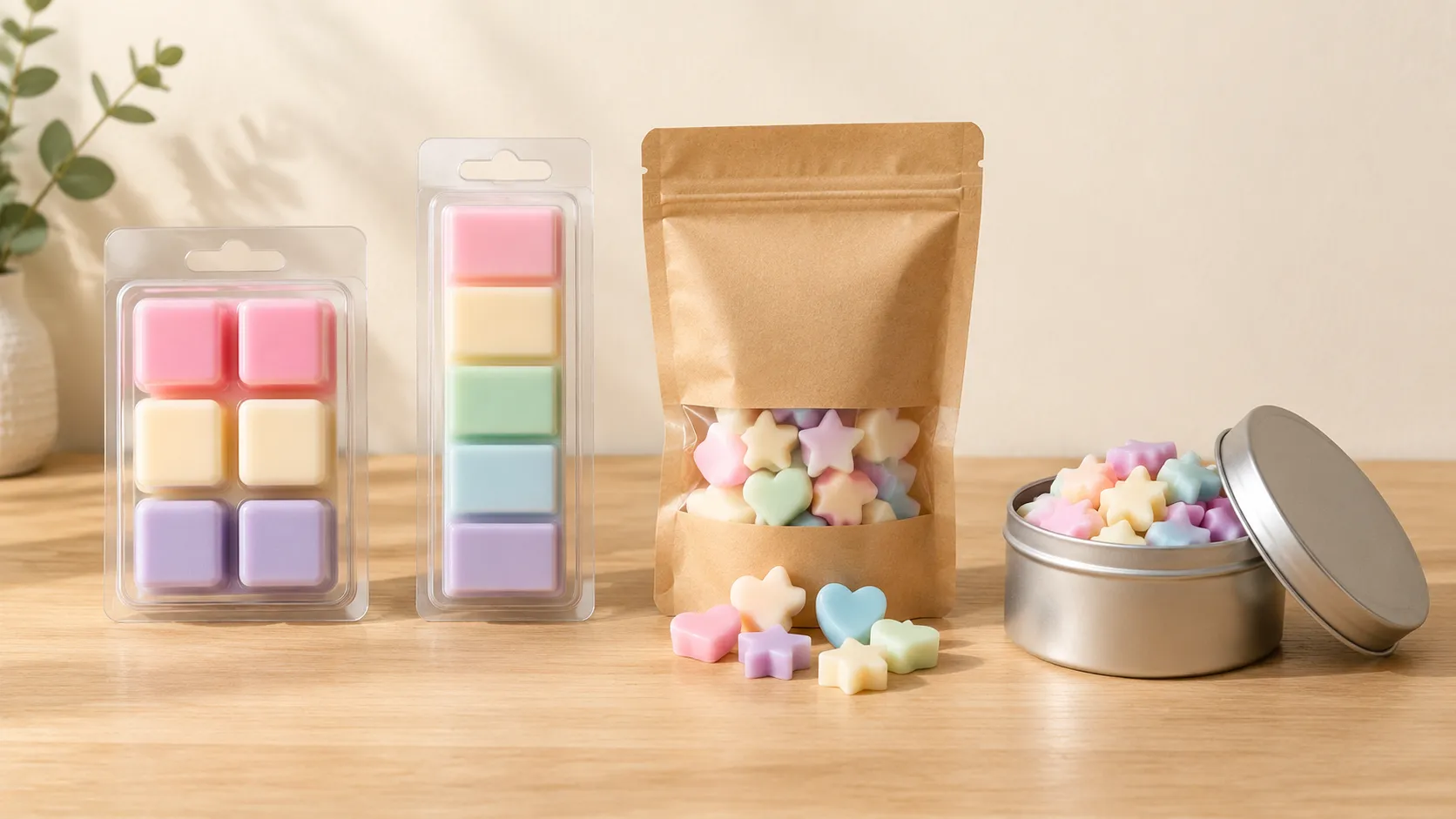
Pick the pack for how the bay sells, then check it leaves room for the label the destination market expects. Grand View Research found clamshells held the largest share of North American wax melt revenue in 2024 and cubes the largest share by form, with bags and sachets forecast to grow fastest among packs and square forms fastest among shapes.
Label space is the constraint first-time buyers forget. The 2024 advice pack from the British Candlemakers Federation and Cornwall Council Trading Standards, written for UK makers of candles, diffusers and wax melts, treats a scented melt as a mixture under the CLP rules (British Candlemakers Federation). On UK and EU shelves, where a formulation is classified as hazardous or carries hazardous components above the CLP thresholds, that label has to be firmly affixed to the packaging that immediately contains the mixture, with tie-on tags, fold-out labels or fuller information on an outer box allowed only where a small or awkward pack makes that impossible. A sachet of tiny shapes can look charming in a mock-up and fail at the proof stage.
| Format | What it does well | What it costs you | Label space | Best for |
|---|---|---|---|---|
| Clamshell tray of cubes | One moulded tray that portions the cubes and stacks on shelf; the customer snaps out one cube at a time | A plastic part per pack and a fixed cube count | Generous on the lid, easy to print | The core bay and repeat scents |
| Snap bar | Same portioning in a flatter footprint that hangs or lies flat | Segments that break unevenly in a warm store | Back of the blister, narrower | Peg walls and impulse lines |
| Bag or sachet of shapes | Photographs well and packs quickly | Depends on its seal to hold the scent once opened | The tightest; tags or fold-out labels may be needed | Gifting, trial sizes, seasonal shapes |
| Tin or pot | Reads premium and reseals | A lid that has to seal and be tested, at a higher unit cost | Lid and base, curved | A premium tier beside the core bay |
Shape carries a rule of its own. In Great Britain, the Food Imitations (Safety) Regulations 1989 still cover products a child could mistake for food (Business Companion, Chartered Trading Standards Institute), and the 2024 advice pack tells makers not to make candles, or any associated product, that look like food or are likely to attract the curiosity of children. Dessert-shaped melts are the format where that question belongs in the brief rather than after the mould is cut.
Leave space for a batch label too. The advice pack lets the batch number label for traceability sit anywhere on the product or packaging, and the label also has to carry the nominal quantity, a weight in grams for wax melts.
Choosing the Best Brand of Wax Melts by Its Paperwork, Not Its Fans
The best brand of wax melts for a store is the one that can hand over the paperwork behind every scent, batch after batch; popularity is a reason to sample a brand, not a reason to stock it. The checks apply equally to a famous name, a small maker and a factory pouring your own label.
Start with the label, on UK and EU shelves. Under the CLP rules summarised in the 2024 advice pack, a mixture containing a sensitising fragrance substance at 0.1% or more generally needs a statement naming it and warning that it may produce an allergic reaction, and above about 1% the whole mixture is classified as a sensitiser and needs a pictogram, a hazard statement and precautionary statements. The thresholds apply formulation by formulation, so one generic warning repeated across twenty scents is worth a question.
Then the documents that travel with the goods. Where a formulation is classified as hazardous or carries hazardous components above the thresholds, the pack says a supplier who is not selling directly to the end user, for instance a maker supplying hotels, cafes or a retailer, has to produce and provide a safety data sheet for each formulation supplied. Add whatever fragrance documents exist for each oil, including its Category 12 certificate. The pack also notes that CLP Article 25(4) bars label statements such as non-toxic or non-harmful that indicate a product is not hazardous or are inconsistent with its classification, which makes a non-toxic promise on a UK or EU melt label a red flag rather than a selling point.
Consistency is the check fans never run. The pack expects makers to keep a technical file of formulas, safety data sheets, labels and test records for a minimum of 6 years and to make it available to Trading Standards on request, so a supplier asked for last season’s formula sheet should be able to find it.
| Check | What a good answer looks like | Red flag |
|---|---|---|
| Wax blend | Composition by weight and the wax grade, per scent if blends differ | An adjective such as natural, with no grade behind it |
| Fragrance load | The load each scent actually runs at, with the IFRA Category 12 certificate for each oil | One number quoted for the whole range |
| Throw | A test after full cure, in a named warmer, judged between hour two and hour four | Samples sent days after pouring and judged out of the pack |
| Melt life | An hours figure with the warmer, the session length and the end point stated | A headline number with no conditions |
| Label | A label per formulation, with allergen statements where the thresholds are met | One generic warning across every scent |
| Trade documents | A safety data sheet for each formulation supplied to the shop, where the formulation is classified as hazardous | Documents promised after the purchase order |
| Batch consistency | A batch label on the pack, and a retained sample you can compare against | No batch code, or a formula sheet nobody can find |
Pairing Melts With the Warmer, and Pouring Your Own Line
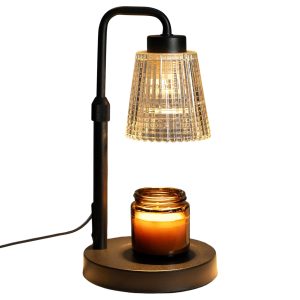
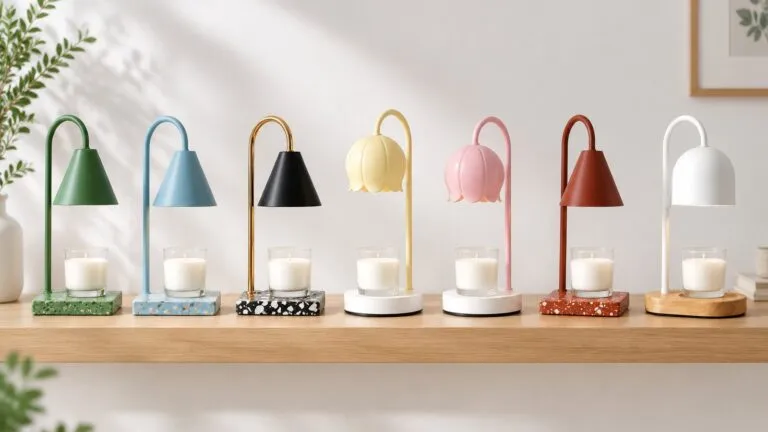
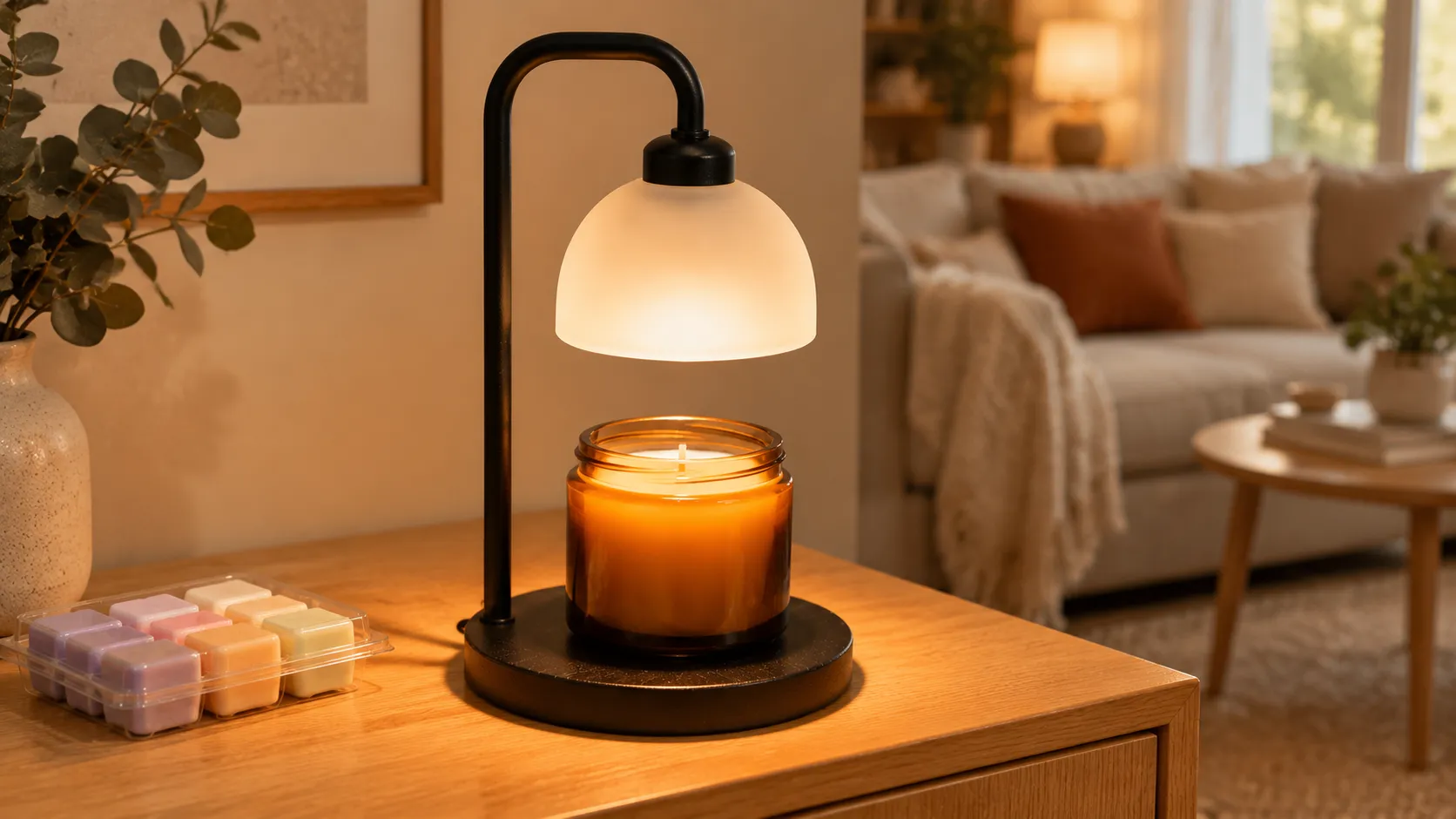
Melts and the warmer that melts them belong on the same shelf, and the warmer decides which melts fit there. A top-down lamp is a different heat source from a melt warmer: it warms a jar candle from above with a bulb, and a unit built to take melts as well as jars is an ODM build to confirm at quotation, not a catalogue lamp. The lamps themselves are in our candle warmer lamps range.
We pour our own wax in Foshan, on the same site as the lamps, so a retailer building a private-label melt line talks to the factory that pours it. Scent, fill weight and pack for a melt programme are confirmed at quotation against your brief, and the lamp and the soy jar candles in lavender, vanilla and citrus in our accessories range can be planned in the same programme.
Candle accessories are one of the lines we private-label under OEM and ODM, and the six steps below are where a melt conversation starts.
Write the brief around the warmer
Name the warmer type your customers own, the rooms they scent and the scent families you want.
Ask for the blend and the load per scent
Composition by weight, the load each scent runs at, and which fragrance documents exist for each scent, including the IFRA Category 12 certificate, before any sample is poured.
Let the samples cure
Hold paraffin waxes for three to five days and soy and other natural waxes for at least one to two weeks. Nobody sniffs before the date on the bag.
Test blind in a living-room-sized space
Same warmer, same session, three noses, scores written between hour two and hour four.
Approve the label and the pack together
Allergen wording where a scent needs it, a batch label and enough flat area for both, signed off on the same proof.
Warm the second batch beside the first
Keep a retained sample from delivery one and compare the reorder against it before it reaches the bay.
Plan the lamp and the melt line with one factory
We build candle warmer lamps and pour our own wax in Foshan, on a 4,000 square metre site with 40 people and two production lines. Send the warmer type you sell, the scent families you want to test and the markets you ship to, and we will scope a melt line alongside the lamps.
Watch it work
Cold throw or hot throw, in 38 seconds:
FAQ
Best wax melts brands?
We do not rank them, and a list that does should say how it tested. A workable shortlist starts with the scents and formats your customers already ask for by name. Put three candidate brands through the same warmer, the same room and the same week, then keep the one whose documents arrive as fast as its samples.
Are wax melts smellier than candles?
Often, because a melt can carry more fragrance oil than most jar candles: CandleScience says melts and tarts can hold more fragrance than most candles, and Purdue’s 2025 release says melts contain a higher concentration of fragrance oils than many candles. The cure and the warmer’s heat still decide what reaches the room, so the fair comparison is the same fragrance, in the same room, for the same length of session.
Where can I find cheap wax melts?
For a retailer, cheap usually means one of three savings: a lower fragrance load, a shorter cure or a simpler pack. The first two show up in the warmer and come back as complaints; the third is often harmless. If price has to move, negotiate on pack format and order structure, and keep the load and the cure exactly where they were in the sample you approved.
Sources
Every external figure above was checked on 2026-10-21: market size and segment leaders from Grand View Research, buyer and usage figures from the National Candle Association, cure times, fragrance loads, throw testing and the IFRA category from CandleScience’s published guidance, labelling, data sheet and record rules from the 2024 advice pack of the British Candlemakers Federation and Cornwall Council Trading Standards, the food-imitation rule from the Chartered Trading Standards Institute’s Business Companion, the emissions finding from Purdue University, and smell variation from the Nature paper cited in full below.
- Grand View Research, North America Fragrance Wax Melts Market Size Report, 2030 (USD 2.59 billion in 2024, USD 2.88 billion in 2025, USD 4.98 billion by 2030 at a 9.5% CAGR; electric melt warmers, floral fragrances, cubes and clamshells each held the largest 2024 revenue share in their segment; fruity fragrances, square forms and bags or sachets forecast to grow fastest), retrieved 2026-10-21.
- National Candle Association, Facts and Figures (three-fourths of candle buyers rate fragrance extremely or very important; about three-fourths of users burn for 4 hours or less per sitting; living room 42%, kitchen 18%, bedroom 13%), retrieved 2026-10-21.
- CandleScience, Candle Making 101: Hot Throw (cold and hot throw defined; hot throw judged after at least two and no more than four hours; paraffin waxes cure 3 to 5 days, soy and other natural waxes at least 1 to 2 weeks; room and individual variables), retrieved 2026-10-21.
- CandleScience, Getting Started with AAK 464 Soy Wax (maximum fragrance load 10%, recommended start 6%, too much fragrance may not give a stronger scent, two-week cure ideal), retrieved 2026-10-21.
- CandleScience, How to Make Soy Wax Melts (tutorial load 10% in a soy pillar wax rated up to 25% for melts; cure 1 to 2 weeks; a high-heat bulb warmer for maximum throw; melts and wax tarts can hold more fragrance than most candles), retrieved 2026-10-21.
- CandleScience, How to Use the IFRA Certificate (each fragrance has its own certificate; Category 12, air care not intended for skin contact, includes candles and wax melts), retrieved 2026-10-21.
- British Candlemakers Federation and Cornwall Council Trading Standards, Candlemakers Advice Pack, 2024 (written for makers of candles, diffusers and wax melts; scented candles, reed diffusers and wax melts are mixtures under CLP; SDS and CLP labelling duties apply where a mixture has hazardous properties or hazardous components above specified concentrations, determined for each formulation; sensitiser thresholds of 0.1% and 1%; a safety data sheet for each formulation when supplying a retailer; labels affixed to the immediate packaging, with tags, fold-out labels or outer packaging for small packs; nominal quantity in grams for wax melts; batch number label anywhere on the product or packaging; technical file kept at least 6 years; CLP Article 25(4) on non-toxic statements; Food Imitations Safety Regulations 1989 and the advice not to make products that look like food), retrieved 2026-10-21.
- Chartered Trading Standards Institute, Business Companion, Food imitations (guidance for England, Scotland and Wales; the Food Imitations (Safety) Regulations 1989 prohibit supplying products that look like food but are not edible where children could mistake them for food; last reviewed June 2026), retrieved 2026-10-21.
- Purdue University, Air inside your home may be more polluted than outside due to everyday chemical products, February 2025 news release (scented wax melts release terpenes that react with ozone to form nanoparticles, polluting indoor air at least as much as candles; wax melts contain a higher concentration of fragrance oils than many candles; study published in Environmental Science and Technology Letters), retrieved 2026-10-21.
- Keller, A., Zhuang, H., Chi, Q., Vosshall, L. B. and Matsunami, H., Genetic variation in a human odorant receptor alters odour perception, Nature, 2007, volume 449, issue 7161, pages 468–472 (human smell perception differs enormously between individuals in intensity and pleasantness; a common OR7D4 variant changes sensitivity to androstenone), record checked 2026-10-21.
