


Ask a retail buyer how to use a candle wax warmer and you get a shrug, because the carton makes it look self-evident: plug it in, slide the jar underneath. Then the complaints arrive. The shade sits too high and nothing melts. It sits too low and the glass runs hot at the rim. The lamp is at full brightness at ten at night, so it gets unplugged and never comes back out. A bulb dies and nobody knows what to order. None of that is a defect, and all of it reaches your counter as though it were.
This page is the operating card, not the category explainer. What the device is and how heat gets into the wax belongs to our candle warmer lamp category primer; running temperature and the auto-off case sit in the safety explainer. What follows is six steps a shop assistant can run in front of a customer, and the sentence to say at each one.
Each step hangs on a piece of hardware, which is why the card is worth printing rather than memorising. The stem and the dimmer settle the complaints that arrive in the first week; the timer and the spare bulb settle the two that turn up later, once the lamp has become furniture. Buyers speccing an assortment rather than working a counter should start from the candle warmer lamp range and come back to this page when the first pallet lands.
Key takeaways
Six steps close most of the complaint log: unbox and place, set the shade height, start bright then dim, set the timer, swap the bulb, change the jar. Knowing how to use a candle wax warmer is a settings problem rather than a product problem, and every setting lives on the lamp.
- The target temperature is low: soy begins melting around 120 to 130°F (Seventh Avenue Apothecary), while the same wax is poured at 180 to 185°F (Lone Star Candle Supply).
- A pool takes most of a session to form, not ten minutes, so the customer who switches off early has not bought a faulty lamp. The minutes are a per-model figure off the leaflet, not an industry number.
- The wax is not consumed, the fragrance load is. That is why a jar can look full and be finished, and why the attach-sale is another jar rather than another lamp.
- Timer steps of 2, 4, 8 and 10 hours match a habit people already have: roughly three-fourths of candle users say they burn a wicked candle for 4 hours or less per sitting (National Candle Association).
- A bulb swap is a fitting question first: GU10 twist-lock, then the wattage printed on the lamp, then the spare you already stock.
The six steps, in the order a customer will run them
Nothing here is difficult. It is simply never written down, so each shop reinvents it and each customer gets a different half of it. Run it once at goods-in on the first unit of a new model, and again in front of the first customer who asks, and it becomes a two-minute demonstration.
Unbox and place
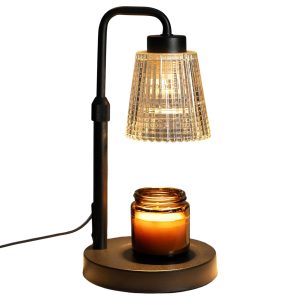
Check the bulb is seated and the spare still in its sleeve. Run the stem through its full travel once. Press a corner of the base: one that rocks walks the jar out from under the bulb over an afternoon.
Set the height
Lid off, jar centred, then set the gap between bulb and wax. This decides whether anything melts, and nobody revisits it as the jar goes down.
Start bright, then drop
Full output builds the pool. Once the surface is liquid edge to edge, step the dimmer down and leave it there.
Set the timer
Pick the step that matches the evening rather than the one that sounds generous. Four hours covers most sittings and ends the session without anyone remembering to.
Swap the bulb
Fitting first, then the wattage printed on the lamp, then the spare you already stock. A cold head is almost always a dead bulb rather than a dead lamp.
Change the jar
Change on scent, not on level. Let the head cool, lift the old jar out, wipe the rim, and put the next one in. Cleaning the head itself belongs to the safety explainer.
One placement line comes from fire-service guidance rather than house style: keep anything that can burn away from lamps, light fixtures and light bulbs, and use lightbulbs that match the recommended wattage on the lamp or fixture (U.S. Fire Administration). Why a flameless head and an auto-off step change the risk picture at all is argued in our safety explainer; this card stops at the two rules staff can repeat out loud. The short answer to how to use a candle warmer already sits in the FAQ on our height-adjustable cylinder shade lamp page. This is the long version, written for the person who has to give that answer forty times a season.
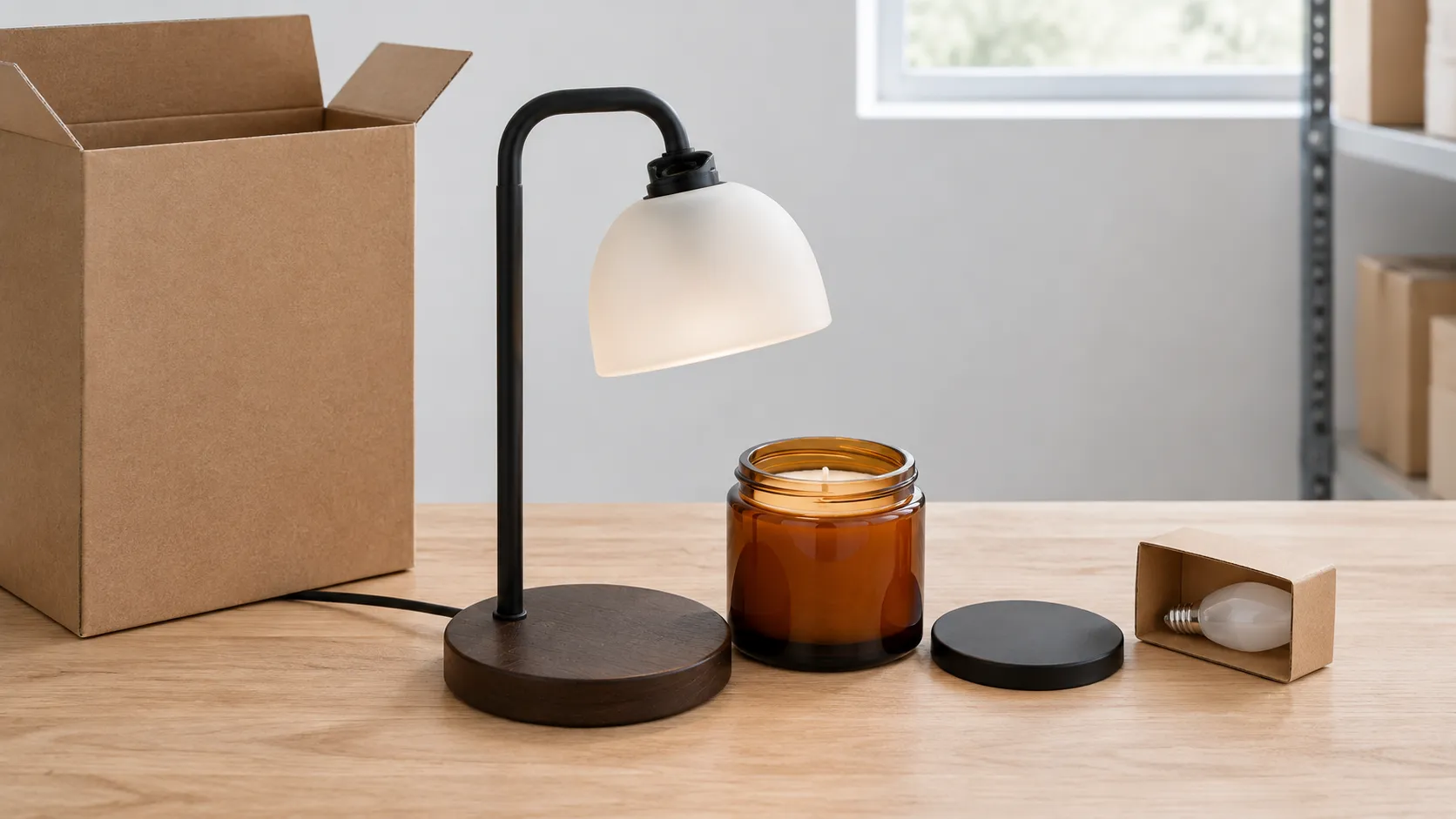
Setting the shade height, the step most complaints trace back to
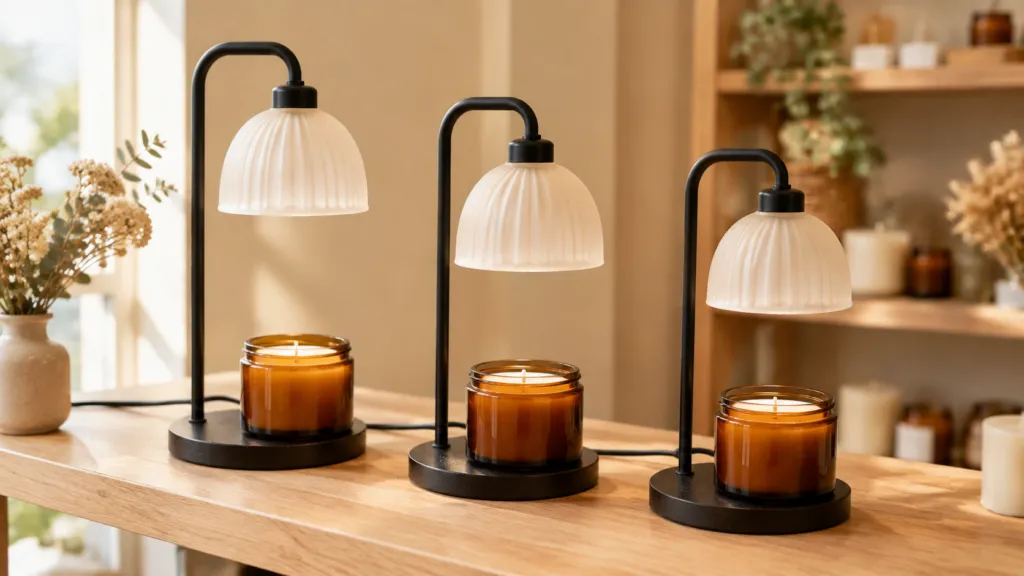
The gap between the bulb and the wax surface decides whether the jar melts, and it is the setting nobody touches twice. Too far and the heat spreads before it arrives, so a pool forms only under the middle of the shade, if at all. Too close and the rim of the glass takes more heat than the wax in the centre does. Take the starting gap from the leaflet that ships with the model rather than from a figure lifted off another brand’s blog, then judge it by result: the gap is right when the surface goes liquid edge to edge.
The gap also moves on its own, which is the part that produces the week-four complaint. A tall jar starts close to the bulb and drifts away as the level drops, so a fixed-height lamp that performed in week one stops keeping up. On an adjustable model the stem is the answer: loosen, raise or lower the arm, retighten, and reset it once when the jar is about half gone. Why an adjustable arm covers more of a shelf is argued in our piece on top-down candle warmers.
Sizing a head to an unusual jar is a selection question rather than an operating one. If a customer asks how to use a candle warmer lamp with a jar that will not fit under the shade at any height, the honest answer is a different head, and the fit ranges are on the height-adjustable glass cone lamp page.
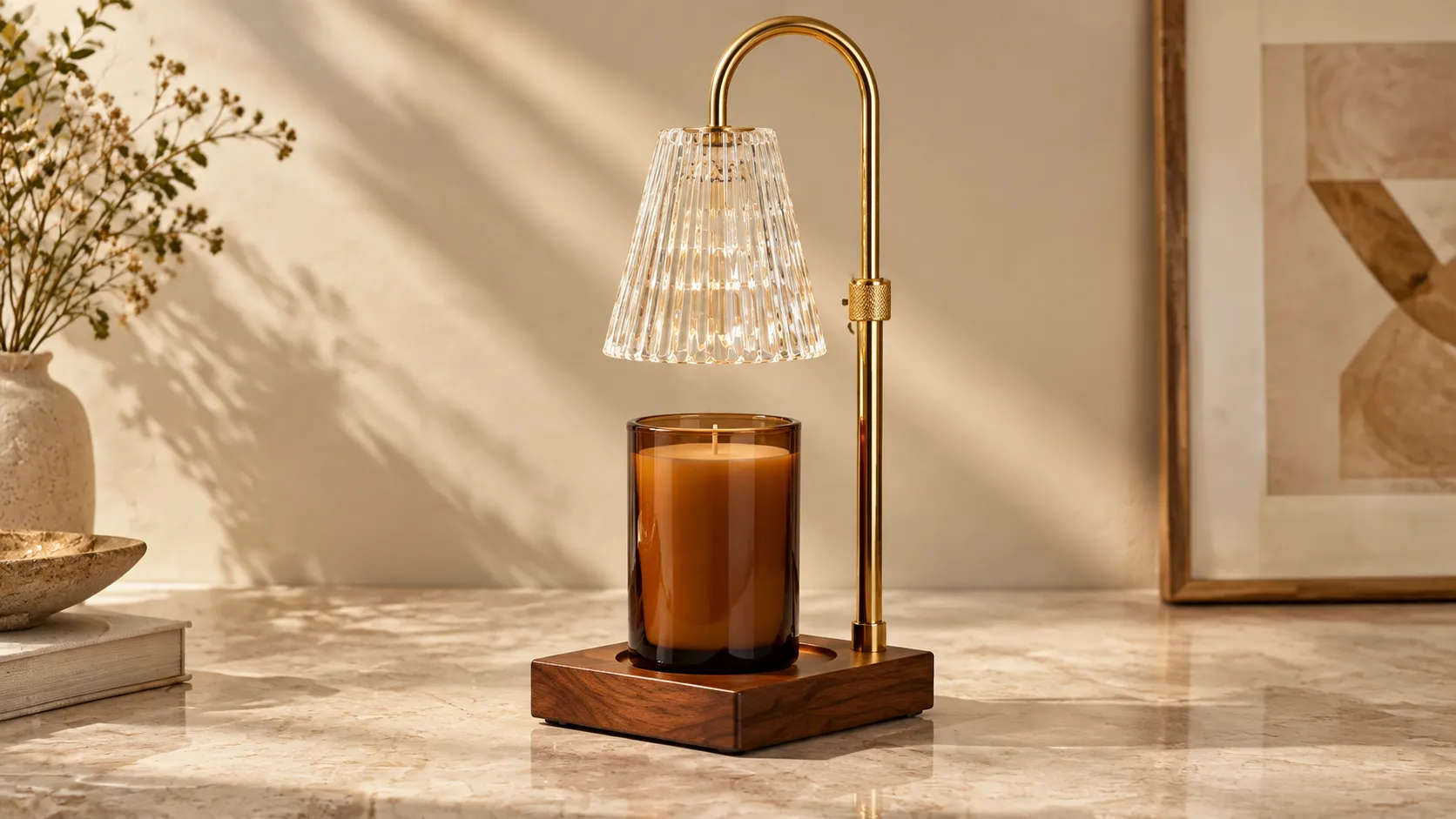
Do candle warmers melt wax, and how much of the jar?
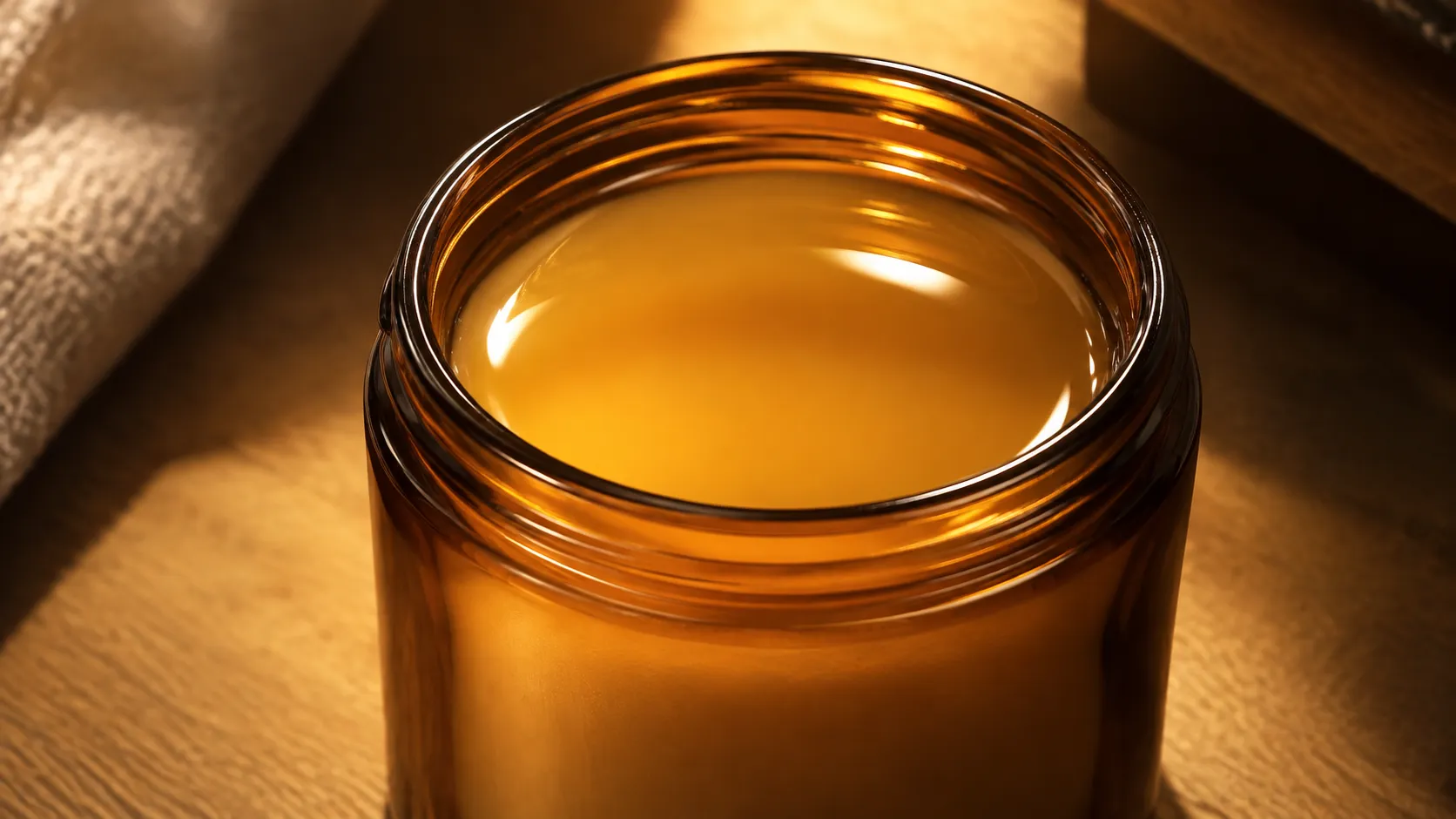
They do, and the accurate version is that they melt a layer rather than a jar. Heat from above brings the top of the wax to the low end of its melting range and stops there, while the wax underneath stays solid. That shallow layer is the whole working part of the product.
How low is low? Most soy wax begins melting around 120 to 130°F (Seventh Avenue Apothecary), while the same container wax is brought to 180 to 185°F before it is poured (Lone Star Candle Supply). The head reaches the first figure and never goes near the second, which is why the fragrance survives the trip and why one jar can be melted and remelted. Which wax suits which head across a whole assortment is a selection question rather than an operating one, and our pairing guide works through it.
Timing is where the complaint starts. A customer who switches on, sniffs at ten minutes and switches off has watched the product fail at a fraction of its job, because the surface is still coming up to temperature. There is no industry figure to quote back, either: the voluntary candle accessory standards on the Consumer Product Safety Commission list cover fire safety and terminology, not how long a pool should take. Use the time from the leaflet of the model you stock, print it on the card, and say it before the sale rather than after the return.
The related question, do candle warmers use up wax, has an answer most shoppers find surprising. Nothing is burned, so the level barely moves; what runs down is the fragrance oil, released a little at a time from the same pool until the scent goes, at which point the wax is replaced and the vessel is not. As for why it melts only a circle: a jar wider than the shade keeps a collar of hard wax against the glass, a width mismatch rather than a time problem, so the fix is a wider head or a narrower jar, never more time. How the heat gets into the wax at all is the subject of our category primer.
The dimmer and the timer: two dials staff should demonstrate
Our timers run four steps at 2, 4, 8 and 10 hours, and the dimmer runs four steps at 10, 30, 70 and 100 percent. Printed on a spec sheet those are two lines nobody reads. Demonstrated at the counter they close the two most common evening complaints in about fifteen seconds.
Run the lamp at 100 percent to build the pool, then drop to 30 or 10 percent to hold it. The bright step is the working step and the low steps are the living-with-it steps; a customer told only about the first is the one who reports the lamp as too bright to leave on. For the timer, demonstrate the 4 hour step by default. Roughly three-fourths of candle users say they typically burn a wicked candle for 4 hours or less per sitting (National Candle Association), so that step matches a habit people already have.
Sources: our own four timer steps (2, 4, 8 and 10 hours), with switch-off times calculated by us from a 6 p.m. start; National Candle Association, Candle Industry Facts and Figures (three-fourths of users burn a wicked candle 4 hours or less per sitting). Retrieved 2026-09-20
Setting a timer is not the same argument as justifying one. Why an auto-off step lowers risk belongs to our safety explainer; on this card the timer is a dial with four positions and a demonstration. Keep one unit carrying both dials on the counter as the demo piece, set the way you would tell a customer to set it, so the shelf default is the demonstration rather than a performance.
Two buyers outside gift retail set these dials once and then leave them alone. Hotel housekeeping wants one timer step and one dimmer step written into the room checklist, so a unit still running at three in the morning is impossible rather than unlikely. A marketplace seller wants the same two settings in the opening A+ module, because a review complaining the lamp is too bright is usually an instruction nobody read.
What watt bulb for wax warmer is the wrong first question
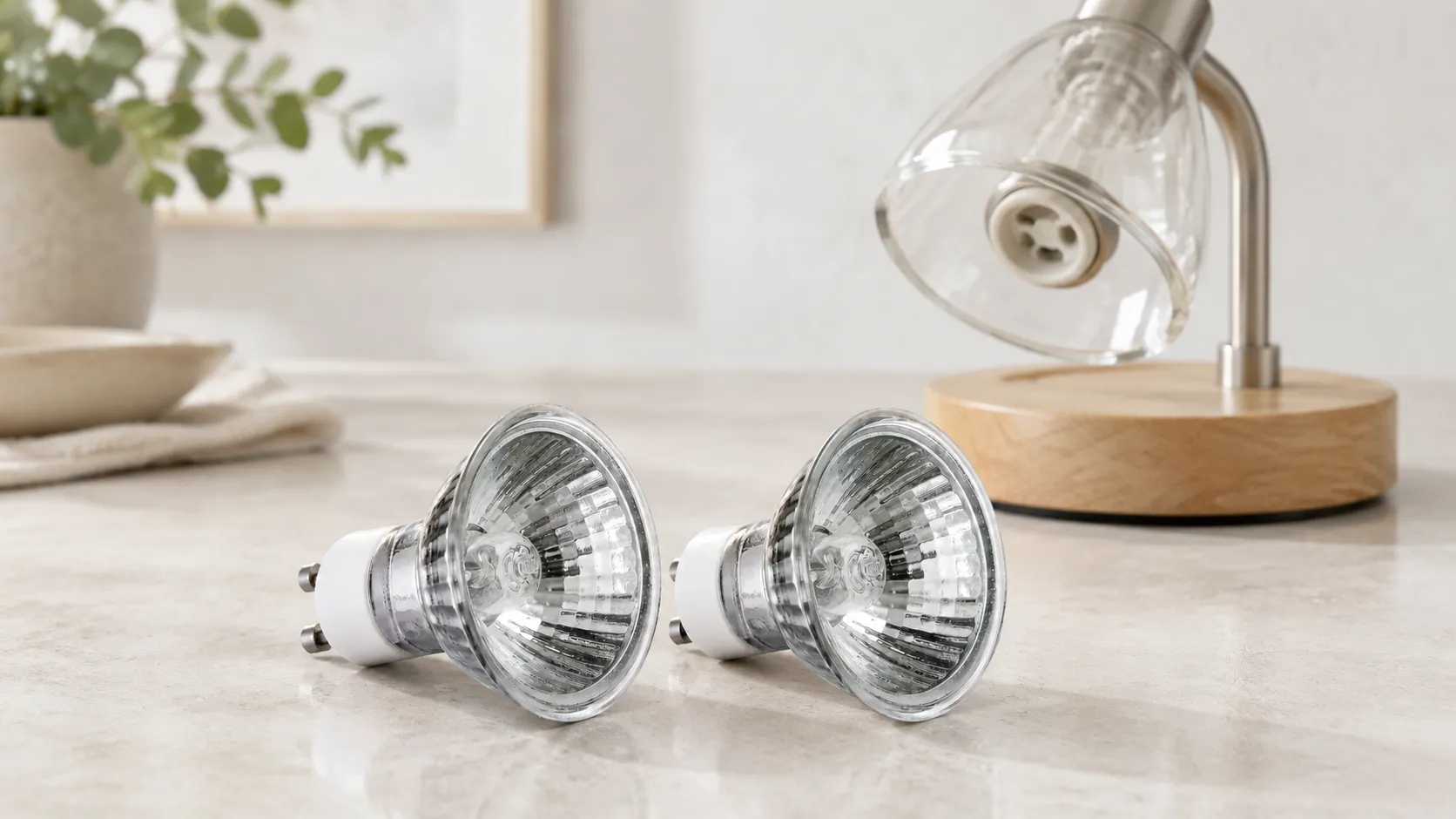
Fitting first, wattage second, stock level third. The fitting on our lamps is GU10: two pins and a quarter turn, not a push fit. A customer holding any two-pin bulb is not holding the right bulb by default, and getting that wrong is a common reason a returned lamp turns out to work perfectly on the bench. Looking at the cap before ordering anything is the whole of step five.
Wattage is read off the lamp, not off the bulb that died. The fire-service rule is the plain one: use lightbulbs that match the recommended wattage on the lamp or fixture (U.S. Fire Administration). The figure printed near the socket or in the leaflet is a ceiling, and a brighter bulb does not buy a faster melt, it buys heat the fitting was not designed to shed. Wattage by model, and which spare goes with which head, lives on the GU10 halogen replacement bulbs page rather than being restated here.
Third comes the step retailers skip: settle a spares ratio and put it on the same purchase order as the lamps, so the first bulb failure is a two-minute sale instead of a support ticket. One limit is worth stating plainly. A halogen bulb is a consumable, and a display unit running open hours gets through them noticeably faster than a home unit does. We list our GU10 halogen as a warmer accessory rather than a lighting product, because on this shelf that is what it is.
How to use wax melter, wax warmer and candle warmer as one shelf vocabulary
Three names, one device, and a shop floor that uses all three inside a single conversation. A customer who asks how to use wax melter hardware is usually holding a jar candle in the other hand. The sentence that ends it is short enough to print: wax melter, wax warmer and candle warmer name the same thing on this shelf, and what changes is what goes under the head, a jar or a tray of melts.
The vocabulary is not standardised anywhere a shopper would look. ASTM does publish a terminology guide for candles and associated accessory items, F1972-19, carried on the Consumer Product Safety Commission list of voluntary candle standards alongside F2601-18, whose scope is minimum safety requirements for candle accessories to help ensure a reasonable degree of safety for normal use with candles (ASTM International). Useful for a compliance file, useless at the till.
Which physical format suits which shopper, and how listing copy should handle the naming, is worked through in wax melt warmer vs candle warmer lamp. The consumable side, how many cubes to load and when to change them, has its own shelf card in how to use wax melts. This one stays with the jar.
Changing the jar, and the two questions that arrive with it
The head is only half the sale, and the other half comes back every six weeks. Which jar belongs under which head across an assortment is the subject of our pairing guide, and jars that will not go under a shade at any height are sized on the glass cone lamp page. What belongs on this card is the change itself.
Change it cold, and change it in one order. Switch off, give the head a few minutes, then lift the old jar straight up rather than dragging it out from under the shade. Wipe the spot on the base where it stood, because a ring of set wax there stops the next jar sitting flat. Put the lid back on the jar coming out and keep the two together, so a half-used fragrance goes back under the head next month rather than drying out in a cupboard. Then centre the new jar, switch on and reset the height, because the jar going in is almost never the height of the one coming out. A wickless jar takes one more variable out of that sequence, which is why our 400 g soy jar is poured without one.
Two questions arrive with the jar. The first lands flat on the counter: are candle warmers toxic? That is an emissions and paraffin argument, answered in the safety explainer rather than on an operating card. The second is when to change the wax, and the answer is scent rather than level: the fragrance is spent long before the wax is, so a jar that still looks full can be finished. Fragrance is rated extremely or very important by about three-fourths of candle buyers (National Candle Association), so a customer told that plainly comes back for another jar instead of deciding the lamp has failed.
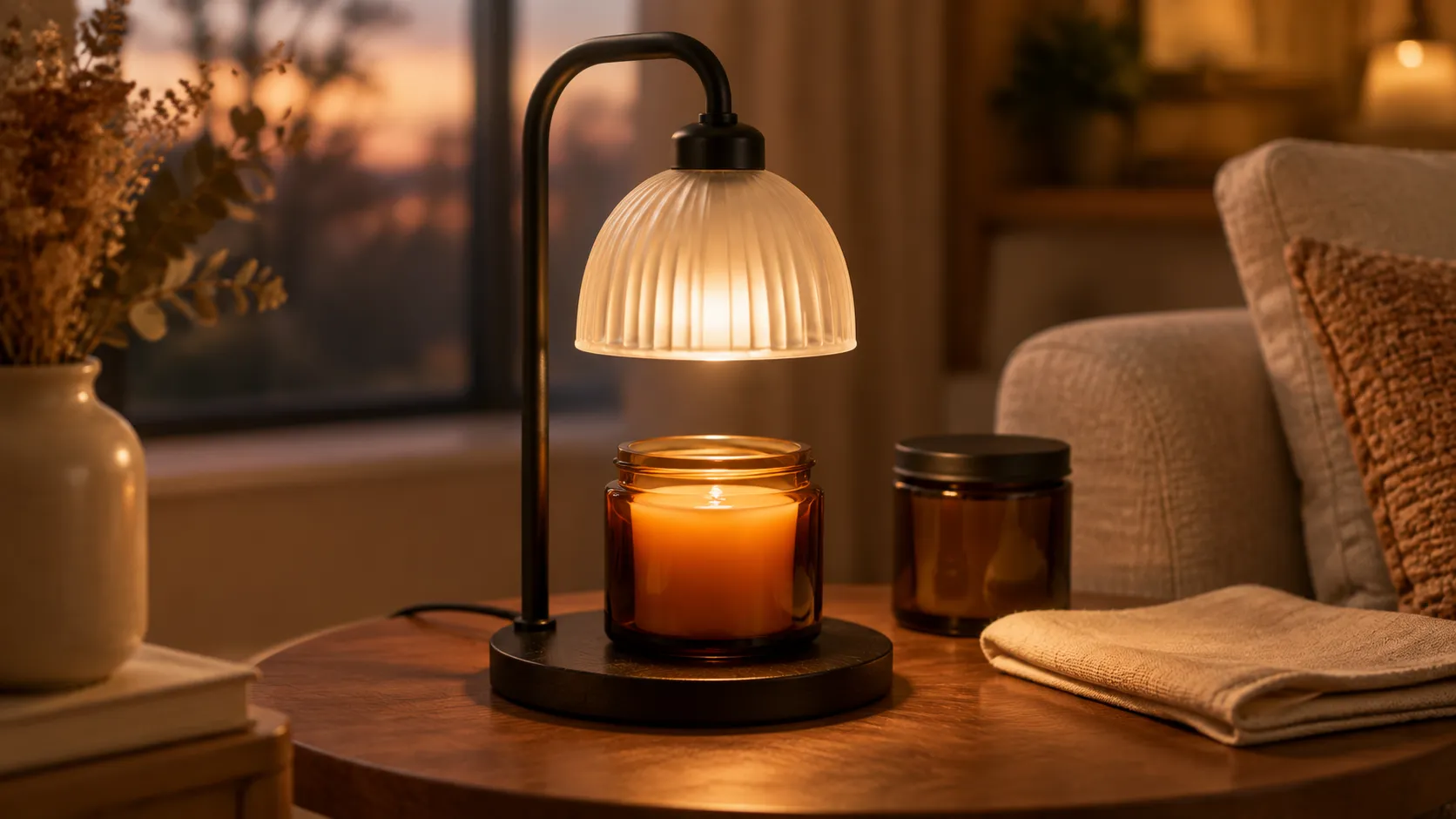
The complaint log, and what the card actually closes
Returns are what an expectation set wrong costs: retailers expected 15.8 percent of 2025 sales back, worth $849.9 billion, with 19.3 percent of online sales returned (National Retail Federation and Happy Returns). A warmer lamp return is rarely about the lamp. It is a setting nobody demonstrated, meeting a customer who had one evening to form an opinion. Each line below is cheaper to print than to process.
| What the customer says | The line on the card | Why it closes the complaint |
|---|---|---|
| It does not melt the wax | Give it the first hour, then check the gap | Sets the first-session expectation before the sale, not after |
| It only melts a circle in the middle | A jar wider than the shade keeps a collar of hard wax | Turns a suspected fault into a jar width question |
| It worked at first and then stopped | The wax dropped away from the bulb; reset the stem | Names the drifting gap while the customer still has the lamp |
| It is too bright to leave on in the evening | Full output to build the pool, then step it down | Splits one dial into a working setting and a living setting |
| I keep forgetting to switch it off | Set the four hour step the first time you use it | Moves the habit onto the appliance instead of the person |
| The wax is still there but the smell has gone | Change on scent, not on level | Converts a perceived fault into the next jar on the same visit |
The card outlives the counter it was printed for. A marketplace seller can lift the same six steps into the opening A+ module and onto the insert card in the carton, and the complaint rows above make a serviceable listing FAQ without another writing job. A hotel buyer can cut it to the two lines housekeeping will follow: one dimmer step, one timer step.
Two of those rows carry most of the weight: give it the first hour, and change on scent rather than level. Staff who can say both without checking close most of what walks back in. Keep the card to six steps; one that runs to a page gets read once and then laminated into furniture. Print it, tape it inside the till drawer, and how to use a candle wax warmer stops being an argument and becomes a demonstration. Buyers building the assortment behind that card will find the heads, the spares and the jars among our candle warmer lamps.
Spec the lamp, the spare and the jar on one sheet
We build the warmer lamps, pour the soy jars and pack the GU10 spares in our own factory in Foshan: 4,000 square meters, 40 people, two production lines. Bring the jar sizes you plan to card and the spares ratio you intend to stock, and we will quote the head, the consumable and the accessory together.
Watch it work
The lighter, the pool that takes a session, and the jar that looks full when it is finished, in 30 seconds:
FAQ
Can you use a wax warmer for candles?
That is what they are for, and the fit rules are short. The jar sits flat inside the base footprint and under the shade, with a rim low enough that it does not shade its own wax. A wicked candle bought elsewhere works too: leave the wick where it is and do not light it. The head runs at wax melting temperature, far below anything a wick needs. A wickless jar avoids the charred tip altogether, which is why most warmer ranges carry one.
Can one lamp warm two jars at once, or a jar and a tray of melts?
No, and say so before the customer tries it. The heat only covers what sits directly under the shade, so a second vessel pushed in alongside sits at the cool edge and gets a rim of soft wax rather than a pool. It also nudges the first jar off centre, which is the failure people then blame on the lamp. One head, one vessel. A customer who wants two fragrances running at once needs a second lamp, not a wider shade.
What should a shop do with a display unit that runs all day?
Put it on the lowest dimmer step and the longest timer step, so the unit switches itself off at close instead of relying on somebody remembering. Order spare bulbs for display units on their own line: a lamp running open hours every day works through a consumable several times faster than a customer unit, and a dark display is the most expensive kind of empty shelf.
Does the lid come off, or can it sit under the shade?
Off, and off the base as well. A lid left on traps the fragrance, which is the entire point of the appliance, and a metal lid propped against the jar under the head gets warm enough to be an unpleasant surprise. Park it beside the lamp or under the base if the base is wide enough, so it does not disappear between jars.
Sources
Every external figure above was checked on 2026-09-20. Wax temperatures are quoted as what candle trade sources publish rather than as our own testing, no temperature figure here describes a measured output of our lamps, and the timer chart is our own arithmetic on our own timer steps, labelled as such.
- U.S. Consumer Product Safety Commission, Candles and Candle Accessories (the voluntary standards list, which covers fire safety for candle accessories in ASTM F2601-18 and terminology in ASTM F1972-19 and sets no melt-pool timing), retrieved 2026-09-20.
- ASTM International, F2601-18 Standard Specification for Fire Safety for Candle Accessories (scope 1.1: minimum safety requirements for candle accessories to help ensure a reasonable degree of safety for normal use with candles), retrieved 2026-09-20.
- U.S. Fire Administration, Appliance and Electrical Fire Safety (use lightbulbs that match the recommended wattage on the lamp or fixture; keep anything that can burn away from lamps, light fixtures and light bulbs), retrieved 2026-09-20.
- National Candle Association, Candle Industry Facts and Figures (approximately three-fourths of candle users say they typically burn candles for 4 hours or less per sitting; fragrance rated extremely important or very important by three-fourths of candle buyers), retrieved 2026-09-20.
- Seventh Avenue Apothecary, The Best Temperatures for Melting, Pouring and Curing Soy Wax (most soy wax begins melting around 120 to 130 degrees F), retrieved 2026-09-20.
- Lone Star Candle Supply, Candle Wax Melting and Pouring Temperatures (container wax brought to 180 to 185 degrees F before pouring, quoted above as the contrast case), retrieved 2026-09-20.
- National Retail Federation and Happy Returns, Consumers Expected to Return Nearly $850 Billion in Merchandise in 2025 (15.8 percent of annual sales, $849.9 billion, and 19.3 percent of online sales), retrieved 2026-09-20.
