


LED strip lighting Christmas kits get ordered in spring, land in a warehouse before the autumn reset, and are judged in the days after Thanksgiving, when a shopper either finds one on your fixture or finds it at the hardware store down the road. Everything decided between those two dates is merchandising, not specification. Nobody reads a datasheet in an aisle on 12 December.
This page is about the Q4 buy: which three groups of wholesale LED strip lights belong on a seasonal fixture, what December does to the install, and what a seasonal description does to the invoice at the border.
Three neighboring questions belong elsewhere. How an outdoor run is powered, solar or low-voltage wired, is weighed in our comparison of solar powered strip against a wired run; which ingress rating a wet location needs is settled in the IP20, IP65 and IP67 guide.
What a remote, an app or music sync does to the price of a kit is costed in the TV backlight sourcing guide.
Key takeaways
Buy led strip lighting Christmas stock as three SKU groups rather than a catalogue: an indoor color kit, an outdoor-rated kit, and the connectors that rescue both. Then read the tariff line and the install window, because either one can cost you more than the light does.
- In October 2025 the National Retail Federation surveyed 8,247 consumers and found planned holiday spending of $890.49 a head, of which $262.56 goes to non-gift items including decorations.
- 42% said they would start buying before November while 63% planned to hold out for Thanksgiving weekend, so the fixture faces two peaks with a thin reorder window between them.
- In the U.S. tariff schedule, LED lighting strings of a kind used for Christmas trees sit at 9405.31.00 and carry an 8% general rate, while other LED luminaires sit as low as 3.9%.
- The Consumer Product Safety Commission counted roughly 14,900 holiday decorating injuries treated in emergency departments over the 2023 season, about 160 a day, nearly half of them falls.
- 3M puts the ideal application range for VHB tape at 70°F to 100°F, and the minimum suggested application temperature for most of the family at 50°F to 60°F. The outdoor adhesive window closes before the selling season peaks.
What the Q4 Window Looks Like From the Fixture
The selling season for decorative lighting is shorter than the sell-in calendar suggests, and it arrives in two waves.
In October 2025 a survey of 8,247 consumers put planned holiday spending at $890.49 a head, with $262.56 of that going to food, decorations and cards rather than gifts (National Retail Federation). The same survey found 42% of shoppers on a schedule that starts before November, and 63% saying they would hold most of their buying for Thanksgiving weekend, up from 59% the year before. So the fixture has to be set and priced in October for the early wave, look unpicked through a quiet November, then absorb a second hit inside one weekend.
That shape decides the assortment more than any spec does. Depth in one hero kit reads as efficient in a buying meeting and fails in the first week of December, when the fixture is missing exactly the part that finishes a job: one more meter, one more corner, one more plug. A reorder placed then lands after the second wave has gone. The hedge is to hold depth in the cheap consumable group rather than in the expensive kit.
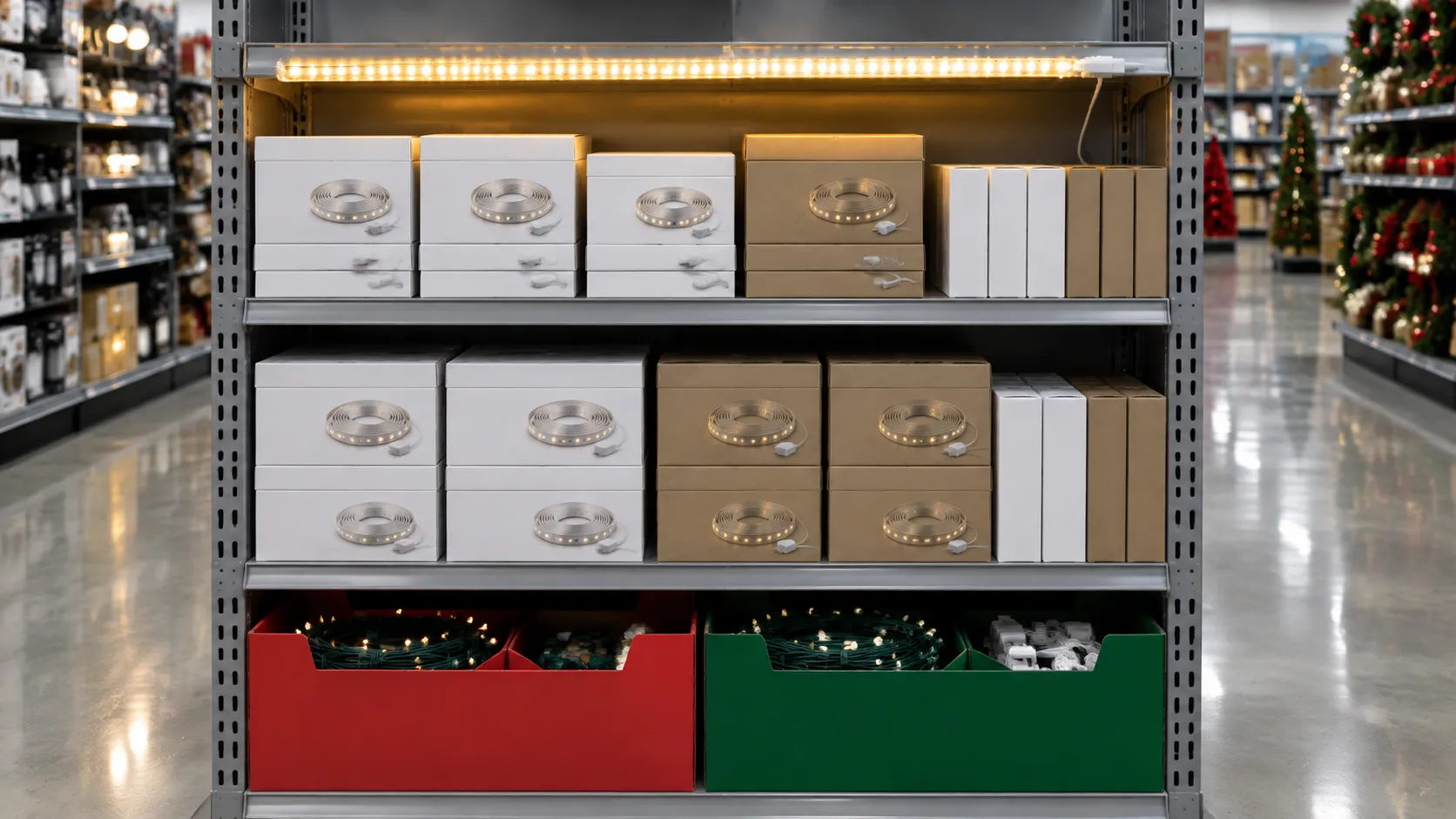
Three SKU Groups, Not a Catalogue: Indoor, Outdoor, Connect-and-Extend
A seasonal lighting fixture works when it answers three different shoppers, and the third one is the shopper most buyers under-order for.
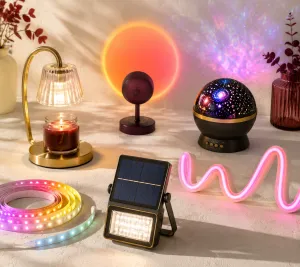
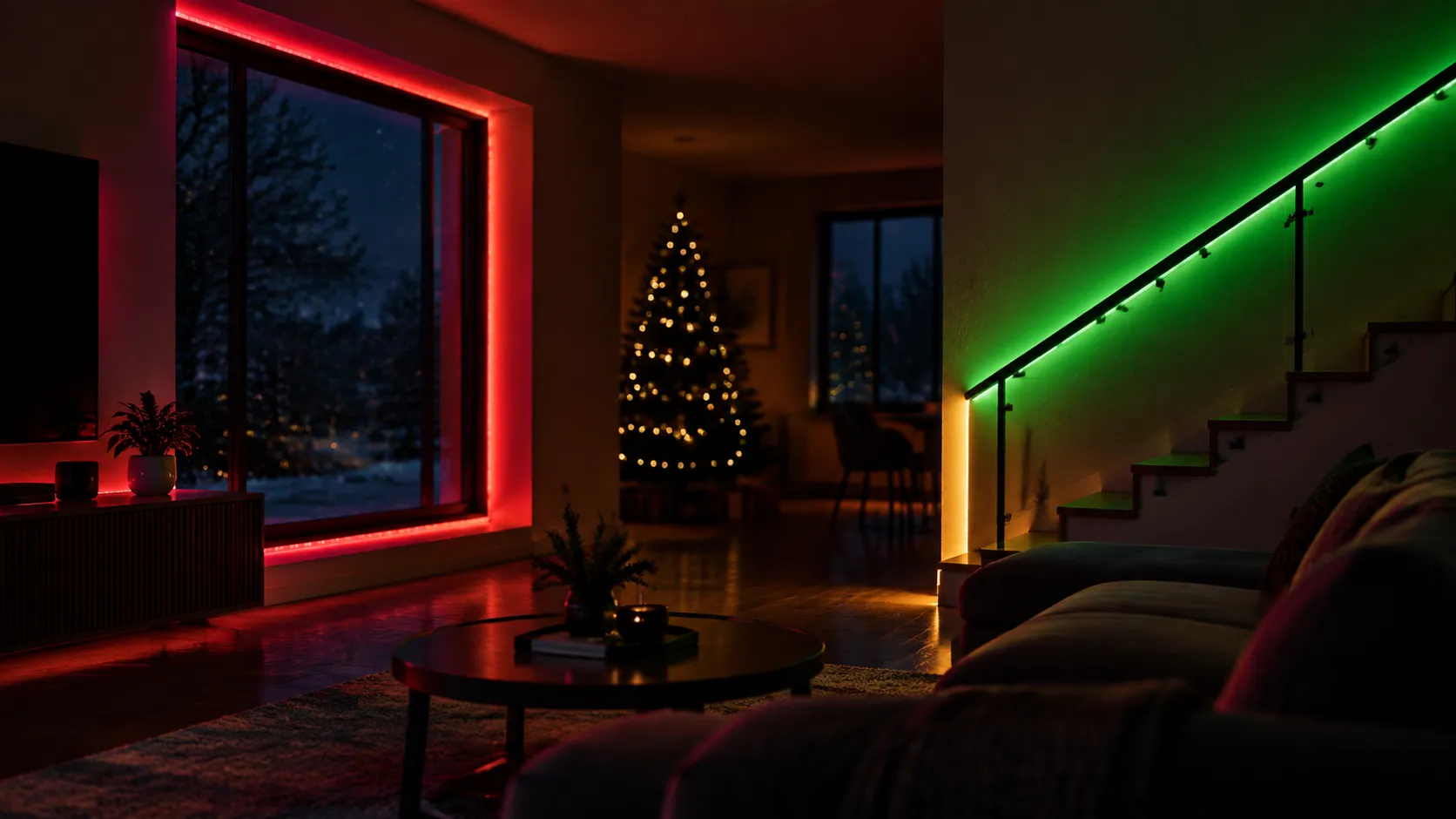
The indoor group is a color kit: short runs for a window frame, a stair rail or a backlight behind the tree, a plug-in supply, adhesive and clips in the same box, and a controller that works without instructions. Our RGBIC music-sync strip sits in this group. What ships inside the carton is a line you write on the purchase order rather than a fixed pack, and it matters more here than in any other season: a missing clip in December is a return, not a service call.
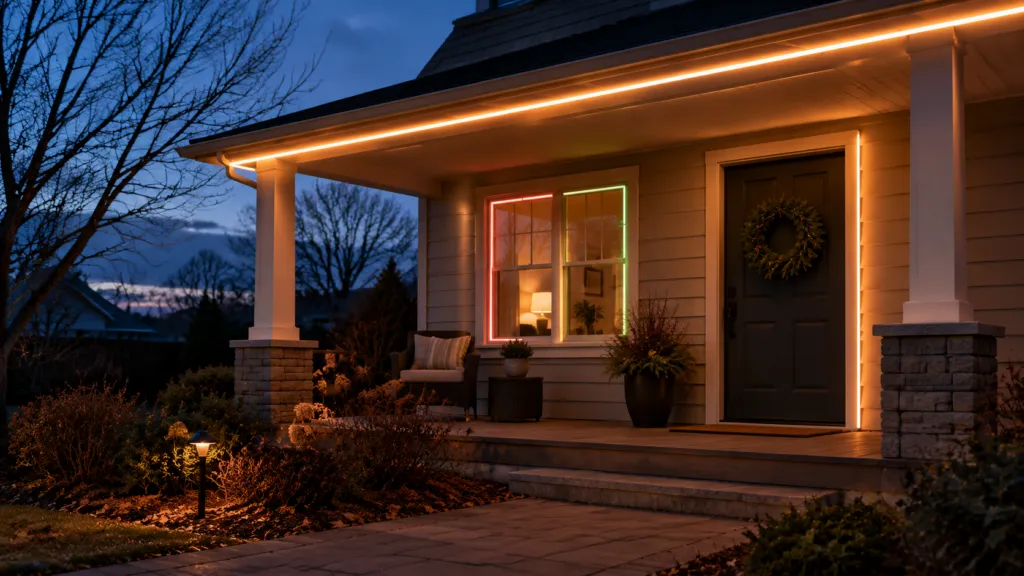
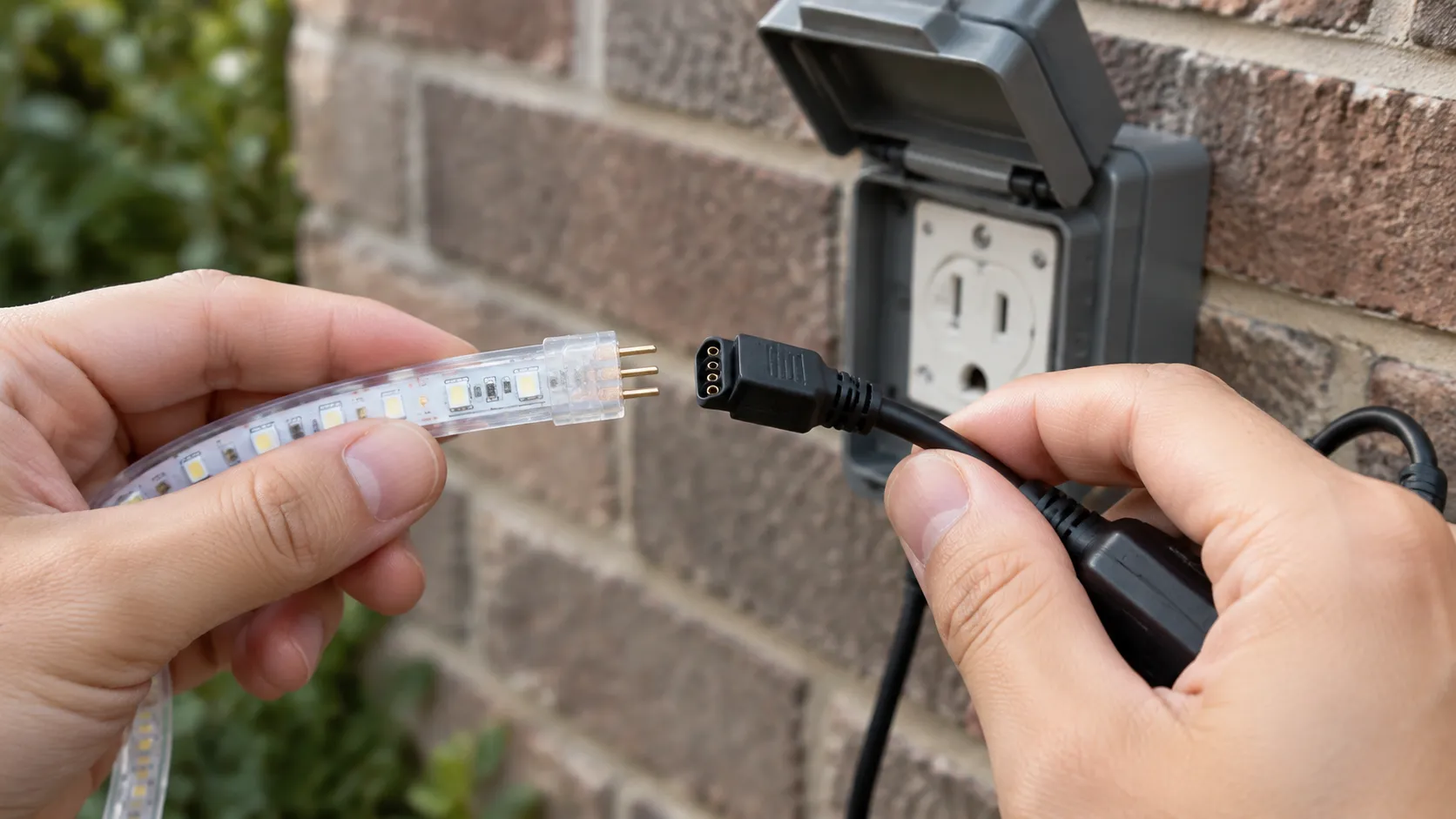
The outdoor group is a different product wearing the same word. It is built for the location rather than the room, it runs longer distances along an eave or a porch fascia, its supply has to live somewhere dry, and its pack needs mechanical fixings because winter will not let adhesive carry the run alone. The outdoor waterproof strip is the base for that group. Merge the two into one dual-purpose kit and you end up explaining at the returns desk why an indoor supply was left out in the rain.
The third group is connectors, extension leads, clips, spare supplies and end caps, sold on the same fixture at a low ticket. This is the attach sale, and it doubles as the returns brake: a kit that comes back because a corner could not be turned is a full-price return plus a lost sale, while the connector bought alongside it is margin. It is also the one part of a seasonal buy that can be topped up late without a container.
| Group | What the shopper is solving | What has to be in the pack | What to pin down on the PO |
|---|---|---|---|
| Indoor color kit | A window frame, a stair rail or a glow behind the tree, installed the same evening | Short run, plug-in supply, adhesive plus clips, controller with the festive programs already loaded | Which programs are preset, what the controller looks like on the shelf, how the box opens for a demo |
| Outdoor-rated kit | An eave, a porch beam or a garage door surround that has to survive weather until January | Location-rated run and joints, a supply that stays dry, mechanical clips as the primary fixing, outdoor cord guidance printed on the pack | Where the rating claim stops, the fixing count per meter, the stated operating temperature of the supply |
| Connect and extend | The job that is one corner, one meter or one outlet short on a Saturday evening | Corner connectors, extension leads, spare clips, spare supply, end caps, keyed to the kits you carry | Physical fit with both kits above, plain packaging that names the kit it fits |
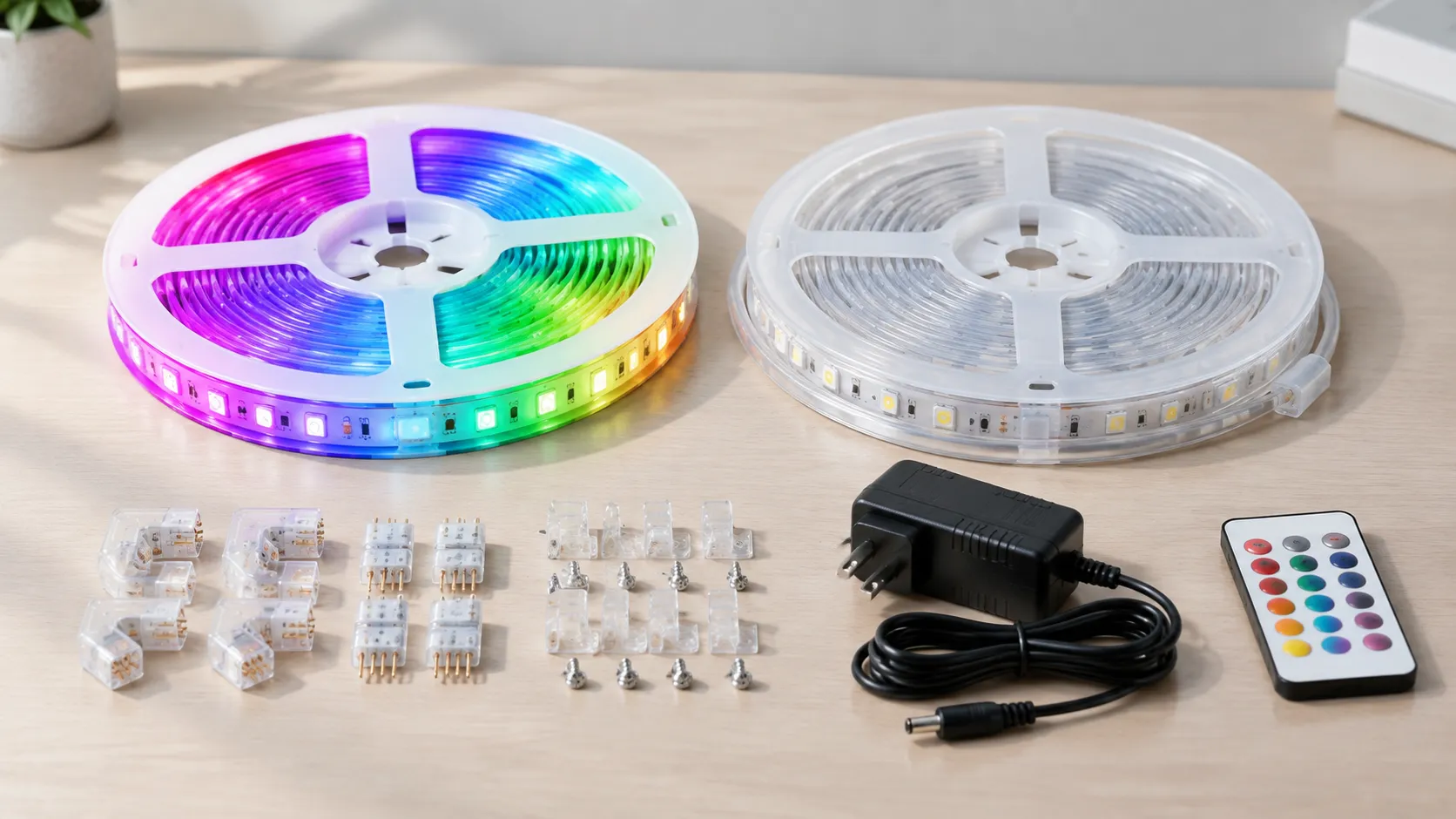
Color Changing LED Strip Lighting: Three Colors, Three Programs, One Remote
For a festive run, color changing led strip lighting is not a palette of sixteen million shades. It is three colors a shopper recognizes from across a room, and a program that cycles them without looking like an alarm.
Red, green and a warm gold carry almost the whole season. Red is the one that exposes a cheap tape: stand two lit demos side by side, after an hour of running rather than a minute, and the thinner, pinker red is obvious across an aisle. Gold is not a primary at all, which is why a strip mixing it from red and green often lands closer to lime than to candlelight, and why a dedicated warm white channel earns its keep at Christmas. Whether a run should be warm white or color in the first place is argued in the under-cabinet buyer primer.
An addressable strip changes what the program can be rather than what the colors are. Because segments are driven individually, a chase can travel along a stair rail while a twinkle sits still, which is the effect shoppers mean when they say the old string lights did something. What the remote, the app or the music-sync option does to the price of the kit is set out in the TV backlight sourcing guide, so one decision is left here: which programs are loaded before the carton is sealed.
Specify that rather than leaving it to a factory default. Name the two or three programs you intend to demo, ask for them as the first presets on the remote, and have the strip come up on a red-green-gold cycle the first time it is powered. Then keep one plain mode in the same kit. A static warm white run has a use on 27 December and through January, and a kit that only does festive is one the shopper boxes for eleven months and never repurchases.
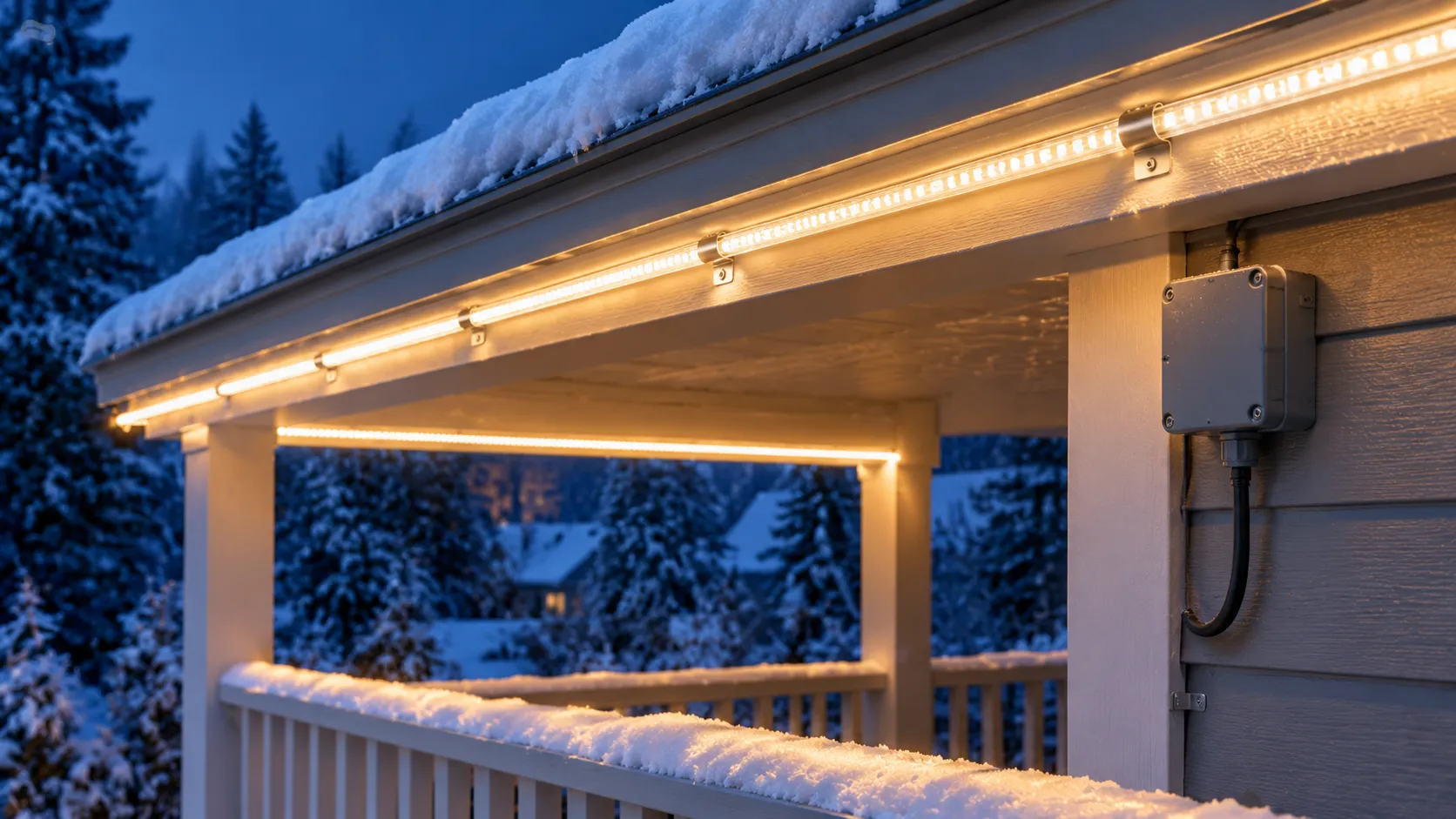
LED Strip Lighting for Outdoor Use in December: Three Things the Season Adds
Nothing about led strip lighting for outdoor use changes because the month is December, except three things that decide whether the run survives to January.
First, where the run sits relative to shelter. A soffit tucked under a deep eave and the face of a porch beam two feet out from it are two different locations, and the pack usually claims one number for both. Joints fail before the middle of a run does, so ask a supplier where the rated construction stops: at the tape, the solder joint, the connector, or the cable gland. Which rating answers which location is settled in our IP ratings guide. The Q4 habit worth keeping is to sell the sheltered run and the exposed run as two items.
Second, where the supply and the cord land. The Consumer Product Safety Commission’s guidance on outdoor decorating is blunt: check labels to be sure the lights have been certified for outdoor use, plug them into a receptacle or portable device with ground-fault protection, and use extension cords rated for the intended use. In practice the supply lives indoors or inside a weatherproof enclosure, the cord drops into a drip loop below the connection, and the carton says which of those the buyer is responsible for. Whether that supply should be wired or solar is compared in our piece on solar powered strip against wired runs.
Third, temperature, and this is the one that quietly breaks a Q4 program. 3M’s own data sheet puts the ideal application range for VHB tape at 21°C to 38°C (70°F to 100°F), and the minimum suggested application temperature for most of the family at 10°C to 15°C (50°F to 60°F); below those, it says, the adhesive becomes too firm to adhere readily. Across much of the northern United States that window has shut before the biggest selling weekend of the year. An adhesive-only outdoor pack is therefore a product that works in the photograph and fails on the porch, and the fix is unglamorous: put enough clips in the box for the whole run, and say in the instructions that the tape is a locator rather than the fixing.
The diodes are not the weak part in cold weather; good performance in cold temperatures is on the Department of Energy’s own list of LED characteristics (DOE). What stiffens in December is the cable jacket and the electronics in the supply, so ask for the supply’s stated operating temperature range instead of assuming the indoor figure travels outdoors with it.
The Border Line: What a Seasonal Description Costs
Two LED strip products can leave the same factory and enter the United States at different rates of duty, and the description decides which.
In the Harmonized Tariff Schedule, subheading 9405.31.00 covers lighting strings of a kind used for Christmas trees designed for use solely with LED light sources, at a general rate of 8%, split statistically into miniature series wired sets and everything else (USITC). Other LED luminaires sit lower: 3.9% at 9405.42.84, 6% at 9405.42.60 for base metal other than brass, 4.7% for brass at 9405.42.40, free for backlight modules at 9405.42.82. On $100,000 of entered value the distance between 8% and 3.9% is $4,100, which is our arithmetic on two published rates, not a quotation.
Source: U.S. International Trade Commission, Harmonized Tariff Schedule, subheadings 9405.31 and 9405.42, retrieved 2026-09-20
The uncomfortable part is that classification turns on the goods as presented, and the carton is part of how they are presented. White tape sold as a general architectural product and the same tape sold in a box printed with a tree are not automatically the same line. We build strip in Foshan and we are not anybody’s customs broker: the only answer that binds an importer is a ruling from the importing authority, and the time to get one is before the artwork goes to print. Any additional duty in force is assessed by tariff line too. Two habits pay for themselves. Write the intended use into the purchase order so the invoice and the box agree, and let your broker read the artwork rather than only the spec sheet. With 85% of shoppers in that survey already braced for tariff-driven prices, four points of duty is not a thing to discover in December.
The Q4 Calendar, in the Order Things Have to Happen
The sequence starts with the assortment rather than the sample, because every later decision inherits the three-group split, and it ends with depth held back on purpose.
Fix the three groups first
Decide the indoor kit, the outdoor kit and the parts group before anybody quotes a reel. The split drives pack contents, carton copy and the classification question underneath both.
Sample under store light, on a fixture
Judge red, green and gold on a demo run at the height a shopper stands, not on a bench under fluorescents. Photograph the demo for the buy sheet while it is lit.
Settle description and classification before artwork
Agree what the box will say, then get the tariff line confirmed against that wording. Changing artwork after a ruling costs a print run; changing it after an entry costs more.
Book production and the ocean window against the reset
Work backwards from the date the fixture is set, not from the date the season starts. The autumn reset is the deadline that matters, and freight is the variable most likely to move.
Check the pack at receiving, not on the shelf
Open one carton per group. Confirm clip count, supply, connectors and the outdoor guidance printed on the box before the goods disappear behind a planogram.
Hold depth in the parts group for December
The reorder that arrives in time is the small one. Keep connectors and extensions deep enough to carry the fixture through the weekend everybody buys on.
That calendar is not a lighting calendar. It is the same seasonal buying calendar the rest of the gift assortment runs on, which is why the wax side of the season sits in our Christmas wax melts stocking guide and the planning view for the giftable range sits on the giftable lighting page. Run lighting on a different rhythm from the rest of the store and the fixture gets set two weeks late.

What the Carton Has to Answer in December
Seasonal lighting is one of the few categories where the safety copy on the box is actually read, because the shopper has usually just climbed something.
About 14,900 holiday decorating injuries were treated in emergency departments over the 2023 season, roughly 160 a day, and nearly half involved a fall (CPSC). That statistic is also a merchandising argument: an indoor strip kit installed from the floor is a different proposition from a string that needs a ladder, and the packaging is allowed to say so. The same agency’s standing advice on light sets, that no more than three sets of incandescent lights be strung together and that outlets not be overloaded, has a direct equivalent for tape. The maximum connected length the supplied unit will carry belongs on the box, not buried in a spec sheet.
The fire numbers point the same way. The U.S. Fire Administration, citing National Fire Protection Association data, reports that almost one third of home Christmas tree fires are caused by electrical problems, and its holiday guidance is to inspect the lights each year, throw away strands with frayed or pinched wires, and read the manufacturer’s instructions for how many strands may be connected. A kit sold for a second season therefore needs instructions that survive the loft: printed on the carton, not on a leaflet that goes in the bin with the wrapping paper.
There is a positive claim worth making for LED strip lights too, if it is made accurately. ENERGY STAR reports that a decorative light string earning the label uses approximately 70% less energy than an incandescent string, and that certified LED strings have no moving parts, filaments or glass and stay cool to the touch. Put that next to the Department of Energy’s definition of useful life, the hours until output drops to 70% of the original, and a shelf talker carries two claims that are true, checkable, and unavailable to the string lights next to it.
Build the seasonal kit around your fixture, not around a reel length
We build LED strip in our own factory in Foshan, 4,000 square metres with 40 people across two production lines, so run length, pack contents, clip count and the programs on the controller are lines you write rather than a catalogue you pick from. Send the three groups you intend to merchandise and the market they are going to, and we will quote them as three packs.
Watch it work
The three SKU groups, the two shopping peaks and the adhesive window that closes before the season does, in 30 seconds:
FAQ
Can one strip kit be sold for both indoor and outdoor Christmas use?
It can be labeled that way, and the buyers who do it usually regret the returns rather than the sales. A dual-labeled kit has to carry the outdoor pack contents and the outdoor instructions, which raises the cost of every indoor sale, and it invites a shopper to take an indoor supply outside because the word outdoor appeared on the box. If only one kit is possible, sell the outdoor one and treat indoor use as the easy case, never the reverse.
What happens to a Christmas strip run when it comes down in January?
Three things, and the pack decides how badly each goes. Adhesive left on a painted surface through a cold month usually releases to a slow pull and a warm cloth, but it can take fresh paint with it, which is why clips on a repeat-use run are worth the extra cents. The run should go back on a reel rather than folded, since a crease lands on a solder joint. And the supply and the controller belong in the same bag as the strip, because the part lost between seasons is never the tape.
Do shoppers expect a festive strip to work with a smart speaker?
A growing share do, and the question is worth settling before the purchase order rather than at the shelf. App control, voice integration and music sync are three separate features with three separate costs, and a kit that claims one and delivers another earns the worst kind of review in the week it matters most. Decide which claim the carton makes, then test it on the app the customer will actually download.
How deep should the connectors and extensions go compared with the kits?
Deeper than instinct suggests, and the ratio is a local decision rather than a rule. Count the jobs a single kit cannot finish in the homes your store actually serves: a bay window, an L-shaped porch, a staircase with a turn in it. Each is a second purchase that either happens on your fixture or happens somewhere else that evening.
Is a strip kit worth carrying if the season is only eight weeks long?
Only if it has a January in it. A strip that runs plain warm white once the festive program is switched off stays on the wall and gets repurchased next year; a strip that only does red and green goes into a box and competes with itself in twelve months. Seasonal lighting is an eight-week category with a year-round product hiding inside it, and the kit you pick decides which of the two you are stocking.
Sources
Every external figure above was checked on 2026-09-20: demand and spending data from the National Retail Federation, duty rates from the U.S. International Trade Commission, safety data and guidance from the Consumer Product Safety Commission and the U.S. Fire Administration, efficiency claims from ENERGY STAR, LED behavior from the Department of Energy, and adhesive application temperatures from 3M’s own technical data sheet.
- National Retail Federation, Consumers to Spend Second-Highest Amount on Record, According to NRF Holiday Survey, October 2025 survey of 8,247 consumers (planned spending $890.49 per person, $262.56 on non-gift items including decorations, 42% starting before November, 63% waiting for Thanksgiving weekend, 85% expecting tariff-driven prices), retrieved 2026-09-20.
- U.S. International Trade Commission, Harmonized Tariff Schedule search, subheading 9405.31 (lighting strings of a kind used for Christmas trees designed for use solely with LED light sources, general rate 8%, statistical splits for miniature series wired sets and other), retrieved 2026-09-20.
- U.S. International Trade Commission, Harmonized Tariff Schedule search, subheading 9405.42 (other LED luminaires: 4.7% of brass, 6% other base metal, free for LED backlight modules, 3.9% other), retrieved 2026-09-20.
- U.S. Consumer Product Safety Commission, Happy Holidays Start with Safety (about 160 decorating-related injuries a day, roughly 14,900 emergency department visits in the 2023 season covering 1 November 2022 to 31 January 2023, nearly half involving falls, no more than three sets of incandescent lights strung together), retrieved 2026-09-20.
- U.S. Consumer Product Safety Commission, CPSC Releases Do’s and Don’ts of Holiday Decorating (check labels for outdoor use, plug outdoor lights into a ground-fault protected receptacle or portable device, use extension cords rated for the intended use), retrieved 2026-09-20.
- U.S. Fire Administration, Holiday Fire Safety, citing National Fire Protection Association data (almost one third of home Christmas tree fires caused by electrical problems; inspect holiday lights each year, throw away light strands with frayed or pinched wires, read manufacturer instructions for the number of strands to connect), retrieved 2026-09-20.
- ENERGY STAR, U.S. Environmental Protection Agency, Light Strings (a decorative light string that has earned the ENERGY STAR uses approximately 70% less energy than an incandescent light string; no moving parts, filaments or glass; cool to the touch), retrieved 2026-09-20.
- U.S. Department of Energy, Solid-State Lighting Program, LED Basics (good performance in cold temperatures; useful life defined as the operating hours until output falls to 70% of initial light output), retrieved 2026-09-20.
- 3M, Technical Data Sheet, 3M VHB Tape 4910 (ideal tape application temperature range 21°C to 38°C or 70°F to 100°F; minimum suggested application temperature for most 3M VHB tapes 10°C to 15°C or 50°F to 60°F; below these suggested minimums the adhesive becomes too firm to adhere readily), retrieved 2026-09-20.
