


The answer to what is a wall sconce is short: a light fixed to a wall and chosen as much for its looks as for its light, the decorative branch of the wall-light family, so every sconce is a wall light but not every wall light is a sconce.
For a retail buyer the word decides which filter a product sits under. We build decorative lighting in Foshan, but sconces are not one of our product lines, so read this as a buyer’s glossary, not a catalog.
What Is a Wall Sconce?
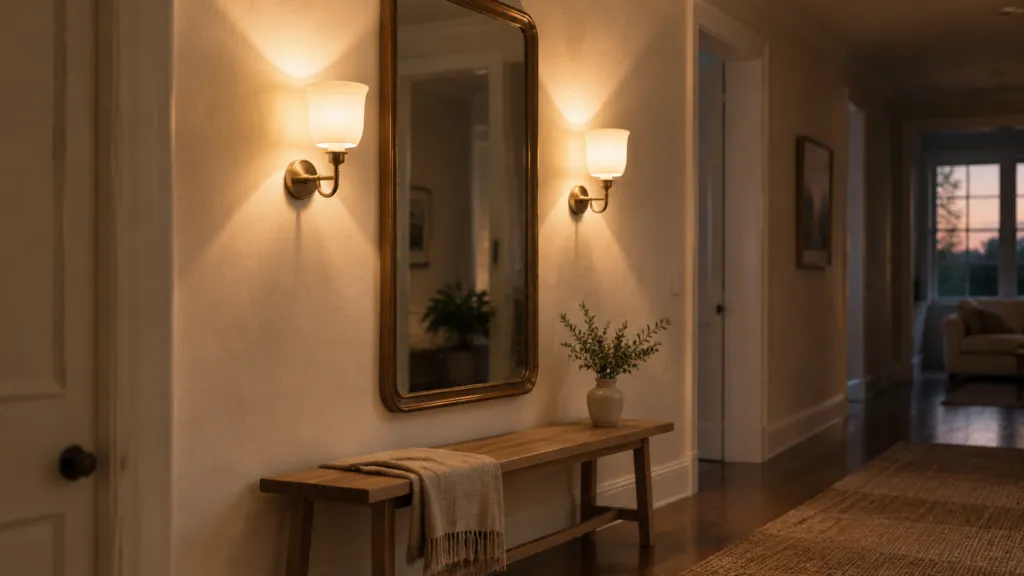
A wall sconce is a light fixture fixed to a wall on a backplate, bracket or arm and chosen as much for its looks as for its light; it also goes by sconce light, wall-mounted sconce or simply sconce. Most send their light up and out across the wall rather than down (Wikipedia).
So what is a wall sconce light? The fixture itself. And what is sconce lighting? The soft, wall-borne light it gives. The form predates electricity: sconces held candles and oil lamps, and from the 17th century were often silver or brass, with a reflecting backplate to intensify the light (Wikipedia).
Wall Sconce vs Wall Light: Which Term Is the Umbrella?
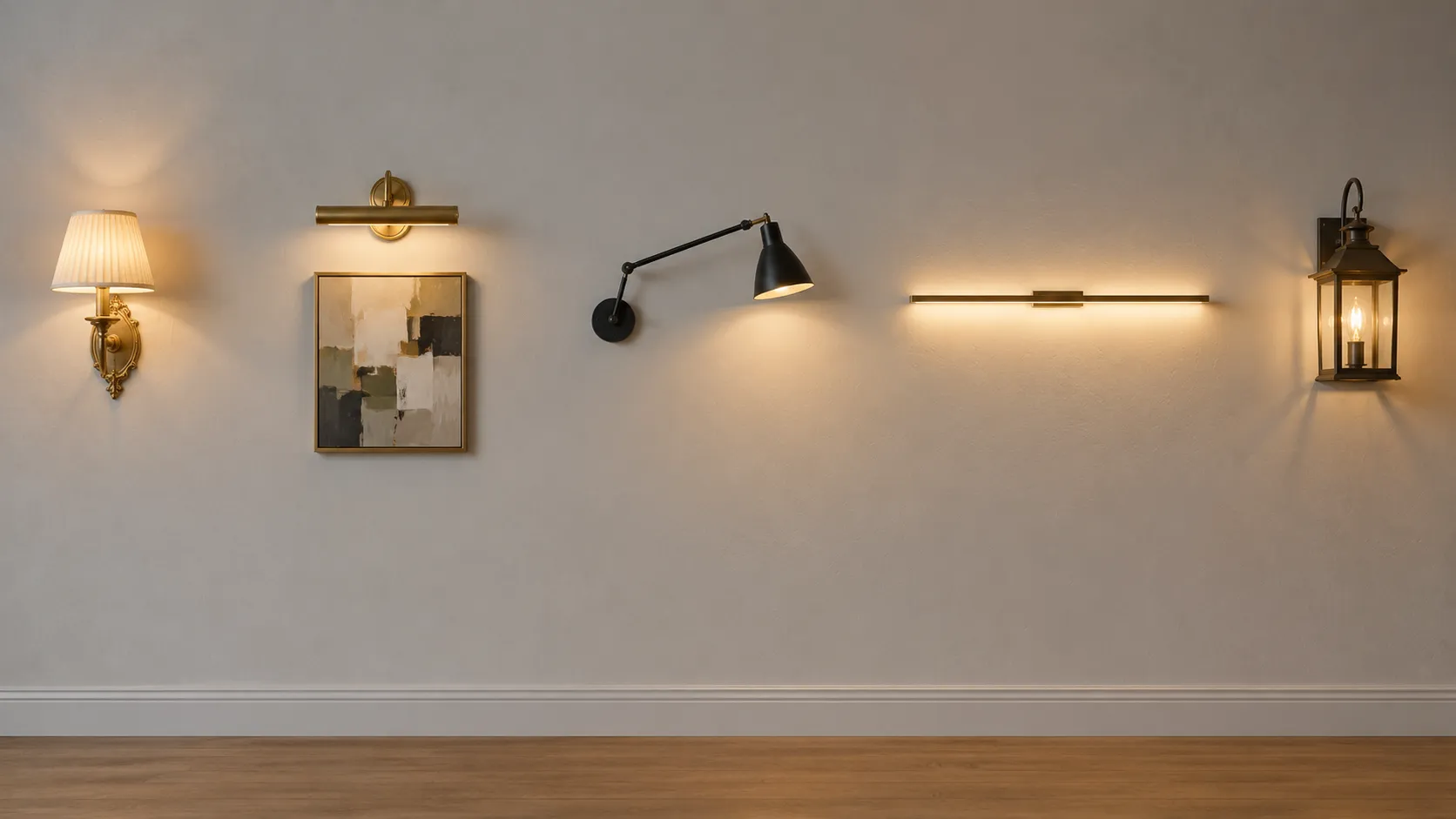
Wall light is the umbrella and sconce is one branch under it: any fixture fixed to a wall is a wall light, while sconce is kept for the decorative, bracket-mounted kind. The other types of wall lights are named for their job: picture lights, swing-arm reading lamps, linear wall bars, vanity lights and outdoor wall lights at doors and garden walls.
Usage is not fully settled. Wikipedia’s entry opens “A sconce or wall light is a decorative light fixture”, treating the words as synonyms. Survey data splits them: the 2025 U.S. Houzz Bathroom Trends Study, which polled 1,738 Houzz users in July 2025, lists sconces and wall lights as separate answers, picked by 34% and 33% of homeowners upgrading bathroom light fixtures (Houzz). A listing can carry both: the family noun in the category, the specific one in the title.
Three Differences, Side by Side: Design, Function, Placement
The two terms part on design, function and placement, and on each the sconce is the narrower case.
Design. A sconce shows its ornament: a shaped backplate, an arm, a shade, a finish meant to be seen with the light off. A wall light can be as plain as a flush bar or a caged bulkhead.
Function. A sconce can light a whole room and is common in hallways and corridors (Wikipedia); a wall light may do a task instead, such as reading by a swing-arm lamp, or a code duty at a door or stair, covered below.
Placement. Sconces typically go up in pairs or other multiples for balance, framing a doorway or lining a hallway (Wikipedia); wall lights go wherever the task is, indoors or out. In public corridors one rule binds both: under the 2010 ADA Standards, an object with a leading edge between 27 and 80 inches (685 and 2030 mm) above the floor may protrude no more than 4 inches (100 mm) into the circulation path (U.S. Access Board).
Types of Wall Lights Compared: Wall Sconce vs the Rest
Set the types of wall lights side by side and the sconce is the only one defined by its decorative form; every other type is bought for a task, and the task names it.
| Type | Bought for | Where the light goes | Spec or rule to check | Best use |
|---|---|---|---|---|
| Wall sconce | Looks as much as light | Mostly up and out across the wall (Wikipedia) | Projection: 4 in (100 mm) max into a public walkway, 27–80 in up (ADA 307.2) | Pairs beside a mirror or doorway |
| Picture light | Lighting one artwork | Down onto the artwork | Arm reach over the frame | Art and display walls |
| Swing-arm lamp | Movable task light | Onto the page | If hardwired: 6 lb (2.7 kg) or less may use other boxes (IRC E3905.6.1) | Bedside reading |
| Linear wall light | An even line of light | Along the wall | Length and finish | Modern corridors and stairs |
| Vanity light | Light on a face | Onto the face | Damp or wet marking (IRC E4003.9) | Bathroom mirrors |
| Outdoor wall light | Arrival and safety | Over the door and steps | Wet-location marking where exposed (IRC E4003.9) | Doors, porches, garden walls |
Both markings come from one section of the 2024 International Residential Code: luminaires in wet locations must be marked “Suitable for Wet Locations”, those in damp locations for wet or damp use (UpCodes, IRC E4003.9).
Hardwired, Plug-In or Rechargeable: How the Listing Should Name It
Put the power type in the product title, because it tells the shopper who can install the light: hardwired needs an electrician and a wall box, plug-in needs an outlet within cord reach, rechargeable needs neither.
Under the 2024 International Residential Code, hallways, stairways and the outside of each grade-level egress door need a lighting outlet controlled by a wall switch (IRC E3903.3). A wall box at a lighting outlet must be marked with its weight limit if that limit is not 50 lb (22.7 kg), and a fixture of 6 lb (2.7 kg) or less may hang from other boxes on two or more No. 6 or larger screws (UpCodes, IRC E3905.6.1). Plug-in fixtures get their own opening: outside kitchens, laundry areas and bathrooms, a wall-switched receptacle counts as the required lighting outlet (IRC E3903.2).
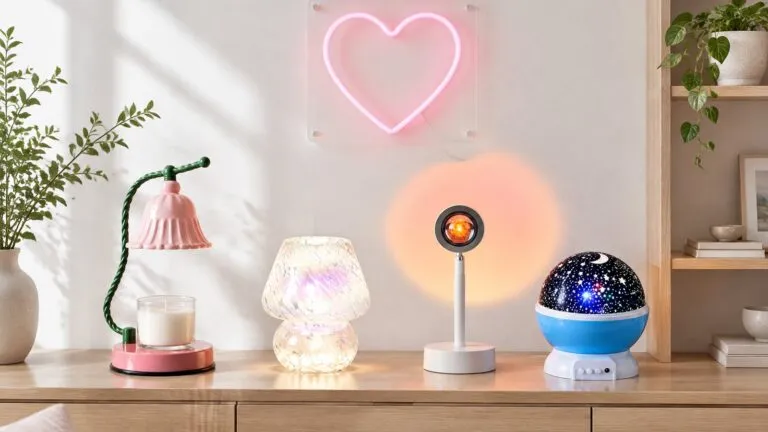
Our own wall-mounted product takes the third route. The sunset wall lamp we make in Foshan is an indoor wall light: rechargeable, held to a round wall plate by a magnet and switched by touch, with an LED rated 3 W per head in white aluminum. It belongs to our sunset projection lamp line, and its job is the sunset-colored wash it puts on the wall, so its listing takes the family noun rather than sconce. With no junction box or wall switch to add, a retailer can shelve it in home decor. The limit: it needs recharging and cannot replace the switched outlet a hallway requires, so sell it as an addition.
Fix the power type
Hardwired, plug-in, rechargeable or solar, before style words.
Pick the noun
Wall sconce for decorative backplate or bracket fixtures sold as room lighting; a light sold for a task or an effect takes wall light or the task name.
Say where it may go
Indoor, or only the damp or wet marking it carries.
Give the mounting facts
Depth from the wall, the mounting plate and, if hardwired, the weight.
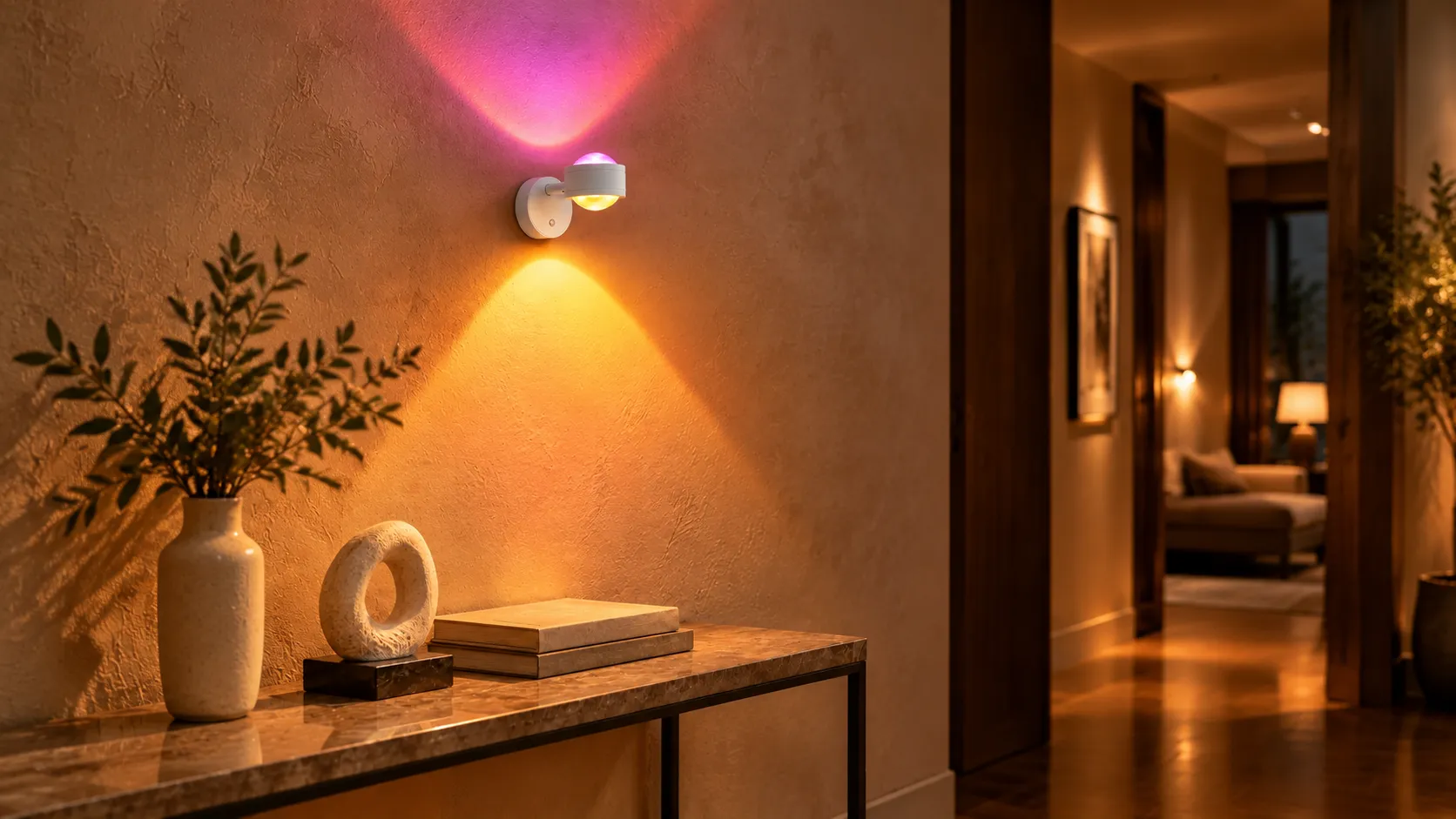
Choose a Sconce When… Choose Another Wall Light When…
Choose by buyer and space: a sconce where the fixture is seen as much as used, another wall light where a task or the code comes first.
Choose a sconce when you are a home-decor retailer building a room-styling range, or a hotel or short-let operator dressing corridors and bedheads, and the fixture will be judged with its light off. Plan them in pairs.
Choose another wall light when the brief names a task: a picture light for art, a swing-arm lamp beside a small nightstand, a vanity light where faces need true color (our CRI explainer covers what to check), or a hardwired fixture where the code wants a switched light. Retailers selling to renters who want no electrician can stock a rechargeable indoor wall light. For garden centers, our outdoor solar wall light sits on top of a garden wall and shines down it.
Shade Materials Buyers Ask About: Glass, Steel and Wood
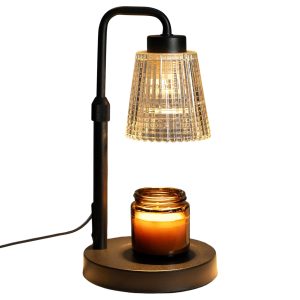
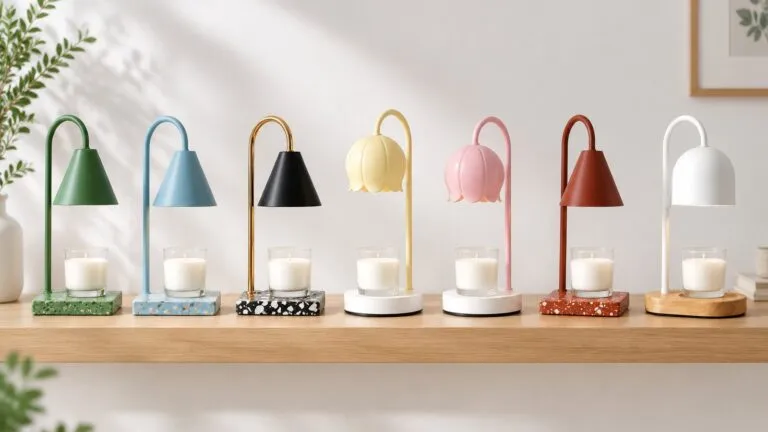
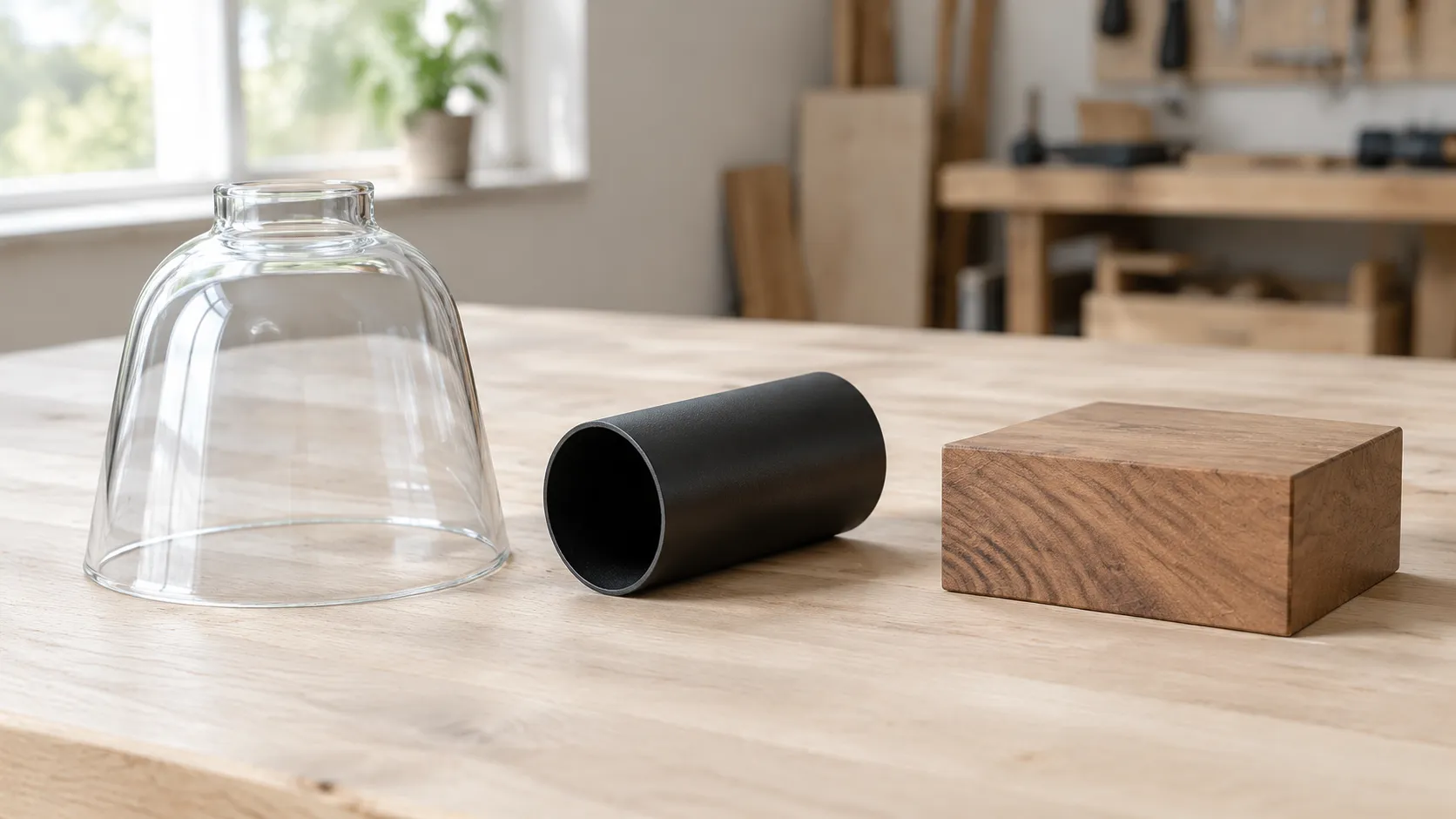
Buyers ask us about three materials, and on a wall each changes the spec as well as the look. Our core candle warmer build is a glass shade over powder-coated steel, with warm-toned solid wood bases on selected finishes; our materials page sets out what we claim.
Glass spreads an even glow but adds weight, pushing a hardwired fixture past the 6 lb exception sooner. Powder coat is a baked finish that resists the chips of transit. Wood reads warm, but in a damp or wet location the whole fixture must carry the matching marking, so judge the marking, not the material. No listing should name a wood species the factory cannot confirm.
Building a wall-light range?
BeginLighting makes decorative lighting on two production lines in a 4,000 m² factory in Foshan with a team of 40. Send your channel, planned listing name and quantities, and we will quote against them.
Watch it work
Sconce or wall light, in 35 seconds:
FAQ
Why is it called a sconce?
The word began as a name for a shielded light. Dictionary.com dates it in English to 1350–1400, from Old French esconce or Medieval Latin sconsa, short for absconsa, from Latin abscondere, “to conceal”. Wiktionary traces it through Old French esconse, “lantern”, and defines a sconce as a holder that screens its light from the wind.
Are wall sconces outdated?
Not in bathrooms, by the latest data. In the 2025 U.S. Houzz Bathroom Trends Study, sconces were picked as often as ceiling lights in renovated bathrooms; only recessed lights, at 40%, were picked more, and their share fell 4 percentage points year over year. What dates a sconce is its finish and shade, so refresh a range with new finishes rather than dropping the type.
What is another name for a wall light?
Wall fixture, wall lamp and wall-mounted light are the everyday names. In British English a light fixture is a light fitting, so a wall light is also a wall fitting; specifications say wall-mounted luminaire, luminaire being the technical term the International Electrotechnical Commission and the Illuminating Engineering Society recommend (Wikipedia). Sconce fits only the decorative kind.
Sources
Every external figure above was checked on 2026-10-21: the definition and history from the encyclopedia entries, the etymology from two dictionaries, the protrusion limit from the ADA Standards, box weights, switched-outlet rules and location markings from the International Residential Code text, and the fixture shares from the Houzz survey report cited in full below.
- Wikipedia, Sconce (light fixture) (a sconce or wall light is a decorative light fixture mounted to a wall; historically used with candles and oil lamps; silver or brass from the 17th century with reflecting backplates; light usually directed upwards and outwards; can provide general room lighting and are common in hallways and corridors; typically installed in pairs or other multiple units for balance, framing doorways or lining a hallway), retrieved 2026-10-21.
- Wikipedia, Light fixture (light fixture in US English, light fitting in UK English, luminaire as the term recommended by the International Electrotechnical Commission and the Illuminating Engineering Society), retrieved 2026-10-21.
- Dictionary.com, sconce (first recorded 1350–1400; from Old French esconce or Medieval Latin sconsa, shortening of absconsa, from abscondere, “to conceal”), retrieved 2026-10-21.
- Wiktionary, sconce (from Middle English sconce, sconse, from Old French esconse, “lantern”; a fixture for a light which holds it and provides a screen against wind or against a naked flame or lightbulb), retrieved 2026-10-21.
- U.S. Access Board, 2010 ADA Standards for Accessible Design, section 307.2 Protrusion Limits (objects with leading edges more than 27 inches, 685 mm, and not more than 80 inches, 2030 mm, above the floor protrude 4 inches, 100 mm, maximum into the circulation path), retrieved 2026-10-21.
- UpCodes, International Residential Code 2024, Chapter 39, sections E3903.2, E3903.3 and E3905.6.1 (a lighting outlet controlled by a listed wall-mounted control device in every habitable room, kitchen and bathroom, with a switched receptacle accepted outside kitchens, laundry areas and bathrooms; required in hallways, stairways and on the exterior side of outdoor egress doors with grade-level access; wall boxes at luminaire outlets marked with the maximum weight if other than 50 pounds, 22.7 kg, and luminaires of not more than 6 pounds, 2.7 kg, permitted on other boxes with at least two No. 6 or larger screws), retrieved 2026-10-21.
- UpCodes, International Residential Code 2024, Chapter 40, section E4003.9 Wet or Damp Locations (luminaires in wet locations marked Suitable for Wet Locations; in damp locations marked Suitable for Wet Locations or Suitable for Damp Locations), retrieved 2026-10-21.
- Houzz, 2025 U.S. Houzz Bathroom Trends Study (survey of 1,738 Houzz users fielded July 6–30, 2025; of renovating homeowners upgrading light fixtures, recessed 40%, down 4 points year over year, sconces 34%, ceiling lights 34%, wall lights 33%), retrieved 2026-10-21.
