



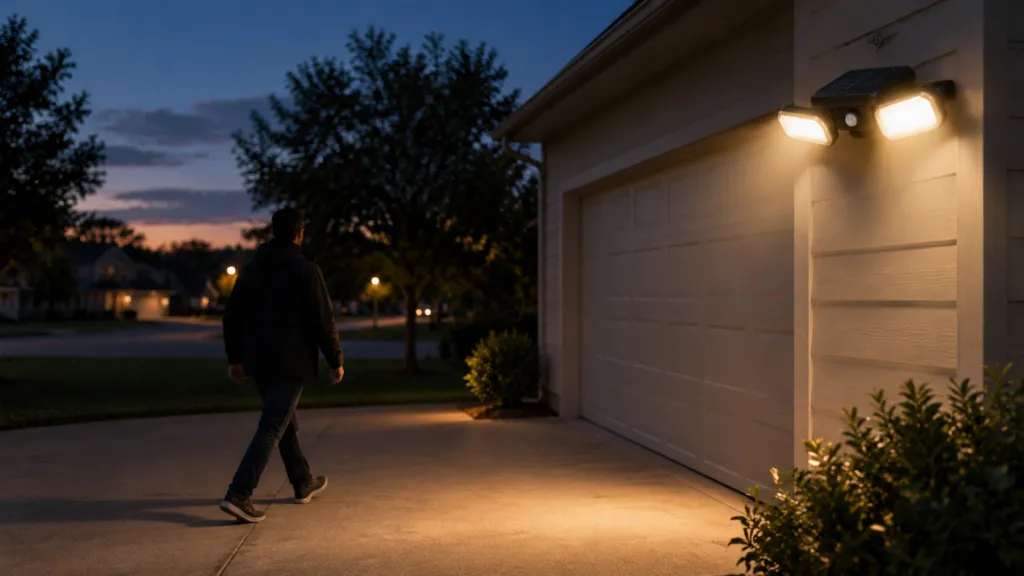
Solar flood lights with motion sensor that come back from customers seldom have a dead LED. The complaint is usually that the light stayed dark when someone walked up the drive, lit up all night for a swaying branch, or ran flat after a week of false starts, and each traces to a decision nobody wrote down before the order.
Panasonic, which makes PIR sensor components, specifies each detection distance at a temperature difference of at least 4°C between the background and the person, with a 700 by 250 mm target moving at 1 m/s across two detection zones (Panasonic). Those conditions sit behind every range figure, whether or not the carton prints them. Whether solar suits a security job, and why its cell fades, is settled in our guide on whether solar is worth it for a security job; this one covers the sensor.
This guide covers what the sensor sees and what it should ignore: outdoor false triggers, detection zones for a driveway, a side door and a fence line, and the settings that belong on the enquiry and the carton. The three switching modes are defined on our solar flood lights range page, so they get this sentence and no table.
Key takeaways
Solar flood lights with motion sensor are judged on their detection zone, not the range on the box. Write the mounting height, the tilt, the local climate and the site’s heat sources onto the purchase order, because each one moves that zone.
- Ring tells installers to mount its floodlight about nine feet up with the sensor parallel to the ground; tilting the head down pulls the zone in fast.
- Panasonic specifies its conventional PIR sensors at a 4°C difference between background and person; its newer line works at 2°C.
- A normal July night in Phoenix bottoms out at 84.5°F; by our sums that sits about 4.3°C below the coolest normal trunk skin, barely above that 4°C rating.
- Outdoor false triggers are mostly heat and light the sensor cannot tell from a person: sunlit branches, engines, headlights on the lens, vent air. Re-aiming beats lowering sensitivity.
- Our three motion-sensing solar models are shown at capability level, so sensing figures and any remote are confirmed on the enquiry.
What a Sensing Return Is Really Reporting
Sensing complaints arrive in three forms, and each was decided somewhere different.
“It doesn’t come on” means the person never entered the zone, crossed it in a way the sensor could not register, or arrived on a night too warm for the printed range. “It comes on by itself” means something warm moved inside the zone. “It dies after a few nights” is often the second complaint in disguise, since every false start spends charge the panel banked for a real visitor.
A passive infrared sensor reacts to a change in the pattern of heat across the segments of its lens, so it catches someone crossing its view far sooner than someone walking straight at it. The mechanism is set out in our explanation of how a PIR sensor reads movement, written for indoor strip kits, and it holds outdoors. What changes outside is everything around the sensor: height, weather, traffic and whatever the wind moves.
| What the customer writes | What usually happened | Where it was decided | The line on the enquiry |
|---|---|---|---|
| “It doesn’t come on” | Head-on approach, a steep tilt, or a warm night | Height, tilt, season | Position, mounting height, direction of arrival |
| “It comes on by itself” | Branch, engine, exhaust or animal moving in the zone | Site survey and aim | Heat sources in view, sensitivity steps, lens masking |
| “It dies after a few nights” | False starts spent the charge, or the unit armed early and held long | Aim, sensitivity, dusk reading | Hold time steps, idle level, which part reads dusk |
Mounting Height and Tilt Set the Detection Zone
Every range figure on a carton assumes a mounting height and an angle, and most listings print neither.
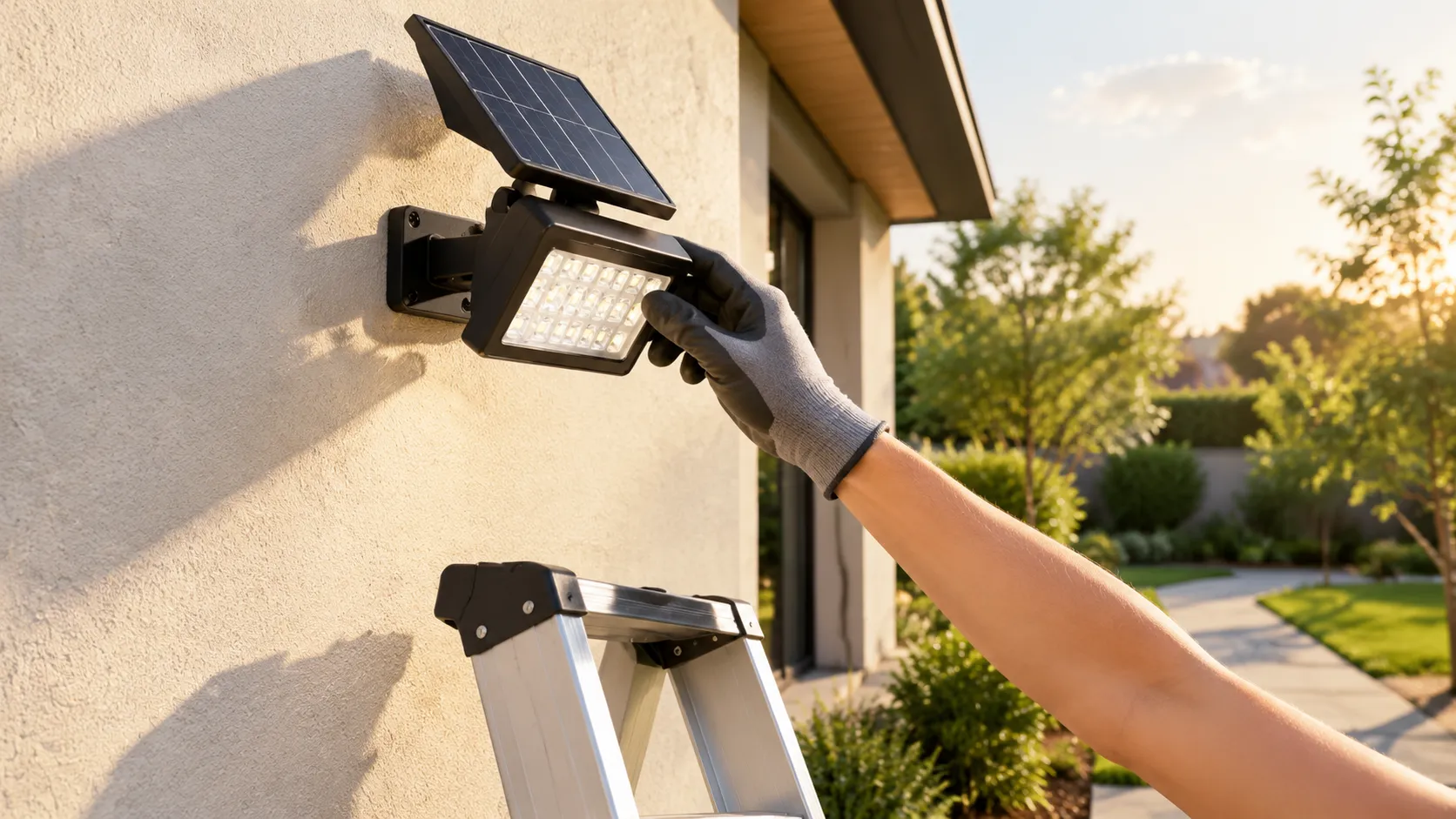
Ring’s installation guide says the Floodlight Cam works best mounted about nine feet above ground level, with the motion sensor parallel to the ground (Ring). That is the assumption under any range claim: the pattern fans out from the head, its lower edge meets the ground at a distance set by height and tilt, and its upper edge runs out over whatever lies beyond. Mount lower and the zone shortens. Tilt down and it shortens faster.
The trigonometry fits on a site visit. From nine feet, a sight line that meets the ground 30 feet away sits only about 17 degrees below horizontal. Tip the head to 30 degrees and the same line lands at roughly 16 feet; at 45 degrees, nine feet. Those are our sums, not a product specification, but they explain the commonest installer mistake: angling a floodlight down to put light on the drive and taking the sensor’s reach down with it. Where lamp and sensor share one housing, the aim that suits the beam is rarely the aim that suits the zone.
Height also decides who can reach the head. Too low, and anyone passing can knock, cover or turn it. Far above its design height, it looks down on the tops of heads and a person crossing close underneath passes through fewer lens segments. State the height the sensor was set up for, and show it on the box as a side view.
Why Motion Activated Solar Flood Lights Misfire Outdoors
Indoors, a sensor watches a room that changes slowly. Outdoors, warm things move all night, and most of them are not people.
Sun-warmed foliage is the classic case. A branch that sat in afternoon sun stays warmer than the sky behind it after dark, and when wind moves it across the lens the sensor sees exactly what it was built to report. Turning sensitivity down treats the symptom and shortens the reach for real visitors too. The cheaper fixes are geometric: aim the branch out of the zone, trim it, or mask that part of the lens where the housing accepts a blinder.
Traffic comes second. The worst offender is a head aimed along a driveway toward the street, where a running engine and a hot exhaust cross the far edge of the zone as large infrared targets and every passing car becomes a trigger. Headlights add two problems: Panasonic lists car headlights or sunlight striking the sensor itself as a false-trigger cause whether or not the source is in the zone (Panasonic), and a sweep across the panel may disturb the dusk reading, worth testing on the sample.
Fixed heat sources come third: dryer vents, heat pump and air conditioner units, boiler flues. Each throws warm air or vapour, and Panasonic’s list also includes sudden temperature change in or around the detection area from HVAC air or vapour among its false-trigger causes. None of this shows on a floor plan, so a site list belongs on the enquiry, with a question about masking and how many sensitivity steps the housing offers. Buyers building a motion detector solar security light range who send that list get a sample configured for a real wall.
Timing causes the last misfire. A dusk reading decides when the sensor arms, and a unit beside a porch lamp or under a streetlight may never read dark enough. A separate-panel model makes it harder: our own is built so the light sits under an eave while the panel goes on a roof edge or fence top, and those two positions disagree about when night falls. Ask which part reads dusk.
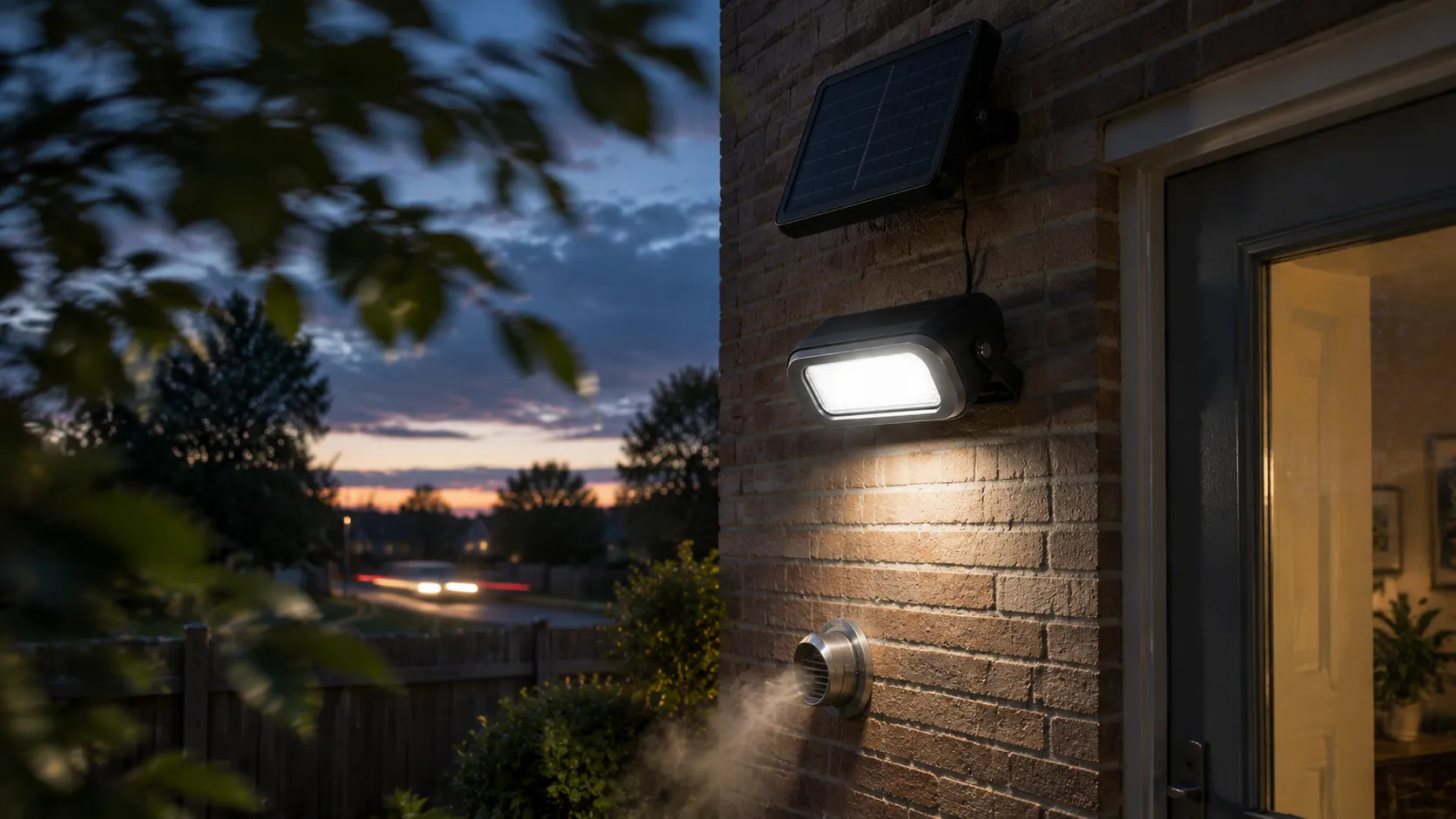
Summer Nights Shrink the Zone, Winter Nights Stretch It
A PIR sensor needs contrast between a person and what lies behind them, and outdoors that contrast moves with the season far more than any dial does.
Component makers rate detection at a stated temperature gap. Panasonic’s newer PaPIRs+ parts work at 2°C instead of 4°C, with about 1.4 times the detection range of its conventional models (Panasonic). Skin on the human trunk runs between 33.5 and 36.9°C, 92.3 to 98.4°F (Wikipedia, Skin temperature), and clothing sits cooler still.
NOAA’s normals for 1991 to 2020 put the average July minimum in Phoenix at 84.5°F and in Houston at 75.7°F, and the January minimum at Minneapolis-St. Paul at 8.8°F (NOAA National Centers for Environmental Information). Put three published numbers together and a Phoenix July night leaves a gap of about 4.3°C: 33.5 minus 29.2, our sums, converting 84.5°F and using air temperature as a stand-in for the background. That is barely above the 4°C in Panasonic’s specification, before stucco and paving give back the day’s heat. It is our inference, not a test result: the same unit at the same aim and sensitivity step should see a person much further out in a Minnesota January than in an Arizona July. Panasonic’s catalogue states the rule behind it: the larger the temperature difference between target and surroundings, the easier the target is to detect (Panasonic).
Source: NOAA National Centers for Environmental Information, Comparative Climatic Data, normal daily minimum temperature (1991-2020 normals); skin range from the Wikipedia entry on skin temperature; both retrieved 2026-09-29
Put this limitation in writing rather than discover it in a review. No PIR, ours included, holds the same reach across that range, and a carton that prints one detection distance without its test conditions promises something the physics will not deliver across much of the southern US for part of the year. Winter reach is not all gain either: it can pull the street back into a zone aimed tightly in July.
Two responses follow. Ask the supplier what temperature difference the range figure was measured at, and whether the sensitivity control has enough steps to raise in summer and lower in winter. Then put a seasonal note in the leaflet. A customer told that reach changes with the weather treats it as a setting; one who was not treats it as a fault.
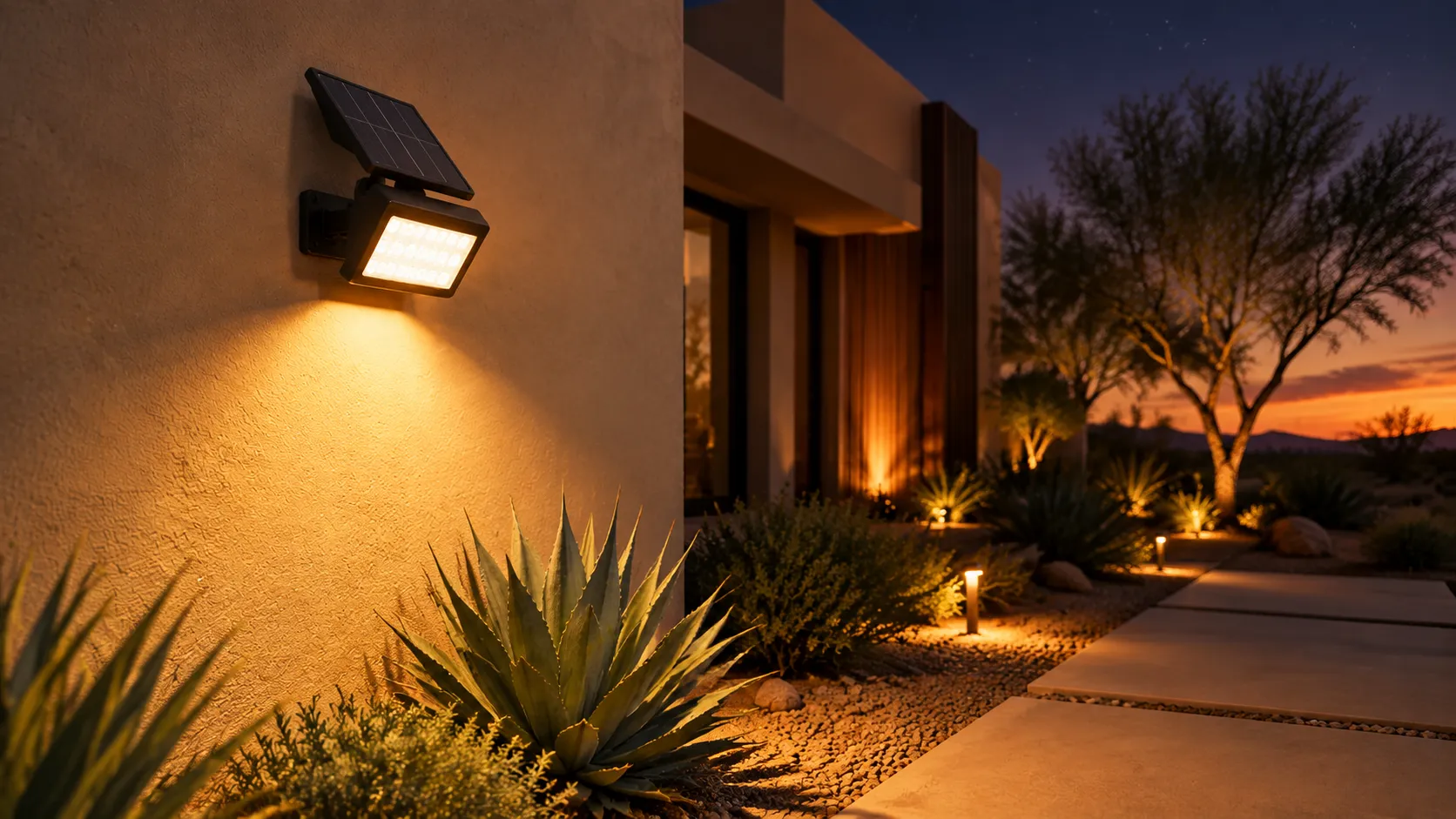
Solar Security Light with Motion Sensor: Driveway, Side Door, Fence Line
A solar security light with motion sensor is bought for one of three positions, and each asks for a different zone shape before it asks for more output.
Whether solar suits a security job at all is argued in our guide to where solar earns its place on security duty. This section is narrower. Draw the zone on the site plan as a fan from the mounting point, then mark the paths people and vehicles take through it, so the light fires for the right person at the right distance.
Driveway. Arrivals come along the drive, the direction a PIR sees worst. Mount the head on the garage side or a wall at right angles to the drive, so arrivals cross the zone rather than walk into it, and stop the far edge short of the pavement. What you gain is earlier detection of the car turning in, instead of detection of every car going past.
Side door or side return. The passage is narrow and the person walks along it toward the door, head-on again. Mount the head on the side wall looking across the passage, or accept a short zone and set the hold time from the task at the end of it: time how long it takes to find a key, lift a gate latch or wheel the bins out. The separate-panel format among our solar powered security lights exists for this spot, with the head guarding a shaded doorway while the panel sits in sun.
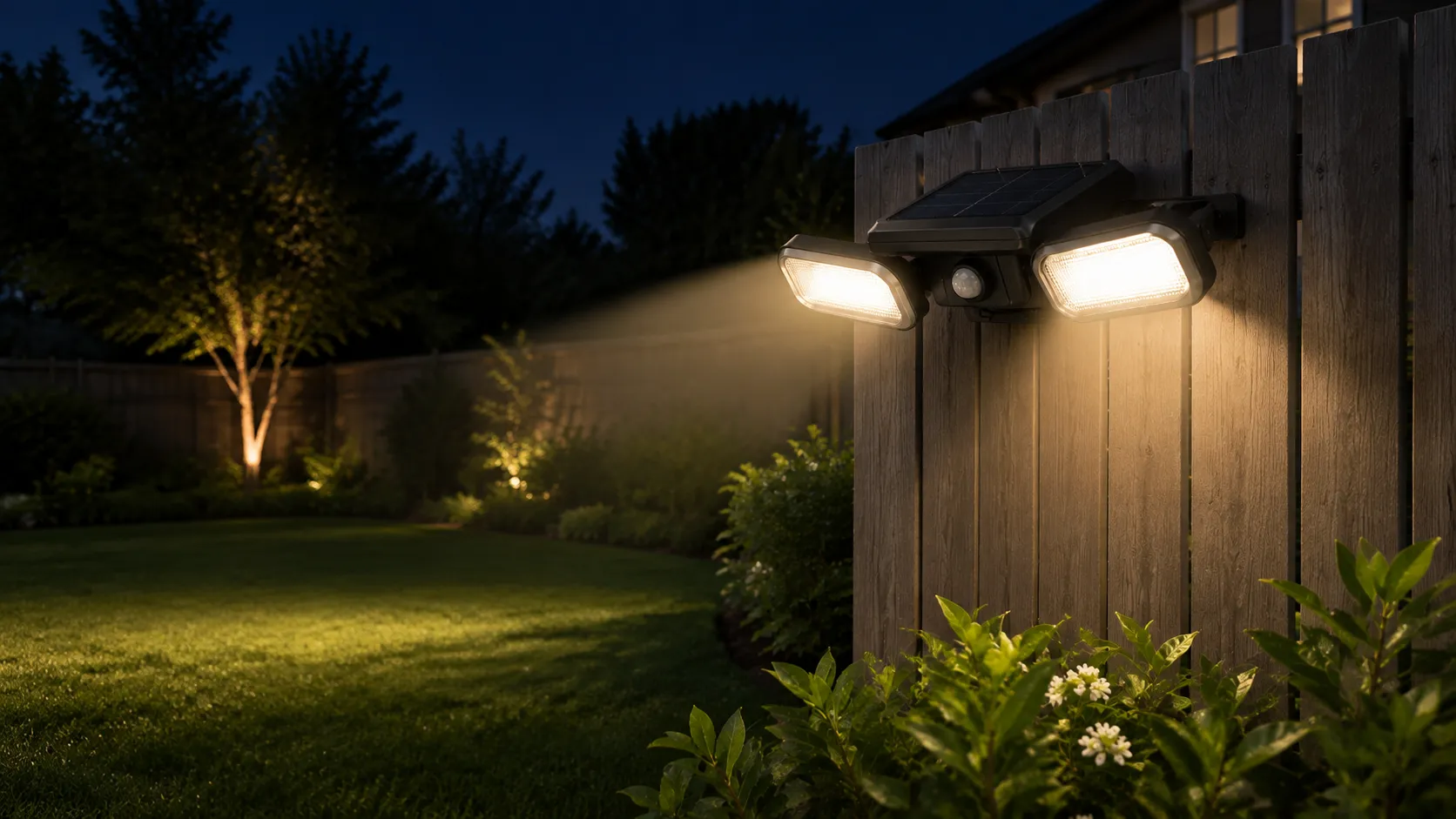
Fence line. A long, thin strip is the shape a single fan covers worst. A dual-head unit answers it by aiming one head along the fence and one across the lawn, the placement our motion activated outdoor light was built around; listings sold as solar spot lights with a motion sensor are usually this format, each head pointed at a defined target. Where the sensor sits in the body rather than in each head, pivoting a head moves the light and not the zone, so confirm which on the sample. Post fixing is a bracket question and outside this page.
All three positions share a rule on the lamp side. The August 2023 revision of the Five Lighting Principles published by DarkSky and the Illuminating Engineering Society asks that outdoor light point downward and not spill beyond where it is needed, with controls such as motion detectors keeping it off otherwise (DarkSky and the Illuminating Engineering Society). A head kept out of the neighbour’s windows keeps their garden out of the zone too.
| Position | How people arrive | Where the head goes | Keep out of the zone | Line for the enquiry |
|---|---|---|---|---|
| Driveway | Head-on along the drive, often by car | Side wall at right angles to the drive | Street and pavement | Mounting height, distance to the street |
| Side door or side return | Head-on along a narrow passage | Side wall, looking across | Vents, bin store, a neighbour’s window | Hold time against the task, head in shade or sun |
| Fence line | Along the fence, sometimes across the lawn | One point, two heads | Road and trees beyond the fence | Head count, whether the sensor turns with the heads |
Where the Settings Live: On the Fixture, on a Remote or in an App
Every sensing setting gets changed somewhere, and where that is decides what your support line hears for the life of the product.
On the fixture, settings sit on a switch or a button under a cover, with no remote to lose or pair. Access is the cost. Changing the mode means a ladder, and every opening of the cover is a chance to reseal it less carefully than the factory did. On our separate-panel security model the product page is explicit that the mode is selected at the fixture; our three-mode solar LED flood light lists Motion, Dusk-to-Dawn and Always-On, and none of our three motion-sensing solar product pages lists a remote.
An app moves the settings to a phone but needs a radio in the head and a signal at the wall, which on a battery-limited solar unit is a power budget question before it is a feature.
Remote control solar flood lights: what the buyer is really asking for
Buyers who ask for remote control solar flood lights mostly want to change the mode from the ground. Fair request, but it is a specification line, not a default. On our side a remote is confirmed on the enquiry, with how it pairs and what the unit does once the remote is lost; we do not assume one ships because some listing shows solar flood lights with remote in its photos.
Two technologies sit behind the word. Infrared remotes use light, so they need line of sight to the receiver (Wikipedia, Remote control), and outdoors that receiver faces the sky. Vishay, which makes such receivers, notes in its 2024 application overview that standard IR receivers adjust their detection threshold to the ambient light and optical noise around them (Vishay Semiconductors). Radio remotes need no sight line, which is why gate and garage openers use them, but they raise pairing questions, including whether one remote wakes a whole row of neighbours’ lights.
After-sales answers follow from this. A lost remote needs a replacement part number and a way to reset the fixture without one. An infrared remote with less reach at noon than at dusk fits that threshold behaviour and is not necessarily faulty. And a customer whose light wakes on dusk-to-dawn after a battery reset needs to know which mode is the default. Put those three answers in the leaflet.
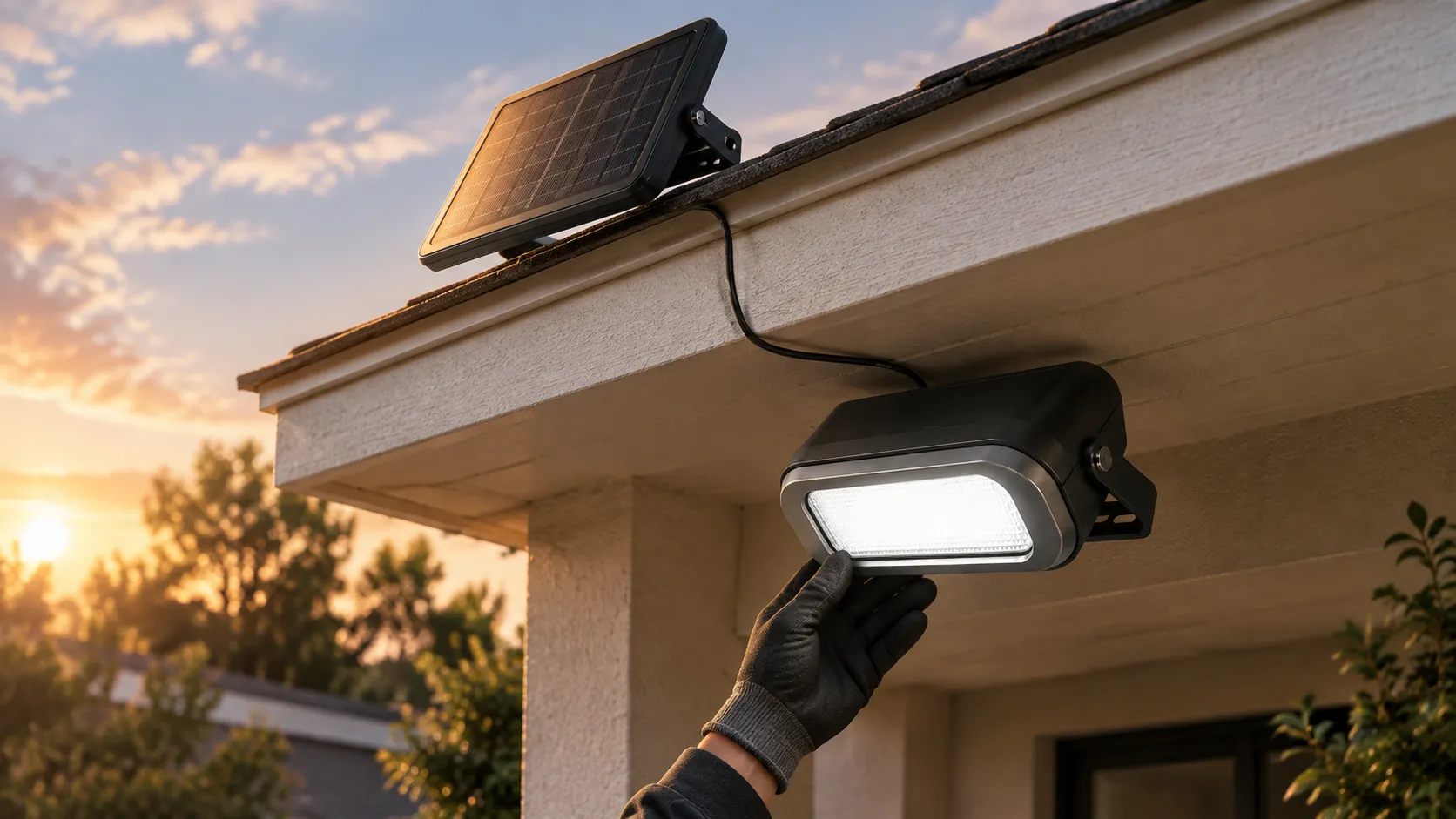
Writing the Sensor Into the Enquiry and Onto the Carton
A sensor that behaves on site was specified on paper first, and the order of that paper matters, because each step narrows the next.
Our product pages show these three models at capability level, not as spec sheets, because detection angle, distance, hold time, daylight threshold and idle level are set per configuration and confirmed with the quote. Whether those figures suit your customers depends on the brief you send.
Name the position
Driveway, side door or fence line, and the direction people and vehicles arrive from.
Give the height and the tilt
The height your customers mount at and the angle the head will sit at, so the zone is drawn for the wall, not the bench.
List what moves on site
Trees, road, vents, pets, water. Ask about lens masking and the number of sensitivity steps.
Ask for the conditions behind the range
The temperature difference behind the detection distance, the hold time and idle level steps, and the default setting.
Settle where the settings live
Fixture, remote or app; which part reads dusk on a split-panel unit; what happens when a remote goes missing.
Test the sample at night, twice
Walk across the zone and straight at it, on a cool evening and a warm one, and count false starts over an hour with the street in view.
Lumens, panel size and ingress protection sit alongside this list, with the floor for those set out in our spec floor for outdoor solar lights; none of them changes what the sensor sees. On the carton goes a side view with the tested height and zone, the default mode, the seasonal note on reach and where the settings are. For solar flood lights with motion sensor, that diagram prevents more returns than any lumen claim on the front panel.
Across a programme, one diagram style on every box keeps the shelf readable. Our wholesale solar flood lights line is quoted in that order: the positions you sell into, then the sensor configuration, then the pack.
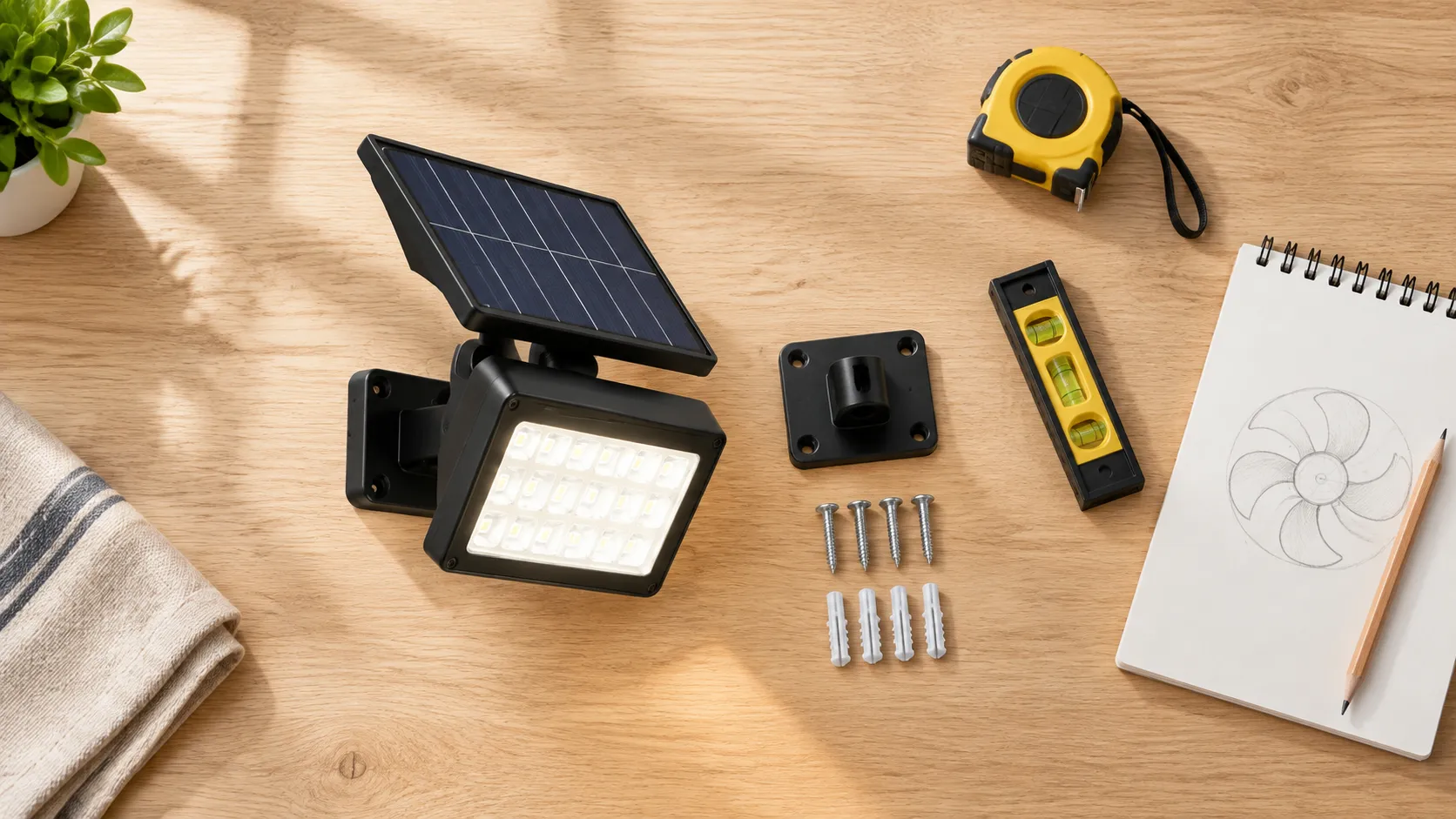
Send the site, not just the model number
We build our solar lines in our own factory in Foshan, 4,000 square metres with 40 people across two production lines, so sensor behaviour, the settings a customer can reach and what goes in the box are specified per programme. Send the positions your customers light, the height they mount at and the markets you ship to, and we will confirm the sensor configuration with the quote; the sample cost is credited against the first order.
Watch it work
What a PIR sensor actually reads, why it cannot tell a raccoon from a person and where the separate panel should sit, in 37 seconds:
FAQ
Can a motion sensor solar light detect someone through a window?
No. Ordinary window glass blocks the long-wave infrared a PIR sensor reads, so a head mounted behind glazing sees the glass, not the person beyond it. Tell customers before they try it: the fix is mounting outside the glass, not raising the sensitivity.
Will cats, foxes or deer set off a solar motion light?
Larger animals will. A passive infrared sensor has no way to tell a deer from a person, only warm from less warm. Small animals are a geometry question, since a higher head whose zone starts further out gives a cat less to cross close up; where wildlife traffic is heavy, set expectations in the listing rather than promising a pet-proof sensor.
Does dust or a spider web on the lens change how the sensor behaves?
Yes, both ways. Dust or salt film dulls the change the sensor needs to see, so reach falls, while a web or insect moving close to the lens can fire the light again and again on a still night. A lens wipe belongs in the leaflet care line, next to cleaning the panel.
How do we test the motion sensor on a sample during the day?
Ask whether the unit has a test mode. A controller that reads dusk will not arm in daylight, so without one you cover whichever part reads the light level, confirming which it is on a split-panel unit, and walk-test in shade. Treat any range seen in a warm office as a floor, not a figure to print.
Sources
Every external figure above was checked on 2026-09-29: mounting height from Ring’s installation guide, sensor temperature thresholds and false-trigger sources from Panasonic, night-time temperature normals from NOAA, the skin temperature range and the remote control basics from their reference entries, receiver behaviour in sunlight from Vishay, and aiming and control principles from DarkSky and the Illuminating Engineering Society.
- Ring, Installing Floodlight Cam (1st Gen) (works best mounted about nine feet above ground level, with the motion sensor parallel to the ground), retrieved 2026-09-29.
- Panasonic Industry, High-Performance PaPIRs, Now 2x More Sensitive (detection previously required a temperature difference of 4°C or more, improved to 2°C with PaPIRs+; detection range about 1.4 times that of conventional models), retrieved 2026-09-29.
- Panasonic Industry, PIR Motion Sensors 2025 catalogue (detection distance specified at ∆T ≥ 4°C between the background and the target object, human, at 1 m/s, with a 700 x 250 mm object crossing two detection zones; the larger the temperature difference, the easier the target is to detect; false detection from sunlight or car headlights hitting the sensor, and from sudden temperature change caused by HVAC air or vapour; glass or acrylic may block correct transmission of infrared), retrieved 2026-09-29.
- NOAA National Centers for Environmental Information, Comparative Climatic Data, Normal Daily Minimum Temperature, °F, 1991-2020 normals (July: Phoenix 84.5, Miami 77.5, Houston 75.7, Atlanta 71.8, Chicago 66.4, Minneapolis-St. Paul 65.3; January: 46.0, 61.0, 43.7, 35.6, 18.8 and 8.8 respectively), retrieved 2026-09-29.
- Wikipedia, Skin temperature (normal human skin temperature on the trunk varies between 33.5 and 36.9°C, 92.3 and 98.4°F; the entry cites Bierman, JAMA, 1936), retrieved 2026-09-29.
- DarkSky International and the Illuminating Engineering Society, Five Lighting Principles for Responsible Outdoor Lighting, revision 08-2023 (targeted: aim light so it points downward and does not spill beyond where it is needed; controlled: use timers or motion detectors so light is off when not needed), retrieved 2026-09-29.
- Vishay Semiconductors, Application Overview, document 80067, revision 2.0, 13 June 2024 (standard IR receivers adjust their detection threshold depending on the amount of ambient light and optical noise, to avoid spurious pulses), retrieved 2026-09-29.
- Wikipedia, Remote control (infrared remotes use light and require line of sight; radio remotes are used with garage door and gate openers), retrieved 2026-09-29.
