



Key takeaways
Product sourcing for boutiques comes down to one number: the price you can buy at and still double on the shelf. This guide walks that margin math, shows where gift shops actually buy, and explains when going straight to a factory beats ordering through a wholesale marketplace.
- Gift shops buy from four places: wholesale marketplaces like Faire, trade shows such as NY NOW and Atlanta Market, independent sales reps, and direct from manufacturers and importers.
- Keystone pricing sets your ceiling. The rule is to buy at half your shelf price, a 100% markup that leaves roughly a 50% gross margin (Shopify).
- Every layer between the factory and your shelf takes a cut. On Faire a brand based outside North America pays 25% to win a new marketplace customer, 15% on reorders, and 0% on customers it brings itself (Faire).
- Buying direct from a manufacturer removes the distributor markup, but you trade it for higher minimum orders and longer lead times.
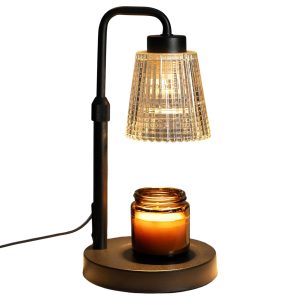
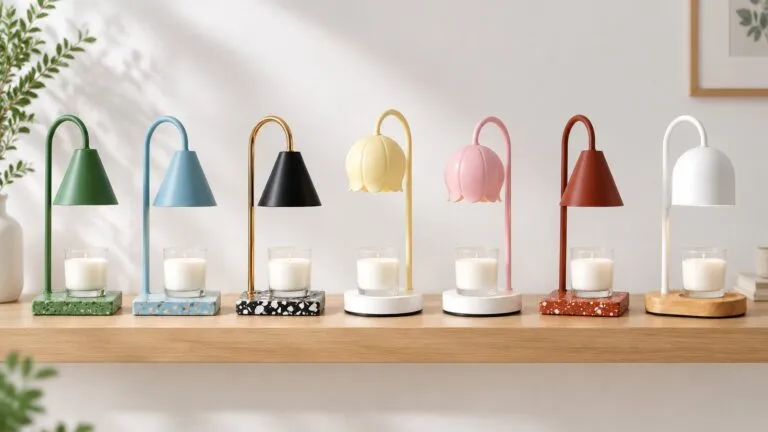
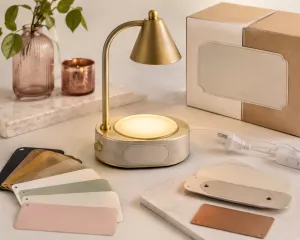
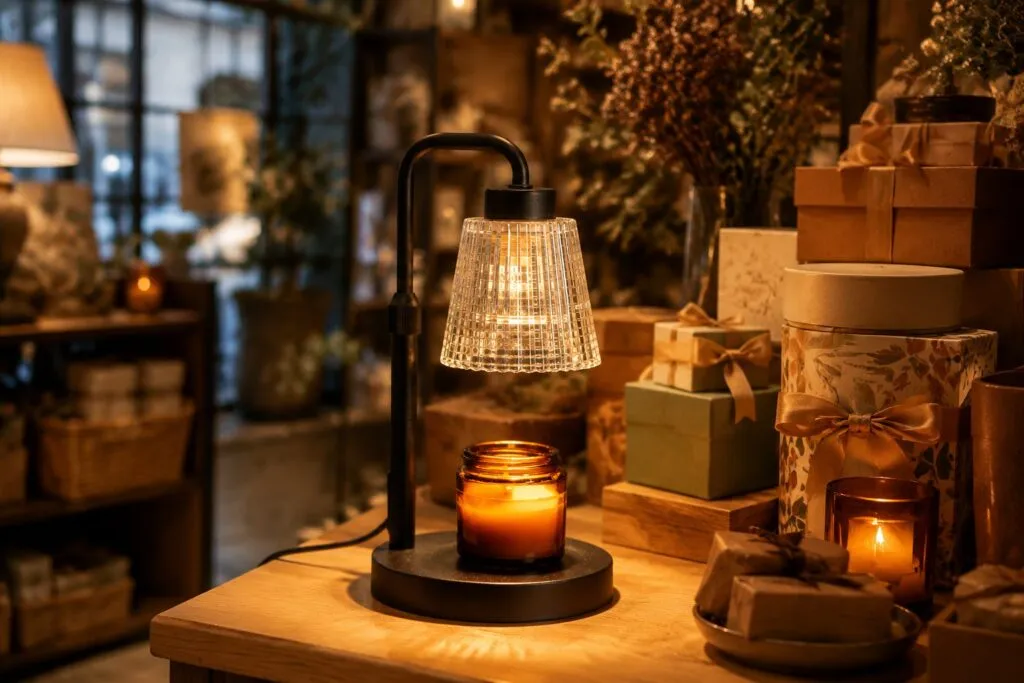
- BeginLighting builds its giftable lighting and candle warmer lines on its own Foshan floor, so the whole range can be bought factory-direct.
01The one number every boutique buys on
Product sourcing for boutiques starts with one number, and it is not the price on the box. It is the price you can buy at and still mark up to a shelf price your customer will actually pay. Get that number right and everything downstream has room to breathe: your assortment, your reorders, your cash flow. Get it wrong and a beautiful shelf quietly loses money on every sale.
The oldest rule in retail still frames the whole exercise. Keystone pricing means doubling your cost to set the retail price, a 100% markup that leaves about a 50% gross margin on the sale (Shopify, How To Calculate Wholesale Product Pricing, retrieved 2026-07-18). That half is not profit. It has to absorb rent, staff, theft, markdowns, and the slow weeks between holidays. So sourcing is really one search repeated over and over: find products you can land cheaply enough to keystone and still price where the shopper says yes.
02Where do gift shops buy their products?
Gift shops buy their products from four main channels: wholesale marketplaces, trade shows, independent sales reps, and direct from manufacturers or importers. Most buyers run a blend of all four, and the right mix depends on how much volume you move and how much margin you need to protect on a given line.
Wholesale marketplaces like Faire put thousands of brands one click away, with net terms and low opening orders that suit a small shop testing new lines (Faire, retrieved 2026-07-18). Trade shows work the opposite way. Events such as NY NOW at the Javits Center and Atlanta Market at AmericasMart gather thousands of brands under one roof, and registration is free for qualified buyers (NY NOW, How to Qualify as a Buyer, retrieved 2026-07-18; Atlanta Market, retrieved 2026-07-18). Sales reps bring a curated bag of lines to your counter. And at the far end sit the manufacturers and importers themselves, where the per-unit price is lowest and the commitment is highest.
| Channel | What it is | Layers to the factory | Best for |
|---|---|---|---|
| Wholesale marketplace | Online catalog of many brands, net terms, low openers (Faire) | Brand plus platform | Discovering and testing new lines |
| Trade show | In-person market twice a year (NY NOW, Atlanta Market) | Brand or its rep | Seasonal buys, seeing product in hand |
| Sales rep | An agent who carries several lines to you | Brand plus rep | Service and a curated selection |
| Direct from manufacturer or importer | Buying at or near the source | None to one | Best price, private label, steady volume |
03How does keystone pricing decide what you can pay?
Keystone pricing decides what you can pay by working backward from the shelf price. If a candle warmer sells at $40 on your shelf, keystone says you should land it near $20, because doubling that cost returns your 50% margin (Shopify, retrieved 2026-07-18). Turn the sourcing question around and it gets concrete: for any product you fall in love with at a show, what is the most you can pay and still hit that half-price target?
Keystone is a starting line, not a law. The convention simply puts the wholesale price a brand quotes near half of your retail price, which is the same 100% markup seen from the buying side (Shopify, Wholesale vs. Retail, retrieved 2026-07-18). The moment you add ocean freight, duty, and the fees a brand already paid to reach you, though, your real landed cost drifts above that clean 50%. That is why the channel you buy through, and how many hands a product passes through first, decides whether keystone survives contact with a real invoice.
04Where does your margin leak between the factory and the shelf?
Your margin leaks at every hand the product passes through on the way from the factory to your shelf. Each layer, whether a marketplace, a distributor, or a rep, adds a markup or a fee that someone has to fund, and that someone is usually you or your shopper. The cleanest way to see the leak is to look at what the marketplaces themselves keep on each order.
The pattern is the whole point. A brand based outside North America that pays Faire 25% to win a new marketplace customer, a one-time 10% referral fee on top of the standard 15% commission, then 15% on every reorder after, has to earn that money back somewhere (Faire, retrieved 2026-07-18), and it usually surfaces in the wholesale price or the opening minimum. Sell that same buyer through Faire Direct, a relationship the brand brought itself, and the platform takes nothing. Etsy, a retail channel shown here for scale, keeps 6.5% of each sale before payment processing (Etsy, retrieved 2026-07-18). None of these fees are villains. They buy discovery, credit, and reach. But each one is a layer, and layers are exactly what a boutique pays for when a wholesale price feels high for what is in the box.
05When is buying direct from the factory worth it?
Buying direct from the factory is worth it when your volume on a product is steady enough to clear a minimum order, and when the margin you claw back beats the extra work and the wait. Direct removes the distributor markup, so the same unit lands cheaper on your books. In return you take on the minimum order quantity, a longer lead time, and the quality control that a middleman used to carry for you.
Marketplace or distributor
- Order today, low opening quantities
- Net terms and easy returns
- Someone else holds the inventory risk
- Highest per-unit cost, so the thinnest margin
Direct from the factory
- Lowest per-unit cost
- Private label and custom options
- You control specs, materials, and packaging
- Higher minimums, longer lead time, you own quality control
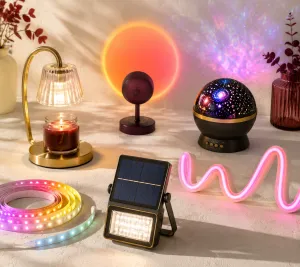
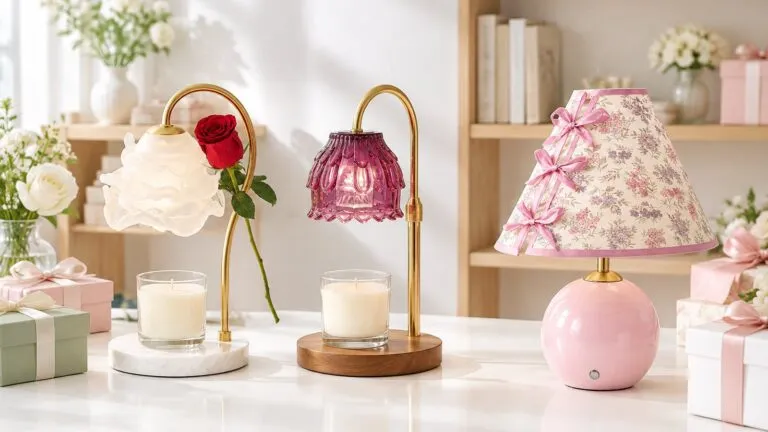
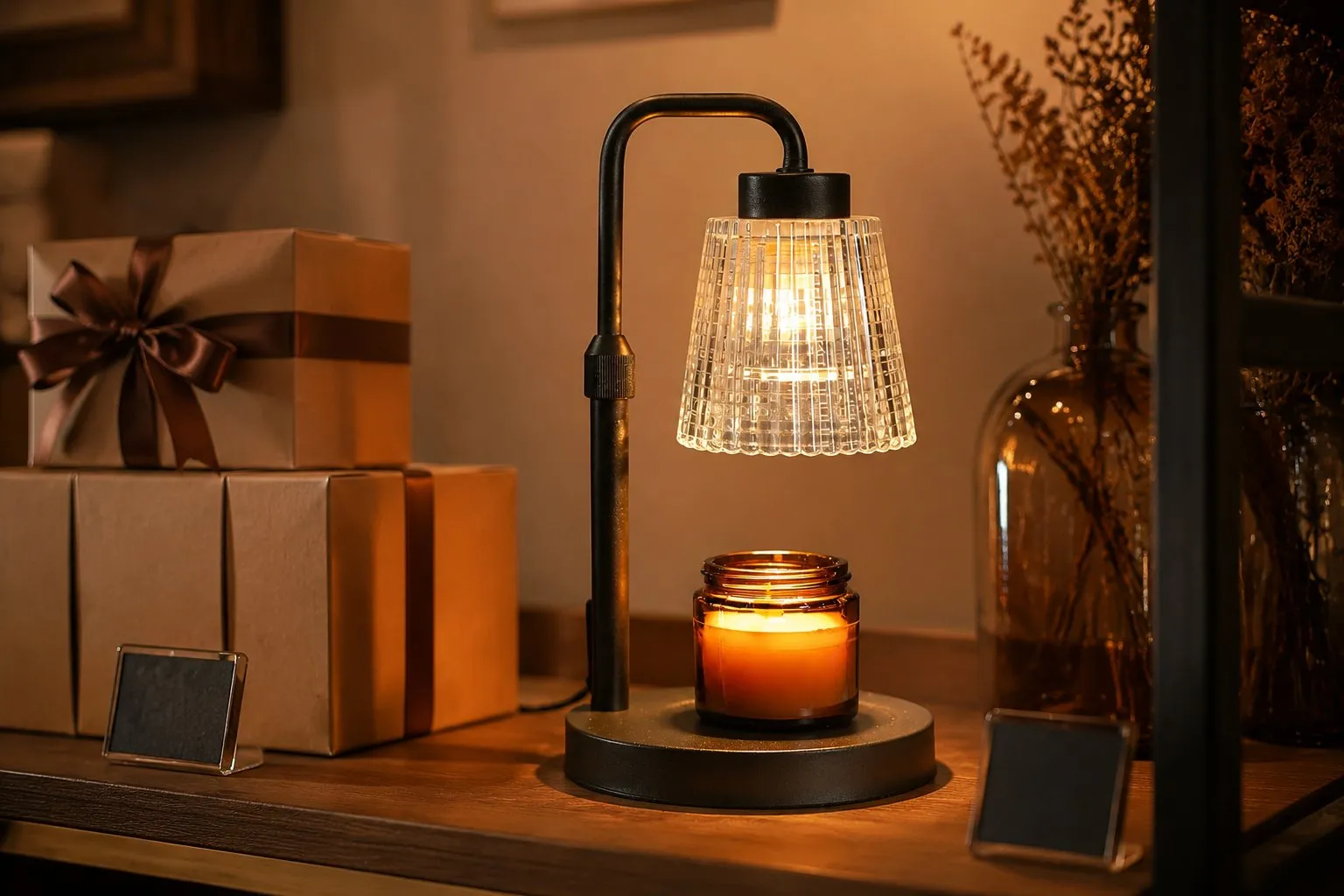
This gets real with a range you can actually buy at the source. BeginLighting makes its own candle warmer lamps on its Foshan lines, so a boutique sourcing candle warmers can buy factory-direct with no distributor sitting in the middle. The same goes for the rest of a cozy-home assortment, from projectors and neon signs to table lamps and LED strips, all built on the same floor. The margin logic is simple: the fewer hands between the line and your shelf, the more room your keystone has to survive. You can see how that plays out across the cozy-home range or narrow it to the giftable end of the shelf.
06Putting the margin math on one page
Put the whole thing on one page and product sourcing for boutiques becomes a short, repeatable check you can run at any booth or catalog. Start from the shelf price, not the invoice. Halve it to find your target landed cost. Then count the layers between you and the factory, because each one is spending a piece of your margin whether you see it on the invoice or not.
Sourcing giftable lighting for your shelves?
BeginLighting builds cozy-home and giftable lighting, candle warmers included, on its own Foshan lines and sells factory-direct. Prices are quoted per order, so the next step is a quote, not a cart.
Whichever channel you use, the shops that keep their margin are the ones that price backward from the shelf and stay curious about how few hands a product really needs to pass through. When a line sells well enough to commit to, that is the moment to ask about buying it direct, or about putting your own label on it. You also carry candle warmers you can source at the factory itself through our wholesale candle warmers program.
Frequently asked questions
Where do gift shops buy their products?
Gift shops buy their products from four main channels: wholesale marketplaces such as Faire, in-person trade shows such as NY NOW and Atlanta Market, independent sales reps, and direct from manufacturers or importers. Most boutiques use a mix. Marketplaces and shows are best for discovering and testing lines, while buying direct from a manufacturer gives the lowest per-unit cost once a product sells steadily enough to justify a full order.
What profit margin does a boutique need on giftware?
The long-standing benchmark is keystone: buy at roughly half your shelf price, which is a 100 percent markup and about a 50 percent gross margin on the sale (Shopify). That margin is not take-home profit. It has to cover rent, staff, shrink, markdowns, and slow months, which is why sourcing at or below the half-price mark matters so much for a small shop.
Is it cheaper to buy direct from a manufacturer than through a wholesaler?
Per unit, yes, because buying direct removes the distributor’s markup and any marketplace commission baked into a wholesale price. The trade is that a factory usually asks for a higher minimum order, a longer lead time, and quality control that a middleman would otherwise handle. Direct wins when your volume on a product is steady enough to clear the minimum without tying up cash in dead stock.
What is the minimum order to buy direct from a factory?
There is no single number. Minimum order quantities vary by product, materials, and how much you customize, so the honest answer is to ask for the minimum in writing before you commit. A serious supplier will quote the minimum, the lead time, and the per-unit price together, which lets you run the keystone math before any money moves.
Can a small boutique create its own private-label products?
Yes. Private label and OEM programs let a small shop put its own name on a proven product without running a factory, and lighting is a common starting point because the tooling already exists. BeginLighting builds giftable lighting and candle warmers on its own Foshan lines and offers both this way, so a boutique can start with a stock item and move to a branded version as sales grow.
Sources
- Faire, How much does it cost to sell on Faire if I'm based outside of North America? (for brands outside North America: a one-time 10% referral fee plus the standard 15% commission equals 25% on a new customer's first order, 15% on reorders, 0% on Faire Direct orders), retrieved 2026-07-18.
- Etsy, Fees & Payments Policy (6.5% transaction fee on the item price plus shipping), retrieved 2026-07-18.
- Shopify, How To Calculate Wholesale Product Pricing (keystone pricing: double the cost, a 100% markup and roughly a 50% gross margin), retrieved 2026-07-18.
- Shopify, Wholesale vs. Retail: Key Differences (suggested retail and wholesale set near half the retail price), retrieved 2026-07-18.
- NY NOW, How to Qualify as a Buyer (registration is free for all qualified buyers), retrieved 2026-07-18.
- Atlanta Market at AmericasMart, gift, home and lifestyle wholesale market open to retailers and gift shops (over 6,000 brands), retrieved 2026-07-18.
BeginLighting manufactures its giftable and cozy-home lighting and its candle warmer line in Foshan. Platform fees, marketplace names, and trade shows cited above are drawn from public sources for context and are not affiliated with BeginLighting.
Knowing which channel to buy through only helps once you know what belongs in the basket: here is a data-backed stocking list of best-selling gift shop items.
Buying direct is really three separate decisions, which we lay out in the three sourcing models behind a factory-direct program.
The sourcing map for a candle brand
Boutiques that also pour their own candles run a second, parallel sourcing map, and it is worth drawing because it is where a small shop’s margin is either built or lost. Finished goods come from the four channels above. Raw inputs do not. Candle making supplies wholesale is a separate trade with its own distributors, its own minimums and its own seasonality, covering wax, wick, fragrance oil, dye and the container the whole thing is poured into.
Containers deserve their own line in the budget, because they are usually the heaviest and most breakable thing you buy. Candle jars wholesale is the channel most small brands start with, stock glassware in a handful of standard shapes bought by the pallet from an importer or a glass distributor, and the trade-side name for the same purchase is candle vessels wholesale, which is the wording you will see on supplier sites and at trade shows. Ask any vessel supplier three questions before you commit: whether the glass is rated for the heat of a burning candle, what the breakage allowance is on freight, and whether the lid, the box and the label come from the same place or from three different ones.
To be plain about where we sit on that map: BeginLighting does not supply wax, wicks, fragrance or glassware. We build our candle warmer lamps and the wider giftable lighting range on our own floor, which is the lighting half of a cozy shelf. If your shop pours its own candles, the useful pairing is a warmer program running alongside them, because the lamp sells the candle and the candle refills the lamp.
How do you vet a wholesale table lamp supplier before your first boutique order?
Vet a wholesale table lamp supplier on the same three questions you would put to any line you intend to reorder. First, can you land the lamp at a price that still keystones on your shelf once freight and duty are in, because a lamp that only works at full retail is a markdown waiting to happen. Second, can they make it again next season in the same finish, since a boutique shelf is built on repeat silhouettes rather than one-off buys. Third, will they tell you plainly whether they build the lamp or source it, because that single answer decides how much of it you are allowed to change.
Two practical asks separate a real supplier from a catalog: request the packed carton dimensions before you talk price, since freight cube is where a cheap lamp gets expensive, and ask what happens to a run if a finish drifts between batches. For the record, BeginLighting builds its decorative and table lamps on the same Foshan floor as its candle warmer line, and the quote names the finish and the material for each.
The harder call comes earlier, when you are still deciding which trend to back at all, which is what our guide to trending home decor products for resale is for.
