

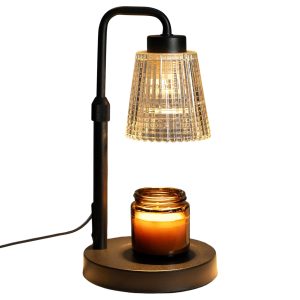



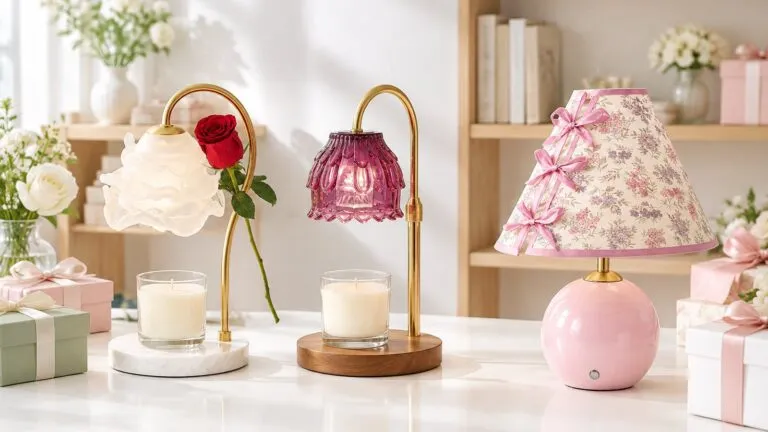



The MOQ meaning fits in one line: MOQ is short for minimum order quantity, the smallest order a supplier will accept, counted per style, per color or across the whole order depending on who is quoting. The business dictionary entry is plainer still, “the smallest amount or number of a product that a company will supply” (Cambridge Business English Dictionary), and almost every argument on a quote sheet comes down to how that number is counted.
Two different numbers hide behind the same three letters, and first-time buyers mix them up constantly. A stock wholesale MOQ is the floor on goods the factory already makes in a catalog finish; a private-label or custom MOQ is the floor on a run built around your logo, your box or your shape, and it is higher for reasons that have nothing to do with greed. This guide explains both from the supplier’s side of the table: what the term means, why factories set one, what moves it, and what a reasonable minimum looks like for a first order. Our own terms sit on the wholesale program page, and we come back to them at the end.
Key takeaways
In short, the MOQ meaning is minimum order quantity: the smallest order a supplier will run or ship. It exists because setup, changeover and material costs are fixed per run and have to be spread over enough units. A good MOQ is one your cash and your sell-through can carry, and the quickest route to a workable one is to sample first and negotiate how the minimum is counted.
- Ask how the minimum is counted before you argue about the number: per model, per color, per order and per production run are four different commitments.
- Stock wholesale and private label carry different minimums, because your logo, your printed box or a new mold each add setup the factory has to recover.
- Changeovers drive minimums. Lean factories aim for changeovers under 10 minutes because short changeovers are what make small lots pay (Wikipedia, Single-minute exchange of die).
- Held stock costs money while it waits: carrying costs generally run between 20% and 30% of total inventory value, according to Investopedia, so an oversized first order keeps charging you after it lands.
- Sample before you commit. Sampling takes about 15 days at our plant, and the sample fee is refundable on your production order.
What Is MOQ? The Definition and Four Ways Suppliers Count It
MOQ is the lowest quantity a supplier will accept on one order, and the part of it that matters on a quote is not the figure but the unit it is counted in. Cambridge files the abbreviation under commerce and expands it simply as minimum order quantity (Cambridge Business English Dictionary). Contracts get more specific. Supply agreements collected by the legal dictionary Law Insider define it as the minimum number of batches “to be produced during the same cycle of manufacturing”, or as the minimum number of units or batches a client must buy for each manufacturing campaign (Law Insider). Both definitions tie the minimum to a production run, which is where the term really comes from.
So what does MOQ mean when it turns up on an actual quote? Usually one of four things, and they behave very differently:
- Per model, or per SKU. The floor applies to each style you order, so three styles means three minimums.
- Per color or finish. The floor applies to each variant, so a six-color assortment of a single style can cost six minimums.
- Per order. The floor applies to the total, in units or in money; a money floor is usually written as a minimum order value, or MOV.
- Per production run. The floor is the smallest batch the line will set up for, and anything smaller waits to be combined with other orders.
Read the counting rule first and the number second. A per-order minimum spread across five styles is a far smaller bet on each style than a per-model minimum of the same size, and two quotes that look identical on paper can leave you holding very different amounts of stock.

Stock Wholesale MOQ vs Private-Label MOQ
A stock wholesale MOQ and a private-label MOQ are two separate numbers, and the private-label one is almost always higher because more of the run is built only for you. Stock wholesale means buying a catalog model in a standard finish and a standard carton. The factory may already be running that body for other buyers, so your order slots into work that is happening anyway, and the minimum tends to be set by the carton or by the smallest batch worth picking and packing.
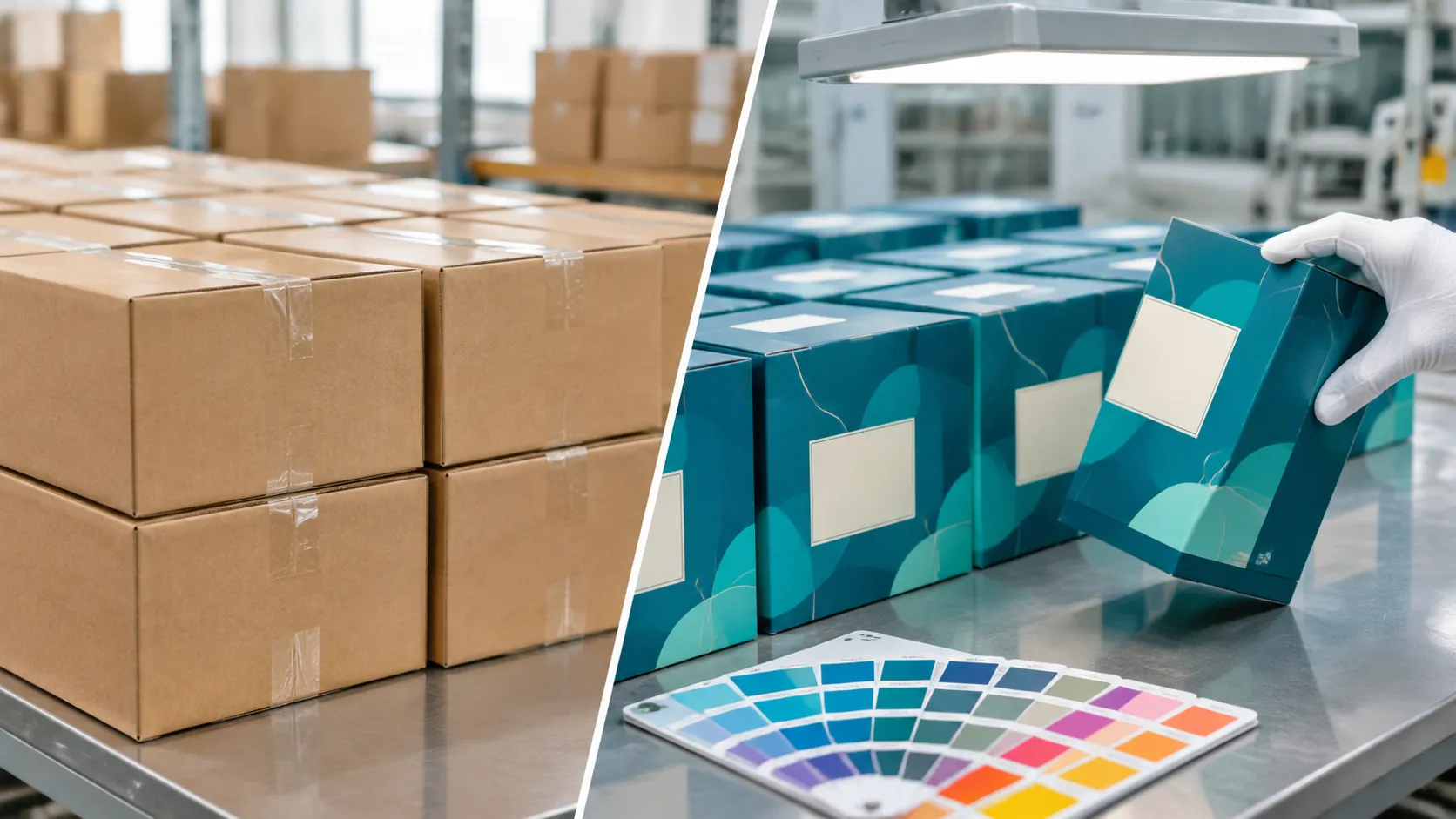
Private label changes the arithmetic. The encyclopedia definition is a brand owned by the company that sells the product while another firm makes it (Wikipedia, Private label), and every element carrying your brand has its own setup: a printed or pad-printed logo needs a plate or a screen, a retail box printed to your artwork has its own print run, and insert cards and labels are separate jobs again. Go further, into ODM, where the factory designs the product for you, or OEM, where it builds to your specification (Wikipedia, Original design manufacturer), and a new shape means new tooling, the most expensive setup of all.
That is why the sensible first question is which of the two you are really asking for. Plenty of small brands start with a stock model in a catalog finish, add their own box once the product has proved it sells, and only then pay for a custom body. Our guide to candle warmer sourcing models lays out that ladder; the short version is that each rung buys more control and charges for it in money, minimum quantity and time.
Why Factories Set a Minimum Order Quantity
Factories set a minimum order quantity because a large share of the cost of any run is fixed: it is the same whether the line makes a handful of units or a full shift’s output, so it has to be spread across enough units to make sense. Changing a line from one product to the next means stopping it, swapping fixtures, loading different parts and finishes, then running and checking first pieces before anything counts as output. None of that time produces a unit anyone can sell.
Manufacturing engineers have been attacking that cost for more than a century. Frederick Winslow Taylor analyzed the non-value-adding parts of setups in his 1911 book Shop Management, and the Single-Minute Exchange of Die method later set the target of changeovers that take less than 10 minutes, an approach its standard description calls key to reducing production lot sizes (Wikipedia, Single-minute exchange of die). The logic runs both ways: long changeovers force large lots, and short ones let a factory afford smaller minimums.
The same trade-off sits on the buyer’s side of the ledger. The economic order quantity model, developed by Ford W. Harris in 1913, weighs a fixed cost for each order placed, regardless of how many items it contains, against a holding cost for every unit sitting in storage (Wikipedia, Economic order quantity). A supplier’s MOQ is roughly the point where its own version of that sum stops working: below it, the setup cost carried by each unit eats the margin.
Materials add a second floor. Glass, steel, wood, printed cartons and electrical parts are each bought in their own minimum lots, and a color change on a powder-coating line usually means cleaning down the booth before the next color goes on. When a buyer asks for a finish nobody else is running that week, the factory is setting up that color for one order. None of this appears as a line on a price list, which is exactly why it shows up as a minimum instead.

What Moves an MOQ Up or Down
Four things move a minimum more than anything else: the mix of bodies and finishes, the packaging, whether the run carries your label, and whether it is a first order or a repeat. The table sorts the common ways of ordering by how the minimum is usually set and what pushes it up or down.
| Way of ordering | How the minimum is usually set | What moves it |
|---|---|---|
| Stock model, catalog finish | Per model, often rounded to whole master cartons | Carton pack count, and whether that finish is already running on the line |
| One body, several finishes | Per model, with finishes mixed inside the order where the factory allows it | How many finishes are in the mix, and whether any of them is off-catalog |
| Your logo and a printed retail box | Per model, plus a print run for each printed part | How many parts carry print, the print method, and late artwork changes |
| Modified or new body (ODM or OEM) | Scoped as a project, with tooling cost carried over agreed runs | How far the part departs from an existing body, and the volume it is expected to carry |
| Repeat order on an approved specification | Quoted against the first run, often on different terms | Whether the specification, cartons and artwork are unchanged from the approved sample |
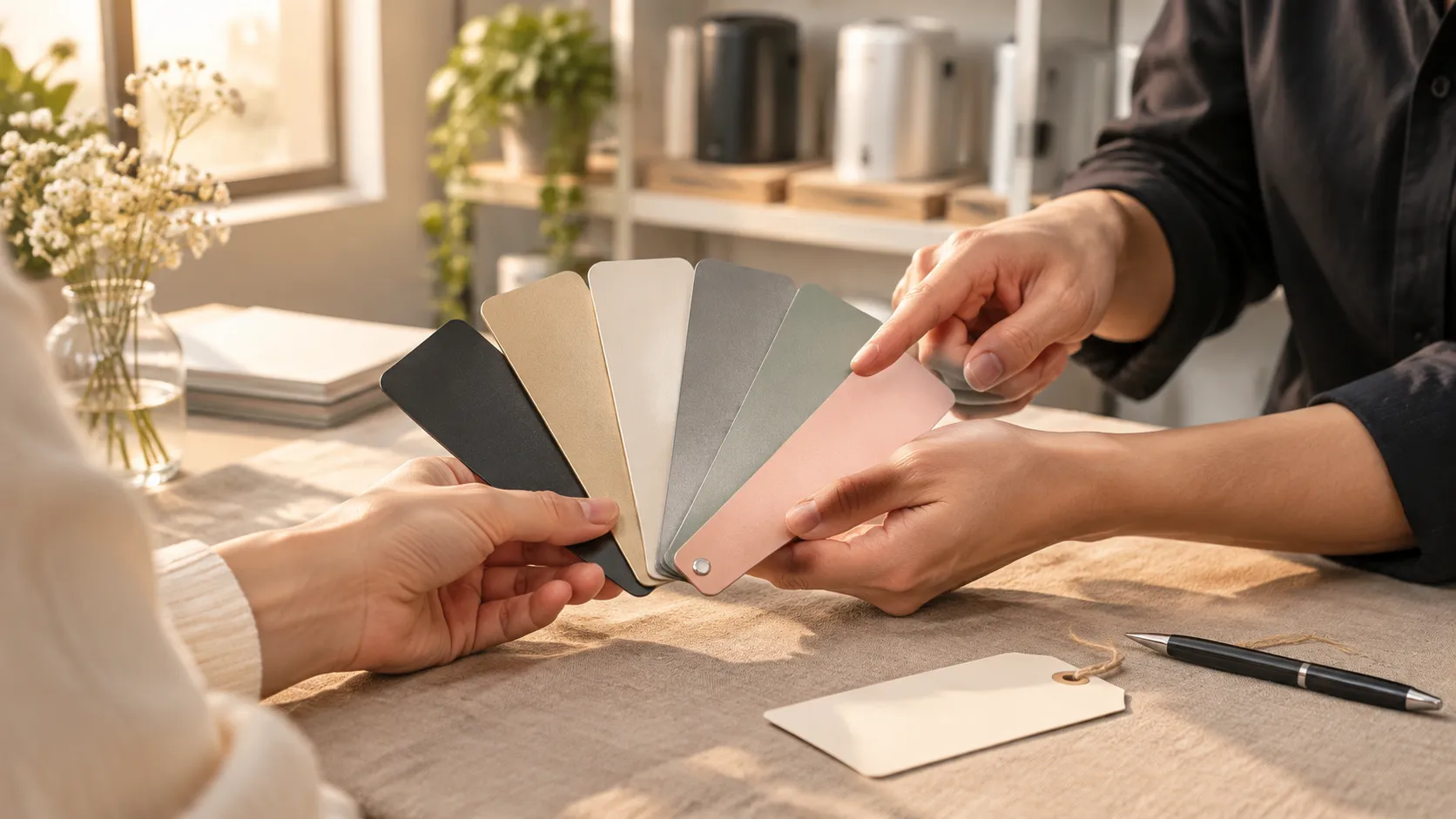
Two of those rows deserve a closer look. Mixing finishes on one body is the cheapest flexibility a buyer can ask for, because the setup that matters is the body rather than the color; on our candle warmer bodies, for example, one purchase order can mix finishes across the same body, as our candle warmer wholesale terms set out. Tooling is the opposite case. A new mold is a sunk cost, so the useful question is less the minimum itself than how the tooling is carried across the first runs, and that method should be agreed in writing before any cutting starts.
Price bands interact with all of this. Suppliers often quote by volume band, and the inventory literature separates two common discount schemes: all-units discounts, where crossing a break reprices the whole order, and incremental discounts, where only the units above the break get the lower price (Wikipedia, Economic order quantity). Ask which one you are looking at, because it decides whether rounding an order up to the next band saves money or simply adds stock.
What Is a Good MOQ?
A good MOQ is one you can pay for and sell through without starving the rest of the business, so no single number is right for every buyer. A minimum that is trivial for a chain buying for dozens of stores can sink a two-person brand selling online, and the same factory can quote both of them honestly.
The cash test comes first. Many of the people asking this question run small firms, and small firms run short of cash more often than they run short of product ideas. In the Federal Reserve Banks’ 2026 Report on Employer Firms, built on 6,525 responses from small employer firms, 60% had applied for financing in the prior 12 months, and the most common reason was to meet operating expenses (Small Business Credit Survey). A minimum order is paid for well before the first unit sells, so it competes for exactly that money, and borrowing is not a reliable backstop: only 42% of applicants received the full amount they asked for, while 22% received nothing.
Source: Federal Reserve Banks, Small Business Credit Survey, 2026 Report on Employer Firms (6,525 responses), retrieved 2026-11-10
The stock test comes second. Every unit you hold costs money while it waits: carrying costs generally run between 20% and 30% of total inventory value, according to Investopedia, once storage, handling, insurance, the opportunity cost of the cash and the risk of goods going stale are counted. Investopedia adds that trendy inventory carries a higher obsolescence risk than staples, which matters for decor and gift lines that sell by season. A minimum that forces two seasons of stock to get one season of sales is not a bargain at any unit price.
There is a real trade-off here, and pretending otherwise helps nobody. Pushing a minimum down usually pushes the unit price up, because the setup cost has not gone anywhere and is now spread across fewer units; if a supplier drops the minimum and holds the price, it is fair to ask where the difference went. A good MOQ is therefore the lowest one at which the unit price still leaves you a margin, not simply the lowest one on offer.
How to Negotiate MOQ on a First Order
The most reliable way to get a workable minimum on a first order is to change what is being counted rather than haggle over the number. Factories have little room to move the setup cost itself, but they often have room on how it is spread: across finishes, across a sample and a first run, or across the first order and the reorder that follows.
Five moves work in practice, in roughly this order:
Send the shortlist and a quantity band
Name the models, the finishes and a realistic quantity range for each. A supplier who sees the band can say at once which line items push the minimum, and you skip a round of guessing.
Ask how the minimum is counted
Per model, per finish, per order or per production run, and whether finishes can be mixed on one body. Get the answer in writing before you compare prices.
Sample before you commit
Pay for a sample, or a pre-production sample with your artwork, before agreeing a bulk quantity. Ask whether the sample fee is credited back on the production order, because that changes what the sample really costs you.
Keep the first run close to the catalog
Start with a stock body and a catalog finish, put your brand on the box first, and leave a custom body for the season when sales have proved the product.
Agree first-order and reorder terms separately
Write down how the minimum, the price band and any tooling charge change on the reorder, so the second purchase order is not renegotiated from zero.
Two things to avoid. Do not agree to a minimum you cannot store, because a pallet sitting in a hallway is still a pallet you paid for, and do not lose the approved sample, because it is the physical reference the production run is checked against. For the full cost side of private label, line by line, our private label primer has it; its short answer is that minimums are set per factory and per product and rise with how custom you go.
MOQ at Our Factory: How We Quote It
We quote minimums per model and per project, and you will not find a single posted number for the whole catalog anywhere on this site. The table above is the reason: change any one of its drivers, from the finish mix to the box, and the floor moves with it, so a single printed figure would mislead most of the people reading it.
What we do publish is the part that does not move. Sampling takes about 15 days, and sample fees are refundable on your production order; the sampling process explains what the sample is and how it gets approved.
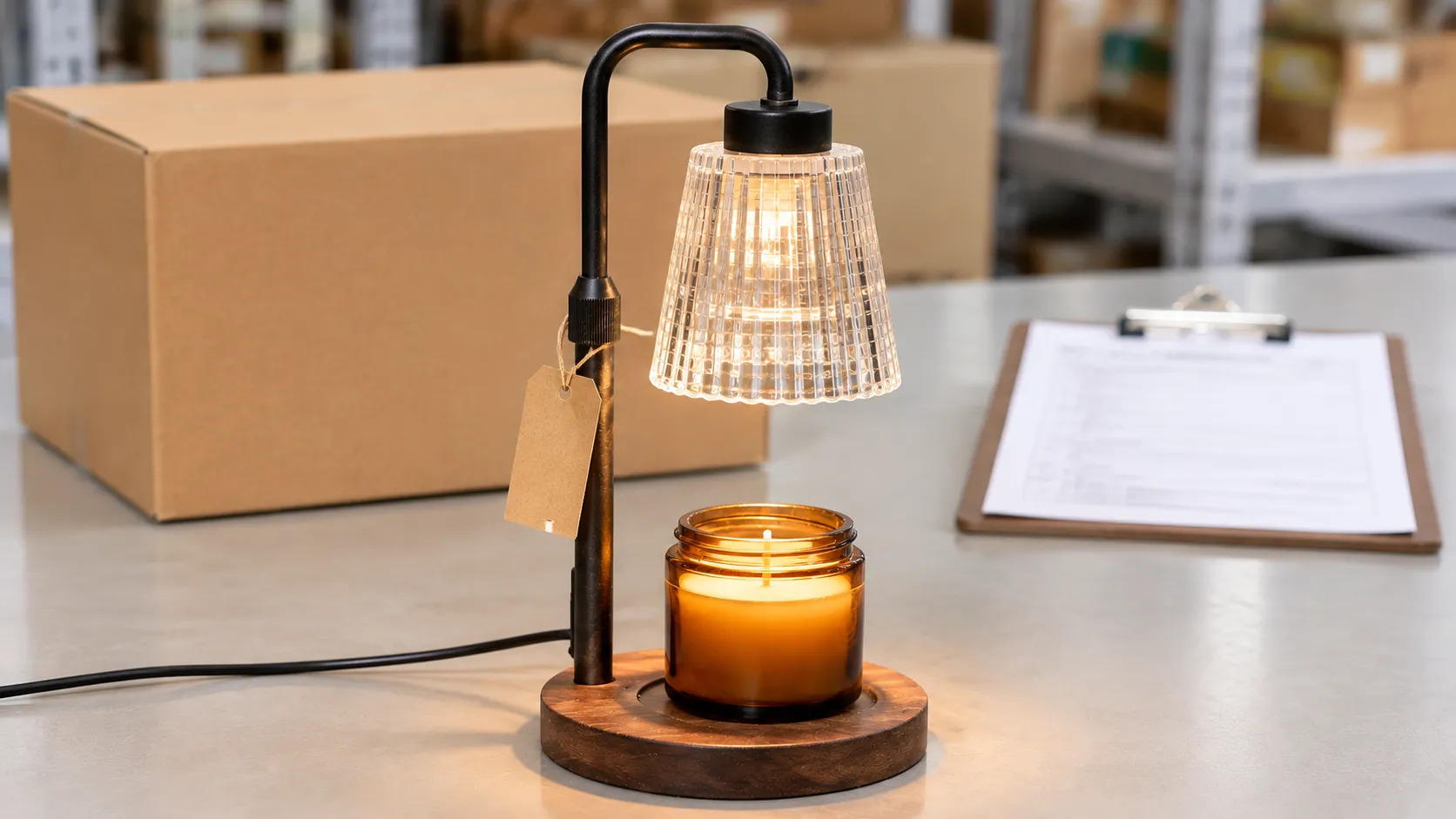
Candle warmer lamps and decorative table lamps are both offered as low-MOQ wholesale, and so are our sunset projection lamps. On every line the production window is confirmed with your quote rather than read off a rate card.
A production window is one part of a lead time, not all of it: sampling comes before it and freight after it, and each part runs from a named event to a named event. How to count all three back from the week stock must be on the shelf is set out in what lead time means.
If you buy products other than lighting, the questions in this guide still apply; our quotes cover our lighting range and its accessories. Tell us which models you want and roughly how many of each through the wholesale program, and the reply puts a minimum in writing for that exact mix, together with the volume bands and per-SKU carton data the rest of the order runs on.
Get the minimum counted for your own shortlist
BeginLighting builds candle warmer lamps, decorative table lamps and the rest of our lighting range in our own factory in Foshan, with 4,000 square meters, 40 people and two production lines under one roof. Sampling takes about 15 days, and the sample fee is refundable on your production order. Send the models, finishes and quantity band you have in mind, and the quote comes back with the minimum counted the way your order is actually built.
Watch it work
How a minimum order quantity gets counted, in 37 seconds:
FAQ
What is a good MOQ?
There is no universal figure, so test the quote instead of the number. Multiply the minimum by the unit price and by the number of styles you need, then check that total against the cash you could tie up for a season without borrowing. If it passes per style but fails across the whole assortment, ask whether the minimum can be counted per order instead.
What is MOQ in supply?
It is the same rule repeated at every tier: each supplier upstream of the factory has its own floor, and the quote you receive is shaped by whichever one is hardest to split. When a minimum looks high for a simple product, ask which single part sets it. Swapping that part for a standard option often brings the whole order down.
Is MOQ the same as minimum order value?
No. MOQ counts units, while a minimum order value, often written MOV, counts money across the whole order. Some suppliers use one, some use both, and a value floor is usually easier to meet with a mixed assortment because every style contributes to the same total.
What is MOQ in dropshipping?
Dropshipping usually has no MOQ in the factory sense, because a supplier ships each sale one unit at a time from stock it already holds. The price of that freedom is a higher unit cost and little say over packaging or branding; once you want your own label on the product, a minimum order comes back.
Sources
Every external figure above was checked on 2026-11-10: the definition against the Cambridge Business English Dictionary and the contract usage against Law Insider’s collected clauses, the private-label and ODM terms against their encyclopedia entries, changeover and order-cost logic against the standard references on SMED and economic order quantity, carrying cost against Investopedia, and the small-firm cash figures against the Federal Reserve Banks’ 2026 Report on Employer Firms. Our own sampling terms come from our factory records, not from any of these sources.
- Cambridge Dictionary, minimum order quantity, Cambridge Business English Dictionary (MOQ given as the abbreviation and the entry filed under commerce; defined as the smallest amount or number of a product that a company will supply), retrieved 2026-11-10.
- Law Insider, Minimum Order Quantity definition (contract definitions tying the minimum to the batches produced in the same cycle of manufacturing, and to the units or batches a client must buy for each manufacturing campaign), retrieved 2026-11-10.
- Wikipedia, Private label (a brand owned by the company that sells the product while the manufacturing is done by another firm), retrieved 2026-11-10.
- Wikipedia, Original design manufacturer (an ODM designs and manufactures a product for a customer to sell, in contrast to an OEM that manufactures to the customer’s specifications), retrieved 2026-11-10.
- Wikipedia, Single-minute exchange of die (changeovers that take less than 10 minutes, described as key to reducing production lot sizes; Frederick Winslow Taylor’s analysis of setups in Shop Management, 1911), retrieved 2026-11-10.
- Wikipedia, Economic order quantity (model developed by Ford W. Harris in 1913; a fixed cost for each order regardless of quantity balanced against a holding cost per unit stored; all-units and incremental quantity discounts), retrieved 2026-11-10.
- Investopedia, What Is Inventory Carrying Cost? (carrying costs generally run between 20% and 30% of the total inventory; tangible costs are storage, handling and insurance, intangible costs are opportunity cost, deterioration and obsolescence), retrieved 2026-11-10.
- Federal Reserve Banks, Small Business Credit Survey, 2026 Report on Employer Firms, covering the 2025 survey (6,525 responses, fielded September 3 to November 14, 2025; 60% applied for financing; operating expenses the most common reason, 56%; of applicants, 42% received the full amount, 36% some or most, 22% none), retrieved 2026-11-10.
