



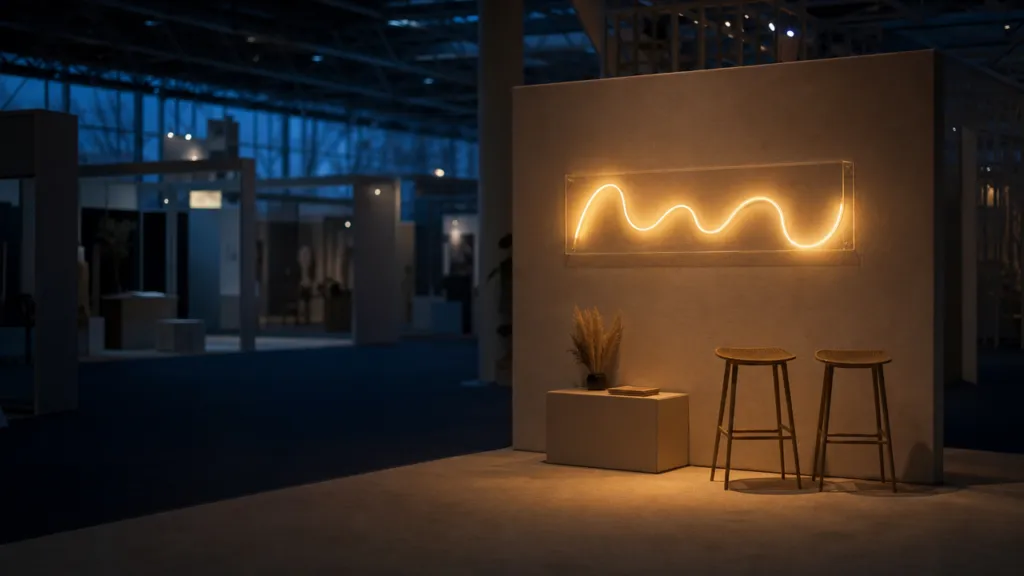
A battery operated neon sign is an LED neon flex sign with its supply moved off the wall and into a pack you carry in with the kit. Nothing else changes: same silicone-jacketed tube, same acrylic backing, same artwork. What changes is that the sign now runs on a budget measured in watt-hours, and every decision after that spends from it. This guide is for people who buy these for a living: event rental fleets, exhibition and pop-up buyers, wedding stylists working in rooms with no socket within thirty feet.
Two things belong at the top. Permanent shop signage is a different purchase, covered in our piece on neon signs for shops. And we do not stock a cordless model: our program is mains-powered LED neon built to artwork, so what follows is the supplier-market view rather than a pitch for one of ours.
Key takeaways
A battery operated neon sign works well under roughly six feet of lit tube, for one session at a time. Runtime is arithmetic rather than a headline number: watt-hours in, watts out. Large signs, long hours and daylight all push the job back to a plug.
- Glass neon can never be cordless. Neon tubes are driven at 5,000 to 15,000 volts through a transformer (US Patent 5,045,760); LED neon flex runs on low-voltage DC, which is the only reason a pack works.
- The draw is knowable before you order. Published LED neon flex sits between 2.43 and 4.57 watts per foot across one US manufacturer’s catalogue (American Lighting). Multiply by lit tube length, divide watt-hours by the result, and the hours fall out.
- Booth power is why the question gets asked. The smallest 120-volt service on the Tampa Convention Center rate card is 500 watts at $117.42 in advance and $206.00 on site (Edlen).
- Dimming buys hours until it stops paying. Relative efficacy stayed above 80 percent for every LED product tested while output was above 20 percent, and some flickered below 20 to 30 percent (U.S. DOE).
- Batteries change how the sign travels. Spare lithium packs ride in the cabin only, capped at 100 watt-hours, with two larger packs to 160 watt-hours allowed only if the airline agrees (TSA).
What a battery operated neon sign actually is
One phrase covers two products that have almost nothing in common electrically, and only one of them can leave the wall.
Glass neon is a sealed tube of rarefied gas that lights when a large voltage strikes an arc through it. A patent for a neon sign transformer puts the working condition plainly: the voltage applied to neon tubes is generally supplied in the vicinity of 5,000 to 15,000 volts. Nothing you hand a stylist at a wedding produces that safely, so a glass sign is a wired fixture and always will be. LED neon flex is the opposite: a run of small diodes in a bendable silicone jacket at 12 or 24 volts DC, and American Lighting lists its flexible neon families at 24V DC across the range. Low-voltage DC is what a battery already produces.
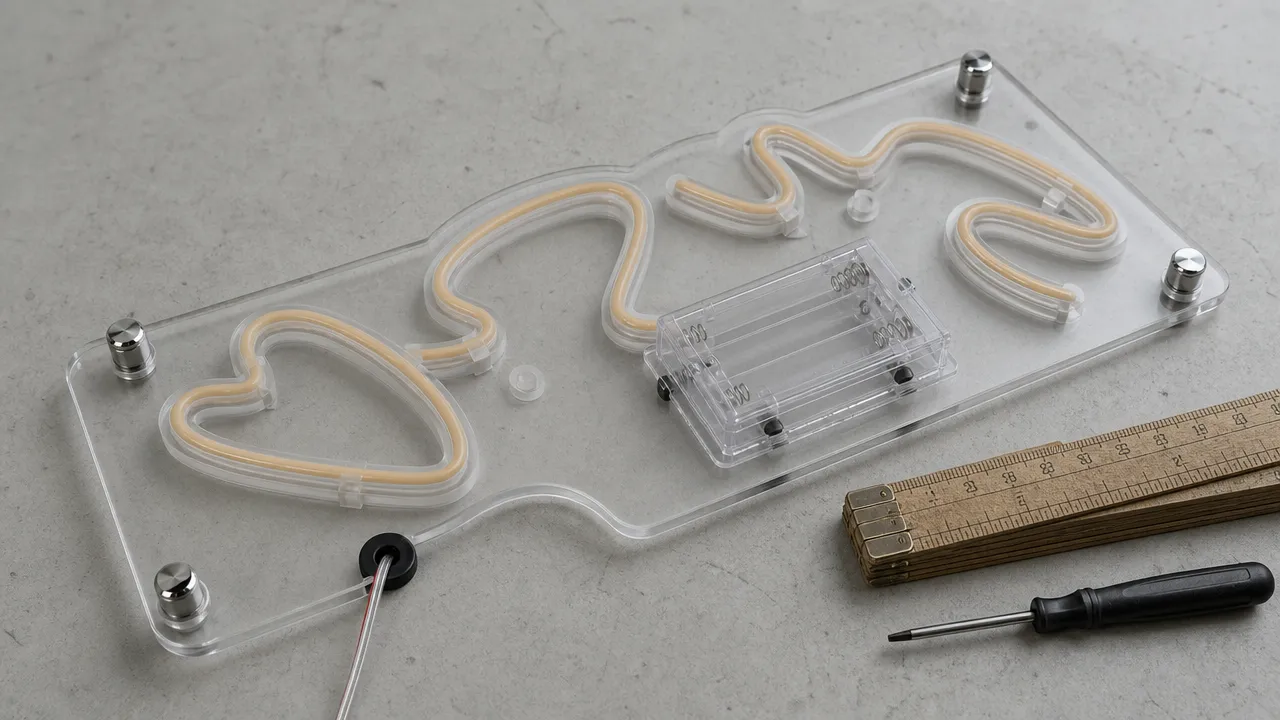
So the cordless format exists on the LED product only, and that product is the one you would otherwise buy plugged in. Listings mix the word order freely: neon sign battery operated, battery powered neon sign and battery power neon sign all point at the same thing. Suppliers deliver it three ways: a pack sealed into the housing, a cage of replaceable cells behind the acrylic, or a socket on the lead that takes an ordinary USB power bank. None is a standard. Lifespan does not change with the supply route, and the wear mechanisms are the ones in how long neon signs last.
Why event buyers ask: what booth power costs, and when it goes off
The cordless question is rarely about elegance. It is about a line on a services invoice, and a room that goes dark at a time you did not choose.
Exhibition power is ordered by the outlet, not by the watt you use. The rate card Edlen publishes for the Tampa Convention Center, in effect from September 2025, prices the smallest 120-volt service, 500 watts at five amps, at $117.42 on advance payment, $176.13 at the regular rate and $206.00 on site. A 15-foot extension cord is $35.00, a power strip another $35.00, and electrical labour runs $145.34 an hour on straight time, $218.02 on overtime (Edlen). A sign drawing single-digit watts buys the same outlet as the coffee machine.
Source: Edlen Electrical Exhibition Services pricing for the Tampa Convention Center, City of Tampa, effective 15 September 2025 (retrieved 2026-09-05)
The second cost is timing, and it varies by venue. Freeman’s electrical services notes for the SEMA Show at the Las Vegas Convention Center explain that many facilities now cut hall power overnight: it goes off no earlier than half an hour after the show closes and returns no later than half an hour before it opens (Freeman). Twenty-four-hour power is a separate order there; on the Tampa card it is bundled into all 120-volt pricing (Edlen). The difference decides whether your sign is lit for a client walkthrough at seven in the morning.
Three smaller rules from the same document shape the plan. Late orders can attract up to a 50 percent increase. Power strips trip at 1,500 watts or 15 amps, so hanging one off a 2,000-watt outlet quietly turns it back into a 1,500-watt outlet. And assume one connection point per outlet, which is how a stand with four lit elements pays for more power than it uses. Against that, a pack arriving in the flight case looks less like a compromise.
Runtime and brightness are the same dial
Nobody can quote an honest runtime for a sign they have not seen, because runtime is not a property of the format. It is a division.
Two numbers give you the answer: the capacity of the pack in watt-hours, and the draw of the sign in watts. Divide the first by the second and you have hours. Getting the draw is the part buyers skip. Published LED neon flex figures from American Lighting run from 2.43 watts per foot on the static-white families to 4.57 on the RGBW versions, most static white near 3.05. Multiply that by lit tube length, which is not the width of the sign: a cursive word 24 inches across can hold six to ten feet of tube once you follow every loop.
| Lit tube length | Draw at 2.43 W/ft | Draw at 4.57 W/ft | Hours from 50 Wh | Hours from 90 Wh |
|---|---|---|---|---|
| 3 ft, a short word | 7.3 W | 13.7 W | 3.6–6.8 | 6.6–12.3 |
| 6 ft, a name or a phrase | 14.6 W | 27.4 W | 1.8–3.4 | 3.3–6.2 |
| 10 ft, a short logo lockup | 24.3 W | 45.7 W | 1.1–2.1 | 2.0–3.7 |
| 16 ft, a stand headline | 38.9 W | 73.1 W | 0.7–1.3 | 1.2–2.3 |
| 25 ft, a storefront run | 60.8 W | 114.3 W | 0.4–0.8 | 0.8–1.5 |
Read that table as a ceiling rather than a promise. The converter between pack and tube takes its own slice, a pack rarely delivers every watt-hour printed on it, and a cold night takes more again. What it shows is the shape of the problem: the top two rows are the useful zone, the middle row is one session, and the bottom two are not really battery products. It is why an honest answer to a runtime question is a question back.
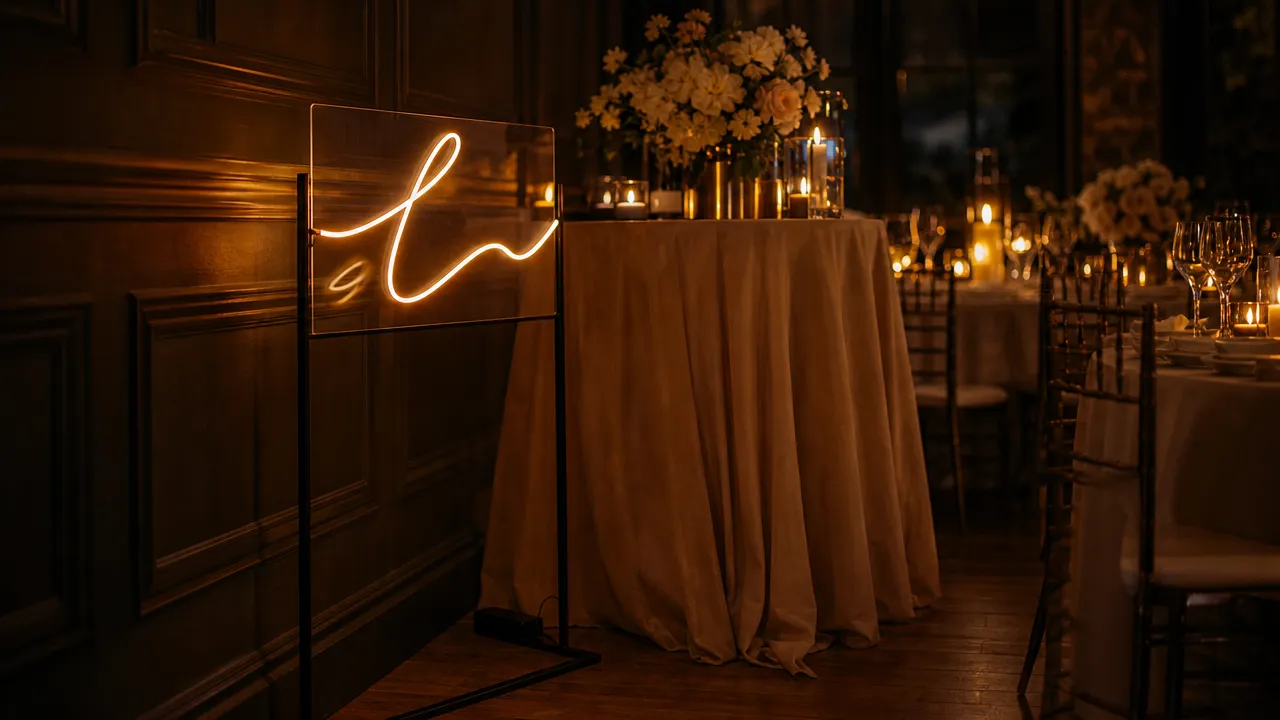
Custom Neon Signs Battery Operated: Where the Brief Changes
Buyers searching for custom neon signs battery operated are asking two questions at once, and only one of them is about the battery.
The first is whether the artwork can be made at all, and that answer is the same as for any wired piece: stroke continuity, minimum letter height, how tight the tightest corner gets. Fonts and proofing are handled in our guide to custom neon name signs. The second question decides the project. Suppliers list battery operated neon signs custom made to wording, the wording sets tube length, and tube length sets the hours. A three-word phrase and a one-word logo can look alike on a mood board and differ by a factor of three at the socket. Send exact wording at enquiry stage, not the concept.
After wording, colour is the next lever, and it is measurable. In the same catalogue the static-white neon families sit at 2.43 to 3.05 watts per foot while the RGBW versions are quoted at 4.57 (American Lighting). A colour-changing sign is close to half again the draw of a fixed warm white one, so choosing one colour at the brief stage buys hours no battery upgrade can. If the client wants colour, pick it and fix it rather than paying for channels nobody will touch during a four-hour reception.
Dimming is the last, and it belongs in the specification rather than the bag of tricks you discover on site. Dimming an LED reduces the current and therefore the draw. The U.S. Department of Energy’s CALiPER testing of retail LED lamps found relative efficacy stayed above 80 percent for every product while light output was above 20 percent, so most of the way down the dial you trade brightness for hours at close to a proportional rate. Below that, efficacy falls for some products and one tested group showed minimal flicker except when output dropped below roughly 20 to 30 percent (U.S. DOE). That work used mains lamps, not neon flex, so treat it as direction rather than a data sheet. Flicker matters at events, because every guest is filming. Film ten seconds of the sample at your intended level and look for banding.
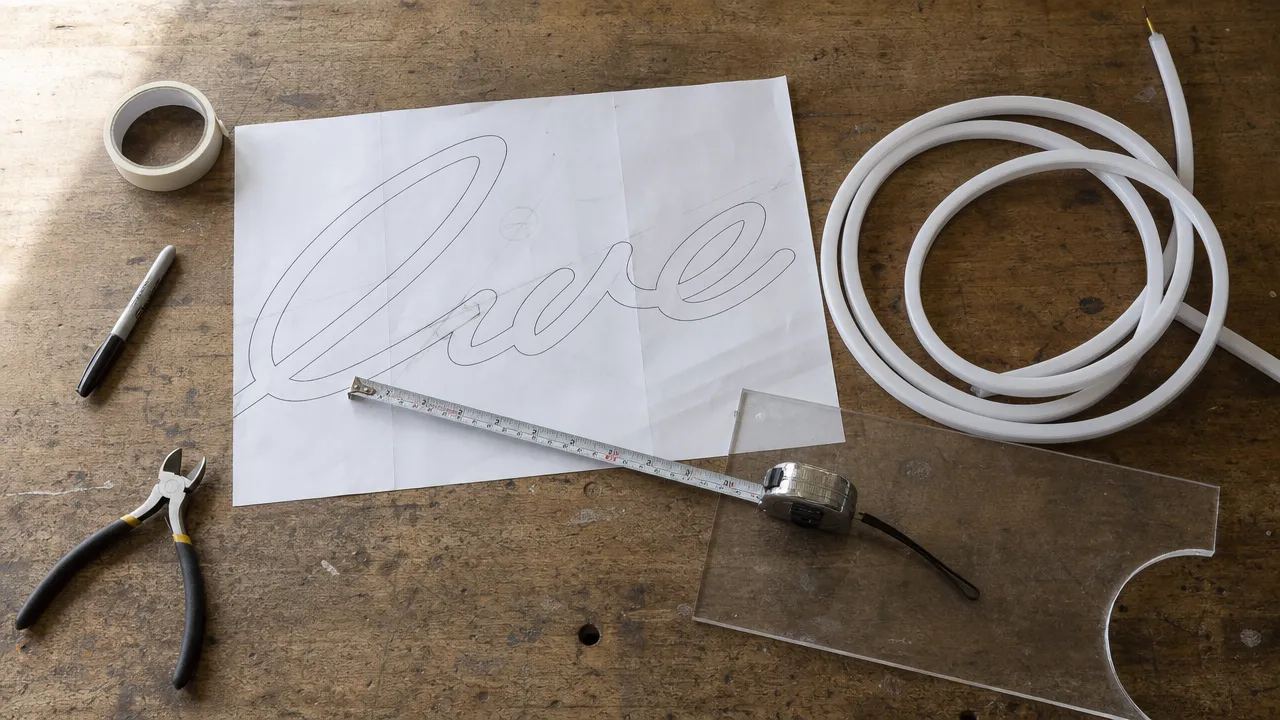
Swappable cells or a built-in pack
The supply route decides who can rescue the sign at hour four, and that person is usually not you.
| Route | What it is | Where it wins | What to check |
|---|---|---|---|
| Replaceable cells | A cage of AA or D cells behind the backing | A stylist fixes it alone, with cells from any shop | Cold performance; capacity falls as the draw rises |
| Built-in rechargeable pack | A lithium pack sealed inside the housing | Cleanest look, one cable, nothing loose to lose | Whether the pack can be replaced when it ages, and by whom |
| External power bank | A standard USB pack on a lead behind the base | Off-the-shelf spares in the size you choose | Whether output holds under load; where the lead hides |
| Mains adapter | The default low-voltage supply for LED neon | Unlimited hours at full output, no charging routine | Outlet cost and position; the venue’s overnight power policy |
| Shared power station | A large pack feeding several fixtures on a stand | Runs a whole booth rather than one sign | Weight, transport rules, and who charges it overnight |
Replaceable cells carry a limitation worth reading before you standardise on them. Energizer’s datasheet for its E91 AA gives a nominal 1.5 volts, an operating range of −18°C to 55°C, and a plot of capacity against discharge current from 25 mA to 500 mA that falls as the current climbs (Energizer). Two things follow. A brighter sign does not simply drain the same cells faster; it gets less total energy out of them. And a February marquee sits near the bottom of that temperature window, so a runtime measured in a warm showroom is not what you get on the day.
For a fleet the choice usually goes the other way from what the sales page suggests. Sealed packs look better, but they age on the shelf between hires, and you find out three seasons later whether the pack is a serviceable part or the reason the sign is scrap. Swappable routes cost a little tidiness and give back a repair anyone on site can perform. Pick one and hold the fleet to it, because two charger types in one van is how a sign goes dark.
The sizes that cannot run on a battery
Past a certain size the cordless version stops being a product decision and becomes a logistics problem. The honest thing is to say where that point sits.
The arithmetic above puts it around six feet of lit tube for a full evening, and near ten to sixteen feet for a single session. Past that you are carrying more battery than sign. Air travel caps the top end independently: spare lithium packs are limited to 100 watt-hours each, with two larger packs to 160 watt-hours allowed only with the carrier’s approval, and spares must travel in the cabin (TSA). That figure is the practical ceiling for anything flying with a crew.
So a storefront run, a full-width bar back or a permanent logo wall is a mains job, and pretending otherwise costs a client an evening. If a sign is going to live somewhere, wire it. Fixed retail pieces are in neon signs for shops, hospitality rooms in personalized neon bar signs, and pricing in how much a neon sign costs. Where a client wants no visible cable at a large size, the answers are a concealed low-voltage lead inside the structure, or one shared power station feeding the stand. The same runtime-against-service-window thinking runs through battery table lamps for restaurants and hotels.
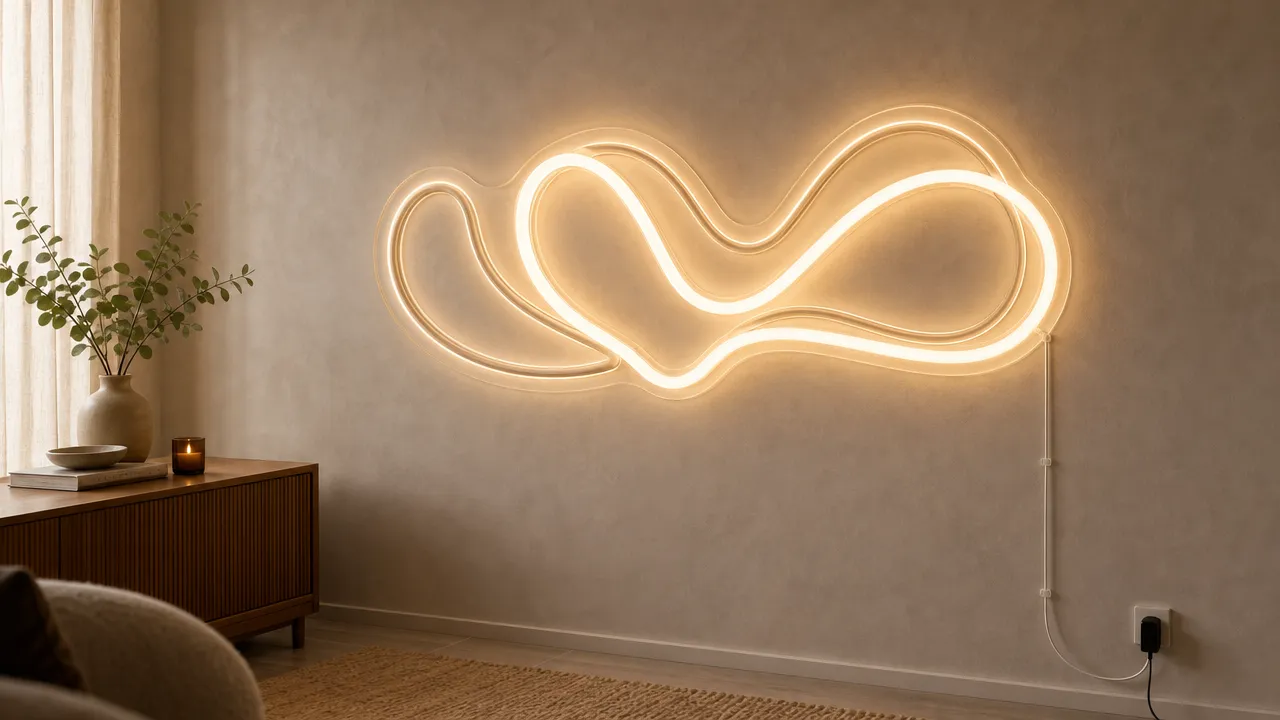
Planning power across a multi-day event
Multi-day is where cordless signs are won and lost, and the unit of planning is the session rather than the day.
A three-day show is not three blocks of power. It is a move-in afternoon when the client wants photographs, three days that each end with the hall going quiet, and a teardown nobody lights. Count the hours the sign has to be lit, add the walkthrough nobody schedules, and plan against that number rather than the show dates.
Count sessions, not days
List the blocks the sign must be lit for, including the client walkthrough before doors and any evening reception.
Get lit tube length and draw
Ask for feet of tube and watts at full output. Those two figures carry the plan; a headline runtime does not.
Fix the level you will run
Set the dim position that reads in the room, film ten seconds, and check for banding before the sign leaves the workshop.
Size packs to the longest session, plus one
Charge between blocks and carry a spare beyond what the arithmetic asks. Chargers get left in the van.
Declare the batteries before you book freight
Tell the airline or the forwarder what is in the case at booking. A pack found at the counter stays behind.
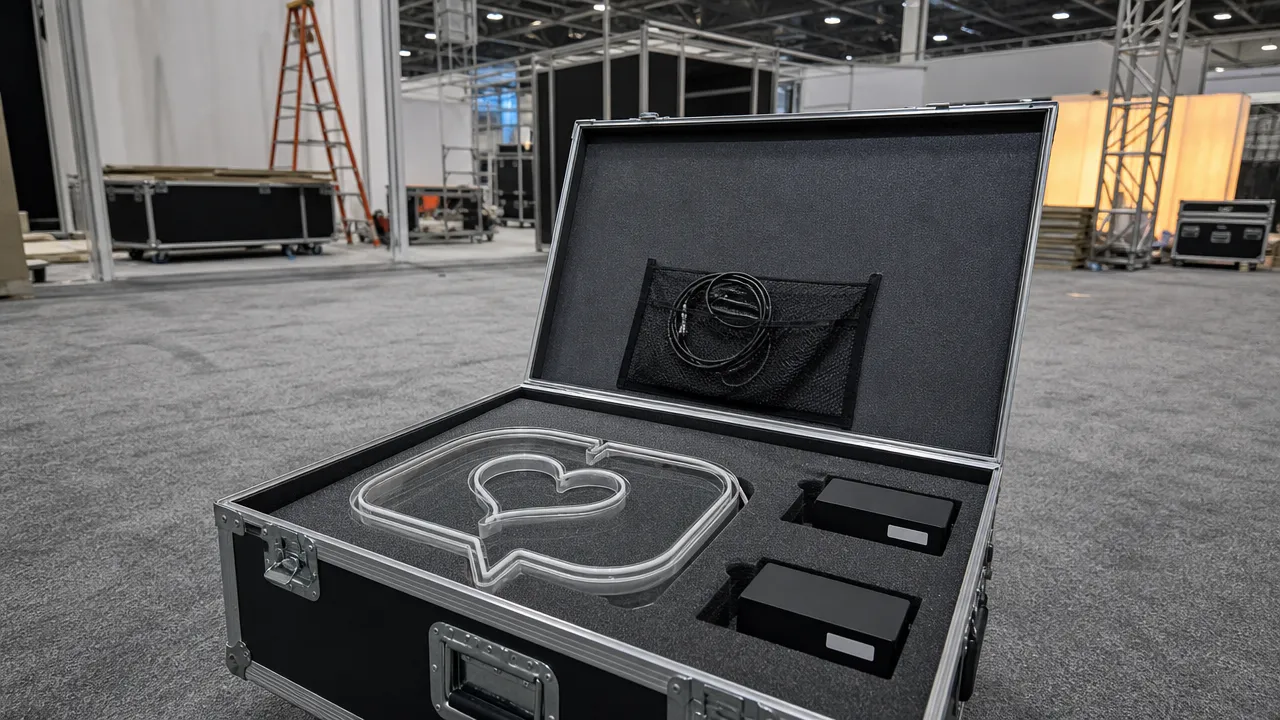
Travel deserves its own budget line. Batteries installed inside a device may go in carry-on or checked baggage, while spares have to be in the cabin with you (TSA), so a sign and its loose packs can end up on different sides of check-in. For a container order, tell the freight forwarder that the goods contain cells before the booking, because the declaration, packing and labelling all change, and they change the schedule with them. Our overview of importing lighting from China covers that, and the range sits in the custom neon signs category.
Send the wording, get a straight answer on power
We build LED neon to artwork in our own factory in Foshan — 4,000 square meters, 40 people, two production lines — and supply it for mains power. Send the wording, the wall or stand it sits on, and the destination market, and the quote comes back with lit tube length and draw rather than a runtime somebody guessed.
Watch it work
The pack, the tube measured for watts per foot and the working light level, in 41 seconds:
FAQ
Do neon signs need to be plugged in?
It depends which product the word covers. A glass tube has to be plugged in, because it needs a transformer stepping the mains up to thousands of volts and no portable pack does that job safely. An LED neon sign runs on low-voltage DC, so it can be fed from a wall adapter, a power bank or an internal pack. Most signs sold today are the LED kind and most still ship with a plug, because a plug is free and a battery is not. If a listing does not say cordless, assume it needs a socket.
How long does a battery powered neon sign last on one charge?
Ask for two numbers rather than one, and be wary of a supplier who gives only the second: the sign’s draw in watts at full output, and the pack’s capacity in watt-hours. If the answer comes back as a range, ask which sign it was measured on, at what brightness and at what temperature. A figure from a small sample in a warm room is not a figure for an eight-foot logo in a January marquee.
Are battery neon signs bright enough outdoors in daylight?
Rarely, and the battery is not the reason. Neon reads by contrast, so any low-output sign competes badly with daylight however it is powered, and running it flat out to compensate is what empties the pack. Plan cordless signs for shaded, covered or evening positions: a marquee interior, a covered stand, a reception after sunset. One more point for the supplier: a battery compartment is an opening in the housing, so ask what protects it if the sign meets weather.
Can you build a cordless version of a design we already have?
Our neon program is built to artwork and supplied for mains power, so the straight answer is that a cordless build is not something we hold. Say so at enquiry stage if a project needs one and we will be direct about what fits the program and what does not, rather than quoting something that arrives wrong. If the piece can take a concealed low-voltage lead instead, the artwork side is unchanged.
What should a rental fleet standardise on?
One pack format across the whole fleet, labelled per sign, with a charge log a crew will actually fill in. Mixed formats are how a van arrives with the right sign and the wrong charger. Treat packs as a consumable with a replacement schedule rather than a part you swap when it fails, and set the ratio of spares to signs before the season. Photograph each sign at its working dim level once, so a new crew member knows what correct looks like.
Sources
Every external figure above was checked on 2026-09-05: power pricing and policy from the venue and contractor documents themselves, battery limits from the TSA, dimming and flicker from the U.S. Department of Energy, product draw from a manufacturer catalogue.
- Edlen Electrical Exhibition Services / City of Tampa, Electrical pricing for the Tampa Convention Center, effective 15 September 2025 (outlet prices, labour rates and ceiling drops charted above; 24-hour power included), retrieved 2026-09-05.
- Freeman, Electrical Services Frequently Asked Questions, SEMA Show, Las Vegas Convention Center (overnight power off and on; late orders up to 50% more; power strips trip at 1,500 watts), retrieved 2026-09-05.
- Transportation Security Administration, Lithium batteries with more than 100 watt hours (spares carry-on only; two 101–160 Wh with airline approval), retrieved 2026-09-05.
- Transportation Security Administration, Lithium batteries with 100 watt hours or less in a device (installed batteries allowed either way), retrieved 2026-09-05.
- American Lighting, LED Neon flexible linear specifications (2.43 to 4.57 watts per foot; 24V DC), retrieved 2026-09-05.
- Energizer, E91 AA datasheet, Form No. E91NA1018 (1.5 volts nominal; −18°C to 55°C; capacity against discharge current), retrieved 2026-09-05.
- U.S. Department of Energy, Solid-State Lighting Program, prepared by Pacific Northwest National Laboratory, CALiPER Retail Lamps Study 3.1: Dimming, Flicker, and Power Quality Characteristics, December 2014 (efficacy above 80% while output was above 20%; flicker below 20–30%), retrieved 2026-09-05.
- U.S. Department of Energy, Solid-State Lighting Program, Flicker (waveform at the diode depends on driver loading and dimming level), retrieved 2026-09-05.
- United States Patent and Trademark Office, US Patent 5,045,760, Neon sign transformer (neon tube voltage in the vicinity of 5,000 to 15,000 volts), retrieved 2026-09-05.
