





Key takeaways
Knowing how to find wholesale vendors is the easy part. The skill that protects your margin is vetting: confirming a supplier is a real, legitimate source, pressure-testing samples against the spec sheet, and asking the questions that separate a factory from a reseller before you wire a deposit.
- Vendors are not scarce. One wholesale marketplace alone lists more than 100,000 brands (Faire), and its July 2025 market drew almost 76,000 retailers. Discovery is not the bottleneck; filtering is.
- Learn to tell a factory from a middleman. A reseller adds a margin and a layer between you and the people who control quality, lead time, and customization.
- Build a fixed list of questions to ask potential wholesale suppliers, covering identity, minimums, samples, production, and compliance, and ask every vendor the same set.
- Verify legitimacy before money moves: business registration, references, a paid sample, and a live video walk of the line. In 2025 the FTC reported people lost nearly 1 billion dollars to business impersonators.
- The best wholesale vendors for boutiques are rarely the biggest; they are the ones whose minimums, mix, and reorder speed fit a small shop.
01How to find wholesale vendors without getting burned
Learning how to find wholesale vendors is less about uncovering a secret list and more about building a filter, because the vendors are not hidden. They sit on B2B marketplaces, exhibit at regional trade shows, appear in industry directories, and are usually one email away from the factory that already makes the product you want to stock.
The scale of the discovery channels is the proof. On the wholesale marketplace Faire, the July 2025 buying event alone saw nearly 30,000 brands receive orders from almost 76,000 unique retailers, who placed about 460,000 orders and bought more than 1.3 million products (Faire, Faire Market by the numbers, July 2025). Trade shows, search engines, and global directories add tens of thousands more. When supply is that deep, the retailer who wins is not the one who finds the most vendors, but the one who filters them fastest and most consistently. The channel-by-channel economics of going direct are laid out in our guide to the direct-from-factory margin math.
02Are you buying from a real vendor or a middleman?
The single most useful distinction in wholesale sourcing is whether your vendor makes the product or merely resells it. A factory controls quality, minimums, lead time, and customization; a trading company or reseller sits in between, adds a margin, and passes your questions down a chain you cannot see.
Middlemen are not automatically the wrong choice. A good trading company can consolidate many small orders, handle export paperwork, and lower the minimum you would face going direct, which is genuinely useful for a new boutique. The hidden cost is control: when you do not know who actually runs production, you cannot fix a quality issue at the source, and you pay a margin for a layer you may not need. The fix is plain honesty in the first email, asking whether the vendor is the manufacturer or an agent, and treating a vague answer as an answer in itself.
Direct from the factory
- Controls quality, tooling, and customization
- One less margin between you and true cost
- Can private-label and tune the spec
- Higher minimums; you manage more logistics
Trading company or reseller
- Lower minimums, consolidated orders
- Handles export and freight for you
- Extra margin baked into every unit
- Cannot fix quality at the source
Neither is a villain, but you should always know which one you are talking to. If you intend to build a house line rather than resell someone else’s, you will eventually want a factory relationship, which is what our OEM and ODM program exists to structure.
03What are the right questions to ask potential wholesale suppliers?
The questions to ask potential wholesale suppliers fall into five buckets: identity, terms, samples, production, and compliance. Ask every finalist the exact same list so you can compare answers side by side, instead of reacting to whichever vendor emails back most enthusiastically.
The point of a fixed list is not interrogation; it is comparability. Professional buyers evaluate suppliers on a stable set of criteria such as quality, price, delivery, and financial stability rather than gut feel (ISM, Supplier Evaluation and Selection Criteria Guide). A vendor that answers minimums, lead time, and sample policy in one clear reply is showing you how the whole relationship will run. One that dodges the identity questions is telling you something too.
| Bucket | Ask this | A good answer sounds like |
|---|---|---|
| Identity | Are you the manufacturer or a trading company? Legal business name and registration? | A registered legal name, a real factory address, and no hesitation |
| Terms | What is your minimum order, and how is a deposit handled? | Clear minimums and a standard deposit-plus-balance structure |
| Samples | Do you offer paid samples, and is the fee credited on an order? | Yes, with a defined sample lead time and a credit policy |
| Production | What is your lead time and capacity, and can you customize? | Specific weeks, honest capacity, and a clear customization path |
| Compliance | Which test reports can you provide on request? | Named, on-request reports rather than vague reassurance |
Notice that none of these ask the vendor to prove a number you cannot check. They ask the vendor to commit to numbers, in writing, that a sample and a reference call will later confirm or contradict.
04How do you verify a wholesale vendor is legitimate?
You verify a wholesale vendor the way a bank verifies a borrower: identity first, then evidence, then a small test transaction. Confirm the legal business exists, ask for and actually call two trade references, order a paid sample, and get a live video walk of the production line before any large deposit leaves your account.
This matters because the money moves before the goods do. In 2025, the U.S. Federal Trade Commission reported that people lost nearly 1 billion dollars to business impersonators (FTC, 2025 imposter-scam data). That sits inside a much larger problem: the FTC logged 12.5 billion dollars in total reported fraud losses in 2024 (FTC, 2024 fraud data). A registered business name you can look up through a government registry (U.S. Small Business Administration), a working phone line, references that answer, and a sample in your hand are cheap insurance against becoming one of those numbers. A real factory will also let you see the floor: a scheduled video call walking the line tells you more than any brochure.
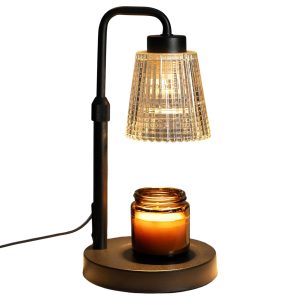
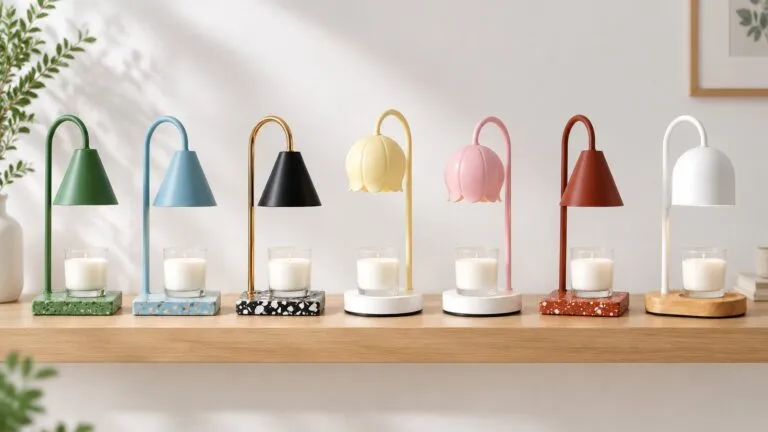
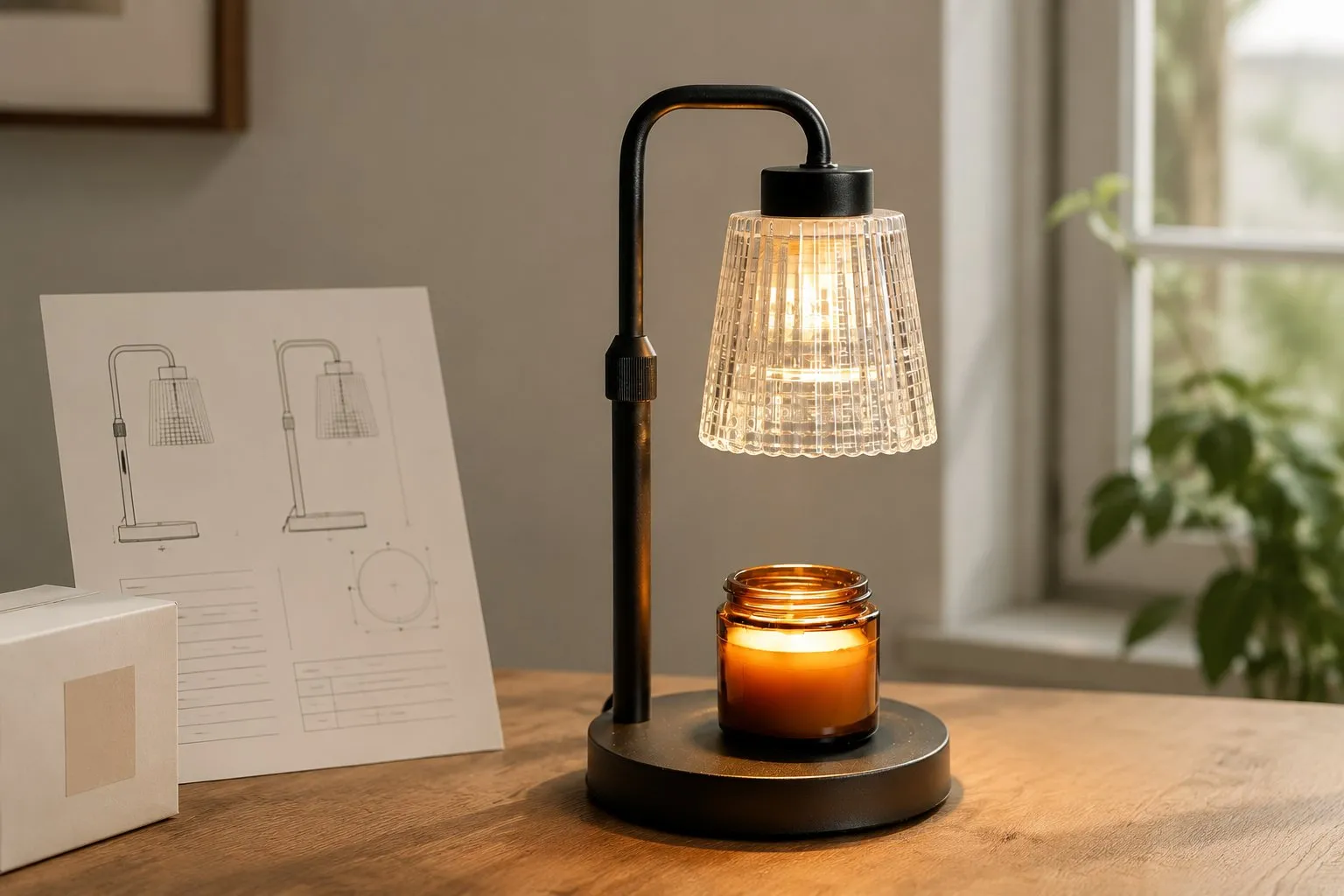
Here is what that looks like from the vendor’s side of the table. For our own candle-warmer line, that supplier is us: two production lines in a 4,000 square metre plant in Foshan, staffed by around 40 people, where samples ship in roughly 15 days and the sample fee is credited back on your first order. The rest of our lighting range is built on the same Foshan floor, and we expect you to run the same checks on us that this guide asks you to run on anyone. If a vendor bristles at that, walk. You can see the transparent version of this path in our wholesale candle warmers range.
05Wholesale vendors for boutiques: matching the vendor to your store
The best wholesale vendors for boutiques are almost never the largest suppliers; they are the ones whose minimums, product mix, and reorder speed fit a small shop’s shelf and cash flow. A vendor built for big-box volume will quote minimums a boutique cannot absorb, while a boutique-friendly vendor lets you buy a tight, curated assortment and reorder the winners quickly.
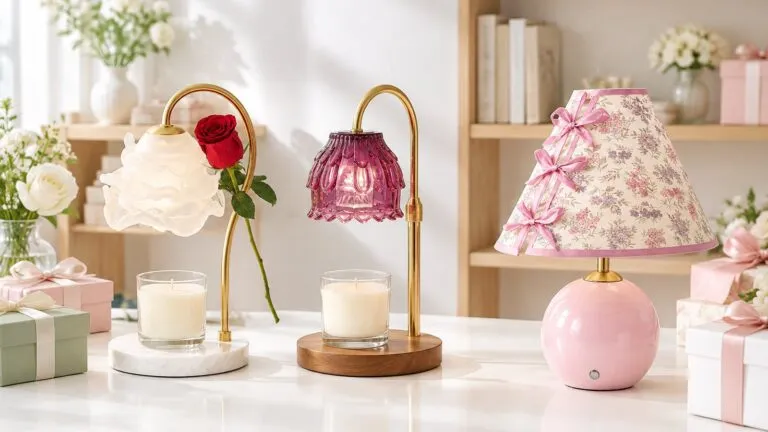
That fit cuts both ways. A tiny vendor with charming product but a two-person team may miss your holiday deadline, so match ambition to capacity and ask about it directly. For a giftable category, the sweet spot is a supplier that can hold a small minimum, private-label a signature item, and scale with you as the shop grows. That profile is exactly what sits behind our giftable lighting for gift shops, and it is why a curated, reorder-friendly range beats a giant catalogue for most independents. If a house line is the goal, walk through a private-label primer for small brands before you negotiate terms.
06Turn the answers into a score, not a stack of quotes
Once every finalist has answered the same questions, score them rather than pile up quotes, because the cheapest unit price hides the most expensive risks. A simple weighted scorecard forces you to price the things a quote never shows: whether the vendor is who it says it is, whether the sample matched the spec, and whether it answers on time.
The weighting below is a starting point, not a rule. It puts identity and sample quality at the top because those are the failures that cost the most to unwind, and it treats a fast, clear reply as a real signal, since a vendor that is slow to answer during courtship rarely gets faster after the order. Adjust the weights to your category and risk tolerance, then run every finalist through the same grid.
Sourcing lighting you can actually vet?
BeginLighting builds ambient and giftable lighting on its own Foshan lines. Send us the same question set you send everyone: identity, minimums, samples, lead time, and compliance. Prices are quoted per project, so the next step is a quote, not a cart.
Put the whole method on one page and it reduces to a habit: find widely, shortlist on fit, ask everyone the same questions, and let the samples and the paperwork, not the sales pitch, pick the winner.
Frequently asked questions
How do you find wholesale vendors as a small retailer?
Start on B2B wholesale marketplaces, then add regional trade shows, industry directories, and direct outreach to factories. Discovery is rarely the hard part: one marketplace alone lists more than 100,000 brands. The real work for a small retailer is filtering, so shortlist vendors whose category, minimums, and location fit your shop before you invest time in samples and negotiation.
What questions should you ask a potential wholesale supplier?
Ask the same five-part set of every finalist: are you the manufacturer or a trading company, what is your minimum order and deposit structure, do you offer paid samples with a credit on the first order, what is your lead time and capacity, and which test reports can you provide on request. Sending an identical list makes the answers comparable and exposes the vendors who dodge the identity questions.
How can you tell if a wholesale vendor is legitimate?
Verify identity first, then evidence, then a small test order. Confirm the legal business exists and is registered, ask for and actually call trade references, order a paid sample, and request a live video walk of the production line before sending a large deposit. Business-impersonation fraud cost people nearly 1 billion dollars in 2025, so treat a vendor that cannot prove who it is as a vendor to skip.
What are the best wholesale vendors for boutiques?
The best wholesale vendors for boutiques are the ones whose minimums, mix, and reorder speed match a small shop, not the biggest suppliers with the deepest catalogues. Look for a vendor that holds a low minimum, offers a curated assortment you can reorder quickly, and can private-label a signature item as you grow. Fit to your shelf and cash flow matters more than raw scale.
Should you buy from a wholesaler or direct from a factory?
Buy direct from the factory when you want the lowest cost, customization, and control over quality, and you can meet the higher minimums. Use a wholesaler or trading company when you need lower minimums, consolidated orders, or help with export logistics, and you accept the extra margin for that convenience. Many retailers do both, going direct on core lines and using intermediaries for the long tail.
Sources
- Faire, Faire Market by the numbers, July 2025 (nearly 30,000 brands, almost 76,000 retailers, about 460,000 orders, more than 1.3 million products), retrieved 2026-07-18.
- Faire, About Faire (100,000 brands on the wholesale marketplace), retrieved 2026-07-18.
- U.S. Federal Trade Commission, FTC Data Show People Reported Losing 3.5 Billion Dollars to Imposter Scams in 2025 (nearly 1 billion dollars in reported losses to business impersonators in 2025), retrieved 2026-07-18.
- U.S. Federal Trade Commission, Consumer Sentinel Network Data Book 2024 (fraud and imposter-scam loss totals), retrieved 2026-07-18.
- Institute for Supply Management, Supplier Evaluation and Selection Criteria Guide (quality, price, delivery, and financial stability as core criteria), retrieved 2026-07-18.
- U.S. Small Business Administration, Business Guide (registering and verifying a legal business), retrieved 2026-07-18.
BeginLighting manufactures its candle-warmer line and its other lighting categories in Foshan. Named third parties above are cited for reference and are not affiliated with BeginLighting; figures are the publishers’ reported figures, not claims about a BeginLighting product.
Most buyers start close to home, and that is a reasonable first move: typing wholesale candle supplies near me into a search bar or walking a regional gift market puts stock in your hand this week, lets you judge quality in person and keeps the first reorder simple. Treat it as a floor rather than a finish line. A local distributor is buying from someone further up the chain, so the price already carries a margin, the range is whatever they chose to stock, and customization or private label is usually off the table. Use the nearby option to learn a category quickly, then run the same vetting questions at the source once you know what actually sells in your store.
Nearby distributor or direct factory: comparing the real landed cost
When a buyer searches wholesale lighting near me, the honest comparison is not one unit price against another. A domestic distributor’s price already contains the freight, duty, customs clearance and warehousing that a direct import makes you handle yourself, plus a margin for carrying that risk. Buying direct at the factory strips out the margin and hands you the work and the timeline instead. Line the two up on total landed cost and on what each one lets you control.
| What you are comparing | Local or domestic distributor | Direct from the factory |
|---|---|---|
| Unit price | Includes the importer’s margin and holding cost | Lower at the factory gate, before freight and duty |
| Freight, duty, clearance | Already inside the price you are quoted | Yours to arrange, budget and pay |
| Minimums | Generally lower, often by the case | Higher, and set per model |
| Lead time | Ships from stock already in the country | Production plus ocean or air transit |
| Range | Whatever they decided to stock | The full catalog, plus what can be built to order |
| Private label and customization | Rarely available | Standard, from packaging through to tooling |
| Quality control | Inspect on arrival, after you have paid | Inspect before it ships, while you still have leverage |
| Who carries the risk | The distributor | You, which is exactly why the vetting above matters |
Neither column is the right answer for every buyer or every product. Test a category nearby while volumes are small and the learning is worth more than the margin, then move the proven best sellers direct once reorders are predictable enough to justify the freight and the inspection. The vendor worth keeping is the one that still answers the same five questions well when you make that move.
Going direct is what puts it back on the table: the four levers you can change on a proven seller sets out what a factory-direct program lets you specify that a distributor cannot.
