


Key takeaways
- The best candles for candle warmers are soy or soy-blend jar candles and soy wax melts. Soy melts in the 49 to 82 degree Celsius band a top-down lamp reaches, so fragrance releases cleanly with no flame.
- Paraffin also works and often throws scent harder, so the smart retail move is to stock both and let the shopper pick by scent strength, not to declare one winner.
- Because a warmer melts wax instead of burning it, a jar candle lasts far longer than when lit. That is the hook that turns a lamp sale into repeat candle and spare-bulb purchases.
- Fragrance drives the category: in the National Candle Association’s 2026 Facts & Figures, three-fourths of candle buyers call scent extremely or very important, and U.S. candle retail runs about $3.14 billion a year. Pairing sells the scent.
SECTION 01Which candles work best in a candle warmer?
The best candles for candle warmers are soy or soy-blend jar candles and soy wax melts, sized to sit under the shade.
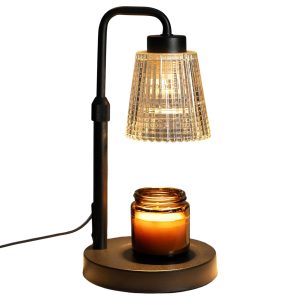
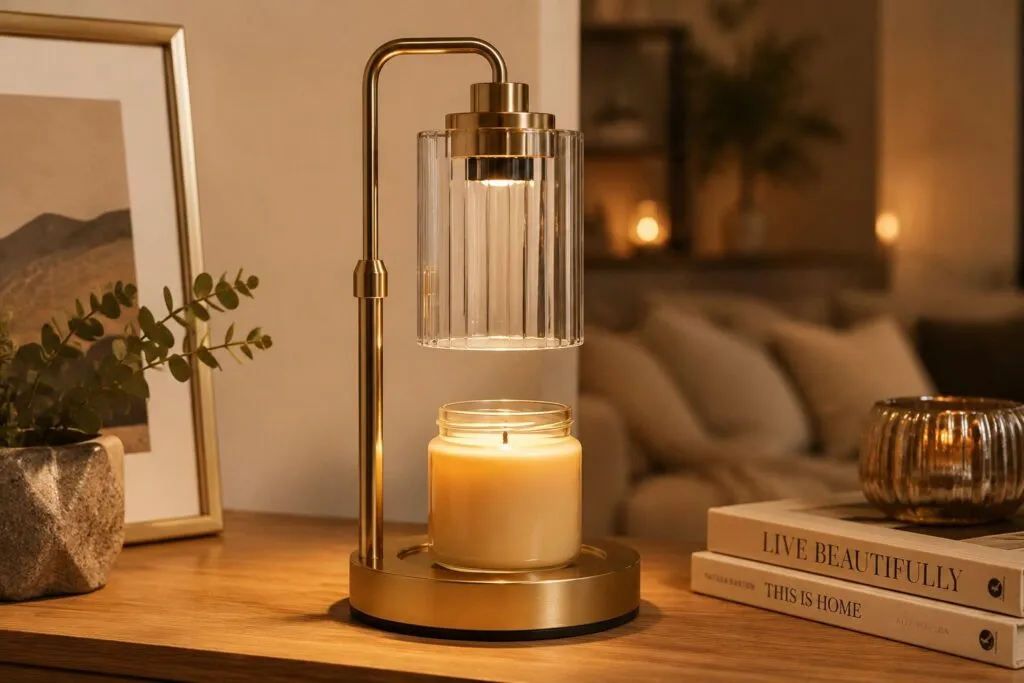
A candle warmer lamp heats a candle from above with a small GU10 bulb, melting the wax into a shallow pool that releases fragrance without ever lighting the wick. Because there is no combustion, the wax choice is about how it melts and throws scent, not about how it burns. Soy and soy-blend jar candles are the natural first pick: they melt smoothly at the moderate temperatures a lamp produces, pool evenly under the shade, and re-solidify cleanly when the lamp switches off, which keeps a display jar looking tidy. If you are new to the category itself, start with our candle warmer lamp category primer, then come back here for the pairing detail.
Fit matters as much as wax. A top-down lamp is built to sit above a container, so the candle has to physically fit under the shade and on the base: most lamps take standard single- or three-wick jars up to roughly 22 ounces and no taller than the rod allows. That is why the best candles for candle warmer lamp displays are lidded jars in that size class rather than pillars or tapers, which have no vessel to catch the melt. A shopper can also re-lid a soy jar between sessions, which protects the scent and the look on a shelf.
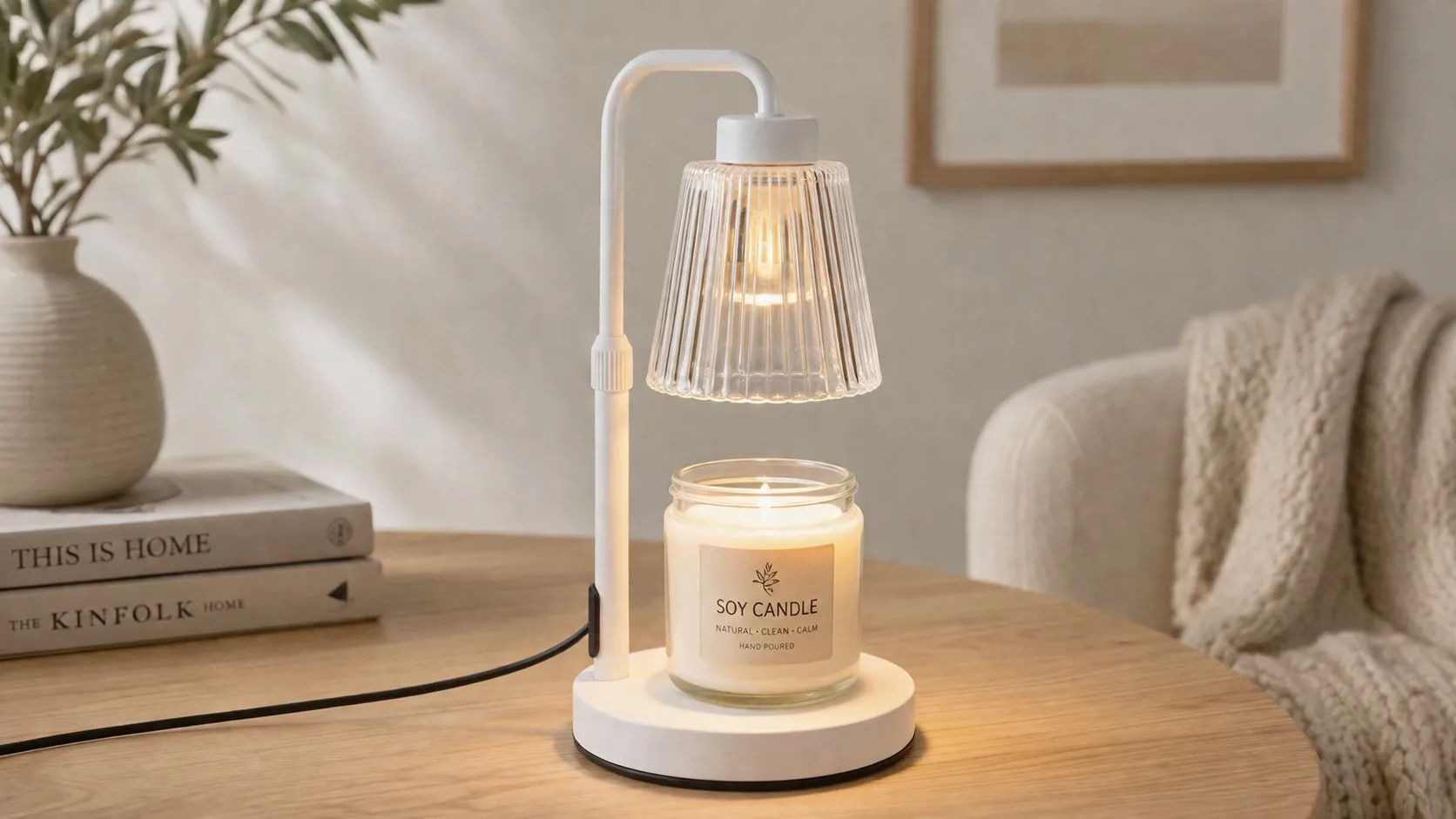
There is a real tradeoff to name up front. Soy is the safe, clean-melting default, but it is not automatically the strongest-smelling option, and some shoppers specifically want a bold room-filling scent. That is a merchandising decision, not a rule, and the next section shows exactly where soy and paraffin diverge so you can stock to your customers rather than to a slogan.
SECTION 02Soy vs. paraffin: which wax melts best in a top-down warmer?
Both melt well in a warmer; soy gives a cleaner, even pool, while paraffin usually gives a stronger hot throw.
Every common candle wax melts far below the heat a warmer produces, so a top-down lamp handles any of them. Published melting ranges put soy at about 49 to 82 degrees Celsius (120 to 180 Fahrenheit), paraffin at roughly 46 to 68 degrees Celsius, and beeswax near 62 to 65 degrees Celsius, according to SER Wax Industry’s 2026 candle-wax melting-point chart. A candle warmer’s molten pool typically sits in the 60 to 80 degree Celsius range, and the warmer’s surface can run higher still. In the U.S. Customs and Border Protection binding ruling N340956 of July 2024, a GU10 candle warmer lamp was documented reaching a 120 degree Celsius plate surface. In short, the heat is never the limiting factor; the wax you choose is a scent-and-melt decision.
Source: SER Wax Industry, candle-wax melting-point chart (2026) for wax ranges; U.S. CBP ruling N340956 (2024) for warmer surface temperature; Columbus Candle Supply flash-point guidance for essential-oil flash range. Retrieved 2026-07-16.
So where do they actually differ? Soy, a soybean-oil wax, melts to a soft, opaque pool, tends to keep a stronger cold throw (the scent you notice before heating), and re-sets cleanly for a neat display. Paraffin, a petroleum-derived wax, often pushes a stronger hot throw that fills a larger room fast, per CandleScience’s soy-versus-paraffin guidance. Neither is disqualified by a warmer. The honest tradeoff for a buyer: soy leans clean, natural-story, and tidy shelf presentation, while paraffin leans loud scent for shoppers who want a room filled quickly. Stocking a soy core with a few high-throw paraffin or paraffin-blend scents covers both shopper types.
Soy & soy blends
- Clean, even melt pool; tidy re-set for displays
- Strong cold throw; natural, biodegradable story
- Melts low (about 49–82°C), easy for any lamp
- Default for gift sets and low-return retail
Paraffin & paraffin blends
- Stronger hot throw; fills a larger room fast
- Holds bold, complex fragrance loads well
- Melts low too (about 46–68°C)
- For shoppers who want maximum scent strength
SECTION 03What is a wax melt, and can a warmer melt one well?
A wax melt is a small wickless piece of scented wax, made to be warmed rather than burned.
Here is the plain definition buyers search for: a wax melt is a wickless cube, tart, or shaped piece of scented wax that releases fragrance when heated in a warmer. Because wax melts have no wick and are never lit, they are purpose-built for warmers, and soy or soy-blend melts are the most common because their lower melting point releases fragrance efficiently at warmer temperatures. When shoppers ask what are wax melts, the short answer is that they are candles with the fire taken out: the same scented wax, designed for a warmer instead of a flame. That makes them a natural companion SKU to a lamp on the same shelf.
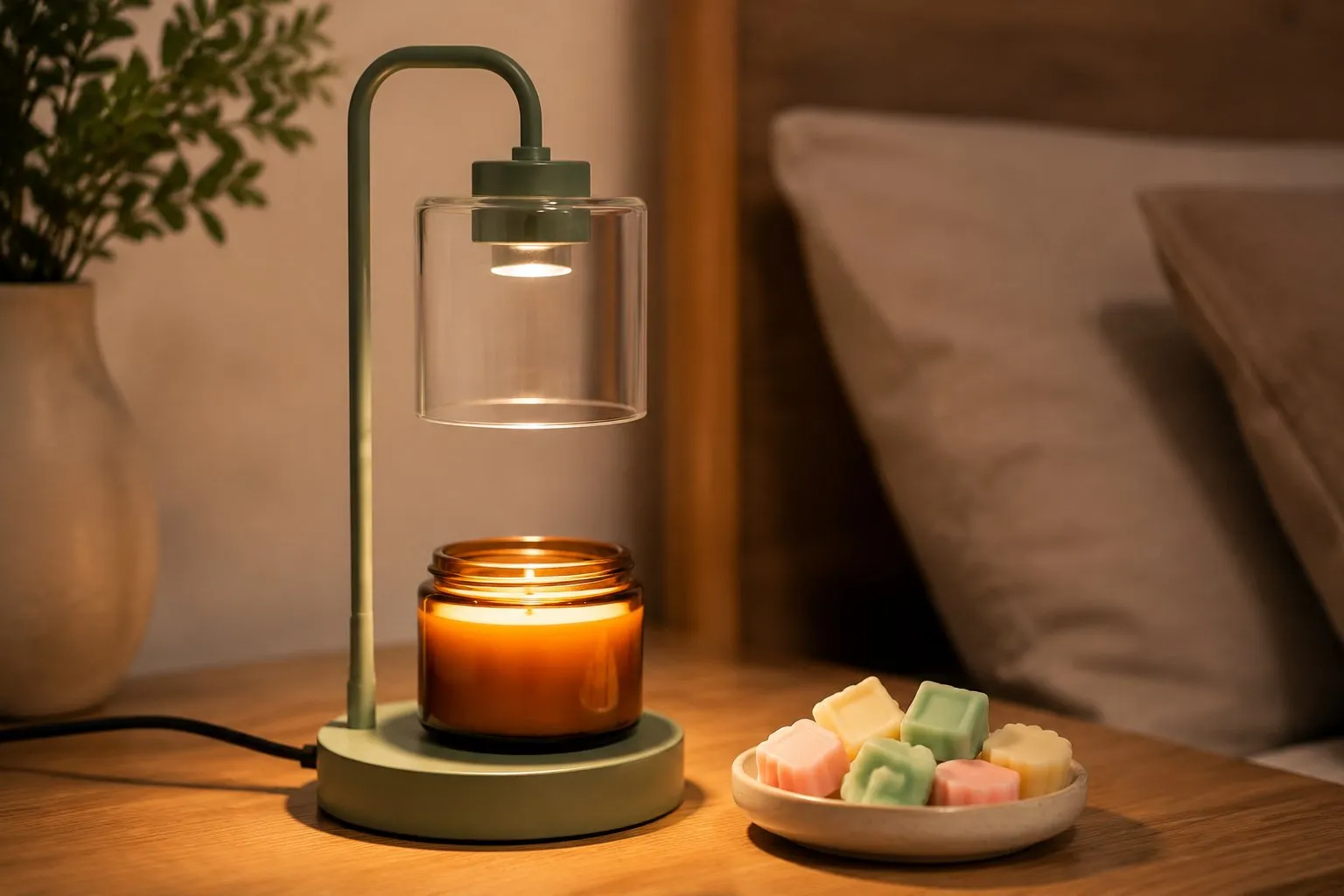
There is a format nuance retailers should get right. Wax melts drop straight into hot-plate and dish warmers, where a heated plate melts the wax directly. A top-down lamp, by contrast, is engineered to warm a container that sits on its base, so the clean way to use a wax melt under a lamp is inside a small melt-safe dish or a wax-melt jar rather than loose on the plate. Selling the lamp, the jar candles, and a few wax-melt jars together lets one shopper cover both the jar-candle and the wax-melt use cases from a single display.
SECTION 04Can you put essential oils in a candle warmer?
Yes, but add them through wax, not as neat oil on a hot surface.
Can you put essential oils in candle warmers? You can, with one safety caveat that is worth printing on a shelf card. Essential oils are volatile and have low flash points: many sit between about 38 and 82 degrees Celsius, and citrus oils such as orange and lemon can flash as low as roughly 40 to 50 degrees Celsius, per Columbus Candle Supply’s flash-point guidance. A warmer’s plate can reach well above that, so dripping raw essential oil directly onto a hot dish can smoke or degrade the scent. The controlled, low-heat element of an electric warmer is the right tool; the mistake is the neat-oil-on-hot-metal method, not the warmer itself.
The practical guidance to pass to shoppers is simple. Stir a few drops of essential oil into an already-melted soy pool, or choose a warmer specifically designed to hold oil in water, and follow the manufacturer’s instructions. Bound in wax at a low load, oil is nowhere near its flash risk, which is why scented candles and wax melts are the low-worry path for a top-down lamp. For any store, that is also cleaner merchandising: sell the tested candle-and-lamp pairing as the primary experience, and treat neat essential-oil use as an advanced, instructions-first option.
SECTION 05Matching candle format to warmer type
Match the format to the warmer: jars and jar-fit soy candles for top-down lamps, wax melts and tarts for hot-plate and dish warmers.
Buyers stocking a mixed candle-warmer program need one clear compatibility map, because a customer return is almost always a format mismatch, not a bad product. Top-down lamp warmers are built for containers, so they want jar candles and jar-based wax melts. Hot-plate and dish warmers take wax melts, tarts, and small open containers directly. The table below is the version worth putting on a line sheet, so a wholesale buyer can merchandise the right candle beside the right warmer.
| Format | What it is | Best warmer type | Fragrance behavior | Retail attach note |
|---|---|---|---|---|
| Soy jar candle | Wicked soy wax in a lidded jar | Top-down lamp | Clean, even pool; strong cold throw | Core pairing; lidded for tidy display |
| Paraffin jar candle | Wicked paraffin or blend in a jar | Top-down lamp | Stronger hot throw; bold scent | Stock for max-scent shoppers |
| Soy wax melt / tart | Wickless scented wax cube or shape | Hot-plate or dish warmer; jar-melt under a lamp | Fast release at low heat | High-margin repeat consumable |
| Coconut-soy candle | Blended natural wax in a jar | Top-down lamp | Smooth melt; soft, creamy throw | Premium natural-story tier |
| Neat essential oil | Undiluted aromatic oil | Purpose-made oil/water warmer only | Low flash point; instructions-first | Advanced use; not the default sell |
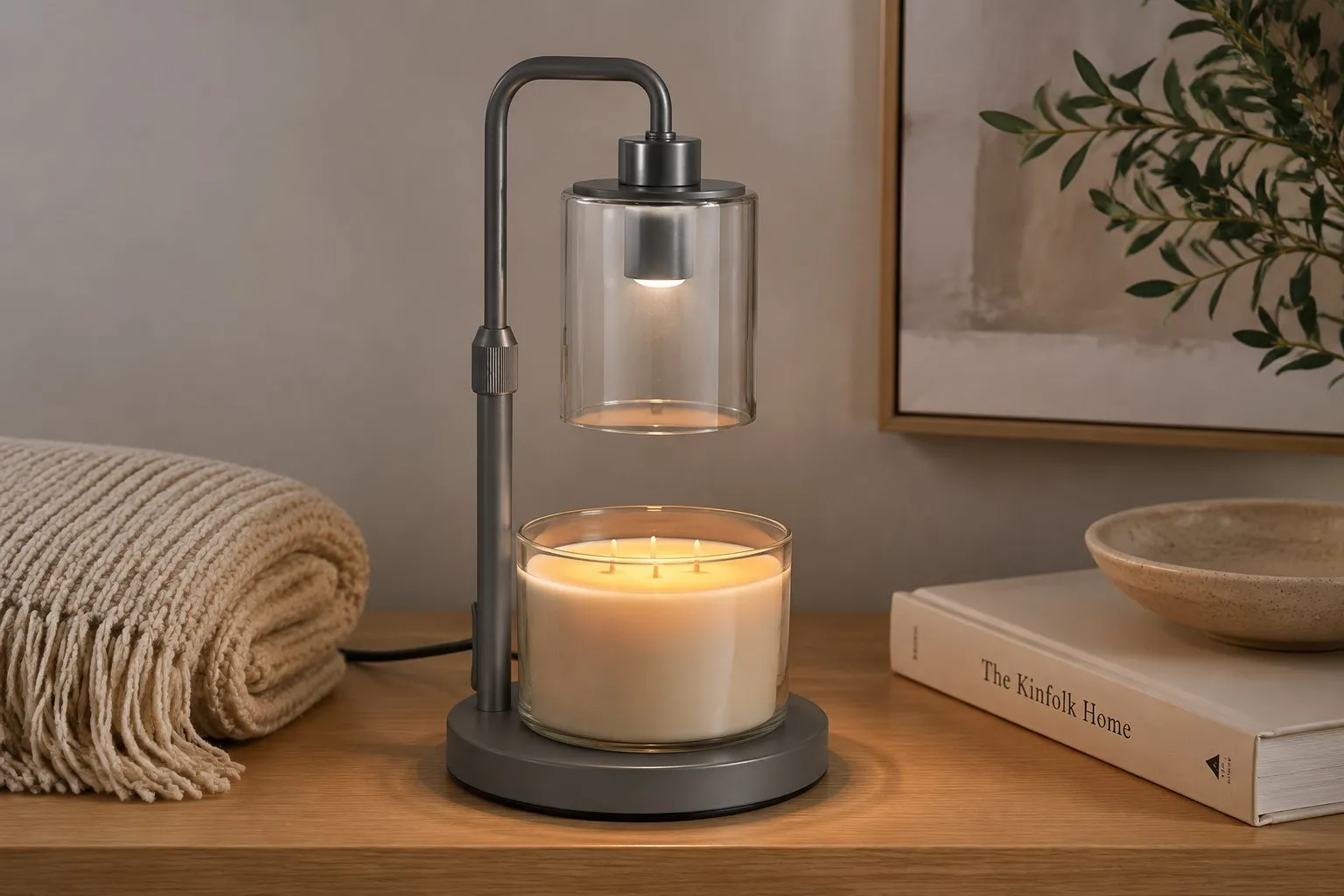
Two cautions belong on the same line sheet. First, size is a hard constraint on a lamp: the jar must fit under the shade and on the base, so publish the fit range (for example, jars up to about 22 ounces and a stated maximum height) beside every lamp SKU. Second, do not promise that a top-down lamp takes loose wax melts the way a hot-plate does; steer melt users to a jar-melt or a dish so the experience matches the hardware. A four-step check keeps returns down:
SECTION 06Turning candle pairing into a retail attach-sale
Pairing is where the margin is: sell the lamp once, then sell candles and spare bulbs on repeat.
The lamp is the hardware sale; the candle is the consumable that brings the shopper back. Fragrance is what drives the whole category, and the data backs the pairing strategy. In the National Candle Association’s 2026 Facts & Figures, three-fourths of candle buyers say fragrance is extremely or very important to their purchase, U.S. retail candle sales run about $3.14 billion a year, and roughly 35 percent of candle sales land in the Christmas and holiday season. A warmer that lets a shopper enjoy that fragrance longer, flame-free, is a natural anchor for a candle-and-accessory basket, especially into Q4.
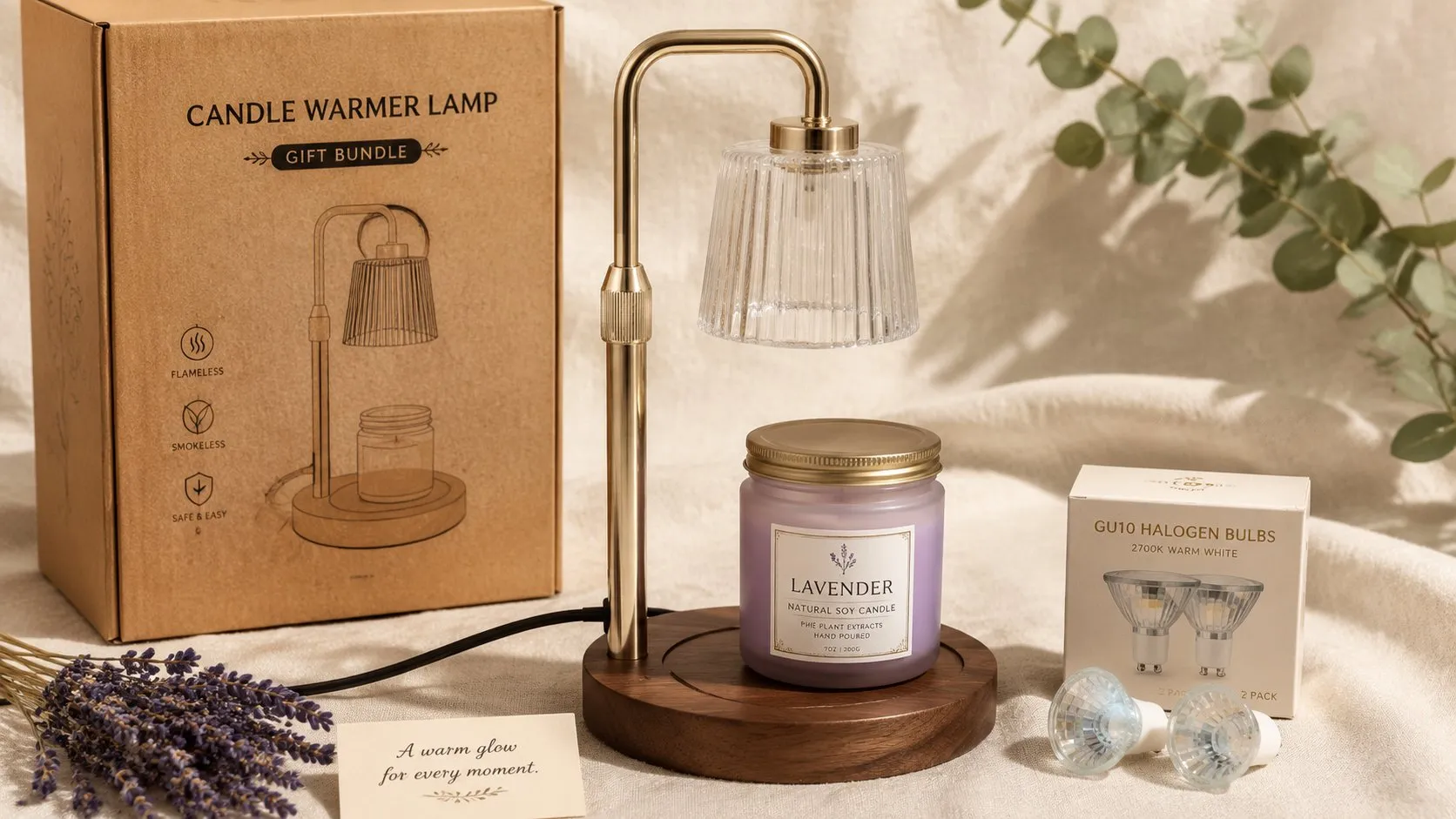
This is where a factory-direct range pays off, because the whole basket ships from one supplier. BeginLighting makes the lamps and supplies the matching consumables: soy-wax scented candles in lavender, vanilla, and citrus at 40 units per carton, plus GU10 halogen replacement bulbs in 2-, 4-, 6-, and 10-pack multipacks, all packed as retail-ready SKUs. That lets a buyer build a single planogram (lamp, two or three signature soy scents, and a spare-bulb peg) instead of sourcing candles and bulbs from three vendors. Merchandising the same scent story across the lamp finishes in our eleven-finishes guide keeps the display coherent from shelf to gift box.
One limitation to plan around honestly: consumable attach rates depend on the scents actually being ones shoppers want to repurchase, so a store is better off stocking two or three strong, broadly liked scent families deep than a wide shelf of niche fragrances that sell through slowly. Start narrow, watch the reorder data, and widen the scent range where it earns the shelf. Explore the matching candle and bulb accessories alongside the candle warmer lamps to build the first planogram.
Bundle the lamp, the candle, and the bulbs from one factory
Tell us your target scents, finishes, and pack levels. We confirm the soy-candle scent families, GU10 multipacks, and carton math so your candle-warmer planogram lands retail-ready.
Frequently asked questions
What are the best candles for candle warmer lamp use?
The best candles for candle warmer lamp use are soy or soy-blend jar candles that fit under the shade, typically three-wick jars up to about 22 ounces and no taller than the rod allows. Soy melts smoothly in the 49 to 82 degree Celsius band a top-down lamp produces, releasing fragrance without a flame. Paraffin jars also work and often throw scent harder, so a store can stock both and let shoppers choose by scent strength.
What is the best candle for candle warmer lamp gifting sets?
For gifting sets, the best candle for candle warmer lamp bundles is a lidded soy jar candle in a clean, popular scent family such as lavender, vanilla, or citrus, paired with the lamp and a spare-bulb pack. Soy gives a clean melt pool and a tidy re-lid, which photographs well and reduces returns. BeginLighting supplies soy-wax candles in those three scent families at 40 units per carton for exactly this bundle.
What is a wax melt, and can you use wax melts instead of a candle?
A wax melt is a small, wickless cube or shape of scented wax that releases fragrance when warmed. Wax melts are made to be heated in a warmer rather than burned, so they suit hot-plate and dish warmers directly. In a top-down lamp warmer designed for jar candles, the practical path is a small melt-safe dish or a wax-melt jar the lamp can heat, since the lamp is built to sit above a container.
Can you put essential oils in candle warmers?
You can put essential oils in candle warmers, but do it through wax rather than as neat oil on a hot surface. Essential oils, especially citrus, have flash points as low as about 40 to 50 degrees Celsius, while a warmer plate can reach far higher, so dripping raw oil onto a hot dish risks smoke. The safe method is a few drops stirred into an existing melt pool or a purpose-made warmer designed to hold oil in water, following the maker’s instructions.
Do candles last longer in a candle warmer than when burned?
Yes. Because a candle warmer melts wax with heat instead of combustion, none of the wax is consumed by a flame, so a jar candle releases scent for far longer than it would if burned. This is a strong retail selling point: the shopper gets more fragrance per jar, which encourages repeat candle purchases and makes the warmer plus candle bundle an easy attach sale.
Wax melting points, flash points, and market figures are drawn from the cited public sources as of July 2026 and are planning references, not lab certifications for any single product. Follow each candle and warmer maker’s own instructions for safe use.
Sources
- National Candle Association, “Facts & Figures” (fragrance importance, U.S. retail sales, seasonality), 2026. candles.org/facts-figures, retrieved 2026-07-16.
- SER Wax Industry, “The Melting Point of Candle Wax: Paraffin, Soy & Beeswax Guide.” cere.it, retrieved 2026-07-16.
- U.S. Customs and Border Protection, Ruling N340956, “The tariff classification of a candle warmer lamp from China” (documents 120 °C plate surface), issued July 17, 2024. rulings.cbp.gov/ruling/N340956, retrieved 2026-07-16.
- Columbus Candle Supply, “Understanding Flash Points: Why They Matter in Candle & Home Fragrance Making.” columbuscandlesupply.com, retrieved 2026-07-16.
- CandleScience Support, “What is the difference between soy and paraffin wax?” (throw and melt behavior). support.candlescience.com, retrieved 2026-07-16.
- Candle Warmers Etc., “Why is Soy Wax Better?” (soy melting behavior in warmers). candlewarmers.com, retrieved 2026-07-16.
- Nikura, “What Are Flash Points?” (essential-oil flash-point ranges). nikura.com, retrieved 2026-07-16.
- BeginLighting factory product and carton specification sheet, revision 2026-06-12 (soy candles 40 per carton in lavender/vanilla/citrus; GU10 halogen bulbs in 2/4/6/10-packs). Primary source, on file with the BeginLighting sourcing desk.
Paraffin wax vs soy wax: melt point, fragrance load and warmer fit
Set side by side for a buying decision, paraffin wax vs soy wax is not a quality contest. It is a merchandising choice, and three specs decide it: where the wax melts, how much fragrance it can carry, and how the pool looks when it re-sets on a display shelf.
| What a buyer compares | Soy and soy blends | Paraffin and paraffin blends |
|---|---|---|
| Melting range | About 49 to 82 degrees Celsius | About 46 to 68 degrees Celsius |
| Fit with a top-down warmer | Melts well below the 60 to 80 degree pool a lamp produces | Melts well below the same pool, so heat is never the limiting factor |
| Fragrance load | Carries a moderate load; the scent reads clean rather than loud | Holds a higher fragrance load, which is part of why the hot throw is stronger |
| Hot throw with the lamp on | Even and steady across a wide melt pool | Stronger and faster to fill a larger room |
| Cold throw with the lamp off | Usually the better of the two, which sells the jar on the shelf | Present, but soy is generally credited with the stronger cold throw |
| Retail role | Core of the assortment, natural story, gift sets | Depth SKUs for shoppers who want maximum scent strength |
The practical read is to stock soy as the core because it behaves predictably in a display, then add two or three paraffin or blend scents where your shoppers ask for a room-filling throw. Neither wax is disqualified by the hardware. What is disqualified is the wrong vessel: a pillar or a taper has nothing to hold a melt pool, whichever wax it is made from.
How to spec candle warmer candles for your own label
When a buyer asks us to quote scented candles for candle warmer programs, three specs settle the fit before scent ever comes up, and getting them on the line sheet is what keeps the pairing from generating returns.
The wick line of that spec sheet has its own guide: the candle wick guide covers series, sizing and the trim tools that sell beside the jar.
- Jar diameter. The jar has to sit on the base and clear the inside of the shade. Publish the fit range beside every lamp SKU so a shopper is never guessing.
- Jar height with the lid off. The rod sets the ceiling. A jar that fits the base but not the gap under the shade is the most common mismatch in the category.
- Lid. A lid protects the fragrance between sessions and photographs better on a shelf, which matters because this is the SKU the shopper rebuys.
- Wick. Never lit under a lamp, but still expected. A wickless jar reads to a shopper as a wax melt rather than as a candle.
- Wax and scent family. Two or three broadly liked families stocked deep beat a wide shelf of niche fragrances that turns slowly.
Specced this way, candle warmer candles stop being a loose add-on and become the consumable half of a planogram: one lamp, two or three signature soy scents and a spare-bulb peg. We supply soy-wax candles in lavender, vanilla and citrus at 40 units per carton, so a first assortment can be quoted next to the lamps instead of chased through a second vendor.
Is paraffin wax toxic in a candle warmer?
Shoppers ask it flatly, so answer it flatly: is paraffin wax toxic? There is no mainstream evidence that paraffin candles are toxic in normal household use, and the indoor-air studies that measure something are measuring combustion, which a warmer removes entirely because nothing is set alight. Separately, 2025 research from Purdue University published by the American Chemical Society found that heating scented wax of any type releases fragrance terpenes that can form ultrafine particles indoors. So the defensible line covers both waxes: no flame, no soot, and normal ventilation as with any scented product. Do not print non-toxic on a listing you cannot substantiate.
What is the best candle for lamp warmer displays?
For a display, the best candle for lamp warmer use is a lidded soy or soy-blend jar sized to the fit range you publish beside the lamp. Soy re-sets into a tidy, opaque surface after every session, which is what a demo unit needs when it is switched on and off all day, and the lid keeps the scent alive between customers. Keep a paraffin or blend jar on the shelf beside it for shoppers who want the loudest possible throw.
What are the best candles to use with candle warmers in a first assortment?
The best candles to use with candle warmers in an opening buy are two or three lidded soy jars in broadly liked scent families, plus one higher-throw paraffin or blend option. That covers both shopper types without spreading the buy thin, and it gives you clean reorder data: watch which scent comes back first, then widen the range where the sell-through earns the shelf rather than guessing at launch.
