


The best cordless table lamps get five things right: a battery and charging port the maker names in full, dimming that reaches a genuinely low setting, a runtime quoted at a stated brightness, a base that stays put without a cable holding it, and a shade that hides the LED. Miss one and the lamp ends up in a drawer.
This is a checklist, not a ranking. We make rechargeable table lamps rather than review other people’s, so each check below uses one or two lamps from our own decorative table lamps range as the worked example, and quotes a number only where that lamp’s own specification prints one. Where a figure is missing, we say so and name what to ask for on a quotation. Three different builds are sold as cordless, so the first section sorts them before the checks begin.
Key takeaways
The best cordless table lamps are judged on five lines of their specification: battery and port, the bottom of the dimming range, the brightness behind the runtime figure, the base, and the shade.
- Battery capacity across the lamps in this article runs from 1200 mAh on the smallest to 5200 mAh on the metal table lamp, but the port and the cable in the box decide how easy the lamp is to live with.
- Many cordless lamps are accent lights. Our woven lamp is specified at 120 lm; the U.S. Department of Energy told shoppers to look for a 1,100-lumen light when replacing a 75-watt bulb.
- A runtime means little without its brightness level. Of the seven runtimes quoted here from our own specifications, only one names it: 8 hours at low brightness.
- Bare LEDs can exceed 1 million cd/m², so the shade is glare control first and decoration second.
- Without a cord, a lamp gets lifted and moved more often. Ask for net weight; in this article only the metal table lamp prints one, 500 g.
What the Best Cordless Lamps Are, and Two Lamps Sold Under the Same Word
The best cordless lamps carry their own rechargeable battery and need a cable only while they charge. Shop listings use the word for three different builds, though, and they behave differently on a table, so there is no single best cordless table lamp until you know which build you are looking at.
The first build is the built-in rechargeable lamp: a rechargeable battery pack in the base, a charging port and a touch switch. Every lamp we call cordless is this kind, starting with our pink ceramic cordless table lamp, which charges from a 5 V USB supply and gives 6–8 hours of light per charge. The second is the dry-cell lamp that takes replaceable AA or AAA batteries. It is cordless in the literal sense, but there is no charging routine to judge, so it sits outside this checklist.
The third is the USB-powered lamp, a corded lamp with a smaller plug. Our wood base lamps show how thin that line is: one design comes as USB versions on a cable of about 110 cm, as a rechargeable version with a touch switch on the base, and as a US plug-in version. The printed-shade lamp and the plain white touch lamps blur it on purpose, running from the battery or while connected to an adapter, a power bank or a computer.
Which power source suits a particular bedside is answered in the USB, cordless and corded section of our bedside lamp checklist.
Check 1, Battery and Charging: What the Best Rechargeable Lamps Print in Full
The best rechargeable lamps state three things about power without being asked: battery capacity in mAh, the charging port, and what comes in the box to charge it. Capacity is the number shoppers compare, and alone it is the least useful.
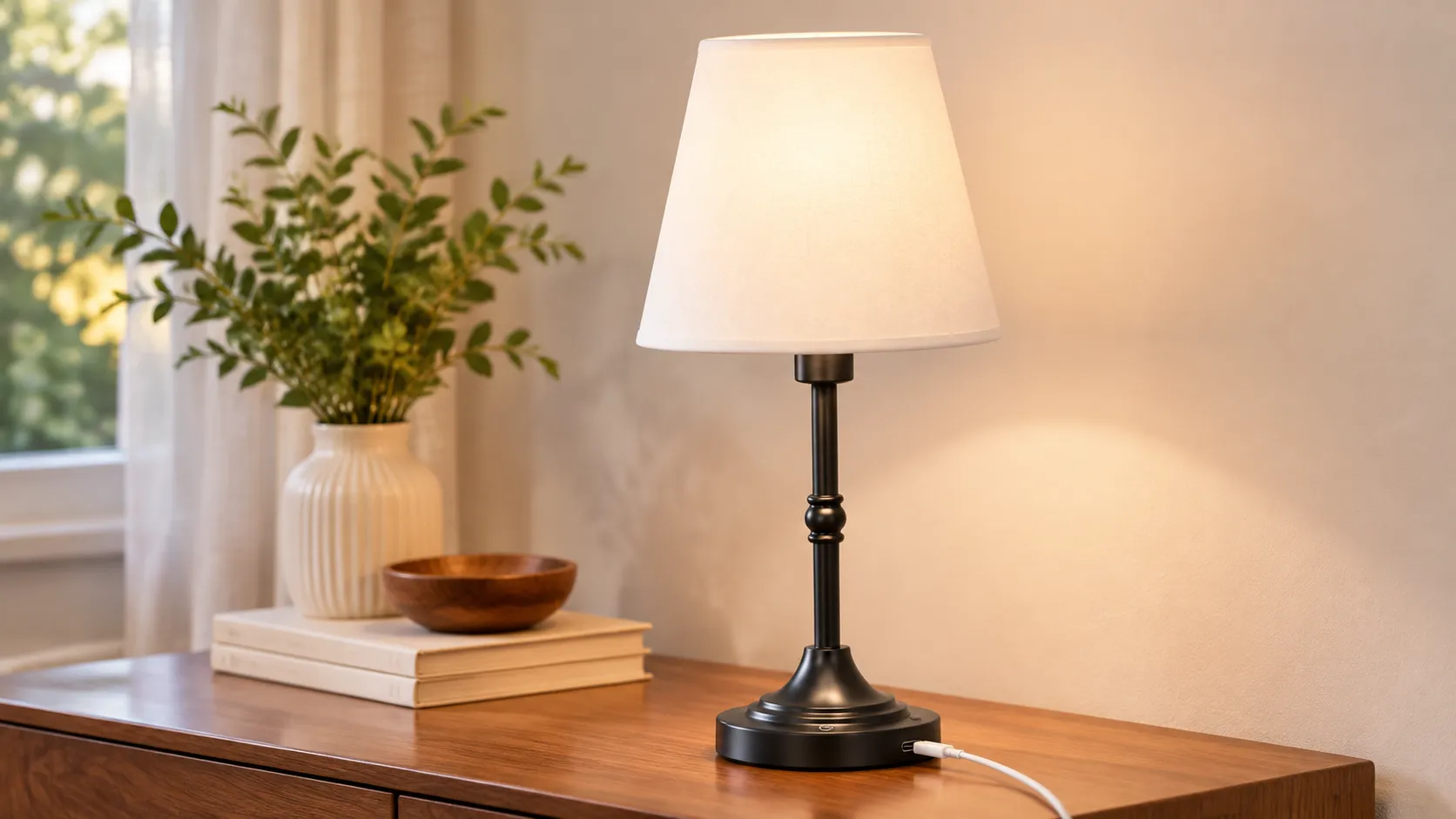
Across the lamps here the capacities fall into clear steps. The metal table lamp carries a 5200 mAh battery behind a USB-C port on the side of its stepped base. The printed-shade lamp comes in 2000 mAh and 5200 mAh versions, the plain white touch lamps in a 2000 mAh version and a higher-capacity one, and the beige stone-pattern lamp with 4000 mAh. At the small end, the aluminum dining lamp is built in 1200 mAh and 2000 mAh versions and the woven boho lamp at 1200 mAh. A bigger pack adds weight and cost to every unit, and the best rechargeable lamp for a nightstand that only has to cover an evening may never use the extra.
The port deserves the same attention as the number. Most of the lamps in this article charge over USB-C, but the rechargeable wood base lamp charges through a round socket on its base with its own USB cable, and the pink ceramic lamp (at 5 V) and the small touch lamp are specified simply as charging over USB. Neither is wrong, but a retailer needs to know before writing a listing: a shopper who loses a dedicated cable owns a dead lamp. The gold table lamp adds a courtesy that should be standard: an indicator beside the port that glows red while charging and green when the battery is full.
What comes in the box varies just as much. The faceted clear-shade lamp ships with a USB-A to USB-C cable, the handle lantern with a 0.5 m USB cable and the ice-textured shade lamp with a USB charging cable, while the rechargeable version of the beige lamp comes without a charger plug. Unbundled chargers are normal in electronics now: under the common charger law the European Parliament approved in October 2022, shoppers can buy a covered device with or without a charging device (European Parliament). For a retail range, decide per market whether a plug goes in the box.
Charging conditions belong in the specification too. As of November 2026, the U.S. Fire Administration, citing NFPA, advises against charging lithium-ion batteries below 32°F (0°C) or above 105°F (40°C) (U.S. Fire Administration), which rules out a sunny window sill in July as a charging spot. How a restaurant organizes charging for dozens of lamps is set out in the charging section of our guide to battery table lamps for restaurants and hotels, and the cheap parts that fail first, the cord switch and the cell, in our bedroom mood lamp guide.
Check 2, Dimming: What a Battery Changes About the Low End
On a cordless lamp the dimmer is also the runtime control, so the best ones say exactly how they dim and how fine the steps are. On our gold table lamp a long press on the touch button sets the light anywhere from 5% to 100%. The plain white touch lamps and the printed-shade lamp dim without fixed steps while the switch is held, and the ice-textured shade lamp steps through three brightness levels by touch, with brightness keys on its remote as well.
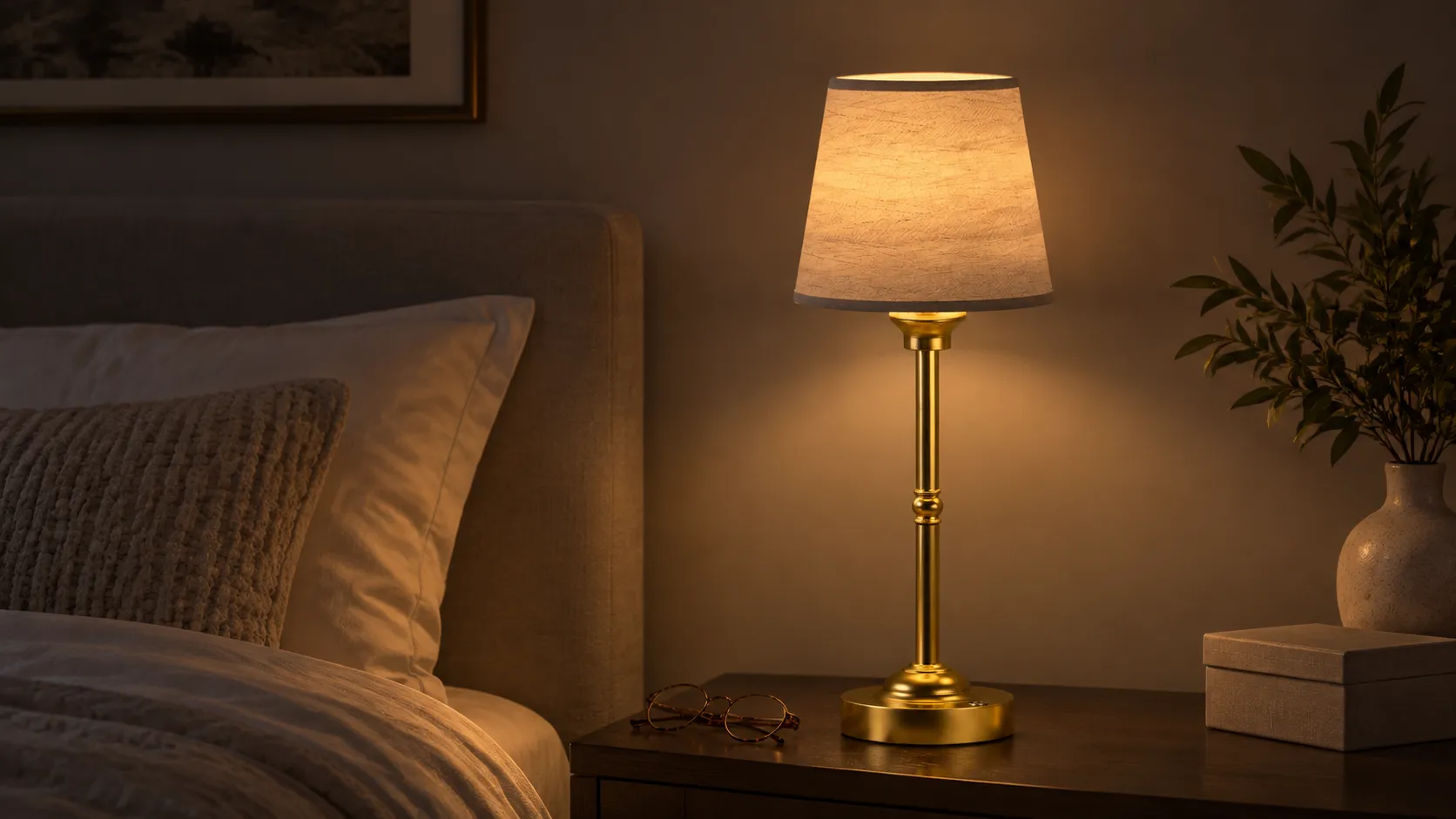
Each method hands the owner a different grip on the battery. A continuous range such as 5% to 100% lets someone trade light for hours precisely, while three fixed levels give a coarser choice that is easier to explain on a shop counter. Cheap dimming tends to flicker at the bottom of the range, a problem the U.S. Department of Energy’s solid-state lighting program ties partly to the dimming level (U.S. Department of Energy); the test and the thresholds are in our bedroom mood lamp guide.
The honest limit of the category sits at the top of the range. Our woven boho lamp is specified at 120 lm. In its 2010 guide to efficient lighting, the U.S. Department of Energy told shoppers replacing a 75-watt bulb to look for a 1,100-lumen light (U.S. Department of Energy), and 120 lm is roughly a ninth of that by our arithmetic. That puts it at the accent end of the range; a long press takes it from a low glow for the evening up to a brighter level for reading. Of the lamps in this article, only the woven lamp has a lumen figure in its specification, so if brightness matters to your customer, ask the factory to state lumens on the quotation, ours included. The gold lamp is the one model here specified for color rendering, at CRI 90 or higher.
Color is set from the same switch on most of these lamps. The printed-shade lamp and the plain white touch lamps give a single 2700K warm white, while most of the other lamps here switch between three whites, such as 3000K, 4000K and 6200K on the gold lamp. Dimming steps, base weight and shade glow apply to every bedside lamp, corded or not, and the general rules are in our five bedside lamp checks; the checks here cover only what a battery changes.
Check 3, Runtime: Read the Hours Against the Brightness
A runtime figure is only useful if it names the brightness it was measured at, because the same lamp on the same charge runs longer dim than bright. Many listings leave it out, and most of ours do too.
Among the lamps in this article, seven print a runtime per charge: the faceted clear-shade lamp 5–6 hours, the pink ceramic lamp 6–8 hours, the woven boho lamp 8 hours, the gold table lamp about 9 hours, the handle lantern 6–12 hours, the beige stone-pattern lamp up to 12 hours and the rechargeable wood base lamp about 15 hours. Only the woven lamp says its 8 hours are at low brightness. The handle lantern quotes a range, 6 to 12 hours, which admits variation but not which setting gives which end; ask.
Source: BeginLighting specifications for the faceted clear-shade, pink ceramic, woven boho, gold, handle lantern, beige stone-pattern and wood base lamps, read 2026-11-10
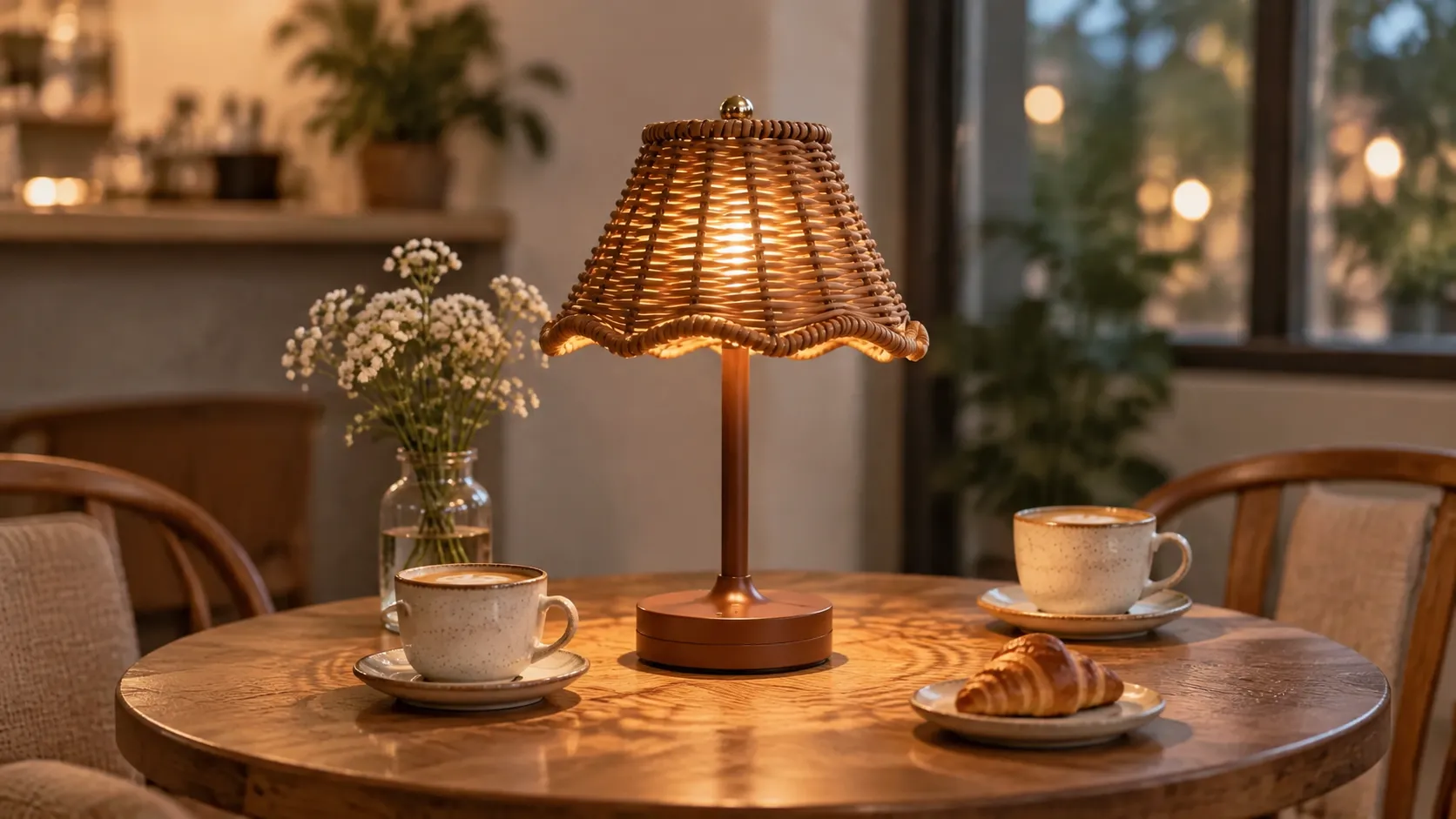
Read any runtime, ours included, as the start of a question: at which setting, and from a full charge? At home, the right lamp is the one that covers your evenings at the brightness you like, whatever the headline number.
When a hotel needs a lamp to last a whole service, runtime has to be specified at more than one brightness, and how the battery holds up over months of nightly charging is a separate negotiation. Both are covered in our hospitality guide, in its sections on runtime and on lifetime claims.
Check 4, The Base: Steady Without a Cord to Hold It
A cordless lamp needs a base that stays upright when someone reaches past it, because it gets picked up, carried and set down far more often than a lamp tied to a wall socket. The general rules on weight, base width and pads are in our bedside lamp checklist; what follows is the part a cordless base adds.
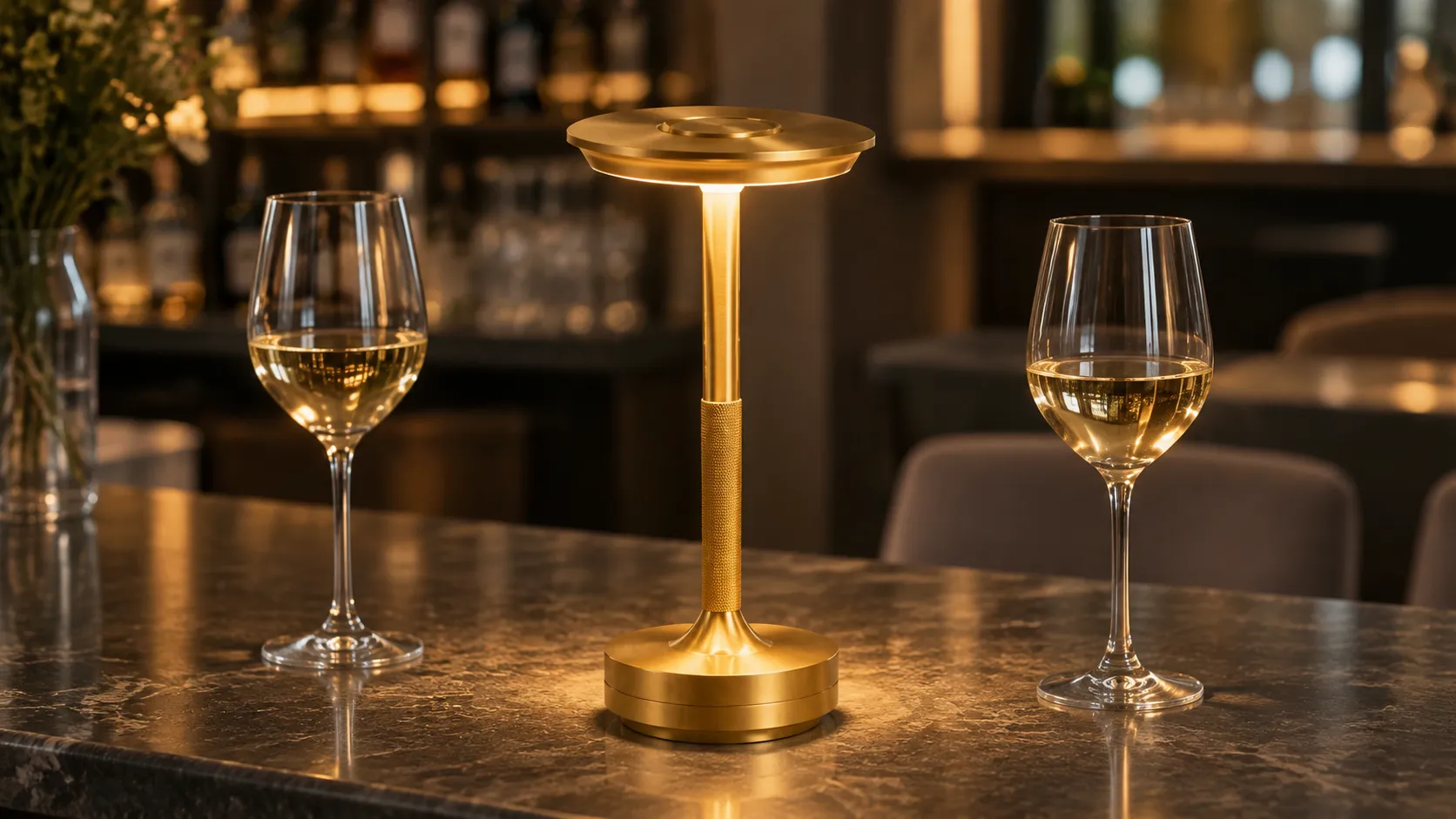
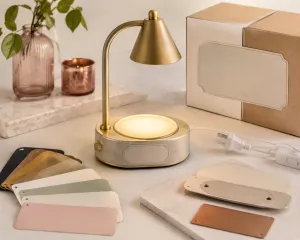
Weight is the figure our own specifications leave out most often. Across the cordless lamps in this article, only the metal table lamp prints one: 500 g, on a 15 cm footprint, for a lamp 38 cm tall. The gold table lamp gives its geometry instead, 42 cm tall on a 13 cm iron base, which describes the proportions but not the heft. For every other model here, weight is a line to request on the quotation.
What sits under the base matters as much as what it weighs. The ice-textured shade lamp has a silicone pad underneath, and the plain white touch lamps stand on a black bottom with four round feet. The aluminum dining lamp takes another route, a two-tier disc base 9 cm across under a 13 cm head, which keeps its footprint small between glasses and menus. Lamps carried by design, like the handle lantern, need the opposite balance: light enough to move, steady when set down.
Check 5, The Shade: Turn a Bright LED Into a Surface
The shade on a good cordless lamp spreads the LED into a soft surface, so no bright point shows from a seated eye height. Bare LEDs can be over 1 million cd/m², against 25,000–30,000 cd/m² for a T5HO fluorescent tube, according to a 2020 glare presentation by Bob Davis in the U.S. Department of Energy’s solid-state lighting R&D workshop files (U.S. Department of Energy).
DOE’s glare research studies perceived glare against the size and luminance of the source and the background around it, night-time backgrounds included (U.S. Department of Energy). A small lamp in a dim evening room is that case exactly, so the question for every shade is whether it turns the LED into a surface.
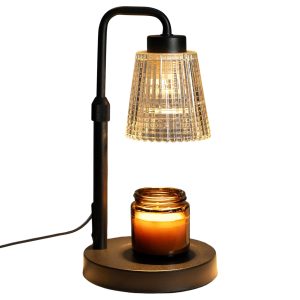
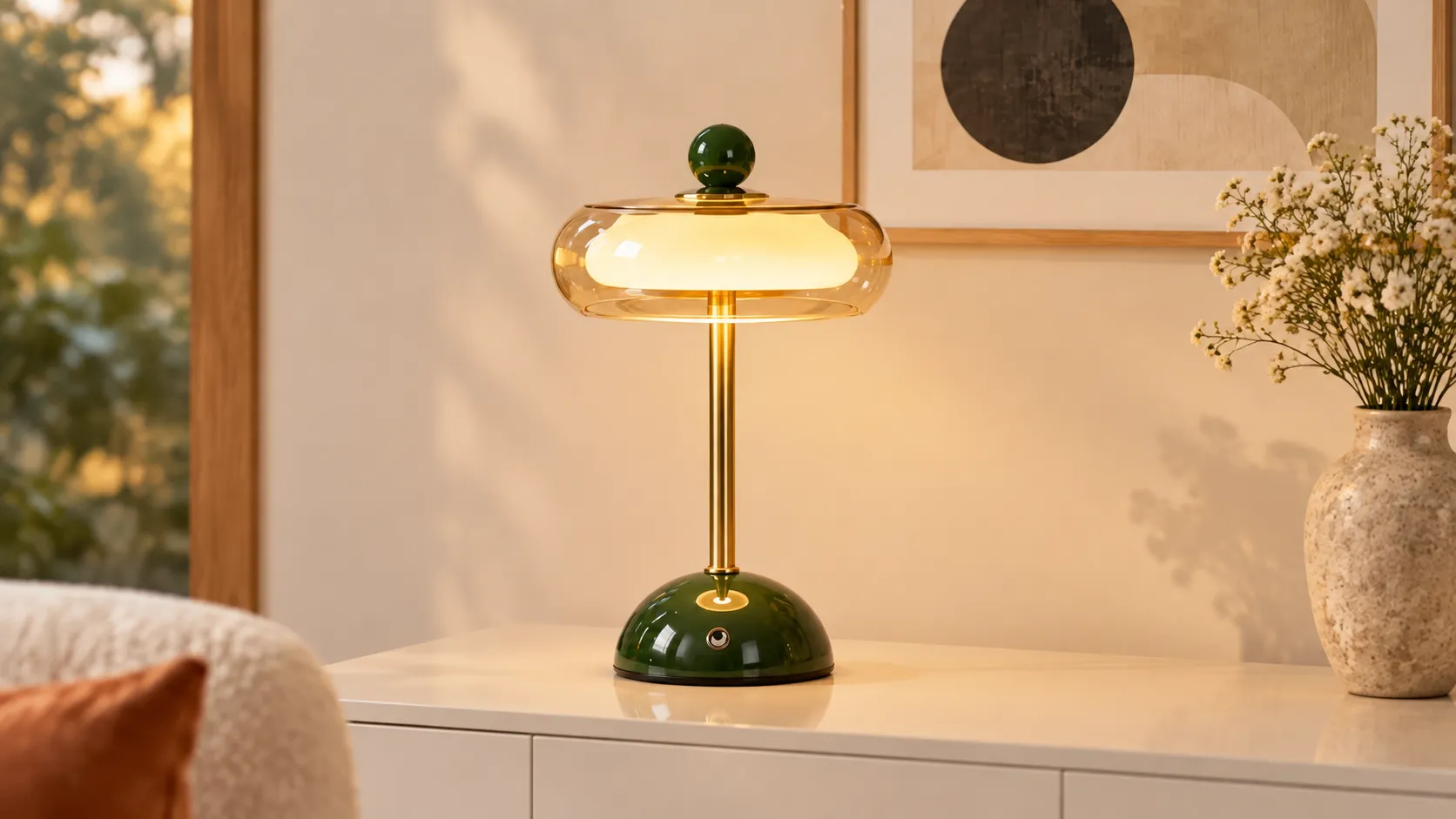
The lamps here show four answers. Fabric shades on the metal table lamp, the gold lamp, the printed-shade lamp and the plain white touch lamps diffuse across their whole surface. The woven boho shade lets light out through its weave, so it reads as a pattern rather than a point. The mid-century style lamp puts a white inner diffuser inside an amber-tinted clear shade, and style D of the handle lantern has a frosted inner diffuser under its ribbed acrylic dome. The faceted clear-shade lamp chooses sparkle on purpose; a clear shade shows more of the source than fabric does, so judge it lit, from where people sit.
The five checks fit on one page; here is the table we would want from any supplier, with our own lamps filled in.
| Check | What to look at | How our lamps state it |
|---|---|---|
| Battery and charging | Capacity in mAh, the port, the cable or plug in the box | Metal table lamp 5200 mAh over USB-C; beige lamp 4000 mAh, no charger plug; wood base lamp charges through a round socket with its own cable |
| Dimming | The lowest setting, how you reach it, flicker at the bottom | Gold lamp 5%–100% by long press; plain white touch lamps dim while the switch is held; ice-textured lamp three levels plus a remote |
| Runtime | Hours per charge and the brightness they were measured at | Woven lamp 8 hours at low brightness; gold lamp about 9 hours and wood base lamp about 15 hours, level not stated, so ask |
| Base | Net weight, footprint, what touches the table | Metal table lamp 500 g on a 15 cm base; ice-textured lamp silicone pad; plain white touch lamps four round feet; other weights on request |
| Shade | Whether a bright LED point shows from seated height | Fabric on the metal, gold, printed and plain white lamps; woven-look shade on the boho lamp; white inner diffuser in the amber mid-century shade; faceted clear shade by design |
Best Cordless Lamps for Living Room Side Tables and Shelves
The best cordless lamps for living room use are the ones designed for it: a warm or switchable white, a shade that looks finished when the lamp is off, and a size that suits a side table or a shelf. Five of the lamps here name the living room in their specification tables.
- The plain white touch lamps give one 2700K warm white, and on the telescopic stem the shade can sit higher beside an armchair or lower on a shelf.
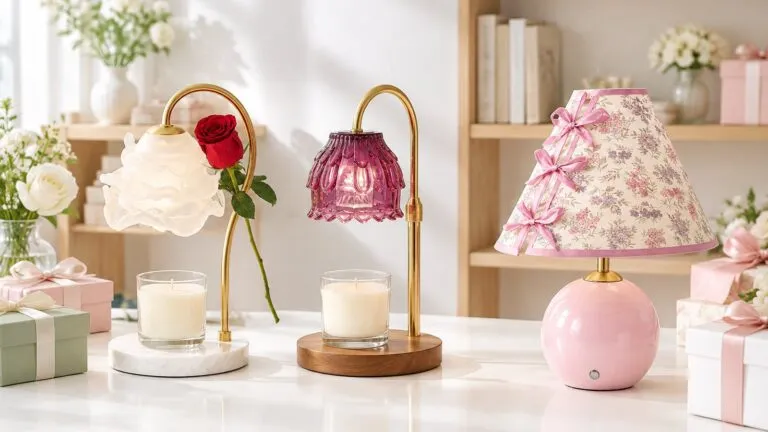
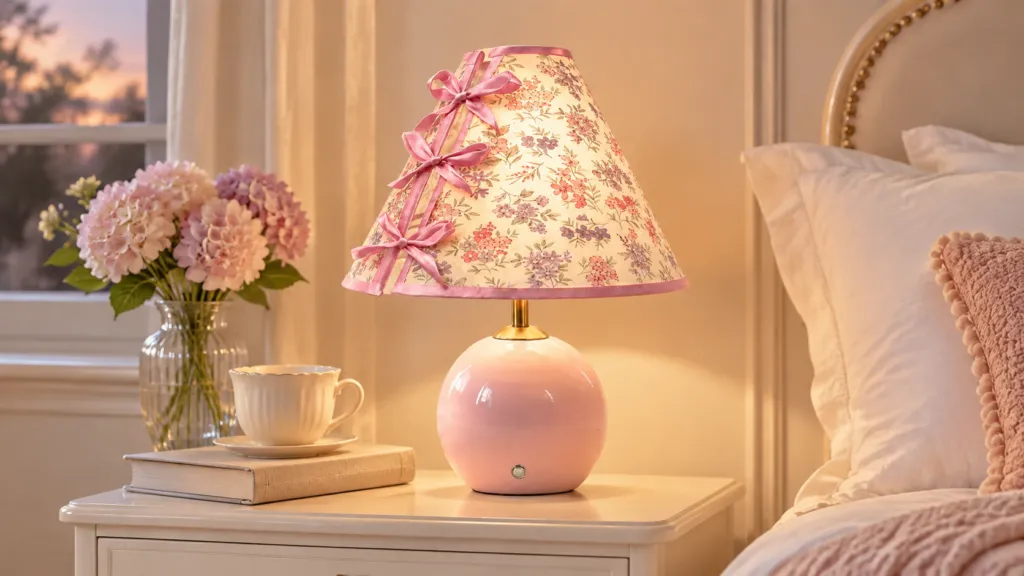
- The printed-shade lamp puts four fabric prints on a gold-tone stem with the same 2700K light, so a row of different prints still reads as one set.
- The woven boho lamp adds texture, three color temperatures and a 1200 mAh battery behind a USB-C port.
- The small touch lamp is switched from a button in the top of its shade, handy on a shelf reached from above, and moves between 3000K, 4500K and 6000K.
- The wood base lamps set a 13 cm cylinder shade on a flat wooden base, small enough for a bookshelf, in six shade designs.
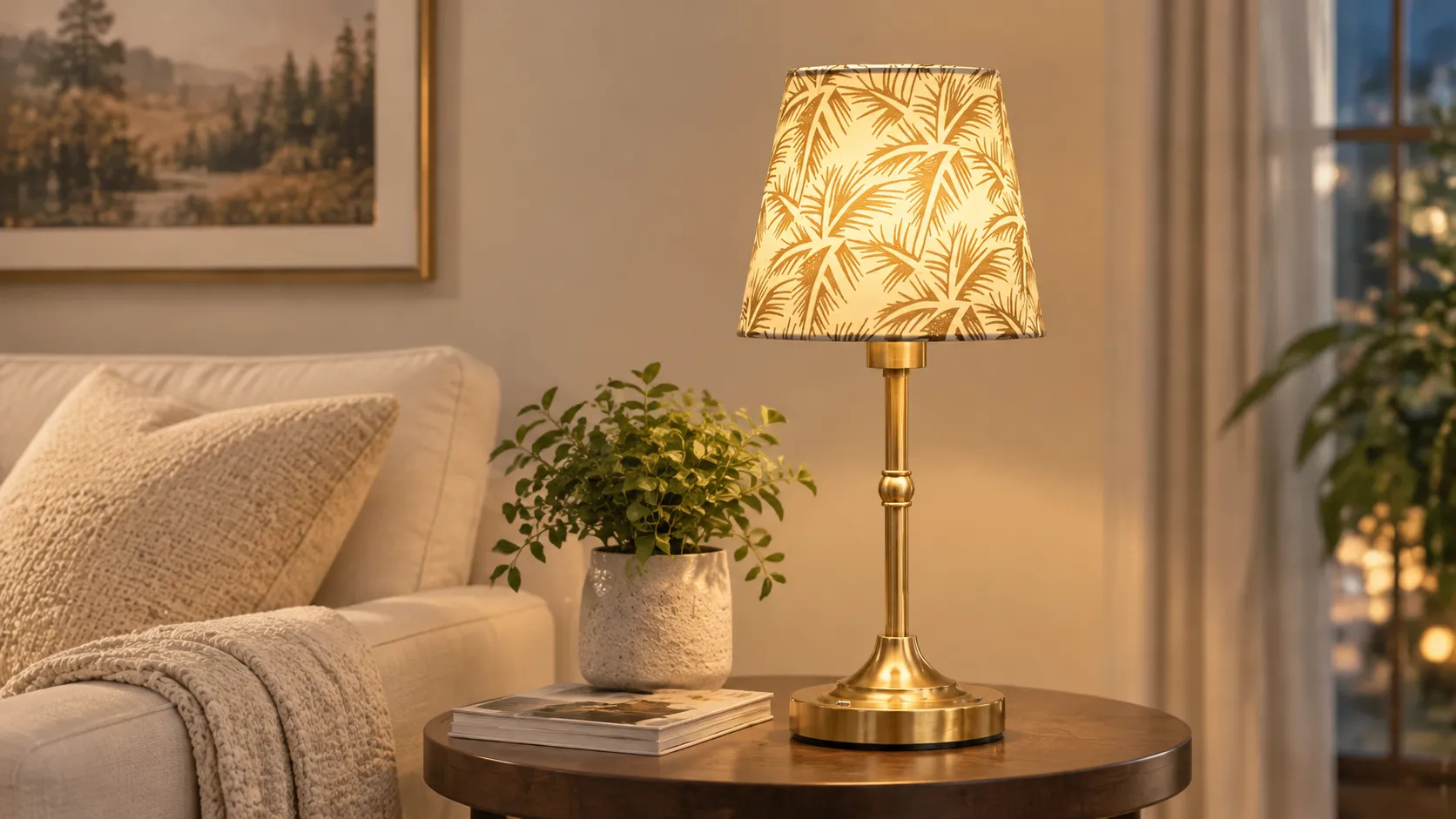
How many lamps a living room needs, and where each one goes, is a different question from which lamp to buy, and this article leaves it alone. The only rule here is the cordless one: put the lamp where it looks right, then decide where it will charge.
Building a Cordless Lamp Line Around the Five Checks
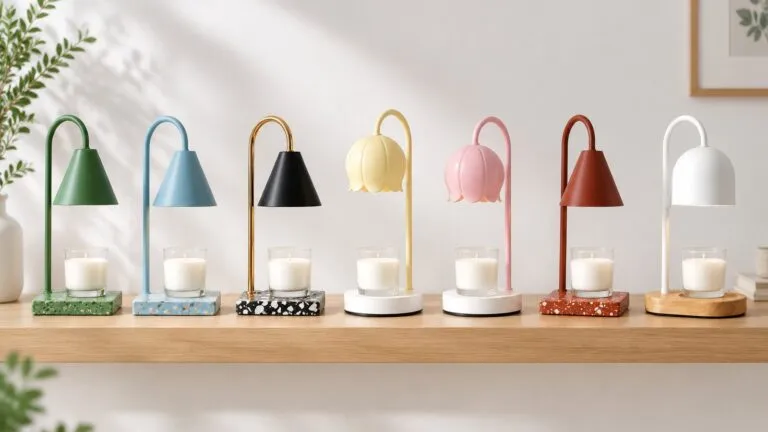
For a retail buyer, the five checks double as a range plan: give each lamp in a cordless line a battery tier, a brightness role and a shade material, and the line reaches more shoppers without repeating itself. The best cordless lamp for a hotel bar is rarely the best one for a teenager’s nightstand, and a small range can hold both.
Among the lamps here the battery tiers fall out naturally: about 1200 mAh for the woven lamp and the smaller dining-lamp version, 2000–2400 mAh for the ice-textured lamp, the larger dining-lamp version, the smaller printed-shade version and the 2000 mAh version of the plain white touch lamps (their higher-capacity version is confirmed on the quote), and 4000–5200 mAh for the beige lamp, the metal lamp and the larger printed-shade version. Night lights and mood lamps such as the small touch lamp sit next to lamps with a long dimming range like the gold lamp, and shade materials split the shelf by look: fabric, woven, amber or clear.
Whatever the mix, check every sample the same way, in this order:
Charge it from the box
Note the port, the cable, whether a plug is included and whether an indicator shows a full charge.
Run it at the customer’s setting
Time it at the brightness your shopper will use, not the lowest, and write the setting next to the hours.
Take it to the bottom of the range
In a dark room, sweep a hand under the shade at the lowest setting and watch for flicker or a visible jump between steps.
Carry it like a guest would
Pick it up by the stem or handle, walk it to the charger and back, and set it down on a polished table. It should feel balanced in the hand and sit still at once.
Sit down and look across it
From sofa or bed height, check whether a bright point of the LED shows through or under the shade.
Most of these designs take a private label: logo printing or labelling, or laser engraving on the wood base lamps. Every model here is in our table lamp catalogue; list the ones you want with battery version, finish and quantity. Order quantities are quoted per model and per project rather than published as a single number, and the production window is confirmed with the quotation.
Have a cordless lamp line built to the five checks
We build these rechargeable lamps in our own factory in Foshan: 4,000 square meters, 40 people and two production lines. Send the models, battery versions and quantities you have in mind and we will quote the line. Sampling takes about 15 days, and sample fees are refundable on your production order.
Watch it work
Five checks before you pick a cordless lamp, in 38 seconds:
FAQ
What are the disadvantages of battery-powered lights?
Someone has to own the charging, which is easy in one home and a common reason hotel programs fail. The battery also makes the lamp a battery product at the end of its life: the U.S. Environmental Protection Agency says lithium-ion batteries and devices containing them should not go in household garbage or recycling bins, so a retailer should be ready to tell customers where to take them.
Can you leave a rechargeable lamp plugged in all the time?
Ask the maker, and get the answer in writing. Some specifications, ours among them, say a lamp also runs while connected to an adapter or a power bank, but running while connected is not the same as being rated to stay connected, so ask the factory to confirm continuous connection, ours included. Either way, stop using a lithium-ion battery that gives off an odor, changes color or shape, gets too hot, leaks or makes odd noises, as the U.S. Fire Administration advises.
What is the best cordless rechargeable lamp?
The one whose specification answers the five checks in writing for the place it will stand, not any single model. On a nightstand, weight the low end of the dimming range and a warm white. On a restaurant table, weight a small, steady base and a charging routine staff will keep. On a shelf or in a window, weight the shade, because it is looked at more than it is read under.
Sources
Every external figure above was checked on 2026-11-10: lumens from the U.S. Department of Energy’s lighting guide, flicker and glare from its solid-state lighting program, charging temperatures and warning signs from the U.S. Fire Administration, battery disposal from the U.S. Environmental Protection Agency, and the unbundled charger rule from the European Parliament. Specifications for our own lamps are quoted from their current BeginLighting listings.
- U.S. Department of Energy, Guide to Energy-Efficient Lighting, DOE/EE-0344, October 2010 (an energy-efficient alternative to a 75-watt bulb is a 1,100 lumen CFL or LED light), retrieved 2026-11-10.
- U.S. Department of Energy, Solid-State Lighting, Flicker Research (the current waveform delivered to an LED depends on the driver loading and the dimming level, so flicker behavior changes with the dimming setting), retrieved 2026-11-10.
- U.S. Department of Energy, Solid-State Lighting, Glare (the prevalence of LED lighting has brought greater attention to discomfort glare; perceived glare studied against source size, luminance distribution and night-time background luminance), retrieved 2026-11-10.
- U.S. Department of Energy, SSL R&D Workshop 2020, Bob Davis, Searching for Holy Grails: A Glaring Lack of Definition (bare LEDs can be over 1 million cd/m², compared with T5HO fluorescent lamps at 25,000 to 30,000 cd/m²), retrieved 2026-11-10.
- U.S. Fire Administration, FEMA, Battery Fire Safety (do not charge lithium-ion batteries below 32 degrees F, 0 degrees C, or above 105 degrees F, 40 degrees C, citing NFPA; stop using a battery that shows an odor, change in color, too much heat, change in shape, leaking or odd noises), retrieved 2026-11-10.
- U.S. Environmental Protection Agency, Used Lithium-Ion Batteries (lithium-ion batteries and devices containing them should not go in household garbage or recycling bins), retrieved 2026-11-10.
- European Parliament, USB-type C to become EU’s common charger by end of 2024 (formal approval on 4 October 2022; consumers can buy a new covered device with or without a charging device), retrieved 2026-11-10.
