
Key takeaways
Importing lighting from China means classifying each product under the right HS code, budgeting for duty now that the $800 de minimis exemption has ended, agreeing a shipping term such as FOB, and confirming your lamps carry the UL or ETL, FCC and Lighting Facts marks US customs and retailers expect. Sample and inspect before you wire the balance.
- China is the world’s largest producer and exporter of light-industrial goods, the category that includes lighting (Invest in China, 2024).
- Finished fixtures classify under HS heading 9405; standalone bulbs and LED lamps fall under 8539 (USITC Harmonized Tariff Schedule).
- The $800 duty-free de minimis exemption ended for Chinese goods on May 2, 2025 and for all countries on August 29, 2025, so nearly every order now pays duty (Morgan Lewis; The White House).
- US-bound lighting needs an NRTL mark (UL or ETL), FCC compliance and a Lighting Facts label; screw-base bulbs must also clear the 45 lm/W federal efficiency floor (FTC; DOE).
- Approve a signed sample and book a pre-shipment inspection; both cost far less than rejecting a container after it lands.
01How do you import lighting from China?
How to import lighting from China comes down to six repeatable steps: choose and vet a factory, classify each product under the correct HS code, agree an Incoterm and price, confirm the US certifications your lamps need, inspect the goods before they ship, and clear customs with a licensed broker. Get those six right on a first order and every order after it is close to a copy-paste.
China is the natural place to start. In 2024, official trade data recorded China as the world’s largest producer and exporter of light-industrial goods, the category that includes lighting, a position it has held for five straight years (Invest in China, China Daily, October 2025, retrieved 2026-07-18). That scale is why the real question is rarely whether to buy from China, but how to import from it without a surprise at the port. The steps below are the same whether you are buying a hundred desk lamps or a mixed container of fixtures.
We sit on both sides of this transaction. We build our whole range in Foshan and ship it out ourselves, so the friction points below are ones we hit on real shipments, not textbook theory. The most expensive mistakes almost always happen in the first two steps, classification and certification, because they stay invisible until customs or a retailer’s compliance team stops the goods and the money is already overseas.
02How do you classify lighting for US customs?
Every product you import needs a Harmonized System (HS) code, and for lighting the split is simple: a finished fixture with its light source built in classifies under heading 9405, while a standalone bulb or LED lamp falls under 8539 (US International Trade Commission, Harmonized Tariff Schedule, retrieved 2026-07-18). The code sets your duty rate and your paperwork, so getting it wrong is not a clerical slip, it is a money error that compounds on every future order.
The 9405 versus 8539 line is where first-time buyers stumble. A table lamp, a wall sconce or a projector shipped as a complete unit is a fixture (9405). A replaceable A19 bulb or a GU10 LED lamp sold on its own is a light source (8539, with LED lamps under subheading 8539.52). Mixed cartons need each line item classified separately on the commercial invoice; customs will not accept one blended code for a pallet of different products.
| Product type | US HTS heading | Examples |
|---|---|---|
| Finished fixtures and luminaires | 9405 | Table lamps, wall sconces, projectors, string lights |
| Standalone bulbs and LED lamps | 8539 (LED under 8539.52) | A19 bulbs, GU10 lamps, filament-style LEDs |
| Electrothermal appliances | 8516 | Candle warmer lamps and similar heated devices |
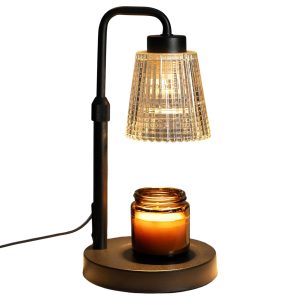
Our own products show how granular this gets. The candle warmer lamps we make ship out of China under HS 8516.79, the electrothermal-appliance code, not a lighting code at all, because the product’s job is warmth, not illumination; the GU10 bulbs that go in them declare separately under 8539.21, and the soy candles under 3406.00. Ask your factory for the exact HS code on its side, then confirm the matching US HTS line with your broker before you cut a purchase order.
03What duties apply now that de minimis has ended?
You will pay duty on nearly every commercial lighting order now, because the $800 de minimis exemption that once let low-value shipments enter duty-free is gone. In 2025, that duty-free treatment ended for Chinese-origin goods on May 2, and was then suspended for all countries on August 29 (Morgan Lewis, De Minimis Exception Eliminated for Imports from China, May 2025; The White House, Suspending Duty-Free De Minimis Treatment for All Countries, July 2025, both retrieved 2026-07-18). The old workaround of splitting an order into sub-$800 parcels no longer avoids duty.
On top of that, each HTS code carries its own base rate, and lighting sits low: a standalone LED lamp under subheading 8539.50, for example, carries a general duty of about 2 percent ad valorem (US International Trade Commission, Harmonized Tariff Schedule, retrieved 2026-07-18). But the base rate is only the floor. Chinese-origin goods can also carry Section 301 tariffs and the 2025 reciprocal-tariff actions, which stack on top and change often, so the only reliable number is the one your broker pulls against your exact code on the day you import.
04FOB, EXW or CIF: choosing your shipping term
Your Incoterm decides who arranges and pays for each leg of the journey, and for a first order from China, FOB is usually the safest default. Under the Incoterms 2020 rules, FOB (Free On Board) means the factory delivers the goods loaded onto your nominated vessel and clears them for export, after which you take over the main freight, insurance and US import (US Department of Commerce, Know Your Incoterms, retrieved 2026-07-18). It gives you control of the ocean leg without asking you to manage export paperwork inside China.
The three terms you will see most sit on a spectrum of how much the factory handles. EXW (Ex Works) puts everything on you from the factory door, including export clearance in China, which is hard to run as a foreign buyer. CIF (Cost, Insurance and Freight) has the factory pay freight and insurance to your destination port, which sounds convenient but hands control of the ocean leg, and any markup, to the seller. FOB sits in the middle, which is why most experienced importers quote it.
| Term | Factory handles | You handle | Best for |
|---|---|---|---|
| EXW | Goods ready at the factory door | Everything else, incl. China export clearance | Buyers with an agent in China |
| FOB | Export clearance and loading onto the vessel | Main freight, insurance, US import | Most first orders |
| CIF | Freight and insurance to your port | US import, unloading, final delivery | Buyers who want the factory to book freight |
Whatever term you agree, get it in writing on the proforma invoice before you pay a deposit, and price two or three terms side by side. A factory quoting a low FOB price and a high CIF price is showing you where its margin hides; a transparent supplier will lay out the same goods under different terms and let you choose.
05What certifications does imported lighting need?
US-bound lighting needs three things on nearly every product: a safety mark from a Nationally Recognized Testing Laboratory (usually UL or ETL), FCC compliance for electromagnetic interference, and, for general-service bulbs, a Lighting Facts label. In practice, most US retailers, marketplaces and insurers treat that NRTL mark as a precondition for stocking or covering an electrical product, and UL or ETL safety standards carry legal force wherever a local jurisdiction has adopted them by reference into its building or electrical codes (Compliance Gate, LED Lighting Regulations in the United States, retrieved 2026-07-18).
For screw-base bulbs there is a second gate. The Federal Trade Commission requires a Lighting Facts label showing brightness, energy cost, life and color temperature on most general-service lamps (Federal Trade Commission, The FTC Lighting Facts Label, retrieved 2026-07-18). And since federal efficiency rules took effect in 2022 and enforcement began in 2023, general-service lamps must deliver at least 45 lumens per watt (US Department of Energy, Energy Conservation Standards for General Service Lamps, Federal Register, May 2022, retrieved 2026-07-18). That single rule quietly bans most imported incandescent and halogen bulbs.
Typical light output per watt, by lamp technology
Source: U.S. Energy Information Administration, LED bulb efficiency expected to continue improving as cost declines (retrieved 2026-07-18). Values are typical figures per lamp type; the 45 lm/W line is the US federal general-service-lamp standard.
The chart makes the sourcing decision for you. In the U.S. Energy Information Administration’s comparison, a typical incandescent bulb delivers about 16 lumens per watt and a halogen about 20, both under the 45 lm/W floor, while CFL at about 67 and LED at about 83 clear it comfortably (U.S. Energy Information Administration, LED bulb efficiency, retrieved 2026-07-18). For screw-base lamps, sourcing LED is not a preference, it is how you stay legal. Ask any factory for the test report and the NRTL file number before production, not after, because retrofitting a certification onto a finished container is slow and costly.
06How do you protect quality before the goods ship?
You protect quality with two checkpoints that happen before the balance payment: a signed pre-production sample, and a pre-shipment inspection of the finished goods. Both cost far less than rejecting a container after it lands, when your money is already overseas and your only options are a discount or a dispute.

Start with a sample. Approve a physical unit against a written spec, glass, finish, wiring and packaging, then keep the signed sample as the reference the production run is judged against. On our own candle warmer line, sampling runs about two weeks, and we credit the sample fee back when the order is placed, which is a fair benchmark to expect from any serious factory. A supplier that resists sending a paid sample is telling you something worth hearing early.
The second checkpoint is a pre-shipment inspection, where an inspector, yours or a third-party firm, checks a random sample of the finished cartons against an AQL (Acceptable Quality Limit) standard before the goods leave the factory. For electrical lighting, insist the inspection includes a function and basic safety check, not just a piece count and a cosmetic look. This is the step first-time importers skip to save a few hundred dollars, and it is the one that saves the container.
07The documents and people in one shipment
A lighting shipment moves on a small stack of documents and one key partner: a licensed US customs broker. The broker files your entry, confirms your HTS classification, and calculates the duty you now owe on every order. For a first-time importer, hiring one is the difference between a routine clearance and a container held at the port while charges accrue.
The core documents are consistent from shipment to shipment. The commercial invoice states what the goods are, their value and their HTS codes; the packing list details cartons, weights and dimensions; the bill of lading is the carrier’s contract and title document; and for ocean freight, an Importer Security Filing (ISF) must be filed before the goods sail. Your factory prepares the invoice and packing list, your freight forwarder handles the bill of lading, and your broker files the ISF and the customs entry. Line the four up before the vessel loads and clearance is a formality.
08Where a sourcing partner fits a first order
A sourcing partner earns its place on a first order by absorbing the two steps most likely to go wrong, classification and quality control, and by collapsing several factory relationships into one. Instead of managing separate minimums, freight lines and QC standards across a lamp factory, a bulb factory and a fixtures factory, you run one purchase order against one standard.
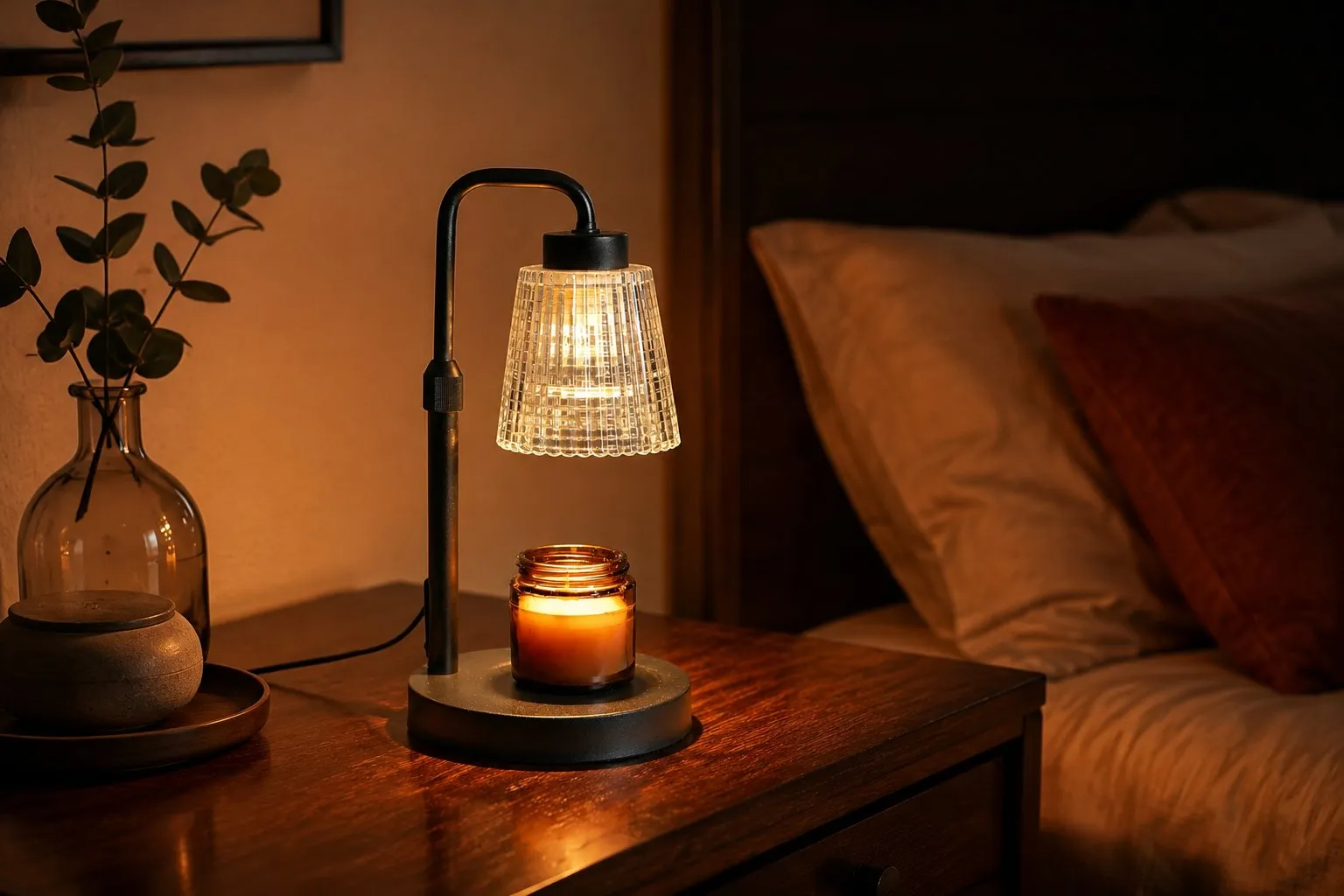
This is the model we run. We make our candle warmer lamps and the rest of a cozy-home and retail lighting range in Foshan, on one order, with one QC standard. We say plainly that we are the maker, because a buyer deserves to know whether the company behind a product is the maker or the middle. For the vetting side of that decision, our guide on how to check China lighting manufacturers pairs with this one, alongside the live BeginLighting range.
The practical upside for a first order is speed. The classification, the certification file, the Incoterm and the inspection are already solved on the lines we run, so a buyer inherits a working process instead of building one from scratch. Send a spec and a target quantity, and you get a quote against a clear standard rather than a lump sum against a mystery.
Sourcing lighting from China without the first-order guesswork?
We build a full ambient range in Foshan, candle warmer lamps included: classified, certified and inspected. Send your spec and quantities and we will quote against a clear standard, not a lump sum.
FAQ
Do I need an importer of record to bring lighting in from China?
Yes. Every US import needs an importer of record (IOR), the party legally responsible for the entry, the duties, and the product’s compliance. For most retail buyers that party is you, though a service can act as IOR for a fee. A customs broker files the entry on your behalf, but filing is not the same as responsibility: if the goods are misclassified or uncertified, the IOR is the one CBP holds accountable, so understand what you are signing before your first shipment.
How much does it cost to import lighting from China?
There is no single figure, because your landed cost is the product price plus ocean or air freight, duty, a customs broker fee, and an inspection. Duty now applies to nearly every order since the de minimis exemption ended in 2025, and the rate depends on your HTS code plus any Section 301 tariff. The only reliable estimate comes from quoting your exact product, quantity and Incoterm and having a broker calculate the current duty against your specific code.
Can I sell imported LED lighting in the US without UL certification?
Customs may admit uncertified lighting, but selling it is a different matter. Most US retailers, marketplaces, insurers and electrical inspectors require a mark from a Nationally Recognized Testing Laboratory, usually UL or ETL, before they will stock or approve an electrical product. Selling uncertified electrical lighting exposes you to liability if a product fails, and many buyers will simply refuse the goods. Treat an NRTL mark as a cost of doing business, not an optional upgrade.
What is the minimum order quantity for lighting from China?
There is no universal minimum. Factories set their own minimum order quantities, and they vary widely by product type, how much customization you want, and whether the item is stock or made to order. Simple stock items can have low minimums, while custom tooling or private-label packaging pushes them up. The practical path is to approve a sample first, then negotiate the first production run; a supplier that will not discuss a realistic starting quantity is often not set up for smaller buyers.
Do I still pay tariffs on small lighting orders from China?
Yes. Since the $800 duty-free de minimis exemption ended for Chinese goods in May 2025 and for all countries in August 2025, even low-value commercial shipments are subject to applicable duties. Splitting an order into several sub-$800 parcels no longer avoids duty, and doing it deliberately to dodge tariffs is a compliance risk. Budget for duty on every order, small or large, and confirm the live rate for your HTS code before you ship.
Sources
- Invest in China / China Daily, China Remains World’s Largest Producer, Exporter of Light Industrial Products (world’s largest producer and exporter of light-industrial goods; $925.4B exports in 2024; five consecutive years), retrieved 2026-07-18.
- US International Trade Commission, Harmonized Tariff Schedule (finished fixtures under heading 9405; standalone lamps under 8539, LED lamps 8539.52; general duty about 2% on 8539.50), retrieved 2026-07-18.
- Morgan Lewis, De Minimis Exception Eliminated for Imports from China (April 2 executive order; de minimis unavailable for Chinese-origin goods as of May 2, 2025), retrieved 2026-07-18.
- The White House, Suspending Duty-Free De Minimis Treatment for All Countries (duty-free de minimis suspended for all countries, effective August 29, 2025), retrieved 2026-07-18.
- US Department of Commerce, International Trade Administration, Know Your Incoterms (EXW, FOB and CIF responsibilities under Incoterms 2020), retrieved 2026-07-18.
- Compliance Gate, LED Lighting Regulations in the United States (UL and ETL safety marks, voluntary unless adopted by reference into local codes; FCC compliance for lighting), retrieved 2026-07-18.
- Federal Trade Commission, The FTC Lighting Facts Label: Questions and Answers for Manufacturers (mandatory Lighting Facts label on most general-service lamps), retrieved 2026-07-18.
- US Department of Energy (Federal Register), Energy Conservation Standards for General Service Lamps (45 lumens per watt backstop for general-service lamps), retrieved 2026-07-18.
- US Energy Information Administration, LED Bulb Efficiency Expected to Continue Improving as Cost Declines (incandescent ~16, halogen ~20, CFL ~67, LED ~83 lumens per watt), retrieved 2026-07-18.
BeginLighting manufactures its candle warmer lamps and its other lighting categories in Foshan, China. The duty, tariff and certification details above are third-party regulatory and market references gathered from the cited public sources, not legal or customs advice; confirm your own classification, duty rate and compliance obligations with a licensed customs broker before importing.
UL, ETL, CSA and FCC: which mark your buyer will actually ask for
Safety marks are gatekeeping, not decoration. US retailers, marketplaces, insurers and electrical inspectors want a mark from a Nationally Recognized Testing Laboratory before they will stock or approve a fixture, and UL, Intertek ETL and CSA are all OSHA-recognized NRTLs, so any of the three satisfies a US buyer. What changes is which market the mark travels to: a plain CSA mark covers Canada, while a CSA mark carrying a US indicator covers both. That is why a Canadian or cross-border retailer will specifically ask for CSA approved LED strip lighting rather than a UL-only file. They need a certificate that is valid on both sides of the border, and a report issued in the wrong body’s name means a retest, not a paperwork fix.
- Ask which standard, not just which mark. Low-voltage strip systems are typically evaluated to UL 2108, the LED source to UL 8750, and the driver to UL 1310 as a Class 2 power unit. A mark with no standard behind it tells you nothing.
- The driver is certified separately. A listed strip on an unlisted adapter still fails inspection, so ask for the power supply’s own certificate and model number.
- FCC applies too. Any product with a switching driver is an unintentional radiator under FCC Part 15 Subpart B. Add an RF remote, Wi-Fi or Bluetooth and it becomes an intentional radiator that needs its own FCC ID.
- Verify the file, not the sticker. Every NRTL publishes a searchable certification directory, and the file has to name the factory that is actually building your order, not a sister plant.
On the tariff side, most finished luminaires and lighting fittings fall under HTS heading 9405, which has separate subheadings for fittings designed to be used solely with LED sources and for parts, while LED lamps and modules sold as light sources are classified in heading 8539 instead. That split decides your duty rate, so give your customs broker the real construction, the operating voltage and whether the goods ship as a complete fitting or as components, and ask CBP for a binding ruling when an order is large enough that a reclassification after arrival would hurt.
